Affiliate / TikTok Shop · Claim Review
“The NEW Method Blowing Up TikTok Shop Affiliates in 2026”
What we found: TikTok Shop Search Method: The $5 Million Is Sales, Not Commission, and the Two-Video Test Is Never Shown
Sound advice on keywords and clear hooks, a headline figure that measures other people's revenue, and a longevity example that relies on the brand's own ad spend.
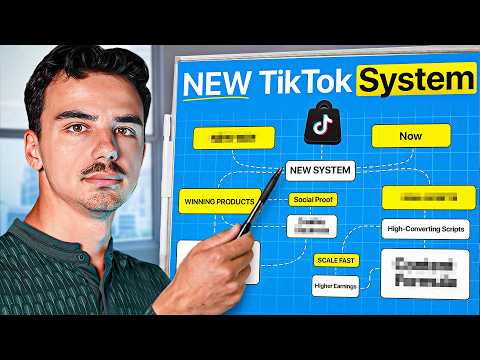
- $5M+ GMV Sales generated
- Not stated Commission on that $5M
- $1,000+ Best single video
- ~$2 Earnings per 1,000 views
The claim
That treating TikTok as a search engine — clear hooks, the problem named in on-screen text, product title and description — produces affiliate videos that keep earning for months, and that they have generated over $5 million this way.
- Sales generated as an affiliate, last 2 years — "Well over $5 million" GMV
- Their commission on those sales — Never stated
- Best of two near-identical videos — 500,000 views, "well over $1,000" commission
- Worst of the two — 500 views, "essentially zero sales"
- Commission per 1,000 views on the better video — ~$2 or a little more
- TikTok's cut of every sale — 6%
- Best student month — $120,000 commission
- Best student first full month — $24,000
- What "10 20 30 40 50k months" measures — Not specified — GMV or commission
- Product samples, time, returns, tax — Never mentioned
What is this income idea?
Make TikTok Shop affiliate videos that match what people type into TikTok's search bar, so they keep getting found and keep selling long after posting.
- The video opens with a comparison: two "nearly identical" videos for the same product, one with 500,000 views and "well over $1,000 commission", the other with 500 views and essentially no sales. Once they worked out the difference, they say, "I could literally predict what videos ahead of time were going to blow up."
- They then give their own figure: "over the course of the last 2 years I generated well over $5 million" — with no dashboard on screen as it is said; in TikTok Shop terms a figure generated through affiliate links is GMV, gross merchandise value, the total value of products sold through their links.
- The thesis is that TikTok has shifted from rewarding one-off viral spikes to rewarding videos that answer searches. They demonstrate by searching "collagen", "spironolactone for acne" and "sunscreen" live, and point out how many of the top results are TikTok Shop listings or sponsored Shop videos. Their explanation: TikTok takes "6% topline revenue" on every sale, so it has an incentive to surface content it earns from.
- The method is to make it obvious what the video is about. Say the problem in the first line of the hook, put it in on-screen text, put it in the description, and — their "super niche tip" — put it in the product title when linking the product. Narrow the audience: not "acne" but a specific group with a specific situation. Use an AI tool to write a search-optimised description.
- They support the longevity claim with two videos from other creators: an acne video from late February that still ranks, and a top result from July 2025 that is still collecting comments — where, they add, "the company is still putting ad dollars behind" it.
- The video promotes their one-to-one mentorship program, citing a student record of $120,000 commission in a single month and a best first full month of $24,000, and ends by directing viewers to an hour-long free course video.
Name the problem everywhere a search can see it — the advice is fine, but the $5 million is what customers spent, not what they earned.
- Search the niche on TikTok — See what ranks
- Listen to top videos — Copy the language
- Narrow the audience — Specific situation
- Name the problem in the hook — First line
- Repeat it in text and title — Incl. product title
- AI-written description — Keyword-led
- Video ranks for months — Their claim
- Commission on sales — Rate never stated
A reasonable search-first process with the earnings side described in sales, not income.
Sales volume is the affiliate's favourite number because it is the biggest one.
The lesson underneath the number
- The practical advice here is fine and mostly uncontroversial. If people search TikTok the way they search Google, then a video that names the problem in its first line, its on-screen text, its description and its linked product title has more ways to be matched to that search. Researching by typing your niche into the search bar and studying the top results is a sensible, free habit. Narrowing the audience to a specific situation is standard advice that holds up. They demonstrate the search results live rather than describing them, which is better than most.
- The money is presented differently. "$5 million GMV" is a real and meaningful metric on TikTok Shop, but it measures what customers paid for other companies' products. The affiliate receives a percentage that varies by product, and that percentage — the only number that turns GMV into income — does not appear anywhere in the video. Neither do returns, which reverse commission after the sale. A viewer who hears "$5 million" and thinks "income" has misread it, and nothing in the video corrects them.
- Their own opening example is more informative than the headline. One video with half a million views earned "well over $1,000". That is roughly two dollars per thousand views — a respectable result for an affiliate, and a useful benchmark — and its near-identical twin earned essentially nothing. That is what this business looks like at the level of individual videos: a wide spread of outcomes, with most of the money concentrated in a few. The video promises to explain what separated the two and does not return to them.
- The longevity claim needs the same care. The strongest example offered — a video from July 2025 still at the top of search nearly a year later — is one they say the brand is "still putting ad dollars behind", and the post on screen at 5:41 carries TikTok's Sponsored label. That is a perfectly good reason for a video to keep performing, and it is not the reason the video is arguing for. The student figures, $120,000 in a month and $24,000 in a first month, are records from their own paid program, offered as its best results, without a count of how many students there are or what a typical one earns.
The problem I see with so many people's videos is your hooks aren't clear.
The most useful sentence in the video
The method, as they give it
Five concrete instructions. None of them is new, and all of them are sensible.
Published 18 June 2026. No creator dashboard, GMV or commission screen is on screen when the $5 million figure or the two-video comparison is given (0:04–0:25 show b-roll and the presenter). The year-old example found by searching "spironolactone for acne" is shown at 5:41: another creator's post dated 2025-7-19 with 14.9K likes, linked to a Shop product and labelled Sponsored.
- Research by searching, not scrolling — Type your product's problem into TikTok search and study what ranks. On "sunscreen" they find five of the top six results are Shop videos and note they are visual-first with the keyword in on-screen text.
- Make the hook unambiguous — "The problem I see with so many people's videos is your hooks aren't clear." Their example opens with the problem in the first sentence, so a viewer knows within a second whether it applies to them.
- Niche the audience down — Rather than the broad, competitive term, speak to one group in one situation. Their example ranks near the top for a broad acne search despite targeting a narrow subgroup.
- Put the keyword in the product title — When linking a product to an affiliate video, include the problem it solves in the title. They call it a tip "you probably won't hear anywhere else". Whether it measurably changes ranking is asserted, not shown.
- Write descriptions for search — Drop "share this with a friend" and describe the topic. They suggest asking an AI tool for an "optimized SEO based description" and pasting it.
- Expect a long tail — Search-led videos, they say, now earn for "30 40 50 60 plus days" and potentially a year. The example offered for the year-long case is one the brand is also paying to promote.
The business model
Commission on TikTok Shop sales made through affiliate videos, plus — for them — a paid mentorship program.
TikTok users searching for a product or a problem, such as acne, collagen or sunscreen.
Videos that clearly answer a search, so viewers who already want a solution find and buy through them.
TikTok's search results and For You feed, optimised through hooks, on-screen text, descriptions and product titles.
- Platform fee — They say TikTok takes 6% of each sale; paid by the seller, not the affiliate
- Returns — Reverse commission. Never mentioned
- Product samples — Needed to film. Never mentioned
- Equipment and editing — Never mentioned
- Time per video — Their own example shows many videos earn almost nothing
- Mentorship fee — Promoted throughout. Price never given
An affiliate's costs are low, which is the model's strength. The bigger omission is on the revenue side: no commission rate is ever given.
What you would actually need
Money
No startup or running costs are mentioned. The free course and paid mentorship are the only spending implied.
Affiliate content can start cheaply, which is a real advantage. But the video gives no commission rate, no sense of how much of GMV becomes income, and nothing on returns, which typically reverse commission. Without those, a viewer cannot turn any figure here into an estimate of earnings.
What determines your income, none of it given
- The commission rate on each product you promote
- How much commission is reversed by returns
- Product samples, if not supplied free
- Filming and editing equipment
- Tax on commission income
- The mentorship fee, if you join
Time
Students "across the board" get results in "month two month three sometimes even month one", against "6 7 8 9 10 11 plus months" for others.
That timeline describes their mentorship students and is offered as a sales point, without a count of students or how many do not reach it. Their own opening example shows the real time cost: a second, nearly identical video that drew 500 views. Volume is the job.
Where the time goes
- Searching and studying top-ranking videos per niche
- Filming many versions of each product video
- Writing hooks, on-screen text and descriptions
- Testing products and moving on from weak ones
- Posting consistently for months
The part you must pay attention to
"$5 million" is what customers spent on other companies' products. It is not what they earned.
The headline credential is "over the course of the last 2 years I generated well over $5 million GMV personally myself as a Tik Tok shop affiliate."
- Gross merchandise value, 2 years — $5,000,000+
- Their commission rate — never stated — × ?%
- Reversed commission — never mentioned — − returns
Unknown
Their actual affiliate income
GMV is the total value of goods sold through their links. An affiliate is paid a percentage of that, set product by product, and the video never says what percentage. As an illustration only, every ten percentage points of commission on $5 million would be $500,000 over two years — so the same headline could mean a modest income or a very large one depending on a number the video leaves out. Their own best-video example points to a far lower ratio than the headline suggests to most viewers: "well over $1,000" on 500,000 views is about $2 of commission per thousand views.
Two further gaps undercut the method's evidence. The video opens by promising to explain why one of two near-identical videos earned over $1,000 and the other almost nothing; it never returns to those two videos or says what differed. And the strongest evidence for search longevity — a video from July 2025 still at the top of results almost a year later — comes with their own qualification that "the company is still putting ad dollars behind" it. A video that ranks because a brand is paying to promote it is not evidence that organic search alone keeps videos alive. The advice may still be right. The video does not show it.
- THE HEADLINE FIGURE
- GMV, 2 years >$5,000,000
- Commission rate never given
- Illustration only:
- each 10 pts of rate = $500,000
- Their income not stated
- HIS OWN BEST-VIDEO RATIO
- Views 500,000
- Commission >$1,000
- $1,000 / 500 thousands = ~$2 / 1k views
- THE "LONGEVITY" EXAMPLE
- Posted July 2025
- Still top of search ~a year on
- Brand ad spend behind it yes
- Label on screen Sponsored
- -> organic and paid reach mixed
- THE TWO-VIDEO TEST
- Promised in intro yes
- Shown or explained no
The economics
One sales figure, one per-video figure, two student records, and no commission rate.
- GMV generated, 2 years — Well over $5,000,000
- Commission rate — Never stated
- Best video — 500,000 views, $1,000+ commission
- Twin video — 500 views, ~$0
- Commission per 1,000 views, best video — ~$2+
- TikTok's share of each sale — 6%
- Student record month — $120,000 commission
- Student record first full month — $24,000
What the best video earned per view
"Well over $1,000" ÷ (500,000 views ÷ 1,000) = ~$2 per 1,000 views
About $2 of commission per thousand views on their best-performing example, and close to zero on its twin
IncomeIdeaLab calculation from the creator's own opening example
"Well over" means the true figure is somewhat higher than $1,000, so ~$2 is a floor. It is one video and says nothing about their average. The $5 million GMV cannot be converted into income without a commission rate, which the video does not give.
- Their commission rate, or their total commission income
- Returns and reversed commission
- How many videos they post for each one that performs
- Whether "10 20 30 40 50k months" means GMV or commission
- How many mentorship students there are, and their typical result
- The price of the mentorship program
- In TikTok Shop affiliate usage the figure they describe as generated is GMV, and we have treated it as gross sales. If it were commission they would almost certainly have said so, as they do for the $1,000 and $120,000 figures. No dashboard is shown on screen when it is given.
- The 6% platform share is stated as fact without a source and is a cost to the seller, not to the affiliate. We have not verified it.
- "Your competitors who are hitting the 10 20 30 40 50k months" does not specify a unit or a period beyond monthly, and is not tied to any named person.
Evidence status
Every substantive claim in the video.
- Well over $5 million generated in 2 years — Creator — Gross merchandise value, not income. Commission rate never given.
- 500,000-view video earned over $1,000 — Creator — About $2 per 1,000 views. A useful, honest benchmark.
- Near-identical video got 500 views and ~zero sales — Creator — Promised as the key lesson; never returned to.
- They can predict which videos will perform — Creator — No prediction record or hit rate shown.
- TikTok takes 6% of every sale — Creator — No source given. A seller-side fee in any case.
- Shop listings dominate search results — Live screen search — Shown for collagen, acne and sunscreen searches.
- Search-led videos earn for 30–60+ days — Creator — Asserted. Examples are other creators' videos.
- A July 2025 video still tops search — Live screen search — They add the brand is still paying to promote it.
- Student record: $120,000 commission in a month — Creator — Best case from their paid program.
- Student record: $24,000 first full month — Creator — Best case. No typical result or student count given.
- Students succeed by month one to three — Creator — A sales claim for the mentorship. No data.
What is actually proven?
The search behaviour is shown. The income is not.
- TikTok search results for several product terms include many Shop videos and listings.
- The optimisation steps are specific and free to apply.
- Their best video earned roughly $2 per thousand views.
- The $5 million headline is gross sales and cannot be converted to income from the video.
- Their year-old example is also supported by the brand's ad spend.
- The example post on screen at 5:41 is labelled Sponsored.
- Their commission rate and total affiliate earnings.
- What distinguished their two near-identical videos.
- Typical results for mentorship students.
What the headline doesn’t tell you
In affiliate marketing, the biggest number is rarely yours.
- $5 million is GMV. — Customers' spending, not their income.
- No commission rate. — The number that matters is missing.
- Their best video: ~$2 per 1k views. — Their own figure, and honest.
- Its twin made nothing. — Same product, nearly the same video.
- The comparison is never explained. — Promised in the first ten seconds.
- The year-old example has ad spend. — Their words, not ours.
- Student records are best cases. — From their own paid program.
- Returns are not mentioned. — They reverse commission.
Should you try it?
Use the search advice; ignore the headline number
The optimisation steps cost nothing and are sensible. Judge your own results in commission per thousand views, not GMV.
- Usefulness of the search advice — 7 — Clear hooks, keywords in text, description and product title.
- Live demonstration — 7 — Search results shown on screen rather than described.
- Clarity of the income figure — 2 — GMV presented without a commission rate.
- Delivery on the opening promise — 2 — The two-video comparison is not returned to.
- Strength of the longevity evidence — 3 — Lead example is backed by brand ad spend.
- Honesty about variance — 6 — Admits a near-identical video earned nothing.
- Disclosure of the mentorship — 6 — Clearly their own program; price and typical results absent.
- Beginner accessibility — 6 — Low cost to start; income depends on volume and luck.
- The search-first habits in this video are worth adopting. Before making a video, search the problem on TikTok and look at what ranks. Name the problem in your first sentence, in on-screen text and in the description. Include it in the linked product title. Write for a narrow audience in a specific situation. None of this costs anything and all of it makes a video easier to match to a search.
- Then calibrate your expectations with their own numbers, not their headline. Their best video in the example earned a little over $1,000 on half a million views — about two dollars per thousand views — and a near-identical one earned nothing. That spread is the business. You will need many videos for a few to work, and you should measure yourself on commission per thousand views and per video, which you can see in your own dashboard.
- Do not read "$5 million" as income. It is the total spent by customers on products they promoted. What they kept depends on commission rates they do not share and returns they do not mention. The same goes for the student records: they are the top results from their own paid mentorship, offered as reasons to join, without a count of students or a typical outcome.
- Finally, treat the longevity claim as plausible but unproven. The video's best evidence is a year-old video still at the top of search, and they say themselves that the brand is still paying to promote it. Organic search may well extend a video's life; this example cannot separate that from paid amplification.
Passive or automated?
Automation
Fulfilment and payment are TikTok's; every video is made by hand.
Passive potential
A video that ranks can sell for weeks, but only a few do.
This is one of the more genuinely passive-leaning affiliate models, in a narrow sense: once a video ranks in search it can keep sending buyers for weeks without further work, and the seller handles stock, shipping and customer service. But the input is relentless. Their own example shows that two nearly identical videos can produce half a million views and five hundred, so the reliable way to get a few long-tail earners is to make a large number of videos, research each niche, and keep testing products. The long tail they describe is also subject to a platform whose ranking they are reading from the outside, and their best example of a year-long tail is being helped by the brand's ad spend.
- Researching niches through TikTok search
- Filming and editing each video
- Writing hooks, on-screen text and descriptions
- Choosing products and dropping weak ones
- Posting at volume to find the few that rank
Recommended beginner experiment
Test the search advice and measure it in commission, not sales.
- Pick one product category. — Something people search by problem.
- Search it on TikTok first. — Note the hooks and words that rank.
- Make ten videos, not one. — Their own twin videos diverged completely.
- Problem in the first line. — And in text, description and title.
- Check each product's commission rate. — Before you film, not after.
- Track commission per 1,000 views. — Their best video was about $2.
- Watch for returns. — They come off what you were paid.
- Hold off on paid mentorship. — Until your own numbers say why.
Our verdict: 5/10
Sensible search advice wrapped around a sales figure presented as success with an opening comparison left unexplained and a longevity example helped by ad spend
Credited for practical, free search-optimisation advice — clear hooks, the problem named in on-screen text, description and linked product title, and research done by searching the niche on TikTok; for demonstrating search results live rather than describing them; for clearly identifying the mentorship as their own program; and for a candid opening example in which a near-identical video earned essentially nothing. Marked down because the headline "$5 million" is gross merchandise value with no commission rate given, so it cannot be read as income; because the two-video comparison promised as the key insight is not returned to; because the strongest longevity example is one the brand is still paying to promote; because the student records are best cases from their own paid program with no typical result; and because the 6% platform-fee claim is unsourced.
If you make TikTok Shop affiliate videos, the core instruction here is worth following: assume people are searching, and make it unmistakable what your video is about. Put the problem in the first sentence of the hook, in the on-screen text, in the description and in the linked product title. Research by typing your niche into TikTok search and studying what already ranks. Speak to a narrow audience in a specific situation. They demonstrate the search results live and the steps cost nothing to try. The figures around that advice need reading carefully. "Well over $5 million" is gross merchandise value — what customers spent on products they promoted — and the video never gives the commission rate that would turn it into income, nor mentions returns that reverse it. Their own opening example is the more honest benchmark: a little over $1,000 on 500,000 views, about two dollars per thousand, with a near-identical video earning nothing. They promise to explain what separated those two videos and do not come back to them. The evidence that search keeps videos earning for a year is a video the brand is still paying to promote, which is a different explanation from the one being argued. And the student results — $120,000 in a month and $24,000 in a first month — are the best outcomes from their own paid mentorship, offered as its advertisement, with no count of students or typical result. Take the search habits. Measure yourself in commission per thousand views. Treat the headline as a sales total, because that is what it is.
- Headline figure — $5M+ GMV in 2 years
- What it measures — Customer spending, not income
- Commission rate — Never stated
- Best video — $1,000+ on 500k views
- Per 1,000 views — ~$2
- Student records — $120k month, $24k first month
- Costs disclosed — None
- Two-video test explained — No
- Beginner suitability — Advice yes, figures no
Sources
- The NEW Method Blowing Up TikTok Shop Affiliates in 2026 — Kade Wiley — Source video, 2026-06-18
- FTC — Guides Concerning the Use of Endorsements and Testimonials — Regulatory guidance on earnings claims and testimonials