Affiliate / Social Commerce · Claim Review
“TikTok Shop Millionaire: From $1,000 to $20,000/Month in 5 Months — Her Exact Growth Strategy”
What we found: $1 Million in TikTok Shop Sales, and No Figure for What She Earned
The monthly numbers she gives add up to roughly $127,000 over ten months, not $1 million, and her commission rate is never stated.
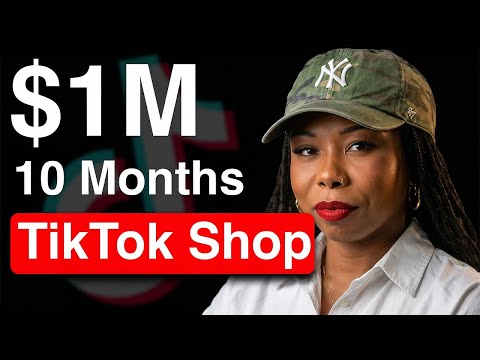
- $1M Total sales claimed
- $27k Months 1–5 sales
- Never stated Commission rate
- $15k–$30k Top product
The claim
That a TikTok Shop affiliate generated $1 million in sales in ten months, growing from $1,000 to $20,000-plus a month.
- Total sales in 10 months — "1 million in sales"
- Monthly sales, months 1–5 — $1k, $3k, $5k, $8k, $10k
- Monthly sales after month 5 — "20K plus"
- Sum of months 1–5 — $27,000
- Monthly average needed in months 6–10 to reach $1M — ~$195,000
- Lipstick sales per month — $15,000–$30,000
- First Crocs video — 100k views, "like 200 pairs"
- Commission rate — Never stated
- Her actual earnings — Never stated
- Costs of any kind — Never stated
What is this income idea?
Make short videos featuring products sold on TikTok Shop and earn a commission whenever a viewer buys through them, without holding inventory.
- The guest is a full-time TikTok Shop affiliate. She explains the model plainly: "being an affiliate, you're making content and they can choose to buy from your videos… And whenever you make a sale, you make a commission off of that."
- She chose affiliate over seller on purpose, saying sellers wait "30 days before you even get the money" and she "didn't have enough revenue or enough capital" to fund orders in the meantime. That reasoning is sound and worth noting: the affiliate route carries no stock risk.
- Her first success was a phone holder she reframed as a content-creation tool. The video "didn't pop off till like three months later", then "hit over a million views" and "did thousands in sales". She studied why it worked and built a method around fast hooks and visual appeal.
- Her filming setup is deliberately simple: an iPhone 14 Pro, the back camera, a large window for natural light, and calm background music on "98% of my videos". Her current best sellers are a lipstick, sweatpants and Crocs.
- Brand relationships carry a lot of the weight. After strong early Crocs videos, the brand "reached out to solidify a partnership, send more product, and raise my commission", and during Black Friday she asked brand partners to "put some ad spend behind my videos".
- Her next step is to stop being only an affiliate: she plans to become a seller "within the next six months" to control inventory, ads and margin.
Film attractive, quick-hook videos of products already selling on TikTok Shop and take a cut of each sale. The cut itself is never named.
- Join as an affiliate — No inventory, no 30-day wait
- Pick products — Brands with ad budgets
- Hook in 3 seconds — Visual or relatable
- Film on a phone — Window light, calm music
- Study what pops — Copy winning patterns
- Get noticed by brands — Higher commission, ad spend
- Earn commission — Rate never stated
- Become a seller — Her stated next step
A clear content method. The money at the end of it is described only as sales, never as earnings.
Sales volume makes a great headline and a poor income figure.
The lesson underneath the number
- There is useful advice in this conversation. She chose the affiliate route for a clear reason: no stock, no thirty-day wait for payouts, no capital tied up in orders. Her filming setup is a phone by a window. She studies what works and copies the structure, not the product. She uses visual hooks, like a striking lipstick or an object in the background, because they hold attention for three seconds without a sales pitch. All of this is specific and cheap to try.
- She is also open about how slow the start was. Her first hit sat for three months before it took off, and her early months were $1,000 and $3,000 in sales. That kind of detail is rarer than it should be in this genre.
- The headline is the problem. "$1 million in sales" for an affiliate means $1 million of other companies' products sold through her links. Her share is a commission, and she says so in the first two minutes. But the rate never comes up, so the figure that matters to a viewer, what she took home, is missing. A creator earning 10% on $1 million in sales has earned about $100,000 before tax over ten months. That is a strong result, but it is a different claim from the one the title makes.
- The figures also do not add up on their own terms. Her own monthly progression reaches about $127,000 across ten months if "20K plus" means around $20,000. Reaching $1 million would need roughly $195,000 a month for the last five months. One of them is probably loose: either "20K plus" meant much more, or the million is rounded up, or it counts something else. The interview moves on without asking. A good part of her later sales also came with brand help, through Crocs' own audience, brand campaigns and paid boosts on her videos, which a beginner would not have.
Whenever you make a sale, you make a commission off of that.
The sentence that turns a $1 million headline into an unknown income
The method, as she gives it
Practical, low-cost filming advice, with brand relationships doing more of the work than the title suggests.
The episode runs to about 28 minutes by its timestamps, and the text is visibly condensed after the fifteen-minute mark.
- Start as an affiliate, not a seller — Her reason is cash flow: sellers wait "30 days before you even get the money", and she lacked the capital to fund orders in the meantime. A sensible, low-risk entry point.
- Sell what you already use — She began with tripods, mics and lighting while improving her own filming, so the products matched what her audience watched her doing.
- Study the video that works — After her first hit she researched other affiliates' successful videos in the same category and focused on "the hook, the watch time, and things like that."
- Win the first three seconds — "That first three seconds has to be a hook or something relatable." Her own hooks are often visual, such as a bold red lipstick or an object in the background that prompts comments.
- Keep the production simple — An iPhone 14 Pro, the back camera and natural window light. Calm music on almost every video to match a laid-back page.
- Choose brands that advertise — She picked Crocs partly because "they put a lot of ad money behind their products", and asked partners to boost her videos with paid spend during Black Friday.
- Work the room at events — She skips the open bar at TikTok events and visits every brand booth. Relationships led to better commission and direct contact with brand teams.
The business model
Commission on sales made through her TikTok Shop affiliate videos, at rates set by each brand. The rate is never stated.
TikTok viewers who buy fashion, beauty and creator gear she features, mostly women drawn by visual hooks.
Calm, attractive, short videos that show a product clearly, with a quick hook in the first three seconds.
TikTok's feed, boosted at times by brands' own ad spend on her videos (Spark Codes) and by brand campaigns.
- Commission rate — Not a cost, but the missing number that turns sales into income
- Phone and filming gear — iPhone 14 Pro, lights, mics. Not priced
- Her own time — Full-time. Hours never given
- Tax — Never mentioned
- Returns — Whether returned orders reduce her commission is not discussed
- Event travel — Dubai, New York, California. Who paid is not said
An affiliate has few costs, which is the model's real strength. The problem is the revenue line: it is given only as sales, never as commission earned.
What you would actually need
Money
Very little: an iPhone 14 Pro and natural light. She chose affiliate work specifically because it needs no inventory capital.
The startup cost really is low, which is the strongest part of this model for a beginner. What the video leaves out is everything after the sale: the commission rate, tax on self-employed income, and whether returned orders reduce what she is paid.
Costs named or implied, never priced
- A recent smartphone (she uses an iPhone 14 Pro)
- Lights, mics and tripods she owns as well as sells
- Products to film, some sent free by brands
- Travel to events, including Dubai and New York Fashion Week; who paid is not said
- Self-employment tax on commission income
- Her own full-time hours
Time
Ten months on TikTok Shop, full-time, with the jump in month five.
Ten months is honest, and she admits her first hit took three months to take off. She also brings a sales-management background and has been an entrepreneur since 2018, which a beginner will not have.
Where the ten months went
- Months 1–4: $1k, $3k, $5k, $8k in sales
- A first viral video that sat for three months
- Month 5: the first $10,000 sales month
- After that: "20K plus" a month
- Ongoing: daily filming, research, brand messages
- Events in Dubai, New York and California
The part you must pay attention to
Every figure in this video is sales volume, not income.
She says it herself: affiliates earn "a commission off of" each sale. The commission rate is never given, so her actual earnings cannot be worked out from the video.
- Sales she says she drove — $1,000,000
- Her commission rate, never stated — ?%
Unknown
What she actually earned
The word "millionaire" in the title rests on reading sales volume as income. On TikTok Shop, an affiliate gets a percentage of each sale, set by the brand. If the rate were 10% (our assumption, for illustration only), $1 million in sales would mean about $100,000 in commission over ten months, before tax. At 20% it would be about $200,000. Both are good results, but neither is a million dollars, and the video gives no figure that tells us which is closer. She also says Crocs "raised my commission", which confirms the rate varies by brand and changes over time.
The second problem is the total itself. Her month-by-month figures are $1,000, $3,000, $5,000, $8,000 and $10,000 for months one to five, which add up to $27,000, then "20K plus" a month afterwards. Five more months at $20,000 gives about $127,000 in total. To reach $1 million in ten months, months six to ten would need to average about $195,000 each, nearly ten times what she describes. "20K plus" is open-ended, and her separate claim that one lipstick alone sells $15,000 to $30,000 a month suggests later months were higher than $20,000. But the interview never reconciles the figures, and the host never asks. The title has a smaller mismatch too: it says $20,000 a month "in 5 months", while she says month five was $10,000 and $20,000-plus came after.
- HER MONTHLY SALES, AS STATED
- Month 1 $1,000
- Month 2 $3,000
- Month 3 $5,000
- Month 4 $8,000
- Month 5 $10,000
- Subtotal $27,000
- Months 6-10 @ "20K plus" $100,000+
- --------------------------------
- Total implied ~$127,000
- Total claimed $1,000,000
- TO REACH $1M IN 10 MONTHS
- ($1,000,000 - $27,000) / 5
- = ~$195,000/mo
- SALES IS NOT INCOME (our assumption)
- $1M x 10% commission = $100,000
- $1M x 20% commission = $200,000
- Her rate: never stated
The economics
Sales figures throughout, and nothing about the share she keeps.
- Total sales claimed, 10 months — $1,000,000
- Months 1–5 sales — $1k / $3k / $5k / $8k / $10k
- Sum of months 1–5 — $27,000
- Monthly sales after month 5 — "20K plus"
- Ten-month total at $20k after month 5 — ~$127,000
- Needed per month, months 6–10, for $1M — ~$195,000
- Lipstick sales per month — $15,000–$30,000
- First Crocs video — 100k views, ~200 pairs
- Commission rate — Never stated
- Commission at an assumed 10% — ~$100,000 on $1M
Reconciling the monthly figures with the $1 million total
$1k + $3k + $5k + $8k + $10k + (5 × ~$20k) = ~$127,000, against "1 million in sales"
Her stated months reach about one eighth of the headline; months 6–10 would need to average ~$195,000 to reach $1 million
IncomeIdeaLab calculation from figures the guest gives in the opening minute
"20K plus" has no upper limit, and her separate figure of $15,000–$30,000 a month for one lipstick suggests later months were above $20,000. All figures are sales, and her income is a commission on them at a rate never given.
- Her commission rate, on any product
- Her actual earnings in any month
- Whether returned orders reduce her commission
- How much of her sales came from brand-paid ad boosts
- Tax on her income
- Who paid for travel to Dubai and New York
- Any dashboard or screenshot of the figures
- Her first Crocs video reached "100K views and sold like 200 pairs". That is about 2 sales per 1,000 views (our calculation), a useful real-world benchmark for anyone estimating what views turn into.
- Her claim that one lipstick alone does $15,000 to $30,000 a month in sales sits awkwardly with an overall monthly figure of "20K plus". If both are right, the later months must have been well above $20,000.
- Crocs was a new product for her, started "two or three weeks ago", yet is already her "top seller" and she expects it to "pass everything by the end of the year". The second part is a forecast.
- The claim that TikTok Shop "sales had grown over 400%" is something she heard at an event. No period or base is given, and we have not checked it.
Evidence status
Every substantive figure in the video.
- "1 million in sales" in 10 months — Guest — Sales volume, not income. Does not reconcile with her own monthly figures.
- Monthly sales of $1k, $3k, $5k, $8k, $10k — Guest — A believable, gradual climb. Sums to $27,000.
- "20K plus" a month after month five — Guest — Open-ended. At $20,000 the ten-month total is ~$127,000.
- $20,000 a month "in 5 Months" — Video title — She puts $10,000 in month five and $20,000-plus after.
- Lipstick: $15k–$30k in sales a month — Guest — Plausible for a top product, and higher than her overall monthly figure implies.
- Phone-holder video: 1M+ views, "thousands in sales" — Guest — No exact figure. Took three months to take off.
- First Crocs video: 100k views, ~200 pairs — Guest — A specific, useful conversion figure.
- Crocs raised her commission — Guest — Confirms rates vary. Neither the old nor new rate is given.
- Sellers wait 30 days for payouts — Guest — Her reason for choosing affiliate work. Not checked by us.
- TikTok Shop sales "grown over 400%" — Guest, repeating an event talk — Second-hand, with no period or base.
- Crocs will "pass everything by the end of the year" — Guest — A forecast.
- Commission rate and actual earnings — Nobody — Never stated. The figure the title implies.
What is actually proven?
The method is described clearly. The money is described only as sales.
- She explains that affiliates earn a commission, not the sale price.
- Her filming setup and hook method are specific and cheap to copy.
- A month-by-month sales climb from $1,000 to $10,000 over five months.
- Brand partnerships that raised her commission and boosted her videos with ad spend.
- Her monthly figures total about $127,000 over ten months, not $1 million.
- Month five was $10,000, not the $20,000 the title gives.
- Her commission rate, and so her income.
- Any screenshot or dashboard backing the figures.
What the headline doesn’t tell you
"Millionaire" here means sales she drove for other companies.
- $1M is sales, not income. — She earns a commission on it.
- The rate is never stated. — So her earnings are unknown.
- Her months add to ~$127k. — Not $1 million.
- Month five was $10k. — The title says $20k.
- Brands paid to boost her videos. — Spark Codes at Black Friday.
- Crocs came to her. — After she was already a Star Creator.
- She has a sales background. — And has run businesses since 2018.
- Her first hit took three months. — She says so herself.
Should you try it?
Cheap to start, but judge it by commission, not sales
The filming and hook advice is worth taking. Before you plan around the income, find out the commission rate on the products you would actually promote.
- Low startup cost — 9 — A phone and a window. No inventory.
- Specificity of method — 7 — Hooks, setup, music, product choice all described.
- Honesty about the slow start — 7 — Gives $1,000 and $3,000 months and a three-month lag.
- Income disclosure — 1 — No commission rate, no earnings figure, in any month.
- Internal consistency — 2 — Monthly figures reach ~$127k against a $1M claim.
- Title accuracy — 3 — Sales labelled "millionaire"; title gives $20,000 for month five; she states $10,000.
- Disclosure of advantages — 5 — Sales background stated; brand-paid boosts mentioned.
- Beginner replicability — 5 — The method transfers; brand partnerships come later.
- This model has a genuinely low barrier. You need a phone, decent light and the patience to study what works. She explains the reason to start as an affiliate clearly: no stock and no cash tied up waiting for payouts. If you are curious about TikTok Shop, this is a sensible way to test it.
- Take the practical advice: hook in the first three seconds, keep videos visually clean, study the videos that already sell in your category, and pick products from brands that are already advertising. Her figure of about 200 pairs from a 100,000-view video is a useful benchmark for what views turn into.
- Then translate every number she gives into commission before you get excited. $1 million in sales at a rate you do not know is not a figure you can plan around. Look up the actual commission on the products you would promote, multiply, and subtract tax. At 10%, the $10,000 sales month she calls her breakthrough would have earned about $1,000 (our assumption, for illustration).
- Finally, notice how much of her later growth came from brands: Crocs' existing audience, a raised commission, brand campaigns and paid boosts on her videos. Those relationships came after she had results, so they are not a starting point. Expect your early months to look like her first four, and expect the first good video to take time.
Passive or automated?
Automation
TikTok handles checkout and delivery; every video is still made by hand.
Passive potential
Old videos can keep selling, but income depends on new content.
She does describe one passive effect: the phone-holder video "made me money for months" after it took off. But that is the exception. Her income depends on filming new videos, testing hooks, following which products brands are pushing, answering brand messages through the seller portal and LARK, and attending events to build relationships. She calls herself full-time. The platform handles payment and shipping, and that is the only part that runs on its own.
- Filming and editing new videos continuously
- Researching which videos and products are working
- Managing brand messages and partnership groups
- Attending events to meet brands
- Choosing products as brand ad budgets shift
Recommended beginner experiment
Test the method, and measure it in commission.
- Find the commission rate first. — For every product you plan to promote.
- Start with products you already use. — As she did with filming gear.
- Film on your phone by a window. — Her whole setup.
- Write a three-second hook for each video. — Visual or relatable.
- Study three winning videos in your niche. — Copy the structure, not the product.
- Track sales per 1,000 views. — Her Crocs video did about 2.
- Record commission, not sales. — That is your income.
- Give it several months. — Her first hit took three to land.
Our verdict: 4/10
Useful filming advice under a sales figure presented as income the commission rate is never given, and the monthly numbers do not reach $1 million
Credited for explaining plainly that affiliates earn a commission rather than the sale price; for a clear reason to start as an affiliate rather than a seller; for a cheap, specific filming method built on fast hooks, a phone and natural light; for giving low early months of $1,000 and $3,000 and admitting her first hit took three months to land; and for one useful conversion figure of about 200 pairs from a 100,000-view video. Marked down because the "$1 million" and "millionaire" framing is sales volume and her commission rate is never stated, so her income cannot be derived; because her own month-by-month figures total about $127,000 over ten months, far short of $1 million, and the gap is never addressed; because the title puts $20,000 a month at month five when she puts $10,000 there; and because brand-paid boosts and partnerships, which a beginner would not have, carry much of the later growth.
As a practical guide to making TikTok Shop affiliate videos, this interview is useful. The guest explains why she chose affiliate work over selling: no stock and no thirty-day wait for payouts. Her setup is a phone by a window, her hooks are quick and visual, and she studies successful videos in her category rather than guessing. She is open about a slow start, with $1,000 and $3,000 months and a first viral video that sat for three months before taking off. Her figure of about 200 pairs of Crocs from a 100,000-view video is a real benchmark. The headline is where it falls down. "$1 million in sales" for an affiliate means $1 million of other companies' products, and she says herself that her share is a commission. The rate is never given, so what she earned is unknown. At an illustrative 10% it would be about $100,000 over ten months before tax, which is a good result but nothing like the title. Her own monthly figures also stop well short of the total: $1,000, $3,000, $5,000, $8,000 and $10,000, then "20K plus", which comes to around $127,000 over ten months. Reaching $1 million would need about $195,000 a month for the last five, and nobody asks about the difference. The title also moves her $20,000 month from month six to month five. Much of her later growth came with help from brands: a raised commission, Crocs' own audience and paid boosts on her videos. Take the method, look up the commission on what you would sell, and judge the opportunity by that number instead.
- Sales claimed — $1M in 10 months
- Sales implied by her months — ~$127,000
- Month 5 sales — $10,000
- Top product — $15k–$30k sales/month
- Commission rate — Never stated
- Actual earnings — Never stated
- Startup cost — A phone
- Beginner suitability — Method yes, headline no
Sources
- TikTok Shop Millionaire: From USD 1,000 to USD 20,000/Month in 5 Months — Her Exact Growth Strategy — Shop House — YouTube video, 2025-12-29
- FTC — Guides Concerning the Use of Endorsements and Testimonials — Regulatory guidance on endorsements and earnings claims