Affiliate / TikTok Shop · Claim Review
“How I Film Viral TikTok Shop Videos (My Full Process)”
What we found: The $24,000 TikTok Shop Month Is Three Weeks of Commission, and the Six Hours Leave Out the Editors and Poster
About $160,000 of sales at an implied 15% commission across three accounts. The six hours a week are the creator's filming time; editing and posting are done by others whose cost is not stated.
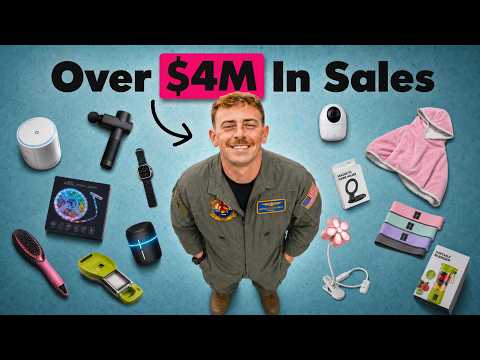
- $24,000 Commission
- ~$160,000 Sales driven (GMV)
- 15% Implied commission rate
- Cost not stated Editors and poster
The claim
That a TikTok Shop affiliate system filmed in a garage earns about $24,000 a month in commission for under six hours of work a week.
- Opening statement — "Averaging $24,000 a month in commission" within two months, under 6 hours a week
- Later statement — $24,000 in commission "in I think the last 3 weeks"
- Sales driven in those three weeks — About $160,000 GMV
- Commission as a share of sales — 15%
- Creator's working time — 6 hours a week, for 3 weeks
- Commission per creator hour — ~$1,333 (18 hours)
- Three weeks' pace over 30 days — ~$34,300
- Accounts — Three, one shirt colour each
- Videos per filming session — Over 60
- Editors and poster — Named; number and cost not stated
- Returns, tax, net income — Not stated
What is this income idea?
Film short TikTok Shop affiliate videos of free product samples in bulk, across several accounts, and earn a commission on every sale made through them.
- TikTok Shop affiliates promote products listed on the platform and are paid a commission on each sale their videos generate. The creator receives products as samples, films them, and earns on the resulting sales, which TikTok reports as GMV (gross merchandise value).
- The opening states the result: "in less than two months I started averaging $24,000 a month in commission on TikTok Shop", for "less than 6 hours a week". A minute later, the method is described as having made "24,000 in commission" in "I think the last 3 weeks", on about $160,000 of GMV, from a "dead" account the creator says they revived.
- The system is volume over polish. The creator rates their own videos six out of ten for quality and nine out of ten for volume: kitchen products filmed in a garage, no long demonstrations, over 60 videos per session. One day a week is for new products, the next for refilming products that sold.
- Three accounts run side by side, each with its own shirt colour. The creator films about two takes per product in each shirt with different hooks, then sends the raw footage to editors, who pass finished videos to a poster trained to upload them. AI prompts with ChatGPT or Claude are used to list a product's features and suggest hooks.
- Samples move through a shelf system: to film, filmed but worth revisiting, and done, with the last group sold on Facebook Marketplace or donated. The creator plans an assistant, a dedicated space in a new house, and eventually 15 accounts with other creators filming. The video twice invites viewers to message the creator about one-to-one coaching.
Film many quick product videos across three accounts, hand editing and posting to a team, and earn a cut of every sale; the creator puts their own share at $24,000 in three weeks.
- Receive samples — Shelved by status
- List the day's products — Pen and paper
- Prompt for hooks — ChatGPT or Claude
- Film in three shirts — One per account
- Editors cut the takes — Cost not stated
- Poster uploads — Three accounts
- Refilm what sells — Next day
- Earn commission — ~15% of GMV
A real production line. Two of its stages are done by people outside the six hours.
A production line, measured by one person's shift
The lesson underneath the number
- The useful part of this video is the system. Rate your quality and volume deliberately and cut what does not pay for its time. Queue samples on a shelf by status. Film new products one day and refilm proven ones the next. Write the list the night before. Use a different shirt per account so editors can sort the footage. None of this needs the headline figure to be worth copying.
- The headline figure needs more care. The opening says $24,000 a month on average; the body says $24,000 in "I think the last 3 weeks", on an account that was dead until recently. Those are two different claims about the same number. A three-week run on a revived account is a good result and a short record. No earlier months are given.
- The six hours are equally specific about what they count. They are the creator's time in front of the camera. Behind them are editors cutting dozens of takes and a poster uploading to three accounts. That is a reasonable way to run the business and the creator describes it plainly as "buying back my time". It means the $24,000 is what a small team produced, and its cost is not stated.
- The creator is open about the other reason for the system: it "gives me more time to work with the clients that I coach one-on-one and still gives me the results to prove that I can teach these people." The coaching is offered twice, by message on Instagram. Viewers can weigh the figures knowing they are also the creator's case for that coaching.
I am deliberately lowering the quality of my videos for the goal of doing more volume.
The creator, on the trade-off the system is built around
The filming system, as the creator describes it
Specific enough to copy, from shelf to upload.
No cost is given for the editors, the poster or any equipment.
- Trade quality for volume, on purpose — The creator rates their output six out of ten for quality and nine out of ten for volume, and names what is cut: a proper setting for each product and long demonstrations. "The time that it would take isn't worth the potential loss of volume."
- Run samples through a shelf queue — Top shelf to film, middle shelf filmed but worth revisiting, bottom shelf to sell on Facebook Marketplace or donate. The creator calls the current state "a really big mess" and plans to hire for it.
- Split new filming from refilming — One bulk day for products not filmed before, then a refilm day for products that converted or "made a couple sales". Putting more effort behind proven products is sound practice.
- Write the list the night before — A pen-and-paper list of products in filming order, so the session runs without stopping to decide.
- One shirt per account — Three accounts, three colours. About two takes per product in each shirt, with different hooks and styles, so editors know which footage belongs to which account.
- Hand off editing and posting — Raw footage goes to editors, who cut mistakes and file finished videos for a poster "trained on how to post the videos on these accounts". This is the step that keeps the creator's own time to six hours.
- Use AI for features and hooks — A photo of the product goes into a ChatGPT or Claude prompt that returns features, benefits, urgency and hook ideas. The creator says they skip this for products they already know.
The business model
TikTok Shop affiliate commission on sales made through the creator's videos, about 15% of GMV on our arithmetic.
TikTok users buying household and food products through short videos; the sellers pay the commission.
Fast, volume-driven product videos that put many sample products in front of buyers across three accounts.
Three TikTok accounts posted by a trained poster, with refilming focused on products that already sell.
- Editors — Named; number and cost not stated
- Poster — Named; cost not stated
- Gear — Ring light, tripod, microphones; not priced
- Samples — Received free; leftovers resold or donated
- Returns — Not mentioned
- Tax — Not mentioned
The model needs no stock and little gear. Its main cost is the people who edit and post, and the video gives no figure for them.
What you would actually need
Money
"You don't need anything other than a phone" to start; a ring light, tripod, small table and compact microphones as you progress.
The starting cost is genuinely low: products arrive as samples and the gear is modest. The system described, though, depends on paid editors and a poster across three accounts, and no figure is given for any of them. That is the main cost of producing 60-plus videos a session.
Costs the video does not state
- Editors, number and rate not given
- A poster for three accounts
- Ring light, tripod and microphones
- AI subscriptions, where paid tiers are used
- Commission lost on returned orders
- Income and self-employment tax
- A planned assistant and dedicated space
Time
Under six hours a week, from a garage.
The six hours are the creator's filming. Editing, posting, sample handling and product selection sit with others or are not counted, and the creator also coaches clients, builds a brand and makes other content. A solo beginner would do all of it.
What the six hours leave out
- Editing 60-plus takes a session
- Posting to three accounts
- Requesting and choosing samples
- Unboxing, shelving and reselling samples
- Tracking which products convert
- The time it took to learn what converts
The part you must pay attention to
The same $24,000 is called a monthly average and a three-week total.
The opening: "averaging $24,000 a month in commission". A minute later: the method "in I think the last 3 weeks made me 24,000 in commission".
- Commission, last three weeks — $24,000
- GMV, same three weeks — $160,000
15%
Implied commission rate
The load-bearing assumption is that three weeks of results describe a normal month. If $24,000 came in 21 days, the same pace over 30 days is about $34,300, so the two statements do not reconcile with each other. Either way the period is short, on an account the creator says was revived recently, and no month-by-month figures are given. The $24,000 is also commission before returns, tax and the cost of the editors and poster who produce and upload the videos.
The commission rate checks out as plausible: $24,000 on $160,000 of sales is 15%. What the figures support is a strong three-week run on one revived account, stated by the creator. They do not show an established monthly average, and they describe gross commission earned by a small team, not the creator's net income for six hours of work.
- THE TWO STATEMENTS
- Opening "$24,000 a month"
- Later $24,000 in ~3 weeks
- OUR ARITHMETIC
- $24,000 / $160,000 = 15%
- $24,000 / 21 x 30 = ~$34,300
- 6 hrs x 3 weeks = 18 hrs
- $24,000 / 18 hrs = ~$1,333/hr
- NOT IN THE 18 HOURS
- Editors not stated
- Poster not stated
- Returns not stated
- Tax not stated
The economics
A clean commission rate, a short period, and no costs.
- Commission, last ~3 weeks — $24,000
- GMV, same period — ~$160,000
- Implied commission rate — 15%
- Creator hours — 6 a week, 18 in total
- Commission per creator hour — ~$1,333
- Weekly commission — ~$8,000
- Accounts — 3
- Editors, poster, returns, tax — Not stated
Reconciling the two $24,000 statements
$24,000 ÷ 21 days × 30 days ≈ $34,300; $24,000 ÷ $160,000 = 15%
If the $24,000 is three weeks, a full month at that pace is about $34,300, not $24,000; the commission rate of 15% is consistent with the stated sales
IncomeIdeaLab calculation from the commission, sales and period stated in the video
The creator hedges the period ("I think the last 3 weeks"), so the opening monthly average and the three-week total may describe the same figure loosely. Either way it is gross commission over a short period on one revived account, before returns, tax and team costs.
- How many editors are paid, and at what rate
- The poster's pay
- Commission reversed on returned orders
- Monthly results before the last three weeks
- How the $24,000 splits across the three accounts
- Income from reselling samples
- Tax on the commission
- A 15% commission rate is within the range TikTok Shop sellers commonly offer affiliates, so the commission and GMV figures are consistent with each other.
- The creator says this filming is "just one side" of their content and the one "yielding the most income", so other income exists but is not quantified.
- At over 60 videos a session across three accounts and about two takes per product per shirt, a session covers roughly ten products on our arithmetic. The creator does not state a figure.
- The opening promises the process "to edit and post all of these videos". Editing and posting are described as a hand-off to editors and a poster; the editing method itself is not described.
- The title says "viral". No view count for any video is given.
Evidence status
Every substantive claim in the video.
- Averaging $24,000 a month in commission — Creator, opening — Later given as a three-week figure. We could not check it from the video.
- $24,000 in commission in about three weeks — Creator — A strong short run. No other months given.
- About $160,000 GMV in the same three weeks — Creator — Consistent with the commission at 15%.
- Under six hours of work a week — Creator — The creator's filming time. Editing and posting are done by others.
- Account revived from dead with this method — Creator — Stated plainly. Means the record is short.
- Over 60 videos per filming session — Creator — Plausible at two takes per product per account.
- Six out of ten quality, nine out of ten volume — Creator — A candid self-rating.
- Plans for 15 accounts with other creators — Creator — A long-term plan, described as such.
- Editors, poster, returns, tax — Not stated — No figure is given for any of them.
What is actually proven?
The method is described in detail. The money is stated.
- $24,000 in commission on about $160,000 of sales over about three weeks.
- Those two figures imply a 15% commission rate.
- Three weeks at that pace is about $34,300 over 30 days, not $24,000.
- The creator films for six hours a week; editors and a poster do the rest.
- The filming system is described step by step.
- Team costs, returns, tax and any month before the last three weeks.
What the headline doesn’t tell you
The figure is real-sounding and specific. It is also gross, short and shared.
- A month or three weeks? — The video says both.
- Commission, not profit. — Before returns and tax.
- Six hours of filming. — Editors and a poster do the rest.
- Three accounts. — Not one.
- A revived account. — A short track record.
- One side of the business. — Other income is not quantified.
- No view counts. — For a title about viral videos.
- Coaching is offered twice. — The creator says so.
Should you try it?
A low-cost model with a copyable system, at a much smaller starting scale
Copy the shelf queue, the refilm day and the volume-first mindset. Expect to do the editing and posting yourself, on one account, and to earn far less while you learn what converts.
- Specificity of the filming system — 8 — Shelf queue, refilm day, shirt per account.
- Consistency of the headline figure — 4 — $24,000 given as a month and as three weeks.
- Commission and GMV agree — 7 — 15%, a plausible rate.
- Cost disclosure — 1 — Editors and poster named, not priced.
- Honesty about the trade-offs — 7 — Six out of ten quality, a messy shelf, a revived account.
- Beginner accessibility — 5 — Cheap to start; the team and three accounts come later.
- TikTok Shop affiliate work is cheap to start: samples arrive free and a phone is enough. The parts of this system that transfer directly are the shelf queue, the split between new filming and refilming what sells, the night-before list, and the decision to favour volume over polish. Those cost nothing to adopt.
- The parts that do not transfer at first are the team and the scale. A beginner will edit and post their own videos, on one account, so the hours per video are several times what the creator describes. The six hours a week is a result of hiring, not a starting point.
- Treat the $24,000 as a three-week result on a revived account, before returns and tax. It shows the ceiling is high for someone who already knows which products convert. It does not tell you what a normal month looks like, or what is left after paying editors and a poster.
Passive or automated?
Automation
Editing and posting are delegated to people, not automated.
Passive potential
Commission depends on a steady flow of new videos.
The system reduces the creator's own time by handing work to editors and a poster, which is delegation rather than automation. Earnings come from a continuous flow of new videos: 60-plus a session, refilming of products that sell, and samples that keep arriving. The creator describes plans to hire further, for sample handling and eventually product selection, which would move more of the work to other people. Older videos can keep selling for a while, but the video gives no figure for how much income arrives without new filming.
- Filming 60-plus takes a session
- Editing every take
- Posting to three accounts
- Choosing and requesting products
- Handling and reselling samples
Recommended beginner experiment
One account, a month, and your own numbers.
- Start on one account. — Three comes later.
- Set up the shelf queue. — To film, revisit, done.
- Film in bulk once a week. — Then refilm what sold.
- Time your editing. — The creator does not do it.
- Track GMV and commission per video. — Find your own rate.
- Watch returns. — Commission on returned orders is usually lost.
- Set aside tax. — Not mentioned in the video.
- Hire only from proven commission. — Price an editor first.
Our verdict: 5/10
A detailed filming system, with a $24,000 figure that covers three weeks and a team the commission and sales agree at 15%; the costs and the longer record are not stated
Credited for a specific, copyable production system, including the shelf queue, the refilm day, the night-before list and one shirt per account; for a candid six-out-of-ten quality rating; for stating that the account was revived recently; for commission and GMV figures that agree with each other at 15%; and for disclosing the coaching offer in plain terms. Marked down because the $24,000 is called a monthly average in the opening and a three-week total later, which do not reconcile; because the six hours a week count only the creator's filming while editors and a poster handle the rest at a cost not stated; because returns and tax are not mentioned; and because no month before the last three weeks is given.
As a description of how to film TikTok Shop videos at volume, this is one of the more practical videos of its kind. The creator explains what they cut and why, rates their own quality honestly, queues samples on a shelf, films new products one day and refilms proven ones the next, and uses a different shirt per account so editors can sort the takes. That is a system a beginner can copy at no cost. The figures need reading carefully. The opening says $24,000 a month on average; the body says $24,000 in about three weeks on roughly $160,000 of sales, from an account revived recently. The commission rate those figures imply, 15%, is plausible, and three weeks at that pace would be about $34,300 over 30 days, so the two statements do not describe the same thing. The six hours a week are the creator's filming time; editing and posting across three accounts are done by others, and no cost is given for them, for returns or for tax. Take the system, start on one account, and judge the income from a full month of your own commission after costs.
- Commission, ~3 weeks — $24,000
- GMV, same period — ~$160,000
- Implied commission rate — 15%
- Three weeks' pace over 30 days — ~$34,300
- Creator hours a week — Under 6
- Editors and poster — Cost not stated
- Beginner suitability — Fair, at a smaller scale
Sources
- How I Film Viral TikTok Shop Videos (My Full Process) — YouTube video, 2026-06-17
- FTC — Guides Concerning the Use of Endorsements and Testimonials — Regulatory guidance on earnings claims and endorsements