Ecommerce / Shopify Brand · Claim Review
“How I Make $100K a MONTH on my Shopify Store | Renee Alyce”
What we found: A Skincare Brand’s $120K Month Is Sales With No Costs Given, Told by the Course That Taught Her
The title says $100K, the founder says $120K, and the year “almost” reached seven figures. Product cost, ad spend, shipping and margin never come up, and every lesson credits the channel’s own paid courses.
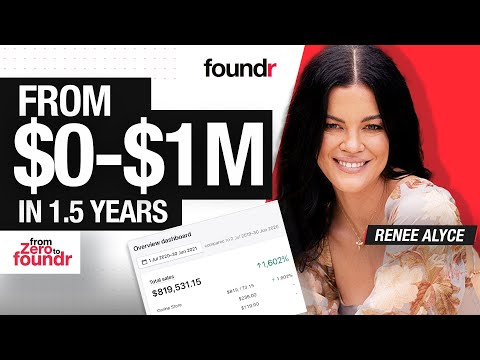
- $120k Current monthly sales
- <$1M Second-year sales
- $12.9k First press day
- None Costs or profit
The claim
That a founder with no business experience built a skincare brand from a single newspaper feature to $120,000 a month in sales, using the channel’s courses.
- Monthly sales now — ~$120,000
- Title figure — $100,000 a month
- Second year of trading — “Almost” seven figures
- Implied average month in that year — Under ~$83,000
- Sales on the day of the press feature — ~$12,900
- Units in stock that day — 29
- Influencers sent free product / posted — 30 / ~15
- Revenue drop during the trademark problem — ~50% for a few months
- Product cost, ad spend, shipping, margin — Not given
- Currency of the figures — Not stated; the business is in Australia
What is this income idea?
Develop a single distinctive skincare product with a compounding pharmacist, seed it with free samples to micro-influencers, and grow a Shopify brand on press, reviews and Facebook ads.
- The founder spent about six years living on a remote Pacific island, where she says a sea cucumber extract cleared a skin problem. Back in Australia with “just a suitcase”, she worked night shifts at a casino on about 21 an hour for two years, saving “a couple hundred dollars every week” to fund formulation.
- After meeting six compounding pharmacists, she found one willing to develop the formula. The first product, a regeneration serum, took about two years to develop and trial. She describes no prior business, skincare or social media experience.
- She launched around August 2019 by sending free serums to 30 micro-influencers without asking them to post. About 15 shared it on their stories, and she had about 400 followers.
- About three weeks in, an influencer’s contact led to a Daily Mail story. Sales that day reached about $12,900 — with 29 units in stock. Bottles, boxes and labels were rushed in by arrangement with local suppliers, every order went out by express post, half of them to the UK, and “I lost a lot of money on shipping”.
- Growth after that is credited to reviews, Facebook ads she runs herself, email flows and copywriting, each tied to a named course from the channel. A customer’s request led to a third product, a calming cream.
- In the second year a trademark problem stopped her using the brand name and influencer marketing for about eight months; a rushed rebrand broke her ads and sales fell about 50% for a few months. She says the business “almost” reached seven figures that year and is now doing $120,000 a month, with wholesale deals in Dubai and Asia under discussion.
A distinctive product, free samples to small influencers, one lucky press story, then reviews and ads — reported as sales, never as profit.
- Fund formulation — 2 years of night shifts
- Partner a pharmacist — After six tries
- Seed 30 influencers — ~15 posted
- Press feature — ~$12,900 day
- Express-ship everything — Lost money doing it
- Reviews and Facebook ads — Self-run
- Trademark setback — Sales −50%
- $120,000 a month — Sales, no costs
A real growth story whose every number is on the revenue side.
A real launch story, framed as a course advertisement
The lesson underneath the number
- There is much here that is specific and useful. She funded formulation from a wage, found a pharmacist willing to work on an unusual ingredient after five who were not, and launched with 30 free samples sent with a personal note and no request to post. She pre-arranged local suppliers who could rush stock if demand spiked, which is the only reason a 29-unit inventory survived a $12,900 day. And she names her mistakes: no pixel installed before the spike, express-shipping half the orders to the UK at a loss, and a do-it-yourself rebrand that broke her ad account.
- What the interview never asks is what any of it costs. The founder gives sales on the first big day, sales in the current month, and a rough annual sales figure. There is no product cost, packaging cost, shipping cost, ad spend, refund rate, staffing figure or profit. The title rounds the monthly figure down to $100,000; it is still a sales number.
- The arithmetic that is possible points the same way. A second year that “almost” reached seven figures averages under about $83,000 a month, so $120,000 is a strong current month rather than a typical one — consistent with her account of a few months at half the usual level during the trademark problem. The currency is not stated, for a business based in Australia.
- The framing matters. This is the channel owner’s own series, interviewing “one of our start and scale students”. Nearly every step is credited to a named paid course — the launch, the review app, the ads, the copy, the email flows — and the episode opens with a legal disclaimer and closes with a link to the company’s training. The disclaimer and the link are both disclosures, and they are clear. They also mean the video’s purpose is to sell the courses, and the omission of costs and profit suits that purpose.
Half of the orders were to the UK so I lost a lot of money on shipping, but this was my one chance.
The cost side of the $12,900 day
The path, as she tells it
From formula to $120,000 a month in sales.
No cost, margin or profit is given at any stage.
- Self-fund the product — Two years of casino night shifts, saving “a couple hundred dollars every week” for formulation and research. The product took about two years to develop with a compounding pharmacist.
- Seed micro-influencers with no ask — Free serums to 30 micro-influencers with a personal note and no request to post. About half posted to their stories in the first week. Cheap, specific and replicable.
- Prepare suppliers for a spike — With overseas minimums of about 5,000 units out of reach, she lined up local bottle, box and label suppliers who agreed to rush-produce on demand. That arrangement is what let a 29-unit stock survive a $12,900 day.
- Ship fast, even at a loss — Every order went by express post, half of them to the UK. “I lost a lot of money on shipping,” she says, and then: “don’t ever do that.” A 30-day money-back guarantee was offered; she reports no refund requests.
- Install tracking before you need it — She had not installed the Facebook pixel before the press spike, so thousands of visitors could not be retargeted. Her clearest practical lesson.
- Grow on reviews, ads and email — A review app, self-run Facebook ads, email flows and customer-led copy, each credited to a course from the channel. No ad spend or return figure is given.
- Survive a trademark problem — About eight months without the brand name or influencer marketing, a self-run overnight rebrand that broke the ad account, and sales down about 50% for a few months before recovering.
The business model
Direct-to-consumer sales of three sea cucumber collagen skincare products through a Shopify store, with wholesale to retailers in Dubai and Asia under discussion.
Consumers in Australia and the UK, reached through press, influencers, reviews and Facebook ads.
A minimal, fragrance-free formula built around an ingredient she describes as not previously used in skincare.
Micro-influencer seeding, one national press feature, a review app, Facebook ads run by the founder, and email flows.
- Product formulation and manufacture — With a compounding pharmacist; not priced
- Packaging — Bottles, boxes and labels, initially rush-ordered; not priced
- Shipping — Express post, half to the UK at launch; “lost a lot of money”
- Facebook ads — Self-run; spend not given
- Software — Store, review app, email platform; not priced
- Courses — At least five from the channel; prices not given
- Trademark dispute and rebrand — Cost not given; sales fell ~50% for months
No cost line appears anywhere in the interview. For a product business running on paid ads and international shipping, that leaves the economics unknown.
What you would actually need
Money
Savings of a couple hundred dollars a week over two years for formulation; enough for 30 sample products; then money from the first big day to buy stock.
The launch was genuinely small. Everything after it — stock at $120,000 a month in sales, ad spend, express shipping, a rebrand, staff and several courses — is unpriced, so the capital a business at this size consumes cannot be judged from the video.
Named, not priced
- Formulation and trials with a compounding pharmacist
- 30 free serums to influencers
- Rush-ordered bottles, boxes and labels
- Express post, half of it to the UK
- Facebook ad spend
- Review app and email platform
- Several paid courses from the channel
- Trademark dispute and rebrand
Time
Two years of night shifts and product development before launch; about two years from launch to the interview.
Roughly four years from first saving to $120,000 months, much of it while employed full-time. She still runs the ads, answers customer emails and works on new products.
What the timeline includes
- ~2 years saving and formulating
- ~1.5 years of product trials
- Launch around August 2019
- Press spike three weeks after launch
- ~8 months of trademark restrictions
- A few months at about half the sales
- Self-run ads and customer emails throughout
The part you must pay attention to
Every figure is sales. The year averaged well below the headline month.
The headline month is given twice as $120,000 — once by the host, once by the founder — and as $100,000 in the title. None of the three is described as profit.
- Second-year sales, as stated — “Almost” $1,000,000
- Months — 12
< ~$83,000 a month
The year’s average, below the $120,000 headline
The claim rests on sales being the measure of the business, and nothing in the video lets a viewer see past them. A skincare brand selling through Facebook ads, express-shipping internationally and buying stock in rush quantities carries product, packaging, shipping, payment, platform and advertising costs, plus at least one compounding pharmacist and help with fulfilment. None is given. The founder herself says she “lost a lot of money on shipping” on the $12,900 day, which means the most celebrated day in the story may have made little or nothing.
The $120,000 month is plausible alongside her own account: a year that “almost” reached seven figures, with a few months at half the normal level during the trademark problem, fits a business now running above its annual average. The video records a strong current month, in an unstated currency for an Australian business, with no margin attached. Readers cannot tell from it whether the brand makes money.
- THE HEADLINE THREE WAYS
- Title $100,000/mo
- Host intro $120,000/mo
- Founder $120,000/mo
- Described as profit never
- THE YEAR (OUR ARITHMETIC)
- "Almost seven figures" < $1,000,000
- / 12 months < ~$83,000/mo
- $120,000 x 12 = $1,440,000
- -> current month well above
- the year it came from
- THE FIRST BIG DAY
- Sales ~$12,900
- Units in stock 29
- Shipping express, ~half UK
- Her words "lost a lot of money"
The economics
Three sales figures and no cost figure.
- Current monthly sales — ~$120,000
- Title figure — $100,000 a month
- Second-year sales — “Almost” seven figures
- Implied average month in that year — Under ~$83,000
- Annualised current month — ~$1,440,000
- Press-day sales — ~$12,900
- Stock on press day — 29 units
- Overseas minimum order — ~5,000 units
- Pre-launch savings rate — “A couple hundred dollars” a week
- Costs, ad spend, profit — Not given
Placing the headline month in its year
“Almost” $1,000,000 ÷ 12 ≈ under $83,000 a month, against $120,000 now
The current month runs roughly 45% or more above the average of the year she describes
IncomeIdeaLab calculation from the founder’s own annual and monthly figures
The annual figure is given only as “almost” seven figures and the currency is not stated. All figures are sales; nothing in the video allows a profit estimate.
- Product, packaging and manufacturing cost per unit
- Facebook ad spend and return
- Shipping cost, including the express UK orders
- Refund and return rates after the launch period
- Staff, fulfilment and pharmacist costs
- The price of the courses credited throughout
- Profit in any period
- The title’s $100,000 is lower than the $120,000 stated by both host and founder. Neither is described as profit.
- At about $120,000 a month, a year would be about $1.44 million — well above the “almost” seven figures she gives for the second year, consistent with the trademark-related dip she describes.
- Pre-launch funding was “a couple hundred dollars every week” for about two years. At $200 a week that is roughly $20,800, our assumption on her approximate figure.
- The $12,900 day came with 29 units in stock, rush-ordered packaging and express shipping, half to the UK. She says it lost money on shipping; the net result of the day is not given.
- Product benefits described in the interview, including skin and eczema results, are personal and customer accounts rather than measured outcomes. She says herself that the published research she cites is “not making any claims”.
Evidence status
Every substantive figure in the video.
- $100K a month — Video title — Differs from the $120K stated in the interview. Sales, not profit.
- $120K a month now — Host and founder — Plausible as a current month; no costs attached.
- “Almost” seven figures in year two — Founder — Implies an average under ~$83K a month.
- ~$12,900 on the press day — Founder — A vivid, specific account. Shipping made it costly.
- 29 units in stock that day — Founder — Explains the rush orders and express shipping.
- 30 influencers seeded, ~15 posted — Founder — Specific and replicable.
- No refund requests on the launch orders — Founder — Stated for the launch batch only.
- Sales down ~50% during trademark problem — Founder — A frank admission of a setback.
- Wholesale deals in Dubai and Asia — Founder — “About to sign”; not concluded.
- The courses made it possible — Founder, on the course seller’s channel — A testimonial; the channel sells the courses.
- Costs, ad spend, profit — Nobody — Absent from the whole interview.
What is actually proven?
A launch story told in sales. The economics are absent.
- Sales of about $120,000 in a current month.
- About $12,900 in sales on the day of a press feature.
- A second year that came close to seven figures.
- The year averaged under ~$83,000 a month.
- The interview is a student testimonial on the course seller’s own channel, with a disclaimer.
- Product cost, ad spend, shipping and profit.
- Which currency the figures are in.
What the headline doesn’t tell you
Sales are the only number on the table.
- It is sales, not income. — No profit figure at all.
- Title $100K, audio $120K. — Neither is profit.
- The year was under $1M. — “Almost” seven figures.
- The big day lost on shipping. — Her own words.
- Sales halved for months. — A trademark problem.
- Ad spend is not given. — She runs the ads herself.
- Currency is not stated. — An Australian business.
- It is a course testimonial. — On the seller’s channel.
Should you try it?
Copy the launch tactics; do not benchmark the income
The seeding, supplier preparation and pixel lessons are useful. The $120,000 is a sales figure from one unusual brand with no costs attached.
- Specificity of the launch — 8 — 30 samples, no ask, rush suppliers, express shipping.
- Honesty about mistakes — 8 — No pixel, loss on shipping, botched rebrand.
- Cost disclosure — 0 — Not one cost figure in the interview.
- Consistency of the headline — 5 — Title and audio differ; the year averages lower.
- Independence of the source — 2 — The channel sells the courses it credits.
- Replicability of the press break — 2 — One influencer’s contact at a national paper.
- Beginner accessibility — 4 — Small launch, but years of development first.
- If you are building a physical product brand, there is good practical material here. Send free samples to a small group of micro-influencers without asking them to post. Line up local packaging suppliers who will rush an order if demand spikes, so a small stock does not sink you. Install your ad tracking before launch, not after a spike you cannot retarget.
- Treat the money figures with care. Every one is sales: about $12,900 on the press day, about $120,000 in a current month, and “almost” seven figures across a year that averaged under about $83,000 a month. There is no product cost, shipping cost, ad spend or profit, and she says outright that the press day lost a lot of money on shipping.
- Be realistic about the breakthrough. Growth turned on one national newspaper story that came through an influencer’s personal contact three weeks after launch. That is luck in the honest sense, and it is not something a course can schedule.
- Remember who made the video. It is the course company’s own interview series with one of its students, and nearly every step is credited to one of its paid courses. The opening disclaimer says results are not guaranteed; that is the most important sentence in the video for anyone deciding whether to buy them.
Passive or automated?
Automation
The store and email flows run themselves; ads, product and customers do not.
Passive potential
The founder runs the ads, answers customers and develops products.
Nothing in this business is described as passive. She runs the Facebook ads herself as a media buyer, answers customer emails personally and says it is what keeps her grounded, works in the lab on new formulations with her pharmacist, and has spent the last four months in product development. The launch involved packing orders and hand-typing postal slips with family help. A Shopify store and email flows automate checkout and follow-up; everything that brings in a customer or makes the product is her work or a partner’s.
- Running Facebook ads as the media buyer
- Answering customer emails personally
- Formulating new products with a pharmacist
- Managing suppliers and stock
- Negotiating wholesale deals
Recommended beginner experiment
Her launch tactics, with the costs written down.
- Cost one unit fully before launch. — Product, pack, ship, fees.
- Seed 30 micro-influencers. — Personal note, no ask.
- Install ad tracking first. — Her biggest regret.
- Pre-arrange rush suppliers. — Bottles, boxes, labels.
- Price shipping by destination. — UK express cost her dearly.
- Secure your trademark early. — Hers cost eight months.
- Track profit, not just sales. — Monthly, per channel.
- Judge courses on outcomes you can check. — Not on testimonials.
Our verdict: 4/10
A genuine bootstrapped launch, reported only in sales with no costs, a headline above the year’s average, and a course seller as narrator
Credited for a specific, replicable launch — 30 free samples with no ask, about 15 posts, pre-arranged rush suppliers — and for frank admissions: no pixel before the press spike, a loss on express shipping, and a trademark problem that halved sales for months. Marked down because every figure is sales and no product cost, ad spend, shipping cost or profit appears; because the title’s $100,000 differs from the $120,000 stated, and a year that “almost” reached seven figures averages well below either; because the currency is not stated; and because the interview is the course seller’s own testimonial, crediting its paid courses at nearly every step.
Strip away the framing and this is a real bootstrapped story with useful detail. A founder funded two years of formulation from casino night shifts, found a compounding pharmacist after several refusals, and launched with 30 free samples sent to micro-influencers with no request to post. She had pre-arranged local bottle, box and label suppliers who could rush stock, which is how 29 units in stock survived a $12,900 day after a national newspaper feature. She is candid about what went wrong: no pixel installed before that spike, every order express-posted with half going to the UK at a loss, and a trademark dispute and rushed rebrand that cut sales by half for a few months. The problem is that every number is a sales number. The title says $100,000 a month; she and the host say $120,000; the second year “almost” reached seven figures, which means it averaged under about $83,000 a month. There is no product cost, packaging, shipping, ad spend, refund rate, staffing or profit anywhere in the interview, and the currency is not stated for an Australian business. The interview is also the course company’s own testimonial series, crediting its paid courses at nearly every turn and opening with a disclaimer that results are not guaranteed. Take the launch tactics. Do not take $100,000 or $120,000 as a measure of what this kind of business pays its owner.
- Current month — ~$120,000 in sales
- Title — $100,000 a month
- Second year — “Almost” seven figures
- Year’s monthly average — Under ~$83,000
- Press day — ~$12,900 in sales
- Costs and profit — Not given
- Currency — Not stated
- Beginner suitability — Tactics yes, income benchmark no
Sources
- How I Make USD 100K a MONTH on my Shopify Store | Renee Alyce — YouTube video, 2021-10-09
- FTC — Guides Concerning the Use of Endorsements and Testimonials — Regulatory guidance on endorsements and earnings claims