Digital Products / Etsy Printables · Claim Review
“6 digital products you can sell without design skills”
What we found: Six Low-Design Etsy Products: The 192,000-Sale Shop Is Real Evidence of Demand, but No Price, Revenue or Fee Is Given for Any Example
Three lifetime sales counts for other sellers support the ideas; none can be converted into income from what is said, and the creator gives no figure for their own shop.
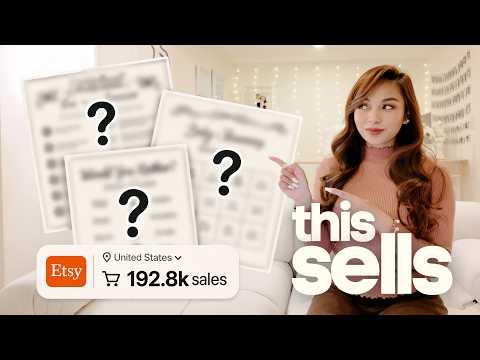
- 192,000+ sales Party-games shop
- 63,000+ sales Résumé-template shop
- 32,000+ sales Cleaning-forms shop
- None Price or revenue for any example
The claim
That six kinds of digital product can be sold on Etsy without graphic design skills, and that existing shops selling them have generated thousands of sales.
- Party-games shop lifetime sales — Over 192,000 in about 5 years
- Average sales per year for that shop — ~38,400
- Average sales per day for that shop — ~105
- Cleaning-business forms shop — Over 32,000 sales
- Simple résumé-template shop — Over 63,000 sales
- Notion-template shops — "Thousands of sales", no figure
- Creator's own shop — Says they sell business forms; no figure given
- Price, revenue, fees or costs for any shop — Not stated in the video
What is this income idea?
Sell practical, low-decoration digital files on Etsy, where the value is in the content or the structure rather than the artwork.
- The six products are business forms and documents, printable party games, resource guides, spreadsheets, résumé and cover-letter templates, and Notion templates. The common thread is that the buyer is paying for something useful — a checklist, a game, a tracker, a layout an applicant tracking system can read — rather than for decoration.
- Business forms are the product the creator says they sell themselves: "I personally sell these so I can assure you there's a market for them." The suggestion is to pick one type of small business, such as a cleaning company, a photographer or a pet sitter, and package its paperwork into a complete onboarding kit instead of selling single forms.
- Printable party games get the longest section. The creator uses ChatGPT to draft fifteen Christmas trivia questions with an answer key, then a sponsored design platform connected to ChatGPT to generate matching illustrations, and suggests bundling those illustrations as a bonus clip-art pack.
- Resource guides, spreadsheets and Notion templates are framed as products where knowledge does the work. The creator is careful to say that spreadsheets and Notion templates still need real skill in the tool, even if they need no design skill.
- Résumé templates round it out, with the point that simpler layouts can be better because applicant tracking systems read them more reliably.
- Three examples carry numbers: a party-games shop at over 192,000 sales in about five years, a cleaning-forms shop at over 32,000 sales, and a résumé-template shop at over 63,000 sales.
Sell useful files that need thinking rather than drawing; the video proves other people have sold a lot of them, not what any of them earned.
- Pick a narrow buyer — e.g. cleaning businesses
- List what they need — ChatGPT can brainstorm
- Build the content — Docs, Sheets, Notion
- Bundle related files — Kits beat single items
- List on Etsy — Or Notion's marketplace
- Price, fees, profit — Not stated in the video
Clear on what to make and where to sell it; silent on what a sale is worth.
Demand is proven. Margin is not addressed.
The lesson underneath the number
- The useful idea in this video is that a digital product does not need to be beautiful to sell. A cleaning company wants an intake form that works, a job applicant wants a résumé that an applicant tracking system can parse, a party host wants twenty trivia questions and an answer key. The creator makes that case well, and is careful in two places a less careful video would not be: spreadsheets and Notion templates are said to need real skill in the tool, and resource guides are said to depend on knowing the subject.
- The numbers are offered as evidence of demand, and on that narrow point they work. A shop that has made over 192,000 sales of mostly printable party games in about five years is a real business by any count. The two other figures, 32,000 sales of cleaning forms and 63,000 of simple résumé templates, add to the impression that plain, practical files sell.
- What the counts cannot do is answer the question a viewer is actually asking, which is what this could earn. A sales count with no price is not revenue, and revenue with no fees is not income. Etsy charges a listing fee, a transaction fee and a payment-processing fee on every order; for a low-priced printable those take a meaningful share. None of that is mentioned, and the creator, who says they sell business forms, does not give a sales count or income figure for their own shop.
- There is also the selection question. The three shops were found because they are the standouts. The video does not say how many shops in the same categories sell rarely or not at all, so a viewer has no base rate to set beside the 192,000. That is not a criticism of the ideas, which are sensible and cheap to try; it is a reason to read the counts as proof that a market exists and nothing more.
Remember what you're selling here is your knowledge not a template that customers need to customize.
Yale Jeannette, on resource guides
The six products, as the video gives them
Each pitched as needing little or no graphic design.
No price, revenue or cost figure is given for any product or shop.
- Business forms and documents — Intake forms, checklists, questionnaires and pet-care sheets for a specific business type, bundled into an onboarding kit. A cleaning-forms shop is cited at over 32,000 sales. The creator says they sell this category themselves.
- Printable party games — Trivia, word scrambles and scavenger hunts for showers, birthdays and holidays, often in black and white to save ink. One shop is cited at over 192,000 sales in about five years, "most of their products are pretty much just printable party games."
- AI-assisted build of a game — ChatGPT drafts fifteen Christmas trivia questions and an answer key; the sponsor's design tool, connected to ChatGPT, generates ten matching illustrations and recolours one on request. The steps are walked through in order.
- Resource guides — How-to PDFs on a skill the seller knows well, built from a template or in Google Docs or Word. "Remember what you're selling here is your knowledge."
- Spreadsheets — Budgets, debt-payoff calculators, inventory and sales trackers in Google Sheets or Excel. The video states plainly that this needs spreadsheet skill.
- Résumé and cover-letter templates — ATS-friendly layouts, bundled with cover letters and application trackers. A shop with "barely any design involved" is cited at over 63,000 sales.
- Notion templates — Content planners, project systems and student or finance dashboards, shared as a duplicate link and sold on Etsy, Notion's marketplace or a personal site. Shops are said to have "thousands of sales"; no figure is given.
The business model
One-off sales of downloadable files on Etsy, with Notion's marketplace or a personal website as alternatives for Notion templates.
Small-business owners needing paperwork, party hosts, job applicants, people managing budgets, and Notion users.
Ready-made structure or content that saves the buyer time, rather than decorative design.
Etsy search. No advertising, social media or email strategy is discussed.
- Etsy listing fee — Per listing. Not mentioned
- Etsy transaction fee — A percentage of each sale. Not mentioned
- Payment processing — Per sale. Not mentioned
- Design or AI subscriptions — Sponsor's paid plan referenced, price not stated
- Seller's time — Research, building, listings and support. Not quantified
No cost of any kind is discussed. For a low-ticket marketplace product, platform fees are the main variable cost.
What you would actually need
Money
Not discussed. The only price mentioned is the sponsor's offer of 300 free images on any paid plan for a limited time.
Start-up cost for this model is genuinely low, which is its main attraction. The running costs are Etsy's: a listing fee per item, a transaction fee and a payment-processing fee on every sale, plus any paid design or AI subscription. None of them is mentioned.
Costs the video does not mention
- Etsy listing fee, paid per listing and on renewal
- Etsy transaction fee on each sale
- Payment-processing fee on each sale
- Optional Etsy advertising
- A paid plan on the sponsored design platform, if used
- Software such as Excel or Word, if not using free tools
Time
Not quantified. The party-game example implies minutes for the content once ChatGPT is used.
The content is the quick part. The slow parts are product research, writing listings, building enough listings to be found, answering buyer messages and, for spreadsheets and Notion, testing that formulas and links work. The 192,000-sale shop took about five years to reach that count.
Where the time actually goes
- Researching demand before building
- Building and testing each file
- Photos or mockups and listing copy
- Enough listings to be discovered
- Customer questions and file-access issues
- Years, on the one shop whose age is given
The part you must pay attention to
A sales count is not an income figure.
The strongest number in the video is "over 192,000 sales in just 5 years". It is the only example with a time frame, and it still cannot be turned into earnings from what is said.
- Lifetime sales, stated — 192,000
- Shop age, stated — 5 years
- Not stated in the video — × price
- Not stated in the video — − fees and costs
~38,400 sales a year
Revenue and profit cannot be calculated
Every example rests on the same missing input: the price of a sale. Printable party games are commonly low-priced items, so the same 192,000 sales could represent very different revenue depending on whether the typical order is a single game or a large bundle, and Etsy takes a listing fee, a transaction fee and a processing fee from each one. The video also describes the most successful shops it found; it does not say how many shops in the same categories sell little or nothing, which is the figure a new seller would most need.
Our arithmetic on the one dated example: 192,000 sales over about five years is roughly 38,400 a year, or about 105 a day, sustained. That is a large, established shop. The other two counts, 32,000 and 63,000, come with no shop age, so they cannot be put on a per-year basis at all. Taken together the counts show that buyers exist for plain, practical files, which is the video's actual point. They do not show what a seller earns, and the creator, who says they sell business forms themselves, gives no figure for their own shop.
- THE ONE DATED EXAMPLE
- Lifetime sales 192,000
- Years on Etsy 5
- 192,000 / 5 = 38,400 / yr
- 38,400 / 365 = ~105 / day
- TURNING IT INTO INCOME
- Price per sale ???
- Etsy fees per sale ???
- Ad spend, tools ???
- -> cannot be calculated
- THE UNDATED EXAMPLES
- Cleaning forms 32,000 sales
- Résumé templates 63,000 sales
- Shop age not stated
The economics
Three sales counts, one time frame, and no prices.
- Party-games shop sales — Over 192,000
- Party-games shop age — About 5 years
- Sales per year (our arithmetic) — ~38,400
- Sales per day (our arithmetic) — ~105
- Cleaning-forms shop sales — Over 32,000
- Résumé-template shop sales — Over 63,000
- Price per sale, any shop — Not stated
- Creator's own sales or income — Not stated
Annualising the one dated example
192,000 sales ÷ 5 years = 38,400 a year; ÷ 365 = ~105 a day
A sustained average of about 105 sales a day across five years for the leading example
IncomeIdeaLab calculation from the figures stated in the video
This is an average over the shop's life; the video does not say whether sales were steady or concentrated in recent years. Without a price per sale, no revenue figure can be derived, and Etsy's per-sale fees would come off any revenue before it reached the seller.
- The price of any product in any example shop
- Revenue or profit for any shop
- The age of the cleaning-forms and résumé shops
- The creator's own sales count or income from business forms
- Etsy fees, advertising or any other cost
- How many shops in these categories sell little or nothing
- Etsy shows a lifetime sales count on shop pages, so the three counts are the kind of figure a viewer can look up; the shops are not named in what is said, so we could not check them.
- The video promises in its opening to show "six digital products that are already generating thousands of sales", and it does give a sales figure or a "thousands of sales" statement for four of the six; resource guides and spreadsheets get none.
- The sponsored segment runs from the party-games section and is disclosed as sponsorship, with an offer of 300 free images on any paid plan "for a limited time". A link to a separate business-forms tutorial by the creator is also mentioned.
- The ChatGPT trivia example is a reasonable demonstration of how quickly game content can be drafted. Checking that AI-written trivia answers are correct is a step a seller would need to add.
Evidence status
Every figure and substantive claim in the video.
- A party-games shop has made over 192,000 sales in about 5 years — Creator — About 38,400 a year by our arithmetic. Shop not named, price not stated.
- A cleaning-forms shop has made over 32,000 sales — Creator — No shop age or price, so it cannot be annualised or valued.
- A simple résumé-template shop has made over 63,000 sales — Creator — Same limits as above.
- Some Notion-template shops have "thousands of sales" — Creator — No figure given.
- The creator sells business forms — Creator — Stated as the creator's own experience; no sales or income figure is given.
- None of the six needs graphic design skill — Creator — Reasonable for the content; the video itself notes spreadsheets and Notion need tool skill.
- ChatGPT can draft trivia questions and an answer key — Creator, walkthrough — The steps are described as they are carried out.
- ATS-friendly résumés are easier for screening software to read — Creator — A widely made point; plausible.
- Etsy cleaning-business listings shown on screen — Etsy search results on screen at 0:43, other sellers' listings — Two readable listing prices: CA$6.24 (marked 25% off) and CA$9.21 (marked 61% off). They are current listing prices for other sellers' bundles, not the price or revenue of the shop whose sales count is quoted.
- Prices, revenue, fees and costs — Not stated in the video — The figures needed to turn sales into income.
What is actually proven?
That buyers exist for plain digital files. Not what a seller keeps.
- Three other shops have lifetime sales counts of 32,000 to 192,000.
- The 192,000-sale shop averages about 38,400 sales a year.
- A printable game can be drafted quickly with ChatGPT.
- The design-platform segment is identified as sponsored.
- Price, revenue, fees or profit for any shop.
- The creator's own results from selling business forms.
What the headline doesn’t tell you
The ideas are sound. The numbers are counts, not earnings.
- 192,000 sales, no price. — Revenue cannot be derived.
- Five years to get there. — About 105 sales a day.
- Two shops have no age. — So no rate can be worked out.
- Etsy fees are not mentioned. — On every single sale.
- The creator's own shop. — No figure is given.
- These are the standouts. — No base rate is offered.
- A sponsored segment. — Disclosed in the video.
- Two products need skill. — The video says so itself.
Should you try it?
A cheap, sensible experiment with unknown upside
Low cost to start and genuinely low design burden; go in expecting slow, small sales rather than the counts quoted.
- Practicality of the ideas — 8 — Specific buyers and specific files for each.
- Evidence of demand — 6 — Three sales counts, one with a time frame.
- Evidence of income — 1 — No price, revenue or profit for any example.
- Cost disclosure — 1 — No fee or cost is mentioned.
- Candour about skill needed — 7 — Flags that spreadsheets and Notion need tool knowledge.
- Sponsorship disclosure — 8 — The design-platform segment is named as sponsored.
- Beginner accessibility — 8 — Free tools and a low entry cost.
- Of the models this library reviews, this is one of the cheaper to test. The files can be built in free tools, the listing fee per item is small, and a narrow niche — forms for one type of business, games for one occasion — is a sensible way to start. The advice to bundle related files into a kit is good: it raises the value of each order, which matters on a platform that takes a cut of every sale.
- The sales counts deserve careful reading. They show that plain, practical files can sell in large volume. They do not show what those sales were worth, and the one shop with a time frame took about five years to reach its count. A new seller is starting from zero reviews and zero sales history against shops like that.
- Before you build, look up comparable listings and note their prices, then work out what one sale leaves you after Etsy's listing, transaction and processing fees. That single calculation tells you how many sales a month a given income target would need, which the video does not.
- If you use AI to draft content, check it. AI-written trivia answers and business forms both need a human pass for accuracy, and for forms that a business will rely on, a pass for anything with legal or insurance implications.
Passive or automated?
Automation
Etsy delivers the file automatically once it is listed.
Passive potential
Each file can sell repeatedly; discovery and support still take work.
Digital files on Etsy are among the more passive models in this library once built: the platform handles payment and delivery, and the same file can sell indefinitely. The work sits up front in research and building, and ongoing in listing renewals, new products to stay visible, and buyer questions — especially for Notion templates and spreadsheets, where customers may need help with access or formulas. The video does not discuss advertising or marketing outside Etsy search, which keeps the model simple but leaves discovery entirely to the marketplace.
- Researching which niche to serve
- Building and testing each file
- Writing listings and making mockups
- Answering buyer questions
- Adding products to stay visible in search
Recommended beginner experiment
Test one niche cheaply and measure what a sale is worth.
- Pick one buyer, not six products. — One business type or occasion.
- Price comparable listings first. — The figure the video leaves out.
- Work out net per sale. — After Etsy's three fees.
- Build a bundle, not a single file. — The video's own best advice.
- Fact-check any AI content. — Especially trivia answers.
- List several related items. — One listing is rarely found.
- Track sales for 90 days. — Then decide whether to expand.
Our verdict: 5/10
Good ideas, real demand, no income figure three sales counts for other sellers, and nothing that converts them into earnings
Credited for six concrete, low-design product ideas with a named buyer for each; for being explicit that spreadsheets and Notion templates need real skill in the tool; for a step-by-step AI-assisted build of a printable game; for disclosing the sponsored segment; and for three specific sales counts, one with a time frame. Marked down because none of the counts comes with a price, so no revenue can be derived; because no Etsy fee or other cost is mentioned; because the creator says they sell business forms but gives no figure for their own shop; and because the examples are standout shops with no base rate offered.
This is a sensible, practical list. Business forms for one type of small business, printable party games for one occasion, résumé templates that screening software can read, and spreadsheets or Notion systems for people who already know the tools are all products where the buyer pays for usefulness rather than artwork, and the creator explains each one clearly, including where real skill is still required. The numbers support the narrow claim the video makes: plain digital files do sell, and some shops have sold a great many. The leading example, over 192,000 sales in about five years, works out at roughly 38,400 a year, a substantial established business. What the numbers do not support is any conclusion about income. No price is given for any example, so none of the three counts can be turned into revenue; no Etsy fee or other cost is mentioned, so revenue could not be turned into profit even if it were known; two of the three shops have no stated age; and the creator, who says they sell business forms, gives no figure for their own shop. Treat the video as a good menu of low-cost products to test, and do the price-and-fee arithmetic yourself before deciding which one is worth the time.
- Party-games shop — 192,000+ sales in ~5 years
- Per year (our arithmetic) — ~38,400
- Cleaning-forms shop — 32,000+ sales
- Résumé-template shop — 63,000+ sales
- Prices or revenue — Not stated
- Etsy fees — Not mentioned
- Creator's own results — Not stated
- Beginner suitability — Good, low-cost test
Sources
- 6 digital products you can sell without design skills — YouTube video, 2026-11-13
- Etsy — Fees & Payments Policy — Platform documentation on seller fees
- FTC — Guides Concerning the Use of Endorsements and Testimonials — Regulatory guidance on endorsements and sponsorship disclosure