AI Businesses / Tier List · Claim Review
“6 BEST AI Businesses To Start Before 2027 (For Beginners)”
What we found: Six AI Businesses Ranked on Estimates, With the Paid Partnership Disclosed
Every income figure in the tier list is either the creator's own estimate or a stated result for someone else; the two estimates for the example channel differ, and product, platform and fee costs are not counted.
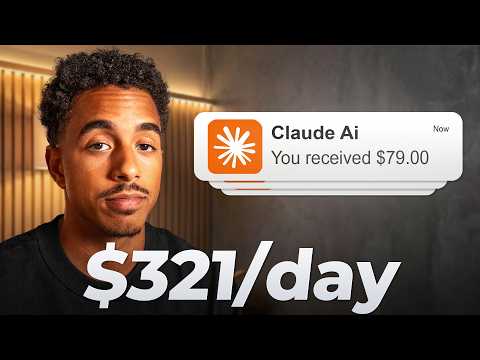
- $10,000+/day Business partner's revenue
- $3k–$10k/mo Example channel
- $300–$1,000 Agent setup fee
- Startup only Costs counted in rankings
The claim
That AI organic dropshipping and AI digital products are S-tier businesses with near-limitless earning potential that a beginner can start for under a few hundred dollars.
- Creator's earnings from this channel — Close to $10 million
- Creator's AI earnings in the past year — "Millions of dollars"
- Business partner, organic dropshipping — Over $10,000 a day
- Example faceless channel — $5,000–$10,000 a month, later $3,000–$5,000 with $10,000 at best
- Example dropshipping store — "A couple hundred a day in sales"
- Creator's digital product business now — Close to $1 million a month
- Student's best month, digital products — $100,000 in sales
- AI copywriting ceiling — $3,000–$5,000 a month
- Product cost, fees, refunds for the S-tier models — Not stated in the video
What is this income idea?
A ranked list of six ways to make money with AI tools, scored on difficulty to start, startup money and earning potential.
- The six are AI faceless YouTube (C tier), AI organic dropshipping (S tier), custom AI agents for local businesses (B tier), AI copywriting (B tier), AI-made digital products (S tier) and AI influencers (D tier). The two S-tier picks are named as the ones the creator would focus on.
- The faceless-channel section is the most practical part. The creator walks through asking ChatGPT for a video idea based on a competitor channel, writing a two-minute script, generating a style prompt for stick-figure images, and making a voiceover in ElevenLabs. They also say plainly that YouTube is "very against lazy AI content" and that "they actually penalize it pretty hard" and that most such channels "are getting destroyed".
- Organic dropshipping is pitched as dropshipping without ad spend: AI-made product videos posted free on TikTok, Instagram and Facebook, linking to a store. The example given is a business partner the creator says is making "over $10,000 a day fully from organic content".
- The agent section suggests three services to sell to local businesses: a data dashboard at a one-time $300–$1,000, an agent that contacts new leads instantly, and AI customer service charged at "hundreds of dollars a month". The creator says they replaced "one or two people" in their own company with an agent.
- Digital products are described as the model that made the creator most of their money, including one business that "went on to do over $5 million in revenue and got acquired". Etsy examples are cited: 9,700 sales of a 99-cent calendar and 8,000 sales of a $17 calendar.
- The creator discloses mid-video: "I partnered with Shopify and they pay me to bring people on board to their platform", and later says "none of the results I'm saying in this video are typical."
A ranking of six AI side businesses by one creator's judgement, with dropshipping and digital products on top; the income figures are estimates or other people's results, and running costs are left out.
- Faceless YouTube — C tier
- Organic dropshipping — S tier
- AI agents — B tier
- AI copywriting — B tier
- Digital products — S tier
- AI influencers — D tier
Rankings weigh startup cost, not running cost, so the two S-tier models look cheaper than they are.
The disclosures are the most useful thing in the ranking
The lesson underneath the number
- This video is clearer than most about its own position. The creator states that Shopify pays them to bring people onto the platform, that they "only get results if you guys get results", and that "none of the results I'm saying in this video are typical." Those statements tell a viewer exactly how to weigh the S-tier ratings: the top picks are also the models the creator's free course and AI store builder support.
- The faceless YouTube section is the most even-handed. It demonstrates the workflow, warns that YouTube penalises low-effort AI content, names AI credits as a real cost, and rates the model C tier because the pay ceiling is low. That candour is worth noting, because it is the one model the creator does not promote.
- The income evidence is thin throughout. The example channel's income is estimated twice with ranges that only meet at $5,000 a month. The dropshipping store "easily making a couple hundred a day in sales" is an estimate from view counts. The partner's $10,000 a day, the student's $100,000 month and the creator's own close to $1 million a month from digital products are stated results with nothing in the video to check them against.
- The cost side is where the ranking tilts. "Everything you make you get to keep" for digital products, and "you get to keep all the profits" for dropshipping, both leave out platform fees, payment processing and, for dropshipping, the product and shipping cost of every order. A model that starts for $200 can still run at a loss, and the S-tier ratings do not account for that.
By the way none of the results I'm saying in this video are typical.
The creator, partway through the digital products section
The six models, as the video ranks them
Each is scored on difficulty, startup money and earning potential.
Startup costs are given as rough ranges; no running cost, margin or profit figure is given for any model.
- AI faceless YouTube — C tier — Demonstrated from idea to voiceover. Startup "less than $100" plus AI credits, which the creator says "can dig a hole in your pocket". Earning potential called low because "YouTube doesn't pay that good on these AI based channels."
- AI organic dropshipping — S tier — Startup "maybe $100 to $200". Earning potential called "pretty much limitless". The section ends with the creator's free course and AI store builder offer, tied to the paid Shopify partnership.
- Custom AI agents — B tier — Three service ideas for local businesses. Setup fees of $300–$1,000 for a dashboard; the creator estimates selling "maybe five, 10 a month". Sales calls are named as the hard part.
- AI copywriting — B tier — An email sequence for a dental practice is written live in ChatGPT, then rewritten with a "humanize" prompt. Ceiling given as "$3,000 to $5,000 a month".
- AI digital products — S tier — Startup "like $50". The creator says "there's no fulfillment cost so everything you make you get to keep", and names traffic and saturation as the real difficulty.
- AI influencers — D tier — Ranked last because "anybody can spin up one of these accounts". A reported example of about €3,000 a month on average is cited without a source.
The business model
Varies by model: per-order product sales (dropshipping), digital downloads, one-time setup fees and monthly retainers (agents, copywriting), YouTube ad revenue (faceless channels).
Social media viewers for dropshipping and digital products; local business owners for agents and copywriting.
AI lowers the cost of producing content, products and services, so a beginner can start with little money.
Organic short-form video on TikTok, Instagram Reels and Facebook; Etsy search; direct phone sales to local businesses.
- Product cost and shipping — Dropshipping. Not mentioned beyond "ship this directly from China"
- Store and payment fees — Shopify subscription and processing. Not mentioned
- Marketplace fees — Etsy listing and transaction fees on digital products. Not mentioned
- AI tool credits — Mentioned for faceless YouTube as a cost that can grow
- Sales time — Named as the hard part of the agent and copywriting models
The rankings score "how much money do you need" as startup money only. Running costs are where the dropshipping margin is decided, and they do not appear in the video.
What you would actually need
Money
Under $100 for faceless YouTube, $100–$200 for organic dropshipping, about $50 for digital products, "practically nothing" for agents and copywriting.
These are startup figures only. Dropshipping carries a product cost, shipping and a monthly store subscription on every order and every month; digital products sold on Etsy or Shopify carry listing, transaction and payment fees. "Everything you make you get to keep" is not accurate once those are counted.
Running costs not counted in the rankings
- Product cost and shipping per dropshipping order
- Shopify subscription and payment processing
- Etsy listing, transaction and processing fees
- Refunds and chargebacks, especially on slow overseas shipping
- AI tool credits, which the creator says can add up
- The creator's own time making daily content
Time
A faceless video "in a couple of minutes" per step; organic product videos "10, 15 minutes to create"; a PDF "in like 15 minutes".
These are production times for a single asset. Each model depends on volume and consistency (daily uploads, many product videos, many sales calls), and the video gives no time to first revenue for any of them.
What volume each model needs
- Faceless channel: near-daily uploads, as in the example
- Organic dropshipping: many product videos per winner
- Agents: list-building and phone sales to local firms
- Copywriting: outreach to land each client
- Digital products: ongoing traffic generation
The part you must pay attention to
The same channel gets two different income estimates.
For the faceless channel used as the C-tier example, the creator first estimates "anywhere from $5 to $10,000 a month", then a minute later says it is "only making 3 to 5,000 maybe $10,000 a month at their best month."
- First estimate, per month — $5,000–$10,000
- Second estimate, typical month — $3,000–$5,000
Ranges overlap only at $5,000
Our comparison of the two stated estimates
Both figures are the creator's estimates "based on everything that I know about how YouTube pays", not stated earnings from the channel owner. The same pattern runs through the video: the dropshipping store is "easily making a couple hundred a day in sales" by estimate, and the partner's $10,000 a day, the student's $100,000 month and the reported influencer income are stated without any figure the video lets us check. The rankings rest on these numbers.
The creator does two things that deserve credit: they disclose that Shopify pays them to bring people onto its platform, and they say directly that the results quoted are not typical. Those disclosures matter because the two S-tier picks are the two models the free course and store builder are built around. Read the tier list as one experienced seller's opinion, and treat every income figure in it as unconfirmed.
- THE EXAMPLE CHANNEL, TWO ESTIMATES
- Estimate 1 $5,000 - $10,000/mo
- Estimate 2 $3,000 - $5,000/mo
- ($10,000 best month)
- -> overlap only at $5,000
- THE PARTNER'S STATED REVENUE (OUR MATHS)
- $10,000/day x 30 = $300,000/mo
- $10,000/day x 365 = $3.65M/yr
- -> revenue, not profit
- AGENT SETUP FEES (OUR MATHS)
- 5 x $300 = $1,500/mo
- 10 x $1,000 = $10,000/mo
- -> one-time fees; resell each month
- ETSY CALENDARS, GROSS (OUR MATHS)
- 9,700 x $0.99 = ~$9,600
- 8,000 x $17 = $136,000
- -> before Etsy fees
The economics
Startup costs are given. Running costs and margins are not.
- Faceless YouTube startup — Under $100 plus AI credits
- Organic dropshipping startup — $100–$200
- Digital products startup — ~$50
- Agent dashboard setup fee — $300–$1,000 one-time
- Agents sold per month — 5–10
- Copywriting ceiling — $3,000–$5,000/month
- Business partner's revenue — $10,000+/day
- Product cost, platform fees, refunds, profit — Not stated in the video
What the agent model earns on the creator's own numbers
5–10 setups × $300–$1,000 = $1,500–$10,000 in setup fees a month
A wide range that depends entirely on closing new local clients every month
IncomeIdeaLab calculation from the fee range and sales volume stated in the video
The setup fee is one-time, so the monthly figure resets to zero without new sales. The monthly customer-service retainer ("hundreds of dollars a month") would add recurring income, but no number of clients is given for it.
- Product and shipping cost per dropshipping order
- Shopify subscription and payment processing fees
- Etsy listing and transaction fees on digital products
- Refund and chargeback rates
- The partner's and student's profit, as opposed to sales
- How the example channel's income was estimated beyond general YouTube knowledge
- The partner's stated $10,000 a day is about $300,000 a month and $3.65 million a year in revenue by our calculation. The video gives no margin, so profit cannot be derived.
- The two Etsy calendar examples gross about $9,600 and $136,000 respectively by our calculation, before Etsy's fees. No time frame is given for either.
- The creator states a lead-response statistic, that businesses contacting leads within an hour are "seven times more likely to close them". No source is given in the video.
- The creator says one digital product business did over $5 million in revenue before a multi-million-dollar acquisition. That is a prior exit, and it is relevant context for anyone comparing their own start to the creator's.
Evidence status
Every substantive claim in the video.
- Close to $10 million from this channel — Creator — We could not check this from the video. Includes brand deals and digital products.
- Millions of dollars with AI in the past year — Creator — No figure or breakdown given.
- Example faceless channel makes $5,000–$10,000 a month — Creator's estimate — A second estimate of $3,000–$5,000 follows; the two do not match.
- Business partner makes over $10,000 a day organically — Creator, about a business partner — Revenue only. Could not be checked from the video.
- Example store makes "a couple hundred a day in sales" — Creator's estimate from views — An estimate, not a stated result.
- Dropshipping startup of $100–$200 — Creator — Startup only. Per-order and monthly costs not counted.
- Digital products: "everything you make you get to keep" — Creator — Platform and payment fees apply on Etsy and Shopify.
- Digital product business did $5M+ and was acquired — Creator — A disclosed prior exit. Could not be checked from the video.
- Current digital product business near $1M a month — Creator — Could not be checked from the video.
- Shopify pays the creator to bring people onto its platform — Creator — Disclosed in the video.
- The results quoted are not typical — Creator — Stated plainly. Credited.
What is actually proven?
The workflows are demonstrated. The incomes are not.
- The faceless-video idea, script, image prompt and voiceover steps are walked through.
- An AI email sequence is written and rewritten live.
- The paid Shopify partnership and the not-typical disclaimer are both stated.
- The two estimates for the example channel do not match.
- The partner's, student's and creator's income figures.
- Product cost, platform fees and margin for either S-tier model.
What the headline doesn’t tell you
Startup cost is not running cost, and sales are not profit.
- Shopify pays the creator. — Disclosed in the video.
- Results are not typical. — The creator's own words.
- Two estimates, one channel. — $5k–$10k, then $3k–$5k.
- $10,000 a day is revenue. — No margin is given.
- Dropshipping has product costs. — Not counted in the ranking.
- Digital products have fees. — Etsy and Shopify both charge.
- Agent fees are one-time. — New sales every month.
- There is a prior exit. — A $5M+ business, acquired.
Should you try it?
A starting menu, not a ranking you can rely on
Use it to pick a model to research. Price the running costs yourself before believing any tier.
- Disclosure of the Shopify payment — 9 — Stated plainly mid-video.
- Demonstration of workflows — 7 — Faceless video and copywriting shown step by step.
- Consistency of estimates — 3 — Two non-matching ranges for one channel.
- Evidence for income figures — 2 — Estimates and third-party claims throughout.
- Cost disclosure — 2 — Startup only; AI credits mentioned once.
- Beginner accessibility — 5 — Low startup cost, but sales and volume are the work.
- The video is useful as a menu. Each of the six models is real, the faceless-video and copywriting workflows are shown in enough detail to try, and the creator is frank that the sales side, phoning local businesses, is the hard part of the agent and copywriting models.
- Weigh the S-tier ratings against the disclosure. The creator is paid by Shopify for sign-ups and runs a free course built around organic dropshipping. That does not make the ranking wrong, but it means the top picks come from the person with the most to gain from them, as the creator says themselves.
- Before starting dropshipping, cost one order end to end: the product, shipping from overseas, the store subscription, payment processing and an allowance for refunds. "Keep all the profits" only holds after those come out. For digital products on Etsy, the same applies to listing and transaction fees.
- Treat the income figures as illustrations. The partner's $10,000 a day and the student's $100,000 month are stated without anything in the video to check them, and the creator calls them not typical.
Passive or automated?
Automation
AI speeds up production; sales and posting stay manual.
Passive potential
Every model depends on continuous content or client work.
AI makes each asset faster to produce, which is the real point of the video, but none of the six models runs on its own. The example faceless channel uploads near-daily; organic dropshipping depends on a stream of new product videos; agents and copywriting need phone sales and client management every month; digital products need ongoing traffic, which the creator names as the hard part. The creator calls a video that "gets views every single day" the ultimate passive income, and also ranks that model C tier because of its low ceiling.
- Posting content daily on several platforms
- Finding and testing products
- Calling and closing local business clients
- Customer service and refunds on physical orders
- Driving traffic to digital products
Recommended beginner experiment
Pick one model and cost it properly.
- Choose one model, not six. — Start where your skills are.
- Cost one sale end to end. — Product, shipping, fees, refunds.
- Try the faceless workflow once. — It is shown step by step.
- Track AI credit spend. — The creator says it adds up.
- For services, list 50 local firms. — Sales is the stated bottleneck.
- Price retainers, not just setups. — Setup fees do not recur.
- Measure profit, not sales. — The video reports sales.
Our verdict: 4/10
An opinionated ranking with honest disclosures and unchecked incomes the paid Shopify link and the not-typical disclaimer are stated; the income figures and running costs are not supported in the video
Credited for disclosing that Shopify pays the creator to bring people onto its platform, for stating that the results quoted are not typical, for a step-by-step faceless-video demonstration, for warning that low-effort AI content is penalised, for naming AI credits as a cost, and for disclosing a prior $5 million-plus digital product business that was acquired. Marked down because the example channel is given two income estimates that do not match; because the partner's $10,000 a day, the student's $100,000 month and the creator's own close to $1 million a month are stated without anything the video lets us check; and because the S-tier ratings count startup money only, leaving out product, shipping, platform and payment costs.
This is a ranking, and the creator is open about where they stand in it. They say Shopify pays them to bring people onto the platform, they say the results quoted are not typical, and they disclose a prior digital product business that did over $5 million and was acquired. The faceless YouTube section is the most balanced part: a full workflow demonstration, a warning that YouTube penalises low-effort AI content, a note that AI credits add up, and a C-tier rating because the ceiling is low. The weaker part is the money. The example channel is estimated at $5,000–$10,000 a month and then at $3,000–$5,000 with $10,000 at best, two ranges that meet only at $5,000. The partner's $10,000 a day (about $3.65 million a year in revenue by our calculation), the student's $100,000 month and the creator's own close to $1 million a month are stated results we could not check from the video. And the two S-tier models are rated on startup money alone, with "everything you make you get to keep" standing in for a cost side that includes product, shipping, Shopify, Etsy and payment fees. Use the video to choose a model to look into; work out its running costs yourself before relying on its tier.
- Partner's revenue — $10,000+/day
- Example channel — $3k–$10k/month, two estimates
- Agent setup fees — $1,500–$10,000/month at 5–10 sales
- Shopify partnership — Disclosed as paid
- Results typical — No, per the creator
- Running costs — Not stated
- Beginner suitability — As a menu, yes
Sources
- 6 BEST AI Businesses To Start Before 2027 (For Beginners) — Jordan Welch — YouTube video, 2026-11-02
- Shopify — Pricing — Platform documentation on subscription and payment fees
- Etsy — Fees & Payments Policy — Platform documentation on listing and transaction fees
- FTC — Guides Concerning the Use of Endorsements and Testimonials — Regulatory guidance on endorsements and earnings claims