Mobile Apps / Monetisation · Claim Review
“The Secret Monetization of a $22M/month App”
What we found: Short-Drama Apps: The $22M a Month Is Another Company's Figure, and the Speaker's Own App Has No Revenue Yet
The talk explains how subscriptions, coins and rewarded ads fit together, using third-party revenue figures for the top short-drama apps. The source of those figures is not named, the apps' costs are not discussed, and the speaker's own app is still in progress.
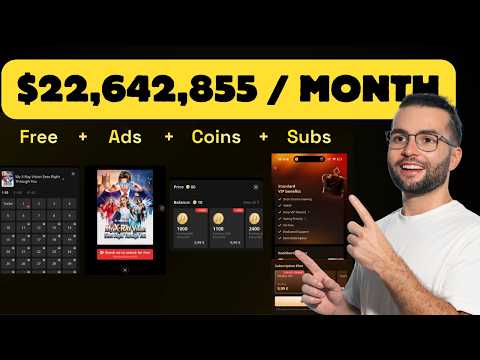
- $22M Top short-drama app, last month
- 5M Downloads that month
- >$1M/mo each Top 15 apps
- No revenue given Speaker's own app
The claim
That a short-drama app makes $22 million a month, and that its hybrid of subscriptions, in-app coins and rewarded ads is a monetisation stack other app developers can copy.
- Top short-drama app revenue, last month — $22 million
- Its downloads in the same month — 5 million
- Revenue per download that month — About $4.40, our division
- Top 15 short-drama apps — Each over $1 million a month
- Combined floor for the top 15 — At least $15 million a month
- Subscription apps using subscriptions only / with consumables — 63% / 10%
- Games using subscriptions only / with consumables — 40% / 27%
- Games vs other apps on consumables — 27 ÷ 10 = 2.7 times, stated as "around three times"
- Streaming start-up capital raised — $1.75 billion
- Source of the app revenue figures — Not named in the video
- Speaker's own app revenue — Not stated; the app is in progress
What is this income idea?
Monetise a consumer app with three layers at once: free content to hook users, rewarded ads and in-app coins to unlock more, and a subscription for committed users.
- The speaker is a developer-educator who says they have made mobile development tutorials for over six years, reached 130,000 subscribers and taught more than 1,500 students through their academy. They say a sponsorship from the monetisation platform behind this event gave them the courage to turn down a job offer and go full time on YouTube.
- The starting point is short-drama apps. The speaker says they looked up the apps' revenue and saw "22 million revenue from 5 million downloads last month" for the leader, with the top 15 each above $1 million a month. The tool or source used is not named.
- The contrast is a short-video streaming start-up that the speaker says raised $1.75 billion, put everything behind a paywall in the streaming model, saw more than 90% of users not convert, and shut down six months after its 2020 launch. Short-drama apps instead borrowed from mobile games.
- The described model: about ten free episodes, no onboarding or paywall at the start, then a locked episode that can be unlocked by watching an ad, then by spending coins, and only later an offer to subscribe. Coins also reward daily logins (20 coins in one app) and actions such as enabling notifications.
- The rest of the talk shows how to set up each layer in the platform being promoted: subscriptions on a paywall, a virtual currency linked to coin packs and subscription renewals, and rewarded ads connected from an ad network. The speaker is building a short-drama app of their own for the event's hackathon.
Give some content away, let users unlock more by watching ads or buying coins, and sell a subscription last; the $22 million belongs to an app the speaker studied, not one they run.
- Free episodes — About 10 per series
- No paywall at entry — Straight into content
- Watch an ad to unlock — Rewarded ads
- Spend coins to unlock — Coin packs
- Earn coins for actions — 20 for a daily login
- Offer a subscription — For committed users
- A/B test everything — Always one running
A clear description of how the layers connect; what any layer earns for a new app is not stated.
A good explanation of a model, with the evidence borrowed
The lesson underneath the number
- As a technical walkthrough this talk is clear. It explains why a hard paywall can fail (the speaker's example of a streaming start-up launched in 2020: more than 90% of users did not convert and the service shut down six months after launch), how short-drama apps put free content first, and how coins, rewarded ads and subscriptions can sit in one app. The advice to keep the coin balance in one system and to always have an A/B test running is practical.
- The numbers that carry the title are a different matter. "$22M a month" is the speaker's reading of another company's app from a research source that is not named. Third-party app revenue figures are generally modelled estimates, and the talk does not say which tool or which month. The speaker's own short-drama app is still being built, and they say it is "very challenging to generate AI videos".
- The talk also leaves out what the example apps spend. Content libraries and paid social ads are the obvious costs of a short-drama app, and the speaker's own story of how they found the category, through ads targeting their wife, points straight at acquisition spend. App store commission comes out of every coin pack and subscription before the developer is paid.
- Finally, the setting. The talk was given at a hackathon run by the monetisation platform it recommends at each step, the speaker credits that company with changing their career as their first sponsor, and the talk points viewers to the event's prize categories for using its products. That relationship is stated openly; whether this particular video is sponsored is not stated.
Don't trust whatever I'm saying or what you read on the internet because every niche every app is different.
The speaker, closing the talk
The method, as the talk gives it
Three revenue layers and the order users meet them.
The set-up steps are explained in full; no revenue, conversion or cost figure is given for any app the speaker runs.
- Hook first, charge later — The apps studied skip onboarding screens and paywalls and start playing content immediately, with around ten free episodes per series. The speaker notes this goes against common subscription-app advice.
- Let users pay with attention — When an episode is locked, the first option is to watch a rewarded ad. The speaker presents ads mainly as a lever for conversion rather than a large revenue source, saying it is "quite hard to make significant revenue with ads unless you have a lot of users".
- Build an in-app economy — Coins come from purchases (a €10 pack for 1,000 coins in the example), from subscription renewals (100 coins a month in the example) and from rewards such as 20 coins for logging in. They are spent to unlock content.
- Keep the balance on one system — The speaker advises storing the coin balance only in the monetisation platform, reading it through its SDK and changing it from your back end, rather than keeping a second copy yourself.
- Sell the subscription last — Only when a user is ready to commit long term is a subscription offered. The talk does not give a conversion rate for any app at this step.
- Test continuously — The speaker says every one of their apps should have an A/B test running at all times, and closes with "test everything", because "every niche every app is different".
The business model
Subscriptions, one-off coin pack purchases, coins bundled with subscriptions, and rewarded ad revenue.
Mobile viewers of short serial dramas, reached in part through social media ads.
Free episodes up front, with several ways to keep watching: watch an ad, spend coins or subscribe.
Ads on social platforms such as Instagram and TikTok, as the speaker describes; acquisition spend is not discussed.
- Content production — Series and episodes. Not discussed
- User acquisition — Social ads are mentioned; spend not stated
- App store commission — Not mentioned
- Monetisation platform — Promoted throughout. Price not stated
- Ad network — Revenue share not stated
- Back end and development — Not priced
The talk is about the revenue side only. No cost of any short-drama app is mentioned.
What you would actually need
Money
No cost is stated. The set-up is presented as configuration in the monetisation platform and an ad network.
The apps used as the example are content businesses: they need a large library of episodes and, by the speaker's own account, were reaching users through ads on Instagram and TikTok. Content production and user acquisition are the expensive parts, and neither is priced. App store commission also comes out of every in-app purchase.
Costs the talk does not price
- Content: series of episodes, AI-generated or filmed
- User acquisition: the ads that reached the speaker's wife
- App store commission on coins and subscriptions
- Monetisation platform fees above any free tier
- Back-end hosting for coin spending and rewards
- Developer time to build and maintain three systems
Time
The speaker says the subscription set-up can be worked out with an AI assistant and that the currency set-up is "the whole setup" once products are linked.
The configuration may be quick. Designing an in-app economy that users find fair, and tuning it through constant A/B tests, is ongoing work; the speaker says games have been "studying this and optimizing it for decades".
Where the time goes
- Producing enough content to hook users
- Designing coin prices and rewards
- Integrating subscriptions, coins and ads
- Running A/B tests continuously
- Buying and managing user acquisition
The part you must pay attention to
The $22 million is a figure about someone else's app.
The speaker says: "I open it up and I see oh my god 22 million revenue from 5 million downloads last month". The tool is not named, the app is not named in that passage, and the speaker's own short-drama app is still being built.
- Leader's revenue, one month — $22M
- Its downloads that month — 5M
≈ $4.40
Revenue per download that month, before any cost
The talk rests on the idea that the monetisation stack is what produces the revenue. The video does not separate it from the other things the leading apps have: large content libraries and paid ads on social platforms, which the speaker mentions when describing how their wife came across the apps. The per-download figure also mixes new downloads with revenue from users who joined in earlier months, so it is a rough ratio, not a lifetime value.
The figures are useful as market context: short-drama apps appear to be a large category. They are not evidence that adding coins and rewarded ads to a new app will lift its revenue, and the talk does not give any result from an app the speaker runs. Third-party app revenue figures are usually estimates, and the source here is not named.
- THE HEADLINE APP
- Revenue, last month $22,000,000
- Downloads, last month 5,000,000
- $22M / 5M = ~$4.40 / download
- (mixes new and existing users)
- THE TOP 15
- 15 apps x >$1M = >$15M / month
- AFTER APP STORE COMMISSION
- $22M x 70% to 85% = $15.4M to $18.7M
- (15-30% standard rates; our
- illustration, not stated)
- CONSUMABLES, GAMES vs OTHER APPS
- 27% / 10% = 2.7x
- -> "around three times" checks out
The economics
Market figures for other apps; none for the speaker's.
- Leader's monthly revenue — $22 million
- Leader's monthly downloads — 5 million
- Top 15 apps — Each over $1 million a month
- Example coin pack — €10 for 1,000 coins
- Example subscription bonus — 100 coins per renewal
- Daily login reward in one app — 20 coins
- Streaming start-up: capital raised / non-converting users — $1.75 billion / over 90%
- Speaker's academy students / subscribers — 1,500+ / 130,000
- Costs of any app, and the speaker's app revenue — Not stated in the video
Revenue per download for the leading app
$22,000,000 ÷ 5,000,000 downloads = about $4.40 per download in one month
About $4.40 of gross revenue per download that month, before app store commission, content and acquisition costs
IncomeIdeaLab calculation from the two figures stated in the talk
The month's revenue includes users who downloaded in earlier months, so this is a ratio, not the value of a new user. The figures come from a source the talk does not name and are likely estimates.
- Which research tool produced the revenue figures, and for which month
- What any of the apps spends on content or ads
- App store commission on coin and subscription sales
- How much of the revenue comes from each layer
- Any revenue from the speaker's own apps
- Whether this video is sponsored
- In the example coin pack, €10 buys 1,000 coins, so one coin is a cent. A 20-coin login reward is worth 20 cents of content at that rate (our arithmetic).
- The speaker's shares from the platform's state-of-the-industry figures check internally: 27% of games versus 10% of other apps using consumables is 2.7 times, which the talk rounds to "around three times".
- At standard app store commission of 15 to 30%, $22 million of gross in-app revenue would leave the publisher roughly $15.4 million to $18.7 million before any other cost, if all of it were in-app purchases. The ad portion is not separated in the talk.
- The speaker's point that ad revenue is hard to make significant without many users is a useful caution, and it applies to any new app copying this model.
Evidence status
Every figure the talk puts forward.
- A short-drama app made $22M last month — Speaker, from an unnamed source — A figure about another company's app; the tool and month are not named.
- From 5 million downloads — Speaker — About $4.40 per download that month, our division.
- Top 15 short-drama apps each over $1M a month — Speaker — At least $15M a month combined, if accurate.
- A streaming start-up raised $1.75 billion and shut down six months after launch — Speaker — Used as the contrast case; we did not check it.
- 63% of subscription apps use subscriptions only, 10% use consumables — Speaker, citing an industry report — The report is referred to but not cited in full.
- Games use consumables "around three times more" — Speaker — 27% vs 10% is 2.7 times. Checks out.
- The monetisation stack can be set up in one platform — Speaker — The steps are explained in order and are specific.
- 130K subscribers, 20M+ viewers, 1,500+ students — Speaker, about themselves — Reported as the speaker's own statement.
- Revenue from the speaker's own app — Nobody — The app is still being built.
- Costs of the apps studied — Nobody — Not stated in the video.
What is actually proven?
The method is explained. The results belong to other companies.
- The set-up for subscriptions, coins and rewarded ads is explained step by step.
- The leading short-drama app is said to have made $22M from 5M downloads in a month.
- That is about $4.40 of revenue per download that month, before costs.
- The games-versus-apps consumables ratio is 2.7 times, as stated.
- The source of the app revenue figures.
- Any revenue from an app the speaker runs.
- What the example apps spend on content and ads.
What the headline doesn't tell you
Copying a monetisation stack is not the same as copying an audience.
- $22M is not the speaker's. — It belongs to an app they studied.
- The source is not named. — App revenue tools estimate.
- The speaker's app is unfinished. — No revenue given.
- Content costs money. — Not discussed.
- So do the ads that find users. — Mentioned, not priced.
- App stores take a cut. — 15–30% on purchases.
- Ads pay little at small scale. — The speaker says so.
- It is the platform's own event. — Stated in the talk.
Should you try it?
A sound monetisation pattern, with no small-app results behind it
Borrow the order of free content, ads, coins and subscription, test it on your own users, and do not use the $22M figure to forecast anything.
- Clarity of the technical method — 8 — Each layer is explained in order and with examples.
- Evidence the method lifts revenue — 2 — Only third-party totals; no before-and-after for any app.
- Source transparency — 2 — The revenue tool and month are not named.
- Cost disclosure — 0 — No cost of any app is discussed.
- Conflict-of-interest clarity — 6 — The sponsor relationship and event host are stated openly.
- Candour about limits — 6 — Says ads need scale and to test everything yourself.
- Beginner accessibility — 4 — Needs a working app with real users before any of it matters.
- If you already have an app with users, the pattern is worth testing. Letting people choose between watching an ad, spending coins or subscribing gives more of them a way to pay something, and the speaker's advice to keep the coin balance in one system and to run A/B tests constantly is sound engineering practice.
- If you do not have users yet, the model does not solve that. The apps in the example have content libraries and buy ads on social platforms, and the speaker says ad revenue is hard to make significant without many users. A new app with a few hundred users will see small numbers from every layer.
- Treat the $22 million as market context. It shows the category is large, by the speaker's source, not that this stack produced it or that it will work for your niche. The speaker's own closing advice, not to trust what they say and to test it, is the right one.
- Price the cost side before you design an economy: app store commission on every coin pack and subscription, the monetisation platform above its free tier, and whatever it costs to make the content users are unlocking.
Passive or automated?
Automation
Purchases, coin grants and ad rewards are handled by the platforms once set up.
Passive potential
Revenue depends on new content and new users arriving.
Once configured, billing, coin balances and rewarded ads run without manual work, which is the automated part. A short-drama app still needs a steady supply of new episodes, continuing user acquisition and ongoing tests of prices and rewards. The talk describes the plumbing; the content and audience behind the example apps are separate, ongoing operations.
- Producing new series and episodes
- Buying and managing ads to find users
- Designing and tuning coin prices and rewards
- Running and reading A/B tests
- Maintaining the back end that spends coins
Recommended beginner experiment
Add one layer at a time and measure it.
- Start with users, not monetisation. — A stack needs an audience.
- Make some content free. — The apps studied give ~10 episodes.
- Add rewarded ads first. — Measure unlocks, not ad revenue.
- Introduce a small coin pack. — Price it after store commission.
- Offer the subscription last. — To users who keep returning.
- Keep one A/B test running. — The speaker's rule.
- Track revenue per user by layer. — Not totals.
Our verdict: 5/10
A clear monetisation walkthrough, built on another company's numbers the $22M a month comes from an unnamed source about a third-party app; the speaker's own app has no figures yet
Credited for a clear, ordered explanation of how subscriptions, in-app coins and rewarded ads fit together, for practical engineering advice on keeping one source for coin balances and testing continuously, for a stated consumables ratio that checks out, and for openly stating the speaker's relationship with the platform hosting the event. Marked down because the headline revenue belongs to a third-party app and comes from an unnamed source, because no cost of any app is discussed, and because no result is given for an app the speaker runs.
This is a well-organised conference talk about a real pattern in app monetisation. Short-drama apps, as the speaker describes them, let users in without a paywall, give away about ten episodes, then offer three ways to keep watching: watch an ad, spend coins or subscribe. The talk explains how to build each layer, how coins can reward logins and other actions, and why one system should hold the coin balance, and the speaker ends by telling viewers to test everything rather than trust them. The title figure is where the evidence thins. "$22M a month" describes another company's app, from a research source the talk does not name; the speaker's own short-drama app is still being built. Nothing in the talk separates the effect of the monetisation stack from the content and paid social ads the example apps also rely on, and no cost, including app store commission, is mentioned. The talk is also given at an event run by the platform it recommends at each step, which the speaker states openly. Use it as a guide to structuring an app's monetisation, not as evidence of what that structure will earn.
- Leader's monthly revenue — $22M, third-party
- Per download that month — ~$4.40
- Top 15 apps — >$1M/mo each
- Consumables ratio check — 2.7x, checks out
- Revenue source named — No
- Speaker's own app revenue — Not stated
- Costs of the apps — Not stated
- Beginner suitability — Pattern yes, forecast no
Sources
- The Secret Monetization of a $22M/month App — YouTube video, 2026-09-15
- Apple — App Store Small Business Program — Platform documentation on App Store commission rates