Real Estate / Small Multifamily · Claim Review
“If You Spend More Than 8 Hours/Week on Rentals, Watch This.”
What we found: 150 Self-Managed Rentals in 6 to 8 Hours a Week: The Figure Covers Existing Units Only, and No Income Is Stated
The hours are given for managing existing units, with rehabs, an agent for showings, a spouse and a three-person inbox outside the count. No rent, cash flow or profit figure is given.
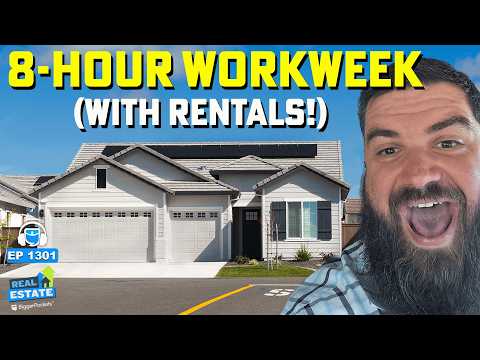
- ~150 Units self-managed
- 6–8 Weekly hours
- ~2.4–3.2 Minutes per unit
- None Income stated
The claim
That a portfolio of about 150 rental units can be self-managed in six to eight hours a week using simple systems and processes.
- Units — "More than 150"; "150ish"
- Buildings — Between 52 and 55
- Weekly hours on existing assets — "Probably six to eight hours a week"
- Who manages — The guest and his wife; a group of three sees the maintenance inbox
- Units managed alongside a tech career — The first 120
- Savings lost in the dot-com crash — About $27,000, at age 20
- House hacks — Nine in 13 years
- Agent for showings — "In the USD 30 range"; unit of payment not stated
- Extra listing traffic — 250% to 300% more than other properties
- Rent, cash flow, debt, equity, income — Not stated in the video
What is this income idea?
Buy small multifamily buildings, templatise everything from kitchens to tenant screening, and self-manage by routing every request to contractors rather than doing the work yourself.
- The guest started after losing about $27,000 of savings in the dot-com crash at 20. He then did nine house hacks in 13 years and kept a W2 job until retiring two years before recording, adding that he "could have retired 10 years ago" but chose to keep earning in his peak career years.
- Today the portfolio is described as between 52 and 55 buildings and more than 150 units in New Hampshire, mostly small multifamily. He says he has been a net adder over the last three years, trading out of some assets while buying more, and that he prefers small buildings because they are easy to sell: a duplex he listed got six offers on its first weekend.
- The management system is plain. Magnets in each unit carry a number; tenant calls and texts are turned into an email seen by a group of three; someone forwards it to a contractor. "I am an elite email forwarder." Completed work is checked by video or by asking the contractor for ten photos, reviewed in the evening.
- Tenant screening uses no application fee up front. Applicants send a pay stub, proof of their last three rent payments and a screenshot of their credit score; the background check fee comes later. He says this brings 250% to 300% more traffic than comparable listings, based on what he calls studies in Zillow.
- He puts management of existing assets at "probably six to eight hours a week". He also says the only time he spends more is on "a multi-million dollar big big project down to studs" with nine contractors, and that a paid agent handles showings to his script.
Standardise every unit and process, send every problem to a contractor by email, and check the work by photo. The six to eight hours a week covers that management only, and the video says nothing about what the portfolio earns.
- Buy small multifamily — B and C areas
- Templatise the units — Kitchens, colours, ads
- Screen without a fee — Pay stub, rent history, score
- Agent runs showings — To a set script
- Requests to one inbox — Seen by three people
- Forward to contractor — Paid on time
- Inspect by photo — Ten pictures or video
- 6–8 hours a week — Existing units only
A simple, copyable management system. The financial side of the portfolio is not discussed.
Forward, do not fix
The lesson underneath the number
- The most useful idea in the episode is the simplest. The guest does not do repairs and does not attend most jobs. Every request lands in one inbox, someone forwards it to a contractor, and the work is checked from ten photos at night. Co-host Henry Washington draws the right lesson from his own experience: ten units felt like a full-time job when he was fixing things himself, and would not have if he had only been forwarding them.
- The tenant screening is also specific enough to copy. Asking for proof of the last three rent payments rather than a reference is a better test of payment habits, and taking the fee only at the background-check stage is fairer to applicants. The guest says this brings 250% to 300% more traffic than other listings; that figure is his, based on what he calls studies in Zillow, and the method behind it is not described.
- The hours figure needs reading carefully. Six to eight hours is given for the management of existing assets, and the guest volunteers what falls outside it: big rehabs, a paid agent for showings, a wife who manages with him, and a third person on the inbox. Our arithmetic puts six to eight hours at under three and a half minutes per unit per week, which is believable for forwarding emails and not for running the whole business.
- What the episode does not give is any sense of the money. There is no rent, no cash flow, no debt and no income figure for 52 to 55 buildings. The guest also says that teaching his system is what he now spends his time on; no product or price is named in the video. Viewers get a credible way to save time and nothing to judge the return on it by.
I am an elite email forwarder.
The guest, on how he runs about 150 units
The system, as the guest gives it
Low-tech and specific, built around forwarding work rather than doing it.
No rent, cash-flow, debt or management-cost figure is given for any part of the portfolio.
- Templatise every unit and process — Kitchens, colours, the application process, ad copy and the go-to-market steps are standardised, so a newly bought building is "snapped in". He says a vacant building can be brought to market in 15 to 30 days after purchase.
- Route all maintenance to one inbox — Magnets in each unit give a single number. Calls and texts become an email seen by three people, and one of them forwards it to a contractor. The tools cost nothing, which the hosts point out.
- Inspect remotely — Finished jobs are checked by live video or by asking for ten photos, reviewed late in the evening. He says many landlords pay contractors without inspecting at all.
- Keep good contractors by paying on time — His own estimate: great contractors who listen and are paid on time are "like 90%" of running the business.
- Screen before any fee is charged — No application fee. Applicants send a pay stub, proof of their last three rent payments and a screenshot of their credit score. Late past payments are a warning sign; medical debt and divorce are not.
- Pay an agent to show units to your script — He provides the ad copy and photos; the agent follows his criteria. He says he paid her "not a high amount of money like in the USD 30 range", without saying per showing, per hour or per unit.
- Hold a unit only for a signed lease and deposit — A lesson from an applicant who delayed signing for three days: a unit stays on the market until the lease is signed and the deposit paid.
The business model
Rent from small multifamily and single-family units in New Hampshire, plus gains when buildings are sold or exchanged.
Working tenants in B- and C-class areas, including applicants with past convictions or medical debt that other landlords might turn away.
Renovated units at rents below new-build apartments, with no application fee up front.
Listings with professional photos and set ad copy, shown by a paid agent.
- Mortgage debt — Not stated for any building
- Contractors and rehabs — Including a "multi-million dollar" project; no figure
- Showing agent — About $30, unit not stated
- Background checks — Absorbed by the landlord at the end of screening
- Taxes, insurance, vacancy — Not mentioned
- The spouse's and third person's time — Not counted in the hours
No cost or income figure is given for the portfolio, so its returns cannot be worked out from the video.
What you would actually need
Money
Not quantified. He says he put 20% down on early small multifamily buildings and used his own money or one private lender per deal, and that owner-occupants can now get "5% money" on three- and four-unit buildings.
This is a capital-intensive model built over about 24 years, with a W2 executive income alongside it for most of that time. The video gives no purchase price, debt level, equity or cash-flow figure, so the money needed to reach anything like this scale cannot be worked out from it.
Named or implied, not priced
- Down payments: 20% on his early deals
- Rehab budgets, including a "multi-million dollar" project
- Contractor payments, made promptly
- The showing agent, about $30 in an unstated unit
- Background checks, around $40 each per the host
- Ad photography, which he paid for
- Mortgage debt across 52 to 55 buildings, not stated
Time
"Probably six to eight hours a week" on management of existing assets.
Credible for what it covers: forwarding requests and reviewing photos. It does not cover acquisitions, sales, rehabs, the agent's showing time, his wife's time or the third person who watches the inbox, and the guest says himself that large projects take much more.
Outside the six to eight hours
- Rehab projects with up to nine contractors
- Buying and selling buildings, including 1031 exchanges
- Showings, done by a paid agent
- His wife's share of the management
- The third person on the maintenance inbox
- Teaching others his system, which he says takes his time
The part you must pay attention to
The hours figure is for one part of the work, and no income is stated.
Asked how many hours a week he works "on the actual management of existing assets", the guest answers "probably six to eight hours a week".
- Weekly management time stated — 6–8 hours
- Units stated — ~150 units
~2.4–3.2 minutes
Per unit per week, our calculation
The claim rests on how narrowly "management" is drawn. The guest is clear about what sits outside it: big rehabs take far more time, showings are handled by a paid agent, his wife manages with him, and a group of three people sees every maintenance request. The six to eight hours is his own time for the routine part. That is a fair answer to the question asked, and it is narrower than the title, which implies the whole operation fits in eight hours.
The larger gap is financial. A portfolio of 52 to 55 buildings is described in units, buildings and hours, but the video gives no rent roll, cash flow, mortgage debt, equity or income figure at all. "Retired in his 40s" is stated, and the guest says he could have retired a decade earlier, but what the portfolio pays him is not stated in the video. The time saving is shown in some detail; the return on the time is not.
- MINUTES PER UNIT (OURS)
- 6 hours = 360 minutes
- 8 hours = 480 minutes
- 360 / 150 units = 2.4 min
- 480 / 150 units = 3.2 min
- PER YEAR (OURS)
- 6-8 h x 52 weeks = 312-416 h
- OUTSIDE THE FIGURE
- Rehabs (up to 9 contractors)
- Showing agent
- Spouse + 3-person inbox
- Buying and selling
- INCOME STATED none
The economics
Units, buildings and hours are given; money is not.
- Units — ~150
- Buildings — 52–55
- Weekly management hours — 6–8
- Minutes per unit per week — ~2.4–3.2
- Hours per year — ~312–416
- Average units per building — ~2.7–2.9
- Down payment on early deals — 20%
- Showing agent — About $30, unit not stated
- Rent, cash flow, debt, income — Not stated in the video
Time per unit
360 to 480 minutes a week ÷ ~150 units
About 2.4 to 3.2 minutes per unit per week for routine management
IncomeIdeaLab calculation from the hours and unit count the guest states
The unit count is given as "more than 150" and "150ish", so we use 150. The figure covers only the guest's own time on existing units; rehabs, showings and the time of the other people involved are outside it.
- Rent roll and average rent
- Monthly cash flow or annual net income
- Mortgage debt and equity
- Vacancy and turnover rates
- What the showing agent is paid per unit of work
- Price of the teaching the guest says he offers
- 150 units across 52 to 55 buildings averages under three units a building, consistent with the small multifamily focus he describes.
- He says the first 120 units were managed while he had a career in tech, which puts most of the growth alongside a W2 income.
- The market claims, 40 buildings listed in 40 days with 37 under contract, and 700 new apartments coming in an area of about 70,000 people, are his local observations and could not be checked from the video.
- His summary of returns is qualitative: "the first five years is awful", then better, with "significant returns" over ten years in a normal market.
- The police station conversion, four luxury apartments and two for disabled veterans, is described as weeks from completion. No cost or rent is given.
- A Fundrise sponsor read in the middle of the episode is labelled as a paid advertisement. It is the show's sponsor and is separate from the guest's business.
Evidence status
Every substantive claim in the video.
- More than 150 units, 52 to 55 buildings — Guest — Consistent with each other at under three units a building. Could not be checked from the video.
- Six to eight hours a week on management — Guest, asked directly — Given for existing assets only; rehabs, showings and others' time are outside it.
- The first 120 units managed with his wife alongside a tech career — Guest — Stated; no hours given for that period.
- Lost about $27,000 at 20 in the dot-com crash — Guest — Background, volunteered.
- Nine house hacks in 13 years — Guest — Stated as the start of the portfolio.
- 250% to 300% more listing traffic — Guest, citing studies in Zillow — Method and comparison set not described.
- Vacant buildings to market in 15 to 30 days — Guest — Plausible with templated finishes; no example given.
- Contractors are about 90% of the business — Guest — His estimate, offered as opinion.
- Retired in his 40s; could have retired ten years earlier — Host intro; guest — No income figure is given to show what retirement rests on.
- Rent, cash flow, debt and income — Nobody — Not stated anywhere in the video.
What is actually proven?
The process is clear. The returns are not addressed.
- About 150 units in 52 to 55 buildings, self-managed by the guest and his wife.
- Six to eight hours a week on management of existing assets.
- That is about 2.4 to 3.2 minutes per unit per week.
- Rehabs, showings and two other people's time sit outside the figure.
- The sponsor read is labelled as paid advertising.
- Any rent, cash-flow, debt or income figure for the portfolio.
What the headline doesn’t tell you
Eight hours of management, not eight hours of business.
- The hours are management only. — Of existing units.
- Rehabs take much longer. — He says so himself.
- An agent does showings. — Paid about $30, unit unstated.
- Three people see the inbox. — Plus his wife manages with him.
- It took about 24 years. — With a W2 job for most of it.
- No rent is given. — For any unit.
- No cash flow is given. — For 52 to 55 buildings.
- He teaches the system. — No product or price named.
Should you try it?
Copy the system, not the scale
The inbox-and-forward method and the screening steps work at two units as well as 150. Building to this size is a capital and decades question the video does not answer.
- Specificity of the management system — 8 — Magnets, one inbox, forward, inspect by photo.
- Usefulness of the screening steps — 7 — Rent history and score screenshot before any fee.
- Clarity of the hours figure — 6 — Scoped to management; the scope is stated.
- Honesty about the path — 7 — A lost $27,000, nine house hacks, a W2 job, "the first five years is awful".
- Financial disclosure — 0 — No rent, cash flow, debt or income figure.
- Delivery against the title — 6 — The hours are explained; the title reads wider than the figure.
- Beginner accessibility — 3 — Needs capital, credit and years to reach this scale.
- If you own even one rental, the core idea here is worth taking: do not be the repair person. A single number for tenants, one shared inbox, a short list of contractors you pay on time and a habit of asking for photos before paying will save hours a week at any scale.
- The screening approach is also practical. Ask for a pay stub, the last three rent payments and a credit score screenshot before charging anything, and only charge for the background check when you reach it. Hold a unit only once the lease is signed and the deposit is paid.
- Read the hours figure for what it is. Six to eight hours is the guest's own time managing existing units. Rehabs, buying, selling, showings, his wife's work and a third person on the inbox are not in it, and he says large projects take much more time.
- Do not take the scale as a target without the money side. This portfolio was built over about 24 years, starting with house hacks and 20% down payments, alongside an executive salary. The video does not say what the units rent for, what is owed on them or what they pay out, so it cannot tell you whether the result would justify the capital and risk for you.
Passive or automated?
Automation
Calls become emails automatically; everything after that is a person forwarding and checking.
Passive potential
Low weekly hours for routine management, with projects, leasing and acquisitions on top.
This is less passive than the title suggests and more than most landlords manage. The routine work has been reduced to reading an inbox, forwarding requests and reviewing photos, which is how six to eight hours a week becomes possible. But the guest describes a business that still buys, sells and renovates buildings, runs multi-contractor rehab projects, pays an agent to show units and relies on his wife and a third person to watch the maintenance inbox. The hours that remain are low because the work has been handed to other people, not because it has gone away.
- Reading and forwarding every maintenance request
- Reviewing photos or video of finished jobs
- Showing units, through a paid agent
- Running rehab projects with several contractors
- Buying, selling and exchanging buildings
Recommended beginner experiment
Test the system on what you already have.
- Set up one number and one inbox. — For every tenant request.
- Build a three-contractor list. — Plumber, electrician, handyman.
- Pay on time, every time. — The guest's 90% rule.
- Ask for ten photos before paying. — Inspect remotely.
- Log your hours for a month. — Split routine work from projects.
- Screen on rent history first. — Last three payments.
- Charge only when you are charged. — For the background check.
- Track cash flow per unit. — The figure the video leaves out.
Our verdict: 6/10
A sound, cheap management system, with the hours scoped and the money left out six to eight hours a week covers routine management of about 150 units, and no income figure is given
Credited for a management system specific enough to copy at any scale, one number, one inbox, forward to contractors and inspect by photo; for a screening process that tests rent history before charging applicants; for answering the hours question precisely and saying what lies outside it; and for an open account of the path, including a lost $27,000, nine house hacks, years of W2 income and "the first five years is awful". Marked down because no rent, cash-flow, debt or income figure is given for a portfolio of 52 to 55 buildings; because the title reads wider than the six to eight hours stated for routine management; because the 250% to 300% traffic figure has no described method; and because the guest says he teaches his system without a product or price named in the video.
The episode delivers what its title points at, a way to keep landlord hours low, and the method is good. Tenant requests go to one inbox, someone forwards them to a contractor who is paid on time, and the guest checks the result from photos in the evening. Screening asks for real evidence of payment habits before charging a fee. None of it needs software, and all of it works for someone with two units. The six to eight hours a week is the guest's answer for management of existing assets, and he is open that big rehabs take much longer, that an agent handles showings and that his wife and a third person share the inbox. By our arithmetic the figure is under three and a half minutes per unit per week, believable for routine forwarding and not for the whole business. What the episode does not provide is any financial picture. There is no rent, cash flow, debt or income figure for 52 to 55 buildings, and "retired in his 40s" is stated without saying what the portfolio pays. The time saving is explained in detail; what that time earns is not stated in the video.
- Units / buildings — ~150 / 52–55
- Weekly hours, existing units — 6–8
- Minutes per unit per week — ~2.4–3.2
- Hours per year — ~312–416
- Years to build — ~24
- Rent, cash flow, income — Not stated
- Beginner suitability — System yes, scale no
Sources
- If You Spend More Than 8 Hours/Week on Rentals, Watch This. — BiggerPockets — YouTube video, 2026-07-08