Local Services / Screen Printing & Embroidery · Claim Review
“How to Start Screen Printing and Embroidery Business with a $3,500/Day Revenue (Pt. 1)”
What we found: Screen-Printing Shop’s $3,500 Average Day Leaves About $22K a Month After Payroll and Garments — Before Rent, Ink or Anything Else
An unusually open interview: revenue, break-even, the two largest costs, equipment prices and repeat-customer share all stated. The arithmetic mostly holds, with one catch — the $1,200-a-day break-even cannot include garments.
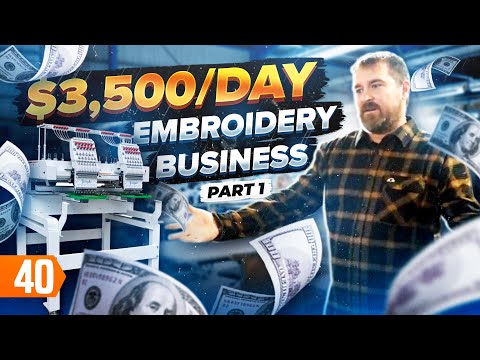
- $3,500 Average day
- $55k/mo Payroll + garments
- ~$22k/mo Left after those two
- ~80% Repeat business
The claim
That a custom screen-printing and embroidery shop bought for $10,000 grew to high-six-figure annual revenue, averaging about $3,500 a day.
- Average daily revenue, last 30–120 days — ~$3,500
- Good day / bad day — ~$5,000 / $1,200 or less
- Stated break-even — ~$1,200 a day
- Payroll — ~$25,000 a month
- Garments — Up to ~$30,000 a month
- Monthly revenue at $3,500 × 22 days — ~$77,000
- Left after payroll and garments — ~$22,000 a month
- Starting cost — $10,000 borrowed from family
- Automatic presses — $35,000 and $65,000
- Target garment margin — "Keystone" — 50% margin / 100% markup
What is this income idea?
A custom apparel print shop — screen printing and embroidery — selling its own sourced garments to repeat business customers.
- The owner, Forrest, previously worked in retail buying for snow, skate and surf shops, and found it hard to get quality private-label T-shirts made. With his partner, he started making them. When the print shop they used was failing, they bought it for $10,000 borrowed from a family member — and, after the landlord locked the doors over a lien, retrieved the equipment at night and kept it in a U-Haul outside his house for about two months.
- The shop now occupies about 4,000 square feet. The host describes revenue as "high six figures every year" and says the business is "on track to double" the following year.
- The owner’s daily numbers are specific: break-even "about 1200 a day just to turn the shop on", a bad day at $1,200 or less, a good day around $5,000, and an average over the last 30 to 120 days of "about 3 500".
- The two largest monthly costs are payroll at about $25,000 and garments at up to $30,000, bought on net terms and paid on time. An entry-level six-colour automatic press cost $35,000; a larger one $65,000.
- Margin comes mainly from supplying the garment rather than printing on the customer’s own: the target is "keystone", 50% margin or 100% markup. About 80% of business is repeat, and 60% of that from customers of five years or more. Staff has ranged from five to eleven; at six, he says, the business is the best it has been.
A print shop averaging $3,500 a day, spending about $55,000 a month on staff and blank shirts, and living mainly on loyal repeat customers.
- Retail buying background — Saw the gap
- Buy a failing shop — $10,000, borrowed
- Sell to your network — Action-sports shops
- Supply the garment — Keystone margin
- Automate the presses — $35k–$65k each
- Keep customers for years — ~80% repeat
A traditional small manufacturer — the figures are unusually complete.
A rare interview where the numbers join up
The lesson underneath the number
- Most business interviews give a revenue figure and stop. This one gives average daily revenue, a good and bad day, a break-even, the two biggest monthly costs, equipment prices, a target margin, headcount and repeat-customer share. That makes it possible to check the headline, and the headline mostly holds: $3,500 a day across 22 to 30 working days is roughly $0.9 million to $1.3 million a year, consistent with "high six figures" on the lower end.
- Joining the figures up also reveals what they do not say. Payroll of $25,000 and garments of $30,000 take $55,000 of a roughly $77,000 month on a five-day week. The remainder has to cover rent on a 4,000-square-foot unit, ink, screens and emulsion, utilities, payments on presses that cost $35,000 and $65,000, insurance, and whatever the two owners pay themselves. The business is clearly sustainable — the owner says it has grown every year — but the "$3,500 a day" in the title is a revenue number, and the margin after everything is not stated.
- The break-even figure deserves a note. "About 1200 a day just to turn the shop on" roughly matches payroll on a five-day month and cannot also include $30,000 of garments. That is a sensible way to think about fixed costs, but it is not the level at which the shop becomes profitable; every order also carries the cost of the blank garment.
- The operating advice is the other reason to watch. Buying a failing shop’s equipment for $10,000 — with someone who knew how to run it — is a far cheaper start than new presses. Earning margin on the garment instead of printing on customers’ own blanks, paying suppliers on time to build credit, preferring a few well-paid staff with automation to many low-paid ones, and making yourself easy to find rather than cold-calling are all concrete, credible lessons. And 80% repeat revenue, most of it from customers of five years or more, is the real asset the business has built.
Our biggest customers and most profitable customers are the ones that have been with us the longest.
The owner, on where the business’s value actually sits
How the shop was built
Practical, specific, and mostly transferable.
This is Part 1 of a two-part interview; Part 2 is a separate video and was not used as a source here. The equipment tour and screen room are shown on camera.
- Start from an industry you know — A retail buying background showed the owner exactly what shops struggled to source. His first customers came from that network, and it is still the largest client group.
- Buy distressed equipment — The whole starting cost was $10,000 for a struggling shop’s equipment — plus someone who knew how to run it. A U-Haul served as storage for two months.
- Seed customers with samples — Send shops a shirt you made for someone they know. For those without a network, he advises against cold-calling and in favour of SEO, social presence and pilot products with friends.
- Earn margin on the garment — Rarely print on customer-supplied blanks; source better garments and aim for keystone pricing. Volume with suppliers improves the buy price.
- Automate with fewer, better-paid staff — An automatic press lets one skilled operator "make a couple thousand dollars". He prefers a few well-paid people to many poorly paid ones.
- Pay suppliers on time — Garments bought on net terms and settled at month end, building business credit. A sound, rarely mentioned discipline.
The business model
Screen printing and embroidery on garments the shop sources and marks up, for private-label and custom orders.
Businesses — especially action-sports retailers — ordering branded apparel repeatedly; about 80% of revenue is repeat.
Higher-quality, more contemporary garments than a standard print shop offers, printed durably on automatic presses.
Existing industry relationships, samples, SEO and social media; cold-calling is explicitly discouraged.
- Payroll — ~$25,000 a month; five to eleven staff over time, six now
- Garments — Up to ~$30,000 a month, on net terms
- Equipment — Automatic presses at $35,000 and $65,000
- Premises — ~4,000 sq ft; rent "used to be" the largest cost, amount not given
- Consumables — Ink, emulsion, film, screens — not quantified
- Owners’ pay and tax — Not discussed
Two named monthly costs and two equipment prices is more cost disclosure than most interviews in this library. Rent and consumables are the notable gaps.
What you would actually need
Money
$10,000 bought the first equipment. Today the owner names $35,000 and $65,000 automatic presses.
The $10,000 start is credible because it bought a going shop’s used equipment and access to someone who could run it. Reaching the current scale needed automatic presses, 4,000 square feet and working capital for up to $30,000 a month of garments, bought on terms.
Stated or implied costs
- $10,000 for used equipment (borrowed)
- $35,000 entry-level automatic press
- $65,000 larger automatic press
- ~$25,000 a month payroll
- Up to ~$30,000 a month garments
- Rent for ~4,000 sq ft — not stated
- Ink, emulsion, screens, utilities — not stated
Time
The business "has grown every year since opening"; 60% of repeat revenue comes from customers of five-plus years.
This is a multi-year build. The loyalty that drives 80% repeat business is the product of years of relationships, and the interview does not suggest a shortcut.
What takes the time
- Learning to run presses (or hiring someone who can)
- Building relationships in a target industry
- Making screens and stencils for each job
- Sourcing and managing garment inventory
- Keeping accounts for five years or more
The part you must pay attention to
The $1,200-a-day break-even cannot include garments.
The owner says break-even is "about 1200 a day just to turn the shop on", and separately that payroll is about $25,000 a month and garments up to $30,000.
- $3,500 × 22 working days — $77,000
- Payroll — $25,000
- Garments — $30,000
~$22,000 a month
Before rent, ink, supplies, equipment and owners’ pay
On a 22-working-day month, $1,200 a day is about $26,400 — roughly payroll plus a little. It cannot also cover $30,000 of garments. So the break-even figure describes the fixed cost of opening the doors, not the point at which the business stops losing money on a job-by-job basis. Garments are a variable cost that rises with sales, which is fine, but a viewer who took $1,200 a day as the point of profit would be wrong. The number of working days is our assumption: the video does not say whether the shop runs five, six or seven days a week, and at 30 days the same arithmetic leaves about $50,000.
None of this contradicts the owner — it simply joins up figures he gave at different points. The headline "$3,500 a day" is revenue, and it reconciles with the host’s "high six figures": between about $924,000 and $1.26 million a year depending on working days. After the two largest costs, somewhere around $22,000 to $50,000 a month remains, from which rent on 4,000 square feet, ink, screens, utilities, equipment payments, insurance and the owners’ own pay must still come. That is a real, healthy small manufacturer. It is not $3,500 a day in anyone’s pocket.
- THE AVERAGE MONTH (our maths)
- $3,500 / day
- x 22 days $77,000
- - payroll $25,000
- - garments $30,000
- ----------------------------
- left $22,000
- (at 30 days: $50,000)
- still to pay: rent, ink,
- screens, utilities, equipment,
- insurance, owners' pay
- THE BREAK-EVEN
- $1,200 x 22 = $26,400
- payroll alone = $25,000
- garments not covered
- THE YEAR
- $77k-$105k x 12 = $0.92M-$1.26M
- host: "high six figures" ok
The economics
Enough figures to do the sums — and the sums mostly work.
- Average day — ~$3,500
- Good / bad day — ~$5,000 / ≤$1,200
- Break-even — ~$1,200 a day
- Payroll — ~$25,000 a month
- Garments — Up to ~$30,000 a month
- Monthly revenue (22–30 days) — ~$77,000–$105,000
- Annual revenue (22–30 days) — ~$0.92M–$1.26M
- Left after payroll and garments — ~$22,000–$50,000 a month
- Rent, consumables, owners’ pay, profit — Not given
What the average day leaves after the two biggest costs
$3,500 × 22 = $77,000; $77,000 − $25,000 payroll − $30,000 garments = $22,000
About $22,000 a month on a five-day week (about $50,000 on a seven-day month), before rent, consumables, equipment payments, insurance and owners’ pay
IncomeIdeaLab calculation from figures the owner stated
Working days are not stated, so we show a range. Garments are described as "can be thirty thousand dollars a month", which may be a high month rather than a typical one. Payroll may or may not include the owners.
- Rent on the 4,000 sq ft facility
- Ink, emulsion, screens and utilities
- Equipment finance on the $35k and $65k presses
- Whether payroll includes the two owners
- Net profit or owners’ take-home
- Working days per week
- Garments at up to $30,000 against roughly $77,000–$105,000 of monthly revenue is 29–39% of sales — consistent with a keystone (100% markup) on the garment portion, with print and embroidery charges on top.
- The host’s "on track to double their growth in the next year" is a projection and is not supported by any figure in the interview.
- The owner says one operator on an automatic press can "make a couple thousand dollars" — a productivity claim that fits a $3,500 average day with a small team.
- Headcount is described as ranging from five to eleven, with six current staff; the owner says the business is performing best at the smaller size.
Evidence status
Every figure in Part 1.
- Average ~$3,500 a day over the last 30–120 days — Owner — Specific and consistent with other figures.
- Good day ~$5,000; bad day $1,200 or less — Owner — A useful range.
- Break-even ~$1,200 a day — Owner — Covers fixed costs; cannot include garments.
- Payroll ~$25,000 a month — Owner — The largest fixed cost.
- Garments up to ~$30,000 a month — Owner — Variable; bought on net terms.
- Started with $10,000 borrowed from family — Owner — Bought a failing shop’s equipment.
- Presses at $35,000 and $65,000 — Owner — Shown on the tour.
- Keystone target: 50% margin on garments — Owner — A target, not a reported result.
- ~80% repeat; 60% of that from 5+ year customers — Owner — The business’s key strength.
- High six figures a year — Host — Consistent with $3,500 a day.
- On track to double next year — Host — No supporting figure.
- Rent, consumables, profit — Nobody — Not given.
What is actually proven?
More than usual — the revenue and main costs are both on the record.
- Average daily revenue of about $3,500, with a good- and bad-day range.
- Payroll of ~$25,000 and garments of up to ~$30,000 a month.
- The facility, automatic presses and screen-making process shown on camera.
- Revenue reconciles with "high six figures" a year.
- About $22,000–$50,000 a month remains after payroll and garments.
- The stated break-even excludes garment costs.
- Doubling the following year.
- Net profit and owners’ take-home.
What the headline doesn’t tell you
The headline is fair. The small print is about what $3,500 has to pay for.
- $3,500 a day is revenue. — Not profit.
- $55,000 a month goes on two costs. — Payroll and garments.
- Break-even excludes garments. — $1,200 a day is fixed costs.
- Rent is not given. — On 4,000 square feet.
- Presses cost $35k–$65k. — The $10k start was used gear.
- Working days are not stated. — We show a range.
- "Double next year" is a forecast. — By the host.
- 80% is repeat business. — Built over years.
Should you try it?
A realistic trade with an honest set of numbers
Achievable for someone with industry contacts and the patience to build repeat accounts. Budget for garments as working capital and cost rent and consumables before you sign a lease.
- Revenue transparency — 8 — Average, good and bad days all given.
- Cost transparency — 7 — Payroll, garments and equipment stated; rent and consumables not.
- Internal consistency — 8 — Figures reconcile, apart from the break-even framing.
- Profit transparency — 2 — Net profit and owners’ pay not given.
- Practical advice — 8 — Buy used, margin on garments, pay on time, get found.
- Beginner accessibility — 4 — Low entry via used gear; relationships take years.
- This is one of the more honest pictures of a small manufacturing business in the genre. The owner started for $10,000 by buying a failing shop’s used equipment, found customers through the industry he already worked in, and built a business where most revenue now comes from accounts he has had for years. None of that is glamorous, and all of it is repeatable in principle.
- Read the headline correctly. $3,500 a day is revenue. Roughly $55,000 a month of it goes on payroll and blank garments before rent, ink, screens, utilities, equipment payments, insurance or the owners themselves are paid. By our arithmetic that leaves around $22,000 a month on a five-day week — enough for a healthy small business, not a windfall.
- Treat garments as working capital. Up to $30,000 a month of blanks is bought before customers pay; the owner uses supplier terms and pays on time to keep that credit. A new shop without that track record may have to pay up front.
- And do not overlook the cheapest part of the story. Automatic presses cost $35,000 to $65,000 new. The owner’s entire start cost $10,000 because he bought a struggling shop’s equipment and gained someone who knew how to use it. For a beginner, that route matters more than any figure in the title.
Passive or automated?
Automation
Automatic presses multiply one operator’s output.
Passive potential
Every order is physical production by staff.
Automation is central to how this shop stays competitive — the owner says one skilled person on an automatic press can produce a couple of thousand dollars of work, and that this is how a US shop competes with overseas manual labour. But it is automation of physical production, not a passive income. Screens must be made for each design, garments sourced and stocked, presses run and maintained, embroidery done, and customer relationships kept for years. The business ran on five to eleven people, currently six.
- Making screens and stencils for every design
- Operating and maintaining presses
- Sourcing garments and managing supplier terms
- Selling to and keeping long-term accounts
- Running embroidery
Recommended beginner experiment
Validate demand before equipment.
- List businesses you already know. — His first customers were his old industry.
- Make samples through an existing printer. — Before buying presses.
- Price with a keystone on the garment. — Then add print charges.
- Look for used or distressed equipment. — His whole start was $10,000.
- Cost rent, ink and screens per job. — The video does not.
- Set a fixed-cost break-even and a job margin. — They are different numbers.
- Chase repeat accounts, not one-offs. — 80% of his revenue.
Our verdict: 7/10
Honest numbers that add up — and show where the money goes $3,500 a day is revenue; payroll and garments take most of it
Credited for an unusually complete set of figures — average, good and bad days, a break-even, payroll, garment spend, equipment prices, target margin, headcount and repeat-customer share; for revenue that reconciles with the "high six figures" description; for a credible, low-cost start by buying distressed equipment for $10,000; for practical advice on garment margin, supplier terms, automation and inbound marketing; and for a tour that shows the operation. Marked down because the "$3,500 a day" in the title is revenue, with roughly $55,000 a month going to payroll and garments before other costs; because the $1,200-a-day break-even covers fixed costs only and cannot include garments, which a viewer could misread; because rent, consumables, equipment finance, owners’ pay and net profit are not given; and because the host’s "on track to double" is an unsupported projection.
This is a straightforward, credible interview about a real small manufacturer, and it gives enough numbers to check itself. An average day of about $3,500 fits the host’s "high six figures" a year. Payroll of about $25,000 and garments of up to $30,000 a month are stated plainly. The start — $10,000 borrowed from family to buy a failing shop’s equipment, plus someone who could run it — is modest and replicable in spirit. The advice on earning margin from the garment, paying suppliers on time, automating with a small well-paid team, and being easy to find rather than cold-calling is sound. Joining the figures up adds two cautions. First, $3,500 a day is revenue: after payroll and garments, roughly $22,000 a month remains on a five-day week, before rent on 4,000 square feet, consumables, equipment payments, insurance and the owners’ own pay, none of which is given. Second, the "$1,200 a day" break-even roughly matches payroll alone and cannot include garments, so it describes the cost of opening the doors rather than the point of profit. With that understood, this is one of the more useful pictures of a trade business in the library, and its most important number may be the least glamorous: about 80% of revenue comes from repeat customers, most of them for five years or more.
- Average day — $3,500
- Annual revenue — ~$0.92M–$1.26M
- Payroll + garments — ~$55,000 a month
- Left after those — ~$22k–$50k a month
- Break-even — $1,200/day, fixed costs only
- Starting cost — $10,000
- Net profit — Not stated
- Beginner suitability — Yes, with contacts and patience
Sources
- How to Start Screen Printing and Embroidery Business with a $3,500/Day Revenue (Pt. 1) — UpFlip — YouTube video, 2020-10-26