Scrap Metal / Curbside Collection · Field Review
“They Thought it was Trash”
What we found: One Scrap Load, 860 lb of Steel, $86: The Scale Arithmetic Checks Out, and the Day’s Costs and Hours Are Not Stated
The weigh-in, weigh-out and 10-cents-a-pound rate reconcile exactly. Fuel, truck costs, time on the route and the value of the copper and aluminium set aside are not given.
- 860 lb Steel weighed in
- $86 Paid for the load
- Reconciles Scale arithmetic
- Not stated Fuel, truck, hours
The claim
That metal people put out on the curb as trash can be collected, weighed in at a scrapyard and turned into cash the same day.
- Gross weight in (truck, driver and scrap) — 7,340 lb
- Weight out (empty truck and driver) — 6,480 lb
- Net steel — 860 lb
- Rate for plain steel — 10 cents a pound
- Paid for the load — $86
- Aluminium rate, as told to him on the route — About 50–60 cents a pound
- Copper rate, as told to him on the route — About $6 a pound
- Fuel and truck costs — Not stated
- Hours worked for the load — Not stated
What is this income idea?
Drive a pickup with a liftgate around residential streets, collect metal items left at the curb, and sell the steel by weight at a scrapyard.
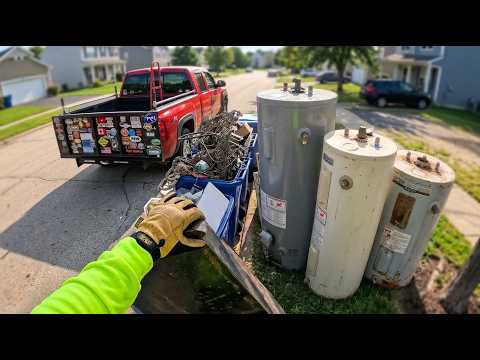
- The video follows one working day. The creator picks up air conditioners, water heaters, a heater unit, a lawn mower, stools, a jump starter and other metal items left out for collection, and some residents hand items over directly after seeing the truck.
- Part of the supply is arranged rather than found. A plumber texts to say a water heater is on the curb, a local business leaves scrap out for him weekly, and a resident says she has now given him metal three times.
- He sorts as he goes. A heavy air conditioner, which he estimates at over 100 lb, is dropped at his son’s place to be taken apart; magnet tests separate steel from aluminium; and items with copper inside are noted. A mower is taken back off the truck because it is leaking fuel.
- At the scrapyard the truck weighs in at 7,340 lb and out at 6,480 lb. The ticket reads 860 lb of steel at 10 cents a pound, $86. His own guess before weighing was 840 lb and $84.
- Rates mentioned on the route put the materials in context: about 10 cents a pound for plain steel, 50 to 60 cents for aluminium, and around $6 a pound for copper, which he describes as rare in curbside finds.
- He also says pallets used to be a second income line, but the two pallet buyers he sold to have closed. Viewer tips by PayPal and letters to a PO box are thanked as support for the channel. The final section of the video is a personal update unrelated to the business, which this review does not cover.
Collect free metal from the curb, sell the steel by the pound, and keep the copper and aluminium separate because they are worth far more.
- Drive the route — 20–30 miles
- Collect curb metal — Appliances, furniture
- Take tips from locals — Plumber, neighbours
- Sort by metal — Magnet test
- Set aside copper — Teardown later
- Weigh in and out — 7,340 / 6,480 lb
- Get paid by weight — 860 lb = $86
A complete revenue cycle for one load, with the cost side and the higher-value metals left unpriced.
The supply network is the asset, not the truck
The lesson underneath the number
- The most useful thing in this video is not the payout but how the material arrives. A plumber texts about a water heater on a curb. A local business sets scrap aside each week. A resident has handed over metal three times, and another flags the truck down after reading the word scrap on it. That network turns a speculative drive into a route with known stops, and it is built through being visible and reliable on the same streets over time.
- The second lesson is in the rates he is quoted on the route. Plain steel at 10 cents a pound, aluminium at 50 to 60 cents, copper around $6. A full load of heavy appliances produced $86. The same weight in copper would be worth far more, which is why water heaters with copper fittings and transformers are noted and set aside. The economics of curbside scrap depend heavily on how much time is spent separating the valuable metals from the steel, and the video gives no figure for that part of the income.
- The numbers that are given are internally consistent. The truck weighs 7,340 lb full and 6,480 lb empty, the difference is 860 lb, and at 10 cents that is $86, matching the ticket. His own guess beforehand was within 20 lb. That kind of accuracy comes from repetition.
- What is missing is the other side of the ledger. The route is 20 to 30 miles, the truck is carrying several thousand pounds, and the day runs from morning to the scrapyard. He mentions that his mileage is tax deductible, which treats the driving as a business expense, but no fuel or vehicle figure is given. Without hours, the $86 cannot be compared with any other job.
They commute 20 or 30 miles to work, I drive 20 or 30 miles to go scrapping. What’s the difference, besides mine’s tax deductible.
The creator, answering viewers who comment on his mileage
How the day runs, as the video describes it
A repeatable route, with the supply coming partly from people who know the truck.
Revenue is given for one load of steel; no costs are stated for any step.
- Work a regular route — He drives residential streets looking for metal left at the curb, and says the 20 to 30 miles he covers is comparable to a commute.
- Build local sources — A plumber texts him about a water heater, a business sets out scrap each week, and residents flag him down. Repeat givers are a real supply advantage that the video demonstrates through what is said on the route.
- Load safely and selectively — A liftgate handles the heavy units. A mower leaking fuel is taken back off, and he says he only takes metal items, turning down a wooden dresser.
- Sort higher-value metals — Magnet tests distinguish steel from aluminium; copper in water heaters and transformers is noted. These are kept apart from the steel load because their rates are many times higher.
- Weigh in, weigh out — The truck crosses the scale full and empty. The difference, 860 lb, is the steel sold.
- Collect the ticket — 860 lb at 10 cents a pound, paid at $86.
The business model
Steel sold by the pound at a local scrapyard, with copper and aluminium separated for higher rates. Pallets were a former income line until his buyers closed.
The scrapyard, which pays by weight on a ticket.
Residents get bulky metal items removed free; the collector gets the material at no purchase cost.
A regular driving route, plus tip-offs from a plumber, a local business and repeat residents.
- Fuel — For a 20–30 mile route. Not stated
- Truck and liftgate — Owned; purchase and upkeep not stated
- Vehicle repairs — A damaged door on the second truck is mentioned, unpriced
- Tools — New snips and magnets appear, unpriced
- Time — Hours for the load not stated
Every cost in this business is real and recurring, and none is given a figure in the video.
What you would actually need
Money
Not discussed. The truck, liftgate, magnets, snips and fuel appear in the video without prices.
The entry cost is mostly a vehicle that can carry several hundred pounds and a way to lift heavy appliances. Someone who already owns a pickup can start cheaply; someone who needs to buy one is starting a long way behind an $86 load.
Named in the video, not priced
- A pickup truck with a liftgate, in use for about four years
- Fuel for a 20–30 mile route
- Magnets, snips and hand tools
- Rope and straps to secure loads
- A place to store and dismantle items
- Vehicle repairs (a damaged door on a second truck is mentioned)
Time
Not quantified. The video covers a single day from a morning start to the scrapyard.
The hours behind the $86 are the missing figure that matters most. Without them there is no way to turn the payout into an hourly rate.
Where the time goes
- Driving the route and stopping at each pile
- Loading and securing heavy units
- Sorting and magnet-testing metals
- Dropping items for teardown
- Queuing and weighing at the scrapyard
- Dismantling items for copper later
The part you must pay attention to
The steel load is worth $86 before any cost. Copper and aluminium are where the margin may sit, and they are not valued.
The scale ticket is the one hard number: 860 lb at 10 cents a pound, $86.
- Weight in — 7,340 lb
- Weight out — 6,480 lb
- Steel rate — $0.10/lb
$86
860 lb of steel, gross
Nothing is deducted from the $86. Fuel for a 20-to-30-mile route, wear on a heavily loaded truck and the hours spent collecting are not stated, so the payout cannot be turned into a profit or an hourly rate. He mentions that his mileage is tax deductible, which is a reminder that the driving is a real business cost.
The rates mentioned on the route show why sorting matters. At 10 cents a pound, a ton of steel is $200. At the rates he is told, 20 lb of copper would bring about $120 and 100 lb of aluminium $50 to $60. Copper pulled from water heaters and transformers could add materially to the day, but none is weighed or sold in this video, so its contribution is unknown.
- THE SCALE TICKET
- Weight in 7,340 lb
- Weight out -6,480 lb
- Net steel 860 lb
- x $0.10 per lb
- Paid $86
- -> his guess: 840 lb, $84
- WHAT IS NOT DEDUCTED
- Fuel, 20-30 mile route ???
- Truck wear, repairs ???
- Hours on the route ???
- WHY SORTING MATTERS (our sums)
- 2,000 lb steel x $0.10 = $200
- 20 lb copper x ~$6 = ~$120
- 100 lb aluminium x $0.55 = ~$55
The economics
One weighed load, a set of quoted rates, and no costs.
- Weight in — 7,340 lb
- Weight out — 6,480 lb
- Net steel — 860 lb
- Steel rate — $0.10/lb
- Paid — $86
- Aluminium rate (quoted on the route) — $0.50–$0.60/lb
- Copper rate (quoted on the route) — ~$6/lb
- Route distance — 20–30 miles
- Fuel, truck, hours — Not stated
Reconciling the scale ticket
(7,340 lb − 6,480 lb) × $0.10 = 860 lb × $0.10
$86, matching the ticket
IncomeIdeaLab calculation from the figures stated in the video
This is gross revenue for one load of steel. It is before fuel, vehicle costs and time, none of which is stated, and it excludes any copper or aluminium from the day, which is not weighed in the video.
- Fuel cost for the route
- Truck purchase, insurance and maintenance
- Hours worked to collect the load
- Value of the copper, aluminium and appliances set aside
- How many loads a typical week produces
- Income from the channel or tips, which are mentioned but not quantified
- His pre-weighing guess of 6,500 lb out and $84 was within 20 lb of the actual 6,480 lb, which reflects a practised eye rather than a lucky load.
- He is unsure whether the steel rate is still 10 cents and wonders if it has risen; the ticket confirms 10 cents for this load.
- At 10 cents a pound, a full ton of steel is $200 gross (our calculation). Hours spent sorting copper and aluminium are likely to matter more to the day’s total than additional steel.
- He says he no longer has a buyer for pallets because the two pallet businesses he used have closed, so one income line in the channel’s name is currently inactive for him.
Evidence status
Every figure stated in the video.
- Weight in 7,340 lb — Creator, reading the scale — Consistent with the weight out and the ticket.
- Weight out 6,480 lb — Creator, reading the scale — Gives 860 lb net.
- 860 lb for $86 — Creator, reading the ticket — Reconciles exactly at 10 cents a pound.
- Plain steel at 10 cents a pound — Conversation on the route; ticket — Confirmed by the ticket for this load.
- Aluminium at about 50–60 cents a pound — Conversation on the route — A quoted range, not a sale in this video.
- Copper at about $6 a pound — Conversation on the route — A quoted rate; no copper is sold in this video.
- A route of 20–30 miles — Creator — Fuel cost for it is not stated.
- An air conditioner over 100 lb — Creator, estimating — His estimate; it is set aside for teardown, not weighed.
- Pallets worth about $50 if a buyer existed — Creator — He says his pallet buyers have closed.
- Costs and hours — Nobody — Not stated in the video.
What is actually proven?
The payout for one load is clear. Whether the day was profitable is not addressed.
- The scale readings and the 10-cent rate reconcile to the $86 ticket.
- Supply comes partly from repeat local sources who contact him.
- Copper and aluminium are quoted at rates many times higher than steel.
- His pallet buyers have closed, so pallets are not currently sold.
- Fuel, vehicle and time costs for the load.
- What the separated metals and set-aside appliances will bring.
What the headline doesn’t tell you
A clean ticket is not the same as a clean profit.
- $86 is gross. — Fuel and the truck come out of it.
- Hours are not given. — So no hourly rate can be worked out.
- Steel is the cheap metal. — 10 cents against about $6 for copper.
- Copper is set aside. — Not weighed or sold here.
- Pallet buyers have closed. — One income line is currently inactive.
- Supply is a network. — Plumbers, businesses and neighbours call him.
- Heavy lifting is constant. — He relies on a liftgate.
Should you try it?
A low-barrier side income if you already own a truck
Price your fuel and time first, and learn to separate copper and aluminium, because steel alone pays very little per hour.
- Consistency of the stated figures — 9 — Scale in, scale out and the rate reconcile exactly.
- Revenue disclosure — 6 — One ticket and a set of quoted rates.
- Cost disclosure — 1 — No fuel, vehicle or time figure.
- Practical detail — 7 — Sourcing, sorting and loading are all described.
- Barrier to entry — 7 — Low with a truck; high without one.
- Beginner accessibility — 6 — Physically demanding, but simple to start.
- Curbside scrap is one of the easiest businesses in this library to start: the material is free, the buyer is a local scrapyard that pays on the spot, and the video shows how a route and a set of regular sources make the supply more predictable. If you already own a pickup, the cash outlay is small.
- The catch is the rate. Plain steel at 10 cents a pound means a truck carrying 860 lb earns $86 before fuel. To make the work pay, you need either volume, a short route, or the knowledge to pull copper, brass and aluminium out of appliances and sell them separately at rates many times higher. The video points at that second route but does not show its income.
- Before committing, keep a log of miles, fuel and hours for a week and set it against your tickets. That is the figure the video does not give, and it will decide whether this is a business or a pastime that pays for its petrol.
Passive or automated?
Automation
Every pound is found, lifted, sorted and driven by hand.
Passive potential
Income stops when the truck stops.
This is manual work and the video presents it as such. Income is tied directly to time on the route, the weight a person can load, and the trips to the scrapyard. The one part that becomes easier over time is supply: regular sources who text or set material aside reduce the searching, but the collection, loading and selling remain hands-on.
- Driving the route and spotting usable metal
- Lifting and securing heavy appliances
- Sorting steel from copper and aluminium
- Dismantling items for higher-value parts
- Weighing in and collecting payment
Recommended beginner experiment
One week, with a log of every cost.
- Call your local scrapyard. — Ask current rates for steel, aluminium and copper.
- Plan a short route first. — Fuel is the cost that scales with miles.
- Carry a magnet. — Separate steel from non-ferrous metals.
- Log miles, fuel and hours. — The figures the video does not give.
- Keep copper separate. — It pays far more per pound.
- Build repeat sources. — Tradespeople and neighbours, as in the video.
- Compare tickets with costs. — After a week, work out your hourly rate.
Our verdict: 6/10
A clean, reconciling scale ticket for one load with no cost, hours or higher-value metal figures to judge the day by
Credited for a payout that reconciles exactly from the weigh-in, weigh-out and rate; for quoting steel, aluminium and copper rates that show why sorting matters; for showing how a network of local sources makes the supply predictable; and for being open that his pallet buyers have closed. Marked down because no fuel, vehicle or time figure is given for a 20-to-30-mile route, and because the copper and aluminium set aside are not valued, so the day’s total and profit cannot be worked out.
The video gives a straightforward look at curbside scrap collection and the one figure it reports holds up. The truck weighs 7,340 lb full and 6,480 lb empty; the difference is 860 lb, and at 10 cents a pound that is $86, the amount on the ticket. The more useful material is in how the business runs: a plumber who texts about water heaters, a business that sets scrap aside, residents who flag the truck down, and a habit of magnet-testing and setting aside anything containing copper. The rates mentioned on the route, 10 cents for steel against about $6 for copper, explain why that sorting matters. What the video leaves open is the cost of the day. The route is 20 to 30 miles, the truck carries thousands of pounds, and no fuel, vehicle or time figure is given, so the $86 is a gross figure with no hourly rate attached. The separated metals are not weighed or sold in this video, so their contribution is unknown. For a beginner with a truck, the model is accessible; the first job is to log costs and hours, which the video does not do.
- Net steel — 860 lb
- Paid — $86
- Steel rate — $0.10/lb
- Copper rate quoted — ~$6/lb
- Fuel and truck costs — Not stated
- Hours — Not stated
- Beginner suitability — Good, if you own a truck
Sources
- They Thought it was Trash — Scrap & Pallet Man — YouTube video, 2026-09-25