SaaS / Exits and Valuation · Claim Review
“What SaaS Buyers Actually Want in 2026”
What we found: 22 Meetings, No Private Equity Offer, and the Company Still Sold
The opening story counts every buyer meeting as a private equity firm, gives no metric for the "great" business, and does not mention in that opening that a strategic bought it.
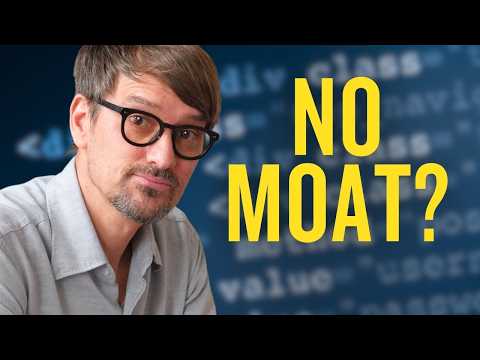
- 22–23 Management meetings
- 0 PE letters of intent
- Sold Outcome
- None Company metrics given
The claim
That private equity buyers have raised the bar, so that a SaaS company with excellent metrics met 22 private equity firms and received no offer.
- Opening claim: PE firms that took a meeting — 22, "not one of them made an offer"
- Guest’s own count: management meetings — "Something like 22 or 23"
- Buyer mix in those meetings — "Lots of strategic interest, lots of private equity interest" — split never given
- Private equity letters of intent — Zero
- Outcome of the sale — Sold to a strategic buyer
- ARR, growth, retention, sale price — Never stated
- Tiny Seed portfolio size — "200 plus companies"
- Discretion Capital client band — 2 to 20 million in ARR — Spoken while the firm's website is shown on screen with the label "DISCRETIONCAPITAL.COM" at about 0:54
- Moats in the framework — 4 existing + "five more"
- Genuinely new moats after removing the repeat — 4
What is this income idea?
Not an income idea as such: an argument about what makes a software business sellable, aimed at founders who might one day want to exit.
- The host interviews Anar, their co-founder at Tiny Seed, who also runs Discretion Capital, a firm that "helps SAS founders doing 2 to 20 million in ARR sell their companies". The firm's website is shown on screen at about 0:54 with the label "DISCRETIONCAPITAL.COM".
- The case they make is that AI has not killed SaaS — "it's software" — but that it has changed which defences buyers value. The host recaps four moats from their earlier book (integrations, brand, switching costs, owned traffic) and calls unique features a false moat.
- Five newer moats follow: hardware tightly coupled to the software, a two-sided marketplace, being the place where a team’s messages and approvals live, exclusive data that "flows in and never flows back out", and high switching costs.
- The evidence offered is one sale process. An AI voice-receptionist company with "great metrics on every measure" had "something like 22 or 23 management meetings", lots of strategic and private equity interest, and not one private equity letter of intent. It sold to a strategic buyer.
- From that and from comments in a private Slack thread, the video concludes that some buyers will not take a company with none of the five moats to their investment committee.
- There is a sponsor read in the middle for the SaaS Institute, described as built for founders past a million in ARR, with a coach, a mastermind and expert access.
Buyers pay more for software that is hard to rip out; the video’s proof is one auction where private equity passed and a trade buyer bought.
- AI lowers build cost — Copying gets cheaper
- Buyers fear rebuilds — "What stops someone…"
- Hardware — Moat 1
- Two-sided marketplace — Moat 2
- Where the team talks — Moat 3
- Data in, not out — Moat 4
- Switching costs — Moat 5, already in the four
- One auction as proof — 0 PE LOIs, sold anyway
A reasonable framework. The evidence for "the bar has risen" is one deal, told by the advisor who ran it.
A good checklist, a thin proof, and a sell-side narrator
The lesson underneath the number
- The framework itself holds up as common sense. Software that sits inside a team’s daily work, that is welded to physical hardware, or that depends on data a copier cannot take with them is harder to replace than software defined by a clever feature. The host’s point that unique features were never a moat is the most useful sentence in the video, and the condition placed on data — it only counts if it does not flow back out through an API — is stated with real precision.
- The evidence is thinner than the opening suggests. One sale is the whole empirical case. The opening line counts every management meeting as a private equity firm, then says none of them made an offer; the guest’s own version has strategic and private equity buyers in the same 22 or 23 meetings, and a strategic buyer who bought the company. Both statements can be true at once only if "offer" means a private equity letter of intent, and the intro does not say so.
- The list also counts one moat twice. High switching costs are in the original four from the host’s book and again as the fifth of the "five more", described as "your classic system of record" — the same phrase used for the third. Read closely, the newer list is three distinct ideas (hardware, marketplace, data) plus two descriptions of being hard to leave.
- The people telling the story have a stake in it, which they partly disclose. The host introduces the guest as their Tiny Seed co-founder, and says the guest’s firm helps founders sell. That firm ran the example auction. The hardware and data examples are introduced as Tiny Seed companies, so the moats are illustrated with the speakers’ own investments. And the sponsor read is for a founder programme that the video describes as where "the real conversations happen" — "our communities". A message that buyers have raised the bar, from people who sell exit advice, accelerator places and coaching, is not neutral, and the video never says so in those terms.
As developers we love to think the clever thing we built is a moat. It never really was and it definitely isn’t today.
The host — the most useful line in the video
The five moats, as they give them
What the video says buyers now look for, with our note on each.
From the 14-minute video, published 19 July 2026. The 22-meetings story is told aloud; no metric for the company that was sold is shown on screen where it is discussed. Around 0:54 the video scrolls the Discretion Capital website ("What is your SaaS business worth?", "Are you getting inbound offers to buy your business?") with its address as an on-screen label. The company that was sold is not named here.
- Hardware tightly coupled to the software — Digital scales in grocery stores, software in EV chargers, printers in warehouses — all described as Tiny Seed companies. "Nobody's vibe coding their way around a physical device." A fair point, illustrated entirely from the host’s own portfolio.
- A two-sided marketplace — More valuable as each side grows, and hard to bootstrap: without access to one side "your odds are approximately zero". The caution is as useful as the moat.
- Be where the team’s work lives — Messages, approvals and shared context — "a system of record type" product. Slack is the example: "We try to leave Slack feels like every year and then we come back."
- Exclusive data that refreshes — Only a moat if the data "flows in and never flows back out through an API", and if a snapshot goes stale within a month. The condition is stated precisely.
- High switching costs — The test: a competitor offers everything you do at half the price and serious customers stay. This one was already in the original list of four, so it is a repeat, not a new moat.
- The investment-committee rule — Some buyers, "mostly private equity but some strategics", told the guest that with none of the five moats they "won't even bring it to their investment committee". How many buyers, and which, is never said.
The business model
For the host and guest: an accelerator (Tiny Seed), a sell-side M&A advisory (Discretion Capital) and a paid founder programme (the SaaS Institute), all named in the video.
SaaS founders, especially those between roughly 1 and 20 million in ARR who may sell.
Know which defences buyers now pay for, so the business is worth more when you sell — or simply worth knowing about if you never do.
A YouTube channel, a private Tiny Seed Slack where the framework first appeared, and a sponsor read for the SaaS Institute.
- Building a moat — Hardware, a marketplace or proprietary data each cost money and time. Never discussed
- Sell-side advisory fees — Discretion Capital ran the example sale. Its fee is never mentioned
- SaaS Institute membership — Promoted in the video. Price never stated
- Founder time — Implicit in every moat. Never estimated
The video is about valuation, not income, and it contains no money figure for the company it uses as proof.
The part you must pay attention to
The 22 meetings were not all private equity firms, and the company did sell.
The video opens: "22 private equity firms took a meeting. Not one of them made an offer." That is not what the guest says when they tell the story themselves.
- Management meetings, all buyer types — 22–23
- Meetings with trade buyers, count never given — − strategics
Unknown, below 22–23
Private equity firms that actually met the company
In the guest’s own words there were "lots of strategic interest, lots of private equity interest" and "something like 22 or 23 management meetings" — a single count that covers both kinds of buyer. Since at least one strategic went far enough to buy the company, some of those meetings were not with private equity. The number of private equity firms in the room is therefore smaller than 22 by an amount the video never gives. The opening line turns "22 meetings, zero PE letters" into "22 PE firms, zero offers", and "not one of them made an offer" reads as if the company got no offer at all. It did: the narration later says it "became a fight between strategics" and that the company sold. The intro also says "a lot of companies aren't even getting offers anymore", and this company is the only example given — one that got offers.
None of this makes the framework wrong. It means the headline evidence is one auction, told by the advisor who ran it, with no ARR, growth rate, retention figure or sale price for the "metrics most founders would kill for". A reader cannot check whether the private equity firms passed for the reason given — fear the revenue would not last a year — or for price, size, sector or timing. The video asserts the reason; nobody from those firms is quoted.
- THE OPENING LINE
- "22 private equity firms took a meeting"
- "Not one of them made an offer"
- THE GUEST'S ACCOUNT
- Management meetings 22 or 23
- Buyer types strategic + PE
- PE letters of intent 0
- Strategic offers at least 1
- Outcome SOLD
- OUR ARITHMETIC
- PE meetings = 22-23 - strategics
- = unknown, < 22-23
- THE "FIVE MORE" MOATS
- Original four incl. switching costs
- New five incl. switching costs
- Genuinely new 4
- COMPANY METRICS GIVEN
- ARR / growth / retention / price 0
The economics
A valuation argument with no valuation in it.
- Management meetings in the example sale — 22–23
- Private equity letters of intent — 0
- Private equity firms among those meetings — Never stated
- Example company ARR, growth, retention — Never stated
- Sale price — Never stated
- Tiny Seed portfolio — 200+ companies
- Discretion Capital client band — 2–20 million ARR
- Illustrative offers to founders — "10, 15, 20 million"
- Founders who swore not to sell, then did — "Almost 100%"
How many private equity firms were in the 22 meetings?
22 or 23 management meetings (all buyers) − meetings with strategics (unstated, at least one bidder)
Fewer than 22 private equity firms, by an amount the video never gives
IncomeIdeaLab calculation from the guest’s own description of the auction
If "management meetings" counts sessions rather than firms, the number of private equity firms could be smaller still. The video does not distinguish them.
- Any metric for the company used as proof — ARR, growth, retention, churn
- The sale price, or how it compared with expectations
- How many of the 22–23 meetings were with private equity
- How many buyers gave the investment-committee rule, and which ones
- Discretion Capital’s fee on the sale it describes
- The price of the SaaS Institute promoted mid-video
- "Almost 100% of the founders who swore they'd never sell" eventually sell is offered with no number of founders behind it. We have not treated it as a statistic.
- The claim that public SaaS companies report "no additional churn" from AI is attributed to "most of the like public SAS companies" without a single company or filing named.
- One unnamed private equity firm is said to have backed a fast-growing AI company that "went to zero within a year". It is a single anecdote and nothing about it can be checked from the video.
- The video shows the guest's M&A firm's website, with its address on screen, while describing the firm. That is open about the connection, and it also means the person describing the sale market sells advisory services in it.
- The host credits the guest for the framework and says it began in a Tiny Seed Slack thread. That is a fair disclosure of where the idea came from, and also a description of an audience made up of the speakers’ own portfolio founders.
Evidence status
Every substantive claim in the video.
- "22 private equity firms took a meeting" — Host, opening — The guest says 22 or 23 management meetings across strategic and PE buyers. The PE count is never given.
- "Not one of them made an offer" — Host, opening — True of private equity letters of intent per the guest. The company received strategic interest and sold.
- The company had "great metrics on every measure" — Guest — No metric is given anywhere in the video.
- It sold to a strategic buyer — Guest — Stated by the advisor who ran the sale. Price and terms never given.
- PE passed because revenue might not last a year — Host, narration — An inference. No private equity firm is quoted.
- Some buyers will not take a no-moat company to committee — Guest, secondhand — From comments in a private thread. Number and identity of buyers unknown.
- Tiny Seed has invested in 200+ companies — Guest — Plausible; we could not check it from the video.
- Five new moats on top of four existing ones — Host — Switching costs appear in both lists, so four are new.
- Public SaaS companies report no additional churn from AI — Guest — No company or filing named.
- Unique features are a false moat — Host — Argued clearly and consistently with the rest of the framework.
What is actually proven?
The reasoning is shown. The evidence for a market shift is one deal.
- The host and guest disclose that they co-founded Tiny Seed together.
- Each moat is defined with a usable test, including the half-price competitor test for switching costs.
- One sale had 22 or 23 management meetings, no private equity letter of intent, and closed with a strategic buyer.
- The opening line gives a higher number of private equity firms than the later account supports.
- The "five more" moats include one already in the original four.
- Any metric, price or term for the company used as proof.
- That private equity firms in general have raised the bar.
What the headline doesn’t tell you
The story is shorter on facts than its opening implies.
- The company sold. — To a strategic buyer.
- 22 meetings, not 22 PE firms. — Strategics were in the count.
- No metrics at all. — For "metrics most founders would kill for".
- One deal is the evidence. — Told by the advisor who ran it.
- The rule is secondhand. — From an unnamed number of buyers.
- Switching costs appear twice. — Four new moats, not five.
- Examples are portfolio companies. — The speakers’ own investments.
- A sponsor read sits mid-video. — For a founder programme, price unstated.
Should you try it?
Useful as a checklist, weak as evidence
Use the five moats to question your own product. Do not take the video as proof that buyers have changed their behaviour.
- Usefulness of the moat checklist — 7 — Each moat comes with a test you can apply to your own product.
- Evidence for the market shift — 2 — One auction plus secondhand thread comments.
- Consistency of the opening with the payoff — 3 — 22 PE firms in the intro, 22–23 mixed meetings and a sale in the story.
- Metrics disclosed for the example — 0 — No ARR, growth, retention or price.
- Conflict-of-interest disclosure — 5 — Co-founder link stated; portfolio and programme interests left implicit.
- Relevance to a first-time founder — 3 — Aimed at founders already past a million in ARR.
- If you run a software product, the checklist is worth ten minutes. Ask whether a competitor offering everything you do at half the price would move your customers; whether your product holds the messages, approvals and records a team works from; whether your data could be exported and rebuilt in a weekend; and whether anything physical ties a customer to you. Those are good questions whatever any buyer thinks.
- Be more careful with the claim that buyers have raised the bar. The proof is one sale, run by the guest’s own firm, described without a single number for the company, and it ended in a sale. The opening says 22 private equity firms; the guest says 22 or 23 meetings including strategic buyers. That gap is not a detail — it is the difference between "private equity has walked away" and "this particular company suited a trade buyer better".
- Also note who is speaking. The host and guest run an accelerator together, the guest runs a sell-side advisory, the examples of good moats are their portfolio companies, and the sponsor read is for a founder programme. None of that makes the advice bad, but a message that the exit market has become harder is one these businesses benefit from.
- For a beginner, the practical value is narrower still. The video is pitched at founders past a million in annual recurring revenue thinking about a sale. If you have not built a product yet, the one line to keep is that a clever feature is not a defence.
Passive or automated?
Automation
Software delivery is automated; building any of these moats is not.
Passive potential
Every moat described takes ongoing work to build and keep.
The video does not claim anything here is passive, and nothing it describes is. Hardware has to be installed and supported, a marketplace has to be balanced on both sides, proprietary data has to keep refreshing every month to stay valuable, and being a team’s system of record means being reliable enough that, in the guest’s words, customers can "call someone up or email them and shout at them if something's broken". The guest’s case for paying a brand over a home-built tool is that a human answers. That is the opposite of passive.
- Installing and supporting any hardware layer
- Recruiting both sides of a marketplace
- Refreshing proprietary data month after month
- Answering customers when something breaks
- Running a sale process with advisors and buyers
Recommended beginner experiment
Run the checklist against your own product, not against the market.
- Apply the half-price test. — Would your customers stay?
- List what lives in your product. — Messages, approvals, records.
- Check your data exits. — Could a copier take it all?
- Drop features from your moat list. — The host’s own advice.
- Do not bootstrap a marketplace cold. — Unless you already have one side.
- Ask any advisor for real comparables. — Not one anecdote.
- Price any programme before joining. — The video gives none.
Our verdict: 5/10
A sound moat checklist, and an opening story that does not match the later account one auction, no metrics, and a narrator with a stake in the conclusion
Credited for a clear and usable framework — a half-price competitor test for switching costs, a precise condition on when data is a moat, an honest warning that a bootstrapped marketplace has "approximately zero" odds without access to one side, and the line that unique features were never a defence; and for disclosing up front that host and guest co-founded Tiny Seed. Marked down because the opening turns "22 or 23 management meetings" across strategic and private equity buyers into "22 private equity firms" that made no offer, while the company in fact sold to a strategic; because no ARR, growth, retention or price is given for the business described as having "metrics most founders would kill for"; because the investment-committee rule is secondhand from an unnamed number of buyers; because the "five more" moats repeat switching costs from the original four; and because the examples are the speakers’ own portfolio companies and the evidence comes from the guest’s own sell-side firm, alongside a sponsor read for a founder programme with no price.
The framework at the centre of this video is sensible and the host states it well. Software is hard to replace when it is tied to hardware, when it connects two sides of a market, when a team’s messages and approvals live inside it, when it holds data that refreshes and cannot be exported, and when customers would not leave for a competitor at half the price. Their dismissal of unique features as a defence is correct and worth remembering. The problem is the evidence for the claim that buyers have changed. It is one sale. The opening tells it as 22 private equity firms that took a meeting and made no offer; the guest, who ran the sale through their own firm, describes 22 or 23 management meetings that included strategic buyers, no private equity letter of intent, and a sale to a strategic. No revenue, growth rate, retention figure or price is given for the company said to have metrics founders would kill for, so a viewer cannot judge whether private equity passed for the reason offered or for any other. The investment-committee rule comes secondhand from an unnamed number of buyers in a private thread. The new list of five moats repeats switching costs from the old list of four. And the people making the argument run an accelerator, a sell-side advisory and, by the sound of the sponsor read, a paid founder programme, with their own portfolio companies as the examples of good moats. Take the checklist. Treat the market claim as one advisor’s reading of one deal.
- Opening claim — 22 PE firms, no offer
- Guest’s count — 22–23 mixed meetings
- PE letters of intent — 0
- Outcome — Sold to a strategic
- Company metrics — None given
- New moats — 4, not 5
- Sample size — One sale
- Beginner suitability — Checklist yes, evidence no
Sources
- What SaaS Buyers Actually Want in 2026 — Rob Walling — Source video, 2026-07-19
- FTC — Guides Concerning the Use of Endorsements and Testimonials — Regulatory guidance on endorsements and material connections