SaaS / Distribution · Claim Review
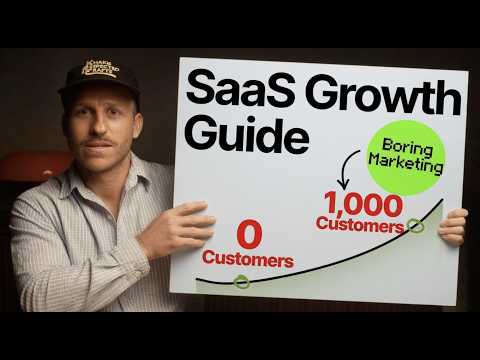
“How I Grew a SaaS From $0 to $20K MRR (7-Step Plan)”
What we found: In This “$0 to $20K MRR” SaaS Story, the Narrator Joined at $12K and the Plan Sells Their SEO Tool
A co-founder’s ads took it to about $8,000, the narrator’s 30 days took it from $12,000 to $20,000, and the slow SEO step is the one the video offers to automate for a fee.
- $12K MRR when narrator joined
- $20K MRR ~30 days later
- $0 → ~$8K Co-founder’s ad-driven start
- $200K MRR Target by year end
The claim
That the founder grew a SaaS from $0 to $20,000 in monthly recurring revenue, and that a seven-step mix of viral, “boring” and paid marketing will do the same for others.
- Zero to ~$8,000 a month — By the co-founder, “through ads”
- MRR when the narrator joined — $12,000
- MRR about 30 days later — $20,000
- MRR chart on the video’s Miro board (0:38, 13:48, 25:31) — $20,128.60, with an "I joined here" arrow at the start of the curve (about $12K); the curve flattens around $20K
- Growth during the narrator’s first month — +$8,000 (+67%)
- Growth from ~$8,000 to $12,000 — Not explained
- Ad spend behind the first $8,000 — Not stated
- Narrator’s community income from listicles — $370 a month — on screen only as a video title, “How I Make $370/month From Google (without a website)”
- Previous website — Stated as “$500,000 a month”, sold “last year”
- Goal — $200,000 MRR before year end
What is this income idea?
A distribution plan for software founders: get first customers fast through social posting and outreach, build slow-compounding search traffic in the background, and only spend on ads once something converts.
- The narrator introduces themselves with three credentials: a previous website, stated as reaching “$500,000 a month” and sold “last year on July”; a series of interviews with SaaS founders earning “between 100K and 10 million a year”; and a current SaaS. “I joined the SAS when we were making 12K a month and in about 30 days we pushed it to 20K a month.” The MRR chart on the video’s Miro board, “SaaS Distribution 101”, reads $20,128.60, and an arrow labelled “I joined here” points at the start of the curve, at about $12K; the line flattens around $20K. The chart’s source platform is not identified on screen.
- Marketing is split into three types. “Viral marketing” is daily posting on social platforms where the ideal customer spends time. “Boring marketing” is SEO, AI-search visibility, branding and YouTube, which shows “absolutely no result” at day 30 and starts to work around day 90. “Scary marketing” is paid ads, UGC and influencers, to be used only once a channel is proven and the founder can pay themselves.
- The plan has seven steps: validate the product until there is a first paying user; build the base for boring marketing; go viral; listen to customers; improve the product; then paid marketing; and finally an affiliate programme.
- The fastest tactic described is for AI-search visibility: publish “best X” listicles on Medium and LinkedIn with your own product at the top. The narrator says this got their community ranked in 48 to 72 hours and makes “$370 a month … without a website”. On screen, the figure appears as the title of a video card — “How I Make $370/month From Google (without a website)” — on a channel with 143 subscribers; no earnings screen accompanies it.
- The slowest step, SEO, is where the video turns to its product: “that’s why uh we built” a service that writes “30 article a months”, places backlinks, mentions customers’ brands on Reddit and publishes listicles across “our network”, with a link to “a free trial 3 days”.
- The video ends with a goal: “to reach 200k MR before the end of the year … We just reached 20k”.
Get your first customers by posting and messaging, start SEO early because it takes months, and only pay for ads once you know what works.
- Validate: first paid user — Ads, outreach or posting
- Build the SEO base — Results from ~day 90
- AI-search listicles — “48 to 72 hours”
- Post daily, go viral — Unpredictable
- Listen to customers — Book-a-call button
- Then paid ads — Once a channel works
- Then affiliates — Share retention data
A reasonable sequence. The slow step is the one the video sells a product for.
Good sequencing advice, from a seller of one of the steps
The lesson underneath the number
- The framework is better than the title. Validate with a first paying customer before investing in anything slow; start the slow channels early because they take about three months; treat virality as unpredictable; and do not spend on ads without the skills to run them or a channel already proven. That is sound, and the narrator is unusually frank that virality is “like the casino” and that ads without skill mean money “you will … never see … again”.
- The title’s figure does not describe what the audio describes. A co-founder with ads experience took the product from zero to about $8,000 a month, something unexplained took it to $12,000, and the narrator joined and saw it reach $20,000 about a month later. That is a strong month, but it is a month on top of a business others had built, and the ad budget behind the first stage is not stated. A viewer reading “I grew a SaaS from $0 to $20K” would reasonably assume the plan in the video is what produced the $20,000. The audio does not say that.
- The second thing to weigh is that the plan and the product overlap. SEO is presented as essential, slow and wearing — and then the founders’ product is offered to do it, with a free trial. The narrator is open about this, which is fair. The supporting evidence is thin, though: one customer’s rising traffic, described as “probably” a thousand visits a month “maybe more”, and 37 top-three keywords, with nothing on whether that traffic produced customers.
- The listicle tactic needs a caution of its own. Publishing a “best tools” list on Medium or LinkedIn with your own product “at the top” presents an advert as a recommendation. Readers and AI systems treat such lists as independent comparisons; the FTC’s endorsement guidance expects material connections like ownership to be disclosed. The video does not mention disclosure.
This one can make you rich fast but that’s like the casino You never know if you will win or not.
The founder on viral marketing, and an honest description of it
The seven steps, as the founder gives them
Sound ordering, with the founder’s own product placed at the hardest step.
Taken from what is said and shown in the video (published 18 April 2026). The MRR chart appears on the video’s Miro board at 0:38, 13:48 and 25:31. Third-party growth figures mentioned in passing are not the founder’s and are not assessed.
- Validate before marketing — “If you have a product that have actually zero customers zero MR don’t even think about um boring marketing.” The goal is a first paid user, because “it’s easy to get a free user”.
- Use ads only if you have the skill — The co-founder “brought the tool from zero to approximately $8,000 a month through ads” — but the narrator warns that without ads skills “you will spend money and never see that money again”. The spend is not given.
- Start AI-search visibility first — Publish “best X for [audience]” listicles on Medium and LinkedIn, with your product at the top, and answer questions on Reddit. Niche phrasing is “less competitive”.
- Start SEO now, expect results at ~90 days — Prepare the site, find keywords, publish regularly, earn backlinks. “It takes about 90 days to get a result.” This is where the founders’ product is offered.
- Chase virality where your customer is — Choose one ideal customer, find where they spend time, post daily. The narrator says plainly that virality is “like the casino”.
- Use YouTube as a moat — Daily videos and SEO-targeted videos, because “long form video convert the best” and most competitors “will never turn on the camera”. One new-channel video is cited at 782 views.
- Paid marketing and affiliates last — Scale proven channels with UGC or ads, then recruit affiliates by publishing conversion and retention data — for example, that customers “stay on average 5 months”.
The business model
Monthly SaaS subscriptions to an SEO and AI-search automation product, after a 3-day free trial. Price not stated.
SaaS founders who want organic traffic and AI-search mentions without writing content themselves.
“30 article a months”, backlinks from real businesses, Reddit brand mentions and listicles on a network of sites, done automatically.
Founder-led YouTube (daily and SEO-targeted videos), podcasts, social posting, the founders’ own SEO, and earlier, paid ads run by the co-founder.
- Paid ads — Took the product from zero to ~$8,000 MRR. Spend not stated
- Content and backlinks for customers — Delivered at volume. Unit cost not stated
- Founders’ time — Daily videos, podcasts, customer calls
- Affiliate commissions — Recurring, recommended as the final step
- Payment processing — Not mentioned
No price, cost, margin or profit figure appears for the product, for the narrator’s previous website, or for the $370-a-month community.
What you would actually need
Money
Avoid paid ads until a channel works and “you can actually pay yourself”. Organic tactics are presented as low-cost, with the founders’ product as the way to automate SEO.
Sensible advice, but the one ad-driven result in the video — zero to about $8,000 a month — comes with no spend figure, and the product offered to automate SEO has no price in the video.
Costs implied, none priced
- Ad spend for the co-founder’s first ~$8,000 MRR
- The founders’ SEO product after a 3-day trial
- Content production: “30 article a months”
- Backlinks from “real businesses”
- Video production for daily YouTube
- Affiliate commissions on recurring revenue
Time
72 hours for AI-search mentions, about 90 days for SEO, 30 days for the narrator’s $12K-to-$20K month.
The timelines are plausible as stated, but the $20K figure sits on a business that had already been built to $12K by others, and the daily posting, publishing and video work is a full-time job.
Where the time goes
- Daily social posting where your customer is
- Daily SEO publishing and backlink work
- Daily YouTube videos
- Customer calls via the dashboard
- Running ads once a channel is proven
The part you must pay attention to
“I grew a SaaS from $0” is not what the audio describes.
The title is in the first person and starts at zero. In the opening thirty seconds the narrator says: “I joined the SAS when we were making 12K a month and in about 30 days we pushed it to 20K a month.” Later: the co-founder “brought the tool from zero to approximately $8,000 a month through ads”.
- Co-founder, via ads (spend not stated) — $0 → ~$8K
- Not explained — ~$8K → $12K
- After the narrator joined, ~30 days — $12K → $20K
$20K MRR
The narrator’s part: +$8K, or 40% of the $20K
Three phases sit behind the title’s single “I”. Paid ads, run by a co-founder with “a lot of skills in ads”, did the first and arguably hardest part, and the cost of those ads is not given. Nothing is said about how the business went from about $8,000 to $12,000. Only the last month, from $12,000 to $20,000, is attributed to the narrator’s arrival, and even that is “we pushed it”. The video also does not say which of the seven steps drove that month: it recommends starting with slow organic channels, yet a 67% increase in 30 days (our arithmetic) is faster than the 90-day SEO timeline the video itself gives.
The plan is also the sales pitch. SEO is described as slow, daily and hard — “a lot of you are not patient at all … So that’s why uh we built” the founders’ product, which writes articles, places backlinks, mentions customers on Reddit and publishes listicles across its own network, with a 3-day free-trial link. The narrator discloses this openly, which is to their credit. But the video’s growth figures are the founders’ own SaaS revenue, the plan’s hardest step is the one their product serves, and the only customer result shown is traffic and keyword rankings — “probably getting thousand visit a month … maybe more” and “37 keywords … ranking top three” — not revenue.
- WHO DID WHICH PART
- Co-founder (ads) $0 -> ~$8K
- Unexplained ~$8K -> $12K
- Narrator joins $12K -> $20K
- Narrator's month +$8K = +67%
- Share of $20K $8K = 40%
- THE GOAL
- Now $20K
- "Before end of year" $200K
- From mid-April: ~8.5 months
- 10x in 8.5 months
- = ~31% growth every month
- NOT GIVEN
- Ad spend for first $8K ???
- Product price ???
- Costs / profit ???
The economics
Revenue milestones without costs, and a growth target without a plan for it.
- Co-founder’s ad-driven start — $0 → ~$8,000 MRR
- MRR when narrator joined — $12,000
- MRR ~30 days later — $20,000
- MRR on the on-screen chart — $20,128.60
- Growth in that month — +$8,000 / +67%
- Narrator’s community income — $370 a month
- Target — $200,000 MRR by year end
- Monthly growth the target requires — ~31% compounded
- Ad spend, product price, costs, profit — Not stated
What the year-end target implies
$20,000 → $200,000 over ~8.5 months (mid-April to year end): 10^(1/8.5) ≈ 1.31
About 31% month-on-month growth, every month, to reach the stated goal
IncomeIdeaLab calculation from the stated current MRR, the stated goal and the video’s publication date
The goal is stated in the future tense and is a target, not a result. We assume “end of the year” means the end of 2026, the year of publication.
- Ad spend that produced the first ~$8,000 MRR
- How MRR moved from ~$8,000 to $12,000
- Which specific channel drove the $12,000-to-$20,000 month
- The product’s price and margin
- Churn: the “5 months” average stay is given as an example, not as the product’s figure
- Any detail on the previous website or its sale
- The narrator’s share of the title figure is $8,000 of the $20,000, or 40% (our arithmetic), achieved over about a month.
- The previous website is stated as reaching “$500,000 a month” and sold “last year”. No revenue type, profit, sale price or name is given, and the figure cannot be checked from the video.
- The $370 a month from a community, attributed to Medium listicles ranking in AI search, is a small but specific result and the only one in the video tied directly to a tactic it teaches. On screen it appears only as a video title on a 143-subscriber channel, with no earnings shown.
- The MRR chart on the Miro board reads $20,128.60 and is labelled by the narrator with an "I joined here" arrow at about $12K. Its source platform is not shown, so it is treated as shown in the creator’s own board rather than as a platform dashboard.
- Several third-party growth figures are mentioned in passing, including a product said to have gone “from zero to 60,000 MR in 53 days”. They are other founders’ claims relayed second-hand.
Evidence status
Every substantive figure in the video.
- “I grew a SaaS from $0 to $20K MRR” (title) — Video title — The audio says the narrator joined at $12,000.
- Co-founder took it from zero to ~$8,000 a month with ads — Narrator — Ad spend not stated.
- $12,000 to $20,000 MRR in about 30 days — Narrator; MRR chart on the Miro board — Chart reads $20,128.60 with "I joined here" at ~$12K. Driving channel not identified.
- Previous website at “$500,000 a month”, sold — Narrator — No detail of any kind given.
- $370 a month from Medium listicles, no website — Narrator; a video title on screen — Specific and modest. No earnings screen shown.
- AI-search mentions within 48–72 hours — Narrator — One example; no result screen shown for it.
- SEO results in about 90 days — Narrator — A common rule of thumb, stated without data.
- Customer with ~1,000+ visits and 37 top-three keywords — Narrator, screen-shared — Traffic, “probably”; no revenue outcome.
- $200,000 MRR by year end — Narrator — Requires ~31% monthly growth.
What is actually proven?
The framework is coherent. The title’s claim is not what the audio says.
- The narrator reports joining at $12,000 MRR and reaching $20,000 about 30 days later.
- A co-founder took the product from zero to about $8,000 a month with ads.
- The video promotes the founders’ own SEO product and says so.
- The narrator’s month accounts for $8,000, or 40%, of the $20,000.
- The year-end goal requires about 31% growth every month.
- Ad spend, product price, costs and profit.
- How the business went from about $8,000 to $12,000.
What the headline doesn’t tell you
One “I” in the title covers three phases and two people.
- The narrator joined at $12K. — Said in the first 30 seconds.
- Ads built the first $8K. — Run by the co-founder. Spend not given.
- $8K to $12K is unexplained. — Nothing is said about it.
- The plan sells a product. — The SEO step, with a free trial.
- Customer proof is traffic. — “Probably” a thousand visits.
- Listicles rank you first. — With no mention of disclosure.
- $200K is a goal. — Needs ~31% growth monthly.
- No costs anywhere. — MRR is not profit.
Should you try it?
Use the sequence; discount the title
The ordering advice is sound and free. The revenue story is not evidence that the plan produced it.
- Quality of the framework — 7 — Validate first, start slow channels early, ads last.
- Honesty about risk — 7 — Virality “like the casino”; ads can lose money.
- Title accuracy — 3 — The narrator joined at $12K; ads built the start.
- Disclosure of the product pitch — 7 — Openly presented, with a link.
- Evidence linking plan to revenue — 3 — No channel attribution for the $12K-to-$20K month.
- Cost disclosure — 1 — No ad spend, price or profit.
- Beginner accessibility — 6 — Low-cost tactics, but daily work across several channels.
- If you have a product, the order of operations here is worth following. Get one paying customer before anything else. Start search and AI-search work early because it takes about three months to show anything. Post where your customers are, without counting on virality. Leave paid ads until a channel already works and you can afford to lose the money while you learn.
- Read the revenue story for what it is. The audio describes a co-founder with ad skills building the first $8,000 a month, an unexplained climb to $12,000, and then a 30-day rise to $20,000 after the narrator joined. That last month is impressive, but nothing in the video says which of the seven steps produced it, and the ad spend behind the start is not given.
- Be aware the video is also a pitch. The step it describes as slowest and hardest is the one the founders’ product automates. That does not make the advice wrong, but it explains why SEO gets the most emphasis.
- If you use the listicle tactic, disclose that you own the product you rank first. A “best tools” list that puts your own product at the top without saying so reads as an advert rather than a review.
Passive or automated?
Automation
SEO publishing can be outsourced or automated; posting, video and customer calls cannot.
Passive potential
Search traffic compounds once built; everything else is daily work.
The plan’s compounding channels — SEO and AI-search visibility — are the closest thing to passive here, and the video is right that they keep paying once established. Everything around them is active: daily posting to chase virality, daily YouTube videos, listening to customers through booked calls, product changes, and eventually running ads and managing affiliates. The founders’ own product automates article writing and backlinks for customers, which is the point of the pitch; it does not remove the founder’s own daily work in the other six steps.
- Daily social posting and outreach
- Recording and publishing YouTube videos
- Customer calls and product decisions
- Running ads once a channel is proven
- Recruiting and managing affiliates
Recommended beginner experiment
The free parts of the plan, in the plan’s own order.
- Get one paying user first. — Not a free sign-up.
- Pick one ideal customer. — And find where they spend time.
- Post there daily for 30 days. — Treat results as variable.
- Start SEO content in week one. — Expect little before ~90 days.
- Write one niche comparison page. — Disclose that you own the product.
- Track which channel each customer came from. — The video does not.
- Hold off on ads until something converts. — The founder’s own rule.
- Log costs alongside MRR. — MRR alone is not profit.
Our verdict: 5/10
A sensible distribution plan under a title that credits one person for three phases the narrator joined at $12K, the ad spend behind the start is unstated, and the slow step sells their product
Credited for a coherent sequence — validate with a paying customer first, start slow-compounding SEO and AI-search work early, treat virality as unpredictable, and hold paid ads until a channel is proven; for frank warnings that virality is “like the casino” and that ads without skill lose money; for a small, specific result tied to a taught tactic ($370 a month from listicles); and for presenting the founders’ product openly. Marked down because the title’s “I grew a SaaS from $0 to $20K MRR” conflicts with the audio, where the narrator joined at $12,000 and a co-founder built the first ~$8,000 with ads whose cost is not given; because the $8,000-to-$12,000 stage is unexplained and no channel is credited for the $12,000-to-$20,000 month; because the step described as slowest is the one the founders’ product is sold to automate, supported only by one customer’s traffic; because the listicle tactic omits disclosure; and because no price, cost or profit figure appears.
The advice in this video is mostly sound. Get one paying customer before anything else; start search and AI-search work early because it takes around three months to show; post daily where your customers are, without expecting virality to be reliable; and do not buy ads until you have the skills and a channel that already converts. The narrator is candid that virality is a gamble and that unskilled ad spending is money lost, and the one small result tied directly to a tactic taught — about $370 a month from listicles — is specific and modest. The title does not match the audio. “I grew a SaaS from $0 to $20K MRR” compresses three stages into one person: a co-founder with ad skills took the product from zero to about $8,000 a month, something unexplained took it to $12,000, and the narrator joined and saw it reach $20,000 about a month later. That final month is a 67% increase, but the video does not say which step caused it, and the ad budget behind the first stage is not given. The plan is also the pitch: SEO is described as the slowest, hardest step, and the founders’ product is offered to automate it, backed by one customer’s traffic rather than revenue. The listicle tactic of ranking your own product first in a “best tools” post comes without any mention of disclosure. And no price, cost or profit figure appears for anything. Use the sequence; do not read the title as evidence that it built the $20,000.
- Title figure — $0 → $20K MRR
- When narrator joined — $12K MRR
- Narrator’s first month — +$8K (+67%)
- Co-founder via ads — $0 → ~$8K, spend unstated
- Year-end goal — $200K MRR (~31%/month)
- Product pitched — Founders’ SEO tool, 3-day trial
- Costs and profit — Not stated
- Beginner suitability — Use the order, not the title
Sources
- How I Grew a SaaS From $0 to $20K MRR (7-Step Plan) — Source video, 2026-04-18
- FTC — Guides Concerning the Use of Endorsements and Testimonials — Regulatory guidance on disclosing material connections in recommendations