Local Services / Pressure Washing · Claim Review
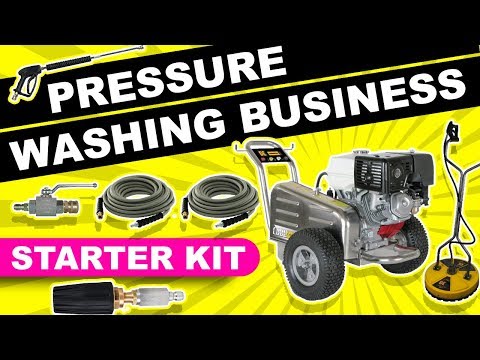
“PRESSURE WASHING BUSINESS STARTER KIT: THE ONE THING YOU NEED”
What we found: The Starter Kit Is a Pricing Lesson, and the $50,000 Is Gross
A $1,200 washer that "probably" brought in $50,000, house washes sold at $1,000–$1,500 before they owned a machine, and not one cost priced.
- ~$50k Earned with first washer
- ~$1,200 Washer price
- $1,000–$1,500 House wash price
- None Costs priced
The claim
That a pressure-washing business can be started with almost no money and a basic washer, and that one ~$1,200 machine earned about $50,000.
- Earned with the first 4 GPM washer — "Probably about 50 grand"
- Price of that washer — "About twelve hundred dollars"
- Early house-wash prices — $1,000–$1,500
- Side income with a truck and washer — "Probably an extra 3k a month"
- Per weekend or day — $500–$600
- Bank balance at the start — $500
- Time to current fleet — "About two years"
- Revenue per dollar of washer — ~42×
- Rental, chemicals, fuel, insurance, tax — Never priced
What is this income idea?
Start a residential pressure-washing business with a homeowner-grade washer — or no washer at all — and charge like an established company from day one.
- The video opens in their basement with their first rig: a 4,200 PSI, four-gallons-a-minute petrol washer that "I think" cost "about twelve hundred dollars from Home Depot". They say it "made me a bunch of money to the tune of about probably about 50 grand" before they replaced it with larger machines.
- The kit list is short. A washer, a surface cleaner for concrete, the wand and hose that came with the machine, and — the part they call "the magic maker" — a working downstream injector, which draws bleach into the line so walls can be treated from the ground. A hose swivel and ball valve are optional conveniences.
- They are candid about how little they started with: "I was living in my van", with "USD 500 in my bank account to my name". They sold house washes at $1,000–$1,500 before owning a washer, then rented one from Home Depot on the day, and warn that rental units often arrived with a broken injector.
- With a truck and a washer, they say, "you can drive around and make probably an extra 3k a month", or "an extra five to six hundred dollars a weekend or in a day". They reinvested earnings and reached their current setup, including a 500-gallon tank and soft-wash equipment, in "about two years".
- The second half turns from equipment to pricing, which they say is what actually changes the business: "the industry wants you to believe that equipment is what's going to change the game for you... it's because they're selling those things to you."
- Their tactic: ask a competitor to bid on a known job, then price "a couple cents per square foot" above them. They give an example of holding at $1,100 against a competitor's $800 and winning, and end by pointing viewers to a free PDF on "high ticket sales" in the description.
Buy or rent a basic washer, make sure it can spray bleach, and price above the cheapest operator rather than below.
- Sell the job first — $1,000–$1,500 house washes
- Rent a washer — If you cannot buy one
- Check the injector — Bleach or nothing
- Add a surface cleaner — For concrete
- Price above rivals — A few cents per sq ft
- Reinvest earnings — ~2 years to a full rig
A genuinely low-cost entry, described entirely in revenue.
They are right that the kit does not matter, which is why the $50,000 says little
The lesson underneath the number
- The most useful sentence in the video is not about money. It is their observation that "the industry wants you to believe that equipment is what's going to change the game for you... it's because they're selling those things to you." For a beginner looking at boosters, proportioners and trailer rigs, that is a valuable corrective, and they back it by showing a dusty homeowner-grade washer with a rusted hose as the machine that started their business.
- The equipment advice that remains is specific and practical. Make sure the downstream injector works, because without bleach you cannot treat a house and cannot reach high walls. Expect rental units to arrive with broken injectors. Use a ball valve so you are not constantly restarting the engine. None of it costs much, and they are honest that the small machine is slow on concrete.
- Then the pricing argument, which they plainly believe is the real "one thing" of the title. Get a competitor to bid a job you know, price slightly above them, and do not sell from neediness. Their example — coming down from $1,400 to $1,100 against an $800 rival and still winning — is a single anecdote, but the arithmetic is right: the homeowner paid $300 more, about 38 per cent above the cheaper bid.
- What follows from their own argument is that the $50,000 figure explains very little. If the machine does not matter and pricing does, then "this washer made $50,000" is a measure of how many jobs they sold at what price, with no timeframe and with every cost left in. They list those costs themselves — labour, gasoline, chemicals — and stop there. The video is a good beginner's case for charging properly. It is not evidence of what a beginner would keep.
The industry wants you to believe that equipment is what’s going to change the game for you… it’s because they’re selling those things to you.
The most useful line in the video
The starter method, as they give it
Minimal kit, sell before you buy, and price high.
Taken from what is said and shown in the video, published 1 May 2019. Equipment is shown on camera, including the first washer’s 4200 PSI label; every money figure is spoken, with no receipt, invoice or revenue screen shown where the figures are discussed.
- Start with a homeowner-grade washer — A four-gallons-a-minute petrol unit, "about twelve hundred dollars", which they say was "worth every penny" despite a hose that rusted because it is not built for daily use.
- Make sure it can spray bleach — The downstream injector is "the magic maker": without it "you can't treat anything", and high walls are hard to clean. They warn that rented and even new units sometimes arrive with a non-working injector.
- Add a surface cleaner — For driveways and patios. Their own was "not the best" but they "would not start" without one. They admit a small machine is slow on concrete: "you might even grow a beard".
- Sell first, rent on the day — With no capital they sold house washes, then rented a washer from Home Depot for the job. They recommend a used washer with a working injector over this route if you can afford one.
- Reinvest into better equipment — "I took the money that I made and I put it back into buying better equipment", reaching a 500-gallon tank and soft-wash setup in about two years.
- Find out what competitors charge — Ask a company to bid a job you know, then "bump yours a couple cents per square foot". Start expensive rather than cheap.
- Sell trust, not price — Their claim is that homeowners rank price "like third place" behind trust, and that neediness loses bids.
The business model
Per-job residential exterior cleaning: house washes at $1,000–$1,500 in their early example, plus concrete and window cleaning.
Homeowners, who they say weigh trust above price.
A professional-seeming, trustworthy operator, priced above the cheapest local competitors.
In-person bidding and selling; they do not describe where leads come from.
- Washer purchase or rental — ~$1,200 to buy; rental fee never given
- Bleach and chemicals — Named as a core cost, never priced
- Petrol — Named as a core cost, never priced
- Labour — Their own time at first; never valued
- Vehicle — An old Suburban, then a van
- Insurance and tax — Never mentioned
"It's basically Labor and gasoline and some some chemicals" is the full cost discussion.
What you would actually need
Money
Nothing up front if you sell the job first and rent a washer; about $1,200 for a washer if you buy one. "It's basically Labor and gasoline and some some chemicals."
The entry cost really is low, which is to their credit. But they list the running costs — labour, gasoline, chemicals — and price none of them, and do not mention the daily rental fee, liability insurance, a vehicle, or tax. Every figure they give for earnings is revenue.
Named or implied, never priced
- Washer rental per day (route they used at the start)
- A ~$1,200 washer, or a used one with a working injector
- Surface cleaner, hose swivel, ball valve
- Bleach and other chemicals, every job
- Petrol for the washer and the vehicle
- A truck or van to carry it
- Liability insurance, never mentioned
- Income tax, never mentioned
Time
A weekend or a day for $500–$600; "about two years" to build up to their current equipment.
No job duration is given for a house wash, and they concede a small machine makes concrete slow. Selling the job — the step they say matters most — takes time that is not counted anywhere.
Where the time goes
- Bidding and selling each job in person
- Collecting and returning rental washers
- Treating and rinsing the house
- Concrete, which is slow on a 4 GPM machine
- Two years of reinvesting to reach a full rig
The part you must pay attention to
Every number in this video is revenue, and the costs they name are never priced.
The most quotable line is that a ~$1,200 washer "made me a bunch of money to the tune of about probably about 50 grand".
- Earned with the first washer — ~$50,000
- Cost of the washer — ~$1,200
~42×
Revenue per dollar of machine — not profit
The load-bearing assumption is that revenue describes the business. They say themselves that pressure washing is "basically Labor and gasoline and some some chemicals", and every one of those is a cost on every job, alongside the rental fees they paid before owning a machine, the vehicle they drove to each bid, and insurance for spraying bleach on other people's houses. None of them is given a number, and no timeframe is attached to the $50,000 — it could cover months or years. A beginner reading "a $1,200 machine made $50,000" would reasonably hear a margin; the video only supports a gross figure, introduced with "probably".
The side-income figures do not quite line up either. "An extra 3k a month" and "five to six hundred dollars a weekend" agree only if you work more weekends than a month has: at four and a third weekends, $500–$600 a weekend is about $2,200–$2,600 a month. The phrase "or in a day" makes the figure larger again without saying how often. At their own $1,000–$1,500 house-wash price, $3,000 a month is two or three jobs — which is plausible, but it is the price that does the work, not the washer. That is also the honest point they reach in the second half: pricing, not equipment, is what decides the outcome.
- THE HEADLINE MACHINE
- Washer cost ~$1,200
- Revenue with it ~$50,000
- Ratio ~42x
- Timeframe never given
- Costs deducted none
- THE SIDE-INCOME FIGURES
- $500-$600 per weekend
- x 4.33 weekends
- = ~$2,200-$2,600 a month
- Stated: "probably" ~$3,000
- AT THEIR OWN JOB PRICE
- $3,000 / $1,000-$1,500
- = 2-3 house washes a month
- THE PRICING STORY
- Their bid $1,400
- Came down to $1,100
- Rival $800
- Homeowner paid $300 more
The economics
A low entry cost, a series of gross figures, and a cost base named but never priced.
- First washer price — ~$1,200
- Revenue with that washer — ~$50,000
- Early house-wash price — $1,000–$1,500
- Side income — "Probably" ~$3,000/month
- Per weekend or day — $500–$600
- Weekend figure, monthly — ~$2,200–$2,600
- Jobs a month for $3,000 — 2–3 at their price
- Rental, chemicals, fuel, insurance, tax — Not stated
Reconciling the side-income claims
$500–$600 a weekend × 4.33 weekends ≈ $2,200–$2,600, against "probably an extra 3k a month"
Close, but only reaching $3,000 with extra working days; and every figure is before costs
IncomeIdeaLab calculation from figures spoken in the video
They say "a weekend or in a day", so the weekly frequency is ambiguous. The $50,000 has no timeframe attached. None of the figures deducts chemicals, petrol, rental, insurance or tax.
- Timeframe for the ~$50,000
- Washer rental cost per day
- Chemical and petrol cost per job
- Liability insurance
- Time per house wash
- Income tax
- What the description link sells, beyond a free PDF
- $50,000 at their early $1,000–$1,500 house-wash price would be roughly 33 to 50 jobs, if all of it came from house washes. They do not say how it splits.
- Their $1,100-versus-$800 story is one anecdote. The homeowner paying $300, about 38 per cent, more is consistent with their argument but not evidence of a general rule.
- Starting with $500 in the bank, they sold jobs before they could do them. That works only while rental units are available on the day and actually function, which they say was often not the case.
- The video was published in 2019; the prices quoted are theirs from that period.
Evidence status
Every substantive claim in the video.
- First washer made "probably about 50 grand" — Creator — Gross revenue, no timeframe, no costs. Spoken; no receipt, invoice or revenue screen is shown when it is discussed.
- Washer cost about $1,200 — Creator — Prefaced with "I think". The machine is shown, its label reading 4200 PSI as stated; no price tag or receipt is on screen.
- House washes sold at $1,000–$1,500 — Creator — Their early prices; no invoices shown.
- "Probably an extra 3k a month" — Creator — Only loosely matches their own weekend figure.
- $500–$600 a weekend or a day — Creator — Frequency ambiguous; revenue, not profit.
- The downstream injector is essential — Creator — Shown and explained; practical advice.
- Equipment sellers overstate what you need — Creator — Reasonable, and consistent with their own first rig.
- Homeowners rank price "like third place" — Creator — One anecdote; no wider evidence.
- Full rig built in about two years — Creator — Through reinvestment; amounts not given.
- Running costs — Creator — Named as labour, gasoline and chemicals; never priced.
What is actually proven?
The kit is shown. The money is described, never documented.
- Their first washer, surface cleaner, wand and injector are shown on camera.
- How a downstream injector works, and why it matters, is explained clearly.
- They started with about $500 and sold jobs before owning a washer.
- Their weekend and monthly side-income figures only loosely reconcile.
- At their own price, $3,000 a month is two or three house washes.
- Any profit figure, or the timeframe for the ~$50,000.
What the headline doesn’t tell you
The title promises one thing; the money in it is all top line.
- $50,000 is revenue. — With no timeframe.
- "Probably" precedes it. — And the $3,000 a month.
- Costs are named. — And never priced.
- Rental fees are not given. — Though they relied on them.
- Insurance is never mentioned. — On bleach and houses.
- The "one thing" is pricing. — Not equipment.
- A free PDF is promoted. — On high-ticket sales.
- Prices are from 2019. — When it was published.
Should you try it?
A realistic low-capital start, if you price your own costs
Take the short kit list and the pricing advice. Do not read the $50,000 as a margin.
- Low entry cost — 8 — Rent first, or buy a ~$1,200 washer.
- Practical equipment advice — 7 — The injector point alone saves beginners a bad day.
- Pricing advice — 7 — Price above the cheapest bid, not below.
- Evidence for the money — 2 — Spoken, hedged, and gross throughout.
- Cost disclosure — 1 — Categories named, nothing priced.
- Consistency of figures — 4 — Weekend and monthly claims do not quite match.
- Beginner accessibility — 6 — Needs a vehicle, selling ability and insurance.
- Of the businesses we review, this is one of the cheaper ones to start, and they show that honestly. A homeowner-grade washer, a surface cleaner, the wand and hose it came with, and a working downstream injector are enough to take on house washes. If you have no money, their route of selling the job first and renting a washer on the day is real, though they are frank that rental units often had broken injectors.
- What you will not get from the video is any idea of what you keep. They list the cost base themselves — labour, gasoline and chemicals — and give none of them a figure. Add a vehicle, rental fees, and liability insurance for spraying bleach onto other people's homes, and you have the costs a beginner needs to estimate before believing that a $1,200 machine pays back forty-fold.
- Treat the income figures as illustrations rather than benchmarks. "Probably an extra 3k a month" and "five to six hundred dollars a weekend" are close but do not match, and the $50,000 has no period attached. At their own prices, $3,000 a month is two or three house washes, which shows the real driver: what you charge per job.
- That is their best advice, and the title's "one thing". Find out what competitors charge and price slightly above, not below. Their example of winning at $1,100 against an $800 bid is one story, but the logic — that trust sells and neediness loses — is widely applicable. The free PDF in their description is their own sales material; read it as that.
Passive or automated?
Automation
Every job is sold and done in person.
Passive potential
Income stops when the washer does.
This is a hands-on service business and the video does not suggest otherwise. Every job begins with an in-person bid, which they present as the most important skill, and ends with someone treating and rinsing a house and running a surface cleaner over concrete. The growth they describe — bigger washers, a 500-gallon tank, soft-wash gear — increases capacity rather than removing labour. The only leverage implied is hiring, which they do not discuss.
- Bidding and selling each job in person
- Collecting or maintaining the washer
- Mixing and applying bleach safely
- Washing houses and cleaning concrete
- Chasing payment and repeat work
Recommended beginner experiment
Cheap kit, careful costing, confident pricing.
- Get local rental prices first. — Washer and surface cleaner, per day.
- Test the injector before the job. — Their most repeated warning.
- Price chemicals and fuel per job. — They never do.
- Get liability insurance quotes. — Never mentioned in the video.
- Ask a competitor to bid a known job. — Their pricing tactic.
- Price slightly above, not below. — Then hold your number.
- Time each job. — Concrete is slow on a small washer.
- Reinvest only from profit. — Not from revenue.
Our verdict: 5/10
Good advice on pricing, no evidence on profit a cheap, honest starter kit wrapped around gross figures and unpriced costs
Credited for showing their actual first rig, including a rusted homeowner-grade hose, rather than aspirational equipment; for the practical explanation of why a working downstream injector matters and the warning that rental units often lack one; for being open that they started with about $500 and sold jobs before they owned a washer; for arguing that equipment sellers overstate what a beginner needs; and for pricing advice — bid above, not below, the cheapest competitor — that is sound and specific. Marked down because every money figure is revenue, most introduced with "probably" or "I think"; because the ~$50,000 earned with a ~$1,200 washer has no timeframe; because the weekend and monthly side-income figures do not quite reconcile; because they name labour, gasoline and chemicals as the cost base without pricing any of them, and never mention rental fees, insurance or tax; and because a free sales PDF and an unspecified description link are promoted.
As a starter kit, this is honest. They show the dusty four-gallons-a-minute washer that "I think" cost about $1,200, the surface cleaner that was "not the best", and a hose rusted from daily use, and they explain the one component a beginner is most likely to overlook — the downstream injector that lets you spray bleach. They are open that they began with about $500 in the bank, sold house washes at $1,000 to $1,500 before they owned a machine, and rented one on the day. And they are right that equipment is not what makes the business: the pricing advice in the second half — find out what a competitor charges and sit slightly above — is the real "one thing" of the title, and the example of winning at $1,100 against an $800 bid has correct arithmetic behind it. The money claims do not hold the same weight. "Probably about 50 grand" from the first washer is gross revenue with no period attached. "Probably an extra 3k a month" sits a little above what their own $500–$600 a weekend works out to. And while they summarise the cost base as "Labor and gasoline and some some chemicals", none of those gets a figure, and rental fees, insurance and tax are absent. Watch it for the kit list and the pricing mindset; do your own costing before you believe the multiples.
- Washer price — ~$1,200
- Revenue with it — ~$50,000, no timeframe
- House-wash price — $1,000–$1,500
- Side income — "Probably" ~$3,000/month
- Weekend figure, monthly — ~$2,200–$2,600
- Costs — Named, never priced
- Beginner suitability — Yes, with your own costing
Sources
- PRESSURE WASHING BUSINESS STARTER KIT: THE ONE THING YOU NEED — Aaron's Lean & Mean Academy — YouTube video, 2019-05-01
- FTC — Guides Concerning the Use of Endorsements and Testimonials — Regulatory guidance on earnings claims