Local Services / Pool Maintenance · Interview
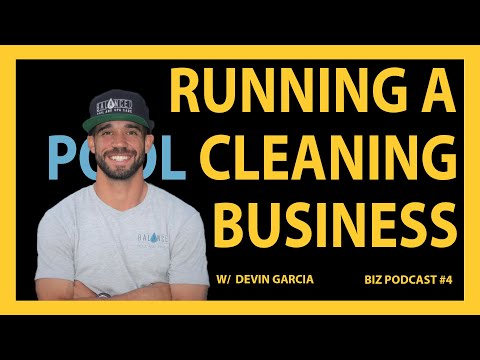
“Pool Expert Shares How to Start & Run a Six-Figure Pool Cleaning Business - Podcast #4”
What we found: Pool Cleaning Route: The "Six-Figure" Label Is the Host's, and a Bought Route Pays Back in About a Year Before Costs
The owner gives specific prices for buying accounts, servicing pools and finding leads. No annual revenue, account count or profit figure is stated, and the one-year payback is measured on gross revenue.
- Not stated Annual revenue
- ~$23k–$24k 20 accounts bought
- $120–$130/mo Weekly service price
- ~9–12 months Payback on a bought pool
The claim
That a solo operator can run a six-figure pool cleaning business by buying an existing route, servicing pools weekly and adding clients through lead platforms.
- Six-figure income — The host's description in the introduction; the guest gives no revenue figure
- Business age — About two years
- First route purchase — 20 accounts for about $23,000–$24,000, paid from savings
- Price per bought account — ~$1,150–$1,200
- Typical route price — About a year of that pool's income
- Average weekly service — $120–$130 a month per pool
- Stops per day — 15–20, sometimes more
- Time per pool — About 15 minutes on average; 5 minutes to an hour
- Hourly earnings on easy pools — "Upwards of like 100 bucks an hour"
- Starting equipment and chemicals — $500–$750
- Start-up with a used truck — $5,000–$7,500
- Thumbtack lead price — $5–$10 per lead
- Current account count, costs, profit — Not stated in the video
What is this income idea?
Buy a list of existing weekly pool-service customers, service them yourself on a tight geographic route, and add more through lead platforms and referrals.
- The guest runs a one-person pool and spa service in San Diego and says he started it about two years before the interview. He came in through a friend in the trade: a week or two of ride-alongs, then an informal apprenticeship covering water chemistry, dosing and equipment.
- His first attempt at marketing did not work. He set a goal of about 100 door hangers a day, biking neighbourhoods with Google Maps open to spot back-yard pools, and after a couple of weeks says "i think i only got like three people from that." He says that income was only covering his insurance and fuel.
- So he bought customers instead. There is a market for pool routes, handled by brokers, where accounts "usually they sell them for around like a year's worth of income." He bought 20 accounts for about $23,000–$24,000 from savings, without a loan, after shadowing the seller. He later sold part of his route, a far-off area, to a family friend to cut driving time.
- Pricing is a monthly fee for a weekly visit, quoted by pool size and how much cleaning the pool needs. His average is about $120–$130 a month. Filter cleaning is charged separately. A typical visit takes about 15 minutes, and a day is 15–20 stops carrying 40–50 pounds of chemicals and tools.
- New business now comes mostly from Thumbtack, where he says leads cost $5–$10 each and he has become a top-rated pro, plus referrals from neighbours. He holds a Certified Pool Operator credential that he says cost about $100–$200 and lasts about five years, and recently signed his first homeowners'-association account.
- The episode opens with a sponsor read for an events production company. No course, coaching offer or affiliate link is promoted, and the guest does not sell anything beyond his own local service.
Buy a ready-made list of pool customers for about a year of their fees, keep the route tight, and grow it with cheap leads and good service.
- Ride along and learn — A week or two, then apprenticeship
- Get certified — CPO, ~$100–$200
- Buy a route — 20 accounts, ~$23k–$24k
- Equip the truck — $500–$750 of gear
- Service weekly — ~15 min a pool, 15–20 a day
- Add leads — Thumbtack, $5–$10 each
- Tighten the route — Sell far-off accounts
A clear operating model with prices at each step. The money coming out of it is not totalled anywhere.
The business is real and well explained. The income figure is the part that is missing.
The lesson underneath the number
- This is one of the more practical interviews in its category. The guest does not describe a shortcut; he describes a trade. He learned it on someone else's route, got certified, tried the cheapest form of marketing, watched it fail, and then paid market price for customers who already existed. Each step comes with a number: 100 door hangers a day for about three customers, about $23,000–$24,000 for 20 accounts, $120–$130 a month per pool, $5–$10 per lead.
- Those numbers hang together. Twenty accounts for about $23,500 is about $1,175 each. If routes sell for a year of income, that implies about $98 a month per pool, a little below his current average, which is what you would expect if he has raised prices or added larger pools since. A day of 15–20 stops at about $29 a visit grosses roughly $435–$580. The host's story about a friend earning $40,000 a year on 10 hours a week works out to about $77 an hour and about 27 pools, which is consistent with the guest's "upwards of like 100 bucks an hour" on easy pools.
- What is absent is the total. The episode is titled six-figure, and the host introduces the guest as "a six-figure solopreneur", but the guest does not give his annual revenue, his current number of accounts or how many days a week he works. On our arithmetic, a five-day week at 15–20 stops would be 75–100 weekly accounts and $112,500–$150,000 a year in gross fees, so six figures of revenue is plausible. That depends on a five-day assumption, it is revenue rather than income, and none of it is stated.
- The one piece of reasoning worth correcting is the payback. Recovering the purchase price from a year of fees recovers it from revenue, and chemicals, fuel, insurance and the truck all come out of those same fees first. The real payback on a bought route is longer than a year, by an amount that depends on costs the video does not price and on how many of the bought customers stay.
i'm going to work for a year and work back that money and then everything after that is profit
The guest, on buying his first 20 accounts
How he built it, as he describes it
A route business: the asset is the customer list and the geography.
No revenue, cost or profit figure is given for the business as a whole.
- Learn on someone else's route — Ride-alongs and an apprenticeship with an experienced operator, covering chemistry testing, dosing and equipment settings. He stresses choosing a careful teacher, because a mistake on expensive equipment is costly.
- Check the certification rules — Some areas require certification. He holds a Certified Pool Operator card, which he says cost "maybe 100 something 200 bucks" and is good for about five years, and credits it with the safety and technical side of the job.
- Try door hangers, then stop — About 100 door hangers a day for a couple of weeks produced about three customers, and a complaint from a local operator who thought he was poaching. He moved on to buying accounts.
- Buy a route through a broker — Shadow the seller for a month or two under a non-disclosure agreement, inspect the pools, then decide. Routes sell for about a year of each pool's income. He paid about $23,000–$24,000 for 20 accounts.
- Price by the work involved — Quotes depend on pool size and whether the pool has a cover or an automatic cleaner. His average is $120–$130 a month for a weekly visit; filter cleaning is extra.
- Fill gaps with paid leads — Thumbtack is his main source of new business. At $5–$10 a lead against $100+ a month in recurring fees, he calls it "a no-brainer". Reviews on Thumbtack and Yelp, and neighbour referrals, do the rest.
- Make the route compact — His early route was spread across the city. He sold a distant section to a family friend because of the 20–25 minute drives at each end of the day.
The business model
A monthly fee for weekly pool service, averaging $120–$130 a pool, plus extra charges for filter cleaning and repairs. Accounts can also be sold on.
Residential pool owners in San Diego, and recently one homeowners' association with two pools and a spa.
Clean, safe, correctly balanced water every week without the owner learning chemistry or buying supplies at retail.
Bought routes, Thumbtack leads at $5–$10 each, Yelp and Thumbtack reviews, and neighbour referrals.
- Route purchases — ~$23,000–$24,000 for 20 accounts
- Truck — The largest start-up item; a used one is assumed in the $5,000–$7,500 figure
- Equipment and chemicals — $500–$750 to start; weekly chemical cost per pool not stated
- Insurance — Liability and vehicle insurance named, not priced
- Fuel — Named, not priced
- Lead fees — $5–$10 per Thumbtack lead; monthly total not stated
- Certification — ~$100–$200 every five years
- Tax and self-employment costs — Not mentioned
He names his running costs, which many interviews do not, but prices none of the recurring ones, so no margin can be worked out from the video.
What you would actually need
Money
$500–$750 for equipment and chemicals, about $5,000–$7,500 if you also need a used truck, and a route purchase priced at about a year of its income. He paid about $23,000–$24,000 for 20 accounts.
The equipment figures are modest and specific. The real entry cost is the route: about $1,175 per account in his case, which means roughly $23,500 of capital before the first month of income for a 20-pool start. Insurance, fuel and chemicals are named as running costs but not priced.
Named in the video, priced or not
- Route purchase: ~$23,000–$24,000 for 20 accounts
- Equipment and starter chemicals: $500–$750
- A truck, used: brings the start-up to $5,000–$7,500
- CPO certification: ~$100–$200, every five years
- Thumbtack leads: $5–$10 each
- Liability insurance and car insurance: not priced
- Fuel and weekly chemicals: not priced
Time
About 15 minutes for a typical pool, 15–20 stops a day, and a friend described as earning $40,000 a year on 10 hours a week.
Pool time is short; the day is not. Driving between and to stops, chemical runs, filter cleans, repairs and client messages on weekends all sit outside the 15-minute figure, and he notes the physical toll on older operators' backs.
Where the hours go
- Ride-alongs and apprenticeship before starting
- 15–20 stops a day, 40–50 lb carried at each
- Driving: 20–25 minutes each way on his old far route
- Filter cleans and repairs, some done unpaid
- Answering client texts, including at weekends
- Quoting and reviewing new Thumbtack leads
The part you must pay attention to
A route that "pays back in a year" pays back in a year of gross revenue, not profit.
His reasoning on buying accounts: "i'm going to work for a year and work back that money and then everything after that is profit."
- Paid for 20 accounts — ~$23,500
- Accounts bought — 20
- Average monthly fee per pool — $120–$130
~9–10 months gross
Before chemicals, fuel, insurance, truck and tax
The payback depends on two things the video does not quantify: what each pool costs to service, and how many bought customers stay. Chemicals, fuel, insurance and the truck all come out of the $120–$130, so the net monthly contribution per pool is lower and the real payback is longer than a year. And a route only pays back if the customers keep paying after the handover; the video describes shadowing the seller before buying but gives no figure for how many accounts were kept.
His own figures are internally consistent. $23,500 for 20 accounts is about $1,175 each, which at "a year's worth of income" implies about $98 a month per pool, a little under his current $120–$130 average, so the price he paid fits the rule he gives. The step that does not follow is "everything after that is profit": only revenue has been recovered at that point. The "six-figure" label is separate again. It is the host's introduction, and the guest gives no annual revenue, no current account count and no profit figure, so it could not be checked from the video.
- WHAT HE PAID PER ACCOUNT
- ~$23,500 / 20 accounts = ~$1,175
- At ~12 months of income = ~$98/mo
- His average now $120-$130/mo
- GROSS PAYBACK (OURS)
- $1,175 / $130 = ~9 months
- $1,175 / $98 = ~12 months
- minus chemicals, fuel,
- insurance, truck, tax = longer
- WHAT A DAY GROSSES (OURS)
- $125/mo / ~4.33 visits = ~$29/visit
- 15-20 stops x $29 = ~$435-$580
- THE FRIEND (HOST'S FIGURES)
- $40,000 / 52 / 10 hrs = ~$77/hr
- $40,000 / 12 / $125 = ~27 pools
The economics
Unit prices are given throughout. Totals, costs and profit are not.
- First route: 20 accounts — ~$23,000–$24,000
- Price per account — ~$1,175
- Market price of a route — ~12 months of income
- Average fee, weekly service — $120–$130/month
- Fee per visit — ~$28–$30
- Stops per day — 15–20
- Daily gross at 15–20 stops — ~$435–$580
- Equipment and chemicals to start — $500–$750
- Thumbtack lead — $5–$10
- Annual revenue, account count, costs, profit — Not stated
Payback on a bought account
~$23,500 ÷ 20 = ~$1,175 per account; $1,175 ÷ $120–$130 a month = ~9–10 months
About 9–12 months of gross fees per account, depending on the price the pool was bought at; longer once operating costs are counted
IncomeIdeaLab calculation from the purchase price, account count and monthly fee stated in the video
This uses revenue only. The weekly chemical cost per pool, fuel, insurance, the truck and tax are not given, and no figure is given for how many bought customers stayed after the handover.
- Annual revenue for the business
- How many accounts he services now, and how many days a week
- Chemical cost per pool per month, and whether it is included in the fee
- Fuel, insurance and vehicle costs
- Monthly spend on Thumbtack leads
- How many bought accounts were kept after the handover
- Profit after costs and tax
- The door-hanger result is a useful data point: roughly 100 a day for about two weeks is on the order of 1,400 hangers for about three customers, around one customer per 450–500 hangers on our arithmetic.
- At $5–$10 a lead, the cost that matters is per customer won, not per lead. The video does not give a close rate, so the cost of each new account through Thumbtack cannot be worked out.
- A second purchase is described as "about another seventeen in about a year" without saying whether that is 17 accounts or $17,000, and he says he later sold accounts and recovered that money. We have not used it in any calculation.
- He says business grew slightly during the pandemic, when pool use rose. That is a single period with no figures attached.
- He credits the free small fixes he does, such as a ten-minute leak repair, with earning reviews and goodwill. That is a cost in time that the 15-minute average does not capture.
Evidence status
Every substantive figure in the video.
- A "six-figure" pool business — Host, introduction and title — The guest gives no revenue figure. Plausible as gross revenue on our five-day assumption; not stated.
- A friend works 10 hours a week and earns $40,000 a year — Host, second-hand — About $77 an hour and about 27 pools at $125. The guest agrees it sounds possible without checking.
- Upwards of $100 an hour on easy pools — Guest — Consistent with ~$29 a visit at under 20 minutes; excludes driving and costs.
- 20 accounts bought for about $23,000–$24,000 — Guest — About $1,175 per account.
- Routes sell for about a year of income — Guest — Matches his own purchase: ~$1,175 implies ~$98 a month per pool.
- Average fee $120–$130 a month for weekly service — Guest — About $28–$30 a visit.
- After a year of payback, "everything after that is profit" — Guest — Payback measured on gross fees; operating costs come first, so net payback is longer.
- 100 door hangers a day for a couple of weeks, about 3 customers — Guest — Disclosed as a failure. Roughly one customer per 450–500 hangers on our arithmetic.
- $500–$750 in equipment and chemicals; $5,000–$7,500 with a used truck — Guest — Specific. Truck price not separated out.
- Thumbtack leads cost $5–$10 — Guest — Close rate not stated, so cost per customer is unknown.
- CPO certification about $100–$200, valid about five years — Guest — His recollection; local requirements vary, as he notes.
- 15–20 stops a day, ~15 minutes a pool — Guest — Days per week not stated.
- Business grew slightly during the pandemic — Guest — No figures given.
What is actually proven?
The unit prices are specific and consistent. The income total is not given.
- The guest paid about $23,000–$24,000 for 20 pool accounts from savings.
- That price fits his stated rule that routes sell for about a year of income.
- Average pricing is $120–$130 a month per weekly pool, with 15–20 stops a day.
- Door-hanger marketing produced about three customers and was dropped; he says so.
- A full five-day route at his stated pace would gross roughly $112,500–$150,000 a year; days worked are not stated.
- The one-year payback on bought accounts is a gross figure; net payback is longer.
- Annual revenue, current account count, operating costs and profit.
What the headline doesn’t tell you
A real trade with honest unit prices, and no bottom line.
- "Six-figure" is the host's word. — The guest gives no revenue figure.
- Customers were bought. — ~$23,500 for the first 20.
- Payback is on gross fees. — Costs come out first.
- Door hangers barely worked. — About three customers.
- A truck is assumed. — Most of the $5,000–$7,500.
- Running costs are named. — None is priced.
- The work is physical. — 40–50 lb at 15–20 stops a day.
- Retention is not quantified. — The whole route value rests on it.
Should you try it?
A learnable trade with a capital-heavy shortcut
Learn on someone else's route first. Before buying accounts, work out payback after chemicals, fuel and insurance, and ask the seller how many customers stayed after past handovers.
- Specificity of the advice — 8 — Route prices, fees, lead costs and equipment costs all given.
- Internal consistency of the figures — 8 — Purchase price, route rule and fees reconcile on our arithmetic.
- Evidence for the headline income — 2 — No revenue, account count or profit figure from the guest.
- Cost disclosure — 4 — Insurance, fuel and chemicals named; none priced.
- Honesty about what failed — 8 — Door hangers, a stained pool, a complaint from a competitor.
- Conflict of interest — 9 — No course or affiliate offer; one sponsor read for an unrelated company.
- Beginner accessibility — 6 — Skills are learnable; buying a route needs five figures of capital.
- This is a genuine small business, described by someone running it, and the path he took is repeatable. The learning curve is real but short: he did a week or two of ride-alongs, an apprenticeship and a certification course. He is candid that skipping steps costs money; his own example is a pool stained purple from dosing a chemical the wrong way, which meant draining it and cleaning the walls himself.
- The bigger decision is how to get customers. His door-hanger campaign produced about three, and he chose to buy 20 accounts for about $23,000–$24,000 instead. That buys immediate revenue, but it is a five-figure purchase of a list of people who can cancel. He shadowed the seller and inspected pools before buying, which is the right instinct; the number to ask the seller for, which the video does not give, is how many customers stayed after previous handovers.
- Then redo his payback with costs in it. At $120–$130 a month per pool, a $1,175 account recovers its price in about nine or ten months of fees. Chemicals, fuel, insurance and the truck come out of those fees first, so the real payback is longer. Leads at $5–$10 are a cheaper way to grow once the route exists, but the price that matters is per customer won, which depends on a close rate he does not give.
- Finally, treat the "six-figure" figure as unconfirmed. On our arithmetic, a full five-day route at his pace could gross six figures, but the guest does not say how many accounts he has or how many days he works, and revenue is not income. Plan on the unit figures, which are stated, rather than the total, which is not.
Passive or automated?
Automation
Every visit is a person at a pool. Billing is the only routine part.
Passive potential
Income stops when the visits stop, unless you hire and buy another truck.
The guest does not describe this as passive, and it is not. Each pool needs someone on site every week, testing and dosing water, emptying baskets and carrying 40–50 pounds of gear between 15 and 20 stops. The one route to less hands-on income he mentions is to buy another truck and hire someone to service extra accounts, which adds payroll, insurance and supervision. He expects automation to change the trade, with chemical dosing and valve actuators doing some of the work, but sees the job shifting toward maintaining that equipment rather than disappearing. The asset that does persist is the customer list, which can be sold, as he did with part of his own route.
- Weekly visits to every pool
- Water chemistry testing and dosing
- Filter cleans and equipment repairs
- Quoting new customers and answering client messages
- Driving the route and restocking chemicals
Recommended beginner experiment
Learn the trade cheaply before buying a route.
- Ride along with an operator. — A week or two, as he did.
- Check local certification rules. — His CPO cost ~$100–$200.
- Price your chemicals per pool. — Not stated in the video.
- Win a few pools via leads first. — Thumbtack at $5–$10 a lead.
- Track your close rate. — Cost per customer, not per lead.
- Ask sellers about retention. — Before paying a year of fees.
- Compute payback after costs. — Not on gross fees.
- Keep the route compact. — Driving is unpaid time.
Our verdict: 6/10
A credible trade with honest unit prices and no stated revenue behind the "six-figure" label
Credited for specific, consistent unit figures: about $23,000–$24,000 for 20 bought accounts, routes priced at about a year of income, $120–$130 a month per weekly pool, 15–20 stops a day, $500–$750 of starting equipment and $5–$10 per Thumbtack lead; for disclosing a door-hanger campaign that produced about three customers and an early chemical mistake that required draining a pool; for naming insurance, fuel and chemicals as running costs; and for having no course or affiliate offer attached. Marked down because the "six-figure" description comes from the host and the guest gives no revenue, account count or profit figure; because the one-year payback on bought accounts is measured on gross fees and described as profit afterwards; and because none of the recurring costs is priced.
Few income interviews give this much usable detail for a real-world service. The guest learned the trade on a friend's route, got certified, tried the cheapest marketing he could think of and says plainly that it brought in about three customers. He then bought 20 accounts for about $23,000–$24,000 from savings, at the going rate of about a year of their fees, and grew from there with $5–$10 Thumbtack leads, reviews and neighbour referrals. His figures fit together: about $1,175 an account, $120–$130 a month per pool, about $29 a visit, 15–20 visits a day. What the video does not give is the total. The "six-figure" label comes from the host, and the guest does not state his revenue, how many accounts he services, how many days he works, or what is left after chemicals, fuel, insurance, the truck and tax. Our arithmetic says a full five-day route at his pace could gross six figures, which makes the label plausible as revenue, but that rests on an assumption and is not income. The one piece of reasoning a beginner should not copy is "work for a year and work back that money and then everything after that is profit": a year of fees repays the purchase from revenue, not profit, and how long the bought customers stay is the number that decides whether the route was a good buy.
- Annual revenue — Not stated
- First route purchase — 20 accounts, ~$23k–$24k
- Price per account — ~$1,175
- Average weekly-service fee — $120–$130/month
- Gross payback per account — ~9–12 months
- Gross at 15–20 stops a day — ~$435–$580
- Start-up with a used truck — $5,000–$7,500
- Recurring costs priced — None
- Beginner suitability — Yes, with capital or patience
Sources
- Pool Expert Shares How to Start & Run a Six-Figure Pool Cleaning Business - Podcast #4 — ThinkRaven — YouTube video, 2020-09-11