Freelance Photography / Creative Services · Claim Review
“The 10 Most Profitable Niches in Pro Photography”
What we found: Ten Photography Niches Ranked by Profit, With Income Ranges That Have No Stated Source and No Costs
Practical entry advice from a working photographer. The yearly ranges are given without a source or region, and none is identified as revenue or take-home pay.
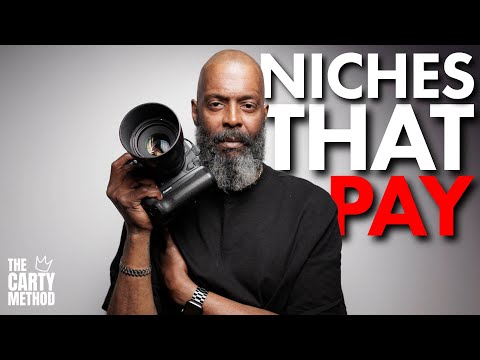
- 10 Niches ranked
- $40k–$200k+ Widest stated range
- Not stated Source for the ranges
- Not stated Costs
The claim
That these ten photography niches are the most profitable going into 2026, with yearly earnings in the ranges the host gives for each.
- Wedding — $35,000 to $120,000-plus a year
- Portrait — $35,000 to $100,000-plus a year
- Fashion — $40,000 to $200,000-plus a year
- Event — $35,000 to $85,000 a year (USD)
- Stock — $20,000 to $65,000 to $100,000-plus a year
- Editorial — $35,000 to $95,000-plus a year
- Video production — $40,000 to $140,000-plus a year
- Product (bonus) — $50,000 to $100,000-plus a year
- Commercial — Up to $175,000-plus a year; the lower bound is not clearly stated
- Real estate and architecture — A range is given; its lower bound is not clearly stated
- Advertising day rates — $35,000, $50,000 or $75,000 "in a day"
- Source, region, revenue or profit — Not stated in the video
What is this income idea?
Pick one photography niche, build a portfolio and client relationships inside it, and stack related services under the same type of client.
- The host says they have been a professional photographer for 35 years and works as an editorial and commercial portrait photographer. The episode ranks ten niches: wedding, commercial, portrait, fashion, real estate and architecture, event, stock, editorial, video production and, as a bonus, product photography.
- For each niche the host describes what defines it in 2026, how to get into it, and a yearly income range. Most ranges start between $20,000 and $50,000 and top out between $85,000 and $200,000-plus. They are presented as what a photographer "can expect to earn", with the repeated caveat that results depend on how hard you work and how specific your niche is.
- The entry advice is practical and specific: assist established wedding photographers and build relationships with planners and venues; learn how brands think for commercial work; master lighting and directing nervous subjects for portraits; buy printed magazines to study current fashion visual language; learn vertical control and interior light for architecture; and shoot events for how the images will be used, vertical for social and horizontal for screens.
- Several examples of working photographers are given, including a commercial photographer the host says earns "in the millions per year" and a product photographer the host says is "doing $2 million a year". These are the host's statements about other people and cannot be checked from the video.
- The closing section argues for a "multi-income stream" approach: stack niches under one umbrella (people, places or things) so the same clients need all of them, and add video. The host says their own income now comes from shooting, stock licensing, YouTube, their coaching business and Substack.
- The video ends with a pitch for a $5-a-month channel membership and for the host's photographer community. Both are named on screen and in the audio.
Specialise, learn how your clients use images, and add video; the income ranges are the host's estimates with no costs attached.
- Choose one niche — Not a bit of everything
- Build a focused portfolio — Repeatable results
- Build client relationships — Planners, agents, brands
- Shoot for the use — Social, web, print
- Add video — Hybrid offers
- Stack related streams — Same client umbrella
Sound positioning advice. The income ranges come with no source and no costs.
Good positioning advice, ranked by a number that leaves out costs
The lesson underneath the number
- The most useful part of the video is not the ranking but the reasoning behind it. Specialise so you become known for one thing. Learn how the client will use the images, whether that is a listing competing online, a brand campaign or a vertical social post. Build relationships with the people who hire, not just followers. Stack services that the same client needs, so you are not marketing to a new audience for every stream. That is sound positioning advice for any freelance creative business.
- The ranges are the weakest part. None has a stated source, region or year, and none says whether it is bookings or take-home pay. Examples in the video span Vancouver, Toronto and the UK, where rates differ. Most ranges have a "plus" on the end, so the top is open. Read together, they say that a working photographer in most niches might bring in somewhere from the mid-thirty-thousands to six figures, which is a reasonable expectation to test but not a measured one.
- The title promises profit, and profit is where the niches differ most. A headshot or stock business can run on modest gear and no travel; a destination-wedding or large commercial business carries travel, assistants, insurance and much more equipment. Without costs, the ranking is a ranking of stated gross income, and the order could change once expenses are counted.
- The host is open about the less attractive parts: event work needs volume and is crowded, magazine rates are low, and they personally dislike weddings. They also name their own interests: a coaching programme that one of the featured photographers belongs to, a community, stock licensing, YouTube, Substack and a paid channel membership.
I used to make money only when I did this which is hold my camera up to my eyeballs and push the button.
The host, on moving to several income streams
The approach, as the video gives it
What the host recommends across the ten niches.
No cost or source is given for any of the income ranges.
- Specialise instead of shooting everything — The host argues that shooting a little of everything leaves you "average" at all of it, while going all in on one niche builds a name quickly.
- Learn the client's problem — Commercial work is described as "solving business problems visually": build a portfolio that shows intent and usage, and network with marketing teams and creative directors.
- Start local and deliver fast — For real estate and architecture, start locally and build trust with agents, developers and builders through speed and consistency.
- Price for fewer, larger jobs — For events, $3,000 a month can come from ten $300 shoots, three $1,000 shoots or one $3,000 shoot. The host says they take the single larger job.
- Shoot stock with a purpose — Build focused, concept-based collections around specific problems, get model releases, and look at what sells on stock marketplaces before shooting.
- Use editorial as a door to advertising — Magazine rates are "not great", the host says, but published editorial work led them to advertising jobs paid in the tens of thousands per day.
- Add video and stack streams — Offer hybrid photo and video packages to existing clients, and add streams that serve the same type of client. The host says video "saved my career".
The business model
Fees for commissioned shoots (weddings, events, portraits, commercial, editorial), stock licensing, video production, and the host's own coaching, YouTube and Substack.
Couples, brands, marketing teams, magazines, estate agents and developers, event organisers and stock buyers, depending on the niche.
Specialist images that solve a client's specific problem, from listings that stand out online to campaigns that sell.
Portfolio, relationships with planners, agents, creative directors and editors, pitching publications, and stock marketplaces.
- Equipment — Not mentioned
- Software, storage and delivery — Not mentioned
- Travel — Destination weddings named; cost not stated
- Insurance and contracts — Not mentioned
- Assistants and crew — The host had an assistant; cost not stated
- Tax and unpaid admin time — Not mentioned
The video ranks niches by profitability but gives income ranges only, with no expense of any kind for any niche.
What you would actually need
Money
Not stated. No start-up or running cost is given for any niche.
Every niche on the list depends on equipment, software and marketing, and several add travel, insurance, assistants or studio space. Because none of these is given, the ranges cannot be read as what a photographer keeps.
Costs implied, not stated
- Cameras, lenses and lighting
- Editing software and storage
- Insurance and contracts
- Travel, including destination weddings
- Assistants, stylists and crew on larger shoots
- Portfolio, website and marketing
- Self-employment tax
Time
Not given as a timeline. The host's own career is 35 years; examples include photographers working for 20 and 21 years.
The examples are long careers, and the entry advice (assisting, test shoots, building relationships) is slow work. Event photography is described as requiring volume and being "okay with shooting every single day". Editing, admin and sales time are not counted anywhere.
Where the time goes
- Assisting and test shoots before paid work
- Building relationships with planners, agents and brands
- Shooting days
- Editing and delivery
- Pitching publications and clients
- Learning video and audio
The part you must pay attention to
The title promises the most profitable niches; the video gives income ranges with no costs and no source.
Each range is introduced as what you "can expect to earn" or "make", with no data source, region, year or definition. The host also says the ranges are "limited to how hard you work and how hard you push".
- Stated wedding range — $35k–$120k+
- Not stated — − gear, travel, insurance
- Not stated — − editing time, tax
Unknown
Profit in any niche
A ranking of "most profitable" niches rests on what each niche costs to run, and the video gives no cost for any of them. A self-employed photographer's bookings are gross revenue: equipment, software, insurance, travel, assistants, marketing and tax come out before anything is kept. Destination weddings and large commercial shoots carry much higher costs than headshots or stock, so ranking niches by stated income alone can reorder very differently once costs are counted. The video also does not say whether the ranges are bookings, take-home pay or a salary; video production is the only one called a "salary range".
The ranges are also wide enough to cover very different businesses. The fashion range spans five times from its low end to its stated high end, and the top examples sit far outside every range: a product photographer the host says earns $2 million a year is twenty times the top of the $50,000 to $100,000-plus range given for product work. Those examples describe exceptional careers, not the niche. The one piece of worked arithmetic in the video, for events, checks out and lands at the bottom of the event range.
- THE EVENT ARITHMETIC (host)
- 10 shoots x $300 = $3,000
- 3 shoots x $1,000 = $3,000
- 1 shoot x $3,000 = $3,000
- -> checks out
- $3,000 x 12 months = $36,000
- -> near the $35k low end
- To reach $85k: ~$7,100/month
- = ~24 shoots at $300
- -> our arithmetic
- RANGE vs EXAMPLE
- Product range top $100k+
- Example stated $2M/yr
- Ratio ~20x
- COSTS not stated
The economics
Yearly ranges for each niche; no costs for any.
- Wedding — $35,000–$120,000+
- Portrait — $35,000–$100,000+
- Fashion — $40,000–$200,000+
- Event — $35,000–$85,000
- Stock — $20,000–$100,000+
- Editorial — $35,000–$95,000+
- Video production — $40,000–$140,000+
- Product — $50,000–$100,000+
- Advertising, per day — $35,000–$75,000
- Event income at $3,000 a month, per year — $36,000
- Costs in any niche — Not stated
Checking the event example against the event range
$3,000 a month × 12 = $36,000 a year; $85,000 ÷ 12 = ~$7,083 a month
The worked example sits at the bottom of the stated event range; the top needs about 24 shoots a month at $300, or about 2.4 at $3,000
IncomeIdeaLab calculation from figures stated in the video
Both the monthly example and the range are stated before costs. The host gives the $3,000-a-month figure as an illustration of pricing, not as a typical result.
- Where the income ranges come from
- Which country, market or year they apply to
- Whether they are bookings, profit or take-home pay
- Equipment, software, insurance and travel costs
- Assistant and crew costs
- Tax and unpaid editing and admin time
- The price of the host's coaching programme and community
- One advertising day at $35,000 to $75,000, as stated, would equal or exceed the low end of every yearly range on the list. The host presents this as the reason editorial work matters, not as a typical rate.
- The stock range is stated as "20,000 to 65,000 to 100,000 plus", which reads as a low, middle and open top.
- The host says "most working photographers in 2023 do not simply rely on a single niche". No source is given for this, and the year differs from the 2026 framing of the rest of the video.
- The architectural photographer used as the real-estate example is, by the host's description, one of the photographers they coach.
Evidence status
Every substantive claim in the video.
- These are the ten most profitable niches — Host — Ranked by stated income; no costs are given for any niche.
- Wedding: $35,000–$120,000+ a year — Host — No source, region or definition given.
- Portrait: $35,000–$100,000+ a year — Host — No source, region or definition given.
- Fashion: $40,000–$200,000+ a year — Host — The widest range on the list.
- Event: $35,000–$85,000 a year — Host — Consistent with the host's own $3,000-a-month example at the low end.
- $3,000 a month from 10 × $300, 3 × $1,000 or 1 × $3,000 — Host — The arithmetic checks out.
- Stock: $20,000 to $100,000+ a year — Host — Depends on library quality, the host says.
- Editorial: $35,000–$95,000+; advertising $35,000–$75,000 a day — Host — The day rates are the host's account of their own experience.
- Video production: $40,000–$140,000+ a year — Host — The only range called a salary.
- Product: $50,000–$100,000+; one example at $2 million a year — Host — The example is about twenty times the top of the range.
- A commercial photographer earns "in the millions per year" — Host — A statement about another person; not checkable from the video.
- Host has been a professional photographer for 35 years — Host — The host's statement; we make no claim either way.
- Costs, source of ranges, profit — Nobody — Not stated in the video.
What is actually proven?
The advice is specific; the numbers are estimates.
- The host gives yearly income ranges for most of the ten niches.
- The host says they earn from shooting, stock licensing, YouTube, coaching and Substack.
- The $3,000-a-month event example works out to $36,000 a year, at the bottom of the event range.
- The host's coaching, community and $5-a-month channel membership are named in the video.
- Where the ranges come from and what market they describe.
- Whether the ranges are revenue or take-home pay.
- The cost of running a business in any of the niches.
What the headline doesn’t tell you
A profit ranking with no costs in it.
- Profit is in the title. — Costs are not in the video.
- No source for the ranges. — No region or year either.
- Revenue or take-home? — Not stated.
- Most ranges end in "plus". — The top is open.
- Examples sit far above the ranges. — $2M against $100k+.
- Events need volume. — The host says so.
- Magazine rates are low. — Also the host's words.
- One example is a coaching client. — Disclosed by the host.
Should you try it?
Use the positioning advice; build your own numbers
The specialise-and-stack approach is sound. Treat the ranges as rough estimates and work out your own costs before choosing a niche on income alone.
- Usefulness of the entry advice — 7 — Specific steps for each niche.
- Sourcing of the income ranges — 1 — No source, region or year.
- Cost disclosure — 0 — No expense of any kind given.
- Candour about downsides — 6 — Event volume, low magazine rates and competition stated.
- Conflict-of-interest clarity — 6 — Coaching, community and membership named; prices of the first two not given.
- Beginner accessibility — 4 — Long careers and assisting work behind the examples.
- If you are choosing a photography niche, the reasoning in this video is worth more than its numbers. Pick a lane, build a portfolio that shows repeatable results for that lane, learn how clients actually use images, and add services the same clients will buy, especially video. Each of those is a decision you can act on this month.
- Treat the ranges as one practitioner's estimates. They have no stated source, they do not say where in the world they apply, and they do not say whether they are bookings or take-home pay. In a market where rates vary widely between cities and countries, check local pricing and job boards before relying on any of them.
- Then add the costs the video leaves out. Equipment, software, insurance and marketing apply to every niche; travel, assistants and crew apply to weddings, fashion and commercial work far more than to headshots or stock. A niche with a higher stated range and much higher costs may keep you less.
- Finally, note the time scale. The host's career is 35 years, and the featured photographers have been working for around two decades. The fastest route the video describes is through assisting, test shoots and relationships, all of which take time before they pay.
Passive or automated?
Automation
Every commissioned shoot needs the photographer present.
Passive potential
Stock licensing can earn after the shoot; everything else is booked work.
Almost every niche on the list is paid work done in person: someone has to be at the wedding, the event, the shoot or the property, and then edit and deliver. The host says they used to earn only when they pressed the shutter and shifted to stock licensing, YouTube, coaching and Substack to earn "all the time". Stock is the one stream on the list that keeps selling after the work is done, and the host says it depends on the quality of the library. None of the streams is described as passive in the sense of needing no ongoing work.
- Shooting every commissioned job
- Editing and delivering images
- Building relationships with clients and referrers
- Pitching publications
- Producing new stock and video content
Recommended beginner experiment
Test one niche locally and track what you keep.
- Shortlist two niches you enjoy. — The host says you cannot do weddings if you hate them.
- Check local rates. — Not the video's ranges.
- List the gear you already own. — And what each niche adds.
- Build a focused portfolio. — Repeatable results, not highlights.
- Assist an established photographer. — The host's first step for weddings.
- Price for fewer, larger jobs. — The $3,000-a-month example.
- Track costs per shoot. — Travel, editing time, gear.
- Add video once photos pay. — Hybrid offers to the same clients.
Our verdict: 4/10
Sound niche advice, ranked by income ranges with no costs from a working photographer whose own coaching and community are named in the video
Credited for specific, practical entry advice for each niche; for arithmetic on event pricing that checks out; for stating the downsides of event work, low magazine rates and the host's own dislike of weddings; and for naming the host's coaching client, community and paid membership. Marked down because a ranking of "most profitable" niches gives no cost for any of them; because no range has a stated source, region or year or says whether it is revenue or take-home pay; and because the named examples, at $2 million and "millions" a year, sit far outside the ranges given.
This is a practical episode from a photographer who says they have worked professionally for 35 years, and its best content is the reasoning, not the ranking. Specialise so you become known for one thing; learn how the client will use the pictures; build relationships with the people who hire; and stack services, especially video, that the same clients need. The entry advice for each niche is specific enough to act on. The income ranges are where the video is thinnest. Each is given as what a photographer can expect to earn, with no source, region or year, and none says whether it is bookings or take-home pay. Most end in "plus", and the named examples, a product photographer at $2 million a year and a commercial photographer "in the millions", are far outside them. The title promises the most profitable niches, but no cost is given for any niche, and the niches differ most in exactly that: destination weddings and large commercial shoots carry travel, crew and equipment that headshots and stock do not. The one worked calculation, $3,000 a month from events, checks out and lands at about $36,000 a year, the bottom of the stated event range. The host is open about the less attractive parts of several niches and names their own coaching, community and channel membership. Use the advice; build the numbers yourself from local rates and your own costs.
- Niches ranked — 10
- Typical stated range — ~$35,000 to $100,000+ a year
- Event example — $36,000 a year at $3,000 a month
- Source of ranges — Not stated
- Revenue or take-home — Not stated
- Costs — Not stated
- Host's products named — Coaching, community, membership
- Beginner suitability — Advice yes; ranges with caution
Sources
- The 10 Most Profitable Niches in Pro Photography — The Carty Method — YouTube video, 2026-01-26