Digital Products / Faceless Content · Claim Review
“Building a Personal Brand is Dead, Do This Instead in 2026”
What we found: The "Personal Brand Is Dead" Proof Is One $10K Student, Pitched Through a Brand With $1.8M a Year in Payroll
A creator reporting $32 million in digital product sales argues that faceless accounts beat personal brands. Their only result is one student's unspecified $10,000, and the video itself funnels viewers to their masterclass through their own brand.
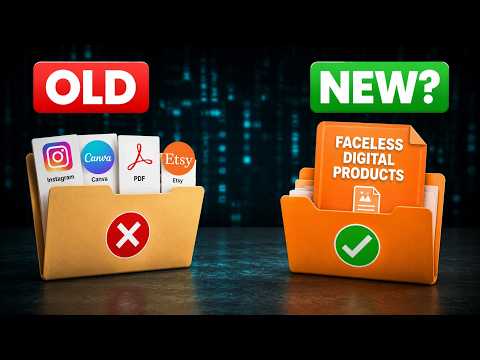
- $32M+ Creator's digital product sales
- $150K/mo Creator's media payroll
- $10K+ Faceless student result
- 3,000+ Students coached
The claim
That building a personal brand is no longer a real business strategy, and that a faceless account selling a digital product — someone else's for commission, or your own made with AI — is the better path.
- Creator's cumulative digital product sales — Over $32 million; on-screen graphic at 0:44 reads "$32,000,000+ Digital Product Sales", with no dashboard
- Students coached — 3,000+
- Creator's media payroll — $150,000 a month; also in on-screen text at 3:53
- Annualised payroll — $1.8 million
- Featured student's income — Over $10,000, no period given; the on-screen chart at 5:41 reads "Income $10,000" with no period, axis or source
- Featured student's account, on screen at 5:27 — 741 followers, 138 posts (date not shown); bio "Marketing Mentor for Moms" with a Stan Store link
- Affiliate commission range — 30–85%, later 50–85%
- Students with under 1,000 followers earning — "Thousands in pure profit", unquantified
- Avatar accounts match real-person results — Asserted, no data
- Featured student's costs or profit — Not given
- Share of 3,000+ students reaching $10,000 — Not given
What is this income idea?
Skip building an audience around yourself. Start with a product — an existing course or guide sold for commission, or your own AI-written PDF — and drive traffic with short faceless Reels or AI-avatar videos.
- The creator says they built their own audience the traditional way, documenting their life on camera for seven years, and reports over $32 million in digital product sales and more than 3,000 students coached. They argue that the audience-first model is now a trap for three reasons: the business stops when you stop posting, the audience belongs to the platform and cannot be sold, and Instagram now favours new accounts over established ones.
- Their alternative is an "asset stack": the product is the asset, distribution is the engine, and a brand is an optional by-product. Beginners are told to start with "product arbitrage" — promoting other creators' courses, guides and communities for a commission of 30% to 85% — then later build their own product with AI in an afternoon and keep all the revenue.
- Distribution is short faceless Reels, 7 to 15 seconds long, built on a three-beat formula: a one-line pain hook, a one-line twist, and a link to the product in the bio. They recommend at least one post a day, up to three, for 90 days, and suggest AI avatar tools for people who do not want to film anything.
- Scaling means adding more products to the same account and then running three, five or ten faceless accounts across niches.
- The proof offered is one student, a full-time mother with a corporate job, who "crossed over $10,000 in income" from a faceless Instagram account. The account shown on screen at 5:27 has 741 followers and 138 posts, and its bio presents a named mentoring brand, "Marketing Mentor for Moms", selling through a Stan Store link; the $10,000 is shown as an editor chart with no period. The video ends by sending viewers to a free masterclass on how to pick a product, which runs through their own channel.
Sell a product with faceless short videos instead of building a following around yourself — argued by someone whose own business runs on a large personal brand.
- Pick a specific problem — A niche buyer
- Promote an existing product — 30–85% commission
- Or write your own with AI — "In an afternoon"
- One-page funnel — Template, ~1 hour
- Faceless Reels — Pain, twist, link
- Add products and accounts — 3, 5 or 10 accounts
A clear sequence; the outcome data for people following it is limited to one student.
Rented attention is a real risk. So is believing a funnel that runs on it.
The lesson underneath the number
- Parts of the argument are sound. An audience on Instagram, TikTok or YouTube is subject to the platform's rules and reach, cannot easily be sold, and depends on the creator continuing to show up. A product with its own customer list is easier to systematise and, in principle, to sell. Starting with a product and a specific buyer rather than a general following is reasonable advice.
- The trouble is the evidence for the faceless alternative. One student's "over $10,000 in income" is offered with no timeframe, no split between commissions and their own products, and no costs. "Students making thousands in pure profit with under 1,000 followers" and "most of my students get their first sales within weeks" are not quantified. Of more than 3,000 students, one result is shown.
- Some statements are presented as fact without support: that Instagram changed its algorithm to favour accounts with zero followers, that a new faceless account "can out-distribute a 100,000 follower account", and that avatar accounts get "the same engagement, the same click-throughs and the same sales". These may be true for some accounts; the video shows no data.
- The structure of the video is worth noticing too. They say they have a personal brand — "you're obviously watching it right now" — with $150,000 a month in payroll for editors, script editors and thumbnail designers. The video ends by sending viewers to a free masterclass on picking a product, through that brand. The advice is to avoid the model that is delivering the advice.
I'm not saying that personal brands don't exist. I have one, you're obviously watching it right now.
The creator, before disclosing $150,000 a month in payroll
The method, as they give it
Three steps, plus the content formula.
No costs, conversion rates or time-to-first-sale figures are given for any step. The $32 million and the payroll appear on screen only as the channel's own graphics restating the spoken figures. The featured student's Instagram profile is shown at 5:27 with 741 followers and 138 posts, a bio reading "Marketing Mentor for Moms" and a Stan Store link; the $10,000 appears in an editor chart with no period.
- Start with product arbitrage — Promote someone else's course, guide, tool or community for a commission. They say this is how most of their students get first sales "within weeks not months".
- Then build your own product with AI — Give an AI tool the structure, audience and outcome; edit the output into a PDF, guide or mini-course. They say this takes a few hours.
- Set up a one-page funnel — A template sales page, "a setup task not a project", about an hour.
- Post faceless Reels on a fixed formula — Pain hook, twist, link; 7–15 seconds; text over stock footage, screen recordings or voiceover. One to three posts a day for 90 days.
- Or use AI avatars — Upload a script and let an avatar tool read it. They say avatar accounts get the same engagement and sales as real people; no figures are shown.
- Scale by products, then accounts — Add more products for the same audience, then run several faceless accounts in different niches with the same playbook.
The business model
Affiliate commissions on other creators' digital products at first, then direct sales of AI-made PDFs, guides and mini-courses.
A specific niche audience with a problem the product solves.
A product that gives a result the buyer cannot easily get free, sold without the seller's face or name.
Faceless Reels or AI-avatar videos with a link in bio, across one or several accounts.
- AI tools — Writing and avatar tools named; not priced
- Funnel platform — Templates mentioned; not priced
- Commission split — Product owner keeps 15–70% on arbitrage
- Payment fees and refunds — Not mentioned
- Time — 1–3 posts a day for 90 days
- Creator's own media payroll — $150K/month — their model, not the one recommended
The only cost quantified in the video is the creator's own payroll, which belongs to the personal-brand model they advise against.
What you would actually need
Money
No money figure is given for starting; the product "exists", the funnel takes "an hour" and AI builds your own product "in an afternoon".
Low cash cost is plausible, but not zero. AI writing and avatar tools, a funnel or checkout platform, and payment processing all cost money, and none is priced. On arbitrage, the product owner keeps 15–70% of each sale.
Costs the video does not price
- AI writing tool subscription
- AI avatar tool subscription, if used
- Funnel, sales page or checkout platform
- Payment processing and refunds on your own products
- Stock footage or editing tools
- The product owner's share on affiliate sales
- The paid programme behind the free masterclass, if any
Time
"Minimum one post, though if you're ambitious you can do three posts a day, every day, for the next 90 days."
That is 90 to 270 short videos before judging results, plus product research, writing and funnel work. For the featured student, who has a corporate job and children, the timeline to $10,000 is not given.
What the time commitment includes
- 90–270 Reels over 90 days
- Finding and vetting arbitrage products
- Writing and editing an AI-drafted product
- Building and testing a funnel
- Running more accounts if scaling
- Time to first sale: "weeks", not quantified
The part you must pay attention to
The case against personal brands is made by a personal brand, and ends in a funnel to its masterclass.
The one hard number about the creator's own operation is a cost: $150,000 a month in media payroll. The one result offered for the faceless model is a student's $10,000, with no period, costs or profit.
- Monthly media payroll — $150,000
- Months — 12
$1.8M a year
Matches their stated figure
The faceless model's evidence is one student out of more than 3,000 coached. "Crossed over $10,000 in income" does not say whether that is revenue or profit, over a month or over a year or more, or whether it came from their own product or commissions. No share of their students reaching any figure is given. Claims that Instagram now favours zero-follower accounts and that AI avatars convert as well as real people are stated without data.
Credit where due: they disclose a large real cost of their own business, and the point that a platform audience is rented and hard to sell is fair. But the video also shows what the faceless model lacks. Their channel, their seven years on camera and their media team are how this video, the free masterclass and their coaching reach viewers. The commission range also shifts within the video, from "30 to 85%" to "50 to 85%". Treat the content formula as a usable template and the income claims as anecdote.
- WHAT THE VIDEO STATES
- Creator sales (total) $32M+
- Students coached 3,000+
- Media payroll $150K/month
- x 12 = $1.8M/yr
- THE FACELESS EVIDENCE
- Students cited 1
- Result $10,000+
- Period not given
- Costs / profit not given
- 1 of 3,000 = ~0.03%
- (of students named, not a rate)
- COMMISSION
- Stated first 30%-85%
- Stated later 50%-85%
The economics
The creator's own figures are large and partial; the student's are thinner.
- Creator's digital product sales — $32M+ (cumulative)
- Creator's media payroll — $150K/month
- Payroll per year — $1.8M
- Students coached — 3,000+
- Featured student's income — $10K+
- Affiliate commission — 30–85% or 50–85%
- Posting cadence — 1–3 a day for 90 days
- Student's timeframe and costs — Not given
- Creator's profit — Not given
Payroll check
$150,000 × 12 months
$1.8 million a year, matching the figure they give
IncomeIdeaLab calculation from figures stated by the creator
This is a cost of their personal-brand media operation. The $32 million in sales is cumulative over an unstated period, so the two figures cannot be combined into a margin.
- Timeframe and costs behind the student's $10,000
- Whether their income is commissions, their own product or both
- Share of students reaching any income level
- The period over which $32 million was sold, and the creator's profit
- What the free masterclass leads to, and its price
- Prices of the AI and funnel tools mentioned
- The payroll disclosure is unusual and to their credit: $150,000 a month to editors, script editors, thumbnail designers and media staff, which correctly annualises to $1.8 million.
- On arbitrage, the commission range is given as "anywhere from 30 to 85%" and a minute later as "a 50 to 85% commission". At 30%, a $100 product earns $30; at 85%, $85. The difference matters for anyone planning income from commissions.
- They say creators "selling courses" give the opposite advice. The video itself ends with a free masterclass and describes coaching over 3,000 students, so they are also in the business of teaching this.
- The Apple comparison — the iPhone sells whether its CEO posts or not — illustrates product-led selling, but Apple spends heavily on brand and distribution; it is not evidence that a faceless account can sell without an audience.
Evidence status
Every substantive claim in the video.
- "Building a personal brand is dead" — Creator — Contradicted by their own business and funnel.
- Over $32 million in digital product sales — Creator — Cumulative; period, product mix and profit not given. Shown in an on-screen graphic, not a dashboard.
- 3,000+ students coached — Creator — Outcomes not given.
- $150,000 a month payroll, $1.8M a year — Creator — Checks out. A cost of their personal brand.
- Student crossed $10,000 from a faceless account — Creator — No period, costs, profit or income type. The on-screen chart has no period; the profile shown has 741 followers and a named mentoring bio.
- Students earn thousands with under 1,000 followers — Creator — Unquantified.
- Most students get first sales within weeks — Creator — No share or timeframe data.
- Commissions of 30–85% (later 50–85%) — Creator — Range changes within the video.
- Instagram favours zero-follower accounts — Creator — Stated as fact; no evidence shown.
- Avatar accounts match real-person sales — Creator — No data.
- AI builds a sellable product in an afternoon — Creator — Plausible for a draft; quality and sales unshown.
- Free masterclass on choosing a product — Creator — The video's call to action.
What is actually proven?
A disclosed cost and a usable formula; the income claims are anecdotal.
- The $150,000 monthly payroll equals $1.8 million a year.
- The three-beat Reel formula is described clearly.
- The video funnels viewers to the creator's masterclass.
- $32M+ in cumulative sales and 3,000+ students.
- One student crossed $10,000 from a faceless account.
- The student's account, shown at 5:27, has 741 followers and a "Marketing Mentor for Moms" bio.
- Instagram favours new accounts; avatars convert as well as people.
- The student's timeframe, costs and profit.
- How many students earn anything.
What the headline doesn’t tell you
The argument is partly right; the evidence is thin.
- Made by a personal brand. — Seven years on camera, $1.8M a year in payroll.
- One student. — Out of 3,000+, with no timeframe.
- "Income", not profit. — Costs and income type not given.
- Commission range shifts. — 30–85%, then 50–85%.
- Algorithm claims unshown. — No data for new-account reach.
- Avatar parity unshown. — "Same sales" asserted only.
- Ends in a funnel. — Free masterclass via their channel.
- Tools not priced. — AI, avatar and funnel costs omitted.
Should you try it?
Use the formula, discount the proof
Product-first with faceless short videos is a cheap experiment. The video does not show how often it works.
- Specificity of method — 7 — Clear Reel formula and cadence.
- Evidence of results — 2 — One student, unspecified $10,000.
- Cost disclosure — 3 — Their payroll yes; the viewer's costs no.
- Internal consistency — 4 — Commission range shifts; thesis contradicted by the delivery.
- Conflict disclosure — 5 — Masterclass and coaching visible; any paid programme not described.
- Beginner replicability — 5 — Low cash cost; heavy posting and unproven conversion.
- The cheapest part of this to test is the content formula. Pick a narrow problem, find an existing product with a fair commission, and post a short pain-twist-link Reel every day for a set period. Track views, link clicks and sales so you know whether it works for you rather than relying on someone else's anecdote.
- Be realistic about the evidence. One student's $10,000, with no timeframe or costs, from a coaching base of more than 3,000, is not a success rate. Claims about the algorithm favouring new accounts and avatars converting as well as people are offered without data.
- Notice the delivery. The video argues against personal brands from inside a large one, discloses a $1.8 million annual media payroll, and ends with a free masterclass. That does not make the advice wrong, but it does mean the video comes from a creator whose own business uses the attention model they advise against.
Passive or automated?
Automation
Products and checkout can run unattended; content is produced daily.
Passive potential
Sales depend on one to three posts a day.
The pitch is that a product sells "while you sleep" and does not depend on you posting. But the distribution they describe is daily short-form posting, and scaling means running more accounts. The faceless approach removes the need to show your face; it does not remove the need to keep producing content. On arbitrage, the product owner controls the product, price and commission.
- Writing hooks and producing one to three videos a day
- Choosing and vetting products to promote
- Editing AI-drafted products to a sellable standard
- Handling customers and refunds on your own products
- Managing several accounts if scaling
Recommended beginner experiment
Test the faceless model with your own numbers.
- Choose one narrow buyer problem. — Specific beats broad.
- Find an affiliate product and confirm its commission. — The video gives two different ranges.
- Price your tools before starting. — AI, avatar, funnel and payments.
- Post one pain-twist-link Reel a day for 30 days. — Then decide on 90.
- Track clicks and sales per post. — Views alone prove nothing.
- Only build your own product after first sales. — Their advice, and sensible.
- Judge any paid programme on outcome data. — Ask what share of students earn what.
Our verdict: 4/10
A fair point about rented audiences, proved with one student the payroll checks out; the faceless results are anecdotal
Credited for disclosing a large real cost of their own business — $150,000 a month in media payroll, which annualises correctly to $1.8 million — for a reasonable argument that platform audiences are rented and hard to sell, and for a clear, copyable short-form content formula. Marked down because the faceless model's only evidence is one student's $10,000 with no timeframe, costs or income type, because claims about the Instagram algorithm and AI avatars are asserted without data, because the commission range changes within the video, and because the argument against personal brands is delivered through one and ends in a funnel to the creator's masterclass.
There is a sensible idea here: lead with a product for a specific buyer, not with a general following, and remember that an audience on someone else's platform is rented. The short-form formula — pain hook, twist, link, posted daily — is concrete and cheap to try. The evidence for the bigger claim is thin. One student's "over $10,000 in income" stands for the whole faceless model, with no timeframe, no costs and no split between commissions and their own products, out of a coaching base of more than 3,000. Claims that Instagram now favours zero-follower accounts and that AI avatars sell as well as people are presented without data, and the commission range moves from 30–85% to 50–85% within minutes. The most solid number in the video is a cost: $150,000 a month, or $1.8 million a year, spent on the creator's own personal-brand media team — the channel through which this video, its free masterclass and their coaching reach viewers.
- Creator sales — $32M+ cumulative
- Media payroll — $1.8M a year
- Faceless student result — $10K+, no period
- Students coached — 3,000+
- Success rate — Not given
- Beginner suitability — Cheap to test; unproven
Sources
- Building a Personal Brand is Dead, Do This Instead in 2026 — Richard Yu — YouTube video, 2026-07-03
- FTC — Guides Concerning the Use of Endorsements and Testimonials — Regulatory guidance on earnings claims and testimonials