YouTube / Personal Brand · Claim Review
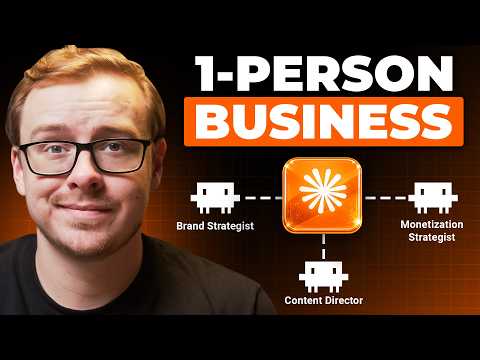
“How I'd Start a 1-Person Business + Personal Brand With Claude AI in 30 Days”
What we found: A 30-Day Personal Brand Plan's Full-Time-Income Example Is One $214 AdSense Day by a Family Member the Creator Coached
The plan is nine to ten YouTube videos in a month. The creator says most people need 5 to 20 videos before one takes off and that results usually take two to four years. Client results from $1,500 to $100,000 a month are stated without timeframes or costs.
- $214 Best single day, day 29
- ~$6,400/mo If every day matched it
- $10M+ Creator’s YouTube earnings
- 5–20 Videos before a hit
The claim
That a beginner can start a one-person business and personal brand in 30 days by choosing a niche, building on YouTube first and posting nine to ten videos, with Claude doing the heavy lifting, and that one person following the plan reached a full-time income by day 29.
- Creator’s YouTube AdSense — Over $1 million
- Creator’s lifetime YouTube earnings — Over $10 million
- Client results — Over $100 million generated in the paid community
- Family member, day 19 — 1,000 subscribers
- Family member, day 29 — $214 in a single day from AdSense (no AdSense dashboard is on screen at 20:28 to 21:06, where the slides show the plan steps and the creator on camera)
- Client with 446 subscribers — $1,500-a-month brand deal
- Client with ~1,500 subscribers — A six-figure contract
- Other clients — $80,000-plus month; $100,000 months
- Videos in the 30-day plan — 9 to 10
- Typical time to success on YouTube — 2 to 4 years
What is this income idea?
Build a personal brand on YouTube around a narrow niche, then sell services, coaching, digital products, affiliate links and sponsorships to that audience, with Claude used for ideas, scripts and titles.
- The creator opens with their credentials: over $1 million from YouTube AdSense, over $10 million in lifetime earnings from YouTube, and over $100 million in results for clients in their paid community. They cite figures for one-person businesses in the US and say most survive their first year.
- The case against building an app is the first section. The creator says over 99 per cent of apps fail and that building one is "a full-time job pretending to be a side hustle". A personal brand, by contrast, is "an asymmetric play": if the business fails, the channel still earns.
- The second section is a "money map" of five streams: services and coaching at the top, then digital products, affiliate links, sponsorships and AdSense as the floor. Client examples include a cyber-security channel with an $80,000-plus month, a $1,500-a-month sponsorship at 446 subscribers, and a six-figure contract from a channel of about 1,500 subscribers.
- Niche choice is presented as the main driver of results, "the niche is doing 90% of the work". The creator offers a free Claude skill for choosing a niche, available by registering for a live workshop.
- The 30-day sprint is one video in week one, then two to three, three and three more, for nine to ten in total. The proof offered is the creator’s brother, in his fifties and new to video, whose first video took off: 1,000 subscribers by day 19 and $214 of AdSense in a single day by day 29.
- The creator is candid that this is not typical: "is that going to happen for everybody no of course not", most successful YouTubers take "like 2 3 4 years", and most community members need 5 to 20 videos before one takes off.
Post weekly YouTube videos in a narrow niche, sell to the audience early, and use AI for the writing; the 30-day result given is one person’s best day.
- Pick a niche — Free Claude skill
- YouTube first — One long video a week
- Clip to other platforms — 5–10 shorts per video
- Nine to ten videos — Each one a test
- Stack income streams — Five named
- Sell from day one — Offer ready early
- Workshop and coaching — Linked in description
A clear posting plan; the income evidence is a set of individual results without costs or timeframes.
The plan is nine videos. The income is an outlier, and the creator says so.
The lesson underneath the number
- The structure of the advice is sensible and the creator argues it well. Treat each video as a test, do not wait for a perfect niche, sell something early rather than waiting for a large audience, and stack income streams instead of depending on ads alone. The point that a small, specific audience can be worth more than a large general one is backed by two concrete examples: a $1,500-a-month sponsorship at 446 subscribers, and a six-figure contract from a channel of about 1,500.
- The 30-day frame is where the evidence thins. The plan itself is a posting schedule, nine to ten videos, and the only 30-day income result is the creator’s brother, whose first video took off and who had the creator advising him. His result is given as 1,000 subscribers by day 19 and $214 of AdSense on a single day by day 29. That is a real milestone for a new channel; calling it a full-time income relies on that day being typical, and no monthly figure is given.
- The creator deserves credit for saying plainly that this is unusual. They say it will not happen for everybody, that successful YouTubers usually take two to four years, that most community members need 5 to 20 videos before one takes off, and that 99 per cent of viewers will never buy from them. They also note that the app founder they discuss already had a large personal brand and prior companies. Those statements sit inside the same video as the 30-day headline.
- The client figures, from an $80,000-plus month to $100,000 months, are stated without timeframes, costs or how long each client had been working with the creator, and they come from people in the creator’s coaching. The video promotes a free workshop throughout and closes with a six-month coaching programme accepting three to five people. Those are disclosed openly, and they are the context for the results quoted.
Is that going to happen for everybody no of course not but the average person who has success on YouTube it usually takes them like 2 3 4 years.
The creator, introducing the 30-day sprint
The 30-day plan, as the creator gives it
Three steps, nine to ten videos.
No cost, profit or timeframe is given for any client result.
- Lock in a niche on day one — Pick a niche at the intersection of what you know, what you love and what people pay for, using the creator’s Claude skill. "3 months of sitting on the fence cost you way more than picking the wrong niche."
- Make YouTube the main platform — One long-form video a week, cut into five to ten shorts for other platforms, each pointing back to YouTube. The creator says YouTube shares 55 per cent of ad revenue with creators.
- Week one: post the first video — "Do not make it perfect." The creator argues the niche and the idea matter far more than production quality.
- Weeks two to four: three videos a week — Two to three, then three, then three more, for nine to ten videos by day 30. Lean into whatever gets more views.
- Use Claude as the content team — Ideas, script outlines, title and thumbnail testing, and analysis of top videos. "You need Claude and an hour a day."
- Have an offer ready early — Affiliate links from day one, sponsorships once the audience is engaged, and a service or product as soon as possible. The ~1,500-subscriber client who closed a six-figure contract is the example.
- Expect most videos to underperform — Most community members need 5 to 20 videos before one takes off; after that, older videos tend to pick up views too.
The business model
Five stacked streams from one audience: services, coaching, digital products, affiliate commissions, sponsorships and AdSense. The creator sells a six-month coaching programme and runs a paid community.
An audience in a narrow niche who know, like and trust the creator after hours of long-form content.
Expertise and trust in a specific niche, sold as services, products and endorsements.
YouTube long-form as the main platform, syndicated as shorts and clips to other platforms.
- Time to produce weekly videos — An hour a day, by the creator’s account
- Claude and other tools — Not priced
- Editing — By the creator, an editor or AI; not priced
- Coaching programme — Optional; price not stated
The creator gives revenue results for several clients and family members but no cost, profit or timeframe for any of them.
What you would actually need
Money
Claude and an hour a day replace a content team of five to ten people. The niche skill and workshop are free.
The plan has low cash costs. The paid options in the video are the creator’s six-month coaching programme, whose price is not stated, and a Claude subscription if the free tier is not enough.
Costs not given a figure
- Claude subscription, if needed
- Camera and microphone
- Editing software or an editor
- The creator’s six-month coaching programme, if taken
- Tools for any digital product or service you sell
Time
An hour a day, nine to ten videos in 30 days, with a full-time income possible in a month.
The creator’s own figures point to a longer horizon: most people need 5 to 20 videos for a first hit, and successful YouTubers usually take two to four years. An example cited in the video took over three years and over 400 videos before one went viral.
Timeframes stated in the video
- 30 days: 9–10 videos
- Typical first hit: 5–20 videos
- One example: 3+ years and 400+ videos
- Typical success: 2–4 years
- Monetisation threshold before AdSense starts
The part you must pay attention to
"Full-time income in 30 days" is one person’s best day of AdSense.
The headline result is the creator’s brother: "by day 29 he was earning a full-time income from AdSense alone $214 in a single day".
- AdSense on one day, day 29 — $214
- Days, if every day matched it — 30
~$6,420
A month, as an upper bound
The load-bearing assumption is that a single day represents a month. A video that has just taken off usually earns most on its best days and then declines, and the creator gives no figure for the brother’s first full month, the following months, or the average day. "Full-time income" is defined by one daily figure. The creator also says the brother had the creator consulting on how to do it, which few viewers will have.
If every day matched day 29, the month would be about $6,420 before tax; any decline brings it lower. That is our calculation from one stated figure, not a monthly result from the video. The creator is clear that this outcome is not typical, and their own figures (5 to 20 videos for a first hit, two to four years for most) describe a much slower path. The 30-day plan produces nine to ten videos; whether any of them earns is the uncertain part.
- THE 30-DAY EXAMPLE (ours)
- Best day, day 29 $214
- x 30 days = ~$6,420
- -> only if every day
- matched the best day
- WHAT IS NOT STATED
- First full month not stated
- Average daily AdSense not stated
- Months after not stated
- THE CREATOR'S OWN TIMELINE
- Videos to first hit 5-20
- Typical success 2-4 years
- 30-day plan output 9-10 videos
- ONE VIRAL VIDEO (ours)
- $46,000 / 9,000,000 views
- = ~$5.11 per 1,000 views
The economics
Plenty of revenue figures, none with a cost or a timeframe.
- Creator’s AdSense, lifetime — Over $1 million
- Creator’s YouTube earnings, lifetime — Over $10 million
- Family member’s best day — $214
- Best day × 30 — ~$6,420
- Viral video in the example — 9 million views, over $46,000 (third-party estimate)
- Revenue per 1,000 views on that video — ~$5.11
- Sponsorship at 446 subscribers — $1,500 a month
- YouTube’s ad-revenue share to creators — 55%
- Costs and profit for any example — Not stated
Turning the day-29 figure into a month
$214 × 30 days = $6,420
About $6,400 a month only if every day matched the best day; no monthly figure is given
IncomeIdeaLab calculation from the single daily figure stated in the video
AdSense on a newly viral video usually peaks and then falls. The creator does not give the first month’s total, an average day, or later months, so the real monthly figure could be well below this.
- The family member’s first-month and later AdSense totals
- Timeframes for each client result
- Costs and profit behind the $80,000 and $100,000 months
- How much of the creator’s $10M is coaching, products or AdSense
- The price of the six-month coaching programme
- How many coaching clients do not reach these results
- Over $1 million of AdSense within over $10 million of YouTube earnings implies that most of the creator’s stated YouTube income comes from sources other than ads, such as coaching and products. That is our inference from two minimum figures; the video gives no breakdown.
- The 9-million-view video said to have earned over $46,000 is a third-party estimate the creator reads from a free tool, for someone else’s channel. About $5 per 1,000 views is far lower than many viewers might assume.
- YouTube’s standard share to creators on long-form ad revenue is 55 per cent, as the creator says. The 5 to 18 per cent figure for other platforms and the "5 to 10 times" for YouTube brand deals are stated without a source.
- The video promotes the free workshop and its Claude skill several times, and closes with a six-month coaching programme. The FTC’s endorsement guides treat results presented in advertising as a claim about what people can generally expect. The creator does say in the video that the 30-day result is not typical.
Evidence status
Every substantive figure in the video.
- Over $1M from YouTube AdSense — Creator — We could not check this from the video.
- Over $10M lifetime from YouTube — Creator — No breakdown between ads, coaching and products.
- Clients generated over $100M in results — Creator — "Results" is not defined; we could not check it.
- Family member: 1,000 subscribers by day 19 — Creator — A real milestone; first video took off.
- Family member: full-time income by day 29 — Creator — Measured by one $214 day; no monthly figure.
- $1,500-a-month sponsorship at 446 subscribers — Creator, about a client — A specific and useful example; duration not stated.
- Six-figure contract from ~1,500 subscribers — Creator, about a client — No contract length or margin given.
- $80,000-plus month and $100,000 months for clients — Creator — No timeframe, costs or profit stated.
- YouTube pays creators 55% of ad revenue — Creator — Matches YouTube’s standard long-form share.
- Over 99% of apps fail — Creator — Stated without a source.
- Most need 5 to 20 videos before a hit; 2 to 4 years to succeed — Creator — The most useful planning figures in the video.
What is actually proven?
The plan is clear. The income figures are individual results the video does not break down.
- The creator says the 30-day result is not typical and success usually takes years.
- The coaching programme and free workshop are promoted openly.
- A family member reached 1,000 subscribers by day 19 and earned $214 on day 29.
- Even if every day matched day 29, the month is about $6,420.
- Client results from a $1,500-a-month sponsorship to $100,000 months.
- Costs, profit and timeframes for every example.
- How many people following the plan earn nothing.
What the headline doesn’t tell you
Thirty days buys nine videos, not an income.
- The 30-day income is one day. — $214, on day 29.
- The example is family. — With the creator advising.
- His first video took off. — Most need 5 to 20.
- Success usually takes years. — The creator says 2 to 4.
- Client results have no costs. — Or timeframes.
- $10M is not broken down. — Ads are $1M of it.
- A viral hit paid ~$5 per 1,000. — By our arithmetic.
- There is a coaching offer. — Six months, price not stated.
Should you try it?
A reasonable way to start a channel, on a much longer clock than the title
Use the niche, test-every-video and sell-early advice. Plan on the creator’s own two-to-four-year figure, not 30 days.
- Clarity of the plan — 8 — A week-by-week posting schedule and a clear structure.
- Honesty about typical results — 7 — Says plainly the 30-day case is not typical.
- Evidence for the 30-day headline — 2 — One $214 day for one family member.
- Evidence for client results — 3 — Specific figures with no timeframes or costs.
- Cost disclosure — 2 — Low cash cost implied; nothing priced.
- Independence of the advice — 3 — Workshop and coaching promoted throughout.
- Beginner accessibility — 7 — Cheap to start; demanding to sustain.
- Starting a YouTube channel in a niche you know, and treating each video as an experiment, is a low-cost way to build an audience, and the creator’s argument for selling early rather than waiting for a large following is well supported by their two small-channel examples. You do not need the workshop or a coaching programme to follow the posting plan.
- Set your expectations by the numbers the creator gives in passing, not the title. Most people need 5 to 20 videos before one takes off, and success usually takes two to four years. Nine to ten videos in 30 days is a good start; it is not a business yet.
- If AdSense is part of your plan, remember that a channel must reach YouTube’s monetisation threshold before ads pay, and that one viral video in this video earned about $5 per 1,000 views by our arithmetic. Services, coaching or products sold to a small audience can earn far more, which is the creator’s point.
- Treat client results as possibilities rather than benchmarks. They come from people inside the creator’s coaching, and none has a timeframe or cost attached.
Passive or automated?
Automation
Claude helps with ideas and scripts; recording and selling are personal.
Passive potential
Older videos keep earning; services and coaching do not.
A personal brand is, by design, built on the creator appearing on camera, and the highest-earning streams the creator names, services and coaching, are delivered by a person. AdSense and affiliate income from older videos can continue with little work, which the creator describes for a client whose years-old videos still earn. Claude can draft ideas, outlines and titles, but the video is clear that the content itself should be the person on camera.
- Recording every long-form video on camera
- Delivering services and coaching
- Negotiating sponsorships
- Choosing and refining the niche
- Answering an audience that buys on trust
Recommended beginner experiment
Run the 30 days as a test, and keep going.
- Pick a niche you can sell in. — Know it, like it, someone pays for it.
- Decide your first offer now. — A service is fastest.
- Post nine to ten videos in 30 days. — Speed over polish.
- Track views per video. — Lean into what works.
- Add affiliate links you use. — From day one.
- Plan for 20 videos, not 9. — The creator’s own range.
- Budget two to four years. — For a real income.
- Count every hour. — An hour a day is the claim.
Our verdict: 4/10
A sensible posting plan sold on one person’s best day with client results that carry no costs or timeframes, and a coaching offer at the close
Credited for a clear week-by-week plan, for well-argued advice on choosing a narrow niche, testing every video and selling early, for two specific small-channel examples, and for stating plainly that the 30-day result is not typical, that most people need 5 to 20 videos before one takes off, and that success usually takes two to four years. Marked down because the "full-time income in 30 days" example is one $214 AdSense day for a family member the creator advised, with no monthly figure, because client results from $80,000-plus to $100,000 months have no timeframes, costs or profit attached, because the creator’s $10 million is not broken down, and because the free workshop and six-month coaching programme promoted throughout are the context for every result quoted.
The plan in this video is reasonable: choose a narrow niche you can sell in, post long-form videos on YouTube every week, cut them into shorts for other platforms, treat each video as an experiment and have something to sell early. The case for selling to a small audience is backed by two specific examples, a $1,500-a-month sponsorship at 446 subscribers and a six-figure contract from about 1,500 subscribers. The 30-day framing is where the evidence is thin. Thirty days of the plan produces nine to ten videos. The one person said to reach a full-time income in that time is the creator’s brother, whose first video took off with the creator advising him, and the income is measured by $214 of AdSense on a single day; even if every day matched it, the month would be about $6,420, and no monthly figure is given. The creator says themselves that this is not typical, that most people need 5 to 20 videos before one works, and that success usually takes two to four years. The larger figures, $10 million of the creator’s own YouTube earnings and $80,000 to $100,000 months for clients, are stated without breakdowns, costs or timeframes, and come alongside a free workshop and a six-month coaching programme promoted throughout. Take the plan, and use the creator’s two-to-four-year figure as the clock.
- Family member’s best day — $214 on day 29
- Best day × 30 — ~$6,420 upper bound
- Videos in the plan — 9–10
- Videos to a first hit — 5–20 for most
- Typical time to success — 2–4 years
- Client costs and timeframes — Not stated
- Beginner suitability — Plan yes, timeline no
Sources
- How I'd Start a 1-Person Business + Personal Brand With Claude AI in 30 Days — Shane Hummus — YouTube video, 2026-05-31
- FTC — Guides Concerning the Use of Endorsements and Testimonials — Regulatory guidance on endorsements and typical results