Digital Products / PDF Guides · Claim Review
“I Made $10 Million Selling Simple Digital Products (Step by Step)”
What we found: The $10 Million PDF Guide Process: Shopify Shows $10.1M in Sales Over 12 Months, but No Marketing Cost Is Given
A step-by-step for chatbot-written PDF guides on pets and parenting. A Shopify sales screen backs the $10 million as revenue; the influencer fees, 50% splits and ad spend behind it are unpriced, and the quality bar is helping buyers "feel 1% better".
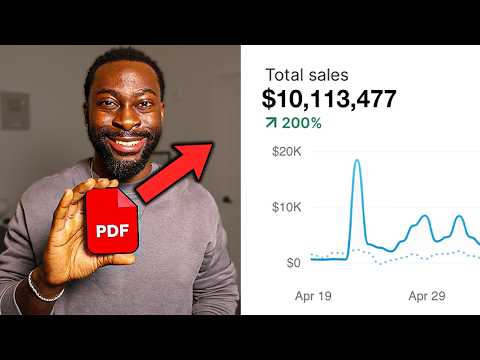
- $10,113,477 Shopify net sales
- 50% Affiliate split
- ~$843K Average month
- Not given Ad and influencer spend
The claim
That the creator made over $10 million in one year selling AI-assisted PDF guides, using a simple process viewers can copy.
- Headline — "Over $10 million selling digital products"
- Shopify Analytics, last 12 months (12:20): net sales — $10,113,477.00
- Same screen: gross sales, discounts, returns — $10,116,681.00; −$1,655.00; −$1,549.00
- Same screen: conversion rate, chargebacks — 3.82%; 3 chargebacks
- Store name on that screen — Not visible
- Average month — ~$842,800
- Influencer terms — Upfront flat fees and 50% affiliate splits, "both throughout the whole process"
- Paid ads — Retargeting and lookalike audiences, "typically profitable right away"
- Guide writing — Chatbot writes the entire guide; creator reads it through
- Quality bar — "If it helped them feel 1% better that is enough"
- Store offer — Shopify at $1/month (shown) versus a usual $39 (spoken), via the creator’s link
- Guide price, ad spend, influencer fees, profit — Not given
What is this income idea?
Produce PDF guides on emotionally charged problems — here, puppies and parenting — mostly written by a chatbot, sell them from your own online store, and market them through YouTube creators and retargeting ads.
- The creator opens: "this one simple process helped me make over $10 million selling digital products specifically PDF guides and AI did a lot of the heavy lifting", adding "I don’t have a course to sell you". Later: "how did I do it to do over $10 million in one year". At 12:20 a Shopify Analytics screen shows the "Total sales breakdown" for the last 12 months: gross sales $10,116,681.00, discounts −$1,655.00, returns −$1,549.00 and net sales $10,113,477.00, with a 3.82% conversion rate and 3 chargebacks. The store name is not visible on that screen.
- Ideas come from an idea-generation tool, linked in the description, which scores topics; "anything 70 and above… I would just click save", and 80% and above "I’m not even going to read". On screen the tool is PDF Trend Lab, logged in under the creator’s name, and its menu lists "Step by Step Course" and "1 on 1 Coaching Call"; the video does not say who owns it or what those cost. The example idea: "The Ultimate Puppy Care Guide", opportunity score 70, about 5,000 searches a month by the tool’s estimate. "Emotion is what makes people buy." The creator recalls buying a puppy book at a big-box store while struggling with a new puppy.
- A chatbot shortens the title into something "punchy" and then, with a second prompt, "create[s] the entire PDF guide for you". The creator reads it for sense: "if it helped them feel 1% better that is enough because you don’t want to just sell rubbish". It can be expanded to 20 pages; research is optional, since the chatbot "is smart enough".
- The guide is laid out in a design app with a free stock-photo cover, then sold on Shopify rather than a marketplace. Shopify’s sign-up page on screen offers "Start for free, keep building for $1/month"; the creator says that is "as opposed to the $39" usual price, via a link in the description.
- Marketing: YouTube creators, paid either a flat fee or a 50% affiliate commission; micro-creators (20,000–50,000 subscribers) for affiliate-only deals. The creator used both, and says larger creators agreed to 50/50 without upfront pay only because "I’ve already proven that I can do that… for you you can’t do that with big influencers". A tracking pixel then lets the creator retarget site visitors with ads — "typically profitable right away" — and build lookalike audiences.
- The video ends by pointing to a free three-hour course on the channel.
AI-written PDF guides sold through creators and ads. Shopify shows the $10 million in sales; the costs of getting it are not given.
- Pick an emotional problem — Idea tool, score 70+
- Chatbot writes the guide — Title, then full text
- Design cover and pages — Stock photo
- Shopify store — $1/month offer
- YouTube creators — Flat fee or 50%
- Pixel and retargeting — Ads to visitors
- Lookalike audiences — Scale ads
Each step is shown or explained; what each marketing step costs is not.
Marketing mechanics explained and sales shown; economics and quality skipped.
The lesson underneath the number
- The strongest part of the video is the distribution logic. YouTube creators build more trust than short-form creators; micro-creators accept affiliate deals more readily; a tracking pixel lets you retarget people who visited from a creator’s video; and lookalike audiences extend that to similar people. These are real, widely used techniques.
- The headline is supported as revenue and incomplete as income. A Shopify Analytics screen shows $10,113,477 of net sales over the last 12 months, with almost nothing lost to discounts or returns — the $10 million in a year is on screen. But the process described is expensive: upfront creator fees, 50% of affiliate sales and paid ads. None of it is priced, so profit is unknown. The store’s name is not visible, so the screen alone does not tie every sale to guides made this way.
- The creator also says the best deals depended on reputation: large creators accepted 50/50 because "I’ve already proven that I can do that". A newcomer would pay upfront or accept a harder path.
- The content standard is the concern most worth flagging. A chatbot writes the guide, fact-checking is optional, and the bar is that the buyer feels "1% better". Selling AI-written pet-care and parenting advice to stressed buyers on that basis risks selling poor or wrong information. If you use this model, check every claim and aim much higher.
For you you can’t do that with big influencers and with small influencers it’s still going to be a struggle.
The creator, on affiliate-only creator deals
The process, as the creator gives it
Specific, and heavily reliant on paid distribution.
Published 7 April 2026, 17:22. The idea tool (3:15), Shopify’s sign-up offer (12:13) and a Shopify sales breakdown for the last 12 months (12:20) are shown on screen.
- Emotional problems only — Topics where buyers feel real stress — a new puppy, a new baby.
- Let the chatbot write it — Shorten the title into something punchy; generate the whole guide; read it through.
- A cover that stops the scroll — Bright, emotional stock imagery; the cover matters most in ads.
- Your own store — Shopify: customisable, reviews, and freedom to run ads.
- YouTube creators, paid or 50/50 — Micro-creators for affiliate deals; pay upfront if you can.
- Retarget and scale with ads — Pixel the creator traffic; retarget non-buyers; build lookalike audiences.
The business model
Sales of PDF guides on pet and parenting topics through a Shopify store; the Shopify screen shows $10,113,477 of net sales over the last 12 months.
Stressed new pet owners and parents searching for help.
A quick, emotionally framed guide to a pressing problem.
Sponsored and affiliate YouTube placements, then retargeting and lookalike ads.
- Creator fees — Upfront; not given
- Affiliate commission — 50% of sales
- Ads — Not given
- Tools — Shopify, chatbot, idea tool
- Tax — Not mentioned
Production is near-free; distribution is where the money goes, and it is uncounted.
What you would actually need
Money
"I recommend if you have money pay the YouTuber"; Shopify is "$1 per month" on the linked offer.
The creation side is cheap. The marketing side is not: upfront creator fees, 50% of every affiliate sale, and paid ads for retargeting and lookalike audiences. The creator used all three but prices none, so the $10.1 million of sales on the Shopify screen cannot be turned into a profit figure. Chatbot and idea-tool subscriptions are also unpriced.
Costs named or implied
- Upfront YouTube creator fees — not given
- 50% commission on affiliate sales
- Retargeting and lookalike ad spend — not given
- Shopify — $1/month offer, then usual price
- Idea tool and chatbot — not priced
- Refunds — $1,549 of returns on the 12-month screen
Time
AI does "a lot of the heavy lifting".
Writing is fast with a chatbot, but checking the content, designing, recruiting creators and managing ads are ongoing work. The creator notes affiliate-only deals with small creators are "still going to be a struggle".
What the work involves
- Choosing topics
- Prompting and checking AI-written content
- Designing guides and covers
- Recruiting and managing YouTube creators
- Running and optimising ads
- Maintaining the store
The part you must pay attention to
The $10 million is Shopify sales from a process that pays creators and advertisers — and none of that spend is stated.
The creator explains that sales came from paid YouTube placements, 50% affiliate deals and paid retargeting. The Shopify screen counts the sales, not the costs.
- Shopify net sales, last 12 months — $10,113,477
- Months — 12
~$842,800
Average monthly sales — before creator fees, 50% splits, ad spend and tools
On every affiliate sale, half goes to the creator who promoted it. Upfront fees were also paid "throughout the whole process", and retargeting and lookalike ads cost money. None is quantified, and no guide price, order count or profit is given, so the $10.1 million of sales cannot be translated into what the creator kept. The store name is not visible on the Shopify screen, so the video does not show that all of those sales are PDF guides made this way. The creator is clear that the no-upfront-fee deals with large creators worked because of an existing track record — "for you you can’t do that with big influencers".
The content quality bar also deserves attention. The chatbot writes "the entire PDF guide"; fact-checking is optional because it "is smart enough"; and the test is whether a buyer feels "1% better". For pet-care and parenting advice sold to stressed buyers, that is a low bar. The idea tool and the Shopify discount are linked without saying whether the creator benefits, and the idea tool’s own menu lists a course and a coaching call.
- SHOPIFY, LAST 12 MONTHS (12:20)
- Gross sales $10,116,681.00
- Discounts -$1,655.00
- Returns -$1,549.00
- Net sales $10,113,477.00
- Conversion rate 3.82%
- Store name not visible
- Per month (ours) ~$842,800
- MARKETING USED
- Upfront creator fees ?
- 50% affiliate splits ?
- Retargeting ads ?
- Lookalike ads ?
- NOT GIVEN
- Guide price, orders
- Profit
The economics
A sales figure shown on Shopify, with all marketing costs left out.
- Shopify net sales, last 12 months — $10,113,477
- Average month — ~$842,800
- Affiliate commission — 50%
- Upfront creator fees — Not given
- Ad spend — Not given
- Shopify offer — $1/month (usual $39, spoken)
- Guide price — Not given
- Profit — Not given
What a 50% affiliate split does to a sale
Sale price × 50%
Half of every affiliate-driven sale goes to the promoter before ads, tools, refunds and tax — Shopify’s net sales count the full price
IncomeIdeaLab calculation from terms stated in the video
The creator used both upfront fees and affiliate splits; the mix is not given, so the share of the $10.1 million paid to creators is unknown.
- Which store the Shopify screen belongs to
- Guide prices and number of orders
- Upfront creator fees
- Ad spend and return
- Whether the creator benefits from the linked tools, and what the idea tool’s course and coaching cost
- Micro-creators are defined as 20,000–50,000 subscribers.
- Retargeting ads are described as "typically profitable right away" — an assertion.
- The creator says they have been in business "over 10 years" and used Shopify throughout.
- The creator says there is no paid course; a free three-hour course is linked. The idea tool on screen lists a "Step by Step Course" and a "1 on 1 Coaching Call" in its menu.
- Search volumes on the idea tool, such as about 5,000 a month for a puppy-care guide, are the tool’s estimates.
Evidence status
Every substantive claim in the video.
- Over $10 million in one year — Creator; Shopify Analytics at 12:20 — Net sales $10,113,477.00 over the last 12 months. Sales, not profit; store name not visible.
- AI writes the entire guide — Creator, on screen — Shown.
- Chatbot is "smart enough" to skip research — Creator — Risky for advice content.
- YouTube creators build most trust — Creator — Reasonable.
- 50/50 deals with big creators — Creator — Relied on reputation.
- Retargeting profitable right away — Creator — No figures.
- Shopify for $1/month via link — Creator; Shopify sign-up page at 12:13 — The $1 offer is on screen; the $39 is spoken. Relationship not stated.
- Idea tool "helped me make the $10 million" — Creator; PDF Trend Lab on screen — Menu lists a course and coaching call; ownership and prices not stated.
- Marketing costs — Nobody — Not given.
What is actually proven?
A content workflow and a year of Shopify sales; no costs.
- Shopify shows $10,113,477 in net sales over the last 12 months.
- A chatbot can produce a titled PDF guide in minutes.
- The influencer and retargeting approach.
- Which store the sales belong to, and how much came from guides made this way.
- Marketing spend and profit.
- Guide quality and buyer outcomes.
What the headline doesn’t tell you
Real tactics, real sales, missing costs.
- $10.1M is sales. — On Shopify, last 12 months.
- The store is not named. — On that screen.
- Creators get 50%. — On affiliate sales.
- Upfront fees too. — Unpriced.
- Ads cost money. — Unpriced.
- Reputation opened doors. — "For you you can’t."
- "1% better" bar. — For AI-written advice.
- Linked tools. — Relationships unstated.
Should you try it?
Learn the distribution tactics — budget for them, and write guides you would trust
The model runs on paid creator placements and ads; price them before you start.
- Marketing mechanics — 7 — Creators, pixel, retargeting.
- Evidence for headline — 7 — Shopify net sales on screen; store not named.
- Cost disclosure — 1 — Store offer only.
- Content standards — 2 — "1% better"; research optional.
- Disclosure of interests — 3 — No course pitched; tool links and the tool’s course menu unexplained.
- Beginner accessibility — 4 — Cheap to create; costly to market.
- The distribution ideas are worth learning: long-form creators for trust, micro-creators for affiliate deals, and retargeting the traffic they send you.
- Read the $10 million correctly. The Shopify screen shows it as net sales over 12 months, which is real scale. It is not what the creator kept: half of every affiliate sale went to a promoter, upfront fees and ads came on top, and none of those is given.
- Budget for marketing before you build. Decide what you will pay creators, what share you’ll give away, and what you can spend on ads per sale at your price.
- Hold AI-written content to a high standard. Check every factual claim, especially for animal care and parenting, and aim to genuinely solve the buyer’s problem. Judge the linked tools on their merits; the video does not say whether the creator benefits from them.
Passive or automated?
Automation
AI writes; delivery and retargeting are automated.
Passive potential
Creator recruitment and ads need constant work.
A chatbot writes the guides and the store delivers them, and retargeting ads run automatically once set up. But sales depend on continually recruiting and paying YouTube creators and managing ad campaigns.
- Checking AI-written content
- Designing guides
- Recruiting and paying creators
- Managing ad campaigns
- Customer support
Recommended beginner experiment
One well-checked guide, one creator, one retargeting test.
- Pick a problem you understand. — Ideally from experience.
- Draft with AI, then fact-check. — Every claim.
- Design a clear cover. — A cover that states what the guide contains.
- Set up a simple store. — Note every fee.
- Approach five micro-creators. — Offer a clear split.
- Add a tracking pixel. — Before any traffic.
- Test a small retargeting budget. — Measure cost per sale.
- Calculate profit per sale. — After split and ads.
Our verdict: 4/10
Useful distribution tactics and $10.1 million of Shopify sales, with every marketing cost left out Sales came from paid creators, 50% splits and ads — none priced — and AI-written guides only need to help buyers "feel 1% better"
Credited for a demonstrated idea-to-guide workflow; for a Shopify Analytics screen showing $10,113,477 in net sales over the last 12 months, with discounts, returns and conversion rate; for a clear explanation of distribution mechanics — long-form creators for trust, micro-creators for affiliate deals, pixel-based retargeting and lookalike audiences — and for acknowledging that the best creator deals depended on an existing reputation. Marked down because the sales figure is revenue from a process that relies on upfront creator fees, 50% affiliate splits and paid ads, none of which is priced, so profit is unknown; because the store on the Shopify screen is not named; because the content standard for AI-written pet and parenting advice is that buyers feel "1% better", with research optional; and because the idea tool and Shopify discount are linked without stating any relationship.
This video walks through producing and marketing PDF guides: pick an emotionally charged topic with an idea tool, have a chatbot shorten the title and write the whole guide, design a cover from a stock photo, sell it from a Shopify store, and market it through YouTube creators — paid upfront or on 50% commission — then retarget their viewers and build lookalike audiences with ads. The distribution mechanics are real and clearly explained. The headline sales are on screen: Shopify Analytics shows $10,113,477 in net sales over the last 12 months, though the store name is not visible. What is missing is the other side of the ledger. The process behind those sales pays creators and advertisers heavily, and not a single cost is stated, so what the creator kept is unknown. The creator concedes the best creator deals came from an existing reputation. The content bar — AI-written pet and parenting advice, research optional, "if it helped them feel 1% better that is enough" — is the most concerning part. Learn the distribution tactics; price your marketing before you start; and write guides you would trust yourself.
- Shopify net sales, 12 months — $10,113,477
- Average month — ~$842,800
- Affiliate split — 50%
- Creator fees — Not given
- Ad spend — Not given
- Guide price — Not given
- Profit — Not given
- Shopify offer — $1/month
- Beginner suitability — Tactics yes, profit unknown
Sources
- I Made $10 Million Selling Simple Digital Products (Step by Step) — Money Talk With Leon — Source video, 2026-04-07