Digital Products / Strategy · Claim Review
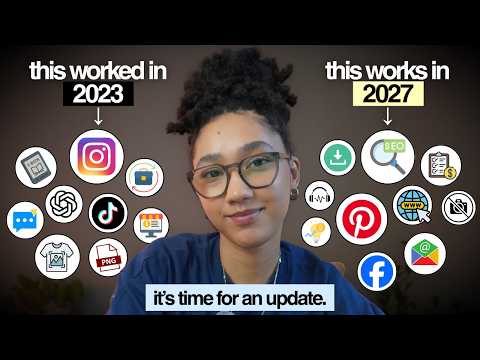
“Stop Following Outdated Digital Product Advice (do this instead)”
What we found: Outdated Digital Product Advice: The $27 Pricing Maths Checks Out, but the Rent-Paying Income Has No Figure Attached
Fewer than 40 sales at $27 does reach $1,000. The creator's own result, rent covered within four months, comes with no rent amount, no monthly earnings and no traffic figure for the SEO approach recommended.
- 38 Sales for $1,000 at $27
- Day 8 First sale
- ~10 Weekly hours at the start
- Not stated Monthly earnings
The claim
That "it's never been easier to make money selling digital products than it is right now", and that within four months her digital product side hustle "was consistently paying my rent every month", which made it possible to quit her full-time job.
- Sales needed at $5 for $1,000 — 200
- Sales needed at $27 for $1,000 — Less than 40
- Exact sales at $27 for $1,000 — 38 ($1,026)
- Hours per week at the start — About 10
- First sale — 8 days after launch
- Time to rent covered every month — Within 4 months
- Rent amount or monthly earnings — Not stated
- Sponsor offer — .store domain for 99 cents, first year
- Traffic from the SEO approach — Not stated
What is this income idea?
Sell digital products, such as planners and templates, from your own website, found through search articles and followed up by email, rather than relying on social media posts.
- The creator sets out seven pieces of advice she considers outdated, each paired with an alternative. First: do not start with a product; start with a specific person and the problem they have, such as a weekly planner for homeschool teachers rather than a productivity planner for everyone.
- Second: do not build the business on social media, which you do not own and which needs daily posting. Make a website the headquarters and use short search-optimised articles that position each product as the answer to a question. This section leads into a sponsor segment for .store domains, disclosed on camera, with a 99-cent first-year offer and a code.
- Third: do not price at $3 to $5. "If your product is five bucks you'd need to sell 200 of them just to break four figures a month, but at USD 27 it would take less than 40 sales."
- Fourth: do not expect AI to produce sellable products by itself. The creator says many videos claiming "USD 20,000 in a month" from AI-made products are "just not real", and that those creators earn from courses; she recommends using AI to speed up outlining while the product itself comes from understanding the customer.
- Fifth: you do not need to be an expert, only "a few steps ahead". Here she gives her own story: a first-year middle school teacher with college debt, about 10 hours a week, no sale in the first week, a first sale on day eight, and within four months the side hustle "was consistently paying my rent every month", which let her quit.
- Sixth and seventh: build around evergreen problems rather than trends, found with Google autocomplete, "People also ask" and online groups; and do not expect sales on launch. Offer a freebie for an email address and send a three-email sequence: deliver, help, then introduce the paid product.
Pick a specific customer, sell them a properly priced product from your own website, get found through search, and follow up by email. The pricing maths is right; her own earnings are not given.
- Pick a person and a problem — Specific niche
- Write a search article — Traffic not stated
- Offer a freebie — For an email
- Three-email sequence — Deliver, help, sell
- Sell at a real price — $27 example
- Repeat for the same customer — Evergreen
Each step is explained clearly. The volumes at each step, from search visits to sign-ups to sales, are not given.
Sound fundamentals, with the scoreboard left off
The lesson underneath the number
- Much of the advice here is standard and well explained: pick a narrow audience, price for the value delivered, own your traffic and your email list, and give visitors a reason to come back. The pricing example is correct, and the point behind it is a fair one: at $27, about 38 sales reach $1,000, against 200 at $5.
- The creator's own story is told plainly and is worth crediting for its candour about the slow start: a week with no sales, a first sale on day eight, and about 10 hours a week alongside a teaching job. Those are specific, modest figures, and more useful to a beginner than a headline number.
- What the video does not give is the size of the result. "Consistently paying my rent" and quitting a full-time job are outcomes, not amounts. The video also does not say which platform her early sales came through, so it is not possible to tell whether the website-and-search approach she now recommends is the one that produced them.
- The creator criticises videos that claim large AI-driven incomes without showing sales, and that point applies in both directions: readers should ask for figures from any income video, including this one. The sponsor segment is disclosed, which is to her credit; its claim that .store domains "get more clicks" is not sourced in the video.
My first week I didn't get a single sale, but I kept going. I could only spend about 10 hours a week on my business.
The creator, on her start
The seven corrections, as the creator gives them
Old advice on the left of each, her alternative on the right.
No traffic, sign-up or conversion figure is given for any step.
- Start with a person, not a product — Narrow the audience until "the right person is going to see that product and immediately think this is exactly what I need".
- Website first, social media second — Social posts fade "within a day or two"; a search article "can continue to bring in new traffic for months or even years". No traffic figure from her own site is given.
- Price on value, not nerves — $5 × 200 = $1,000; at $27 it takes fewer than 40 sales. Low prices can also signal low value.
- Use AI as a tool, not the product — "If you can turn out a hundred products in 10 minutes with AI, so can everyone else." Let it speed up the parts that do not need judgement.
- Be a few steps ahead, not an expert — Someone who solved a problem recently often understands a beginner's difficulties better. Her own first products were made as a first-year teacher, not a designer.
- Serve evergreen problems, not trends — Research with Google autocomplete, "People also ask" and repeated questions in Facebook groups and Reddit. Each repeated question is a problem worth solving.
- Capture visitors with a freebie and three emails — A quick-win freebie tied to the paid product, then email one delivers it, email two helps, email three introduces the product. Once written, it runs for every new sign-up.
The business model
Sales of digital products such as planners, templates and printables from the seller's own website. The video also carries a sponsor segment.
A specific group with a recurring problem, such as homeschool teachers, couples planning a wedding or nail technicians seeking clients.
A product built for one person's problem, found when they search for help, at a price that reflects what it saves them.
Search articles on the seller's website, with social media and email pointing back to it.
- Website platform or hosting — Not priced
- Domain — 99 cents for the first year via the sponsor; renewal not stated
- Email tool — Needed for the automated sequence; not priced
- Payment processing — Not mentioned
- The seller's time — About 10 hours a week in her early months
The sponsor segment is disclosed on camera. The statement that ".store" sites "get more clicks" is attributed to research that is not named in the video.
What you would actually need
Money
A .store domain for 99 cents in the first year with the sponsor's code. No other cost is mentioned.
The model is cheap to start, which is a real advantage. The recurring costs are the website platform or hosting, an email tool that can run automated sequences, payment processing on each sale, and the domain at its renewal price, none of which is priced in the video.
Costs not priced in the video
- Website platform or hosting
- Email marketing tool with automation
- Payment processing on every sale
- Domain renewal after the first year
- Design tools, if not free
- Tax on product income
Time
About 10 hours a week at the start, alongside a full-time teaching job, adding products "whenever I finished them".
Ten hours a week is a useful, specific figure. The plan in this video adds search articles, freebies and emails to the product work. Search traffic to a new site usually takes months to build, and the video does not give a timeline for it.
Where the time goes
- Researching a specific customer's problems
- Making products
- Writing search articles
- Making freebies for each product type
- Writing the three-email sequence
- Adding new products over time
The part you must pay attention to
The arithmetic in the video is correct. The income it leads up to is not given.
The pricing example is the only worked calculation in the video, and it adds up. The creator's own result is described in terms of rent and quitting, not dollars.
- Example price — $27
- Our count to pass $1,000 — × 38 sales
$1,026
"Less than 40 sales" checks out
The load-bearing assumption is that search articles on a new website bring buyers. The whole plan routes traffic through them, and the creator says an article "can continue to bring in new traffic for months or even years". The video gives no traffic, sign-up or sales figure from her own site, and no timeline for a new site to start ranking. Her own early story does not say where her first buyers came from or which platform she sold on.
The creator's timeline is specific and internally consistent: no sale in the first week, a first sale eight days after launch, about 10 hours a week, and rent covered "consistently" within four months. What is missing is the size of it. Rent varies widely, so "paying my rent" could mean several hundred or several thousand dollars a month. At her own $27 example, every $1,000 a month is about 38 sales; the video does not say what her prices or sales were.
- PRICING (our check)
- $5 x 200 = $1,000 correct
- $27 x 37 = $999
- $27 x 38 = $1,026
- "less than 40" correct
- RENT (our working, examples only)
- $1,000 a month = 38 sales at $27
- $2,000 a month = 75 sales at $27
- Her rent not stated
- Her prices not stated
- TIMELINE
- Week 1 no sales
- Day 8 first sale
- Month 4 rent covered
The economics
One correct worked example; the creator's own numbers are qualitative.
- Low price example — $5
- Sales at $5 for $1,000 — 200
- Higher price example — $27
- Sales at $27 for $1,000 — 38
- Hours a week at the start — About 10
- Time to first sale — 8 days
- Time to rent covered — Within 4 months
- Rent, monthly earnings, prices — Not stated
- Sponsor domain offer — 99 cents, first year
Sales needed at $27 to pass $1,000
$1,000 ÷ $27 = 37.04, so 38 sales; 38 × $27 = $1,026
38 sales, which matches "less than 40"
IncomeIdeaLab check of the creator's own example
Both examples are gross sales. Payment processing and any platform fee come off each sale, so slightly more sales are needed to net $1,000.
- The creator's monthly earnings at any point
- The rent amount covered within four months
- Her product prices and sales count
- Which platform her early sales came through
- Traffic, sign-up or sales figures from search articles
- Website, email tool and payment processing costs
- The .store domain renewal price
- The research behind the ".store gets more clicks" statement
- $5 × 200 = $1,000, so the first example is exact.
- At about 10 hours a week, four months is roughly 170 hours of work before rent was covered, by our calculation (10 × 17 weeks).
- The "USD 20,000 in a month" figure is the creator's description of other videos, not a claim about her own business.
- The video links an example freebie, an example email and a launch checklist in the description; no price is stated for any of them.
Evidence status
Every substantive figure in the video.
- At $5 you need 200 sales for four figures a month — Creator — Correct: $1,000.
- At $27 it takes less than 40 sales for $1,000 — Creator — Correct: 38 sales gives $1,026.
- First sale 8 days after launch — Creator — Specific; not checkable from the video.
- About 10 hours a week — Creator — Specific and modest.
- Rent covered consistently within four months — Creator — No amount stated.
- Search articles bring traffic for months or years — Creator — No traffic figure given.
- .store sites get more clicks, per research — Sponsor segment — Research not named in the video.
- .store domain for 99 cents the first year — Sponsor segment — Renewal price not stated.
- Many AI-product income videos are not real — Creator, about others — Her view of other videos; not checkable here.
What is actually proven?
The maths, yes. The income, no figure.
- Both pricing examples are arithmetically correct.
- A specific start: no sales in week one, first sale on day eight, about 10 hours a week.
- Rent covered within four months, enough to quit a teaching job.
- A sponsor segment, disclosed on camera.
- Any monthly or total income figure.
- Traffic or sales from the search-led approach recommended.
What the headline doesn’t tell you
Good advice, measured in rent rather than dollars.
- Pricing maths. — Correct.
- "Paying my rent". — Amount not stated.
- Early sales channel. — Not stated.
- SEO traffic. — No figure given.
- Sponsor segment. — Disclosed on camera.
- "More clicks". — Research not named.
- Domain renewal. — Price not stated.
- Running costs. — Not priced.
Should you try it?
Yes, as a strategy; set your own targets in dollars
The approach is low-cost and the advice is sound. Decide what "paying the rent" means for you in dollars, divide by your price, and track how many visitors and sign-ups it takes to get there.
- Quality of the advice — 8 — Standard, well explained, practical examples.
- Arithmetic — 9 — The worked example is correct.
- Income evidence — 3 — Outcomes described, amounts not given.
- Cost disclosure — 3 — Only the sponsored domain price.
- Sponsor disclosure — 8 — Named on camera.
- Beginner accessibility — 8 — Cheap to start, no audience needed.
- For a beginner, this is a reasonable plan. It needs little money, no social following and no expert credential, and the creator's own start, about 10 hours a week with a slow first week, sets realistic expectations about pace.
- Take the pricing point seriously. At $27, 38 sales reach $1,000, against 200 at $5. That is correct, and it is the simplest lever a new seller controls.
- Plan for search to be slow. The video says articles keep bringing traffic for months or years once posted, but gives no figure for how long a new site takes to be found. Budget several months of writing before counting on it.
- Price the tools. A website, an email tool that runs sequences and payment processing are the running costs of this model; the video prices only a sponsored domain for its first year.
Passive or automated?
Automation
The email sequence runs on its own once written.
Passive potential
Products and articles can keep selling; new ones need regular work.
Once a product, an article and an email sequence exist, each new visitor can be served without further work, which is the real appeal. The creator's own growth came from adding products steadily at about 10 hours a week, so the income she describes was built with ongoing effort rather than a single launch.
- Researching customer problems
- Making each product
- Writing search articles
- Writing emails and freebies
- Adding new products over time
Recommended beginner experiment
One customer, one product, one article, measured.
- Name one customer. — And one recurring problem.
- Collect 20 real questions. — Autocomplete, groups, Reddit.
- Make one product. — Priced on value.
- Write three articles. — Each answering a question.
- Add a freebie. — And three emails.
- Track the funnel. — Visits, sign-ups, sales.
- Set a dollar target. — Not just "the rent".
- Review at 90 days. — Before adding products.
Our verdict: 6/10
Sound digital-product advice with correct arithmetic and a personal result described in rent, not dollars
Credited for practical, well-explained advice, a pricing example that is arithmetically correct, a specific and modest account of the creator's own start (no sales in week one, first sale on day eight, about 10 hours a week), and a sponsor segment disclosed on camera. Marked down because the creator's income is described only as covering rent within four months with no amount; because the search-led approach has no traffic or sales figures from her own site; because running costs beyond the sponsored domain are not priced; and because the sponsor's click-through research is not named.
This is a clear, practical video. The seven corrections are mostly sound: start with a specific customer, sell from a site you control, price for value, use AI to assist rather than to replace the work, and use a freebie and three emails to bring visitors back. The one worked calculation is correct: at $27, 38 sales pass $1,000, against 200 at $5. The creator's own story is specific about the slow start and the hours, which is useful for a beginner. What it lacks is a dollar figure: "consistently paying my rent" within four months is an outcome whose size depends entirely on the rent, and the video does not say which platform those early sales came from, so it does not show that the search-led approach recommended produced them. The sponsor segment is disclosed; its research claim is not sourced. Follow the method, set a dollar target, and measure your own traffic and sales.
- Pricing maths — 38 sales at $27 = $1,026
- First sale — Day 8
- Hours at the start — About 10 a week
- Rent covered — Within 4 months, amount not stated
- SEO traffic — Not stated
- Sponsor — .store domains, disclosed
- Beginner suitability — Yes
Sources
- Stop Following Outdated Digital Product Advice (do this instead) — Tatyana Savage — YouTube video, 2026-11-11
- FTC — Guides Concerning the Use of Endorsements and Testimonials — Regulatory guidance on endorsements and earnings claims