Local Services / Lawn Care · Claim Review
“Quit His Job to Make USD 480K/Month...”
What we found: The $480,000 a Month in This Lawn Care Title Matches the $5.8 Million Stated, but the Owner Also Gives $10 Million, and Profit Is Not Stated
The growth from $261,000 in year one to about $10 million adds up on the owner's own figures. The start used a $50,000 line of credit on the family home plus $17,000 of savings, and no margin or profit figure is given.
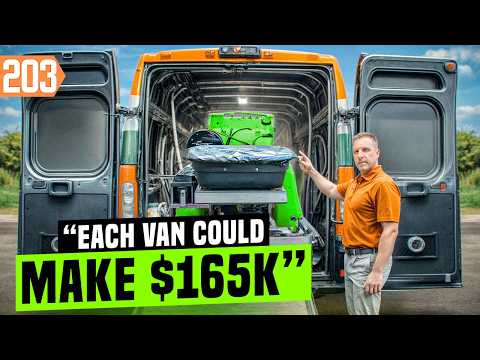
- $480k/mo Title figure
- "Topping $10M" Revenue at peak
- $67,000 Start-up money
- Not stated Profit or margin
The claim
That the owner quit his job, started a lawn care business "with virtually zero dollars of his own", and built it to $5.8 million in revenue from a single location, about $480,000 a month.
- Revenue "from a single location" — $5.8 million
- Title: per month — $480,000, about $5.8 million ÷ 12
- Revenue at peak, two cities — "Topping $10 million"
- Year one, 2001 — $261,000
- End of year five — $1.2 million
- Growth after year five — About $600,000 a year for 15 to 16 years
- Start-up funding — $50,000 home equity line plus $17,000 savings
- Customers — About 14,000 now; 15,000 at peak
- Technician output — 25–30 lawns, $2,000–$2,500 a day
- Profit or margin — Not stated
What is this income idea?
Lawn treatment rather than mowing: fertiliser and weed control applied five or six times a year to residential lawns, sold as a recurring programme, often prepaid.
- The owner spent about five years at a large supplier to the lawn and landscape industry, where he says he took classes on direct mail, pay-per-click and selling lawn care so he could pass them on to contractors. He left in January 2001, the year his first child was born, to start his own company, which operated as WeedPro for 23 years and was rebranded as Lawn Squad about six months before filming when it began franchising.
- The funding was specific. A bank gave him a $50,000 line of credit backed by the family home, all of which went on marketing, mostly direct mail. A separate $17,000 of savings bought a used pickup, a spreader, a sprayer and other equipment. He then asked every customer to prepay for the season at a 5% discount, and says well over half did, which paid for payroll and product as the business grew.
- The company-owned branches are in Cleveland and Columbus, with about 14,000 residential and commercial clients and about 35 technicians, one per vehicle. A technician treats 25 to 30 lawns a day at about $80 an application, which the owner puts at $2,000 to $2,500 a day, and he says one technician keeps more than 90% of his customers each year.
- Growth came from three things he names. Direct mail takes at least half the marketing budget. From 2008 the company measured lawns from aerial images and quoted on the first call, and he says about half of sales close on that call. And a fully equipped ride-on application unit replaced smaller machines after he compared revenue per hour.
- The video is also a franchise pitch. Lawn Squad had four franchise locations six months in, with a goal of 12 by year-end and 20 to 25 a year after that, and a "special link" with a franchise fee discount is offered in the description.
A recurring lawn treatment business grown on direct mail and prepayment; revenue is given in detail, profit is not.
- Fund the marketing — $50k line of credit
- Mail the neighbourhood — 50%+ of budget
- Measure online, quote live — ~50% close first call
- Ask for prepayment — 5% discount
- Treat 25–30 lawns a day — ~$80 each
- Follow up in 48 hours — Retention 90%+
The model is recurring and the funding is clever. The margin is the missing number.
Customers funded the growth, which is the real lesson
The lesson underneath the number
- The cleverest decision in the video is the one the owner calls one of his smartest. Having borrowed $50,000 against his house and put all of it into marketing, he asked every new customer to pay for the season up front at a 5% discount. Well over half did. That cash paid payroll and product while the mail kept bringing in more customers, so the business was funded by its customers rather than by more debt. In a recurring service, that is a pattern anyone can copy.
- The revenue history is unusually complete, and it adds up. $261,000 in 2001, roughly $250,000 more each year to about $1.2 million by the end of year five, then about $600,000 a year for fifteen or sixteen years: our addition comes to about $10.2 million, matching his "topping $10 million". The operating figures fit too. Twenty-five to thirty lawns a day at about $80 is $2,000 to $2,400, close to the $2,000 to $2,500 he gives.
- What does not fit is the headline. The title's $480,000 a month is the intro's $5.8 million "from a single location" divided by twelve. The video does not say which location or year that is, and the owner's own figure for the business is $10 million across two cities. The intro's "virtually zero dollars of his own" also sits awkwardly beside a $50,000 line of credit secured on his home and $17,000 of savings, which he describes openly himself.
- Then there is the cost side, which is absent in dollars. The owner names marketing as the big investment and says spending $150 to win a customer is fine against an $8,000 lifetime value. That lifetime value implies a long stay: at the roughly $670 a year that $10 million across 15,000 customers gives, $8,000 takes about twelve years, longer than the "5, 10 years or so" he gives. Payroll, product, vehicles, the call centre and the owner's pay are not priced, and the video closes with a franchise offer and a channel promotion.
It ended up being the best line of secondary line of credit that I was able to have in the business.
The owner, on asking customers to prepay at a 5% discount
How the business grew, as the owner tells it
Specific practices, most with a figure attached.
Revenue is given year by year; no cost, margin or profit figure is given for any year.
- Spend the borrowed money on customers, not kit — All $50,000 of the home equity line went on marketing in year one. Equipment came from $17,000 of savings and was second-hand where possible.
- Collect the season in advance — A 5% discount for prepaying, taken up by "well over half" of thousands of first-year customers. He calls it the best secondary line of credit he had.
- Keep direct mail at half the budget — "At least 50% of our budget typically goes towards direct mail", heavy in early spring, with pay-per-click, social and SEO through the year. He says pay-per-click wins over two or three years and direct mail wins on lifetime value.
- Quote on the first call — From 2008 lawns were measured from aerial images while the customer was on the phone, and field estimates stopped within a week. About half of sales now close on the first call.
- Match equipment to revenue per hour — Machines were tested by the time each lawn took and the revenue per hour it produced, until the current ride-on unit. A fully equipped van and unit is about $100,000.
- Same technician, same route — Each customer keeps one technician, and every application is followed by a call 48 hours later. He says customers who cancel rarely blame the technician by name.
- Answer customer questions as blog posts — A blog post from a turf student, paid $15 in 2008, is credited in their CRM with more than 500 sales. Technician questions now become hundreds of posts a year.
The business model
Recurring lawn treatment programmes of five or six applications a year, often prepaid, plus add-ons such as core aeration; about 80% residential, 20% commercial.
Homeowners in Cleveland and Columbus, about 14,000 clients, kept "5, 10 years or so" by the owner's account.
Green, weed-free lawns from the same technician each visit, with an instant quote by phone.
Direct mail at half the budget, pay-per-click, social, SEO blog content, door hangers, yard signs and local networking.
- Marketing — Half direct mail. Total budget not stated; $150 to acquire a customer given as acceptable
- Technicians — About 35, one per vehicle. Wages not stated
- Call centre and managers — 12 in the call centre plus 4 managers at head office. Cost not stated
- Vehicles and equipment — About $100,000 per equipped van
- Fertiliser and weed control — 10 to 15 products. Cost per lawn not stated
- Prepay discount — 5% on prepaid programmes
Every major cost is named, and the vehicle cost is priced. None of the running costs is given in dollars, so no margin can be worked out.
What you would actually need
Money
"$500 to $1,000" to start small with a hand spreader and backpack sprayer. The owner himself started with a $50,000 home equity line and $17,000 of savings.
The intro's "virtually zero dollars of his own" describes a start funded by $50,000 borrowed against his home and $17,000 of his savings. The $500 to $1,000 covers hand tools only and assumes you already have a vehicle. A professional set-up is about $100,000 per van.
Stated costs
- Hand spreader: $300–$400
- Backpack sprayer: about $200
- A vehicle: "a beater" truck, not priced
- His own start: $17,000 of equipment from savings
- His own marketing: $50,000 on a home equity line
- Professional van: $70,000–$80,000 equipped
- Ride-on unit and equipment: $18,000–$20,000
- Licensing and insurance for applying products: not priced
Time
A franchisee is in the field after a two to three month onboarding. The owner had about five years at a supplier before starting.
The owner's path took industry experience, a master's-level product education by his account, and 24 years. Year one brought $261,000 and year five $1.2 million. Lawn care is seasonal, with five or six treatment rounds from spring to late autumn.
Where the years went
- About 5 years at an industry supplier
- 2001: $261,000 in year one
- Years 2–5: about +$250,000 a year
- 2008: online measuring and blogging
- 15–16 years at about +$600,000 a year
- 2024: franchising begins
The part you must pay attention to
Two revenue figures are given, $5.8 million and $10 million, and neither comes with a profit figure.
The intro says $5.8 million "from a single location", which is where the title's $480,000 a month comes from. Later, the owner says revenue topped $10 million with branches in Cleveland and Columbus.
- Revenue at end of year five — $1.2M
- About $600,000 a year for 15 to 16 years — 15 × $600k
~$10.2M
Consistent with "topping $10 million"
The growth path reconciles with the $10 million. The $5.8 million and the title's $480,000 a month are not explained: the video does not say which location, which year, or whether $5.8 million is the Cleveland branch alone. Neither figure is given as profit, and nothing in the video gives a margin, a payroll figure, a product cost or the owner's pay.
There is a useful check from the owner's own operating figures. Thirty-five technicians producing $2,000 to $2,500 a day would need roughly 115 to 145 working days each to reach $10 million in a year, and 65 to 85 days to reach $5.8 million, by our arithmetic. Both fit a seasonal business, so the scale is plausible. What is missing is the cost side, and the franchise pitch that closes the video is where a viewer is asked to act.
- THE TITLE
- $5.8M / 12 = ~$483,000/mo
- Title $480,000/mo
- THE GROWTH PATH (his figures)
- 2001 $261,000
- +$250k x 3 ~$1.0M, year 4
- End of year 5 $1.2M
- +$600k x 15 +$9.0M
- Total ~$10.2M
- TECHNICIAN CHECK (our arithmetic)
- 25-30 lawns x $80 $2,000-$2,400
- 35 techs x $2,250 ~$79,000/day
- $10M / $79k ~127 days
- $5.8M / $79k ~74 days
- Margin, profit not stated
The economics
A revenue history that reconciles, and no cost figures to set against it.
- Revenue, "single location" — $5.8 million
- Revenue at peak — "Topping $10 million"
- Year one / year five — $261,000 / $1.2 million
- Customers — ~14,000 (15,000 at peak)
- Revenue per customer — ~$415–$670 a year
- Application price — ~$80
- Technician day — $2,000–$2,500
- Lifetime value / acquisition cost — $8,000 / $150
- Close rate, pay-per-click — 45–55%
- Margin or profit — Not stated
Revenue per customer, two ways
$5.8M ÷ 14,000 = ~$415; $10M ÷ 15,000 = ~$670
About $415 to $670 per customer per year, consistent with five or six applications at around $80
IncomeIdeaLab calculation from the stated revenue and customer counts
The video does not say which customer count goes with which revenue figure. At $670 a year, the stated $8,000 lifetime value needs about twelve years of retention.
- Profit or margin in any year
- Which location and year the $5.8 million refers to
- Total marketing budget
- Technician wages and call-centre costs
- Product cost per lawn
- The owner's own pay
- The franchise fee, royalties and the discount offered
- The growth figures reconcile: $261,000 plus three years at about $250,000 is about $1 million by the end of year four, and $1.2 million at the end of year five, as stated.
- The owner says 35 employees run the field work, one per vehicle, and separately that 16 people work at head office, so total staff is above 35.
- A failed 2011 mailing to 50,000 homes with a photo of each house on the envelope brought six customers; he volunteers it as his biggest lesson.
- The "$15 blog" result of more than 500 sales comes from their CRM attribution. The revenue from those sales is not stated.
- The video carries a sponsor read for a franchise marketing platform, a promotion for the channel's own academy, and a franchise discount link.
Evidence status
Every substantive figure in the video.
- $480,000 a month — Video title — Matches $5.8 million ÷ 12. The $5.8 million itself is not explained.
- $5.8 million from a single location — Narrator, intro — Location and year not stated. Not reconciled with $10 million.
- "Topping $10 million" — Owner — Consistent with his growth figures, by our addition.
- Started with "virtually zero dollars of his own" — Narrator, intro — The owner describes a $50,000 home equity line and $17,000 of savings.
- $261,000 in year one — Owner — Specific and dated.
- $1.2 million by the end of year five — Owner — Reconciles with $250,000 a year of growth.
- Well over half of customers prepaid — Owner — At a 5% discount. Credible and standard in the industry, he says.
- 25–30 lawns, $2,000–$2,500 a day — Owner — At $80 each, $2,000 to $2,400. Reconciles.
- 90%+ retention for one technician — Owner — About one technician, not the company.
- $8,000 lifetime value, $150 to acquire — Owner — Needs about twelve years at ~$670 a year.
- $15 blog, 500+ sales — Owner, CRM attribution — Could not be checked from the video.
- 4 franchises, 12 by year-end, 20–25 a year after — Owner — Targets, in a video that promotes the franchise.
- Profit or margin — Nobody — Not stated.
What is actually proven?
The revenue story is internally consistent. Profit is not addressed.
- The year-by-year growth figures add up to about $10 million.
- The technician day rate matches lawns per day times price.
- The title's $480,000 a month is the intro's $5.8 million divided by twelve.
- The owner discloses the $50,000 home equity line and $17,000 of savings.
- A costly failed mailing is volunteered.
- Margin, profit and the owner's pay.
What the headline doesn’t tell you
The revenue checks out. The rest of the picture is not given.
- Two revenue figures. — $5.8 million and $10 million.
- No profit figure. — In 24 years of history.
- "Virtually zero dollars". — Was $67,000, secured on his home.
- Five years in the industry first. — At its largest supplier.
- $500 start excludes a truck. — Hand tools only.
- A pro van is ~$100,000. — Per technician.
- The video sells franchises. — With a discount link.
Should you try it?
A sound recurring model, if you can learn the agronomy and fund the marketing
Copy the prepay and instant-quote ideas. Work out your own margin per lawn before borrowing for marketing, and get the full franchise terms before signing anything.
- Revenue history detail — 9 — Year one, year five and growth rates, all consistent.
- Operating detail — 8 — Lawns per day, price, retention, close rates.
- Title accuracy — 5 — Matches $5.8 million, which is not explained.
- Cost disclosure — 2 — Equipment priced; running costs not.
- Profit disclosure — 0 — Not stated.
- Beginner accessibility — 5 — Cheap tools, but licensing and agronomy to learn.
- Lawn treatment has a low equipment floor. A hand spreader and backpack sprayer cost $500 to $600 by the owner's figures, if you already have a truck. The barrier he points to is knowledge: turf, weeds and insects. Product application usually needs a licence, which the video does not discuss, so check your state's rules first.
- The two ideas worth copying are prepayment and quoting on the first call. Asking customers to pay for the season up front, at a small discount, gives you working capital when you most need it. Measuring a lawn from aerial images while the customer is still on the phone, and giving a price then, is how he says half of sales close on the first call.
- Be careful with the funding story. The owner borrowed $50,000 against his home for marketing in a year when his household was moving to one income. It worked for him with five years of industry experience behind it. Before you borrow for marketing, know your cost per lawn, your price and how many customers you need to cover the loan, because the video gives none of those margins.
- The franchise route is pitched at the end of the video. The fee, royalties and expected earnings of a franchisee are not stated, and the four franchises were all under six months old at the time.
Passive or automated?
Automation
CRM nurturing and online quotes; every lawn is treated by hand.
Passive potential
Recurring revenue, but each visit needs a technician.
The revenue is recurring, which makes it predictable, but it is not passive. Every application is done by a technician on a route, and the company employs a call centre to take calls, quote and follow up. Automation sits in the sales process: aerial measuring for instant quotes and a CRM that sends texts, emails and guides to leads who did not buy on the first call. The owner is clear that he does not expect technology to replace the technician's relationship with the customer.
- Treating every lawn on a route
- Taking calls and quoting
- Follow-up calls 48 hours after each visit
- Direct mail planning and local networking
- Training technicians each season
Recommended beginner experiment
Start on your own street before borrowing.
- Check your state's applicator licence. — Not covered in the video.
- Learn the five or six rounds. — Products differ by season.
- Price your cost per lawn. — Product, fuel, time.
- Quote from aerial images. — Give the price on the call.
- Offer a prepay discount. — His was 5%.
- Test a small mail drop. — Track cost per customer.
- Call every customer after a visit. — His 48-hour follow-up.
Our verdict: 6/10
A revenue history that adds up, with no profit figure beside it and a title taken from a $5.8 million figure the video does not explain
Credited for a year-by-year revenue history that reconciles to the $10 million stated, for operating figures that check out (lawns a day, price, daily output), for disclosing the $50,000 home equity line and $17,000 of savings, for the specific prepay and instant-quote practices, and for volunteering a failed mailing. Marked down because the $5.8 million behind the title is not tied to a location or year and is not reconciled with the $10 million, because the intro's "virtually zero dollars of his own" does not match the owner's account, because no margin, profit or running cost is given in dollars, and because the video promotes the owner's franchise with a discount link and no fee figures.
This is one of the more internally consistent revenue stories we have reviewed. The owner gives $261,000 in 2001, about $250,000 of growth a year to $1.2 million by year five, then about $600,000 a year for fifteen or sixteen years, which by our addition is about $10.2 million and matches his "topping $10 million". Twenty-five to thirty lawns a day at around $80 gives the $2,000 to $2,500 a technician day he quotes, and thirty-five technicians at that rate would reach $10 million in a working season. The practices behind it are specific and copyable: put borrowed money into marketing rather than equipment, ask customers to prepay for the season at a 5% discount, quote on the first call from aerial measurements, keep one technician per customer and call 48 hours after each visit. Three things hold it back. The title's $480,000 a month comes from a $5.8 million "single location" figure that the video does not tie to a place or year, and it is not reconciled with the $10 million. The intro says he started with "virtually zero dollars of his own", while he describes a $50,000 line of credit on his house and $17,000 of savings. And no margin, running cost or profit is given in dollars anywhere, in a video that ends by promoting his franchise with a discount link. The revenue is well evidenced by the video's own figures; whether this business, or a franchise of it, is profitable is not stated.
- Title figure — $480k/mo = $5.8M ÷ 12
- Revenue at peak — "Topping $10M"
- Growth path — Reconciles to ~$10.2M
- Start-up money — $50k home equity + $17k savings
- Technician day — $2,000–$2,500
- Profit — Not stated
- Beginner suitability — Possible; learn agronomy first
Sources
- Quit His Job to Make USD 480K/Month... — UpFlip — YouTube video, 2024-08-12
- FTC — Guides Concerning the Use of Endorsements and Testimonials — Regulatory guidance on endorsements and earnings claims