Laundromat / Local Services · Claim Review
“How Much Cash Can a Laundromat Business Really Make? (Pt. 2)”
What we found: A Video Called "How Much Cash Can a Laundromat Make?" That Never Gives a Revenue Figure
About 500 regulars, a $35 parts bill and a $600–$1,000 customer value — but no revenue, no profit, no rent, no utilities and no purchase price.
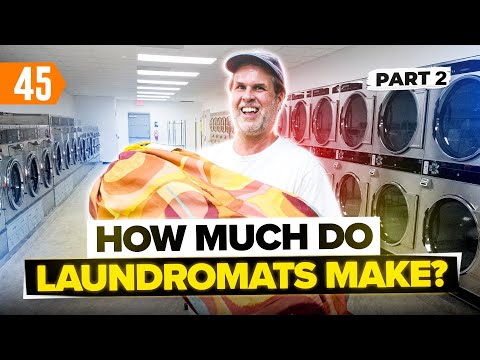
- None Revenue or profit
- ~500 Regular customers
- $600–1,000/yr Value per customer
- $35 Monthly parts bill
The claim
That the video answers how much cash a laundromat business really makes.
- Revenue, monthly or annual — Never stated
- Profit or owner income — Never stated
- Regular customers — ~500
- New customers from one Google promo — ~13 in two weeks
- Annual value per retained customer — $600–$1,000
- Parts bill this month — $35
- Price per machine — ~$5,000
- Expected machine life — Up to ~8 years
- Time owning the business — ~3 years
- Purchase price, rent, utilities, wages — Never stated
What is this income idea?
Buy an existing self-service laundromat in a dense area, add wash-dry-fold and pickup and delivery on top, and compete on customer service.
- The owner bought an existing laundromat in Los Angeles about three years before recording. The property and the business were both for sale, and he says he "bugged the guy for months and months" through competing offers until the deal happened. No price is given.
- He explains why location matters: apartment complexes, students, hotels and above all large families, who fill "a whole row and then some". His area is densely populated and densely competitive — sometimes "two on the same block facing each other."
- His main regret is moving too slowly on the add-ons. Pickup and delivery, the software behind it and an upgraded website were rolled out gradually over three years; "I just wish I'd done it all the first year."
- Marketing is a free Google Business Profile. One promotional post brought "like 13 new customers" in a couple of weeks, tracked by a promo code, and he estimates each is "worth probably anywhere from 600 to 1000 a year if… we keep them."
- Asked what it costs to keep the machines running, he says this month's parts bill was $35. The machines are a couple of years old, cost about $5,000 each and are expected to last up to around eight years.
- He and his wife own and run it, staff handle wash-dry-fold, and he watches through cameras and software. He estimates about 500 regular customers. He never states revenue, profit, rent, utilities or wages.
A service-minded owner explaining how he runs and markets a laundromat — without ever saying what it earns.
- Scout laundromats — Visit every one you pass
- Check the water meter — Estimate revenue
- Buy business and property — Price not stated
- Add wash-dry-fold — Staffed service
- Add pickup and delivery — Software, website
- Post Google promos — ~13 new customers
- Keep customers — $600–$1,000/yr each
- Step back with systems — Cameras and staff
A clear operating picture with the financial statements missing.
The best tip is how to check someone else’s revenue — he never shows his own
The lesson underneath the number
- The most valuable thing in this episode is a due-diligence method, and it is a good one. A laundromat's revenue is essentially water: every wash uses a predictable number of gallons. Photograph the street water meter a week apart, work out gallons used, divide by the manufacturer's gallons per cycle and multiply by the vend price, and you have an independent estimate of what a seller's machines take. He says he learned it from a broker. For anyone considering buying a cash-heavy business, a way to check the seller's figures without relying on the seller is worth more than any revenue number.
- Which makes it notable that his own figures never appear. The title asks how much cash a laundromat really makes, and in this part there is no monthly takings, no annual revenue, no profit, no purchase price and no running cost beyond one month's $35 parts bill. The closest thing to a revenue figure is his estimate that a newly won customer is worth $600 to $1,000 a year if retained. That is a useful number for judging marketing, not for judging the business.
- The Google Business Profile tactic is the second thing worth taking, and he describes it carefully. Instead of paying for ads, he posts a photo with a promo code and tracks redemptions, so he knows exactly which post brought which customer. About thirteen new customers from one free post is a strong result for a local service, and at his own estimate those customers could be worth roughly $7,800 to $13,000 a year if they all stay.
- On passivity he is honest. He says a hands-off laundromat is possible with good staff and systems, that it takes time, and that he himself is not there yet — "I'm afraid to let go." For a business type often sold online as passive income, the owner of one describing it as hands-on after three years is a useful correction.
You can figure out how many cycles and based on their price you can sort of generate an idea of what their revenue is.
The owner, on checking a laundromat’s revenue before buying it
The method, as he gives it
Six practical points from three years of ownership.
This is part two of a two-part series; only this part was reviewed, and revenue may be discussed in part one.
- Pick a location full of laundry — Apartments, students, hotels and big families. He notes that areas of single people may suit drop-off service rather than self-service.
- Estimate a target's revenue from its water meter — Photograph the street water meter a week apart, work out gallons used, divide by gallons per cycle and multiply by the vend price. He says he learned it from a broker.
- Launch the add-ons early — Pickup and delivery, drop-off service and a proper website. His stated mistake was spreading these over three years instead of doing them in year one.
- Use a free Google Business Profile — Post a photo with a promo code, then track redemptions to see where customers came from. One post brought about 13 new customers in two weeks.
- Compete on service — "I will talk to anybody that calls me." He and his wife take calls, fix problems, and sometimes give a free wash to keep a customer.
- Buy durable machines — He chose what he believes is the most expensive brand, about $5,000 per machine, and so far has paid little for parts. Card and app payment are offered alongside coins.
The business model
Self-service washer and dryer use by coin, card or app, plus staffed wash-dry-fold, drop-off and pickup and delivery.
Local residents in a dense Los Angeles area, especially large families; about 500 regulars by his estimate.
Reliable, modern machines, app payment and notifications, and an owner who personally answers calls and fixes problems.
Walk-in location plus a free Google Business Profile with trackable promo codes.
- Machine parts — $35 this month; a motor would be ~$100–$120
- Machines — ~$5,000 each; number not stated
- Business and property purchase — Price never stated
- Utilities — Water, gas, electricity — never mentioned
- Staff — Wash-dry-fold team confirmed; wages never stated
- Delivery — Truck and software referenced; not priced
- Payment fees — Card and app payment offered; fees not mentioned
The one figure given for running costs is the smallest cost a laundromat has.
What you would actually need
Money
Not discussed beyond "being fiscally prudent". The only figures are about $5,000 per machine and a $35 monthly parts bill.
He bought both the business and the property. That is a major capital outlay, and neither price is given. The costs that usually decide a laundromat's profit — water, gas, electricity, rent or mortgage, wages, insurance and card fees — are not mentioned at all.
Costs this business has that go unpriced
- Purchase of the business
- Purchase of the property
- Machines at ~$5,000 each — count not stated
- Water, gas and electricity
- Staff for wash-dry-fold and pickup and delivery
- Pickup and delivery software, website and a truck
- Card and app payment processing fees
Time
Hands-off is "possible" with good staff and systems, but takes time and patience; he himself is still largely hands-on.
Three years in, the owner still takes customer calls personally and describes being "afraid to let go". A semi-passive laundromat is a goal he is working towards, not the current state.
Where his time goes
- Months of pursuing the seller before buying
- Learning the business from scratch
- Rolling out pickup, delivery and drop-off over three years
- Posting and tracking Google promotions
- Personally handling customer problems
- Overseeing staff through cameras and software
The part you must pay attention to
The title asks how much cash a laundromat makes. This part never says.
The numbers given describe customers and repairs. None describes revenue, costs or profit.
- Regular customers — ~500
- Estimated yearly value of a new customer — $600–$1,000
$300k–$500k?
Our illustration only — not a figure he gives
That multiplication is tempting and probably does not hold. The $600–$1,000 estimate is about new customers won through a promotion for the drop-off and pickup service, and it is conditional — "if we keep them". Nothing says the 500 regulars spend that much, and a self-service customer feeding machines will usually spend less than one paying for wash-dry-fold. We show the figure only to make clear that it would be a guess built on a guess. And even if revenue were in that range, it is sales, not profit.
The one cost given is equally narrow. "$35" is this month's parts bill for fairly new machines under warranty. For a laundromat, water, gas and electricity, rent or mortgage, wages and card fees are the costs that decide profit, and none is mentioned. The machines themselves also wear out: at about $5,000 each and a life of up to eight years, each one costs roughly $625 a year to replace, which the parts bill does not show. The honest answer to the title, from this part, is that we do not know.
- WHAT THE TITLE ASKS
- "How much cash can a
- laundromat really make?"
- Revenue given none
- Profit given none
- WHAT HE DOES GIVE
- Regulars ~500
- New from 1 promo ~13
- Value if retained $600-1,000/yr
- Parts this month $35
- Per machine ~$5,000
- OUR ARITHMETIC (illustration)
- 13 x $600-1,000 = $7.8k-13k/yr
- -> from one free promo,
- if all 13 stay
- $5,000 / 8 yrs = ~$625/yr
- per machine to replace
- NOT MENTIONED
- Water, gas, power, rent,
- wages, card fees, purchase price
The economics
Customer and repair figures only.
- Revenue — Never stated
- Profit or owner pay — Never stated
- Regular customers — ~500
- Value of a retained new customer — $600–$1,000 a year
- New customers from one promo — ~13
- Potential value of that promo — ~$7,800–$13,000 a year
- Parts bill this month — $35
- Machine price — ~$5,000
- Replacement cost per machine per year — ~$625
What one free Google post could be worth
~13 new customers × $600–$1,000 a year each
About $7,800–$13,000 a year in revenue, if every one of them is retained
IncomeIdeaLab calculation from the owner’s own estimates
The per-customer value is his projection and depends on retention, which he says is "looking good" so far. It is revenue, not profit, and says nothing about the business as a whole.
- Monthly or annual revenue — the title’s question
- Profit and owner income
- Purchase price of the business and the property
- Water, gas and electricity
- Staff numbers and wages
- Number of machines
- Card and app payment fees
- "$35" is the parts bill for one month on machines a couple of years old, some still under warranty. He says costs "can add up" as machines age, and expects them to last another five to seven years.
- The machine brand is named and praised repeatedly, including its payment app. No sponsorship is stated in the video and we have no indication of one.
- The host suggests viewers open public water-meter covers to photograph them "quietly". Water meters belong to the utility, and anyone doing this should check what their local utility permits.
- The owner mentions the IRS can use water readings to check a laundromat's reported income — a fair point about why the meter method works.
Evidence status
Every substantive claim in part two.
- How much cash a laundromat makes — Video title — Not answered in this part.
- ~500 regular customers — Owner — "From analyzing the numbers." No spend per regular given.
- ~13 new customers from one Google post — Owner — Tracked by promo code. Specific and plausible.
- Each new customer worth $600–$1,000 a year — Owner — Conditional on retention, in his own words.
- $35 parts bill this month — Owner — Parts only, on young machines. Not running costs.
- Machines cost ~$5,000 each — Owner — Machine count never given, so total outlay is unknown.
- Machines last up to ~8 years — Owner — An expectation, not yet observed at three years.
- Water readings reveal a laundromat’s revenue — Owner, via a broker — Method explained step by step. Sound in principle.
- A laundromat can be hands-off — Owner — He says it is possible; he is not there yet.
- He bought both the property and the business — Owner — Price never stated.
What is actually proven?
The operation is described well. The finances are not described.
- A concrete method for estimating a laundromat’s revenue from its water meter.
- A trackable free marketing tactic, with a result given.
- About 500 regular customers and a $35 monthly parts bill.
- A retained new customer is worth $600–$1,000 a year.
- One promo could be worth $7,800–$13,000 a year if all customers stay.
- Revenue, profit, purchase price, utilities and wages.
What the headline doesn’t tell you
The title asks the right question. This part does not answer it.
- No revenue figure. — The title’s own question.
- No profit figure. — Or owner income.
- $35 is parts only. — Utilities are never mentioned.
- He bought the building too. — Price not stated.
- $600–$1,000 is a projection. — "If we keep them."
- Not passive yet. — "I'm afraid to let go."
- Machines wear out. — ~$625 a year each to replace.
- Staff are needed. — For wash-dry-fold and delivery.
Should you try it?
Good operating tips, no basis for judging the money
Take the water-meter method and the Google promo tactic. Do not take this episode as evidence of what a laundromat earns.
- Answers the title question — 0 — No revenue or profit figure at all.
- Due-diligence value — 8 — The water-meter method is specific and usable.
- Marketing specificity — 7 — Free, trackable, with a stated result.
- Cost disclosure — 1 — One month of parts; no utilities, rent or wages.
- Honesty about passivity — 7 — Says he is still hands-on after three years.
- Capital transparency — 1 — Bought business and property; neither price given.
- Beginner replicability — 4 — Needs large capital, but the operating model is learnable.
- If you are thinking about buying a laundromat, the water-meter method alone justifies watching. Takings in a cash business are hard to verify, and a laundromat's water use gives you an independent check: gallons over a week, divided by gallons per cycle, multiplied by the vend price. It will not be exact — machines differ and some water goes elsewhere — but it will tell you whether the seller's numbers are in the right range.
- The Google Business Profile tactic is equally practical. A free post with a unique promo code tells you exactly which customers it produced. About thirteen new customers in two weeks, each potentially worth $600 to $1,000 a year, is a strong return for no ad spend, and the measurement habit matters as much as the result.
- What you cannot get from this part is any sense of whether a laundromat is a good investment. He bought the business and the building, and neither price is given. The costs that decide a laundromat's margin — water, gas, electricity, rent or mortgage, staff and card fees — are never mentioned, and there is no revenue or profit figure at all. The $35 parts bill is real but small next to all of those.
- Finally, set the "passive" expectation carefully. He says a hands-off laundromat is possible with good staff and systems but takes time, and describes himself as still hands-on and "afraid to let go" after three years. That is an honest account and a better guide than the way laundromats are often sold online.
Passive or automated?
Automation
App payment and notifications; self-service runs without staff.
Passive potential
Possible with staff and systems, by his account; not yet in his case.
Self-service laundry is one of the more automatable local businesses: customers start machines from an app, pay by card and are notified when a cycle ends. But the parts that add value — wash-dry-fold, drop-off and pickup and delivery — are staffed services, and the owner's competitive edge is personal customer service. He says a hands-off laundromat is achievable with good employees, systems and patience, and that he watches the business through cameras and software. After three years he is still taking customer calls and describes himself as reluctant to let go.
- Wash-dry-fold and drop-off service
- Pickup and delivery
- Answering customer calls and fixing problems
- Machine maintenance and repairs
- Marketing posts and promo tracking
- Hiring and overseeing staff
Recommended beginner experiment
Do the research he describes before you commit capital.
- Visit every laundromat you pass. — His own scouting habit.
- Estimate revenue from water use. — Gallons ÷ gallons per cycle × price.
- Ask for utility bills, not just takings. — The costs he never mentions.
- Price the building separately. — He bought both.
- Count machines and their age. — ~$5,000 each, ~8-year life.
- Plan add-ons for year one. — His biggest regret was waiting.
- Track every promo with a code. — His Google tactic.
- Budget for staff from the start. — Passive takes systems and people.
Our verdict: 4/10
Useful laundromat tips under a title that goes unanswered no revenue, no profit, and a $35 parts bill standing in for running costs
Credited for a specific, usable method of estimating a laundromat's revenue from water-meter readings; for a free, trackable Google Business Profile tactic with a stated result of about 13 new customers; for a clear customer-value estimate that he explicitly conditions on retention; for candour that the business is not yet hands-off after three years; and for practical location advice. Marked down because the title asks how much cash a laundromat makes and this part gives no revenue, profit or owner-income figure; because the only running cost given is one month of parts, with water, energy, rent, wages and card fees never mentioned; because the business and property were bought at an undisclosed price; and because the machine count, and therefore the equipment outlay, is never stated.
The title asks exactly the right question and this part of the interview never answers it. There is no monthly takings figure, no annual revenue, no profit and no owner income. The owner bought both the business and the property, and neither price is given. The one number offered for running costs is a $35 parts bill for a single month on machines a couple of years old — while water, gas, electricity, rent or mortgage, wages and card fees, the costs that actually decide whether a laundromat makes money, are never mentioned. The figures he does give are about customers: roughly 500 regulars, about thirteen new ones from one free Google post, and an estimate that each new customer is worth $600 to $1,000 a year if retained. Those are useful for judging marketing, and our arithmetic puts that one post at about $7,800 to $13,000 a year of revenue if everyone stays, but multiplying the estimate across all 500 regulars would be a guess on a guess. The best thing in the episode is a way to check someone else's numbers: photograph a laundromat's water meter a week apart, convert gallons to wash cycles and multiply by the price. For a would-be buyer that is worth more than any figure he could have given. He is also honest that the business is still hands-on after three years. Take the method and the marketing tactic. Look elsewhere for what a laundromat earns.
- Revenue — Never stated
- Profit — Never stated
- Regular customers — ~500
- Value per new customer — $600–$1,000/yr
- Parts this month — $35
- Machine price — ~$5,000
- Purchase price — Never stated
- Beginner suitability — Research tips yes, financial case no
Sources
- How Much Cash Can a Laundromat Business Really Make? (Pt. 2) — UpFlip — YouTube video, 2020-11-11
- FTC — Guides Concerning the Use of Endorsements and Testimonials — Regulatory guidance on earnings claims