Digital Products / Amazon KDP · Claim Review
“I Found 5 KDP Niches That ACTUALLY Sell in 2026 (PUBLISH THESE NOW)”
What we found: Five KDP Niches Rest on a Promoted Tool's Scores and Sales Estimates; No Royalty or Sales Result Is Stated
Every niche is rated by the same AI tool the creator links in the description. The video gives BSR averages, estimated daily sales and suggested prices, but no figure for what any book earns after Amazon's printing cost and share.
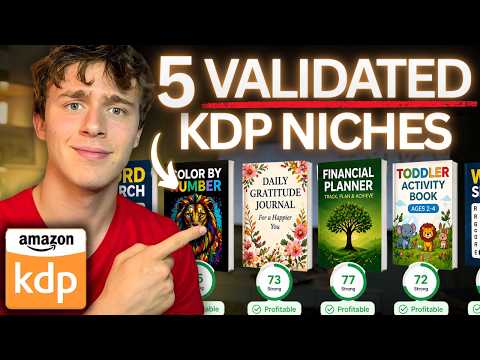
- 70–78 Niche scores
- 39/day Top competitor estimate
- $6.99–$12.99 Suggested prices
- Not stated Creator’s own royalties
The claim
That five specific KDP niches "actually sell" in 2026, and that a beginner can create a book for any of them the same day using AI and start competing.
- Summer coloring books — Score 78; average BSR 45,000; average price $9.37
- Competitor estimates in that niche — 39 and 34 sales a day for two books
- Butterfly coloring books — Score 72; top sellers with 1 to 24 reviews
- 80s nostalgia word search — Score 70; one example at 126,000 BSR
- New-sibling kids’ books — Score 70; top sellers professionally published
- Fun-fact coloring books — Score 70; one example at 14,000 BSR; 10 competitors identified
- Suggested list prices — $6.99 to $12.99 depending on niche
- Royalty per book, print cost, ad spend — Not stated
- Creator’s own KDP sales — Not stated
What is this income idea?
Pick a book niche with demand and few strong competitors, generate the interior with AI, and publish it as a paperback on Amazon KDP.
- The video opens on a common problem: beginners waste weeks choosing what to publish, or crowd into saturated journal and diary niches. It promises five niches a beginner can make a book for "today using AI".
- Each niche is checked in the same AI research tool, which the creator says is available to its paying users and links "using the top link in the description". The tool returns a score out of 100, an average best-seller rank (BSR), a competition level, a price range and seasonal notes.
- The five niches are summer coloring books (score 78), butterfly coloring books (72), 80s nostalgia word searches (70), new-sibling kids’ books (70) and fun-fact coloring books (70). Each is followed by a sample book generated inside the same tool.
- The evidence offered for demand is competitor data: an average BSR of 45,000 in the summer niche, estimates of 39 and 34 sales a day for two books, and examples of books with only two reviews selling at BSRs of 80,000 and 126,000.
- The creator is candid in places. For a two-review book selling well, they say "obviously this person is likely running Amazon ads". For the kids’ book niche they read out the tool’s warning that competition is high from established titles with thousands of reviews.
- The fun-fact method is manual: export the AI coloring pages, open them in a PDF editor, and add a fact on each blank reverse page. The creator demonstrates copying the first search result for a fun fact about monkeys.
Use a research tool to find book niches, let AI draw the pages, and publish them on Amazon, with no figure given for what a book earns.
- Type a niche into the tool — Linked in description
- Read the score — 70–78 here
- Check competitor BSRs — Tool estimates
- Generate the book — AI pages
- Export the PDF — Edit if needed
- Publish on KDP — Not done in the video
- Royalties — Not stated
A clear workflow from niche to PDF; the money end of it is not given a figure.
Every piece of demand evidence comes from the tool being promoted.
The lesson underneath the number
- Niche research videos are useful when they teach a method a viewer can repeat with any data source. This one shows a method (look for top sellers with few reviews, check seasonality, look for gaps in the audience) but the evidence for each niche is a score from a single tool, and the same tool generates each book. The creator links that tool at the top of the description and closes the video by pointing viewers to it again.
- That matters because the score is a black box. A 78 for summer coloring books and a 70 for new-sibling kids’ books sit close together, yet the tool itself describes the second as high competition from traditionally published titles with thousands of reviews. The creator’s reading, that a niche with no other self-publishers is an opportunity, is one view; the other is that self-publishers may have tried and not broken through. The video gives no data that separates the two.
- The daily-sales numbers deserve the same care. A figure like 39 sales a day is an estimate derived from a book’s rank, for a book already at the top of its niche. The creator says one of the strong performers likely runs Amazon ads, which is a fair caveat and also a reminder that rank can be bought. Ad spend is not given a figure.
- The fun-fact demonstration copies the first search result for a fact about monkeys straight into the book. Text copied from a website may belong to someone else, and KDP reviews content quality, so a reader following that step would be better off writing and checking each fact themselves.
Obviously this person is likely running Amazon ads but this just goes to show that there is definitely demand for this niche.
The creator, on a two-review book selling well
The process, as the creator gives it
Five niches, one tool, one workflow.
No royalty, print cost or sales figure is given for any book made in the video.
- Validate the niche in the research tool — Type the niche in, click analyse, and read the score, average BSR, competition level, suggested price and seasonal notes. Every niche in the video is assessed this way, by the same tool.
- Look for self-published competitors with few reviews — The creator treats low review counts among top sellers as a sign the niche is open, for example butterfly books with 1 to 24 reviews, and a summer book with two reviews under 80,000 BSR.
- Time seasonal niches — Summer coloring books are said to peak in late spring and early summer, and the creator urges publishing now. Word searches and gift-style books are expected to do well in the fourth quarter.
- Generate the interior with AI — Coloring books at 40 pages and 8.5 × 8.5 inches, a 50-page word search with a 20 × 20 grid, a 24-page kids’ story with a consistent character. Each is generated in a few minutes, by the creator’s account.
- Differentiate where competition is high — For new-sibling books the creator suggests finding a sub-niche or a different target audience, since the top sellers are traditionally published and "fairly generic".
- Add fun facts by hand — Export the coloring pages, open them in a PDF editor, and add a fact on each blank reverse page. In the demonstration the fact is copied from a web search result.
- Price inside the suggested range — The tool’s ranges run from $6.99 to $8.99 for butterfly books up to $9.99 to $12.99 for the word search. What the author receives at those prices is not stated.
The business model
KDP royalties on print books sold through Amazon, at list prices from $6.99 to $12.99. The creator also links the research tool and a free community.
Parents, gift buyers, adults buying nostalgia puzzle books, and colouring book buyers.
Simple themed books in niches where the tool sees demand and limited competition.
Amazon search, with ads mentioned as something a competitor likely uses.
- Research and generation tool — Paid; price not stated
- Amazon printing cost — Deducted from every sale; not mentioned
- Amazon ads — Mentioned for a competitor; not priced
- Design and editing time — Not timed
- Fact checking — Not mentioned
The video gives list prices and competitor ranks but no figure for what an author receives per sale.
What you would actually need
Money
The creator presents the books as simple enough for beginners to make and publish the same day, using the tool they link.
The tool is a paid product: the creator describes the research feature as available "to all active" users. Its price is not stated. Nor is the cost of Amazon ads, which the creator suggests at least one successful competitor is using.
Costs not given a figure
- Subscription to the research and generation tool
- Amazon ads, if competing with sellers who run them
- A PDF editor or design tool for fun-fact pages and covers
- Author copies and proofs
- Amazon’s printing cost, deducted before royalty
Time
"By the end of today you can publish your very own Amazon KDP book." Generation takes a few minutes per book.
Generation is fast. Checking every AI page, writing or checking facts, designing a cover, writing the listing and keywords, and waiting for KDP review all take longer than the video suggests, and none is timed.
Steps not timed in the video
- Reviewing and editing every generated page
- Writing or checking 40-plus fun facts
- Cover design and listing copy
- Keyword research beyond the tool
- KDP upload, proof and review
- Marketing after launch
The part you must pay attention to
A BSR or sales estimate tells you what a competitor sells, not what you will earn.
The strongest number in the video is 39 sales a day for one summer coloring book. It is a third-party estimate for someone else’s book, at an average list price of $9.37.
- Estimated sales a day, one competitor — 39
- Average list price in the niche — $9.37
~$365
A day in list-price sales, before Amazon’s share and print cost
Everything rests on the research tool. The scores, the competition levels, the price ranges and the daily-sales figures all come from the product the creator links in the description and generates the books with. The video does not explain how the score is calculated, how daily sales are estimated from rank, or how often a 70-scored niche produces a profitable book. No result from the creator’s own catalogue is offered as a check.
Our $365 is gross sales at list price for a competitor already at the top of the niche, and it is the best case in the video. The author’s royalty is a share of the list price after Amazon deducts the printing cost, which for a 40-page square colour-cover paperback can take a large part of a $9.37 price. The video does not give the royalty or print cost for any of the books it makes, so what a new entrant in any of these niches might earn cannot be worked out from it. The creator also notes the summer niche is seasonal and that the two-review competitor is probably running ads, both of which cut against a new book matching that figure.
- BEST CASE IN THE VIDEO (ours)
- Est. sales/day, 1 competitor 39
- Avg list price $9.37
- 39 x $9.37 = ~$365/day
- -> list-price sales,
- not royalty
- WHAT COMES OFF
- Amazon printing cost not stated
- Amazon's share not stated
- Ads (likely, per creator) not stated
- Tool subscription not stated
- WHAT IS UNKNOWN
- Creator's own sales not stated
- How the score is built not stated
- Hit rate of a 70 score not stated
The economics
List prices and ranks are given. Royalties, costs and results are not.
- Summer coloring average list price — $9.37
- Summer coloring suggested price — $7.99–$9.99
- Butterfly coloring suggested price — $6.99–$8.99
- 80s word search suggested price — $9.99–$12.99
- Fun-fact coloring suggested price — $8.99–$9.99
- Estimated sales, top summer competitors — 39 and 34 a day
- List-price sales at 39 a day — ~$365 a day
- Print cost and royalty per book — Not stated
- Creator’s own KDP sales or royalties — Not stated
Best-case gross sales for one competitor
39 estimated sales a day × $9.37 average list price = ~$365
About $365 a day in list-price sales for the top competitor, before Amazon’s share, printing and ads
IncomeIdeaLab calculation from figures read out from the tool in the video
Both inputs are tool outputs: the sales figure is an estimate from rank, and the price is a niche average rather than that book’s price. The author’s royalty would be a fraction of this, and the video does not say what fraction.
- The price of the research and generation tool
- Whether the creator earns a commission from the description link
- Royalty and printing cost for any book made in the video
- Amazon ad spend for any book
- Results from the creator’s own published books
- How the tool’s niche score is calculated
- The summer niche is described as peaking in late spring and early summer; the video was published on 30 April 2026 and says "we're still in summertime", so a viewer watching later in the year would be publishing after the stated peak.
- In the summer niche the tool calls an average BSR of 45,000 "really really high demand"; a lower BSR means more sales, as the creator says, but how many sales a given BSR represents is not stated.
- The creator mentions a free community of almost 2,000 self-publishers and says the channel is close to 10,000 subscribers. Neither figure bears on whether these niches pay.
- Whether the description link to the tool is an affiliate link is not stated in the video. The FTC’s endorsement guides expect a material connection to be disclosed clearly.
Evidence status
Every substantive figure in the video.
- Summer coloring books score 78 and are profitable — Research tool, read out by creator — Method behind the score is not stated.
- Average BSR 45,000; top competitors under 10,000 — Research tool — Indicates sales exist; not how many.
- Two books selling 39 and 34 a day — Research tool estimate — Third-party estimates for competitors at the top of the niche.
- A two-review book under 80,000 BSR — Creator — Creator adds that it is likely running Amazon ads.
- Butterfly coloring books score 72, with 1 to 24 reviews among top sellers — Research tool — Low review counts suggest an open niche; not checkable from the video.
- 80s word search scores 70; example at 126,000 BSR — Research tool — The creator says demand "isn't super high".
- New-sibling kids’ books score 70 despite high competition — Research tool — The tool’s own competition warning is read out.
- Fun-fact coloring books: 10 competitors, one at 14,000 BSR — Research tool — One self-publisher is said to have a whole series in the niche.
- A beginner can publish a book "by the end of today" — Creator — Generation is quick in the video; publishing is not done on camera.
- Royalties, print cost, creator’s own sales — Not stated — No figure is given.
What is actually proven?
The workflow is demonstrated. Whether the niches pay is not.
- Sample books are generated for four of the five niches inside the tool.
- The creator notes a competitor is likely running ads, and reads out a high-competition warning.
- Niche scores of 70 to 78, BSR averages and price ranges, all from one tool.
- Estimated sales of 39 and 34 a day for two summer coloring books.
- 39 sales a day at $9.37 is about $365 a day at list price, before Amazon’s share and print cost.
- Royalty per book, print cost and ad spend.
- Any sales or royalties from the creator’s own books.
What the headline doesn’t tell you
"Actually sell" is measured by competitors’ estimated ranks.
- One tool scores every niche. — And it is linked in the description.
- Daily sales are estimates. — For someone else’s book.
- List price is not royalty. — Printing comes off first.
- A top seller likely runs ads. — The creator says so.
- Summer peaks in spring. — Late viewers miss the window.
- Kids’ books face big publishers. — The tool warns of it.
- Copied facts carry risk. — Write and check your own.
- No creator results. — Not one book’s sales are given.
Should you try it?
A usable niche-hunting method, with the money side left blank
Use the review-count and seasonality checks. Work out royalty after printing for any book before choosing a niche.
- Clarity of the workflow — 8 — Niche, score, competitors, generation, export: all walked through.
- Independence of the evidence — 2 — Every score and estimate comes from the promoted tool.
- Candour about competition — 6 — Ads and traditional publishers are acknowledged.
- Earnings evidence — 1 — No royalty or sales result from any book.
- Cost disclosure — 1 — Tool price, print cost and ads are not given figures.
- Beginner accessibility — 7 — Low upfront cost apart from the tool.
- KDP low-content and children’s books are a real, low-cost way to publish, and the checks the creator uses are sensible: look at how many reviews top sellers have, whether the leaders are self-published, and whether demand is seasonal. Those checks can be done with Amazon’s own search pages and any rank estimator, not only the tool in the video.
- Before choosing a niche, use KDP’s own royalty calculator with your trim size, page count and colour settings at the list price you plan. That gives the figure the video does not: what you receive per copy. Then estimate how many copies a book at your likely rank sells, and how much ad spend it may take to get there.
- Treat a niche score as a hypothesis. The video’s scores cluster between 70 and 78 for niches the tool itself describes very differently, from low competition to high. Publishing two or three books and tracking their real sales will tell you more than the score.
- Write your own facts and check AI pages one by one. KDP asks publishers to say whether content is AI-generated, and text copied from a website may belong to someone else.
Passive or automated?
Automation
AI generates pages; review, listing and marketing are manual.
Passive potential
A published book can keep selling; seasonal niches and ads limit that.
Once a book is live on KDP, Amazon prints, ships and pays royalties without further work, which is the genuinely passive part. Getting there is not automatic: AI pages need checking, covers and listings need writing, and the creator’s own examples suggest the books that sell well may be supported by ads. Seasonal niches like summer coloring books sell in a window and then fade.
- Checking and editing every generated page
- Writing and verifying fun facts
- Cover, title, description and keywords
- Managing Amazon ads, if used
- Publishing new books as seasonal demand moves
Recommended beginner experiment
Test a niche with real royalty numbers.
- Shortlist three niches. — Use review counts and seasonality.
- Check ranks on Amazon directly. — Not only in one tool.
- Run KDP’s royalty calculator. — At your trim size and page count.
- Set a small ad budget, or none. — Decide before launch.
- Review every AI page. — Fix errors before upload.
- Write your own facts. — Check each one.
- Publish two or three books. — Track real sales for 60 days.
- Compare royalty to time spent. — That is your hourly rate.
Our verdict: 4/10
A clear niche workflow whose evidence all comes from one promoted tool and no royalty, cost or sales figure from any book
Credited for a clear, repeatable workflow from niche research to finished PDF, for sensible checks on review counts, self-publisher share and seasonality, for noting that a strong competitor is likely running Amazon ads, and for reading out the tool’s own high-competition warning on the kids’ book niche. Marked down because every score, competition rating and sales estimate comes from the tool linked at the top of the description and used to generate the books, because no royalty, print cost or ad figure is given for any book, because no sales result from the creator’s own catalogue is stated, and because the fun-fact demonstration copies text from a search result.
The video gives a beginner a clear way to move from a niche idea to a finished book file in an afternoon. Its checks are reasonable: look for top sellers with few reviews, see whether they are self-published, and note when demand peaks. It is also candid that one strong competitor is probably running Amazon ads and that the kids’ book niche faces established publishers with thousands of reviews. The weakness is where the evidence comes from. Every niche score, competition level, price range and sales estimate is read from the same AI tool the creator links at the top of the description and uses to generate each book, and the video does not explain how any of those numbers is produced. The strongest figure, 39 sales a day, is an estimate for a competitor at the top of its niche; at the $9.37 average price that is about $365 a day in list-price sales, before Amazon deducts printing and its share. No royalty, print cost or ad spend is given for any book, and no result from the creator’s own catalogue is offered. The method is worth borrowing; run the royalty numbers yourself before publishing.
- Niche scores — 70–78
- Top competitor estimate — 39 sales a day
- List-price sales at that rate — ~$365 a day
- Suggested prices — $6.99–$12.99
- Royalty per book — Not stated
- Creator’s own results — Not stated
- Beginner suitability — Method yes, with your own royalty maths
Sources
- I Found 5 KDP Niches That ACTUALLY Sell in 2026 (PUBLISH THESE NOW) — Zachary Donovan - Official — YouTube video, 2026-04-30
- FTC — Guides Concerning the Use of Endorsements and Testimonials — Regulatory guidance on endorsements and material connections