Self-Publishing / Amazon KDP · Claim Review
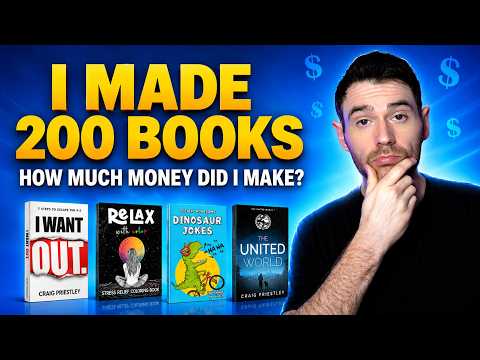
“200 Books = How Much Money on Amazon KDP?”
What we found: 200 KDP Books, About $102,000 Before Tax in Six and a Half Years, and Ad Sales on a Thin Margin
Royalties of about $146,634 less about US$44,605 of Amazon ads, stated on camera. Averaged out, that is roughly $15,700 a year, with most of it earned in the last three years.
- $146,633.60 Lifetime royalties
- US$44,604.93 Lifetime ad spend
- ~$102,000 Profit before tax
- ~$15,700 Average per year
The claim
That 200 books published on Amazon KDP over six and a half years have produced about $102,000 in profit before tax, after advertising.
- Books published — 200 (201 on the morning of recording)
- Time publishing — Six and a half years, since January 2020
- Orders, all time — 64,362, of which 61,371 paid
- Royalties, all time — $146,663 spoken; the KDP Royalties dashboard at 4:27 shows $146,633.60 (9 Dec 2019 to 25 Jun 2026, 201 books)
- Amazon ad spend, all time — "44,000 odds" spoken; US$44,604.93 on the Amazon Ads dashboard at 8:35
- Sales attributed to ads — US$193,038.96 from 19,421 purchases (Amazon Ads dashboard, 8:35)
- Advertising cost of sales (ACoS) — 23.13%
- Profit before tax — ~$102,000
- Profit per book — ~$525 stated; ~$510 on our division by 200
- Best month — $15,573 in royalties, December 2025
- Royalties last year — "Almost 60 grand"
What is this income idea?
Publish many books on Amazon KDP, mostly coloring, activity and puzzle books, then advertise them with Amazon ads and let the back catalogue accumulate.
- Craig started in January 2020 with fiction: a standalone sci-fi horror novel and a dystopian trilogy. Each took six to nine months to release, and they say that for the first two and a half to three years "I barely sold anything".
- From 2021 they moved into low-content books such as notebooks and journals, and from 2023 into what they call medium content: coloring books, activity books and puzzle books. Many coloring books are produced with AI and then retouched by hand. Sales rose from that point.
- Across all six and a half years they report 61,371 paid orders and about $146,634 in royalties. They explain that a $10 paperback might return about $3 to them after Amazon covers printing and takes its share.
- They then do what most income videos in this category do not: they subtract their Amazon ad spend, "44,000 odds", and call the remainder their profit before tax. On the figures they give, that is about $102,000.
- Growth is uneven and recent. Last year alone brought "almost 60 grand" in royalties, December 2025 was the best month at $15,573, and the best single day was a little over $800. Kindle Unlimited page reads on their fiction add only about $656 over the whole period.
- They close with tips and a plan: research before publishing, invest in covers, treat advertising as required, expect most books to fail, and focus on medium- and high-content books that are harder to mass-produce with AI.
A catalogue of 200 books that took six and a half years to build, earning a real but modest profit that has grown sharply in the last three years.
- Start with fiction — Slow, few sales
- Switch to low content — Notebooks, journals
- Move to medium content — Coloring, puzzles
- Publish 2–8 a month — Build the catalogue
- Run Amazon ads — US$44,605 all time
- Ride Q4 — December peak
- Subtract ad spend — ~$102,000 left
A slow catalogue business with an unusually complete set of numbers.
Six and a half years, two of them nearly empty
The lesson underneath the number
- The most useful thing in this video is the shape of the curve. For the first two and a half to three years, Craig says they barely sold anything. The income came after they stopped writing what they wanted to write and started publishing what people search for, and it has risen sharply since: almost $60,000 in royalties last year against an all-time total of about $146,634. That means roughly 40% of six and a half years of royalties arrived in one year.
- They also do the subtraction that most income reports in this category leave out. Royalties less about US$44,605 of Amazon ads is about $102,000, which they call profit before tax. Their per-year and per-book averages divide out correctly from their totals. The stated profit per book, about $525, is a little above the $510 we get dividing by 200, a small gap that does not change the picture.
- The ad figures deserve more care than the video gives them. A 23% ACoS sounds efficient, but it is measured against list price. On their own example of $3 royalty from a $10 book, break-even ACoS is about 30%, so at 23% most of the royalty on an ad-driven sale is spent acquiring it. The catalogue is profitable because many orders arrive without an ad click; the advertised sales themselves run on a thin margin.
- There are commercial interests in the video and they are stated openly: paid one-to-one consultations with a £40 intro call, a research tool with a link in the description, their own non-fiction book and a newsletter. None of them affects the arithmetic, but a viewer should know the channel earns from more than royalties.
Make what people are looking for, not what you want to make yourself.
Their lesson from the first two and a half years
How the catalogue was built, as they describe it
Six and a half years, three phases, one main marketing channel.
No figure is given for the time spent per book or for tool and cover costs.
- Learn what sells, not what you want to write — Their fiction sold little. "Make what people are looking for not what you want to make yourself" is the lesson they draw from the first two and a half years.
- Publish steadily — Between two and eight books a month, building a back catalogue over time rather than relying on one hit.
- Use AI, then retouch — Coloring pages are generated with AI, then upscaled, retouched and drawn into by hand. They say fully AI-produced books "feel a bit wrong" and could put a KDP account at risk.
- Advertise every book — "Marketing is not optional." They say organic sales on KDP in 2026 are rare outside very hungry niches, and their marketing is Amazon ads.
- Expect most books to fail — Some books they spent $200 to $400 promoting flatlined when ads stopped. They expect one in three to one in eight or nine books to succeed.
- Build for the fourth quarter — Release in time for November and advertise into December, when their royalties peak and then fall back after the 23rd.
The business model
Royalties on paperbacks and ebooks sold through Amazon KDP, plus a small amount from Kindle Unlimited page reads.
Amazon shoppers buying coloring, activity and puzzle books, notebooks and some fiction and non-fiction.
Niche, gift-friendly books with covers designed to stand out in Amazon search results.
Amazon search, driven mainly by Amazon ads; a free promotion in October 2022 produced a one-off spike.
- Amazon ads — US$44,605 all time; the one cost subtracted in the video
- Printing and Amazon's share — Already deducted inside royalties
- Research tool — Recommended and used; unpriced
- AI tools and retouching time — Not stated in the video
- Tax — They say the profit is before tax
- Their own time — Two to eight books a month; hours not stated
Ad spend is the cost that matters most in this model and it is disclosed. Smaller costs and labour are not.
What you would actually need
Money
About $44,605 on Amazon ads across six and a half years, most of it in the last three; a few hundred dollars to test a single book.
Ad spend is the cost they disclose and it is substantial: about 30% of lifetime royalties. Other costs are not stated, including the book research tool they recommend, AI image tools, cover design, and any paid help.
Costs named or implied
- Amazon ads: US$44,605 all time
- $200–$400 to test a book that may then flatline
- Book research tool subscription (unpriced)
- AI image tools for coloring pages (unpriced)
- Covers and A+ content (unpriced)
- Tax on the ~$102,000 (not calculated in the video)
Time
Six and a half years; two to eight books a month; six to nine months per novel in the early years.
The timeline is stated plainly and is the most useful figure in the video for a beginner. Hours per book are not stated, so an hourly return cannot be calculated.
Where the six and a half years went
- 2020–2022: fiction, six to nine months per book, few sales
- 2021 onward: notebooks and journals
- 2023 onward: coloring, activity and puzzle books
- Last year: "almost 60 grand" in royalties
- Ongoing: ad management, research, retouching
- Hours per book: not stated in the video
The part you must pay attention to
A 23% ACoS on a roughly 30% royalty leaves a thin margin on ad-driven sales.
They present a 23.13% ACoS as "really good". ACoS compares ad spend with the list price of the books sold, not with the royalty they keep.
- Sales attributed to ads (list price) — $193,000
- Royalty share, from their $3-on-$10 example — × ~30%
- Ad spend — − US$44,605
~$13,000
Royalty left from ad-attributed sales after ad cost
Everything rests on the royalty share. They give $3 on a $10 book as an example, which puts break-even ACoS near 30%. At 23%, roughly three-quarters of the royalty on an ad-driven sale goes back to Amazon as ad spend. If their real royalty share is higher, the margin is better; the video does not give an average.
This does not change the headline: royalties less ad spend is still about $102,000, because many sales arrive without a click. It does mean that the advertised sales, about a third of all paid orders, contribute much less than the ACoS figure suggests, and a reader copying the approach should calculate break-even ACoS from their own royalty, not compare against 23%.
- PROFIT, ALL TIME
- Royalties ~$146,634
- Amazon ads -$44,605
- Before tax ~$102,000
- Per year (/6.5) ~$15,700
- Per book (/200) ~$510
- AD-DRIVEN SALES
- Ad sales (list) $193,000
- Royalty at ~30% ~$58,000
- Ad spend -$44,605
- Left ~$13,000
- SHARE OF ORDERS
- Ad orders 19,421 / 61,371
- = ~32%
The economics
Royalties, ad spend and a before-tax profit, all given; the time cost is not.
- Royalties, all time — ~$146,634
- Amazon ad spend, all time — US$44,605
- Profit before tax — ~$102,000
- Average profit per year — ~$15,700
- Paid orders — 61,371
- Royalty per paid order — ~$2.39
- Ad-attributed sales / orders — $193,000 / 19,421
- ACoS — 23.13%
- Royalties last year — ~$60,000
- Kindle Unlimited page reads — ~160,000 for ~$656
- Hours worked, tool costs, tax — Not stated
Royalties less ad spend
~$146,634 − US$44,605 = ~$102,000; ÷ 6.5 years = ~$15,700 a year; ÷ 200 books = ~$510 a book
About $102,000 before tax across six and a half years
IncomeIdeaLab calculation from the totals stated in the video
Ad spend is spoken as "44,000 odds"; the Amazon Ads dashboard on screen at 8:35 shows total cost of US$44,604.93. The profit is before tax and before any tool, cover or labour cost.
- Ad spend and profit for last year alone
- Hours spent per book
- Research tool and AI tool subscriptions
- Cover design and other outsourced work
- Income from consultations, the newsletter and links
- Tax
- Their averages reconcile: 61,371 orders ÷ 6.5 years is about 9,442 a year, $146,663 ÷ 6.5 is about $22,563, and $146,663 ÷ 200 is about $733 per book (our checks).
- ACoS of 23.13% matches the Amazon Ads dashboard on screen at 8:35, which shows total cost US$44,604.93 against sales US$193,038.96 (US$44,604.93 ÷ US$193,038.96 is about 23.1%, our arithmetic).
- Ad-attributed orders are about 32% of all paid orders (19,421 of 61,371, our arithmetic).
- Kindle Unlimited works out at about $0.004 per page read (our arithmetic), and they say page reads fall off when they stop publishing fiction.
- They say Amazon reduced royalties on low-content books and that the UK added a tax on them; they give no figures and we have not checked this.
Evidence status
Every substantive figure in the video.
- 200 books in six and a half years — Creator — Stated with a breakdown by book type.
- 61,371 paid orders — Creator — Free orders from a 2022 promotion are separated out, which is careful.
- ~$146,634 royalties — Creator — Spoken as $146,663; the KDP dashboard on screen at 4:27 shows $146,633.60.
- US$44,605 Amazon ad spend — Creator — Disclosed and subtracted. Most of it in the last three years.
- Profit ~$102,000 before tax — Creator; our check — Royalties less ad spend. Checks out on their totals.
- ~$525 profit per book — Creator — Our division by 200 gives about $510; a small gap.
- 23.13% ACoS — Creator — Shown on the Amazon Ads dashboard at 8:35: US$44,604.93 cost, US$193,038.96 sales. Measured on list price, not royalty.
- Almost $60,000 royalties last year — Creator — About 40% of the all-time total in one year.
- $15,573 best month, December 2025 — Creator — A seasonal peak they say falls back after 23 December.
- One in three to one in nine books succeed — Creator — Volunteered. Useful for anyone planning a catalogue.
- Royalties could reach $1,000–$2,000 per book over time — Creator — Stated as a possibility, not a forecast.
What is actually proven?
The figures are stated by the creator; the totals reconcile on our arithmetic.
- About $146,600 in royalties from 61,371 paid orders across 200 books.
- About $44,605 spent on Amazon ads, disclosed and subtracted.
- About $102,000 before tax, or roughly $15,700 a year on average.
- The per-year and per-book averages reconcile with the totals.
- Ad-attributed sales leave about $13,000 of royalty after ad cost, assuming a ~30% royalty share.
- Two to three slow years at the start, and a low book success rate.
- Hours worked, tool costs and income from consulting.
What the headline doesn’t tell you
The numbers are unusually complete; the context matters more than the total.
- It took six and a half years. — The first two and a half sold little.
- ~40% came in one year. — Almost $60,000 last year.
- Ads cost US$44,605. — Disclosed and subtracted.
- 23% ACoS is on list price. — Break-even is near 30%.
- Most books fail. — Their estimate: 1 in 3 to 1 in 9 succeed.
- Profit is before tax. — They say so.
- Hours are not stated. — Two to eight books a month.
- Consultations are on offer. — Promoted mid-video.
Should you try it?
Possible, slow, and dependent on ads
Expect years, not months, to build a catalogue that earns, and work out your own break-even ACoS before you spend on ads.
- Completeness of the numbers — 8 — Royalties, orders, ad spend and before-tax profit all given.
- Internal consistency — 8 — Averages divide out correctly from the totals.
- Honesty about the timeline — 9 — Two slow years and a low hit rate volunteered.
- Ad economics explained — 4 — ACoS presented without comparison to royalty share.
- Cost disclosure beyond ads — 4 — Tools, covers and time not stated.
- Startup cost — 7 — Low per book; ads are the real spend.
- Beginner accessibility — 5 — Open to anyone, but competitive and ad-dependent.
- This is one of the more complete income reports we review. The creator gives orders, royalties, ad spend and a before-tax profit, and the numbers check out against each other. On average the catalogue has made about $15,700 a year in profit, and much more than that in the most recent year.
- The timeline is the warning. Two and a half to three years of near-zero sales came first, and the growth came after a change of category. A beginner should plan on a long build, on many books failing (their estimate is that only one in three to one in nine succeed), and on needing ads from the start because, in their words, organic sales "aren't really a thing" any more outside hungry niches.
- Be careful with the ad benchmark. Their 23% ACoS is good relative to list price, but on a royalty near 30% it leaves little of each ad-driven sale. Before copying their targets, calculate the royalty on your own book and set your maximum ACoS below it.
- Finally, weigh the business around the books. The video promotes paid consultations, a research tool and a newsletter. They are presented openly, and none of their income is included in the KDP figures.
Passive or automated?
Automation
Amazon prints, ships and pays; publishing and ads are manual.
Passive potential
Back-catalogue royalties continue, but they say books flatline when ads stop.
KDP removes printing, shipping and payment, and a back catalogue does keep selling. But the creator says organic sales are rare now and that books they promoted flatlined after they turned ads off. The catalogue grows only as they keep publishing two to eight books a month, retouching AI artwork, researching niches and managing an ad budget that now runs most months. It is a business with a long tail, not a passive one.
- Researching niches before each book
- Producing and retouching two to eight books a month
- Designing covers that stand out in search
- Managing Amazon ad campaigns and budgets
- Preparing releases for the fourth quarter
Recommended beginner experiment
Test the category before building the catalogue.
- Research demand first. — Their first and main tip.
- Calculate your royalty per book. — Price minus printing and Amazon's share.
- Set break-even ACoS from it. — Not from their 23%.
- Publish a small batch. — Five to ten books.
- Cap ad tests per book. — They spent $200–$400 on some that flatlined.
- Track profit, not royalties. — Subtract ads monthly, as they do.
- Plan releases for Q4. — Their December peak.
- Log your hours. — The figure the video does not give.
Our verdict: 7/10
A complete, consistent income report from a slow, ad-dependent catalogue about $102,000 before tax over six and a half years, with most of it in the last three
Credited for giving orders, royalties, lifetime ad spend and a before-tax profit, all of which reconcile on our arithmetic; for disclosing two and a half years of near-zero sales and a low book success rate; and for stating that profit is before tax. Marked down because the 23% ACoS is presented as strong without comparing it with a roughly 30% royalty share, and because hours, tool costs and cover costs are not stated.
This video answers its own title. Two hundred books over six and a half years have produced about $146,634 in royalties, and after about US$44,605 of Amazon ads the creator puts their profit before tax at roughly $102,000. Their averages divide out correctly, they separate free orders from paid, and they say plainly that the first two and a half years produced almost nothing and that most books do not succeed. Averaged across the whole period, the catalogue has made about $15,700 a year; the recent year is far stronger, at almost $60,000 in royalties, though its ad spend and profit are not given separately. The one place the analysis is thin is advertising. A 23% ACoS is measured against list price, and on their own example of a $3 royalty from a $10 book, it leaves only a small margin on each advertised sale. The catalogue is profitable overall because many orders arrive without an ad click. For a beginner, the stated lessons are the ones they give: research first, expect years rather than months, expect most books to fail, and treat advertising as a cost to be measured against royalty, not against price.
- Books published — 200
- Royalties, all time — ~$146,634
- Ad spend, all time — US$44,605
- Profit before tax — ~$102,000
- Average profit per year — ~$15,700
- Royalties last year — ~$60,000
- ACoS — 23.13%
- Hours worked — Not stated
- Beginner suitability — Yes, with patience and an ad budget
Sources
- 200 Books = How Much Money on Amazon KDP? — Self Publishing Empire — YouTube video, 2026-06-26
- FTC — Guides Concerning the Use of Endorsements and Testimonials — Regulatory guidance on earnings claims