Local Services / HVAC Contractor · Claim Review
“HOW MUCH MONEY MY HVAC BUSINESS MADE FIRST YEAR!!”
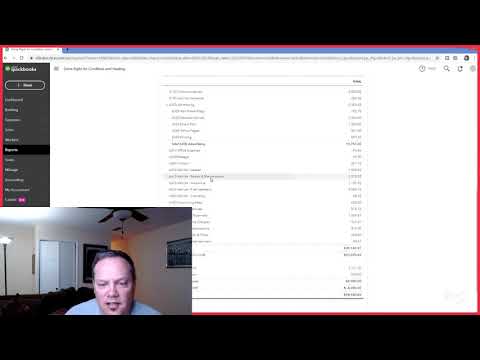
What we found: An HVAC Start-Up's First Seven Months Show $142,588 of Income and About $49,000 After Expenses and Depreciation, on a QuickBooks Report Shown on Screen
The report on screen itemises income, cost of goods sold, expenses and depreciation, and the lines add up. The spoken $43,000 for vans and computers matches the expenses and depreciation combined. Whether the owner's own pay sits inside those costs is not stated.
- $142,588.92 Revenue, first 7 months
- $53,070.83 on screen Net operating income
- $43,232.91 Expenses plus other expenses on screen
- Not stated Owner pay
The claim
That a residential and commercial HVAC company started from scratch in June 2013 brought in $142,588 of revenue and about $49,000 of net operating income in its first seven months.
- Business opened — June 2013
- Period covered — Seven months, not the six announced at the start
- Total income (QuickBooks report on screen, June to December 2013) — $142,588.92
- Total cost of goods sold on screen (materials 35,203.27; labor 2,369.00; subcontractors 352.00; franchise service fees 12,450.91) — $50,375.18
- Gross profit on screen — $92,213.74
- Income minus cost of goods sold — $92,213.74
- Total expenses on screen — $39,142.91
- Net operating income on screen — $53,070.83
- Other expenses on screen: depreciation 3,121.00 and amortization 969.00 — $4,090.00
- Net operating income spoken — "About $49,000", later "only 48,000"
- Vans, computers and similar purchases (spoken) — ~$43,000 in the first seven months
- Expenses plus other expenses on screen — $43,232.91 (our arithmetic)
- Following 12 months (2014) — "665", described in a later video
- Owner pay, tax, number of jobs, staff — Not stated
What is this income idea?
Open a residential and commercial HVAC service company from home, buy the vans and equipment in cash, and track every dollar in an accounting package from the first month.
- The creator opened an HVAC company in June 2013 and, recording in May 2020 after having sold it, runs the profit and loss for its first months in their accounting software. They had no existing business and say they had not been working in the HVAC industry for two to two and a half years before opening, so the company "literally started from scratch".
- The video announces six months and corrects itself once the report runs: "actually it was seven months worth of business not six." The title's "first year" therefore means the first calendar year of trading, which was seven months long.
- Revenue came from residential repairs, accessories, service agreements and equipment change-outs, plus commercial service and replacements. The report on screen shows residential sales of $116,047.00 (regular 32,704.11; accessories 4,027.74; service agreements 5,313.15; equipment 70,110.42; refunds and allowances -100.30) and commercial sales of $26,341.92 (regular 2,205.92; equipment 24,136.00). Total income shown is $142,588.92.
- Cost of goods sold, which the creator defines as labour, equipment and parts, was $50,375.18 on the report on screen (materials 35,203.27; labor 2,369.00; subcontractors 352.00; franchise service fees 12,450.91), leaving gross profit of $92,213.74. Below that the report lists total expenses of $39,142.91, including rent of $6,180.00, advertising of $10,757.20, vehicle lines and computer expenses, and the creator stresses that each should be tracked as a percentage of revenue.
- The report on screen shows net operating income of $53,070.83 and $4,090.00 of other expenses (depreciation 3,121.00 and amortization 969.00) below it, which leaves $48,980.83 (our arithmetic). The creator says "about $49,000", later "only 48,000", and explains why it is lower than it might be: about $43,000 went on vans, computers and similar purchases in those seven months, all paid without loans or leases, with the office in a spare bedroom and the shop in the garage. The report's expenses and other expenses add up to $43,232.91 (our arithmetic).
- The creator closes by saying the next twelve months, 2014, rose to "665", with the detail held for a later video.
A start-up HVAC company took in about $20,000 a month in its first seven months and kept about a third of it after expenses and depreciation, according to the QuickBooks report on screen.
- Open from home — June 2013
- Repairs and change-outs — Residential and commercial
- $142,588 revenue — Seven months
- − ~$50,000 direct costs — Labour, equipment, parts
- ~$92,000 gross profit — About 65% of revenue
- − $43,233 expenses and depreciation — Rent, advertising, vehicles (our arithmetic)
- ~$49,000 operating income — Before owner pay is clarified
Each step is a figure the creator states or the report on screen shows; the percentages and the $43,233 total are ours.
A real profit and loss, with one question left open
The lesson underneath the number
- Most income videos give a revenue figure and stop. This one goes line by line on screen: total income of $142,588.92, cost of goods sold of $50,375.18, gross profit of $92,213.74 and, after expenses and depreciation, about $49,000. The creator also volunteers the biggest single cost, about $43,000 on vans and computers, and explains that it was paid in cash so the business could run without vehicle loans or leases. The lines reconcile to within rounding, which is the first thing we check and the first thing most videos fail.
- The margins are healthy for a start-up. On our arithmetic, about 65 cents of each revenue dollar remained after labour, equipment and parts, and about 34 cents remained after everything the creator counts in operating income. Monthly revenue averaged about $20,370 across seven months, and operating income about $7,000.
- The part a reader needs to resolve is what those costs include. The spoken $43,000 for vans and computers matches the report's expenses and depreciation added together ($43,232.91, our arithmetic), and the report lists those costs as rent, advertising, vehicle, computer and other lines. Owner pay is the larger question. For a one-owner trade business, $49,000 over seven months means something very different if the owner was already paid inside the labour line than if that $49,000 is the owner's pay. The video does not say.
- The context is worth keeping too. The creator recorded this in May 2020, after selling the business and after being laid off from a union contractor job during COVID, and says they have no affiliation with the accounting software they recommend. Nothing is being sold in the video. The tone is a tradesperson explaining their own books, and the main lesson they draw is the one most beginners skip: track every line as a percentage of revenue from the first month.
One of the things we need to be good at or hire somebody to do for us is to keep track of the money, because that's our report card.
The creator, on why the books matter
How the first seven months were run, as described
A cash-funded, home-based start with the books kept from the first month.
No job count and no owner pay figure are given for any stage.
- Start without an existing customer base — No existing business to buy and, by the creator's account, two to two and a half years away from the trade before opening. Their earlier experience as a technician is not quantified.
- Run it from the house — Office in the spare bedroom, shop in the garage, as the creator describes. The report on screen also carries a Rent line of $6,180.00; the video does not say what it covers.
- Buy equipment outright — "It cost me about $43,000 between buying vans and computers and what have you within my first seven months." No vehicle loans or leases were taken. The report on screen itemises its costs differently, with vehicle lease, repair, insurance and fuel lines.
- Sell repairs, agreements and replacements — Residential repairs, accessories, service agreements and equipment change-outs, plus commercial service and replacements. The report on screen shows the amount from each; residential equipment sales of $70,110.42 are the largest line.
- Keep the books in software from day one — One credit card for bills and a business bank account, both linked to the accounting package so transactions import rather than being keyed from receipts. The creator says the chart of accounts will be imperfect at first and improves over time.
- Read the profit and loss as percentages — "Everything is a percentage of what your top line is." Revenue, then cost of goods sold, then overhead, then net operating income.
- Repay yourself before borrowing — The creator says they paid themselves back all their own money first so the business could run without debt. The amount the owner put in at the start is not stated.
The business model
Residential repairs, accessories, service agreements and equipment change-outs, plus commercial service and replacements. Residential sales were $116,047.00 and commercial sales $26,341.92 on the report on screen.
Homeowners and commercial customers in the creator's area; customer numbers are not stated.
Heating and air-conditioning repair, maintenance and replacement from a newly opened local contractor.
Advertising by vehicle decals, direct mail and directory listings is named as an expense category, and the report on screen shows advertising of $10,757.20; how customers were actually won is not described.
- Cost of goods sold — $50,375.18 on the report on screen: materials, labor, subcontractors, franchise service fees
- Vans, computers and similar (spoken) — About $43,000 in seven months, paid without loans
- Total expenses (report on screen) — $39,142.91, including rent $6,180.00 and advertising $10,757.20
- Vehicle and computer lines (report on screen) — Lease 1,805.94; repair 3,078.20; insurance 1,155.52; fuel 4,985.15; computer 1,569.87
- Depreciation and amortization — $4,090.00 on the report on screen
- Owner pay and tax — Not stated
The creator shows more of the cost side than most videos we review: the report on screen prices cost of goods sold, every expense line and depreciation. Owner pay and tax are not mentioned.
What you would actually need
Money
About $43,000 on vans, computers and similar items in the first seven months, paid without loans. How much of the owner's own money went in before revenue arrived is not stated.
The $43,000 is one of the most useful numbers in the video and the creator volunteers it. On the report on screen the costs between gross profit and net income are itemised as expenses of $39,142.91 and depreciation and amortization of $4,090.00. It is not the whole start-up cost: licences, tools, initial parts stock and the months before the first invoices are paid are not priced.
Named or implied, not priced
- Vans and computers: ~$43,000 (stated)
- Cost of goods sold: $50,375.18 (report on screen; materials 35,203.27 and franchise service fees 12,450.91 are the largest lines)
- Rent: $6,180.00 (report on screen)
- Advertising: $10,757.20 (report on screen)
- Vehicle lease 1,805.94, repair and maintenance 3,078.20, insurance 1,155.52, fuel 4,985.15; computer expenses 1,569.87 (report on screen)
- Accounting software subscription: not priced
- Licensing and certification: not mentioned
- Owner's starting cash: not stated
Time
Seven months from opening to the figures given. Hours worked, staff and number of jobs are not stated.
An HVAC company is a full-time, on-call trade business. The video says the creator likes the trade work and the numbers, and describes hiring as a separate job, but does not say who did the work in 2013 or for how many hours.
What the time went into
- Service and replacement calls, residential and commercial
- Bookkeeping and data entry, done by the owner
- Buying and fitting out vans
- Building a customer base with no prior business
- Hours per week: not stated
The part you must pay attention to
The spoken $43,000 of vans and computers matches, in total, the expenses and depreciation that the QuickBooks report itemises.
The creator gives gross profit of about $92,000 and net operating income of about $49,000, and explains the difference as about $43,000 spent on vans and computers. The report on screen shows gross profit of $92,213.74, total expenses of $39,142.91, net operating income of $53,070.83 and other expenses of $4,090.00.
- Gross profit, shown on screen — $92,213.74
- Total expenses, shown on screen — $39,142.91
- Depreciation and amortization, shown on screen — $4,090.00
$48,980.83
Close to the spoken ~$49,000 (our arithmetic)
The report on screen and the spoken explanation describe the same $43,000 in different terms. The creator says about $43,000 went on vans, computers and similar purchases. The report shows total expenses of $39,142.91, which include rent of $6,180.00, advertising of $10,757.20, vehicle lease, repair, insurance and fuel lines, and computer expenses of $1,569.87, plus $4,090.00 of depreciation and amortization. Those two groups add up to $43,232.91 (our arithmetic). The video does not say how the vans and computers map onto those lines, and the creator notes that the detail would need "a different report". Separately, whether the owner's own wages are inside the labor line of cost of goods sold, which shows $2,369.00, or whether the $49,000 is what was left to pay the owner, is not stated. That one fact decides whether $49,000 is profit after the owner was paid or the owner's income for seven months.
Read either way, the headline holds up better than most figures we review: income, direct costs, gross profit, expenses and depreciation are all shown on a line-by-line report and they reconcile to within rounding. Our arithmetic gives a gross margin of about 65% and a margin after expenses and depreciation of about 34%. The open question is not whether the numbers add up but what is inside them, and above all how the owner was paid.
- THE SEVEN-MONTH P&L (REPORT ON SCREEN, JUNE TO DECEMBER 2013)
- Total income $142,588.92
- Cost of goods sold -$50,375.18
- --------------------------------
- Gross profit $92,213.74
- Total expenses -$39,142.91
- --------------------------------
- Net operating income $53,070.83
- Other expenses -$4,090.00
- --------------------------------
- Left (our arithmetic) $48,980.83
- spoken: "about $49,000"
- and later "only 48,000"
- SPOKEN $43,000 VS THE REPORT (OUR ARITHMETIC)
- Expenses + other expenses $43,232.91
- PER MONTH (7 MONTHS)
- Income $142,588.92 / 7 = ~$20,370
- Left $48,980.83 / 7 = ~$7,000
- OWNER PAY
- Inside labor costs? not stated
- Or paid out of NOI? not stated
The economics
The profit and loss lines shown on screen reconcile with each other and with the spoken figures.
- Total income (June to December 2013, report on screen) — $142,588.92
- Cost of goods sold (report on screen) — $50,375.18
- Gross profit (report on screen) — $92,213.74
- Total expenses (report on screen) — $39,142.91
- Depreciation and amortization (report on screen) — $4,090.00
- Gross margin — ~65%
- Net operating income spoken — ~$48,000–$49,000
- Net operating income (report on screen) — $53,070.83
- Operating margin — ~34%
- Vans, computers and similar (spoken) — ~$43,000
- Average monthly revenue — ~$20,370
- Owner pay and tax — Not stated
Reconciling gross profit with operating income
$92,213.74 − $39,142.91 = $53,070.83; $53,070.83 − $4,090.00 = $48,980.83, against a spoken NOI of about $49,000
The lines shown reconcile to within rounding, and expenses plus depreciation ($43,232.91) match the spoken $43,000 in total
IncomeIdeaLab calculation from the figures stated in the video
The creator describes net operating income as taking in "all my other miscellaneous expenses" and refers to depreciation and amortization, which appear on screen as $3,121.00 and $969.00. The video does not say how the vans and computers map onto the report's lines.
- Whether the owner's own pay is inside cost of goods sold
- How the vans and computers map onto the expense and depreciation lines
- Income tax on the operating income
- Number of jobs, average ticket and staff count
- How much of the owner's own money was put in at the start
- The announced six months becomes seven once the report is run, and the creator corrects this on camera. The title's "first year" is the first calendar year of trading, June to December 2013.
- Net operating income is spoken as "about $49,000" and then as "only 48,000" a few minutes later. The report on screen shows $53,070.83 before $4,090.00 of other expenses, which leaves $48,980.83 (our arithmetic).
- If the seven-month pace had simply continued, twelve months would give about $244,000 of revenue (our arithmetic). The creator says the next twelve months reached "665", which is far above that pace; the detail is left for a later video and cannot be checked from this one.
- The creator states plainly that they have no affiliation with the accounting software they use and recommend. No course, coaching or sponsor appears in the video.
Evidence status
Every substantive figure in the video.
- $142,588 total income in seven months — Creator, reading their profit and loss; $142,588.92 shown in QuickBooks on screen — Matches the report on screen; about $20,370 a month on average.
- Cost of goods sold ~$50,000 — Creator; $50,375.18 shown on screen — Defined as labour, equipment and parts; the report itemises it.
- Gross profit ~$92,000 — Creator; $92,213.74 shown on screen — Checks: $142,588.92 − $50,375.18 = $92,213.74.
- Net operating income ~$49,000 (later "only 48,000") — Creator; $53,070.83 shown on screen before $4,090.00 of other expenses — $48,980.83 after other expenses (our arithmetic); about 34% of revenue.
- ~$43,000 on vans and computers in seven months — Creator — The report on screen shows expenses of $39,142.91 and depreciation and amortization of $4,090.00, $43,232.91 together; it lists no single vans-and-computers line.
- Expenses $39,142.91 (rent 6,180.00; advertising 10,757.20) and other expenses $4,090.00 — QuickBooks report on screen, June to December 2013 — Shown in the creator's own accounting-software report.
- No vehicle loans or leases; run from home — Creator — Explains the absence of rent and finance costs.
- Started from scratch with no existing business — Creator — Reported as the creator's own account; earlier trade experience is not quantified.
- Next 12 months reached "665" — Creator — Unit and detail held for a later video; not checkable here.
- No affiliation with the accounting software — Creator — Disclosed unprompted.
- Owner pay and tax — Nobody — Not stated in the video.
What is actually proven?
The figures are stated, shown on screen and consistent. What the owner was paid is not described.
- Revenue of $142,588.92 for June to December 2013, shown in the creator's QuickBooks report on screen.
- Revenue, cost of goods sold and gross profit reconcile to within rounding.
- Gross margin of about 65% and operating margin of about 34%.
- Expenses of $39,142.91 plus depreciation and amortization of $4,090.00 total $43,232.91, in line with the spoken $43,000.
- The business ran from home without vehicle loans or leases.
- Whether the owner was paid inside the stated costs.
- Tax, job count and staffing.
What the headline doesn’t tell you
The numbers add up. The question is how the owner was paid.
- "First year" is seven months. — June to December 2013.
- Six months became seven. — Corrected on camera.
- $43,000 is described as vans and computers. — Paid in cash, no loans.
- The report lists it differently. — Expenses $39,142.91 plus depreciation $4,090.00.
- Owner pay is not stated. — Inside costs or out of NOI.
- A rent line appears. — $6,180.00 on the report; its cover is not stated.
- Recorded seven years later. — After the business was sold.
- Nothing is sold in the video. — No affiliation, stated plainly.
Should you try it?
A credible trade-business start, for someone who already has the trade
The figures describe a licensed technician opening their own company with about $43,000 for vans and equipment. Without the trade skills and that capital, the model does not apply.
- Completeness of the profit and loss — 7 — Income, direct costs, gross profit, expenses and depreciation all shown on screen.
- Internal consistency — 8 — The lines reconcile to within rounding.
- Cost disclosure — 8 — Direct costs, every expense line and depreciation shown on screen.
- Clarity on owner pay — 2 — Not stated whether the owner was paid inside the costs.
- Freedom from conflicts — 9 — No product, course or affiliate; no affiliation stated for the software.
- Detail on how customers were won — 3 — Advertising categories named; no figures or channels ranked.
- Beginner accessibility — 3 — Needs trade qualifications and about $43,000 of equipment.
- This is a realistic picture of a trade business in its first months, and it is more complete than most. Revenue of about $20,000 a month, direct costs of about a third of that, and operating income of about $7,000 a month after buying the vans outright is a sound start for a company with no existing customers. The creator also tells you how it was funded: in cash, from home, with no vehicle loans.
- Before treating $49,000 as what the owner earned, find out what it contains: the report shows a labor line of only $2,369.00. In a one-owner business, the owner's labour is either inside cost of goods sold, in which case the $49,000 is profit on top of a wage, or it is not, in which case the $49,000 is the wage. The video does not say which, and the difference roughly doubles or halves the owner's real income. Tax on whichever it is also comes off.
- The $43,000 of vans and computers matters for anyone planning to copy this. That is cash you need before or during the first months, and it is not the whole start-up bill: licences, insurance, tools, parts stock and the weeks before customers pay are not priced in the video. The creator describes running from a spare bedroom and a garage; the report on screen still shows a rent line of $6,180.00.
- The most transferable part is the bookkeeping habit. The creator's point that each overhead line should be read as a percentage of revenue, and that the books will be untidy at first and improve, is good advice for any small service business. The "665" for the following year is promised for another video and cannot be weighed from this one.
Passive or automated?
Automation
Bank feeds into the accounting software are the only automation described.
Passive potential
Revenue comes from service and installation calls that someone has to attend.
An HVAC contractor earns by sending a qualified person to a house or building to diagnose, repair or replace equipment, and none of that runs without people. Service agreements give some recurring revenue, but they are fulfilled by visits. The only automation the creator describes is linking the bank account and credit card to the accounting software so transactions import automatically. Hiring technicians can take the owner off the tools over time, but that turns the owner's job into managing staff rather than removing the work.
- Every service, repair and replacement call
- Quoting and selling equipment change-outs
- Bookkeeping, done by the owner in the first months
- Buying, equipping and maintaining vans
- Hiring, once the owner stops doing all the work
Recommended beginner experiment
Copy the bookkeeping first, then the business.
- Get the trade qualifications first. — This is a licensed technician's business.
- Price the full start-up bill. — Vans were ~$43,000 alone.
- Decide how you pay yourself. — Wage in costs, or draw from profit.
- Set up the books before the first job. — Link the bank and card from day one.
- Read every line as % of revenue. — The creator's own rule.
- Keep overhead low if you can. — Home office and garage were used.
- Avoid finance on early vehicles if possible. — Their stated choice.
- Set aside tax from operating income. — Not mentioned in the video.
Our verdict: 7/10
A consistent first profit and loss, shown line by line, with owner pay left unclear and a spoken $43,000 that matches the expenses and depreciation on the report
Credited for showing a line-by-line QuickBooks report on screen rather than revenue alone; for figures that reconcile to within rounding; for volunteering the largest single cost, about $43,000 on vans and computers, and how it was funded; for correcting the six-month framing to seven months on camera; and for stating that they have no affiliation with the software they recommend, with nothing sold in the video. Marked down because the video does not say whether the owner's own pay is inside the costs, which decides what the $49,000 means; because the spoken $43,000 for vans and computers is not a line on the report; because net operating income is spoken as two slightly different figures and shown as $53,070.83 before other expenses; and because tax, job count, staffing and the source of customers are not stated.
This is one of the more complete first-year accounts we have reviewed. The creator runs the profit and loss for the HVAC company they opened in June 2013 and reads each line: $142,588 of revenue in seven months, about $50,000 of labour, equipment and parts, about $92,000 of gross profit and about $49,000 of net operating income. Those lines reconcile to within rounding, which on our arithmetic means a gross margin of about 65% and an operating margin of about 34%, or roughly $20,000 of revenue and $7,000 of operating income a month. The creator also tells you where much of the rest went, about $43,000 on vans and computers paid without loans, and that the company ran from a spare bedroom and a garage. Two things are left open. The spoken $43,000 matches the report's expenses and depreciation added together ($43,232.91, our arithmetic), but the report shows rent, advertising, vehicle and depreciation lines rather than one vans-and-computers line, and the video does not say how they map. And it does not say whether the owner's own pay is in the labour line or is the $49,000 itself, which is the difference between a profitable company paying its owner and an owner earning about $7,000 a month before tax. For someone who already holds the trade and can fund the vans, it is a credible picture of a first seven months. The bookkeeping advice is the most transferable part, and the "665" for the following year is held for another video.
- Revenue, first 7 months — $142,588.92
- Cost of goods sold — $50,375.18
- Gross profit — $92,213.74 (65%)
- Net operating income — $53,070.83 on screen; ~$48,000–$49,000 spoken
- Operating margin — ~34%
- Vans and computers (spoken) — ~$43,000
- Owner pay — Not stated
- Beginner suitability — Only with the trade and capital
Sources
- HOW MUCH MONEY MY HVAC BUSINESS MADE FIRST YEAR!! — I HVAC — YouTube video, 2020-05-15