Coaching / Info Products · Claim Review
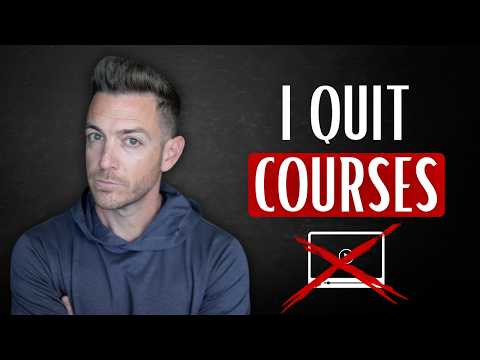
“Courses Are Dead, Sell This Instead (My 2026 Blueprint)”
What we found: A Coach’s Case for $25,000 Group Programmes Rests on Selected Client Results; Client Count and Outcomes Across Clients Are Not Stated
The model — video curriculum, community, live calls — is described clearly. Five client results are given as evidence; how many clients there are, and how typical those results are, is not.
- $25k / $55k Group programmes
- $490k Best client result
- $67–$397 Former course prices
- Not stated Clients / outcomes
The claim
That online courses no longer sell, and that a high-ticket group coaching programme — video curriculum, community and live calls — produces better client results and a better business.
- Former course business — “First million-dollar a year business”, courses at $67 to $397
- Current group programmes — $25,000 and $55,000
- Other price points named — $100,000; $250,000 VIP day
- Client: $55,000 programme, one call — $490,000 of new business
- That client’s multiple — ~8.9× (stated as “10xed”)
- Client: $400,000 best year to $85,000 months — ~$1.02M a year pace
- Number of clients, completion, refunds — Not stated
- His own current revenue and costs — Not stated
What is this income idea?
Package what you know into a high-priced group coaching programme rather than a low-priced online course.
- The creator says he built his “first million-dollar a year business” selling online courses priced from $67 to $397, from 2009 until about 2024 or 2025. He argues that course sales have collapsed because of three things: a flood of new courses since 2020, abundant free information, and AI chatbots that curate it.
- His replacement is high-ticket group coaching. In his framing, people pay for transformation rather than information, and transformation needs three things: financial commitment, a clear path, and a guide. A programme should therefore contain a video curriculum, a community and live group coaching calls; in-person events and one-to-one check-ins are optional.
- Price is central to the argument: “when someone pays a lot they pay a lot of attention.” He names his own programmes at $25,000 and $55,000, mentions $100,000 and a $250,000 VIP day, and runs a “10K offer challenge” on building a $10,000 offer.
- As evidence, he lists client results since switching: $50,000 in a first 30 days; $6,000 a month to $76,000 a month in four months; $30,000 a month to $100,000 a month with a best month of $250,000; a best year of $400,000 to $85,000 months; and one client who “generated $490,000 of new business” from one call.
- He also describes buying a $9,000 nutrition group programme himself, and says that the price made him commit.
Charge much more, deliver a curriculum plus community plus live calls, and rely on the high price to make clients follow through.
- Define the transformation — “From here to here”
- Record the path — Video curriculum
- Add community — Peers on the same path
- Run live calls — Group Q&A
- Price high — $10k to $55k
- Fill each month — “A handful of clients”
A clear offer structure; the business outcomes rest on selected examples.
A clear offer design, supported by the results that best illustrate it.
The lesson underneath the number
- The structural argument is coherent and easy to follow. Information is plentiful and cheap; following through on it is hard. A curriculum gives the path, a community keeps people going, and live calls deal with the points where they get stuck. Many course sellers have moved in this direction, and his description of why is clear.
- He is also candid about the history. Courses made him “a millionaire the first time”, he says most course buyers never finish, and he acknowledges that his best course results came from the most self-disciplined students. That is a fair statement of the problem he says group coaching solves.
- The weak point is the evidence. Five client outcomes are offered, and they are striking, but there is no denominator — no number of clients, no share who achieved anything like these figures, no refund rate. The client who “generated $490,000 of new business” from one call is a revenue figure for that client’s business, roughly 8.9 times the $55,000 fee rather than ten.
- It matters too that the video promotes his own offers: the group programmes, the challenge, the book and the VIP day. He presents these openly as his. A reader weighing the advice should treat it as both a business argument and an introduction to products he sells.
When someone pays a lot they pay a lot of attention.
The creator, on why price drives results
The offer, as he lays it out
Three required parts and some optional ones.
No delivery cost, client count or completion figure is given for any part.
- Be clear on the transformation — Write down where clients start and where they end up. His own is helping business owners go from “underpaid overworked” to $100,000 a month on 20 hours a week or less.
- Turn your method into a video curriculum — This replaces the old course and can reuse it. It is “the path” in his three-part framework.
- Build a community around it — Even clients who only read along benefit from seeing others’ wins and setbacks, he says, and one-to-one coaching cannot offer that.
- Hold live group coaching calls — Weekly, fortnightly or monthly. The calls answer individual questions rather than re-teaching the curriculum.
- Charge a high fee — He presents price as the mechanism for commitment: “those fees those offers are not for me they are for my clients.” He uses $10,000 as a proxy for a high-ticket price.
- Optional extras — In-person meetups, software, and one-to-one check-ins with him or other coaches on his team.
The business model
High-ticket group coaching at $25,000 and $55,000, plus higher tiers and a $250,000 VIP day, by his account.
Established business owners and creators; he says the VIP day suits people already at $50,000 a month in revenue.
A defined path, a peer community and direct access to the coach, priced to ensure commitment.
His YouTube channel and podcast, a book, a “10K offer challenge” event, and sales calls.
- Coaching team — Mentioned. Size and cost not stated
- In-person events — Held in Tampa for the top tier. Cost not stated
- Community platform — Not named for his programmes
- Sales calls — Implied by the sale process he describes. Not costed
- Content and audience — Channel, podcast, book. Not costed
- Refunds — Not mentioned
The video describes the offer and its price, not the business behind it: no client count, revenue, cost or margin for his own programmes is given.
What you would actually need
Money
No start-up or running cost is given. The model is presented as needing “very little stress and very little work” once built.
The video mentions a team of coaches, in-person events in Tampa, sales calls and a community platform without pricing any of them. Selling $25,000 places typically depends on an audience and a sales process; how he acquires clients is not covered beyond his own channel, book and challenge.
Named or implied, not priced
- Recording and hosting a video curriculum
- A community platform and its moderation
- Live coaching calls, every week to month
- Other coaches on the team
- In-person events (optional)
- Sales calls and the audience that feeds them
Time
“Build it once fill it up regularly … a handful of clients every month.” His promised outcome is a business run on 20 hours a week or less.
The creator has 16 to 17 years in online education and an existing audience. For someone starting out, the hard part is the credibility and audience that make a $25,000 sale possible, and the video does not address how long that takes.
Where the time goes
- Building the curriculum
- Running live calls on a fixed cadence
- Community management
- Sales calls with each prospective client
- Producing the content that attracts buyers
The part you must pay attention to
The client results are examples he selected, with no denominator.
The evidence for the model is five client outcomes, introduced as testimonials that “fly off the shelf”. The video does not say how many clients have been through the programmes, or what share reached results like these.
- New business from one call — $490,000
- Programme fee — ÷ $55,000
~8.9×
Revenue multiple, before any costs of that new business
The assumption that a high price causes the results. Clients who can pay $25,000 to $55,000 are typically already running sizeable businesses — he says his VIP day suits people at $50,000 a month — so better outcomes may reflect who buys as much as what is delivered. The video gives no comparison group, completion rate or refund figure that would separate the two.
The arithmetic in the examples is mostly sound. $85,000 a month is about $1.02 million a year, so “pacing a million dollar a year” holds. “He 10xed his investment” on $490,000 from $55,000 is about 8.9 times by our calculation, close to his “almost $500,000”. All of these are revenue figures for the client’s business, not profit, and none can be checked from the video.
- THE $55K CLIENT (our arithmetic)
- New business $490,000
- Programme fee $55,000
- Multiple ~8.9x
- Stated "10xed"
- Revenue, not profit
- THE $85K-A-MONTH CLIENT
- $85,000 x 12 = $1,020,000
- "pacing a million" holds
- A MILLION A YEAR FROM GROUP SEATS
- $1,000,000 / $25,000 = 40 seats
- $1,000,000 / $55,000 = ~18 seats
- Before team, events, sales cost
- CLIENTS IN TOTAL NOT STATED
- SHARE WITH RESULTS NOT STATED
The economics
Prices and client results are given; the coach’s own business figures are not.
- Former course prices — $67 to $397
- Group programmes — $25,000 / $55,000
- VIP day — $250,000
- His own nutrition programme purchase — $9,000
- $55k client: new business from one call — $490,000
- That client’s revenue multiple — ~8.9×
- Seats for $1M a year at $25,000 — 40
- Number of clients, completion, refunds — Not stated
What “a handful of clients every month” could mean
$1,000,000 ÷ $25,000 = 40 seats a year (about 3 a month); $1,000,000 ÷ $55,000 = about 18 seats a year (1 to 2 a month)
A million-dollar year needs roughly 18 to 40 seats, before any cost of delivery or acquisition
IncomeIdeaLab calculation from the prices stated in the video
The creator does not give his own seat count, revenue or costs. This shows the scale his prices imply, not what he earns.
- How many clients have joined each programme
- What share achieved results like those quoted
- Completion and refund rates
- His own current revenue and margin
- Cost of the coaching team and events
- How clients are acquired and at what cost
- The quoted client results are revenue figures for clients’ businesses — monthly sales, a best month, “new business” — not profit, and none can be checked from the video.
- He says courses worked “beautifully” until 2023 or 2024 and that he sold his last one in 2024 or 2025; no revenue figure is given for either period.
- His VIP day is pitched at people “already doing $50,000 a month”. Buyers at that level start from a strong position, which bears on how far the programmes caused the results.
- His own $9,000 purchase is described three and a half weeks in. He says he is “already seeing results”; no measure is given.
Evidence status
Every substantive claim in the video.
- First million-dollar-a-year business from courses — Creator — No revenue figures given.
- Online courses are dead or dying — Creator — His view; no sales data given.
- Programmes at $25,000 and $55,000 — Creator — His own offers, promoted in the video.
- Client: $50,000 in first 30 days — Creator, testimonial — Selected; no denominator.
- Client: $6,000 to $76,000 a month in four months — Creator, testimonial — Selected; revenue, not profit.
- Client: $30,000 to $100,000 a month — Creator, testimonial — Selected; best month $250,000.
- Client: $85,000 months, “pacing a million” — Creator, testimonial — $1.02M a year; the pacing figure holds.
- Client “10xed” a $55,000 fee to $490,000 — Creator — About 8.9× by our calculation; revenue, not profit.
- Million-dollar business on 20 hours a week — Creator — No hours or revenue data given.
- Client count and success rate — Not stated — Absent throughout.
What is actually proven?
The offer is clearly described. Its results across clients are not.
- A three-part group coaching structure: curriculum, community, live calls.
- Programme prices of $25,000 and $55,000, and a $250,000 VIP day.
- Five selected client results, all revenue figures.
- The “10x” client result is about 8.9×.
- A million-dollar year needs roughly 18 to 40 seats at these prices.
- Client count, completion, refunds, and the coach’s own revenue and costs.
What the headline doesn’t tell you
A clear model, evidenced by examples.
- Results are selected. — No client count given.
- Results are revenue. — Not profit.
- “10xed” is ~8.9×. — $490,000 on $55,000.
- Buyers start strong. — His VIP day suits $50k months.
- His own offers are promoted. — Programmes, book, challenge.
- No delivery costs. — Team and events not priced.
- Audience comes first. — 16+ years in his case.
Should you try it?
A sound offer structure that presumes an audience and credibility
The curriculum-community-calls structure is worth using at any price. The $25,000 price point assumes buyers who already trust you.
- Clarity of the model — 8 — Three required parts, clearly explained.
- Evidence for results — 3 — Selected examples, no denominator.
- Accuracy of the arithmetic — 7 — Mostly holds; “10x” is ~8.9×.
- Cost disclosure — 1 — No delivery or acquisition cost.
- Disclosure of interest — 7 — His own offers are named as his.
- Beginner accessibility — 3 — High prices need an audience first.
- The structure in this video is useful for anyone who sells knowledge. A curriculum gives clients the path, a community keeps them going, and live calls deal with the places they get stuck. Those three parts can be offered at a few hundred dollars as well as at $25,000.
- The price advice needs more care. High prices may increase commitment, as he argues, but buyers who can pay $25,000 to $55,000 are already established, which makes their results easier. A beginner without an audience or a record of results is unlikely to sell seats at those prices.
- Treat the client results as examples. They are specific and may be accurate, but there is no figure for how many clients have taken part or how many did well, and all are revenue figures for the client’s business.
- Finally, the video promotes his own programmes and events. That is openly stated and does not make the advice wrong, but it is a reason to look for independent results before paying.
Passive or automated?
Automation
The curriculum is recorded once; calls and community are not.
Passive potential
Live coaching, sales and community need ongoing attention.
The creator presents group coaching as low-stress and low-work once built, and the curriculum part is reusable. But the model he describes depends on live calls at a fixed cadence, an active community, sales conversations with each buyer and, at the top tier, in-person events — and he mentions other coaches on his team. It is more scalable than one-to-one coaching, which is his point, but it is a service business rather than a passive product.
- Running live coaching calls
- Moderating and energising the community
- Sales calls with each prospective client
- Producing content that attracts buyers
- Hosting events for the top tier
Recommended beginner experiment
Test the structure before the price.
- Write your transformation down. — Start point and end point.
- Pilot at a modest price. — A small cohort first.
- Include all three parts. — Curriculum, community, calls.
- Track every client’s result. — Not just the best ones.
- Count your delivery hours. — Calls and community add up.
- Raise prices with evidence. — Your own completion data.
- Ask any coach for a denominator. — How many clients, how many results.
Our verdict: 4/10
A clear coaching model, evidenced by selected results client count, success rate and the coach’s own costs are not stated
Credited for a clearly explained offer structure, candour about the weaknesses of online courses including low completion, arithmetic in the client examples that mostly holds, and open naming of his own programmes. Marked down because the evidence that the model works is a set of selected client results with no client count, success rate or refund figure; because those results are revenue rather than profit and the “10x” example is about 8.9× by our calculation; because no delivery or acquisition cost is given; and because the video promotes the creator’s own offers.
The creator makes a clear case. Courses, in his account, stopped selling because there are too many of them, too much free information and AI tools that organise it; what remains scarce is follow-through. His answer — a recorded curriculum, a community and live group calls, priced high enough that clients commit — is a coherent design, and his account of why course buyers rarely finish is candid. The evidence that it works is less complete. Five client results are offered, all of them revenue figures for the client’s business, with no number of clients, no share who achieved similar results and no refund figure. The most striking, $490,000 of new business from one call in a $55,000 programme, is about 8.9 times the fee rather than ten, and is revenue rather than profit. Buyers at these prices are often already established, which makes it hard to separate the programme’s effect from the client’s starting point. The video also promotes his own programmes, book and challenge, which he names openly. The structure is worth borrowing; the results cannot be checked from the video.
- Group programmes — $25,000 / $55,000
- Best client example — $490,000 from one call
- Revenue multiple — ~8.9×
- Seats for $1M a year — 18 to 40
- Client count — Not stated
- Share with results — Not stated
- Beginner suitability — Structure yes, price later
Sources
- Courses Are Dead, Sell This Instead (My 2026 Blueprint) — Graham Cochrane — YouTube video, 2026-06-23
- FTC — Guides Concerning the Use of Endorsements and Testimonials — Regulatory guidance on testimonials and typical results