Local Services / Side Hustles · Claim Review
“Side Hustles That Are Making People $100K+/Year (Low Competition)”
What we found: Five Six-Figure Side Hustles Where the Big Numbers Are Revenue, Not Profit
Garage shelving, foam parties, painted signs, lawn leveling and boat detailing are real local services with low startup costs. The six-figure examples are other people’s sales, and almost none of their costs are given.
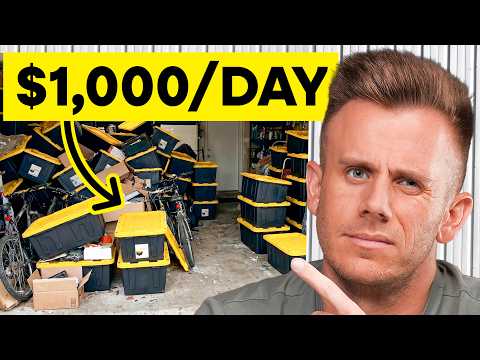
- $150k Foam parties, year one
- $500k/yr Lawn leveling
- $570 Shelf "profit"
- Almost none Operating costs given
The claim
That five low-competition side hustles — garage tote shelving, foam parties, hand-painted signs, lawn leveling and boat detailing — are making people $100,000 or more a year with very little money down.
- Shelf: material cost / sale price — ~$200 / $770
- Shelf: stated profit — $570, before labour
- Shelf builder’s volume — 20+ shelves a month
- Foam parties: year-one total — $150,000 in ~4 months
- Foam party price — $450–$550 per 2 hours
- Banners: price / time — $60–$120 / under an hour
- Lawn leveling — ~$40,000 a month; $500,000 a year
- Boat detailing hypothetical — 2–3 details a week at $1,000
- Labour, staff, insurance, materials beyond the shelf — Not stated
What is this income idea?
Five hands-on local services or crafts that most people have not thought of, each with a reported success story and a low cost to start.
- Garage tote shelving: custom wooden racks sized for plastic storage totes, sold through Facebook Marketplace and Instagram. The example builder spends about $200 on material, sells a 4-by-5-foot shelf for $770, and was doing 20 or more a month while still employed before going full time.
- Foam parties: a professional foam cannon hooked to a hose and an outlet for a two-hour backyard party, priced at $450–$550. The example, a teacher, is described as reaching $150,000 in year one working about four months a year, scaling from one setup to nine.
- Hand-painted signs: at the high end, storefront lettering and gilding; at the low end, hand-lettered paper party banners at $60–$120 each, designed in Canva, traced with a projector and painted in under an hour. The banner example sells through an audience of nearly 600,000 social followers.
- Lawn leveling: top-dressing a yard with sand and compost until it is flat. The example started with a shovel and wheelbarrow on a $600 first job and is described as reaching about $40,000 a month — $500,000 a year — with a two-man crew.
- Boat detailing: washing, oxidation removal, gel-coat restoration and ceramic coating, priced from $400–$1,500 for a full detail to $3,500–$8,000 for ceramic packages. He suggests two or three $1,000 details a week would beat most full-time jobs.
Five unglamorous services people will pay for; the big numbers belong to operators with crews, audiences or many setups.
- Pick a niche service — Low local competition
- Start with basic tools — Saw, shovel, brush
- Post your work — Marketplace, Instagram
- Take a deposit — Before buying materials
- Deliver on weekends — Alongside a job
- Add crews or setups — Where the big numbers come from
Real services with low entry costs. The six-figure results come after scaling, and the costs of scaling are left out.
Cheap to start is not the same as cheap to scale.
The lesson underneath the number
- The five ideas here are genuinely practical, and that is the video’s strength. None requires a licence in the way he describes it, none needs a website, and each can be tested with a first paid job before money is spent. His point about the shelf — take a deposit before buying the wood — is the right way to start any made-to-order business, and his own purchase of a shelf for $550 is a small but useful piece of evidence that people do pay for this.
- The headline numbers come from somewhere else. The $150,000 foam-party year was built on nine setups running at once, and the $500,000 lawn-leveling business on a two-man crew and upgraded equipment. Those are businesses with staff and capital, reported as revenue, and the video gives no figure for what their owners keep. They prove demand exists. They do not show that one person with a $1,500 machine or a wheelbarrow will reach six figures.
- The one place he does call a number profit, it is gross margin. A $770 shelf with $200 of wood in it leaves $570 before the builder’s couple of hours, the wheels he sources overseas and any delivery. That is still a healthy margin for handmade goods, and 20 shelves a month at that rate is about $11,400 before labour — a meaningful side income. It is just not the same thing as "profit for one shelf".
- Notice too where the demand came from in the smaller examples. The banner painter sells to an audience of nearly 600,000 followers; the shelf builder’s Instagram is "north of 50,000". Organic social reach is the distribution in both cases, and it took time to build. A beginner will start with the local listing and word of mouth, which suits these services well but at a slower pace than the examples suggest.
People will pay you to save them a Saturday.
The creator, summing up the shelving business
The five ideas, as he presents them
Each pairs a pricing guide with a borrowed success story.
None of the five success stories is the creator’s own business, and none comes with a cost breakdown beyond the shelf’s materials.
- Garage tote shelving — About $200 in material, sold for $770, which he calls "USD 570 in profit for one shelf" for "a couple of hours worth of work". Take a deposit before buying wood. He bought one himself from a local builder for $550.
- Foam cannon parties — A setup costs about $1,500 and a two-hour party $450–$550. The example reached $150,000 in year one over roughly four months, running up to nine setups on the same weekend, and warns to carry backup equipment.
- Hand-painted signs and banners — Banners at $60–$120, under an hour each, with startup costs under $200. Storefront signs run from a few hundred to a couple of thousand dollars; murals into the tens of thousands.
- Lawn leveling — Sand and compost top-dressing to flatten a yard. The example began with a $600 job done by hand and is described at $500,000 a year, doubling for four straight years, with only two real competitors in his region.
- Boat detailing — $10–$20 a foot for a basic detail, $20–$45 a foot for restoration, $3,500–$8,000 for ceramic coating. Mobile, with a buffer and compound as the main early equipment.
The business model
Per-job pricing for local services and made-to-order goods: shelves, parties, banners and signs, lawn jobs and boat details.
Homeowners, parents planning parties, small businesses wanting signage, and boat owners.
In his words for the shelves, "people will pay you to save them a Saturday".
Organic social posting — Facebook Marketplace, Instagram and TikTok — with no ad spend in the examples given.
- Shelf material — ~$200 per shelf, stated
- Foam setup — ~$1,500, stated; foam and vehicle wear unpriced
- Banner startup — Under $200, stated
- Lawn materials and crew — Not stated
- Boat equipment — Buffer, compound, trailer; unpriced
- Insurance and tax — Not mentioned for any idea
Startup costs are given; operating costs are not. "Insane profit margins" is asserted for the category, but the only margin that can be computed is the shelf’s, and it leaves out labour.
What you would actually need
Money
"Very minimal amounts of money down": near zero for shelving if you own a saw, about $1,500 for a foam setup, under $200 for banners, hand tools for lawn leveling, and "close to nothing" for boat detailing.
The startup figures are plausible for a first job. The examples that reach six figures did so with more: nine foam setups, a two-man lawn crew with "high-performing equipment", and a trailer setup for boats. Those costs, and the people running them, are not priced.
Named in the video, not priced
- Wheels and hardware for shelves, sourced overseas
- Foam solution and vehicle wear
- Eight additional foam setups and the staff to run them
- Sand and compost for every leveled lawn
- Lawn equipment and a second crew member
- Buffer, compound and a trailer for boat work
- Liability insurance for work at customers’ homes and marinas
Time
"A couple of hours" per shelf; two-hour foam parties; under an hour per banner; "you can pretty much get started by this weekend".
Starting quickly is credible. The volumes behind the headline figures are not small: 20 shelves a month at a couple of hours each is 40 or more hours of building, and $150,000 at $500 a party is about 300 parties in a single summer.
What the examples imply
- 20+ shelves a month while working full time
- ~300 foam parties in about four months
- 8 banners a week for a few hundred dollars
- Multiple lawn jobs a day with a two-person crew
- Boat work is outdoor and likely seasonal; not discussed
The part you must pay attention to
The six-figure examples are sales, and the foam payback claim does not add up.
He says that with "a couple of bookings" in the first weekend, the foam machine "has already paid for itself".
- Bookings — 2
- Price per party — $450–$550
$900–$1,100
Against a ~$1,500 setup: three or four bookings, before foam and fuel
The title says these side hustles make people $100,000 or more a year, and the evidence for that comes from two examples: $150,000 in foam parties and $500,000 a year in lawn leveling. Both are revenue. The foam business got there with nine setups running on the same weekend, and the lawn business with a two-man crew and upgraded equipment, but the video gives no figure for staff, materials, equipment, insurance or what either owner keeps. The only figure labelled profit — $570 on a $770 shelf — is sale price minus about $200 of wood and excludes the builder’s time, the wheels and delivery.
The arithmetic that is given mostly checks out. $500 for two hours is the $250 an hour he quotes. $40,000 a month is $480,000 a year, close to the $500,000 stated. Eight banners a week at $60–$120 is $480–$960, consistent with his "few hundred extra dollars a week". Two or three $1,000 boat details a week would be $104,000–$156,000 a year if it ran every week of the year, which an outdoor, weather-dependent service may not. What is missing is the cost side for every idea except the shelf’s timber.
- FOAM MACHINE PAYBACK
- Setup cost ~$1,500
- 2 bookings x $450-$550 $900-$1,100
- -> not yet paid back
- Bookings needed 3 to 4
- FOAM, YEAR ONE
- $150,000 / $500 = ~300 parties
- over ~17 weeks = ~18 a week
- -> needs several setups + staff
- SHELF "PROFIT"
- $770 - $200 material = $570
- minus labour, wheels, delivery = ?
- 20 shelves x $570 = $11,400/mo
- (before his time)
- LAWN LEVELING
- $40,000 x 12 = $480,000
- Stated $500,000
- Revenue, two-man crew
The economics
Prices and startup costs are given; what the operators keep is not.
- Shelf: material / price — ~$200 / $770
- Shelf: margin before labour — ~74%
- Foam: setup / per party — ~$1,500 / $450–$550
- Foam: year-one revenue — $150,000
- Foam: implied parties — ~300
- Banners: price each — $60–$120
- Lawn leveling: revenue — ~$40,000/month; $500,000/year
- Boat: full detail / ceramic package — $400–$1,500 / $3,500–$8,000
- Staff, materials, insurance, tax — Not stated
What the foam example’s year actually required
$150,000 ÷ ~$500 per party ≈ 300 parties, over roughly four months (~17 weeks)
About 18 parties a week, which is why it took up to nine setups running on the same weekend
IncomeIdeaLab calculation from the price and revenue figures in the video
Assumes the mid-point party price. Larger packages would reduce the count. The video does not say how many people ran the nine setups or what they were paid.
- Profit for any of the five example businesses
- Staff costs behind nine foam setups and a two-man lawn crew
- Sand, compost and equipment costs in lawn leveling
- Hardware, wheels and delivery for shelves
- Insurance for work at customers’ homes and marinas
- Seasonality for boat and lawn work
- $450–$550 for two hours is $225–$275 an hour, matching his "USD 250 an hour" at the mid-point.
- Lawn leveling is described as doubling year-over-year for four straight years to $500,000. Working backwards, that implies roughly $31,000 in the first full year — our arithmetic, assuming exact doubling.
- The boat-detailing figure is a hypothetical, not an example: two or three $1,000 details a week. At 52 weeks that is $104,000–$156,000 in revenue; he does not address weather or seasons.
- The market-size figures — about $60 billion for US lawn care and over $2.1 billion for marine detailing — describe whole industries and say nothing about what a newcomer would earn.
Evidence status
Every substantive claim in the video.
- These side hustles make people $100,000+ a year — Video title — Supported by two second-hand revenue figures; no profit figure for either.
- $570 profit per $770 shelf — Creator, about a third party — Sale price minus ~$200 material. Excludes labour, wheels and delivery.
- 20+ shelves a month while employed — Creator, about a third party — About 40+ hours of building a month at his time estimate.
- $150,000 in foam parties in year one — Creator, about a third party — Revenue, about 300 parties, up to nine setups.
- Foam machine pays for itself in a couple of bookings — Creator — Two bookings at $450–$550 do not cover a ~$1,500 setup.
- $60–$120 banners in under an hour — Creator, about a third party — Consistent with "a few hundred extra dollars a week" at eight a week.
- Lawn leveling at ~$40,000 a month — Creator, about a third party — Consistent with $500,000 a year. Revenue, with a crew.
- Only two real lawn-leveling companies in one region — Creator, about a third party — A competition claim with no source given.
- A ~$5,000 boat detail job — Creator, about a third party — A single large job at the top of the price range.
- Startup costs near zero to ~$1,500 — Creator — Plausible for a first job; scaling costs not given.
What is actually proven?
Demand and pricing are plausible. Six-figure profit is not shown for anyone.
- He bought a tote shelf himself and gives the price he paid.
- Hourly, monthly and weekly figures mostly reconcile with each other.
- The foam payback claim does not hold at the stated prices.
- Six-figure revenue for two of the five examples.
- Profit for any of the example businesses.
- Staff, materials, insurance and tax.
What the headline doesn’t tell you
Low startup cost, with the scaling costs left out.
- $150k is revenue. — From nine foam setups.
- $500k is revenue. — With a two-man crew.
- The $570 shelf "profit"… — excludes the builder’s time.
- Two bookings ≠ $1,500. — It takes three or four.
- ~300 parties in a summer. — Behind the $150k.
- The banner seller has ~600k followers. — That is the distribution.
- Boat work is a hypothetical. — Seasons not considered.
- None of these is his business. — All five stories are second-hand.
Should you try it?
Good ideas to test cheaply; do not plan on six figures
Any of these can be tried with one paid job. Price in your time, materials and insurance before you scale.
- Low startup cost — 9 — From near zero to about $1,500.
- Practicality for beginners — 8 — Basic tools, organic listings, deposit before materials.
- Evidence for six figures — 3 — Two second-hand revenue figures, no profit.
- Cost disclosure — 2 — Startup costs only; operating costs left out.
- Arithmetic accuracy — 6 — Mostly consistent; the foam payback claim is off.
- Conflicts of interest — 9 — Nothing is sold beyond a like and subscribe.
- Competition claims — 4 — Based on his own local look and the examples’ word.
- Income reliability — 4 — Per-job and likely seasonal for several of the five.
- These are good ideas for a side income and most can be tested this month. A tote shelf can be listed before you buy the wood, a banner costs a few dollars in paper and paint, and a lawn-leveling job can be done with a shovel and a wheelbarrow. The creator does not sell anything in the video, and his pricing guides give a beginner something concrete to quote.
- Set expectations by the small numbers, not the large ones. A few hundred dollars a week from banners, or a few thousand a month from shelves after your time, is what the video’s own figures support for one person. The six-figure examples ran nine foam setups or a lawn crew, and their profit is not given.
- Count your own hours. His shelf example is $570 before "a couple of hours" of building, and twenty shelves a month means more than a working week of labour. Foam parties and boat details include travel and setup time on top of the billed hours.
- Check insurance and local rules before taking jobs on other people’s property or at a marina. He says most markets need no licence for foam parties; that is worth confirming locally, along with what happens if a customer’s lawn, boat or child is harmed.
Passive or automated?
Automation
Every job is physical work on site or at the bench.
Passive potential
Income stops when the work stops, until you hire.
All five ideas are hands-on services or made-to-order goods. Revenue arrives one job at a time and requires someone to build, paint, level, detail or run the party. The larger examples became less dependent on the owner’s own hands by adding setups and crew, which turns the work into management and payroll rather than making it passive. Boat detailing is described as recurring because boats keep weathering, which can bring repeat customers, but each visit is still labour.
- Building, painting, leveling or detailing every job
- Travel to customers and setup on site
- Quoting, scheduling and taking deposits
- Posting work to social media for leads
- Hiring and supervising crew once scaled
Recommended beginner experiment
One idea, one paid job, real costs written down.
- Pick the idea that fits your tools. — Saw, brush, shovel or buffer.
- List one offer locally. — Marketplace or a neighbourhood group.
- Take a deposit first. — His advice for the shelves.
- Time the first job end to end. — Including travel and cleanup.
- Write down every cost. — Materials, fuel, consumables.
- Work out your hourly profit. — Not just the sale price.
- Get liability cover before scaling. — Not discussed in the video.
- Add a second setup only on demand. — Backup equipment first, as advised.
Our verdict: 5/10
Practical side hustles with borrowed six-figure headlines revenue presented as earnings, and almost no operating costs
Credited for five concrete, low-cost ideas with specific price ranges; for sensible advice to take a deposit before buying materials and to keep backup equipment; for his own purchase of a tote shelf as a real-world price point; and for selling nothing to viewers. Marked down because the six-figure figures are second-hand revenue from businesses with crews and multiple setups, with no profit given; because the only "profit" figure excludes labour; because two foam bookings at the stated prices do not cover the setup cost he says they repay; and because staff, materials, insurance, tax and seasonality are left out for every idea.
This is a useful list of practical, low-cost side hustles, and the creator keeps it honest in small ways: he bought a tote shelf himself for $550, recommends taking a deposit before buying materials, and sells nothing to his viewers. The prices he gives are specific and mostly consistent — $500 for a two-hour foam party is the $250 an hour he quotes, and $40,000 a month in lawn leveling is close to the $500,000 a year stated. The title is where it overreaches. The two examples that clear $100,000 are revenue from businesses that scaled well beyond a side hustle — nine foam setups on one weekend, a two-man lawn crew with upgraded equipment — and the video gives no profit figure for either. The one number called profit, $570 on a $770 shelf, is sale price minus wood and leaves out the builder’s time. And the claim that a foam machine pays for itself in a couple of bookings does not hold: two parties at $450–$550 bring in $900–$1,100 against a $1,500 setup. Try any of these with one paid job and a written list of your costs; expect a few hundred to a few thousand dollars a month, and treat six figures as what a business with staff might reach.
- Shelf margin — $570 before labour
- Foam year one — $150,000 revenue
- Foam parties implied — ~300
- Lawn leveling — $500,000 a year revenue
- Foam payback — 3–4 bookings, not 2
- Profit for any example — Not stated
- Beginner suitability — Good for testing; modest income
Sources
- Side Hustles That Are Making People USD 100K+/Year (Low Competition) — YouTube video, 2026-07-09
- FTC — Guides Concerning the Use of Endorsements and Testimonials — Regulatory guidance on earnings claims