Digital Products / Info Products · Claim Review
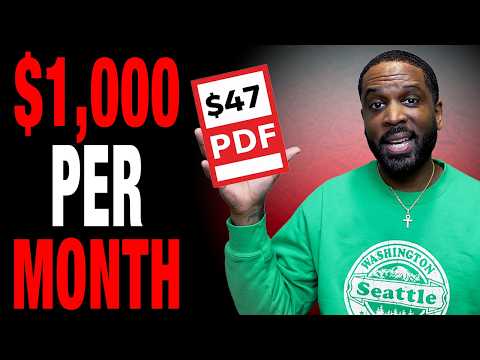
“How To Make Your First USD 47 Digital Product (& Then Scale It)”
What we found: First $47 Digital Product: The $900K Ebook Figure Is Stated Without Costs, a Time Frame or How It Was Sold
The advice to start small and the $1,000-a-month arithmetic are sound. The creator's own $900K and seven-figure figures are not broken down, and he separately mentions ad spend of over $100,000 in a single month.
- ~$900k First ebook revenue
- ~19,150 Implied sales
- >$100k Peak monthly ad spend
- None Costs stated
The claim
That beginners should start with a low-priced digital product to reach a first $1,000 month, then scale with long-form YouTube traffic, using a blueprint the creator says made him over seven figures, including a first $47 ebook that made over $900,000.
- Business revenue with this blueprint — "Over seven figures"
- First product, a $47 ebook with mini course — "A little over 900K"
- Sales implied at $47 — ~19,150
- First $1,000 month — 20 sales at $50
- $1,000 a day — ~$30,000 a month
- Highest monthly ad spend — "A little over USD 100,000"
- Followers before YouTube — 120,000+ Instagram, 14,000–15,000 TikTok
- Conversion from YouTube traffic — 3%–6% (1%–2% "normal")
- Period, channel, costs, refunds for the $900K — Not stated
What is this income idea?
Package what you know into a cheap, quick-to-make digital product — an ebook, a mini course or a small community — sell it to a YouTube audience, then grow revenue through more traffic and back-end offers.
- The creator argues against starting with a $2,000–$15,000 offer. A low-priced product is "low risk", easy to make and easy to sell, and proves you can sell anything at all. The first goal is a $1,000 month: "at a USD 50 price point all that you need to sell is 20 units."
- He gives his own example: "my very first digital product made a little over 900K with this price point", a $47 ebook bundled with a mini course as a bonus. He says $47 is not a rule; anything from $5 to $200 counts as low ticket.
- Three formats are offered: an ebook of $5–$50 that solves one problem with checklists and steps; a mini course of five to ten short videos, 30 to 90 minutes in total; and a small community with a clear promise and at least one live event a week.
- AI is for ideas, not the product. He demonstrates asking ChatGPT for product ideas for yoga instructors and warns that products written entirely by AI "sucks" and do not sell.
- Scaling is traffic. Ads give fast feedback but stop when spending stops; he says his highest month of ad spend was "a little over USD 100,000". He prefers long-form YouTube, which compounds, and says he started his YouTube strategy on 30 January 2024 with no audience there, after leaving 120,000 Instagram followers.
- He gives the formula traffic × conversion × average order value = revenue, says 1%–2% conversion is normal and 3%–6% "really strong" from YouTube, and closes by inviting viewers to his community and its Wednesday coaching call.
Make a small, cheap product fast, sell it to people who already watch you, and grow by getting more people to watch; the creator's own large figures are stated, not broken down.
- Pick one problem — One person, one outcome
- Brainstorm with AI — Ideas only
- Build an MVP — Ebook, course, community
- Price low — $5–$50
- Sell 20 units — First $1,000 month
- Get feedback — Calls with buyers
- Grow YouTube traffic — Long-form, search
- Add back-end offers — Upsells, community
A reasonable starter sequence. The creator's own results sit at the far end of it and are not itemised.
Good beginner arithmetic; the headline results are the part not itemised
The lesson underneath the number
- The core advice is sensible. A first product that takes days, costs little and sells for $50 is a better test than a $5,000 programme. The video's numbers for it are correct: 20 sales at $50 is $1,000, and $1,000 a day is about $30,000 a month.
- The useful addition is the formula he gives near the end: traffic × conversion × average order value. With his own conversion rates, 20 sales needs somewhere between about 330 and 2,000 people to reach the sales page. That is the real task for a beginner, and it is the one that takes the time.
- The creator's own results are where the video gives least. "A little over 900K" from a first $47 ebook is roughly 19,000 sales. The video does not say over what period, through which channel, at what cost or with how many refunds. He describes running ads at up to a little over $100,000 a month and having 120,000 Instagram followers before he moved to YouTube in 2024, so the route to the $900K may differ from the YouTube-first route the video teaches; it does not say.
- He is candid about the effort, including that his income once "went to zero overnight", and that ad testing and posting three to five times a day was "exhausting". The video ends with an invitation to his paid community, which is also one of the three product formats it recommends.
Traffic times conversion times average order value equals your revenue that's all that you need to be focused on.
The creator, on the numbers that matter
The blueprint, as he gives it
In the order the video covers it.
No cost, refund or time frame is given for the creator's own product results.
- Start low ticket — A $5–$200 product, not a $2,000–$15,000 one, because it is quicker to make and easier to sell. The aim is a first $1,000 month: 20 sales at $50.
- Build a minimum viable product fast — Days, not the 45 days to 18 months he says many beginners spend. Then stay in a feedback loop: he says calling buyers on Zoom to ask what to improve has made him a lot of money.
- Add bonuses to raise perceived value — His $47 ebook came bundled with a mini course, which he says is why it could sell above the price of a printed bestseller.
- Use AI for ideas, not the product — He asks ChatGPT for three product ideas for yoga instructors on camera, then says the product itself "needs to come from you".
- Sell to warm traffic on YouTube — Viewers who have watched hours of your content need less convincing, so a plain sales page with a clear promise is enough. He has not made short-form content since 2023.
- Track the numbers that make money — Traffic × conversion × average order value. Do not judge an offer until at least 100 people have seen the sales page; then add order bumps, upsells and a community on the back end.
The business model
One-off sales of low-priced ebooks and mini courses, recurring community memberships, and back-end offers such as order bumps and upsells.
Viewers of the creator's YouTube channel who want a specific result, described as warm traffic.
A quick, specific transformation for one kind of person, with bonuses to raise perceived value.
Long-form YouTube content ranking in search, an email list, and calls to action in videos; paid ads described but not preferred.
- Payment processing — Per sale; not mentioned
- Hosting and checkout — Not mentioned
- Community platform — For that format; not mentioned
- Paid ads — Top month a little over $100,000; not tied to a product
- Refunds — Not mentioned
- Creator time — Content, calls, weekly community events
No cost is given for any product, so neither margin nor profit on the $900K or "seven figures" can be worked out.
What you would actually need
Money
Not quantified for a beginner. The products are described as quick and cheap to make, and organic YouTube is preferred to paid ads.
Accurate: an ebook or mini course costs little to make. The running costs are payment processing on each sale, a sales page or checkout tool, a community platform if you choose that format, refunds and tax. If paid ads are used, they can be the largest cost; he mentions spending over $100,000 in a month.
Costs that apply, none priced in the video
- Payment processing on each sale
- Checkout, sales page or course hosting
- Community platform fees, for that format
- Email list software
- Refunds
- Paid ads, if used
- Tax
Time
The product should take days to make. Scaling through YouTube is "slow in the beginning" and requires consistency.
The product time is realistic. The traffic time is the real requirement: at 1%–2% conversion, 20 sales needs roughly 1,000–2,000 sales page visits, and at his 3%–6% about 330–670. Building a YouTube audience that sends that many is the long part.
Where the time goes
- Making the first product
- Calls with early buyers
- Weekly community events, for that format
- Producing long-form YouTube videos
- Email list and back-end offers
- Tracking traffic and conversion
The part you must pay attention to
The $900K is a gross figure with no period, channel or costs attached.
The creator's evidence for the method is one sentence: "my very first digital product made a little over 900K with this price point."
- Stated revenue, first product — $900,000
- Price — $47
~19,150
Sales at $47, before refunds or discounts
The video teaches selling to warm YouTube viewers instead of paying for ads, but it does not say how the $900K was sold. He says he started his YouTube strategy in January 2024 with no audience there; before that he had over 120,000 Instagram followers and describes running ads, with a top month of a little over $100,000 in ad spend. Whether the first ebook's sales came from ads, Instagram or YouTube, and what they cost, is not stated.
Our working: $900,000 ÷ $47 ≈ 19,150 sales. At his "really strong" 3%–6% conversion, that is roughly 320,000–640,000 sales page visits; at the 1%–2% he calls normal, 960,000–1.9 million. Neither the period nor any cost is given, so the profit on the product cannot be worked out. The advice to start with a cheap product and reach a first $1,000 month stands on its own arithmetic; the $900K and "over seven figures" could not be checked from the video.
- BEGINNER MATHS (our check)
- 20 sales x $50 = $1,000 ✓
- $1,000 x 30 days = $30,000 ✓
- THE $900K
- $900,000 / $47 = ~19,150 sales
- At 3-6% conversion = 320k-640k visits
- At 1-2% conversion = 960k-1.9M visits
- FIRST $1,000 MONTH
- 20 sales at 1-2% = 1,000-2,000 visits
- 20 sales at 3-6% = ~330-670 visits
- NOT GIVEN
- Period of the $900K ?
- Sales channel / ad spend ?
- Refunds, fees, tax ?
The economics
The beginner maths checks out; the creator's own figures are gross and undated.
- First product price — $47
- First product revenue — "A little over 900K"
- Implied sales — ~19,150
- Business revenue with the blueprint — "Over seven figures"
- First $1,000 month — 20 × $50
- Conversion, YouTube traffic — 3%–6%
- Visits needed for 20 sales — ~330–2,000
- Highest monthly ad spend — >$100,000
- Costs, refunds, profit — Not stated
Turning the $900K into sales and traffic
$900,000 ÷ $47 = ~19,150 sales; ÷ 3%–6% conversion = ~320,000–640,000 visits
Roughly 19,000 sales, needing hundreds of thousands of sales page visits at his stated conversion rates
IncomeIdeaLab calculation from the price, revenue and conversion rates stated in the video
The video does not say whether the $900K includes the mini course bundle, upsells or discounts, or how long it took. If some sales were at other prices, the unit count would differ.
- The period over which the $900K was earned
- Whether those sales came from ads, Instagram or YouTube
- Ad spend, processing fees and refunds on the product
- Profit on the $900K or the "seven figures"
- The creator's YouTube revenue or community membership
- The price of the community he invites viewers to join
- The $1,000-a-day benchmark he sets for himself is about $30,000 a month; the arithmetic is right.
- He cites a Google statistic that people need about seven hours with someone before buying, and adds "I don't know how true that is or not".
- He says a community needs only "three to five people" as a core to build on; no revenue figure is given for that size.
- His point that freebie email lists rarely buy, while a smaller list of buyers is worth more, is a common and reasonable view; no figures are given.
- The video closes with an invitation to join his community and its Wednesday coaching call, linked in the description.
Evidence status
Every substantive figure in the video.
- Over seven figures with this blueprint — Creator — No breakdown; could not be checked from the video.
- First $47 ebook made a little over $900K — Creator — ~19,150 sales by our arithmetic; period, channel, costs not stated.
- 20 sales at $50 is a $1,000 month — Creator — Correct.
- $1,000 a day is $30,000 a month — Creator — Correct, at 30 days.
- Spent over $100,000 on ads in one month — Creator — Not tied to any product or result.
- 120,000 Instagram followers before YouTube — Creator — Relevant context for how earlier sales were made.
- 1%–2% conversion normal, 3%–6% from YouTube — Creator — Presented as his experience; no data given.
- People need ~7 hours with you before buying — Creator, citing Google — He says he does not know how true it is.
- AI-written products do not sell — Creator — His view; no figures.
What is actually proven?
The arithmetic is right. The creator's results are stated without detail.
- The $1,000-month and $30,000-month arithmetic is correct.
- He uses ChatGPT on camera to generate product ideas.
- His first $47 product made a little over $900,000.
- That is about 19,150 sales at $47.
- He has spent over $100,000 on ads in a single month.
- The period, channel, costs and profit behind the $900K.
What the headline doesn’t tell you
A sensible method; the proof offered for it is one undated figure.
- $900K is gross. — No costs given.
- No time frame. — For the $900K.
- About 19,150 sales. — Our arithmetic.
- Channel not stated. — YouTube started 2024.
- Ads up to $100k a month. — His figure, separately.
- Traffic is the hard part. — 330–2,000 visits for 20 sales.
- He was 120k followers in. — Before YouTube.
- Ends with his community. — Paid, weekly calls.
Should you try it?
Yes, as a cheap test — budget your time for traffic, not the product
Making a $47 product is the easy part. Getting a few hundred to a couple of thousand people to its sales page is the work.
- Beginner arithmetic — 9 — Correct and simple.
- Evidence for the creator's results — 2 — Stated once, undated, no costs.
- Practical product advice — 7 — Formats, length, bonuses, feedback calls.
- Cost disclosure — 1 — Ad spend mentioned; no product costs.
- Traffic realism — 5 — Formula given; time to build audience not estimated.
- Candour about effort — 7 — Income went to zero once; ads "exhausting".
- Startup cost — 8 — Low for an ebook or mini course.
- Beginner accessibility — 6 — Easy to make; audience needed to sell.
- Starting with a cheap, quick product is reasonable advice, and the formats suggested — a focused ebook, a short mini course, a small community with a weekly event — are realistic for one person.
- Work out your traffic need first. Using the video's own rates, 20 sales means roughly 330 to 2,000 people on your sales page. If you do not yet have an audience that can send that, building it is the real project, and the video says YouTube is "slow in the beginning".
- Price in what comes off each sale: payment processing, the checkout or hosting tool, and refunds. If you use paid ads, track cost per sale against your price from the first day.
- Treat the $900K as the creator's statement. The video does not say how long it took, how those sales were made or what they cost, and the creator had a large Instagram following and an ads operation before moving to YouTube.
Passive or automated?
Automation
Checkout and delivery of an ebook or course are automatic.
Passive potential
Old videos can keep selling; content and community still need work.
Delivery of an ebook or a recorded mini course is automatic once set up, and the creator's case for long-form YouTube is that older videos keep sending buyers for years. But the model he describes is not hands-off: it needs a steady output of videos, calls with buyers to improve the product, email to the list, back-end offers, and for a community, at least one live event a week. He describes his own earlier period of ads and short-form posting as "exhausting".
- Making and updating the product
- Producing long-form videos consistently
- Calls with buyers for feedback
- Weekly community events and coaching
- Email and back-end offers
Recommended beginner experiment
Thirty days to a first sale, measured honestly.
- Pick one problem for one kind of person. — As he advises.
- Write the product yourself. — Use AI for ideas only.
- Price it low. — $10–$50.
- Set up a simple checkout. — Note the fee per sale.
- Count sales page visits. — Not views or likes.
- Call your first buyers. — Ask what to improve.
- Judge it after 100+ visits. — His own threshold.
Our verdict: 4/10
Sound beginner advice; the $900K behind it is stated, not itemised with no time frame, sales channel or costs given
Credited for correct beginner arithmetic (20 sales at $50 is $1,000; $1,000 a day is about $30,000 a month); for practical product guidance on formats, length, bonuses and calling early buyers; for a clear traffic × conversion × order value formula with stated conversion rates; for using ChatGPT on camera for ideas while advising against AI-written products; and for candour about effort, including income that once went to zero. Marked down because the creator's own evidence — a first $47 ebook that made "a little over 900K" and "over seven figures" overall — is stated without a period, sales channel, costs or refunds; because he separately mentions ad spend of over $100,000 in a month without tying it to any result; and because the video ends with an invitation to his paid community, one of the formats it recommends.
The method in this video is sensible for a beginner: make a small, specific product in days, price it low, sell it to people who already know you, call your first buyers, and improve it. The arithmetic offered is correct — 20 sales at $50 is a $1,000 month — and the formula near the end, traffic × conversion × average order value, is the right way to think about it. Applied with the creator's own conversion rates, it shows where the work really lies: 20 sales needs roughly 330 to 2,000 people on a sales page. The creator's own results are where the video says least. His first $47 ebook "made a little over 900K", about 19,000 sales by our arithmetic, and his business has made "over seven figures", but neither figure comes with a period, a sales channel, costs or refunds. He also mentions spending a little over $100,000 on ads in one month and having 120,000 Instagram followers before turning to YouTube in 2024, so how the $900K was reached may differ from the YouTube-first route the video teaches; the video does not say. It ends with an invitation to his paid community. Use the method; plan for the audience it needs; treat the headline figures as the creator's statement.
- First ebook revenue — ~$900k, undated
- Implied sales — ~19,150 at $47
- Overall — "Over seven figures"
- Beginner maths — 20 × $50 = $1,000
- Visits for 20 sales — ~330–2,000
- Peak ad spend — >$100k in a month
- Costs and profit — Not stated
- Beginner suitability — Yes, with an audience plan
Sources
- How To Make Your First USD 47 Digital Product (& Then Scale It) — AstenCeo — YouTube video, 2026-02-17
- FTC — Guides Concerning the Use of Endorsements and Testimonials — Regulatory guidance on endorsements and earnings claims