YouTube / Faceless Automation · Claim Review
“The ONLY 12 Faceless AI Niches You Should Try in 2026 To Make Money”
What we found: $26,000 in Three Weeks Counts Views Before Monetization
A 12-channel niche list whose biggest revenue figure treats every view as paid from day one, and whose last estimate doubles the RPM the tool reported.
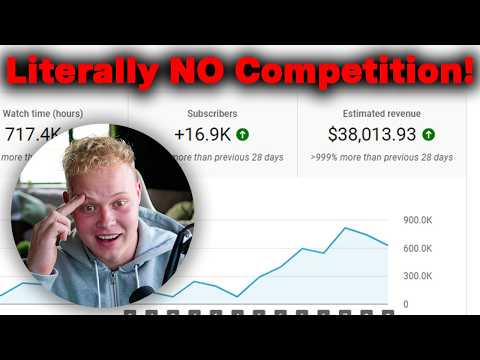
- $26,000 Headline estimate
- 3.8M × $7 Views × RPM used
- 12 Channels listed
- None Costs or profit
The claim
That these are 12 of the most profitable faceless AI niches, led by a three-week-old channel that "made $26,000".
- Space channel’s stated earnings — "$26,000 in the first 3 weeks"
- How it is worked out — 3.8M views ÷ 1,000 × $7 RPM
- The arithmetic — $26,600 (also the result on the calculator on screen at 3:26)
- Views on the NexLev panel at 3:02 — 3.58M; at $7 RPM, ~$25,060
- The "$11" RPM quoted first — $11.66 in NexLev for a single video (2:32), not the channel
- Colorized-history video — "Made them $2,000" at $5 RPM, ~400,000 views
- Audio-gear channel, tool RPM — "$7" or "$7.40"
- Audio-gear channel, their RPM — "Probably around like the $15 mark"
- Channels they say are not or may not be monetized — 2
- Channels a month old or less (current content) — ~8 of 12
- Costs, profit, failure rate — Never stated
What is this income idea?
Faceless YouTube: spot a format that is working on a small channel, move it to a new country, brand or topic, and earn from ads on simple AI-assisted videos.
- The video lists 12 channels. For each, the creator reads out videos posted, subscribers, recent views and sometimes an RPM from an analytics tool they link "with like a discount code". They describe most of the content as very simple, one video taking "maybe an hour to put together".
- The first and biggest example is a space channel "literally 3 weeks old" with "4 million views with 29 videos". They work out its earnings on camera: "3.8 million views … divided by 1,000 … the RPM is $7 … this channel made $26,000 in the first 3 weeks of posting." A moment earlier they had said "an insane RPM of $11"; the NexLev panel on screen at 2:32 shows that figure, $11.66, for a single video, with estimated earnings of $14.33K for that video. The channel panel at 3:02 shows 3.58M views and 57.3k subscribers, with its revenue and RPM tiles left hidden behind "Reveal", and a calculator at 3:26 shows (3,800,000 / 1000) × 7 = 26,600.
- The repeated advice is to move formats rather than copy them. A Japan-inventions channel could become a German or Canadian one. A single-car-brand channel could become one about a motorbike brand, bicycles, boats or jet skis. "We call it niche transfer method." For a 4-day-old channel on the list: "I would start this like literally today."
- Some picks come with warnings. A four-day-old channel is "not even monetized". A chess channel clones a real person’s voice and "has the potential to actually get demonetized okay or get banned". For a car channel whose stats looked odd, they first suspect "they're buying views", then find a video was taken private and republished.
- The creator says they make "about 30 to $40,000 a month", made "$42,000 from just two videos" and scaled a channel "from literally 0 to $48,000 in just 30 days". They name students at $31,000, $24,000, $18,000, $12,000 and $8,000 a month, and "$25,000 in a single week".
- They promote a "completely free call" for one-to-one coaching several times, plus the analytics tool and an AI video generator. The coaching price is not given.
A tour of new channels with strong views and advice to copy their format into another topic. The money figures are rough, and the biggest one counts views from before the channel could earn.
- Find a fast-growing channel — Often weeks old
- Read views and RPM — From an analytics tool
- Multiply to estimate — Views ÷ 1,000 × RPM
- Move the format — Country, brand, topic
- Post daily — "One video a day two videos a day"
- Or book a call — Price not given
The method is fine. The step that turns views into dollars is where the figures stop matching our calculation.
Views times RPM is a ceiling, not an income
The lesson underneath the number
- The useful idea here is simple: when a format is working on a small channel, ask where else it would work. A Japan-inventions format could be done for Germany or Canada. A channel about one car brand could become one about a motorbike brand, or about boats. They explain it in a sentence and give several examples, and it is a better way to find an idea than picking a topic for its RPM.
- The money figures are less reliable. Every revenue number in the video comes from one sum, views divided by a thousand times RPM, and the sum depends on its inputs. For the space channel they apply a $7 average to all 3.8 million lifetime views of a three-week-old channel; the analytics panel on screen shows 3.58 million. That is the most it could have earned if every view had been monetized, and a channel that new would usually have been earning for only part of that time, if at all. The $11 RPM they quoted a few seconds earlier is, on screen, one video's figure, so the $7 average is the more cautious input; the channel's own RPM tile is not revealed.
- The last example shows the same thing more plainly. The tool shows about $7.40 RPM for an audio-gear channel. They say they think "the RPM is probably around like the $15 mark", and on that basis the channel is "probably making … a few thousand a month". On the tool’s own figure and the channel’s recent views, the answer is nearer $1,900. The estimate reaches "a few thousand" only because they doubled the input.
- None of this makes the channels bad picks. Several are clearly finding an audience, and they investigate odd numbers on camera rather than repeating them. But a list sold on what you can make should give at least one channel’s costs, and should not treat views from before monetization as money earned. A viewer copying these formats should expect less than the sums suggest, and should start counting only from the day their own channel is accepted.
This channel made $26,000 in the first 3 weeks of posting.
On a channel three weeks old, multiplying all its views by an average RPM
The method, as they give it
Short and repeatable, and the revenue step needs more care than it gets.
Channel statistics are read from screens and an analytics tool, NexLev, whose panels appear at 2:32 and 3:02; they are third-party estimates, not the channel owners' data. Channels are described by topic.
- Look for small channels with big recent views — A space channel three weeks old with millions of views, an earth-and-nature channel with "750 760,000 views in the last 7 days" on 8,000 subscribers. Views far ahead of subscribers is their main signal.
- Estimate revenue as views × RPM — "3.8 million views … divided by 1,000 … the RPM is $7 … this channel made $26,000." The formula is right for monetized views. It is applied here to every view the channel has had, and to 3.8M views where the NexLev panel on screen shows 3.58M.
- Double down on what works — Of a channel testing other topics: "I would literally stick to that specific concept that is currently doing well." Clear advice.
- Move the format to another market — Japan to Germany or Canada; one car brand to Yamaha or Honda; cars to bicycles, boats or jet skis. "Take these exact same video title structures the same kind of thumbnail styles … and just move it over."
- Post far more often — For a car-manufacturing channel: "You can post one video a day two videos a day … and you will thank me later." The cost of that volume is not discussed.
- Check odd stats before trusting them — They suspect a channel of "buying views", then find a video was privated and republished. Investigating instead of assuming is good practice, and they do it on camera.
The business model
YouTube ad revenue from simple faceless videos once a channel is monetized.
YouTube’s advertisers, through the Partner Program; viewers on space, nature, history, cars, audio gear and similar topics.
Topics with viewer demand and few channels, in a thumbnail and title format already shown to work elsewhere.
YouTube’s browse and suggested feeds, with frequent uploads and consistent packaging.
- Video production — "Maybe an hour" a video; no money figure given
- Upload volume — One or two a day advised for some picks
- Tools — Analytics at ~€13 a month; an AI video generator, unpriced
- Account risk — Cloned-voice content flagged as a ban risk
- Coaching — Promoted throughout; price not given
- Owner’s time — Research to find formats early
This video gives no money figure for producing any of the channels it calls profitable.
What you would actually need
Money
Content is "super basic". The analytics tool is "like €13 a month". Daily posting suits "someone who has a little bit of budget".
No per-video or monthly cost is given in this video at all. Posting once or twice a day, as they advise for one pick, means 30–60 videos a month, and the video gives no way to price them.
Named or implied, mostly unpriced
- An analytics tool at "like €13 a month", linked with a discount code
- An AI video generator, also linked
- Editors, if you outsource, at a price not given
- One or two videos a day for some picks
- Possibly a bought aged account, as one channel used
- One-to-one coaching, price not given
- Tax on AdSense income
Time
About "an hour to put together" a video like the space channel’s. For a four-day-old format: start "literally today".
An hour a video is believable for very simple content. The research is the real time cost: spotting channels days old, before others copy them, means watching constantly. Several picks depend on being early.
Where the time actually goes
- Ongoing research to catch formats days or weeks old
- About an hour per simple video, by their estimate
- Daily or twice-daily uploads on some picks
- Waiting out YouTube’s monetization requirements
- Replacing formats as copycats arrive
The part you must pay attention to
A three-week-old channel cannot have been paid on all 3.8 million of its views.
The headline sum multiplies every view the channel has ever had by an average RPM: "this channel made $26,000 in the first 3 weeks of posting."
- All lifetime views, three weeks — 3.8M views
- Average RPM from the tool — ÷ 1,000 × $7
$26,600
Only if every view was monetized from day one
Ad revenue only starts once a channel is accepted into YouTube’s Partner Program, and views before that point earn nothing. The video gives no date for when this channel was monetized, or whether it was. For a channel three weeks old, a large share of those views may well have come before it could earn. The same video shows how much this matters. It lists a four-day-old channel that is "not even monetized" despite more than 100,000 views, and a chess channel where they do not know whether it is monetized. Multiplying views by an RPM gives the most a channel could have earned if every view had been paid. Presenting that as what it "made" is higher than what was earned by an amount the video gives no way to measure.
The inputs are a second soft spot. The "insane RPM of $11" quoted a moment before the sum is, on the NexLev panel at 2:32, $11.66 for one video, so using a $7 channel average instead is the more cautious choice. The view count is the other way: the NexLev panel at 3:02 shows 3.58M views, and at $7 that is about $25,060 (our arithmetic), against the 3.8M used on the calculator at 3:26. The channel's own revenue and RPM tiles on that panel are left hidden behind "Reveal", so the $7 is the creator's figure. The last channel on the list shows the same habit going the other way. The tool shows "$7 RPM or $740 RPM", and they decide "the RPM is probably around like the $15 mark", which is how the channel gets to "a few thousand a month". On the tool’s own figure and its recent views, our arithmetic puts it nearer $1,900. None of the 12 channels has a cost figure, so profit, the word in the title’s promise of niches to "make money", is not shown anywhere.
- THE $26,000 SUM
- 3,800,000 / 1,000 x $7 = $26,600
- NexLev views on screen 3,580,000
- 3,580,000 / 1,000 x $7 = $25,060
- "$11" RPM = one video ($11.66)
- Assumes: every view paid
- Channel age: 3 weeks
- Monetization date: not given
- THE AUDIO-GEAR CHANNEL
- 60,000 views / 7 days
- x 30/7 ~ 257,000/mo
- x $7.40 (tool) ~ $1,900/mo
- x $15 (their guess) ~ $3,860/mo
- -> "a few thousand a month"
- needs their RPM, not the tool’s
- COLORIZED-HISTORY VIDEO
- $2,000 / $5 x 1,000 = 400,000 views
- COSTS GIVEN FOR ANY CHANNEL: 0
The economics
Three revenue estimates, all from views × RPM, and no costs.
- Space channel lifetime views — 3.8M (also given as 4M)
- Space channel views on NexLev panel (3:02) — 3.58M
- RPM used / RPM first quoted — $7 average / $11.66 for one video (NexLev, 2:32)
- Stated earnings — $26,000 in three weeks
- 3.58M views at $7 RPM — ~$25,060
- Colorized-history video — "$2,000" at $5 RPM
- Views implied by that figure — ~400,000
- Audio-gear channel monthly revenue at tool RPM — ~$1,900
- Same at their $15 guess — ~$3,860
- Costs, profit, monetization dates — Never stated
What "made $26,000" requires
3,800,000 views ÷ 1,000 × $7 = $26,600, counting every view since the first upload
An upper bound. Actual earnings depend on when the channel was monetized, which is not given
IncomeIdeaLab calculation from the views and RPM stated in the video
RPM figures come from a third-party analytics tool, NexLev, and they say such tools can be out of date ("this is not as up to date always takes a while to process"). The channel's revenue and RPM tiles are hidden behind "Reveal" on screen, and the monetization date is not given.
- When, or whether, the three-week-old channel was monetized
- The channel-level RPM and revenue the analytics panel holds behind "Reveal"
- What any of the 12 channels costs to produce
- Whether the analytics tool link pays them a commission
- The price of the coaching promoted throughout
- How many copies of these formats fail
- The audio-gear channel estimate uses 60,000 views in seven days scaled to 30 days (about 257,000) at the tool’s $7.40 RPM. That is our arithmetic and assumes recent views hold steady.
- They mention that a car channel’s oldest video is 19 years old, "so this is an aged account". They note this and move on; how the account was obtained is not discussed.
- The creator’s own figures ($30,000–$40,000 a month, "$42,000 from just two videos", "0 to $48,000 in just 30 days") are stated and are treated as unverified. A student-win collage at about 18:20 includes a YouTube Studio screenshot showing $11,785.65 in estimated revenue on 1.3M views; it is a student's result in a coaching testimonial and is treated as source-reported.
- The analytics tool, NexLev, is described as costing "like €13 a month"; the channel pages also show a "Monetized" badge from the vidIQ extension.
- The FTC’s endorsement guides cover testimonials and earnings claims used to market a product or service, such as the coaching promoted here.
Evidence status
Every substantive claim in the video.
- Space channel "made $26,000 in the first 3 weeks" — Creator, from an analytics tool — Counts all lifetime views as paid; monetization date not given.
- Same channel "has an insane RPM of $11" — NexLev, on screen at 2:32 — $11.66 for a single video; the $7 channel average used in the sum is lower.
- Colorized-history video "made them $2,000" — Creator, on screen — Consistent with ~400,000 views at $5 RPM.
- Audio-gear channel makes "a few thousand a month" — Creator — Needs their $15 guess; the tool’s ~$7.40 gives ~$1,900.
- A simple video takes "maybe an hour" — Creator — Plausible for the simplest formats.
- Breaking-news thumbnails "always" work — Creator — Asserted from a few examples.
- A four-day-old format should be started "literally today" — Creator — Speed matters; the channel is "not even monetized".
- Creator makes $30,000–$40,000 a month — Creator — Stated, not shown.
- Student results from $8,000 to $31,000 a month — Creator — No channels, costs or failure rate given.
- Cloned-voice channel may be demonetized or banned — Creator — Their own warning, about a pick they list.
- Costs, profit and monetization dates — Nobody — Absent throughout.
What is actually proven?
That these formats are getting views. Not what they earn.
- Twelve channels’ views, subscribers and ages were read from screen.
- The "move the format to another market" method is clearly explained.
- They check a suspicious channel’s stats on camera before judging it.
- The $26,000 figure treats every lifetime view as monetized.
- The "few thousand a month" estimate doubles the tool’s RPM.
- One listed channel is not monetized; another may not be.
- Any channel’s costs or profit.
- When the headline channel became able to earn.
What the headline doesn’t tell you
The sums are the most generous version of each number.
- $26,000 counts every view. — Including any before monetization.
- The channel is three weeks old. — Its monetization date is not given.
- 3.8M in the sum, 3.58M on screen. — About $25,060 at $7.
- $7.40 RPM became $15. — Their guess, to reach "a few thousand".
- One pick is not monetized. — Four days old, still on the list.
- One pick clones a real voice. — They warn it may be banned.
- No costs for any channel. — Despite "to make money".
- The tool link has a discount code. — Commission not stated.
Should you try it?
Borrow the method, discount the sums
Moving a working format to a new market is a reasonable way to start. Expect your revenue to begin on the day you are monetized, at the RPM the tool actually shows.
- Usefulness of the format-transfer method — 7 — Clear, with several examples.
- Accuracy of the revenue estimates — 3 — Pre-monetization views counted; one RPM doubled on a guess.
- Evidence for "most profitable" — 2 — Three estimates, no costs.
- Durability of the picks — 3 — About two-thirds are a month old or less.
- Care with odd data — 6 — Investigates one channel’s stats before judging.
- Risk disclosure — 5 — Flags the cloned-voice pick; still lists it.
- Cost disclosure — 1 — Only the analytics tool is priced.
- Beginner accessibility — 5 — Simple videos; success depends on spotting formats early.
- The format-transfer idea is worth using. When a small channel with a clear thumbnail and title pattern is getting far more views than it has subscribers, ask whether the same pattern would work for another country, brand or hobby. It is a quick way to find something with demand behind it.
- Do your own revenue sums, and do them conservatively. Views divided by a thousand times RPM gives what monetized views would earn. It does not tell you what a channel made unless you know when it was monetized, and for channels a few weeks old that is the whole question. Use the RPM the tool shows, not a guess at a higher one.
- Price your plan before starting, because the video does not. If you follow their advice to post once or twice a day, that is 30 to 60 videos a month. Work out what each costs, in money or your own hours, and how many views at a realistic RPM you need to cover it, remembering that nothing is paid until YouTube accepts the channel.
- Skip the cloned-voice pick they warn about, and treat the student and personal income figures as marketing for the coaching. If you book the call, ask for the price and for how many students do not get monetized. The video gives neither.
Passive or automated?
Automation
AI tools make simple videos quickly; finding the format stays human.
Passive potential
Daily posting is advised, and early formats attract copies fast.
The production side can be fast. They estimate about an hour for the simplest videos, and AI tools handle script, voice and visuals. The rest of the work keeps going. Their advice for several picks is to post one or two videos a day, and the formats they like most are days or weeks old, which means that by the time a viewer acts, others may be copying them too. Staying ahead means watching for new formats all the time, moving them quickly, and dropping them when they fade. A channel that stops posting stops getting recommended.
- Spotting new formats while they are days or weeks old
- Choosing the new market to move a format to
- Keeping up one or two uploads a day
- Checking analytics and doubling down on outliers
- Managing demonetization risk
Recommended beginner experiment
Use the method, with honest arithmetic.
- Collect five small channels with a clear pattern. — Views well ahead of subscribers.
- Pick one format to move to a new market. — Country, brand or hobby.
- Use the tool’s RPM, not a guess. — They double one; do not.
- Count revenue from monetization day only. — Earlier views earn nothing.
- Price your upload schedule. — 30–60 videos a month if you post daily.
- Work out the views you need to break even. — Before the first upload.
- Avoid cloned voices and reused content. — They warn of bans.
- Ask any coach for price and failure rate. — Neither is given here.
Our verdict: 4/10
A sensible way to find formats, with arithmetic that counts every view as paid where the biggest figure counts views from before a three-week-old channel could earn
Credited for a clear format-transfer method with concrete examples (Japan to Germany or Canada, one car brand to a motorbike brand, cars to boats); for reading out views, subscribers and channel ages; for doing a views-times-RPM sum on camera; for investigating a channel’s odd statistics before judging it; and for warning that the cloned-voice pick may be demonetized or banned. Marked down because the headline "$26,000 in the first 3 weeks" multiplies every lifetime view of a three-week-old channel by an RPM without giving its monetization date; because the sum uses 3.8M views where the analytics panel on screen shows 3.58M, and the channel's own RPM and revenue tiles are left hidden; because another estimate reaches "a few thousand a month" only after they roughly doubles the RPM the tool shows; because one listed channel is "not even monetized" and another may not be; because no cost figure appears for any channel; and because the coaching and the analytics tool, linked with a discount code, are promoted without a price or a statement about commission.
The idea at the centre of this video is sound and easy to use. When a format works on a small channel, move it to a market nobody is serving: a Japan-inventions channel done for Germany, a single-car-brand channel done for a motorbike brand, cars done as boats. They explain it with examples and investigate a suspicious channel on camera instead of repeating its numbers. The money figures are another matter. The biggest, a three-week-old space channel that "made $26,000", comes from multiplying all 3.8 million of its views by a $7 RPM, which assumes every view was paid from its first upload. YouTube only pays once a channel is accepted into its Partner Program, the video gives no date for that, and it lists an even newer channel as "not even monetized". The inputs are loose in both directions: the "$11" RPM quoted first is one video's figure on screen, so the $7 average is the cautious choice, but the analytics panel shows 3.58 million views rather than 3.8 million, about $25,060 at $7, and the channel's own revenue and RPM tiles stay hidden. At the end of the list they take a tool reading of about $7.40, decide the real figure is "probably around like the $15 mark", and arrive at "a few thousand a month" for a channel that on the tool’s own number would make about $1,900. No channel has a cost figure, so whether any of them makes money after production is not shown. Use the method. Do the sums yourself, from monetization day, at the RPM the tool reports, and get a price before booking the coaching call.
- Stated earnings, space channel — $26,000 in three weeks
- What the sum assumes — Every view monetized from day one
- At the 3.58M views on screen — ~$25,060
- Audio-gear channel at tool RPM — ~$1,900 a month
- Channels a month old or less — ~8 of 12
- Costs for any channel — Not given
- Coaching price — Not given
- Beginner suitability — Method yes, sums no
Sources
- The ONLY 12 Faceless AI Niches You Should Try in 2026 To Make Money — Source video, 2026-07-20
- FTC — Guides Concerning the Use of Endorsements and Testimonials — Regulatory guidance on testimonials and earnings claims