Marketplaces / Etsy · Claim Review
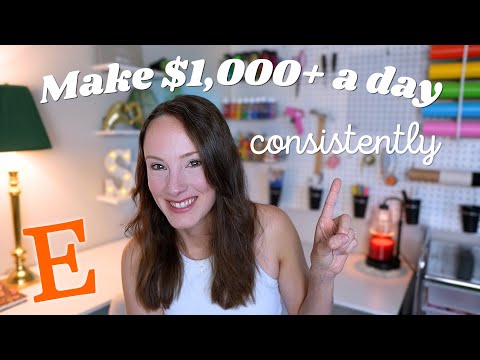
“You CAN Make Etsy Your Full-Time Job in 2026 (Here's How)”
What we found: Top 0.5% on Etsy, and Zero Dollar Figures to Check
Ten years as a full-time seller, a spouse who quit their job to join them, and a self-reported ranking — the only numbers about their own shop in fourteen minutes about making Etsy pay the bills.
- Top 0.5% Global percentile
- Top 0.3% US percentile
- 10 Years as full-time seller
- 0 Dollar figures for their shop
The claim
That following their seven tactics can make Etsy a full-time, sole income for a family in 2026, as it has been for their own household for ten years.
- Global percentile (E-Rank) — Top 0.5%
- US percentile (E-Rank) — Top 0.3%
- Years running the business — 10
- Household earners drawing from the shop — 2, both full-time
- Revenue or profit stated for their shop — None, at any point
- "Thousand-plus dollar days" — Described for "sellers out there," not named as theirs
- "Multi-6 figure" and "million-dollar" shops — Described among other sellers
- Photo-permission acceptance rate — "99 times out of 100"
- Course, coaching, or affiliate link pitched — None found
What is this income idea?
Run an Etsy shop selling simple, evergreen physical products, write listings around what customers actually search for rather than what the product is made of, and grow by studying what already sells instead of constantly adding new items.
- Sally introduces ten years "selling online and running a small business," all of it as a full-time Etsy seller — solo at first, with their spouse later leaving their own full-time job to join them. They credit some of that outcome to reaching "the top 0.5 percent of Etsy sellers globally and 0.3 percent of Etsy sellers in the US, according to E-Rank," a third-party tool sellers use to check their own shop's ranking against other shops.
- Their current product is wood signs. Earlier in the ten years they made fully custom applique shirts, then ran a shop selling tumblers, vinyl decals, and personalized signs at the same time — a period they describe as "chaotic" before they narrowed their focus.
- The video gives seven tactics: sell boring, evergreen, milestone-driven products rather than trendy ones; write titles and keywords in customer language ("pet memorial gift," not "scroll saw dog portrait"); win the click with a real, non-AI thumbnail; remove buyer fear with dimensions, video, and reviews, treating complaints as useful feedback rather than a bad sign; simplify customization instead of building fully bespoke items from scratch; study and repeat winning listings rather than chasing new product ideas; and find "hidden revenue" in upsells — size and material upgrades, rush processing, bundles, gift wrap, quantity discounts, abandoned-cart discounts — plus Etsy Ads.
- The bigger income claims in the video are framed in the third person. "The sellers that are out there doing thousand plus dollar days and multi-6 figure a year, some of them million-dollar businesses per year" is a description of a category of Etsy seller, not a figure attached to their own shop at any point.
- No dollar amount is stated for their own shop. When the percentile is cited at 0:39, and at the other moments checked, the screen shows the creator speaking to camera in a craft room, with no Etsy stats, ranking badge or revenue graphic on view. The video is built from qualitative advice and two self-reported percentiles.
- They close with a direct claim about possibility rather than a number: "Yes it's possible to have this be your sole income for your family. You just have to put the work in." That claim is corroborated by their own household — both adults now work the business full-time — but nothing in the video says what that income actually is.
Sell simple, needed things; write listings the way customers search, not the way a maker describes materials; win the click with a real photo; and grow by doubling down on what already sells instead of starting new products.
- Pick boring, evergreen products — Milestones over trends
- Write customer-language SEO — The problem, not the materials
- Win the thumbnail — Real photos, not AI
- Remove buyer fear — Dimensions, video, reviews
- Simplify customization — Limited fonts and colors
- Exploit winners — Study, don't chase new listings
- Find hidden revenue — Upsells, bundles, ads
Seven specific tactics, none of them attached to a dollar figure for the shop they came from.
The tactics are specific. The proof they worked is a percentile with no denominator.
The lesson underneath the number
- Several of the seven tactics are genuinely useful and transferable beyond Etsy. The customer-language SEO example — retitling a "scroll saw dog portrait" as a "pet memorial gift" — is a real, testable technique that shifts a listing from describing the object to describing the buyer's reason for wanting it. The instruction to drop AI-generated thumbnails is a specific, falsifiable claim rather than vague encouragement. And reframing customer complaints as diagnostic signal, rather than something to suppress, is a more mature stance than this genre usually offers.
- They are also candid about their own mistakes in a way that costs their something to admit. They name their earlier fully-custom applique-shirt process as a time trap they moved away from, and describe their multi-product-line period — tumblers, decals, signs, and shirts all at once — as "chaotic" before they narrowed their focus. Crediting a specific past error, rather than only the current success, is a form of honesty this genre usually skips.
- The gap sits underneath the video's central claim. "You CAN make Etsy your full-time job" and the seven tactics that follow are presented as cause and effect, and the only evidence offered that the tactics worked is "the top 0.5 percent of Etsy sellers globally and 0.3 percent... in the US, according to E-Rank." That figure is self-reported, drawn from a tool whose ranking is not on screen when it is cited, with no stated metric and no stated population size. It is entirely possible to sit in a legitimate top percentile of Etsy sellers by whatever measure E-Rank uses and still run a shop that, once Etsy's fees and two full-time salaries are subtracted, nets modestly. The ranking alone cannot distinguish that case from a genuinely lucrative one.
- What they can uniquely speak to is their own household: ten years in the business, and a spouse who left other employment to join it. That is real, lived evidence that the business supports two adults in some form. What it does not establish — because no figure ever appears — is whether that support amounts to a good outcome, an average one, or a bare-minimum one. The title promises a full-time job. The video never says what that job pays.
The sellers that are out there doing thousand plus dollar days and multi-6 figure a year — some of them million-dollar businesses per year — they don't have to be the most creative, the most talented.
A description of other sellers, not a claim about their own shop
The seven tactics, as they give them
A tips video built entirely on qualitative advice — no revenue figure attaches to any of it.
Tactics as given in the video. Every income reference is spoken in words and, on a close read, describes other Etsy sellers rather than their own shop.
- Sell boring, evergreen products — Milestones repeat for every customer — graduations, weddings, babies, new homes, career changes, sports, teacher gifts, memorials — and simple products tied to them keep customers returning "year after year," they say, more reliably than trendy or unique items.
- Write titles in customer language, not maker language — Their own example: a custom scroll-saw dog portrait should be titled around "dog memorial gift," "pet loss gift," or "gift for dog lovers" — the buyer's problem — rather than "scroll saw dog portrait walnut cherry oak," the product's construction.
- Stop using AI-generated thumbnails — Stated as their "unpopular opinion": customers can spot AI thumbnails and ignore them. They recommend real-life photos, lifestyle shots, customer photos (asked for by name, with permission — "pretty much 99 times out of 100 they'll say yes"), and Canva mockups instead.
- Remove buyer fear with trust signals — Dimensions, scale, customization examples, video, thorough answers, and reviews all reduce the perceived risk of buying. They reframe customer complaints as useful diagnostic feedback rather than a problem to hide from.
- Simplify customization instead of building fully bespoke — They describe their earlier fully custom applique-shirt process — back-and-forth fabric selection with each customer — as unsustainable, and contrast it with their current wood-sign shop, where customers choose from a fixed set of fonts, colors, and text lines rather than starting from scratch.
- Study and repeat winning listings rather than chasing new ones — They name their own early mistake: running tumblers, vinyl decals, and personalized signs at once, calling the resulting shop "chaotic." Growth came from studying why a specific listing outperforms — thumbnail, font, title — and building more from that pattern instead of adding new product types.
- Find hidden revenue in existing traffic — Named upsell types: size, paint, or material upgrades; rush processing; bundles; gift wrap; quantity discounts (their example: "buy two or more save 25 percent"); and abandoned-cart discounts. Etsy Ads are described as capable of "a really good return" for those who know how to run them — with no spend figure, return figure, or method given beyond that.
The business model
Etsy sales of customer-customized physical products — currently wood signs, previously tumblers, vinyl decals, and personalized signs — plus in-listing upsells and Etsy Ads.
Gift and milestone buyers: graduations, weddings, new babies, new homes, career changes, sporting events, teacher gifts, memorials.
Simple, needed products found through customer-language search, backed by trust signals and a strong thumbnail, with limited but real customization.
Etsy organic search (SEO-driven) plus Etsy Ads, which they say can return well "if you know how to use them" — no spend or return figure given.
- Materials — Wood, vinyl, tumbler blanks, fabric — never priced
- Etsy fees — Listing, transaction, and payment processing — never mentioned
- Etsy Ads spend — Recommended; no budget or return stated
- Shipping and packaging — Not discussed
- Two full-time incomes — Theirs and their spouse's, drawn from one shop
No cost of any kind is named in the video. Every tactic addresses attracting or converting a customer; none addresses what the business keeps after Etsy's cut, materials, and two people's time.
What you would actually need
Money
Never quantified. No materials cost, listing fee, transaction fee, payment-processing fee, ad spend, or shipping cost is mentioned once in the video.
This is a tactics video rather than a P&L walkthrough, so the omission is at least consistent with its format. But it also means a viewer cannot tell from anything here whether "full-time income" describes a low five-figure household top-up or a genuinely comfortable living, or what share of revenue Etsy and materials take before either adult sees a dollar.
Named or implied, never priced
- Materials — wood, vinyl, tumbler blanks, fabric — depending on the product line
- Etsy's per-listing fee, transaction fee, and payment-processing fee
- Etsy Ads spend, described as worthwhile with no budget or return stated
- Canva, and any paid tier of the ranking tool they cite
- Shipping and packaging for physical, often custom, goods
- Two adults' full-time labour, since their spouse also works the business
Time
"For the past 10 years" as a full-time seller; their spouse later "quit his full-time job" to join them. No hours-per-week figure is given for either of them.
Ten years, two full-time adults, and at least three earlier product lines sit behind the shop these tactics come from. That is a materially different starting point from a beginner opening a shop this month, and the video never draws that distinction.
Where the ten years actually went
- Started solo, selling online and running a small business
- Early period: fully custom applique shirts, negotiated per order
- A middle period selling tumblers, decals, and signs at once — by their own account, "chaotic"
- Spouse quits their job, joins the business full-time
- Current shop: wood signs, simplified but still customer-customized
- Hours per week, for either of them: never stated
The part you must pay attention to
Every dollar figure in this video belongs to somebody else's shop.
No dollar figure is stated for Sally's own business. The only numbers attached to it are two percentiles and a length of time.
- Their stated threshold for "sellers that are out there" — $1,000+/day
- If a shop hit that figure every day of the year — × 365
$365,000+/yr
Falls inside their own "multi-six-figure" bracket for other sellers — never claimed as theirs
Sally never states a single dollar figure for their own shop — not revenue, not profit, not an average order value, not a count of sales. The "top 0.5 percent globally, top 0.3 percent in the US" ranking is the only evidence offered that their methods work, and it comes from E-Rank, a tool a seller queries about their own shop; it is not on screen when it is cited at 0:39, and the video never says what it measures. Sales volume, review count, and favourites would each produce a different ranking, and a global figure and a national figure from the same tool moving in different directions, with no stated basis for either, cannot be checked against anything. A percentile with an unstated metric and an unstated denominator is not a number a reader can verify — it is a claim about a number.
The "thousand-plus dollar day," "multi-six-figure," and "million-dollar" figures are real numbers, and two of them are internally consistent with each other — a sustained $1,000 day does annualise into multi-six-figure territory. But both describe "the sellers that are out there" in general, and neither is tied to Etsy's transaction and processing fees, materials, shipping, or the fact that two adults now draw a living from this specific business rather than one. Without their own figure, there is no way to tell whether their ten years of work replaced one modest income, replaced two, or built something well beyond either.
- THE ONLY NUMBERS ABOUT THEIR OWN SHOP
- Global percentile (E-Rank) Top 0.5%
- US percentile (E-Rank) Top 0.3%
- Years operating 10
- Revenue or profit stated None
- THE THIRD-PERSON FIGURES
- "Thousand plus dollar days" -> others
- "Multi-6 figure a year" -> others
- "Million-dollar businesses" -> others
- $1,000/day x 365 = $365,000+/yr
- -> consistent with "multi-6 figure,"
- but never claimed as their own
- WHAT NEVER APPEARS
- Dollar figure for their own shop: none
- Materials, fees, ad spend, shipping: none
- Course, coaching, or affiliate link: none
The economics
No revenue, profit, or cost figure is stated in this video for the shop the advice comes from.
- Revenue for their own shop — Never stated
- Profit for their own shop — Never stated
- Global percentile (E-Rank) — Top 0.5%
- US percentile (E-Rank) — Top 0.3%
- Years operating — 10
- Household earners drawing from the shop — 2, both full-time
- "Thousand-plus dollar day," annualised — $365,000+/yr
- Etsy transaction fee, for reference — ~6.5% per sale
- Any cost disclosed in the video — None
What a "thousand-dollar day" would annualise to
$1,000/day × 365 days
$365,000+/year — inside their own "multi-six-figure" bracket for other sellers, but never claimed as their own figure, and never adjusted for fees or labour
IncomeIdeaLab calculation from the threshold they name
This describes the top end of "sellers that are out there" in the video's own words, not a figure attached to their shop. It assumes the threshold is hit every single day, which nothing in the video claims, and it is gross — before Etsy's roughly 6.5% transaction fee, payment processing, per-listing fees, materials, and shipping.
- Any revenue, profit, or order-volume figure for their own shop, at any point
- Etsy's transaction fee (~6.5%), payment-processing fee, and per-listing fee
- Material and shipping costs for wood signs or any prior product line
- Etsy Ads spend, or the return they say is achievable
- What metric E-Rank's percentile is based on, or the population it is measured against
- Whether the household's "full-time income" is drawn as one salary or two
- No dollar figure is stated for their own shop; every income reference — "thousand plus dollar days," "multi-6 figure a year," "million-dollar businesses" — is spoken in words and, on a close read, is attributed to "the sellers that are out there" rather than to their own shop.
- The two percentiles they cite both come from E-Rank, a tool that ranks a seller's own shop against others; the ranking is not on screen when it is cited at 0:39, the date it was checked is not stated, and a global ranking and a narrower national ranking from the same tool are never reconciled or explained.
- Their own case for "full-time income" is corroborated by lived history — ten years in the business, and a spouse who left their job to join it — rather than by a figure that can be independently checked.
- "99 times out of 100" customers agree to a photo-use request is a specific-sounding number with no stated sample size; it reads as an impression of a common occurrence rather than a tracked statistic.
Evidence status
Every substantive claim in the video.
- Top 0.5% of Etsy sellers globally — Sally, citing E-Rank — Not on screen when cited (0:39); metric and denominator unstated.
- Top 0.3% of Etsy sellers in the US — Sally, citing E-Rank — Same tool. A narrower population and a different figure, never reconciled with the global one.
- 10 years as a full-time Etsy seller — Sally — Stated plainly and consistently through the video.
- Spouse quit their job to join full-time — Sally — Consistent with the "sole income for your family" claim they make at the close.
- "Thousand plus dollar days" achievable on Etsy — Sally — Framed as "the sellers that are out there," not named as their own shop.
- "Multi-6 figure a year" and "million-dollar" Etsy shops exist — Sally — Same third-person framing; internally consistent if the daily figure is extrapolated.
- "99 times out of 100" customers approve photo use — Sally — An impression, not a counted statistic — no sample size given.
- AI-generated thumbnails perform worse because customers can spot them — Sally — Stated as their "unpopular opinion," not measured on screen.
- Etsy is "still worth it" and can be a family's sole income in 2026 — Sally — Corroborated by their own ten-year, two-income case; not quantified for anyone else.
- Costs, fees, ad spend, or profit for their own shop — Nobody — Absent throughout. The video is tactics-only.
- A course, coaching programme, or affiliate link — Nobody — None is pitched in the video — a genuine positive for a video in this genre.
What is actually proven?
A specific set of tactics. No figure for the business they are said to have built.
- They have run an online small business for ten years, all of it full-time on Etsy.
- Their spouse left their job to work the business with them full-time.
- E-Rank places their shop in the top 0.5% globally and 0.3% in the US, by their account.
- No dollar figure is stated for their own shop.
- The "thousand-dollar day" and "million-dollar shop" claims describe other sellers, not their own business.
- That 99 out of 100 customers agree to photo-use requests.
- Any cost — materials, Etsy fees, ads, shipping — for running this business.
- No course, coaching programme, or affiliate link is pitched anywhere in the video.
What the headline doesn't tell you
The title promises a full-time job. The video never says what that job pays.
- No dollar figure for their shop. — Not revenue, not profit, not an average sale.
- The ranking has no visible denominator. — 0.5% of how many sellers, measured on what, is never said.
- It took ten years. — And at least three earlier product lines before this one.
- Two full-time incomes rely on this shop. — Their spouse quit their job to join them — "sole income" now covers two people.
- Etsy's cut is never mentioned. — Transaction, processing, and listing fees go unnamed.
- "99 times out of 100" has no sample size. — An impression about photo permissions, not a tracked rate.
- The big numbers are about other people. — "Thousand-dollar days" and "million-dollar shops" describe "sellers that are out there," not them.
- No course is being sold. — Worth noting, because most videos like this end with one.
Should you try it?
Useful tactics, an unverifiable outcome
The seven tactics are specific enough to apply this week. Whether they add up to a "full-time job" worth having is something this video gives you no way to check.
- Specificity of the tactics — 7 — Customer-language SEO, thumbnail rules, and upsell types are concrete and copyable.
- Honesty about their own mistakes — 7 — Names their own over-diversification and fully-custom time trap as errors they corrected.
- Evidence for the outcome — 2 — A self-reported percentile with no denominator, and zero dollar figures.
- Cost disclosure — 0 — No material, fee, ad, or shipping cost is named at any point.
- Realistic timeline — 4 — Ten years and several pivots are mentioned, but never framed as the expected path.
- Conflict-of-interest transparency — 9 — No course, coaching, or affiliate link is pitched.
- Clarity on what "sole income" covers — 3 — Two full-time adults now draw from one shop; the video never flags that shift.
- Beginner accessibility — 5 — The tactics apply to any shop; the ten-year head start behind them does not.
- Treat this as a tactics list, not a case study, because that is what it actually is. The customer-language SEO reframing, the no-AI-thumbnail rule, the trust-signal checklist, and the named upsell types are all specific enough to try on an existing shop this week, and none of them requires taking their word for an outcome — you can test each one against your own listings' performance.
- Weigh their admitted mistakes as seriously as their tips, because they are stated plainly. They spent time on fully custom, back-and-forth orders before simplifying, and they scattered across four product types before narrowing to one. Both are framed as lessons, which is worth more than the percentile they lead with.
- Then be precise about what that percentile actually tells you. "Top 0.5 percent globally, top 0.3 percent in the US" comes from a tool whose ranking is not on screen when they cite it, measuring something they do not name, against a total seller count they do not give. It is consistent with success. It is not evidence of a specific income, and two different percentiles from the same tool covering an unstated metric cannot be reconciled by a viewer with nothing else to go on.
- Finally, notice what their own household case does and does not prove. Ten years in, with their spouse having left their job to join them, is real evidence that this business supports two adults in some fashion. It says nothing about how much — whether that is a comfortable living or a income two people are stretching to make work — and nothing about Etsy's cut, materials, or ad spend along the way. If you attempt this model, track the number they never give: revenue minus Etsy's fees minus materials minus shipping, checked monthly, so that "full-time job" means something you can measure rather than a percentile you have to take on trust.
Passive or automated?
Automation
Custom orders, packaging, and shipping are manual; only listing SEO and ad settings can be set once and revisited occasionally.
Passive potential
Two adults work this full-time; nothing in the video suggests it runs without them.
Nothing about this shop is passive, and nothing in the video claims otherwise. Every tactic described — writing customer-facing SEO, sourcing and vetting real photos, managing customization choices, studying which listings perform, running Etsy Ads — is an ongoing task for a person. The business supports two full-time adults, which is itself evidence of the labour behind it: a genuinely passive operation would not need a second full-time person to help run it. What could be automated — repeat listings, saved reply templates, Etsy's own ad bidding — is not the part they credit; the SEO judgment calls, thumbnail decisions, and winner analysis they describe are manual work, repeated continuously.
- Researching customer language for every new listing
- Sourcing and vetting real customer or lifestyle photos
- Managing customization choices on each order
- Studying winning listings to understand why they work
- Running and monitoring Etsy Ads
Recommended beginner experiment
Borrow the tactics. Track the numbers they doesn't.
- Pick one evergreen, milestone-driven product. — Not a trend — something tied to graduations, weddings, or gifts.
- Write titles in customer language, not maker language. — Their own example: "pet memorial gift," not "scroll saw dog portrait."
- Build your thumbnail from a real photo, not AI. — Their stated rule, and a testable one.
- Track your own costs from day one. — Materials, Etsy's fees, and shipping — none of which they name.
- Log every sale and every fee Etsy takes. — So you have the number this video never gives.
- Resist adding new product lines early. — Their own admitted mistake, and their fix.
- Test one upsell before you touch ads. — A bundle or quantity discount, their named examples.
- Set a revenue milestone you can actually check. — Something concrete — unlike anything in this video.
Our verdict: 5/10
A specific, honest tactics list attached to an unverifiable outcome ten years, two full-time incomes, and not one dollar figure for their own shop
Credited for seven tactics specific enough to test independently — customer-language SEO with a worked example, a falsifiable rule against AI thumbnails, a named list of trust signals and upsell types, and a described method for studying winning listings; for admitting their own past mistakes, including a "chaotic" multi-product-line period and an unsustainable fully-custom process, rather than presenting only a success narrative; and for never pitching a course, coaching programme, or affiliate link anywhere in the video. Marked down because no revenue, profit, sales volume, or average order value is stated for their own shop in the video; because the only evidence offered for the central claim — a "top 0.5 percent globally, top 0.3 percent in the US" ranking — comes from a self-service tool whose ranking is not on screen when it is cited, with no stated metric and no stated population; because Etsy's transaction, processing, and listing fees, along with materials, shipping, and ad spend, are never mentioned once; and because "sole income for your family" is stated without acknowledging that two full-time adults, not one, now draw from this single shop.
The seven tactics in this video hold up better than most in this genre because they are specific enough to test on their own terms: retitle a listing around the buyer's reason for wanting it rather than the object's materials, drop AI-generated thumbnails, name your upsells, and study a winning listing before launching a new one. They also do something this genre rarely does, which is name their own errors — a fully custom process they found unsustainable, and a period of running four product types at once that they call "chaotic" — rather than presenting only the outcome. And there is no course, coaching call, or affiliate link waiting at the end of it, which is worth crediting on its own. Against that, the video's central claim — that these tactics are why their household reached "the top 0.5 percent of Etsy sellers globally and 0.3 percent... in the US" and can support two full-time adults — rests entirely on a percentile from a tool whose ranking is not on screen when it is cited, measuring something never named, against a seller population never given. Not one dollar figure is stated for their own shop: not revenue, not profit, not an average sale, not a materials cost, not Etsy's transaction or processing fee, not an ad budget. The bigger numbers they do say out loud — "thousand plus dollar days," "multi-6 figure a year," "million-dollar businesses" — are explicitly about "the sellers that are out there," not their own shop. Their own case is real: ten years in, and a spouse who left their job to join them. It shows the business supports two adults in some form. It does not show how well, and nothing in the video lets a viewer check.
- Global percentile (E-Rank) — Top 0.5%
- US percentile (E-Rank) — Top 0.3%
- Years operating — 10
- Household earners — 2, both full-time
- Revenue or profit stated — Never
- Costs disclosed — None
- Course or affiliate pitch — None found
- Tactics given — 7, specific
- Beginner suitability — Tactics yes, outcome unverifiable
Sources
- You CAN Make Etsy Your Full-Time Job in 2026 (Here's How) — Simply Sallie — Source video, 2026-06-25
- Etsy — Fees & Payments Policy — Platform documentation on listing, transaction, and processing fees
- FTC — Guides Concerning the Use of Endorsements and Testimonials — Regulatory guidance on earnings claims