Digital Products / Etsy Printables · Claim Review
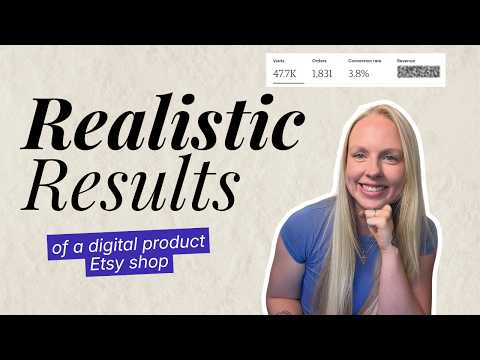
“How much I made in my 12th & 13th month on Etsy (Digital Products)”
What we found: Etsy Party Printables: December and January Profit Reconciles, With Ads Taking About a Third of Revenue
$4,818 and $8,158 of revenue became $2,371 and about $4,125 of profit before tax. The fee and ad figures add up; tax, software and the seller's time are not included.
- $8,158 January revenue
- ~$4,125 January profit
- 34–36% Ad spend share
- 600–700 Products listed
The claim
That a digital-products Etsy shop selling Canva party printables made $2,370.70 profit in December and over $4,000 profit in January, its 12th and 13th months, after Etsy fees and ad spend.
- December visits, orders, conversion — 17,900 visits; 679 orders; 3.8%
- December revenue (statement) — $4,818.59
- December Etsy fees — $725.89: listing $93, transaction $311, processing $320
- December ad spend (statement) — $1,722
- December profit — $2,370.70
- December ad revenue, spend, ROAS — $3,172.38 revenue and $1,691.72 spend on the Etsy Ads page shown at 9:30 (6,981 clicks, 407 orders); ROAS 1.88 is our arithmetic
- January visits, orders, conversion — 29,900 visits; 1,152 orders; 3.9%
- January revenue (statement) — $8,158.14 sales on the Etsy monthly statement shown at 17:42 ($8,210.41 on the stats page)
- January fees and ad spend — $1,241.70 fees (processing $542.85); $2,791 marketing
- January profit — First month over $4,000; ~$4,125 by our subtraction
- January ad revenue, spend, ROAS — $5,520.36; $2,788.55; 1.98
- Tax, software and the seller's time — Not stated in the video
What is this income idea?
Design printable party templates in Canva, list them on Etsy as digital downloads that customers edit and print at home, and grow sales with Etsy Ads and a large catalogue.
- The seller opened the shop in January 2025 and sells Canva templates in the party printables category: invitations, banners, signs and other decor. Because the customer prints at home, there is no inventory or shipping. The seller says the shop is "not passive to build" but can become more passive later.
- December was the shop's 12th full month. It had 17,900 visits, 679 orders, a 3.8 per cent conversion rate and $4,818 of revenue, down on November because of the holidays. The worst day was Christmas Eve, with three orders and about $23 of revenue.
- January was the best month to date: 29,900 visits, 1,152 orders, a 3.9 per cent conversion rate and $8,210 on the stats page. The seller had hoped to average the $8,333 a month needed for $100,000 a year, and fell just short.
- The video then goes through Etsy Ads and the monthly statement for each month. Ads brought in $3,172 of revenue for $1,692 of spend in December and $5,520 for $2,789 in January. After Etsy's listing, transaction and processing fees and the ad spend, profit was $2,370.70 in December and, as stated, the first month over $4,000 in January.
- The shop has 600 to close to 700 products, added at one to three a day. The seller describes working every day at the start, including from 4:30 in the morning, for no sales in the first month and very little for the first couple of months.
A year-old Etsy shop selling printable party templates kept about half its revenue after fees and ads in December and January.
- Design in Canva — 1–3 products a day
- List on Etsy — 600–700 products
- Etsy Ads — $85–$110 a day budget
- Visits — 17.9K / 29.9K
- Orders — 679 / 1,152
- Revenue — $4,819 / $8,158
- Less fees and ads — ~50% of revenue
- Profit — $2,371 / ~$4,125
December and January side by side; each step is a stated figure, and profit is before tax and the seller's time.
A monthly report where the numbers add up
The lesson underneath the number
- Most income reports give revenue. This one gives the whole chain for two months: visits, orders, conversion rate, revenue on the stats page and on the statement, ad views, clicks, ad revenue and spend, return on ad spend, each type of Etsy fee, and profit. Every ratio we recomputed matches what is said: 679 orders from 17,900 visits is 3.8 per cent, 1,152 from 29,900 is 3.9 per cent, and both ROAS figures follow from the ad revenue and spend.
- December's statement reconciles to the cent: $4,818.59 less $725.89 of fees and $1,722 of marketing is $2,370.70, the stated profit. The seller also explains why the stats page and the statement differ slightly, and why the ad spend on the ads page ($1,691.72) is a little below the marketing line ($1,722). January's profit is stated as the first month over $4,000; our subtraction from the stated lines gives about $4,125.
- The honesty extends beyond the numbers. The seller reports the worst day of December (three orders on Christmas Eve), says the shop made nothing in its first month, describes working from 4:30 in the morning, and notes that viewers often say the ad spend is too high. They also say the channel is monetised but that they are not selling anything.
- What is left out is ordinary rather than material to the picture: the profit is before income tax and any design software subscription, and the seller's hours are not counted as a cost. The bigger question is the ads. They take a third of revenue, and the case for them rests on Etsy's attribution of sales to ad clicks, which counts some buyers who might have found the shop anyway.
I do not let the sticker shock of like seeing how much I spent affect me as long as my ads are actually returning me more profit than I would have made without ads.
The seller, on December's ad spend
How the shop works, as the video gives it
A catalogue business, grown with paid ads on Etsy.
Fees and ad spend are given for both months; tax and software costs are not.
- Pick a niche of printable products — Party printables: invitations, banners, signs and decor, sold as Canva templates the buyer edits and prints at home.
- Build a large catalogue — One to three new products a day, reaching 600 to nearly 700 listings after about 13 months.
- Run Etsy Ads on a daily budget — $85 a day in December; raised to $105 and then $110 in January when it was spending in full. Etsy charges per click, so spend can fall below the budget.
- Judge ads by return on ad spend — The seller aims for a ROAS near two, and notes it must be a little above one to cover Etsy's fees. December was 1.88, January 1.98.
- Read profit from the monthly statement — Revenue less listing, transaction and processing fees and marketing gives the month's profit.
The business model
Digital downloads of Canva party templates sold on Etsy, averaging about $7.10 an order in both months by our arithmetic.
People planning parties who want editable invitations, banners and signs to print at home.
Cheap, instant, customisable party decor without waiting for delivery.
Etsy search and Etsy Ads; the seller says more than half of January's orders came from ads.
- Etsy Ads — $1,722 and $2,791; 34–36% of revenue
- Etsy listing and transaction fees — Stated by type for December
- Payment processing — $320 and $542.85
- Design software — Not stated in the video
- Income tax — Not stated in the video
- Seller's time — One to three products a day; hours not stated
Fees and ad spend are stated in full for both months; profit is before tax, software and the seller's own time.
What you would actually need
Money
No inventory or overhead; the difference between ad spend and ad revenue is "pretty much profit minus Etsy's fees".
That holds for the costs shown, and the seller states them in full. Ads are the largest: $1,722 and $2,791 a month, 34 to 36 per cent of revenue. Etsy fees take about 15 per cent. A design tool subscription, if used, and income tax are not included in the profit figures.
Costs in this business
- Etsy Ads: $1,722 in December, $2,791 in January
- Etsy listing and transaction fees: $93 and $311 in December
- Payment processing: $320 and $542.85
- Design software: not stated
- Income tax on profit: not stated
- Ad budget before sales arrive
Time
Hard work every day at the start; now the shop "still brings me in money" on days the seller cannot work.
The early hours are described plainly: seven days a week, from 4:30 in the morning, with no sales in the first month. Even now the seller adds one to three products a day and manages ad budgets, so the shop is lower-effort, not hands-off. Hours per week are not stated.
Where the time goes
- Designing one to three templates a day
- Writing listings for each product
- Adjusting ad budgets as demand changes
- Reviewing stats and statements monthly
- Handling buyer messages, not described
The part you must pay attention to
Ads are a third of revenue, and the return depends on Etsy's attribution.
The seller reasons that without ads, revenue "would be $3,100 less" in December. That treats every ad-attributed sale as a sale that would not otherwise have happened. Some ad clicks come from buyers who would have found the listing anyway, so the true gain from ads is somewhere at or below the figure below.
- January ad-attributed revenue — $5,520
- Etsy fees, as a share of revenue — − ~15%
- January ad spend — − $2,789
~$1,890
Gain from ads if all attributed sales were extra
The load-bearing assumption is that ad-attributed revenue is incremental. If, say, a quarter of those buyers would have bought anyway, January's gain from ads falls by about $1,170 by our arithmetic. The video does not test this, for example by pausing ads for a period, so the share is not known.
The seller's rule that ROAS must be "a little bit above one" is correct for this shop: with fees at about 15 per cent of revenue, break-even is a ROAS of about 1.18 by our arithmetic. At 1.88 and 1.98 the ads clear it, giving about $1,000 in December and $1,890 in January if every attributed sale was extra. Organic sales make up the other half of orders and most of the profit.
- DECEMBER STATEMENT
- Revenue $4,818.59
- - Etsy fees $725.89
- - Marketing $1,722.00
- = Profit $2,370.70 (matches)
- JANUARY STATEMENT
- Revenue $8,158.14
- - Etsy fees $1,241.70
- - Marketing $2,791.00
- = Profit ~$4,125.44 (ours)
- SHARES OF REVENUE
- Fees 15.1% / 15.2%
- Ads 35.7% / 34.2%
- Kept 49.2% / 50.6%
- ADS BREAK-EVEN (OURS)
- 1 / (1 - 0.15) = ROAS 1.18
- Stated: 1.88 and 1.98
The economics
Two complete monthly statements, checked line by line.
- December revenue — $4,818.59
- December fees — $725.89
- December marketing — $1,722
- December profit — $2,370.70
- January revenue — $8,158.14
- January fees — $1,241.70
- January marketing — $2,791
- January profit — ~$4,125
- Two-month revenue — $12,977
- Two-month profit — ~$6,496
- Average order value — ~$7.10
- Tax, software, seller's hours — Not stated
January profit from the stated statement lines
$8,158.14 − $1,241.70 fees − $2,791 marketing = $4,125.44
About $4,125 of profit in January, roughly half of revenue, before income tax and software
IncomeIdeaLab calculation from the January statement figures stated in the video
The seller states it as the first month over $4,000 and about $300 above October's $3,800; our figure is consistent with both. Income tax and the seller's time are not deducted.
- Design software subscription, if any
- Income tax on the profit
- Hours worked per week now
- Orders that would have happened without ads
- Refunds, if any
- December's three fee components ($93 + $311 + $320 = $724) sum to within $2 of the stated $725.89 total by our arithmetic.
- The $100,000-a-year goal needs $8,333 a month; January's $8,210 on the stats page fell about $120 short.
- Ad cost per click was about 24 cents in December and 22 cents in January by our arithmetic.
- December's profit was stated as about $600 below November's and about $1,400 to $1,500 below October's $3,800; the October figure and the gap agree.
Evidence status
Every substantive figure in the video.
- December: 17,900 visits, 679 orders, 3.8% conversion — Seller, Etsy stats — Conversion matches orders and visits.
- December revenue $4,818 — Seller, Etsy stats and statement — Consistent across both.
- December ads: $3,172.38 revenue, $1,691.72 spend, ROAS 1.88 — Seller, Etsy Ads — The Etsy Ads page on screen at 9:30 shows $3,172.38 revenue and $1,691.72 spend; ROAS matches.
- December fees $725.89; marketing $1,722; profit $2,370.70 — Seller, statement — Reconciles to the cent.
- October profit $3,800, the best month at that point — Seller — Consistent with the stated gaps.
- January: 29,900 visits, 1,152 orders, 3.9% conversion — Seller, Etsy stats — Conversion matches.
- January revenue $8,210.41 stats, $8,158.14 statement — Seller — The monthly statement on screen at 17:42 shows $8,158.14 in sales; the difference from the stats page is explained by billing periods.
- January ads: $5,520.36 revenue, $2,788.55 spend, ROAS 1.98 — Seller, Etsy Ads — ROAS matches.
- January profit over $4,000, the best month — Seller, statement — About $4,125 by our subtraction.
- Without ads, revenue would be lower by the ad revenue — Seller — Some attributed buyers may have bought anyway.
- 600 to nearly 700 products, one to three a day — Seller — Plausible over 13 months.
- No sales in the first month — Seller — An honest disclosure of the start.
What is actually proven?
A two-month income statement whose arithmetic holds.
- December revenue less fees and ads equals the stated profit.
- Conversion rates and ROAS figures follow from the stated inputs.
- About half of revenue is kept after fees and ads in both months.
- Every cost line on Etsy, by type, is stated.
- That all ad-attributed revenue is extra revenue.
- Tax, software and hours, which would reduce the figure kept.
What the headline doesn’t tell you
Small, and stated where they matter.
- Ads are a third of revenue. — 34–36% in both months.
- Profit is before tax. — And any software.
- Attribution is Etsy's. — Some ad buyers may be organic.
- Seasonal. — December fell; January rose.
- Low order value. — About $7 an order.
- A year of building. — No sales in month one.
Should you try it?
A realistic picture of a year-old Etsy printables shop
The figures are complete enough to plan from. Expect months of little or nothing at the start, and be ready to spend about a third of revenue on ads if you follow this approach.
- Revenue disclosure — 9 — Stats page and statement for both months.
- Cost disclosure — 8 — Fees by type and ad spend; tax and software not stated.
- Arithmetic consistency — 9 — December reconciles exactly.
- Honesty about the start — 9 — No sales in month one, long hours.
- Ad dependence — 5 — A third of revenue, on Etsy's attribution.
- Beginner accessibility — 6 — Low cost to start; slow to build.
- This is a useful benchmark. A shop with 600 to 700 Canva templates, a 3.8 to 3.9 per cent conversion rate and about $7 per order made $4,800 to $8,200 a month at the 12-to-13-month mark, keeping about half after Etsy fees and ads. Those are ordinary numbers for a catalogue business, and they come with the costs attached.
- The start matters as much as the result. The seller describes a year of daily product creation, early mornings and no sales in the first month. A beginner should plan for several months with very little revenue while the catalogue grows.
- Ads are the decision to think hardest about. Spending a third of revenue on Etsy Ads can be profitable, as it appears to be here, but the return is measured by Etsy's attribution. If you run ads, try pausing them for a week at a stable time of year and compare organic sales, so you know what they really add.
- Remember the costs not counted here. Set aside money for income tax, include any design subscription, and value your own hours, at least roughly, before deciding the shop is worth the time.
Passive or automated?
Automation
Delivery is automatic; design, listing and ad management are not.
Passive potential
The catalogue sells on days the seller does not work, by their account.
Digital downloads remove shipping and inventory, and the seller says the catalogue keeps selling on days they cannot work. That is the passive part, and it is earned: it rests on a year of building 600 to 700 listings. The seller still adds one to three products a day and adjusts ad budgets as demand changes, and ads, which take a third of revenue, need watching.
- Designing new templates
- Writing and updating listings
- Setting and adjusting ad budgets
- Reviewing monthly statements
- Answering buyer questions
Recommended beginner experiment
Test a niche with organic sales before buying ads.
- Pick one printables niche. — Party decor, as here, or similar.
- List 50 products. — Before judging demand.
- Track visits and conversion. — Weekly, from Etsy stats.
- Add ads at a small budget. — Once listings convert.
- Know your break-even ROAS. — About 1.2 with 15% fees.
- Read the monthly statement. — Fees, ads and profit.
- Count tax and software. — Before calling it profit.
Our verdict: 8/10
Two months of Etsy figures that add up, with the costs stated about half of revenue kept after fees and ads, before tax and the seller's time
Credited for giving visits, orders, conversion, ad revenue and spend, every type of Etsy fee and profit for both months; for a December statement that reconciles to the cent; for a correct explanation of break-even ROAS; and for disclosing a zero-sales first month, long early hours and the worst days. Marked down only because profit is before income tax and any design software, the seller's time is not costed, and the case for spending a third of revenue on ads rests on Etsy's attribution, which the video does not test.
This is one of the more complete income reports we have reviewed. For December and January, the shop's 12th and 13th months, the seller gives visits, orders, conversion rates, revenue on the stats page and the statement, ad revenue and spend, return on ad spend, each type of Etsy fee and profit. The figures are consistent: conversion rates and ROAS follow from their inputs, and December's $4,818.59 less $725.89 of fees and $1,722 of ads is exactly the stated $2,370.70. January's profit, stated as the first month over $4,000, is about $4,125 by our subtraction. In both months the shop kept about half its revenue after fees and ads, with ads taking 34 to 36 per cent. The profit is before income tax, any design software and the seller's own time, and the value of the ads depends on how many attributed buyers would have bought anyway, which is not tested. The seller is also clear that the shop made nothing in its first month and was built with long hours. As a realistic benchmark for an Etsy printables shop at one year, it holds up.
- December revenue — $4,818.59
- December profit — $2,370.70
- January revenue — $8,158.14
- January profit — ~$4,125
- Ads as share of revenue — 34–36%
- ROAS — 1.88 / 1.98
- Tax and software — Not stated
- Beginner suitability — Yes, with a long build period
Sources
- How much I made in my 12th & 13th month on Etsy (Digital Products) — Erika — YouTube video, 2026-03-02
- Etsy — Fees & Payments Policy — Platform documentation on Etsy seller fees