Ecommerce / Etsy · Claim Review
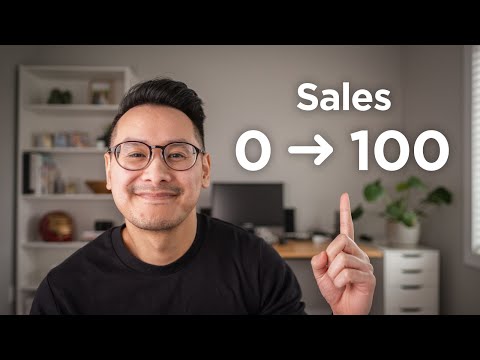
“How to Get Your First 100 Sales (on Etsy)”
What we found: 3,000 Etsy Sales and $40,000 in 18 Months Works Out to About $13 an Order, With No Profit Figure Given
The four-step plan for a first 100 sales is practical and modest. The headline revenue averages about $2,200 a month before fees and costs, and the time it took to reach 100 sales is not stated.
- 3,000 Total sales
- Over $40,000 Revenue
- ~$13 Average order
- Not stated Costs or profit
The claim
That an Etsy sticker shop reached 3,000 sales and over $40,000 in revenue in about a year and a half, and that four steps got it through the hardest part: the first 100 sales.
- Time since opening — About a year and a half
- Total sales — 3,000
- Total revenue — Over $40,000
- Etsy Stats page on screen at 0:05 — Orders 2,248, Visits 29.1K, Conversion rate 7.7%, Revenue CA$48,494.17; no date range is visible. The figures spoken are 3,000 sales and over $40,000
- Average revenue per sale — ~$13.33 ($40,000 ÷ 3,000)
- Average revenue per month — ~$2,222 ($40,000 ÷ 18)
- Average sales per month — ~167 (3,000 ÷ 18)
- Listings at launch — Around 10
- Time taken to reach 100 sales — Not stated
- Fees, materials, shipping, profit — Not stated
What is this income idea?
Open an Etsy shop selling a low-cost physical product, push through the slow first 100 sales with personal networks and reviews, and rely on momentum after that.
- The creator sells stickers on Etsy. They open with the result: “I started my Etsy shop about a year and a half ago and since then I managed to get 3,000 sales and over $40,000 in revenue.”
- The rest of the video is about the start, not the result. They describe the first 100 sales as “by far the hardest” and compare the shop to a heavy boulder that needs a lot of effort before it starts rolling.
- Step one is the first 10 sales, from friends and family. The reasoning is that buyers avoid a shop with zero sales, and that selling to people you know is practice and a test of demand. They add a useful caution: ask questions about buying habits rather than “do you like this candle”, because family will be kind.
- Step two is making the shop look active: post on social media and keep adding listings. They started with around 10 listings and say Etsy recommends a similar number.
- Step three is reviews. They used a raffle for store credit in exchange for any review, read out the part of Etsy’s policy that covers compensation for positive reviews, and say they are not sure whether what they did was allowed and no longer do it. Freebies, careful packaging and handwritten thank-you notes are the other tactics.
- Step four is the product. If a new shop sits next to one with 1,000 sales and 200 reviews, the buyer needs a reason to choose the newer one.
Get your first sales from people you know, make the shop look alive, earn reviews, and make something better than the established shop beside you.
- Open with ~10 listings — Their starting point
- Friends and family — First 10 sales
- Look active — Social posts, new listings
- Earn reviews — Freebies, packaging, notes
- Improve the product — Beat the bigger shop
- Momentum after 100 — Their experience
A sensible launch checklist. The revenue figure at the start is not connected to any cost.
The useful part is the questions, not the revenue
The lesson underneath the number
- The strongest advice in the video is easy to miss because it sits inside the friends-and-family step. Asking your mother whether she likes your candle tells you nothing. Asking when she last bought one, whether it was a gift, and whether she chose it for the scent, the jar or the price tells you how buyers decide. That is customer research a beginner can do for free in an afternoon, and the creator ties it back to the last step: the product has to beat the established shop on one of those dimensions.
- The caution about friends and family is also well judged. The creator says plainly that people you know are not obliged to buy and that a product that struggles with them will struggle more with strangers. That turns the first 10 sales into a test rather than a favour.
- The review raffle section is a good example of disclosure. Rather than presenting it as a tactic to copy, the creator puts Etsy’s policy text in front of the viewer, explains why they think their version might be different, says they are not a lawyer, and says they stopped. A reader should treat any incentive for reviews as a risk to the shop under Etsy’s terms.
- What the video does not do is connect the opening figure to the advice. $40,000 across about 18 months and 3,000 sales is about $13 a sale and about $2,200 a month in revenue. The video does not say what Etsy took, what the stickers and postage cost, or how long the first 100 sales took. The plan is sound; the headline number only tells you the shop sold a lot of low-priced items.
If you’re having a hard time selling your product to people who actually know you you might have an even harder time selling to people who are actually strangers.
The creator, on using the first 10 sales as a test
The four steps, as given
Each step is practical; none comes with a figure for how long it took.
No timeline or cost is given for any step.
- Get the first 10 sales from people you know — They asked real-life friends and family to buy stickers. The stated value is practice at describing a product and an early test of demand: “if you’re having a hard time selling your product to people who actually know you you might have an even harder time selling to people who are actually strangers.”
- Make the shop look open for business — An active Instagram or TikTok account and a catalogue of listings. They started with around 10 listings and say they believe Etsy recommends a similar number.
- Encourage reviews — A card in each order offering a raffle entry for store credit in return for any review. The creator reads out Etsy’s policy on compensation for positive reviews, says they are unsure whether their raffle fell under it, and says they no longer run it.
- Give something extra — Free stickers with orders, careful packaging and a handwritten note to every customer, which they say they still write. They accept earning “a little less money” early in exchange for reviews; how much less is not stated.
- Compete on the product — A new shop with 20 sales and five reviews beside one with 1,000 sales and 200 reviews needs a concrete advantage: scent, jar, price or design, in their candle example.
The business model
Sales of stickers through an Etsy shop, averaging about $13 per sale by our arithmetic.
Etsy shoppers searching for stickers, plus friends and family for the first sales.
Designs buyers prefer over established shops, with careful packaging, freebies and a personal note.
Etsy search, supported by an active Instagram or TikTok account and a separate SEO video the creator points to.
- Etsy fees — Listing, transaction and payment processing. Not mentioned
- Materials and printing — Described as low for stickers. Not priced
- Packaging and postage — Recommended as a priority. Not priced
- Freebies — Free stickers in orders. Not priced
- Review raffle store credit — Stopped. Not priced
- Creator’s time — Includes a handwritten note on every order
The video gives revenue and nothing on the cost side, so no margin can be worked out from it.
What you would actually need
Money
Not stated. The video gives revenue and no cost of any kind, though it describes giving away free stickers and store credit.
A sticker shop is cheap to start, which is part of why the plan suits beginners. Etsy charges listing, transaction and payment-processing fees on every sale, and stickers need printing, packaging and postage. On a $13 average order those costs are a large share of the sale, so the $40,000 is a long way from take-home pay.
Costs the video mentions or implies but does not price
- Etsy listing, transaction and payment-processing fees
- Sticker printing and materials
- Packaging, thank-you cards and postage
- Free stickers added to orders
- Store credit given away in review raffles
- Any Etsy Ads or offsite ads fees (not mentioned)
- Income tax on profit
Time
About a year and a half from opening to 3,000 sales. The first 100 sales are described as the hardest, with no time given.
The video promises the first 100 sales but does not say how many weeks or months they took, which is the number a beginner would most want. Handwritten notes on every order are stated as ongoing work, and the creator calls them “not super scalable”.
Where the time goes, from the video
- Designing and listing around 10 products to start
- Selling to friends and family in person
- Posting regularly on Instagram or TikTok
- Packing every order with care
- A handwritten note for every customer
- Time to reach 100 sales: not stated
The part you must pay attention to
$40,000 is revenue across about 18 months, not profit and not a monthly figure.
The video states 3,000 sales and “over $40,000 in revenue” in about a year and a half. It gives no cost or profit figure.
- Stated revenue — $40,000
- Stated sales — 3,000
~$13 per sale
About $2,200 a month over 18 months, before any cost
The load-bearing claim is the momentum story: that the first 100 sales are the hardest and later sales come more easily. It is the creator’s description of their own experience and no figures are given for it, such as how long the first 100 took or what monthly sales looked like before and after. The revenue line at the start shows the shop grew; it does not show what the shop earns. At about $13 an order, Etsy’s fees, printing, packaging, postage and the freebies the video recommends all come out of a small sale.
Our arithmetic, using Etsy’s published US fee schedule as an assumption: a 6.5% transaction fee, payment processing of about 3% plus $0.25, and a $0.20 listing fee per sale would take roughly $1.70 from a $13.33 order, about 13% of revenue or about $5,100 across 3,000 sales. Rates vary by country and change over time, and Etsy Ads, shipping labels and materials would come on top. None of these figures is in the video. Credit where due: the revenue is stated plainly as revenue, the review raffle is flagged by the creator as a possible policy problem, and nothing is sold to the viewer.
- THE HEADLINE, AVERAGED (our arithmetic)
- Revenue $40,000
- Sales 3,000
- Per sale ~$13.33
- Months ~18
- Per month ~$2,222
- Sales per month ~167
- ETSY FEES ON ONE ORDER (assumed US rates)
- Transaction 6.5% $0.87
- Processing 3% + $0.25 $0.65
- Listing fee $0.20
- Total ~$1.72
- Share of order ~13%
- STILL NOT COUNTED
- Printing, packaging, postage
- Free stickers, store credit
- Ads, tax, the creator’s time
The economics
One revenue figure and one sales count. Everything else is our arithmetic.
- Time since opening — ~18 months
- Total sales — 3,000
- Total revenue — Over $40,000
- Revenue per sale — ~$13.33
- Revenue per month — ~$2,222
- Etsy fees per sale (US rates) — ~$1.72
- Etsy fees across 3,000 sales — ~$5,150
- Materials, postage, freebies, profit — Not stated
Turning the headline into a monthly figure
$40,000 ÷ 18 months; $40,000 ÷ 3,000 sales
About $2,222 a month in revenue, about $13.33 a sale, before any fee or cost
IncomeIdeaLab calculation from the two figures stated in the video
“Over $40,000” and “about a year and a half” are both approximate, and revenue would not have been spread evenly: the creator says early sales were slow, so recent months were likely above the average. Whether the $40,000 includes shipping charged to buyers is not stated.
- Etsy fees, Etsy Ads or offsite ads fees
- Printing, materials and packaging costs
- Postage and whether buyers paid shipping
- The cost of freebies and raffle store credit
- Time taken to reach the first 100 sales
- Profit and the creator’s hours
- 3,000 sales over about 18 months is about 167 sales a month on average, or between five and six a day. Each of those received a handwritten note, by the creator’s account.
- The fee estimate uses Etsy’s published US rates of 6.5% per transaction, payment processing of about 3% plus $0.25, and $0.20 per listing; it is our assumption and not a figure from the video.
- The creator’s point that low-cost goods make freebies cheap is fair for stickers. On a $13 order, though, even a few free stickers and a printed card are a noticeable share of the sale.
- No sponsor, affiliate link or paid product appears. The only promotion is another free video of the creator’s on Etsy SEO.
Evidence status
Every substantive claim in the video.
- 3,000 sales in about a year and a half — Creator — Stated once; we could not check it from the video. About 167 sales a month on average.
- Over $40,000 in revenue — Creator — Gross revenue, about $13 a sale. Not profit. The Etsy Stats page on screen at 0:05 shows CA$48,494.17 and 2,248 orders with no date range visible; the video does not say how these relate to the spoken 3,000 sales and $40,000.
- The first 100 sales are the hardest — Creator — Their experience. No timeline or monthly figures are given.
- Start with around 10 listings — Creator — Their own starting point. They say they believe Etsy recommends a similar number.
- Friends and family as the first 10 sales — Creator — What they did. A reasonable demand test, with sensible cautions attached.
- Review raffle for store credit — Creator — They read Etsy’s policy text, say they are unsure it was allowed, and say they stopped.
- Most Etsy buyers expect a freebie — Creator — An opinion; no figure is given.
- Growth is exponential after the first 100 — Creator — Described, not quantified.
- Fees, materials, postage, profit — Nobody — Not stated in the video.
What is actually proven?
The advice is concrete. The money side is one line.
- 3,000 sales and over $40,000 in revenue in about 18 months.
- About $13 a sale and about $2,200 a month on average.
- The review raffle is disclosed alongside the Etsy policy it may conflict with.
- No product, course or sponsor is sold to the viewer.
- How long the first 100 sales took.
- Any cost, fee or profit figure.
What the headline doesn’t tell you
Small orders, many of them, and no costs.
- About $13 a sale. — Our arithmetic from the stated totals.
- About $2,200 a month. — Revenue, averaged over 18 months.
- No time to 100 sales. — The title’s own milestone is not dated.
- Etsy fees are not mentioned. — Roughly 13% of a $13 order at US rates.
- First 10 from family. — Useful practice, not market demand.
- The raffle may conflict with policy. — The creator says so and stopped.
- A note on every order. — Their words: not super scalable.
- Nothing is sold to you. — No sponsor or course in the video.
Should you try it?
A sound launch checklist for a low-price shop
Follow the steps, skip review incentives, and price every cost before you judge the shop by its revenue.
- Practicality of the steps — 8 — Each step can be done this week with no budget.
- Honesty about tactics — 8 — The review raffle is disclosed with the policy text.
- Freedom from selling — 9 — No sponsor, course or affiliate link.
- Revenue clarity — 5 — Stated as revenue, but once and without a breakdown.
- Timeline to 100 sales — 2 — The milestone in the title is not dated.
- Cost disclosure — 0 — No cost, fee or profit figure.
- Beginner accessibility — 8 — Low start-up cost; stickers are cheap to make.
- This is one of the more useful beginner Etsy videos because it does not promise a number for the viewer. The steps are things anyone can do: sell to people you know and learn from the questions, list around 10 products, keep a social account active, pack orders well, and work out why a buyer would pick you over a shop with a thousand sales.
- Treat the opening figure for what it is. $40,000 across 3,000 sales is a low-price, high-volume shop: about $13 a sale and about 167 sales a month on average. Before deciding whether that is worth your time, work out what Etsy takes on a $13 order, what your materials and postage cost, and how long packing and writing a note for 167 orders a month would take.
- Do not copy the review raffle. The creator does not recommend it either: they show Etsy’s rule on compensation for reviews, say they are not sure their version was allowed, and say they stopped. An incentive for reviews risks the shop itself under Etsy’s terms.
- Finally, expect the first 100 sales to take a while and do not judge the idea too early. The video does not say how long it took the creator, so set your own checkpoint, for example a number of listings and a number of weeks, and review then.
Passive or automated?
Automation
Etsy handles checkout; everything else is done by hand.
Passive potential
Every physical order is packed, posted and given a handwritten note.
A physical sticker shop is active work. Each sale is printed or picked, packed with care, posted and, in this creator’s case, given a handwritten thank-you note. At about 167 sales a month on average, that is several orders a day. Etsy provides the storefront and payments, and good reviews may bring repeat buyers, but nothing in the video is automated beyond that.
- Designing and listing new products
- Printing, packing and posting every order
- Writing a note for each customer
- Posting on social media to keep the shop looking active
- Answering buyer messages and handling reviews
Recommended beginner experiment
Run the four steps with your own numbers attached.
- Price one order end to end. — Fees, materials, packaging, postage.
- List around 10 products. — The creator’s starting point.
- Ask buying questions, not opinions. — When, why and what made them choose.
- Sell your first 10 to people you know. — Treat it as a test.
- Keep one social account active. — So the shop looks open.
- Earn reviews without incentives. — Packaging and a note, no raffle.
- Name your edge over the leader. — Design, price or quality.
- Set a date to review progress. — The video gives no timeline.
Our verdict: 6/10
Practical first steps, and a revenue line with no costs beside it about $13 a sale and $2,200 a month on average, by our arithmetic
Credited for a concrete, low-cost launch plan; for the advice to ask friends and family about buying habits rather than for approval; for treating the first 10 sales as a demand test; for disclosing that the review raffle may conflict with Etsy policy and that it was stopped; and for selling nothing to the viewer. Marked down because the only business figures, 3,000 sales and over $40,000 in revenue, are given once without a breakdown; because no cost, fee or profit figure appears; and because the time taken to reach the 100 sales in the title is not stated.
The video promises a path to a first 100 Etsy sales and gives one: sell your first 10 to people you know and learn from how they buy, list around 10 products, keep a social account active, earn reviews through packaging, freebies and a personal note, and make a product with a clear edge over the established shop next to yours. Each step is cheap and specific, and the creator adds sensible cautions, especially that family will be kind and that a product struggling with people who know you will struggle more with strangers. The review raffle is handled well: the creator shows Etsy’s policy, says they are not sure their version was allowed, and says they stopped. The figures are the weaker half. 3,000 sales and over $40,000 in revenue across about a year and a half are stated once and not broken down; by our arithmetic that is about $13 a sale and about $2,200 a month in revenue, before Etsy’s fees (roughly 13% at US rates), printing, packaging, postage and freebies, none of which is priced. The time it took to reach the first 100 sales, the milestone in the title, is not stated. Use the plan, and price an order end to end before treating the revenue figure as a guide to what a shop like this earns.
- Total sales — 3,000
- Revenue — Over $40,000 in ~18 months
- Per sale — ~$13.33
- Per month — ~$2,222
- Etsy fees (US rates) — ~13% of revenue
- Time to 100 sales — Not stated
- Profit — Not stated
- Beginner suitability — Good, with costs priced first
Sources
- How to Get Your First 100 Sales (on Etsy) — Tim Koa — YouTube video, 2022-01-24
- Etsy — Fees & Payments Policy — Platform documentation on seller fees