Coffee Shop / Roastery · Claim Review
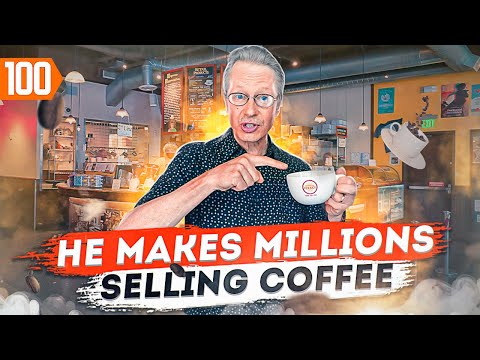
“How To Start A 7-Figure Coffee Business”
What we found: A Coffee Cart to Three Bars and a Roastery, With the Title's Seven Figures Not Stated in the Video
Asked for revenue and margins, the owner gives a 70/30 split between bars and roasting and no total. The costs that are given, from a $15,000 cart to a $750,000 bar build, are useful on their own.
- Not stated Annual revenue
- 70% bars / 30% roasting Revenue split
- ~$15,000 Cart startup, 1988
- ~$750,000 One bar build
The claim
That a coffee business started from a street cart with no prior industry experience can be scaled into a seven-figure company, by roasting your own beans, locating in dense urban neighbourhoods and growing by word of mouth.
- Total annual revenue — Not stated; the host asks and the answer is a percentage split
- Profit or margin — Not stated; asked in the same question
- Share of annual totals from the coffee bars — 70%
- Share from the roasting programme — ~30%
- First cart, 1988 — ~$10,000 for the cart plus ~$5,000 for the machine
- Same cart, later in the video — "about 10 or 11 000" from about $10,000 in cash
- A cart started today — ~$40,000
- Espresso machine — $23,000, later "between 18 and 22,000" for a three-group
- Build cost of one grand bar — ~$750,000
- Baristas — 40
- Base wage — $16.79 an hour, untipped
- Payroll for 40 baristas at 30 hours a week — ~$1.05 million a year
- Advertising spend — "We don't spend a penny"
What is this income idea?
Start a specialty espresso cart on a small budget, build a word-of-mouth following in a dense neighbourhood, roast your own beans, then move into indoor bars and sell roasted coffee by mail.
- The owner opened an espresso cart in Seattle on 18 April 1988 with, by his account, no background in coffee. He says he was a precision measurement specialist at an aircraft maker and a classical flute player, and that he learned the espresso method on trips to Italy. He went on to publish a book and video courses on espresso from the mid-1990s.
- The business now has a 5,000-square-foot roastery, three retail locations (two large indoor "grand bars" and one sidewalk bar), around 40 baristas, and a roasting programme that ships whole-bean coffee. He says the roaster handles about 60 pounds every 15 minutes and that the operation goes through roughly 500 bags a day.
- The video is unusually forthcoming on what things cost. The first cart was about $10,000 plus about $5,000 for the machine; a cart today would be about $40,000; the espresso machine is about $23,000; one of the grand bars cost about $750,000 to build; green Ethiopian beans run about $4.75 a pound against about $12 a pound for wholesale roasted coffee.
- What it does not give is the number in the title. Asked "what's the revenue this year that you expect and profit margins", the owner answers that the coffee bars bring in 70 per cent of annual totals and roasting about 30 per cent. No total follows, and the host moves on.
- His advice is specific: roast your own coffee because wholesale prices make a coffee shop "very difficult" to sustain; locate in a dense urban neighbourhood, even next to a large chain; hand out free samples on the street instead of buying print advertising, which he says "did nothing"; and keep partners who handle accounting, because he does not.
- He also describes his own biggest mistake: a second cart in the financial district in 1989, on a corner where 14,000 people a day walked past, which failed to build any loyalty.
Make very good espresso somewhere dense, roast it yourself, let people talk about it, and expect it to take decades and a lot of staff.
- Street cart — ~$15,000 in 1988
- Free samples — Instead of print ads
- Start roasting — 1991
- Indoor bars — From 1992
- Grand bar build — ~$750,000 each
- Roastery — 5,000 sq ft
- Ship whole bean — ~30% of totals
Thirty-three years from cart to the business in the video, with costs given at most stages and revenue at none.
The costs are the useful part of this video
The lesson underneath the number
- For a viewer pricing a coffee business, the figures here are more practical than a revenue headline would be. The owner gives the entry price of a cart then and now, the price of the espresso machine he uses, a grinder, a refrigerator, a sign, green beans, and the build cost of a large bar. Few interviews in this format itemise that much, and the $750,000 bar build alone tells a reader how far apart a cart and a flagship café are.
- The video does not give the other side. Asked for revenue and margins together, the owner replies with a percentage split. He is open about why he might not have the number to hand: he describes himself as "an artist that is in business with good partners", and says his co-founder runs the numbers, taxation, payroll and inventory, tracking cost of goods "to a tenth of a penny". So the business evidently knows its margins; they are not shared in the video, and the "7-figure" in the title is the channel's framing rather than a figure anyone states.
- Our own check suggests the title is not out of line. Forty baristas at a base wage of $16.79 is roughly $700,000 a year at 20 hours a week each and about $1.4 million at full time, and wages are the owner's own biggest cost. A business carrying that payroll plus three leases in dense Seattle neighbourhoods would need revenue well into seven figures to survive 33 years. That is an inference from the stated costs, though, not a figure from the video.
- Two parts of the advice pull against each other, and a beginner should notice. The cart is presented as the cheap way in, then later described as "a dog business". Roasting is described as essential, yet it is the 30 per cent side, while the retail bars that bring in 70 per cent are the part the owner says is intense, prone to breakdowns and limited by training. The business in the video is a mature retail operation built on decades of reputation; the cart is where it started, not a smaller copy of it.
My compulsion to do something beautiful limits me on how much money I'm going to make.
The owner, on why the business has stayed at three locations
How the business was built, as described
A slow, quality-first route that the owner says cannot be shortcut.
Costs are given for several stages; revenue and profit are given for none.
- Start with a cart, not a shop — A handmade cart and machine for about $15,000 in 1988, run from April 1988 until 1992. He says they took no loans and stayed "lean and mean". Later in the video he calls carts "a dog business" and says you need an indoor store, so the advice is to start with one and leave it.
- Pick a dense neighbourhood, not footfall — The 1989 financial-district cart had 14,000 passers-by a day and no loyal customers. Loyalty came in urban residential areas. He says he would never open a coffee shop in a small town and calls drive-throughs "horrible business".
- Give coffee away instead of advertising — Staff in vests and bow ties handed out small macchiatos and cortados downtown. Print advertising "did nothing", and today the business spends nothing on ads, relying on Instagram, Facebook and a social media coordinator.
- Roast your own — From 1991. He says paying about $12 a pound for roasted coffee would have made the shops hard to sustain, and that roasting in-house reduced that cost "way down". He also warns roasting needs separate space and high-pressure natural gas because of dust and noise.
- Train continuously — A second interview is an hour on the espresso machine with the owner, then one to two months of training, then monthly and quarterly sessions for the rest of a barista's career. He reports managers with 20 and 22 years of tenure.
- Diversify green-bean suppliers — Four brokers, and a year of essential supplies held ahead after supply chains became unreliable. He describes one broker covering a container delayed outside Los Angeles with 30 bags from Oakland.
- Raise prices once a year — Cost of goods is tracked "to a tenth of a penny" and reviewed almost weekly by his business partner; bar and whole-bean prices are set annually. He says a justified price increase has never reduced customer volume.
The business model
Espresso drinks sold at three Seattle bars (about 70% of annual totals) and roasted whole-bean coffee sold retail and shipped (about 30%).
Regulars in dense urban neighbourhoods who care about coffee quality, plus whole-bean buyers reached by word of mouth.
A specific northern-Italian-style roast and a highly trained espresso method, which the owner credits for the business's reputation.
Word of mouth, free street samples in the early years, Instagram and Facebook run by a social media coordinator; no paid advertising.
- Wages — $16.79 an hour base for ~40 baristas; the owner calls wages the biggest expense
- Leases — Described as expensive in the recommended locations; not priced
- Equipment and maintenance — $18,000 to $23,000 per espresso machine; "it breaks all the time"
- Fit-out — ~$750,000 for one grand bar
- Green beans — ~$4.75 a pound for Ethiopian; paid at a premium by choice
- Roastery — 5,000 sq ft, natural gas, a warehouse team; not priced
- Management and partners — Managers, a training department, a social media coordinator and a co-founder running finance; not priced
More costs are itemised than in most videos of this kind. What is missing is the revenue to set them against.
What you would actually need
Money
About $40,000 to start a cart today, by his estimate, against about $15,000 in 1988. An indoor grand bar cost about $750,000 to build.
The cart figure is a useful entry price, but the owner also says carts are a poor business and that you must roast your own coffee. A viable version of what he describes therefore needs an indoor lease in a dense, high-rent neighbourhood and roasting equipment with its own space, neither of which is priced as a starting package in the video.
Stated costs
- Cart and machine, 1988: ~$15,000 (also given as $10,000 to $11,000)
- Cart today: ~$40,000
- Three-group espresso machine: $18,000 to $23,000
- Grinder: ~$650; refrigerator: ~$600 to $700 per unit
- Sign: $500 to $1,000, plus a branding team (not priced)
- Green Ethiopian beans: ~$4.75 a pound
- One grand bar build: ~$750,000
- Lease: described as high in the areas he recommends; not priced
Time
Four years on a cart before the first indoor bar, and 33 years to the business in the video. He says you now need some experience, because the US coffee industry is mature.
This is a decades-long build that depends on the owner's own expertise and reputation. He credits his published books and videos with drawing staff applicants, which a newcomer would not have.
Where the years went
- 1988: first cart opens
- 1989: financial-district cart, no loyalty, closed
- 1991: starts roasting
- 1992: off the cart and indoors
- Mid-1990s: book and video courses
- 2021: three bars, roastery, ~40 baristas
The part you must pay attention to
The title's seven figures are not stated in the video.
The host asks directly: "what's the revenue this year that you expect and profit margins". The answer is a split of an unstated total: "my coffee bars ... are bringing in 70 percent of our annual totals", and "about 30" from roasting.
- Baristas — 40
- Base hourly wage — $16.79
- Hours a year each (30 a week, our assumption) — 1,560
~$1.05M
Barista base wages a year, before tax and benefits
The hours each barista works are not stated, so the payroll figure rests on our assumption of 30 hours a week. At 20 hours it is about $700,000; at full time it is about $1.4 million. Wages are, in the owner's words, the biggest expense, so a business paying anything in this range would plausibly have revenue in seven figures.
That makes the title plausible, but plausible is not stated. The video gives no revenue figure, no profit and no margin, and the only ratio given is how revenue divides between bars and roasting. The 70/30 split also says something useful the title does not: the roasting side, which the owner calls "the only thing I can grow", is the smaller part, and the retail side he describes as intense, staff-heavy and hard to scale is most of the business.
- WHAT IS STATED
- Bars share of annual totals 70%
- Roasting share 30%
- Annual total ???
- OUR PAYROLL CHECK (base wage only)
- 40 x $16.79 x 20h x 52 = ~$698,000
- 40 x $16.79 x 30h x 52 = ~$1,048,000
- 40 x $16.79 x 40h x 52 = ~$1,397,000
- -> hours per barista not stated
- IF IT WERE $1,000,000 (illustration)
- Bars $700,000
- Roasting $300,000
- -> not a figure from the video
- THE TWO CART FIGURES
- $10,000 cart + $5,000 machine = $15,000
- later: "about 10 or 11 000"
The economics
A long list of costs, and no revenue to subtract them from.
- Annual revenue — Not stated
- Profit or margin — Not stated
- Bars / roasting split — 70% / ~30%
- Baristas and base wage — 40 at $16.79/hour
- Grand bar build cost — ~$750,000
- Green beans vs wholesale roasted — ~$4.75/lb vs ~$12/lb
- Roaster throughput — 60 lb per 15 minutes; ~1,200 lb "maybe" a day
- Bags a day — ~500
- Advertising — $0
Barista base payroll at the stated wage and headcount
40 baristas × $16.79 × 30 hours × 52 weeks
About $1.05 million a year (about $700,000 at 20 hours, about $1.4 million at 40)
IncomeIdeaLab calculation from the stated wage and headcount; the hours are our assumption
Hours per barista, payroll tax, benefits, manager pay and tips are not stated. The figure is a rough scale check on the title, not an estimate of the business's costs or revenue.
- Total annual revenue, in any year
- Profit, gross margin or the owners' pay
- Lease costs for the three locations and the roastery
- Revenue or profit of the most profitable location, which he names
- How the ~$750,000 bar build was financed and how long it takes to pay back
- Shipping and packaging costs on the whole-bean side
- The host's roaster arithmetic checks out: 60 pounds every 15 minutes is 240 pounds an hour. The owner's "1,200 maybe" a day would be five hours of roasting.
- The two volume estimates do not line up neatly: 1,200 pounds across about 500 bags would be about 2.4 pounds a bag, and the bags also feed the bars. Both are stated as rough guesses ("maybe", "something like that"), and 1,200 may describe capacity rather than a typical day.
- Green beans at about $4.75 a pound against about $12 a pound for wholesale roasted coffee is the cost advantage he gives for roasting. Roasting loses some weight and needs equipment, gas, space and staff, none of which is priced, so the real saving is smaller than the gap between the two prices.
- The first cart is costed twice: about $10,000 plus about $5,000 for the machine early in the video, and "about 10 or 11 000" from about $10,000 in cash later. The espresso machine is given as $23,000 and later as "between 18 and 22,000". Both are offhand recollections, and he says he would "have to check" the machine price.
- The owner says the next goal is to sell whole-bean coffee across the US, and that the roastery could produce "probably three times" its current volume without compromising quality.
Evidence status
Every substantive figure and claim in the video.
- A "7-figure" coffee business — Video title — Not stated in the video. No revenue figure is given; our payroll check makes seven figures plausible.
- Bars 70%, roasting ~30% of annual totals — Owner — The only revenue information given. The total it divides is not stated.
- First cart ~$15,000 in 1988 — Owner — Later given as $10,000 to $11,000. Both are recollections from 33 years earlier.
- A cart today ~$40,000 — Owner — A useful entry price. He later calls carts a poor business.
- Espresso machine $23,000 — Owner — Later "between 18 and 22,000"; he says he would need to check.
- One grand bar cost ~$750,000 to build — Owner — The largest figure in the video, and a cost, not revenue.
- 40 baristas at $16.79 an hour base — Owner — Implies roughly $0.7 million to $1.4 million a year in base wages, depending on hours (our arithmetic).
- No money spent on advertising — Owner — Consistent with his account of growth by word of mouth; a paid social media coordinator is on staff.
- Print advertising "did nothing" — Owner — Stated from experience; a useful negative result.
- A justified price increase has never reduced volume — Owner — Could not be checked from the video; no sales figures are given.
- Roastery could produce ~3× current volume — Owner — Stated as capacity for future growth.
- Revenue, profit, margins, leases — Nobody — Not stated in the video.
What is actually proven?
A long-running business with itemised costs; its income is not stated.
- The business has run since 1988 and now has three bars, a roastery and about 40 baristas, by the owner's account.
- Startup, equipment, wage and build-out costs are stated, with two small mismatches.
- Revenue divides about 70/30 between bars and roasting.
- Base barista payroll at the stated wage is roughly $0.7 million to $1.4 million a year, depending on hours.
- The sponsor read for a signage company, with a 10% viewer discount, is disclosed on camera.
- Total revenue, profit and margin in any year.
- Whether the business earns seven figures, as the title says.
What the headline doesn’t tell you
The title is a revenue claim; the video is a cost briefing.
- No revenue figure. — Asked, answered with a split.
- The cart is the start. — He later calls carts a poor business.
- One bar cost ~$750,000. — The cart is not a small version of it.
- Payroll is the big cost. — 40 baristas at $16.79 base.
- Roasting is the 30%. — Retail bars are most of it.
- 33 years in. — Plus the owner's published reputation.
- Small towns are ruled out. — Dense urban areas only, by his advice.
- A sponsor read sits mid-video. — For signage, disclosed on camera.
Should you try it?
A useful cost briefing for a capital- and staff-heavy business
Take the equipment prices and the location advice. Do not take the title as a revenue figure, and price an indoor shop and roasting, not just a cart.
- Cost disclosure — 7 — Cart, machine, grinder, fridge, sign, beans, wages and a bar build are all given.
- Revenue disclosure — 1 — Only a 70/30 split; no total, profit or margin.
- Match between title and content — 3 — The title's seven figures are not stated in the video.
- Honesty about mistakes — 8 — The failed 1989 cart, print ads that did nothing, his own limits with numbers.
- Consistency of the advice — 5 — Start with a cart, then carts are a poor business; roast, though roasting is the smaller side.
- Beginner accessibility — 3 — He says you now need experience, a dense urban location and your own roasting.
- If you are pricing a coffee business, this video is worth an evening. It gives a cart budget, a machine price, the cost of a grinder, a refrigerator and a sign, what green beans cost against wholesale roasted coffee, the state minimum wage the business pays, and what a full indoor bar cost to build. Write those down; few interviews of this kind are this specific about money going out.
- Then notice that it gives nothing about money coming in. The only revenue information is that the bars bring in about 70 per cent and roasting about 30. Whether the business earns seven figures is not stated, and the owner says his partner, not he, handles the numbers. Our payroll arithmetic suggests seven figures is plausible for a business of this size, but you cannot plan a shop from a plausibility check.
- Read the cart advice in full. A $40,000 cart is the cheapest way to start, and the owner did start that way, but by the end of the interview he calls carts and drive-throughs poor businesses, rules out small towns, and says you must roast your own coffee to make the margins work. The realistic version of his advice is an indoor shop in a dense, high-rent neighbourhood with roasting capacity, which is a much larger commitment than the cart.
- Finally, weigh what a newcomer would not have. He started in 1988, when espresso was a novelty in the US, and he says the industry is now mature and that you need experience to break in. He also credits his books and videos with attracting staff in a hard hiring market. His own summary is that the business is limited by people and by his standards, and that is probably the most useful expectation to take from the video.
Passive or automated?
Automation
Hand-made drinks, continuous training and equipment that "breaks all the time".
Passive potential
Forty baristas, managers, a roastery team and an owner who still trains staff.
Nothing about this business is passive, and the owner does not present it as such. Every drink is made by a trained barista, training continues monthly and quarterly for a barista's whole career, and the owner still runs the hands-on hiring interview himself. He names personnel as the hardest part of running the business and equipment breakdowns as a constant. The whole-bean side he wants to grow is closer to a product business, but it still needs roasting, bagging, a warehouse and shipping staff.
- Making every drink at three bars
- Hiring, training and retaining about 40 baristas
- Roasting, de-stoning, bagging and shipping
- Sourcing green beans through four brokers
- Finance, payroll and inventory, run by his co-founder
Recommended beginner experiment
Test demand and the numbers before you sign a lease.
- Work in a specialty café first. — He says experience is now needed.
- Map dense neighbourhoods near you. — His rule: urban, residential, dense.
- Price the lease before the cart. — Not priced in the video.
- Hand out samples, track who returns. — His early marketing, at low cost.
- Build a payroll model first. — Wages are his biggest expense.
- Cost roasting separately. — Space, gas, equipment, staff.
- Get a partner who runs the numbers. — His own strongest advice.
Our verdict: 5/10
Real costs, no revenue, and a title figure the video does not state useful for pricing a coffee business, not for judging what one earns
Credited for itemising startup, equipment, ingredient, wage and build-out costs; for describing a failed early location and ineffective print advertising; for naming the business partner who runs the finances; and for a disclosed sponsor read. Marked down because no revenue, profit or margin figure is given when the host asks for them, so the "7-figure" in the title is not stated in the video; because the cart and machine prices are each given two different ways; and because the advice to start with a cart sits alongside the owner's later description of carts as a poor business.
This is an interview with the owner of a long-running Seattle espresso business who is candid about what things cost and much less specific about what the business earns. He gives a cart budget for 1988 and for today, the price of his espresso machine, grinder and refrigerators, what green beans cost against wholesale roasted coffee, the $16.79 base wage he pays about 40 baristas, and a build cost of about $750,000 for one of his bars. He also describes what did not work: a cart on a busy financial-district corner that built no loyalty, and print advertising that did nothing. Asked for revenue and margins, he gives only a 70/30 split between the bars and the roasting programme, so the "7-figure" in the title is not stated in the video. Our arithmetic on the stated payroll suggests revenue in seven figures is plausible for a business this size, but that is our inference from its costs, not a figure anyone gives. For a viewer, the most useful reading is as a cost briefing: a cart is a cheap way to start, but the business the owner recommends, and the one he runs, is an indoor bar in a dense urban neighbourhood with its own roasting, a large trained staff and decades of reputation behind it.
- Annual revenue — Not stated
- Revenue split — 70% bars / ~30% roasting
- Cart startup — ~$15,000 (1988), ~$40,000 today
- Grand bar build — ~$750,000
- Baristas / base wage — 40 / $16.79 an hour
- Base payroll estimate — ~$0.7M to $1.4M a year
- Profit — Not stated
- Beginner suitability — Low without experience and capital
Sources
- How To Start A 7-Figure Coffee Business — UpFlip — YouTube video, 2021-10-04
- FTC — Guides Concerning the Use of Endorsements and Testimonials — Regulatory guidance on endorsements and sponsored content