Local Services / Dumpster Rental · Claim Review
“$1.3M Revenue in Year 3 — The Real Cost of Running a Dumpster Rental Business”
What we found: A Dumpster P&L That Adds Up — Built on $40-a-Ton Disposal
$1.313 million in revenue, $940,433 in costs, $373,184 net. The figures reconcile. Whether they transfer depends on a landfill rate a third of what the owner says others pay.
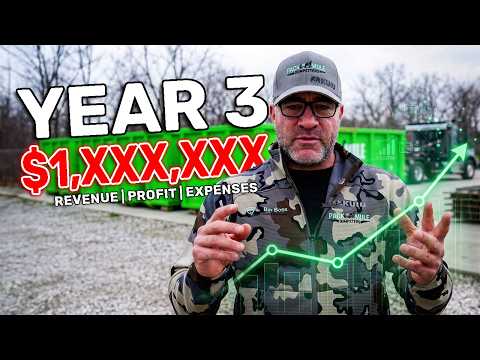
- $1.313M 2025 revenue
- $940,433 Total expenses
- $373,184 Net income
- ~$40/ton Disposal rate
The claim
That a three-year-old dumpster rental company in the Dayton area earned $373,184 net on $1.313 million of revenue in 2025, a margin of about 28%.
- Revenue, 2025 — $1.313 million
- Monthly revenue panels on screen (2:46 onwards) — January $49,000 to June $152,000 to December $75,613
- Sum of the twelve monthly figures — $1,313,484 — matches the stated total
- Total expenses — $940,433
- Sum of itemised expense lines — ~$949,000
- Net income — $373,184
- Stated margin — 27.8%
- Margin recomputed — ~28.4%
- Orders completed — Over 3,200
- Net profit per order — ~$117
- Owner pay and income tax — Not stated
What is this income idea?
Roll-off dumpster rental: delivering containers of different sizes to homes and job sites, collecting them full, and paying a transfer station or landfill by the ton to dispose of the contents.
- The owner walks through the company’s third full year, 2025, line by line. Revenue is given for every month: $49,000 in January, climbing to a peak of $152,000 in June, holding around $141,000–$147,000 through October, then falling to $88,000 in November and $75,000 in December. On-screen text panels beside the owner list the exact figures, from $57,959 in February to $88,631 in November and $75,613 in December; with June at the spoken $152,000, the twelve months add to $1,313,484 (our arithmetic), matching the stated $1.313 million.
- The spring jump is attributed partly to adding two trucks and 39 thirty-yard dumpsters in March. The owner is candid about seasonality in a northern market: "I can see how dumpster businesses fail because if you don't stash money away in the summer… winter's going to be hard on you."
- Expenses are then broken into thirteen lines totalling $940,433: disposal about $190,000, labour about $220,000, loan principal and interest $142,000, marketing $127,000 (9.7% of revenue), fuel $82,000, repairs $47,574, insurance $47,656, general business costs $50,199, supplies $15,438, rent $14,558, utilities $5,936, and smaller lines for meals and office costs.
- Net income is given as $373,184, a margin the owner puts at 27.8% against a usual target of 23–25%, lifted by the higher price point of thirty-yard containers. Per order, across more than 3,200 orders: about $400 of revenue, $294 of expense and $117 of profit.
- The video also covers two truck accidents — one clearly the company’s fault, one where a court found the driver not guilty but the insurer paid out $14,000 on $1,400 of damage — and plans for 2026: more drivers, a full-time dispatcher, smaller driveway dumpsters, and proactive sales to construction sites found through permit data.
A real, fully itemised year: $1.3 million in, $940,000 out, about $117 kept per dumpster — in a market with unusually cheap disposal.
- Winter trough — $49k in January
- Add 30-yard fleet — 2 trucks, 39 bins
- Summer peak — $152k in June
- Autumn plateau — ~$141k–$147k
- Holiday drop — $75k in December
- $1.313M revenue — Full year
- $940k expenses — 13 lines
- $373k net — ~$117 per order
Every stage has a figure attached, and the figures agree with each other.
The rare P&L you can check — and the one line you cannot copy.
The lesson underneath the number
- Very few videos in this category give a viewer enough to test the headline. This one gives twelve months of revenue, thirteen expense lines, a net figure, a margin and a per-order breakdown, and they reconcile. The months add up to within about $5,000 of the stated $1.313 million; the itemised costs come within about 1% of the stated $940,433; revenue minus costs gives the stated net; and 3,200 orders at $117 profit each gives about $374,000. The margin is slightly understated — $373,184 on $1.313 million is about 28.4%, not 27.8% — which is the unusual direction for an error.
- The seasonality is the most useful lesson for anyone in a cold climate. January brought in $49,000; June brought in $152,000. The owner is explicit that dumpster companies fail when they spend summer cash and meet winter unprepared, and the numbers show why: fixed costs such as loan repayments, insurance and rent do not fall when revenue drops by two-thirds.
- The line to handle carefully is disposal. At about $40 a ton, this company pays a third or less of what the owner says operators in other regions pay. Its tonnage — about 4,750 tons, on our arithmetic — would cost roughly $380,000 more at $120 a ton, which is the whole year’s net income. The owner rightly points out that local competitors pay the same local rate, so prices adjust. But a viewer in a high-cost market cannot expect this margin at this price.
- Two further notes. "Net income" here includes loan principal as an expense, which makes it conservative on that line, but does not state whether the owner is paid within labour, and excludes income tax. And the video carries an ad read for the owner’s own dispatch and booking software, on which the owner says they spend about six hours a day. That is disclosed plainly as the owner’s product, and the P&L does not depend on it — but it is part of why the video exists.
I can see how dumpster businesses fail because if you don’t stash money away in the summer… winter’s going to be hard on you.
The owner — the most transferable lesson in the video
How the business runs, as the owner describes it
An operating review rather than a how-to, with numbers attached to each decision.
Published 20 March 2026, 33:59. The 2025 monthly revenue is spoken and shown in on-screen text panels beside the owner (January to May, July to November, October to December); June is spoken. The expense sections, including disposal, diesel ($82,000) and the final $373,000, are read from paper, with no on-screen table at the moments where they are discussed. We use the disposal figure the owner restates ("190,000") and do not give a precise meals figure.
- Match fleet to demand — Thirty-yard dumpsters were rented out as soon as they arrived; forty-yards, for which the owner saw "very very little demand", also went out immediately. The plan for 2026 is eight more forty-yards and one or two more concrete dumpsters.
- Spend on marketing and online ordering — $127,000, or 9.7% of revenue, on advertising and Google Maps ranking, plus a "buy now" online-ordering flow. The owner calls this "non-negotiable" and attributes local competitors’ failures to under-spending.
- Buy used trucks and budget for repairs — A mix of new and used trucks. Repairs were budgeted at about $9,000 a month and came in at $47,574 for the year across five trucks — but the owner expects 2026 to be "a lot more".
- Run everything off target margin — "Everything has to be run off of the margins that you want." The stated target is 23–25%; 2025 came in higher because of thirty-yard pricing.
- Save in summer for winter — January revenue is about a third of June’s. The owner’s warning is to "stash money away in the summer" — the most transferable advice in the video for a northern operator.
- Hand off daily operations — A full-time dispatcher was hired in early 2026 and an operations manager runs daily deliveries, freeing the owner — who says they spend about six hours a day on their software business.
The business model
Roll-off dumpster rentals — 14-, 30- and 40-yard containers plus concrete dumpsters — averaging about $400 per order.
Homeowners clearing out and renovating, and contractors on construction sites.
Easy online booking, strong Google Maps presence, and a range of sizes including higher-margin thirty-yards.
Google Maps ranking, reviews and paid advertising at 9.7% of revenue; from 2026, proactive sales using construction permit data.
- Labour — ~$220,000. Owner pay inclusion not stated
- Disposal — ~$190,000 at ~$40/ton, from county statements
- Loan principal and interest — $142,000 for trucks and containers
- Advertising and marketing — $127,000 — 9.7% of revenue
- Fuel and repairs — $82,000 + $47,574 = ~$129,600
- Insurance — $47,656, after a $14,000 claim payout
- General, supplies, rent, utilities, office — ~$88,000 combined
Every major cost is stated. The two things missing are owner compensation and income tax.
What you would actually need
Money
Not discussed as start-up capital. The operating cost of year three is itemised in full: $940,433.
The $142,000 a year in loan principal and interest shows how capital-intensive the fleet is. A newcomer would need to finance trucks and dozens of containers before earning anything; the video does not give the original investment.
The 2025 cost lines, as stated
- Labour: ~$220,000
- Disposal: ~$190,000 (at ~$40/ton)
- Loan principal and interest: $142,000
- Advertising and marketing: $127,000
- Fuel: $82,000
- General business: $50,199
- Insurance: $47,656
- Repairs and maintenance: $47,574
- Supplies $15,438; rent $14,558; utilities $5,936; office and meals
Time
Three full years to this point. An operations manager and, from 2026, a dispatcher run the day-to-day.
The owner is now largely out of daily deliveries and spends about six hours a day on a separate software business. That is a mature stage, not a starting point.
What the year involved
- Five trucks, and drivers to run them
- 3,200+ orders — up to 47 tasks in a day across five drivers
- Two accidents and one lawsuit
- Adding a thirty-yard fleet mid-year
- Hiring drivers, including one with a CDL
- Owner hours: not stated
The part you must pay attention to
The margin rests on a disposal rate most operators do not have.
The owner says: "we're cheap man, we're like $40 a ton. I talked to people $120, $160 a ton." Disposal is already the second-largest cost line.
- Disposal paid in 2025 — ~$190,000
- Per ton — ~$40
~4,750 tons
At $120/ton that tonnage would cost ~$570,000
On the owner’s own figures, the company disposed of roughly 4,750 tons in 2025. At $120 a ton, the rate the owner hears from operators elsewhere, the same tonnage would cost about $570,000 — $380,000 more, which would erase the year’s entire $373,184 net income. At $160 a ton it would cost about $760,000. The owner’s counter-argument is fair: "your competition is paying the same that you are", so prices in high-disposal markets are higher too. But it means this P&L cannot be carried to another market. A viewer should rebuild it with their own local tipping fee and local prices before drawing any conclusion from the 28% margin.
The second thing to understand is what "net income" means here. The owner lists "loan principal and interest" of $142,000 as an expense. Principal repayment is not normally an expense on a profit-and-loss statement; including it makes this closer to a cash-flow figure after debt service, and more conservative than an accounting profit on that line. On the other hand, the video does not say whether the owner draws a salary inside the $220,000 labour line, and income tax is not listed. So $373,184 is best read as the cash the business generated before the owner is paid (possibly) and before income tax — a strong result, but not the owner’s take-home.
- THE MONTHS ADD UP
- Jan 49.0 Feb 58.0 Mar 77.1
- Apr 119.2 May 115.5 Jun 152.0
- Jul 147.4 Aug 145.0 Sep 144.9
- Oct 141.3 Nov 88.6 Dec 75.6
- ($k; on-screen panels, June spoken)
- Sum $1,313,484 vs $1.313M stated
- THE COSTS ADD UP
- Itemised lines ~ $949k
- Stated total $940,433
- Gap ~1% (rounded lines)
- THE NET
- $1,313k - $940k = ~$373k
- $373k / $1,313k = ~28.4%
- Stated margin 27.8%
- THE DISPOSAL SENSITIVITY
- $190k / $40 = ~4,750 tons
- x $120/ton = ~$570k
- Extra cost = ~$380k
- Net income -> ~zero
The economics
A complete, reconciling year — with the disposal rate and owner pay as the caveats.
- Revenue — $1.313 million
- Total expenses — $940,433
- Net income — $373,184
- Margin (recomputed) — ~28.4%
- Orders — 3,200+
- Revenue per order — ~$410
- Profit per order — ~$117
- Disposal tonnage implied — ~4,750 tons
- Marketing share of revenue — 9.7%
- Owner pay, income tax — Not stated
Reconciling revenue, costs and orders
$1.313M − $940,433 = ~$372,600; 3,200 × $117 = ~$374,400; 3,200 × $294 = ~$940,800
All three views of the year agree to within about $2,000. Revenue per order is closer to $410 than the "about $400" stated
IncomeIdeaLab calculation from figures stated by the owner
The twelve monthly figures on the on-screen panels (with June as spoken) sum to $1,313,484, matching the stated $1.313 million. The itemised costs sum to about $949,000, within about 1% of the stated total; several cost lines are read as round numbers, which accounts for that gap.
- Whether the owner is paid within the labour line, and how much
- Income tax
- Depreciation on trucks and containers
- Original start-up capital and outstanding debt
- Average price by container size
- Revenue or cost attributable to the owner’s software business
- Marketing at $127,000 is 9.67% of $1.313 million — the stated 9.7% checks.
- Fuel ($82,000) plus repairs ($47,574) is $129,574 — the stated "vehicle operating cost" of $129,000 checks.
- Repairs were budgeted at about $9,000 a month, or roughly $108,000 a year, and came in at $47,574. The owner says 2026 will be "a lot more" because of cold weather and ageing used trucks — a projection worth noting against this year’s margin.
- The $14,000 insurance payout on a $1,400 damage claim, after the driver was found not guilty, is given as a possible reason insurance costs are rising.
Evidence status
Every material figure in the video.
- $1.313 million revenue in 2025 — Owner; on-screen monthly panels — The on-screen monthly figures sum to $1,313,484. Consistent.
- June best month at $152,000 — Owner — Consistent with the monthly series.
- $940,433 total expenses — Owner — Itemised lines sum to ~$949k. Within ~1%.
- $373,184 net income — Owner — Matches revenue minus expenses.
- 27.8% margin — Owner — Recomputes to ~28.4%. Slightly understated.
- ~$190,000 disposal at ~$40/ton — Owner, from county statements — Implies ~4,750 tons. Far below rates cited elsewhere.
- $127,000 marketing, 9.7% of revenue — Owner — Checks.
- $129,000 vehicle operating cost — Owner — Fuel + repairs = $129,574. Checks.
- 3,200+ orders, ~$117 profit each — Owner — 3,200 × $117 = ~$374,400. Checks.
- Competitors who under-spent on marketing sold or went bankrupt — Owner — Local anecdote; no names or figures.
- Repairs will be "a lot more" in 2026 — Owner — Stated as a forecast.
- Owner pay and income tax — Nobody — Not addressed.
What is actually proven?
More than in almost any comparable video — with two caveats.
- Twelve monthly revenue figures, thirteen cost lines and a net figure.
- Revenue, costs, net and per-order figures reconcile to within about 1%.
- Disposal figures come from monthly county statements.
- The owner discloses two accidents and a $14,000 claim.
- At $120 a ton, the same tonnage would erase the year’s net income.
- The dispatch-software ad read is for the owner’s own product.
- Owner pay, income tax and depreciation.
What the headline doesn’t tell you
The numbers hold. The context matters.
- $40 a ton disposal. — Others pay $120–$160.
- At $120 a ton, profit ≈ zero. — On the same tonnage.
- Owner pay is not stated. — Net is not take-home.
- Loan principal is in expenses. — A cash view, not accounting profit.
- January is a third of June. — Winter reserves are essential.
- Marketing is ~10% of revenue. — Called "non-negotiable".
- An ad for the owner’s software. — Disclosed as their own.
- Repairs will rise in 2026. — Ageing used trucks.
Should you try it?
A credible model — rebuild it with your local disposal rate
Use this P&L as a template, not a forecast. Substitute your own tipping fee, prices and financing before trusting a 28% margin.
- Financial disclosure — 10 — Monthly revenue, thirteen cost lines, net and per-order figures.
- Internal consistency — 9 — Reconciles to within about 1%.
- Transferability — 4 — Disposal at ~$40/ton is far below other markets.
- Honesty about problems — 8 — Accidents, lawsuit, repairs and winter all discussed.
- Owner-pay clarity — 3 — Not stated whether net is before or after owner salary.
- Conflict disclosure — 7 — Software ad read clearly identified as the owner’s product.
- Beginner accessibility — 3 — Five trucks, financing and a year-three operation.
- This is one of the best-evidenced income videos in its category. The owner gives every month’s revenue, every major cost, and the net result, and the numbers agree with each other. If you are considering dumpster rental, you can use this P&L as a template: marketing near 10% of revenue, labour and disposal as the two largest lines, loan payments near 11%, and fuel and repairs together near 10%.
- Before using it as a forecast, find out what your local transfer station charges per ton. This company pays about $40. On its own tonnage, $120 a ton would add about $380,000 in costs and wipe out the year’s profit. The owner’s point that local competitors face the same rate is correct — prices will be higher where disposal is dear — but the margin in this video belongs to this market.
- Plan for the calendar as well. January revenue was about a third of June’s, while loan repayments, insurance and rent continued. The owner’s advice to put summer money aside for winter is the most practical instruction in the video for anyone in a cold climate.
- Finally, read the net figure for what it is. $373,184 is after loan principal but before income tax, and the video does not say whether the owner’s pay is inside labour. It is a strong business result; it is not necessarily the owner’s income.
Passive or automated?
Automation
Online ordering and dispatch software; every delivery is a driver and a truck.
Passive potential
The owner has stepped back from daily deliveries, but the business runs on staff.
The owner has moved away from daily operations — an operations manager runs deliveries and a full-time dispatcher now takes calls — and spends most of the working day on a separate software business. That shows the business can run without the owner behind the wheel. It does not make it passive: more than 3,200 orders a year each require a truck, a driver, fuel and a trip to the transfer station, and the owner describes hiring, accident fallout, repairs and seasonal cash planning as ongoing concerns.
- Drivers for every delivery and pick-up
- An operations manager and a dispatcher
- Hiring and managing drivers after incidents
- Truck repairs, especially on used vehicles
- Marketing, reviews and construction-site sales
Recommended beginner experiment
Rebuild this P&L for your own market before buying a truck.
- Call your transfer station for the per-ton rate. — This company pays ~$40.
- Price local competitors by container size. — Revenue here averages ~$410 per order.
- Budget marketing at ~10% of revenue. — The owner’s own ratio.
- Model January at a third of June. — Then set aside the difference.
- Price commercial vehicle insurance early. — $47,656 here, after one large claim.
- Budget repairs high for used trucks. — The owner expects 2026 to be worse.
- Decide your own salary up front. — The video does not show one.
- Target 23–25% margin, not 28%. — The owner’s normal goal.
Our verdict: 8/10
A full, reconciling P&L — on a disposal rate you probably cannot match $1.313M revenue, $940K costs, $373K net, and about $117 per dumpster
Credited for giving twelve monthly revenue figures, thirteen expense lines, a net figure, a margin and a per-order breakdown, and for all of them reconciling to within about 1%; for citing disposal costs from county statements; for stating marketing spend as a share of revenue; for candour about seasonality, two accidents, a $14,000 claim payout and rising repair costs; for a stated margin that errs on the low side; and for clearly identifying the software ad read as the owner’s own product. Marked down because the margin rests on disposal at about $40 a ton — a third or less of rates the owner cites elsewhere, and a difference that on the same tonnage would erase the year’s net income; because the video does not say whether owner pay sits inside the labour line; because income tax and depreciation are not addressed; because "net income" includes loan principal, mixing cash and accounting views; and because start-up capital and outstanding debt are not given.
This is the kind of disclosure the genre rarely offers. The owner of a three-year-old dumpster rental company gives revenue for every month of 2025, thirteen cost lines, the total, the net and the margin, and then a per-order breakdown — and the figures agree with each other to within about 1%. The monthly series explains itself: a cold-weather trough of $49,000 in January, a spring jump when thirty-yard containers arrived, a summer peak of $152,000, and a holiday fall to $75,000. The owner’s warning to save summer cash for winter follows directly from those numbers. Marketing at 9.7% of revenue, repairs, insurance after a $14,000 claim, and two accidents are all discussed plainly, and the stated margin of 27.8% is, if anything, a little low. Two things limit what a viewer can take from it. First, disposal costs about $40 a ton here, and the owner says operators elsewhere pay $120 to $160. On this company’s tonnage, the higher rate would add roughly $380,000 in costs — the entire year’s profit. Local prices would adjust, as the owner points out, but the 28% margin belongs to this market. Second, $373,184 is not necessarily anyone’s take-home: loan principal is counted as an expense, income tax is not, and the video does not say whether the owner is paid within labour. The video also includes an ad for the owner’s own software, clearly identified as such. As evidence that a well-run dumpster business can clear well over $300,000 on $1.3 million in a low-disposal market, it is strong. As a forecast for yours, rebuild it with your own tipping fee first.
- Revenue — $1.313M
- Expenses — $940,433
- Net income — $373,184
- Margin — ~28.4%
- Profit per order — ~$117
- Disposal rate — ~$40/ton
- At $120/ton — Net ≈ zero
- Owner pay — Not stated
- Beginner suitability — Template, not forecast
Sources
- $1.3M Revenue in Year 3 — The Real Cost of Running a Dumpster Rental Business — Pack Mule Dumpsters — Source video, 2026-03-20
- FTC — Guides Concerning the Use of Endorsements and Testimonials — Regulatory guidance on earnings claims and material connections