Apparel / Print on Demand · Claim Review
“The Easiest Way to Make Custom T Shirts in 2026”
What we found: A $5 Shirt Sold for $30 Is a Price Gap, Not Yet a Profit
A clear direct-to-film printing tutorial from a working screen printer. The margin claim skips the press, shipping, fees and the hardest part: finding buyers.
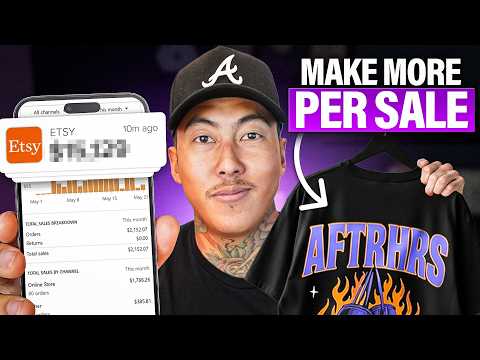
- ~$5 Shirt cost
- $30 Selling price
- ~$25 Gap per shirt
- None Sales shown
The claim
That with direct-to-film transfers and a heat press (or an iron) you can turn a roughly $5 shirt into a $30 shirt, and that pressing your own placements beats print on demand on margin.
- Cost of a finished shirt — ~$5 (blank plus full-colour transfer)
- Example selling price, shirt — $30
- Example selling price, hoodie — ~$60
- Gap per shirt — ~$25 (~83% of price)
- Blank Gildan G500 tee, supplier list price — From $2.65 (white), $2.91 (colours) — Ninja Blanks page on screen at 2:20
- Transfer cost per shirt — Not shown; ~$2.09–$2.35 is left of the ~$5 (our arithmetic)
- Durability — “50 plus washes”
- Printing experience — “10 years plus”, runs a screen print shop
- Heat press cost — Never stated
- Sales volume, shipping, platform fees — Never stated
What is this income idea?
Order full-colour direct-to-film (DTF) transfers printed on a "gang sheet", press them onto blank shirts and hoodies yourself, and sell the results — either as your own brand or to groups such as schools and churches.
- The creator says they come "from a background in production" and still run a screen print shop near Atlanta. Their case for learning this, even as a print-on-demand seller, is control and margin: test designs on print on demand, then bring a winner in-house "so that we can increase our profit margins", or offer placements print on demand cannot, such as a print over a pocket.
- The workflow is shown in full. They design in Kittl, shown on screen at 10:10, use its "remix" feature to generate and vary assets, vectorise them, and measure placements with a tape — "a left chest is going to be anywhere from 2 to 4 in" — before sizing artwork on the transfer supplier’s gang-sheet builder.
- The gang sheet is the cost lever. Small scattered placements that look like a full design use less sheet area than one large back print, so "this design would probably make the same amount as money if not more" for less transfer cost. They also note that a multi-colour sleeve print would be "extremely expensive" to screen print in small runs, which is DTF’s real advantage.
- Pressing takes a pre-press, the transfer, parchment paper, a hot peel and a post-press. "And that's how you take a USD 5 shirt and turn it into a USD 30 shirt." They say the prints last "50 plus washes" and that press marks usually fade.
- They close by saying "the reason why I've been able to make so much money doing this" is longevity, pointing to earlier videos where they show sales. No sales figure appears in this one.
Buy printed transfers, iron them onto cheap blank shirts, and sell each for several times its material cost — if you can find the buyers.
- Design the art — AI design tool
- Measure placements — 2–4 in left chest
- Build a gang sheet — Many designs, one sheet
- Order transfers — Plus blanks
- Press and peel — Heat press or iron
- Sell at $30 — Buyer not covered
The production side is fully shown. The selling side is one sentence.
Strong on production, silent on demand
The lesson underneath the number
- The craft in this video is real. Measuring placements on a physical garment, choosing several small prints over one large one to save gang-sheet space, exporting at 300 dpi in CMYK, pre-pressing to remove moisture and wrinkles, and knocking black out of a design printed on a black shirt are the details of someone who has printed for years.
- The best business idea is mentioned almost in passing: test designs on print on demand, where you hold no stock, then press the proven sellers yourself to keep more of the margin. That sequence reduces the risk the rest of the video leaves open.
- The money claim is thinner. "A USD 5 shirt" into "a USD 30 shirt" describes a material-to-price gap. It leaves out how the shirt reaches a customer, what the shop and payment platform take, what shipping costs, and above all how a buyer is found. The blank-shirt price is shown on the supplier’s page at 2:20, from $2.65 to $2.91, which leaves roughly $2.09 to $2.35 of the $5 for the transfer (our arithmetic); the transfer price itself is not shown.
- The video also links a transfer supplier and a design tool without saying whether the channel has a commercial relationship with either. The supplier shares part of its name with the channel; the video does not say what connects them, and we make no assumption. A viewer should still read the product recommendations knowing the relationship is not stated in the video.
We use print on demand to test multiple products … and then when we find a winner … we can take all that margin in-house.
The most useful business advice in the video
The process, as they show it
A practical walkthrough from an experienced printer.
Video published 16 June 2026. The blank-shirt prices are shown on the Ninja Blanks product page at 2:20: a Gildan G500 from $2.65 in white and $2.91 in colours, with free shipping from $50. The Ninja Transfers gang-sheet builder appears at 12:05 and Kittl at 10:10, neither with a price visible. A bulk price for schools and churches is mentioned but is not a clear figure, and we do not use it.
- Design and remix artwork — Start from a template, swap assets with text prompts, remove backgrounds and vectorise. They address the obvious worry — everyone has the same templates — by generating original assets.
- Measure before you size — Use a tape measure on a real garment. Their example ends at 6.2 by 4 inches for a left-chest print.
- Lay out a gang sheet — They set a sheet 22 by 120 — they say "22 ft wide by 10 ft tall", but the 120 figure and a 10-foot height only fit inches for the width. Auto-nest can pack separate uploads for you.
- Favour small scattered placements — They read as a full design but use far less sheet than one 18-inch back print, at a similar selling price.
- Export for print — 300 dpi, PDF, CMYK — then a candid aside that customers "rarely ever see the same mistakes that you see".
- Press, peel, post-press — Pre-press to remove moisture and wrinkles, place by eye, parchment on top, follow the supplier’s time and temperature, hot peel, post-press.
The business model
Selling self-pressed shirts and hoodies at retail, or in bulk to schools, churches and events.
Own-brand buyers online, or local groups ordering in quantity.
Full-colour, custom-placement garments in small runs without screen-printing setup costs.
Not covered in the video, beyond a reference to their own channel’s merchandise.
- Blanks — Gildan G500 from $2.65 (white) or $2.91 (colours) on the Ninja Blanks page at 2:20; free shipping from $50
- DTF transfers — Part of the ~$5 per shirt; the gang-sheet builder at 12:05 shows no price
- Heat press — Covered in a separate video. Not priced
- Design tool — Kittl, shown at 10:10. Not priced
- Shipping and packaging — Not mentioned
- Sales channel fees and ads — Not mentioned
Their gang-sheet advice is genuinely about cost control. The costs outside the garment are where the margin claim is untested.
What you would actually need
Money
About $5 per finished shirt. "If you have a heat press or even an iron" you can start. Heat presses are covered in a separate linked video.
Material cost per shirt is genuinely low: the blank is shown on the supplier’s page from $2.65 (white) or $2.91 (colours). But a heat press, transfers, test prints, packaging and shipping come first, and none of those is priced on screen. The supplier’s free shipping starts at $50, so a small blank order adds shipping.
Named or implied, not priced
- A heat press (or an iron, with less consistent results)
- Gang sheets ordered in advance of any sale
- Blank shirts in each size and colour you offer
- A design tool subscription, if paid
- Packaging and shipping to each customer
- Shop platform and payment fees
- Misprints and unsold stock
Time
Design takes minutes with templates and remix; pressing is quick ("hot press hot peel no wasted time").
Pressing one shirt is fast. Designing a range, finding customers, handling orders and shipping each item by hand is where the hours go, and the video does not cover any of it.
Where the time goes
- Designing and testing artwork
- Ordering and waiting for transfers
- Pressing each garment by hand
- Marketing and finding buyers
- Packing and shipping orders
The part you must pay attention to
$5 to $30 is the gap between material cost and price. It is not what you keep.
"That's how you take a USD 5 shirt and turn it into a USD 30 shirt." The $5 covers the blank and the transfer only.
- Selling price — $30
- Blank ($2.65–$2.91 shown) plus transfer — $5
- Shipping, fees, press, packaging, ads — ?
Under $25
Per shirt, by an unknown amount
The load-bearing assumption is that someone will pay $30. The video demonstrates production thoroughly and says nothing about where buyers come from, how many there are, or what it costs to reach them. For a seller with no audience, paid ads or marketplace fees could take a large share of the $25. Their own context — a screen print shop, an existing channel audience that "bought this" hoodie, years of experience — is what makes the price achievable for them, and a beginner has none of it yet.
The DTF method does solve a real problem: small runs of multi-colour designs that would be "extremely expensive" to screen print. Their point about using print on demand to test designs and pressing only proven winners in-house is the most useful business advice in the video. But the headline gap is a material margin. After shipping, platform and payment fees, packaging, a share of the press and any ad spend, the profit per shirt is lower by an amount the video never estimates.
- THEIR EXAMPLE
- Selling price $30
- Blank + transfer -$5
- Gap $25
- Gap as % of price ~83%
- NOT INCLUDED
- Shipping to customer ???
- Shop + payment fees ???
- Packaging ???
- Heat press (spread) ???
- Ads / finding buyers ???
- Misprints, unsold stock ???
- SHOWN ON SCREEN (2:20)
- Blank G500, white from $2.65
- Blank G500, colours from $2.91
- Transfer, implied ~$2.09-$2.35 (our arithmetic)
The economics
A clear material cost, an example price, and nothing in between.
- Blank plus full-colour transfer — ~$5
- Example shirt price — $30
- Example hoodie price — ~$60
- Gap per shirt — ~$25
- Price markup — 6× material cost
- Left-chest print size — 2–4 in
- Large back print — ~18 in tall
- Blank G500 list price (Ninja Blanks, 2:20) — $2.65 white / $2.91 colours
- Transfer cost implied by the ~$5 — ~$2.09–$2.35
- Press, shipping, fees, ads, volume — Never stated
Material margin on their example
$30 − $5 = $25; $25 ÷ $30 ≈ 83%; $30 ÷ $5 = 6×; $5 − $2.91 = $2.09 and $5 − $2.65 = $2.35 left for the transfer
An ~83% gap between material cost and price, before every other cost of selling
IncomeIdeaLab calculation from the figures stated in the video
Hoodie costs are not given, so the $60 hoodie price cannot be turned into a margin. The bulk price for schools and churches is not a clear figure and is not used. Blank prices are the supplier’s "starting at" list prices.
- Price of a heat press
- Price of the transfer or gang sheet
- Minimum order or shipping on transfers (blanks ship free only from $50)
- Shipping and packaging per order
- Sales channel and payment fees
- How customers are found, and at what cost
- Any sales figure in this video
- The gang-sheet advice is a real saving: small scattered placements leave room for several designs on one sheet where a single 18-inch back print would not.
- DTF’s advantage over screen printing is small multi-colour runs; they say a five- or six-colour sleeve would be "extremely expensive" to screen print without high volume.
- "Hot seller, a lot of you guys bought this" refers to an earlier hoodie sold to their own audience; no number is given.
- They say earlier videos show their sales. This analysis covers only this video.
Evidence status
Every substantive claim in the video.
- A ~$5 shirt sells for $30 — Creator — A material-to-price gap. Selling costs and demand not covered.
- A hoodie could sell for ~$60 — Creator — Plausible; hoodie cost not given.
- Small placements earn as much as a full back print — Creator — Reasonable on transfer cost; sale prices not evidenced.
- Prints last 50+ washes — Creator — Asserted, not tested on camera.
- You can use an iron instead of a heat press — Creator — Mentioned once; only a heat press is shown.
- A Gildan G500 blank costs from $2.65 (white) or $2.91 (colours) — Ninja Blanks product page on screen at 2:20 — Supplier list prices, readable on screen. Supports the blank part of the ~$5.
- Bulk price for schools and churches — Creator — Mentioned but not a clear figure. Not used.
- Test on print on demand, then bring winners in-house — Creator — Sound sequencing; no figures.
- “I've been able to make so much money doing this” — Creator — No figure in this video.
- Relationship with linked supplier and design tool — Not stated — Links given; no relationship stated in the video.
What is actually proven?
The process is shown. The business is not.
- Designing, sizing, gang-sheet layout and pressing are shown step by step.
- Two transfers pressed and peeled successfully on camera.
- The Ninja Blanks page at 2:20 shows a Gildan G500 blank from $2.65 (white) and $2.91 (colours).
- A finished shirt costs about $5 in materials; the transfer price is not shown on screen.
- At $30, the gap to materials is ~$25, about 83% of the price.
- Shipping, platform fees, press cost and ad spend.
- How many shirts sell, to whom, and at what cost to reach them.
What the headline doesn’t tell you
Making the shirt is the easy part.
- $25 is not profit. — Shipping and fees come next.
- No buyer is shown. — Demand is assumed.
- The press costs money. — Covered in another video.
- The transfer is not priced. — Only the blank is shown.
- Links are given. — Relationship not stated.
- They run a print shop. — Ten-plus years of experience.
- Their audience bought before. — A beginner has none.
- No sales figure here. — Only a pointer to older videos.
Should you try it?
A cheap, learnable skill; a business only once you have buyers
Learn the pressing. Price every cost of getting a shirt to a customer before you believe the $25.
- Practical clarity of the process — 9 — Sizing, layout, export settings and pressing all shown.
- Low cost of trying — 7 — Blanks from $2.65 shown; the press is the main upfront spend.
- Accuracy of the margin claim — 4 — Material cost only; selling costs not included.
- Evidence of sales — 1 — None in this video.
- Relationship disclosure — 3 — Supplier and tool linked; relationship not stated.
- Beginner accessibility — 6 — Easy to produce; finding customers not addressed.
- As a skill, DTF pressing is accessible and this is a good place to learn it. The walkthrough covers the details that trip beginners up: measuring placements on a real garment, export settings, pre-pressing, and peeling.
- As a business, the video gives you one side of the ledger. A finished shirt at about $5 in materials selling at $30 is a large gap, but you still have to ship it, pay a sales platform and a payment processor, package it, cover the press, and, most of all, find the person who buys it.
- Their own advice offers the safest path: test designs through print on demand with no stock, and only press in-house once a design has proved it sells. Local bulk orders for schools, clubs or events are another route, though the bulk price they suggest is not a clear figure and we do not repeat it.
- Start small. Press a handful of shirts for people you know will buy them before ordering gang sheets in volume.
Passive or automated?
Automation
Transfer printing is outsourced; pressing, packing and shipping are by hand.
Passive potential
Every shirt is pressed by a person.
This is the opposite of passive. The point of pressing your own shirts, rather than using print on demand, is to take production in-house — and that means a person places, presses, peels, packs and ships each garment. The video is candid that print on demand is the hands-off option and that in-house pressing trades effort for margin and placement freedom. Auto-nesting on the gang sheet and AI-assisted design save time at the start, but nothing after the transfer arrives runs by itself.
- Designing and sizing artwork
- Pressing each garment
- Quality-checking prints
- Packing and shipping orders
- Finding and serving customers
Recommended beginner experiment
Prove demand before buying stock.
- Test designs on print on demand first. — Their own sequence.
- Find one local bulk buyer. — A club, school or event.
- Order one small gang sheet. — Pack several small designs.
- Press with care. — Pre-press, follow instructions, post-press.
- Price every cost to the door. — Shipping, fees, packaging.
- Track profit per shirt. — Not the $25 gap.
- Buy a press only after sales. — Not before.
Our verdict: 5/10
A good pressing tutorial with a material margin presented as profit the $5-to-$30 gap leaves out every cost of selling
Credited for a thorough, practical demonstration from an experienced printer — measured placements, gang-sheet economics, export settings, pressing technique — for the genuinely useful advice to test on print on demand before producing in-house, and for candour that small print flaws matter more to the maker than to customers. Marked down because "a USD 5 shirt into a USD 30 shirt" counts only material cost; because heat press, shipping, packaging, platform and payment fees and customer acquisition are absent; because no sales figure appears in this video; and because the linked supplier and design tool are recommended without the relationship being stated. The blank-shirt list price is shown on the supplier’s page; the transfer price is not.
If you want to learn how to put a full-colour design on a shirt, this is a clear and experienced guide. They show how to build artwork, measure a left-chest placement, lay out a gang sheet so small prints share space, export at the right settings, and press and peel a transfer cleanly. Their suggestion to test designs through print on demand and only press proven winners in-house is the most useful business point in the video. The money claim is narrower than it sounds. "A USD 5 shirt into a USD 30 shirt" is the gap between materials and an example price, about $25 or 83%. It does not include the heat press, shipping, packaging, the sales platform and payment processor, or the cost of finding customers, and the video does not show where any buyer comes from. The blank-shirt list price is shown on the supplier’s page at 2:20, from $2.65 to $2.91, but the transfer price is not, and the supplier and design tool are linked without any stated relationship. Learn the skill here; work out your own profit per shirt before treating it as income.
- Material cost per shirt — ~$5
- Example price — $30
- Gap — ~$25 (~83%)
- Selling costs — Never stated
- Sales evidence — None in this video
- Blank list price — From $2.65 (white), $2.91 (colours)
- Transfer price — Not shown
- Beginner suitability — Skill yes; business needs buyers
Sources
- The Easiest Way to Make Custom T Shirts in 2026 — Source video, 2026-06-16
- FTC — Guides Concerning the Use of Endorsements and Testimonials — Regulatory guidance on disclosing material connections