Ecommerce / Dropshipping · Claim Review
“The ONLY Way to Start Dropshipping in 2027 (For Beginners)”
What we found: The Proof of Demand Works Out to $3.72 a Unit, Below the $10.43 Landed Cost — and the “$50” Start Excludes a $50-a-Day Ad Budget
A three-step dropshipping walkthrough with clear margin arithmetic. The sales figures used to validate the product do not match the price it is sold at, and no profit figure is given for the store or for the creator’s stated $10 million.
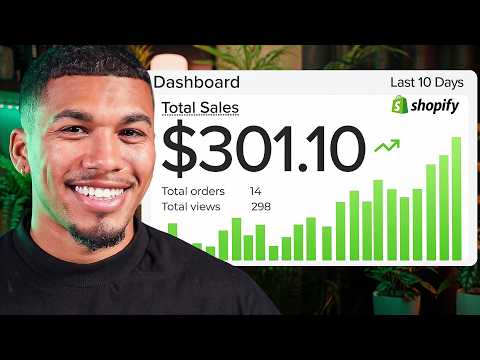
- ~$3.72 Demand data per unit
- $10.43 Landed cost per order
- $25–$50/day Paid-traffic budget
- Not stated Store profit
The claim
That a beginner can start dropshipping in three steps, store, product and traffic, and with just $50 have a live store, a product proven to sell and traffic running; and that the creator has built stores generating over $10 million, with students over $50 million combined.
- Revenue from the creator’s own stores, 8 years — Over $10 million
- Students’ combined revenue — Over $50 million
- Starting outlay promised in the opening — “Just $50”
- Paid ad budget recommended — $50 a day, or $25 if tighter
- Demand data for the chosen product — 78,000+ units, almost $290,000
- Revenue per unit in that data — ~$3.72
- Landed cost (product + shipping) — $6.58 + $3.85 = $10.43
- Price set in the store — $29.99
- Gross margin per order before fees and ads — $19.56
- Sales, ad results or profit from the demo store — Not stated
What is this income idea?
Dropshipping: list a product on your own store, and when someone buys it, order it from a supplier who ships it straight to the customer.
- The video presents itself as the only way the creator would start in 2027, in three steps taken in a fixed order: build the store, choose the product, then buy or earn traffic, with AI tools doing most of the work at each step.
- Step one uses an AI store builder reached through the first link in the description, which sets the viewer up on Shopify. The creator says the current offer is a free trial followed by three months for $1, and recommends the Basic plan. A $1 trial of AutoDS is offered during setup.
- Step two is product research. The creator gives a three-part test for a product: proven demand from current sales data, a selling price at least 2.5 times the purchase cost, and a problem the product visibly solves on camera. Using AutoDS’s TikTok sales data, the video picks a turmeric toner pad, citing over 78,000 units sold and almost $290,000 in sales.
- The margin check is worked through on camera. Competitors sell at $36.99; divided by 2.5 that gives a maximum sourcing cost of about $14.79. A US-warehouse supplier lists the product at $6.58 plus $3.85 shipping, and the store price is set at $29.99, described as the market median.
- The store is then rebuilt around the product using Claude for competitor analysis and page prompts, Shopify’s built-in AI section generator, and an AI image tool for product photos, since the seller does not hold the product.
- Step three offers two routes. Paid: 15 AI-generated video ads across three angles in one Meta campaign at $50 a day, or $25 for a tighter budget. Organic: the same videos scheduled as 10 to 30 Reels in Meta Business Suite. The video closes with the creator’s account of a store shut down when they had no LLC, which they say cost over $10,000, and a link to an LLC-formation service.
Build a Shopify store with AI, pick a product that already sells on TikTok, price it at 2.5x cost, and buy or post video ads, but the sales data used for the pick works out far below the price you would charge.
- AI store builder — Shopify, $1 offer
- Pull TikTok sales data — AutoDS
- Apply the 2.5x rule — $36.99 ÷ 2.5
- Source from a US supplier — $10.43 landed
- Price at $29.99 — Market median
- AI copy and photos — Claude + image tool
- 15 video ads — 3 angles × 5
- Paid or organic — $25–$50/day or Reels
Each step is shown being set up; no step reports a sale, a conversion rate or a profit.
A margin rule is only as good as the price people actually pay
The lesson underneath the number
- The strongest part of the video is the margin discipline. The creator states a rule, a selling price at least 2.5 times cost, and works it through with real numbers: competitor price, maximum sourcing cost, supplier price plus shipping, final price. A beginner who takes nothing else from the video should take that habit of doing the sum before listing anything.
- The weakness is the input the rule depends on. Demand is established from TikTok sales data, and the two figures given for the chosen product, 78,000 units and almost $290,000, average about $3.72 a unit. That is below the $10.43 the store pays to buy and ship one. The data shows volume at a low price; the store is priced at $29.99. Those can both be true only if the buyers in the data are a different market from the buyers the store will reach, and the video does not address it.
- The second check is the 1,400 active Meta ads for similar pads, read in the video as “1,400 receipts” because “nobody’s going to keep paying for all these ads if they are losing money”. That is an assumption, not a figure: active ads show competition and spend, and say nothing about whether those advertisers are profitable. The same count is equally a measure of how crowded the ad auction is.
- Finally, the money. The video opens with “just $50” and recommends $50 a day for paid traffic. Both may be meant honestly, one for setup and one for testing, but a beginner reading the first will budget very differently from one reading the second. The creator’s own closing story, a store that was making money until it shut down, at a cost they put at over $10,000, is a useful reminder that the risks of this model arrive after the setup steps the video covers.
Nobody’s going to keep paying for all these ads if they are losing money on this product.
The creator, reading 1,400 active ads as validation; ad counts show competition, not profit
The three steps, as the video gives them
A setup walkthrough with one worked margin calculation.
No sales, ad results or costs beyond the product and shipping are given for the store built in the video.
- Build the store with an AI builder — The first link in the description opens a store builder that sets the viewer up on Shopify. The creator says the offer is a free trial and then three months for $1, and recommends the Basic plan. The monthly price after the offer is not stated.
- Validate demand with sales data — AutoDS’s TikTok analytics tab, filtered to beauty and personal care over the last 7 to 30 days, surfaces a turmeric toner pad with “over 78,000 units sold” and “almost $290,000 in total sales”. On our arithmetic that is about $3.72 a unit.
- Check the margin against the 2.5x rule — Competitor price $36.99 divided by 2.5 gives about $14.79 as the most the product can cost. The supplier lists it at $6.58 plus $3.85 shipping, which we add to $10.43. That clears the rule at either price used in the video.
- Price at the market median — The store price is set at $29.99, described as the median of what the market pays. At that price the markup is about 2.9x on our arithmetic, inside the creator’s rule.
- Rebuild the page with AI — Claude analyses a competitor and writes section prompts; Shopify’s AI section generator builds the page; an AI tool generates product photos and model shots because the seller does not hold the product.
- Make 15 ads from one product photo — Three marketing angles, five AI video ads each, said to take under 15 minutes. The ads show AI-generated people applying the product.
- Launch paid or organic — Paid: one Meta sales campaign with budget optimisation, broad targeting, $50 a day or $25. Organic: schedule 10 to 30 Reels in Meta Business Suite. No result from either route is reported.
The business model
Retail sales of a single skincare product at $29.99 through a Shopify store, with the supplier fulfilling each order.
Buyers reached through broad Meta ads or organic Reels, with AI-generated video ads aimed at three customer angles.
A product with a visible before-and-after result, delivered in three to five days from a US warehouse.
Meta sales campaign with budget optimisation and broad targeting, or scheduled organic posts on Facebook and Instagram.
- Product and shipping — $6.58 + $3.85 = $10.43 per order (our sum)
- Meta ad spend — $25–$50 a day recommended
- Shopify subscription — $1 for three months, then not stated
- Payment processing — Not mentioned
- AutoDS, supplier plan, AI image tool — Trials and discount codes given; prices not stated
- Refunds and returns — Not mentioned, for a skincare product shipped unseen
- LLC formation — Recommended; price not stated
Only two costs are given as numbers: product and shipping per order, and the daily ad budget. Everything else is named with a trial or discount and no price.
What you would actually need
Money
“By the end with just $50 you’ll have a live store, a product that’s proven to sell and traffic that’s running.” The store build is described as 100% free.
The $50 covers trial offers, not traffic. The paid route the video recommends is $50 a day, which is $350 a week on our arithmetic, and the organic route costs time instead. Shopify after the offer, a paid AutoDS plan, the AI image tool and the LLC service are all recommended, and none is priced in the video.
Recommended in the video, mostly unpriced
- Shopify Basic: $1 for three months, then not stated
- AutoDS: $1 trial, paid plan not stated
- Supplier paid plan: 10% off with a code, price not stated
- AI image and video tool: 25% off the first month, price not stated
- Meta ads: $25–$50 a day
- LLC formation: 35% off premium plans, price not stated
- Product and shipping: $10.43 per order
Time
The store is built “in under 2 minutes”; 15 ads take “less than 15 minutes”; the LLC fix takes “10 minutes”.
The setup times are for generating assets, not for running a store. Customer service, refunds, supplier issues, daily ad decisions and fresh creative, which the creator says is needed “pretty much every single day”, are ongoing. The video defers scaling and ad management to a separate video.
Ongoing work the video names or implies
- New ad angles “pretty much every single day”
- 10 to 30 scheduled posts for the organic route
- Reading results and deciding what to scale or stop
- Order handling and customer questions
- Business formation and compliance deadlines
The part you must pay attention to
The sales data used as proof of demand works out to about $3.72 a unit.
The product is chosen because it “has over 78,000 units sold” and “almost $290,000 in total sales”. Those two figures, divided, do not describe a $29.99 product.
- Total sales in the data (stated) — $290,000
- Units sold (stated) — 78,000
~$3.72 per unit
Below the $10.43 landed cost and about an eighth of the $29.99 store price
The whole step-two logic rests on one assumption: that buyers in the sales data were paying roughly what this store will charge. The video’s own numbers do not support that. If 78,000 units brought in almost $290,000, the average sale was about $3.72, which is less than the $10.43 it costs this store to buy and ship one. The video does not say why the figures differ. Possible reasons include a different listing, multi-unit counts, heavy discounting or a different product sharing the name; none is stated. What the data shows is that something called a turmeric toner pad sold in volume at a low average price, not that buyers will pay $29.99 for it from a new store.
The rest of the margin arithmetic is sound: $36.99 ÷ 2.5 is $14.80 (the video says $14.79), $6.58 + $3.85 is $10.43, and $29.99 is about 2.9 times that. But a margin rule only matters if people buy at the price. The second gap is the budget. The opening promise is “just $50”, while the paid route given later is $50 a day. Before platform and payment fees, each $29.99 sale leaves $19.56 after product and shipping, so a $50 day of ads needs about 2.6 sales just to cover the ad spend, on our arithmetic. No conversion rate, cost per purchase or sale from the demo store is given.
- THE DEMAND DATA
- Total sales (stated) ~$290,000
- Units sold (stated) 78,000
- Per unit = ~$3.72
- THE STORE’S ORDER
- Price set $29.99
- Product -$6.58
- Shipping -$3.85
- Left per order = $19.56
- before Shopify, payment fees,
- refunds, apps and ads
- THE AD BUDGET
- Recommended $50/day
- Sales to cover ads only
- $50 / $19.56 = ~2.6/day
- Break-even ROAS
- $29.99 / $19.56 = ~1.53
- “Just $50” to start vs $350/week
The economics
Unit cost and price are given. Volume, fees, ad results and profit are not.
- Competitor price — $36.99
- Maximum sourcing cost at 2.5x — $14.79 stated; $14.80 on our arithmetic
- Product cost — $6.58
- Shipping to the US — $3.85
- Landed cost — $10.43
- Store price — $29.99
- Markup at store price — ~2.9x
- Demand data per unit — ~$3.72
- Ad budget — $25–$50 a day
- Conversion rate, cost per purchase, profit — Not stated
Break-even on the paid route
$29.99 − $10.43 = $19.56 per order; $50 a day ÷ $19.56 = ~2.6 orders a day to cover ads alone
Break-even ROAS of about 1.53 before Shopify, payment processing, refunds, apps or the creator’s time
IncomeIdeaLab calculation from the prices and budget stated in the video
Shopify publishes its own subscription and payment processing rates; adding them, plus any refunds, raises the break-even further. The video gives no sales or ad results to compare against.
- Any sale, conversion rate or cost per purchase from the demo store
- Why the demand data averages about $3.72 a unit
- Shopify’s price after the $1 offer
- Prices of the AutoDS plan, supplier plan, AI tool and LLC service
- Payment processing fees and refunds
- Profit, or the period and margin, behind the creator’s $10 million
- How the students’ $50 million is counted
- On screen at 5:18 the product page reads 78.8k total units sold, $289.5k total GMV and a price of $19.80, last seen 2026-02-03. Those two totals average about $3.67 a unit, against the $19.80 price on the same page; the page does not say what period or what the GMV covers.
- The global market figures, $583 billion now and $2 trillion by 2033, are stated without a source. $2 trillion is about 3.4 times $583 billion, so “3x” is a slight understatement on our arithmetic. The 2033 figure is a projection.
- The 15 ads share one $50-a-day campaign, which is about $3.33 per ad per day if spread evenly, on our arithmetic. Campaign budget optimisation will not spread it evenly, but the sum shows how thin the test is per creative.
- “Over $10 million” is described as generated by multiple stores over eight years. It is a revenue figure; no profit, ad spend or margin is given for it.
- The video directs viewers to the store builder, AutoDS, a supplier, an AI image tool and an LLC-formation service, with links or discount codes for most. Whether the creator is paid for any of these is not stated in the video. The FTC’s endorsement guides describe the disclosures expected when a creator has a financial connection.
Evidence status
Every substantive figure in the video.
- Stores that have generated over $10 million — Creator — Revenue over eight years across multiple stores. No profit, store names or breakdown given; we could not check it from the video.
- Students over $50 million combined — Creator — No count of students, period or method given.
- With just $50 you will have a live store, a product and traffic running — Creator, opening — The paid route given later is $25–$50 a day; the organic route costs time. $50 covers setup offers, not paid traffic.
- Dropshipping market $583 billion, projected $2 trillion by 2033 — Creator — No source named. $2 trillion is about 3.4x, not 3x.
- Shopify free trial then three months for $1 — Creator — A time-limited offer; the price afterwards is not stated.
- Turmeric pad: 78,000+ units, almost $290,000 in sales — Creator, from AutoDS data — Averages about $3.72 a unit, below the store’s $10.43 landed cost. The product page on screen at 5:18 reads 78.8k units, $289.5k total GMV and a $19.80 price; the page does not say what period or sales channel the GMV covers.
- $36.99 ÷ 2.5 = $14.79 — Creator; retail listing on screen at 6:26 reads $36.99, was $44.99, "75+ bought in past month" — Checks out; $14.796 rounds to $14.80.
- Product $6.58 plus $3.85 shipping — Creator; supplier listing on screen at 7:20 reads US$6.58, MSRP US$32.00, 249 in stock, ships from United States — We add them to $10.43.
- Sell at “nearly three times our cost” — Creator — About 3.5x at $36.99 and 2.9x at the $29.99 actually set.
- $29.99 is the market median — Creator — The range it is the median of is not stated.
- 1,400 active ads are “1,400 receipts” — Creator — Active ads show competition and spend, not profitability.
- Store shut down for lack of an LLC, costing over $10,000 — Creator — Which platform closed the store, and why, is not stated.
What is actually proven?
The setup is walked through. No result from it is reported.
- The 2.5x margin rule is stated and worked through with real prices.
- Product plus shipping is $10.43, and $29.99 clears the rule at about 2.9x.
- The demand data averages about $3.72 a unit, below that landed cost.
- At $50 a day, about 2.6 sales a day are needed to cover the ads alone.
- Over $10 million from the creator’s stores and $50 million from students, without a breakdown.
- Any sale, conversion rate or profit from the store built in the video.
- Whether the creator is paid for the tools and services linked.
What the headline doesn’t tell you
The sum is right. The inputs need checking.
- 78,000 units for $290,000. — About $3.72 each.
- Landed cost is $10.43. — Above that average.
- “Just $50” to start. — Ads are $50 a day.
- Break-even ROAS ~1.53. — Before any fees.
- 1,400 ads is competition. — Not proof of profit.
- $10 million is revenue. — No profit given.
- Five services linked. — Payment not stated.
- Scaling is in another video. — Not covered here.
Should you try it?
Use the margin rule; check the demand data and budget before you spend
The setup steps are clear. Treat the opening $50 as the cost of a store, not of a test, and check that the sales data you rely on matches the price you plan to charge.
- Clarity of the setup steps — 8 — Each tool and setting is named in order.
- Margin arithmetic — 8 — Rule stated, worked, and correct to the cent.
- Quality of the demand evidence — 3 — The data averages about $3.72 a unit, below cost.
- Budget clarity — 3 — “Just $50” beside a $50-a-day ad budget.
- Evidence for the track record — 2 — $10 million and $50 million stated with no breakdown.
- Cost disclosure — 3 — Product, shipping and ad budget given; fees, tools and refunds not.
- Disclosure of commercial links — 3 — Links and codes for five services; payment not stated.
- Beginner accessibility — 5 — Easy to set up; the risk is in the ad spend.
- The walkthrough does what it says on setup. A beginner can follow it to a live Shopify store with a product, a page and ads in an afternoon. The part worth keeping is the 2.5x rule: work out the most you can pay for a product from the price people already pay for it, then check a supplier against that number before you list anything.
- The part to check yourself is the evidence that people will pay. The figures used for the chosen product average about $3.72 a unit, so before you spend on ads, look at the actual price buyers paid in the data you are relying on. If it is a fraction of your price, the demand you are seeing may not transfer.
- Then budget honestly. The setup costs little; the paid test does not. At $50 a day and $19.56 left on each $29.99 order before any fees, you need roughly three sales a day just to pay for the ads. Decide in advance how much you will spend before you stop, because the video leaves the scaling and stopping decisions to a separate video.
- Finally, weigh the recommendations knowing that most come with a link or discount code, and that the video does not say whether the creator is paid for them. The creator’s own story of a store shut down while it was making money is the most useful warning in the video: the risks of this model sit in payments, platforms and business setup, after the steps shown here.
Passive or automated?
Automation
AI builds the store and ads; suppliers ship. Decisions and service do not run themselves.
Passive potential
Traffic is paid daily or posted daily, and stops when either does.
The video automates asset creation: the store, the page copy, product photos and ad videos are all generated by AI tools, and the supplier handles fulfilment. What it does not automate is the business. The creator says fresh ad angles are needed “pretty much every single day”, the paid route spends money every day whether or not it sells, and the organic route needs a steady supply of posts. Customer questions, refunds, supplier problems and the decision about what to scale or stop all remain with the seller, and the video defers those decisions to a separate video.
- Producing new ad angles almost daily
- Deciding which ads to scale and which to stop
- Answering customers and handling refunds
- Managing supplier stock and delivery issues
- Keeping business registration and tax deadlines
Recommended beginner experiment
Keep the rule, cap the spend.
- Apply the 2.5x rule to every product. — Do the sum before listing.
- Divide sales by units in any demand data. — Compare it to your price.
- Add every per-order cost. — Product, shipping, payment fee.
- Work out your break-even ROAS. — Price ÷ margin per order.
- Set a total test budget in advance. — Not just a daily one.
- Try the organic route first if budget is tight. — The video offers it.
- Price every tool after its trial. — Before you subscribe.
- Sort business setup before sales start. — The creator’s own lesson.
Our verdict: 5/10
Sound margin arithmetic on demand data that does not match the price and a “$50” start that leaves out a $50-a-day ad budget
Credited for a clear, ordered setup walkthrough; for stating a 2.5x margin rule and working it through with competitor, supplier and shipping prices that check out; for offering an organic route for viewers without an ad budget; and for describing a costly early mistake of their own. Marked down because the sales figures used to prove demand average about $3.72 a unit, below the $10.43 landed cost and far below the $29.99 price set; because the opening promise of a running store “with just $50” sits beside a recommended $50-a-day ad budget; because the $10 million and $50 million track-record figures have no breakdown or profit; because no sale, conversion rate or profit from the store built is reported; and because links and discount codes for five services are given without stating whether the creator is paid.
As a setup guide this video is clear and well ordered. It takes a viewer from nothing to a Shopify store with a product page, AI-generated photos and fifteen video ads, and it teaches one habit worth keeping: a 2.5x margin rule, worked through with a competitor price of $36.99, a maximum sourcing cost of about $14.80, a supplier price of $6.58 plus $3.85 shipping, and a store price of $29.99. That arithmetic checks out. The problem is the evidence fed into it. The product is chosen because it has sold over 78,000 units for almost $290,000, which averages about $3.72 a unit, below what this store pays to buy and ship one and about an eighth of the price it will charge. The second check, 1,400 active ads read as receipts, shows competition rather than profit. The money promise also needs reading carefully: “just $50” buys a store on trial offers, while the paid route recommended later costs $50 a day, and at $19.56 left per order before any fees it needs about 2.6 sales a day to pay for the ads alone. No sale or ad result from the demo store is reported, the creator’s $10 million and the students’ $50 million are given without a breakdown, and most tools come with links or discount codes, without saying whether the creator is paid for them. Use the margin rule. Before spending on ads, check that the sales data behind a product reflects the price you plan to charge.
- Demand data per unit — ~$3.72
- Landed cost per order — $10.43
- Store price — $29.99
- Left per order before fees and ads — $19.56
- Ad budget — $25–$50 a day
- Break-even ROAS before fees — ~1.53
- Creator’s stores, 8 years — Over $10M revenue
- Store profit — Not stated
- Beginner suitability — Setup yes; budget with care
Sources
- The ONLY Way to Start Dropshipping in 2027 (For Beginners) — YouTube video, 2026-09-29
- Shopify — Pricing — Platform documentation on plan and payment processing rates
- FTC — Guides Concerning the Use of Endorsements and Testimonials — Regulatory guidance on endorsements and material connections