Digital Products / Courses · Claim Review
“How to Make Money from The Hobbies & Skills You Already Have”
What we found: Hobby Digital Products: The 150,000-Student, $2,000-a-Month Average Comes With No Definition, Period or Costs
An honest account of a slow start, $63 in year one and $350 in year two, beside two large figures, $21 million and a student average, that cannot be checked from the video.
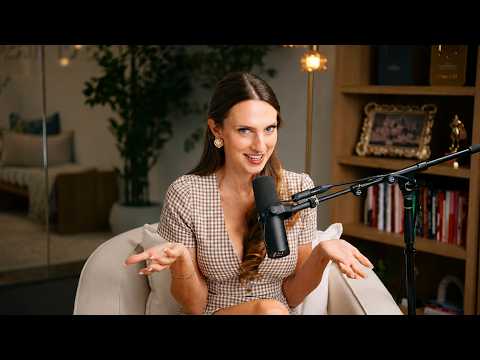
- 150,000 Students helped
- $2k–$3k/mo Stated student average
- $21M Creator's own sales
- $63 Creator's year one
The claim
That almost anyone can turn a hobby or skill into a digital product in 8 to 10 hours and add "a few extra thousand dollars a month", as 150,000 students have done "on average".
- Students helped — 150,000
- Student earnings — "On average $2 to $3,000 a month"
- Creator's own total — $21 million "selling low ticket digital products"
- Time in business — "13 almost 14 years"
- First two years — $63, then $350
- Time to create a product — 8 to 10 hours
- Marketing experiments that fail — "Nine out of 10"
- One student's result — "Almost a million dollars" from a knitting product
- Aunt's first day — "10 or 15 sales", price not stated
- Costs, refunds, platform fees — Not stated in the video
What is this income idea?
Take something you already know or love, package it as a short digital product that gets one specific result, and sell it at a low price.
- The creator says every person who wants extra money should launch and sell a digital product. The examples range widely: relationship and parenting coaching, decluttering, gluten-free baking, a student she says is "hitting almost a million dollars" teaching parents to knit felt hats, and her aunt, who she says launched a product about FaceTime activities for long-distance grandparents and had "10 or 15 sales" within about an hour.
- The target she sets is modest by the standards of the genre: "a few extra thousand a month", not millions. She says her approach has "helped 150,000 students make on average $2 to $3,000 a month".
- She gives three expectations. A product should take 8 to 10 hours to make, because "less is more": short and bite-sized, not 80 videos. Most marketing experiments fail; at her company "nine out of 10 of them fail" and one or two winners carry the results. And a mindset of gratitude and perseverance keeps people going long enough to succeed.
- Her own story is offered as proof of perseverance: $21 million made "selling low ticket digital products" over "13 almost 14 years", after $63 in the first year and $350 in the second.
- The video opens by promising to show "everything that you need" at the end. The closing section describes her own bundle of training and templates, linked in the description, rather than further steps.
Package one skill into a short product that solves one problem, sell it cheaply, test lots of marketing, and expect a slow start.
- Pick a skill or hobby — Anything you already know
- Define one result — Short and specific
- Build in 8–10 hours — Less is more
- Sell at a low price — Low-ticket products
- Run many experiments — 9 in 10 fail, she says
- Persevere — $63 in her first year
A plain, low-cost method. The large figures used to support it are not defined in the video.
The honest numbers are the small ones
The lesson underneath the number
- The most useful figures in this video are the smallest. The creator says she made $63 in her first year and $350 in her second, and that nine in ten of her company's marketing experiments fail. Those are specific, they cut against the idea of quick results, and they are the kind of detail most videos in this genre leave out. She also sets a modest target, "a few extra thousand a month", rather than promising wealth.
- The large figures are a different kind of claim. $21 million over 13 to 14 years is stated as a sales total with no breakdown by year, no costs and no profit figure. The 150,000-student average carries the whole promise of the video and arrives with no definition: no period, no statement of whether it is revenue or profit, and no word on how many students sold nothing. Read literally, it describes a group earning hundreds of millions of dollars a month.
- The examples follow the same pattern. A student "hitting almost a million dollars" is described by the creator herself as "an extreme example". The aunt's 10 or 15 first-day sales come with no price, so their value is unknown, and she is a relative of the creator who "followed my courses perfectly". A student who bought a house is described without any figure.
- There is also a gap between the video's two time frames. The creator says a product takes 8 to 10 hours to make, and describes her bundle as showing how to sell a product "in an afternoon". Her own path from $63 to $21 million took more than a decade. Both can be true: making the product is quick, building the audience that buys it is not.
In my first year do you know how much I made? $63. And in my second year I made $350.
The creator, near the end of the video
The approach, as given
The expectations the creator says a beginner should set.
No price, cost or sales channel is given for any of the examples.
- Start from what you already know — Any skill, hobby or industry. She says she has a student success story for "anything you can think of".
- Make the product small — "It's not 80 videos. It's not pages and pages." A short product that gets one specific result.
- Budget 8 to 10 hours — She says that if a product takes 30, 40 or 50 hours, "you're doing it wrong".
- Treat marketing as experiments — Nine out of ten of her company's experiments fail, she says, and one or two successful ones drive most orders.
- Use AI in marketing — She says her company uses AI to sell and market its products. No tool or method is named.
- Keep going — "You don't fail. You quit or you succeed." Her own first year earned $63.
The business model
One-off sales of short, low-priced digital products such as guides, templates or mini-courses.
People with a specific problem in a niche the seller knows: parents, grandparents, home bakers, people decluttering.
A short product that gets one specific result, from someone who already has the skill.
Social media and marketing experiments; the aunt's example uses a new Instagram account. No other channel is named.
- Sales platform and payment fees — No platform named in the video
- Advertising — Not mentioned
- Tools and AI — AI use is mentioned; no tool or cost
- Team — She refers to "my company"; size and payroll not stated
- Refunds and tax — Not mentioned
Every figure in the video is a sales or earnings figure. No cost is given for the creator's business or for any student example.
What you would actually need
Money
Little: a skill you already have, a short product and a low-priced bundle from the creator to learn the process.
The cash cost of making a short digital product is genuinely low. The video does not name a sales platform or give any fee, ad cost, tool cost or refund rate, so it is not possible to say what a sale keeps after costs.
Not priced in the video
- A checkout or storefront platform and its fees
- Payment processing
- Design and recording tools
- Any paid advertising
- Refunds
- Tax on sales
Time
8 to 10 hours to make the product. The closing bundle is described as showing how to sell a product "in an afternoon".
Making the product may well take a day. Finding buyers is the long part, and the creator's own history says so: $63 in year one and $350 in year two. The video gives no figure for how long a typical student takes to reach $2,000 a month.
Where the time goes
- Choosing a specific result to sell
- Building the product
- Growing a social audience to sell to
- Running and measuring marketing tests
- Customer questions and refunds
- Months of low sales at the start
The part you must pay attention to
The 150,000-student average is stated without a definition.
The video's main promise rests on one sentence: the approach has "helped 150,000 students make on average $2 to $3,000 a month". The video does not say what counts as a student, what period the average covers, whether it is revenue or profit, or whether students who sold nothing are included.
- Students, as stated — 150,000
- Stated monthly average each — $2,000–$3,000
$300M–$450M a month
Across the group, read literally
What "on average" means. If it is the average across all 150,000 students, the group would be earning $3.6 billion to $5.4 billion a year between them. If it is the average among students who reported a result, or among those who launched, it says nothing about students who did not. The video does not say which.
For scale, the creator's own stated total over 13 to 14 years is $21 million, which is about $140 per student if every one of the 150,000 bought something, by our arithmetic. That fits a low-ticket business. It does not tell a viewer what a typical student earns. The figure may describe a self-selected group of successful students; the video does not define it, so it cannot be used as an expected result.
- STUDENT AVERAGE, READ LITERALLY
- 150,000 x $2,000 = $300M a month
- 150,000 x $3,000 = $450M a month
- x 12 = $3.6B to $5.4B a year
- CREATOR'S OWN SALES
- $21M / ~13.5 years = ~$1.56M a year
- $21M / 150,000 = ~$140 per student
- FIRST TWO YEARS
- $63 + $350 = $413
The economics
Every stated figure, and the arithmetic the video does not do.
- Students helped — 150,000
- Stated average per student — $2,000–$3,000 a month
- Group total implied, read literally — $300M–$450M a month
- Creator's total sales — $21 million
- Years in business — 13 to 14
- Average sales a year — ~$1.56 million
- Year one and year two — $63 and $350
- Aunt's first-day sales — 10 or 15; price not stated
- Costs, refunds, profit — Not stated
Average yearly sales over the stated period
$21,000,000 ÷ ~13.5 years
~$1.56 million a year in sales, before any costs
IncomeIdeaLab calculation from the stated total and years in business
The first two years together are stated as $413, so the remaining years carry almost all of the $21 million and later years must be well above the average. The video gives no figure for any year after the second, and no cost or profit figure for any year.
- What counts as a student, and how the 150,000 is counted
- Whether the $2,000–$3,000 average is revenue or profit, and over what period
- How many students have earned nothing
- Any year-by-year breakdown of the $21 million
- Costs of the creator's business: team, advertising, platforms, refunds
- Prices behind the aunt's first-day sales
- How long a typical student takes to reach $2,000 a month
- $21 million is described as "made"; the video does not say whether that means sales or profit. We treat it as sales because no cost is mentioned.
- At about $140 per student, by our arithmetic, the creator's total is consistent with a business selling low-priced products to a very large audience.
- The creator calls the near-$1 million knitting student "an extreme example". We agree it should not be read as typical.
- The closing section promotes the creator's own bundle, linked in the description. Her courses are also the basis of the student figures and the aunt's launch.
Evidence status
Every substantive claim in the video.
- 150,000 students make on average $2,000 to $3,000 a month — Creator — The central claim. No definition, period or source is given; we could not check it from the video.
- Group total implied by that average — IncomeIdeaLab — $300 million to $450 million a month, read literally.
- $21 million made selling low-ticket digital products — Creator — No breakdown, costs or profit given.
- $63 in year one, $350 in year two — Creator — Specific and candid. Credited.
- A student "hitting almost a million dollars" — Creator — She calls it an extreme example.
- Aunt had 10 or 15 sales within about an hour — Creator — No price given, so the value is unknown.
- A product takes 8 to 10 hours to make — Creator — Plausible for a short product. Selling it is the slow part.
- Nine out of ten marketing experiments fail — Creator — An unusually candid admission. Credited.
- A student bought a house after launching products — Creator — No figure given.
- Costs, fees and refunds — Nobody — Not stated in the video.
What is actually proven?
The method is simple and plausible. The large numbers are not defined.
- The creator states $21 million in sales over 13 to 14 years.
- She states $63 in year one and $350 in year two.
- The stated student average implies $300 million to $450 million a month across 150,000 students.
- $21 million is about $140 per student, if every student bought.
- Nine in ten of her company's marketing experiments fail, she says.
- What a typical student earns, and what any of the examples cost to run.
What the headline doesn’t tell you
A quick product is not a quick income.
- "On average" is not defined. — No period, no profit, no zeros.
- The group total would be enormous. — $300M+ a month, read literally.
- $21 million has no breakdown. — Sales, not profit, as far as stated.
- Her start was slow. — $63, then $350.
- Most experiments fail. — Nine in ten, she says.
- The big student result is "extreme". — Her own word.
- The aunt's sales have no price. — Value unknown.
- The closing section is a pitch. — For her own bundle.
Should you try it?
Yes, as a small experiment, with your own target
Making a short digital product from a skill you have is cheap and low-risk. Plan for the creator's first two years, not the student average.
- Clarity of the method — 6 — Simple principles; few concrete steps.
- Honesty about a slow start — 8 — $63 and $350, and 9 in 10 experiments fail.
- Definition of the headline average — 1 — No period, basis or count of zeros.
- Cost disclosure — 1 — No cost given anywhere.
- Cash barrier to entry — 9 — A skill and a few hours.
- Beginner accessibility — 7 — Easy to make; selling needs an audience.
- The core advice is sound for a beginner. A short product that solves one problem is quicker to make, easier to explain and easier to price than a large course, and the cost of trying is mostly your own time. The creator's point that most marketing tests fail is worth taking seriously: plan to try many things and keep the few that work.
- Do not plan around $2,000 to $3,000 a month. The video does not define that average, and the creator's own first two years, $63 and $350, are a more useful guide to what an early product earns. Her later results came after more than a decade and with a large audience.
- Before launching, work out where buyers will come from. The video's only distribution example is a new Instagram account, and the sales figure given for it has no price attached. Track what each sale keeps after platform fees, payment fees and refunds.
- The bundle promoted at the end is the creator's own product. The principles in the free part of the video, small product, one result, many experiments, are enough to start a first test.
Passive or automated?
Automation
Delivery can be automatic; marketing is ongoing work.
Passive potential
The product is made once; sales depend on continued promotion.
A digital product is made once and delivered automatically, which is the passive part. Sales are not. The creator's own description of her business is of constant marketing experiments, most of which fail, and her bundle includes automations for marketing rather than removing marketing. Expect the product to be the small job and finding buyers to be the ongoing one.
- Choosing and testing product ideas
- Creating social content to sell from
- Running and judging marketing experiments
- Answering customers and handling refunds
- Updating the product
Recommended beginner experiment
One small product, measured honestly.
- Pick one problem you can solve. — Specific, from your own skill.
- Check people ask about it. — Forums, comments, searches.
- Build it in a weekend. — Short, one result.
- Choose a platform and note its fees. — Before you set a price.
- Post about it for 30 days. — Track views to sales.
- Run five marketing tests. — Expect most to fail.
- Count what each sale keeps. — After fees and refunds.
- Decide at 90 days. — Improve, switch niche or stop.
Our verdict: 4/10
A sensible small-product method, supported by two large figures the video does not define and a candid $63 first year that is the most useful number in it
Credited for a modest target of a few thousand a month rather than wealth; for stating plainly that the creator earned $63 in her first year and $350 in her second; for saying that nine in ten of her company's marketing experiments fail; for calling the near-$1 million student an extreme example; and for sound advice to keep products short and specific. Marked down because the central figure, 150,000 students averaging $2,000 to $3,000 a month, is given with no definition, period or basis and implies $300 million to $450 million a month across the group when read literally; because the $21 million total has no breakdown, costs or profit figure; because the aunt's sales have no price; and because no cost of any kind is given.
The method in this video is simple and reasonable: take a skill you already have, package one specific result into a short product, and treat marketing as a series of experiments, most of which will fail. It costs little to try. The creator is unusually candid about a slow start, $63 in her first year and $350 in her second, and that candour is the best guide the video offers. The figures used to promise more are not defined. The 150,000-student average of $2,000 to $3,000 a month comes with no period, no statement of revenue or profit and no count of students who earned nothing, and read literally it describes a group earning hundreds of millions of dollars a month. The $21 million personal total has no breakdown or costs. Try a small product if the idea appeals, measure what each sale keeps, and set your expectations by the creator's first two years rather than the student average.
- Student average — $2k–$3k/mo, undefined
- Implied group total — $300M–$450M a month
- Creator's total — $21M over 13–14 years
- Average a year — ~$1.56M in sales
- First two years — $63 and $350
- Costs — Not stated
- Beginner suitability — Yes, as a small, cheap test
Sources
- How to Make Money from The Hobbies & Skills You Already Have — Maria Wendt — YouTube video, 2026-08-10
- FTC — Guides Concerning the Use of Endorsements and Testimonials — Regulatory guidance on endorsements and earnings claims