Digital Products / Content Marketing · Claim Review
“The Most Valuable Digital Product Training Youll Ever Watch”
What we found: A Digital-Product Training States $500,000 a Month With No Costs, While Labelling Its Client Results as Sales, Not Profit, and Not Typical
The first course's $500,000 in eight months works out to about 1,000 sales at $500, by our arithmetic. The $500,000-a-month business is the one that teaches digital products, and its margin is not stated.
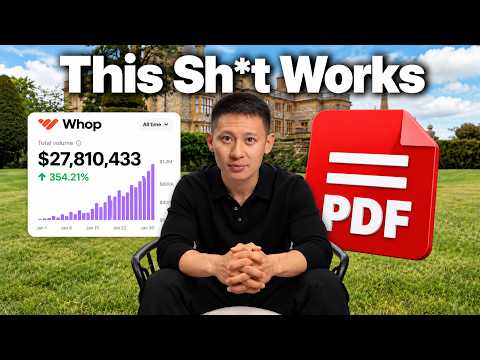
- $500k/month Business revenue
- $500k First course
- ~1,000 Sales implied
- Not stated Costs and margin
The claim
That the creator built a digital product business doing $500,000 a month by replacing guesses with evidence at each step, and that viewers can follow the same five steps, with results that vary.
- Business revenue today — $500,000 a month
- First product — $500 productivity course, about $500,000 in 8 months
- Total across products — Over $32 million in sales
- Client results — $12,000+ total; 20,000+ in month two; 105,000+ in just over 4 months
- Creator's label for those results — "Sales not profit" and "not typical"
- Commission range claimed — 3–10% traditional; 50–85% for digital products
- Students worked with — Over 3,000
- Costs, margin, refund rate — Not stated
What is this income idea?
Sell digital products, your own or someone else's for commission, using evidence of demand rather than guesses at each step from product choice to pricing.
- The creator says they sold a $500 productivity course at university that "did about $500,000 in 8 months", that their digital products have since done over $32 million in sales, and that the business now does $500,000 a month.
- Three client results follow: a university student with over $12,000 in total sales, a stay-at-home parent with over 20,000 in their second month, and a full-time nurse with over 105,000 in a little over four months. The creator says plainly: "those are sales not profit and they're also not typical."
- The method has five steps: find a product people already want, package it so they pick yours, deliver so they come back, turn attention into buyers, and use numbers to repeat what works.
- For demand, the creator uses questions people already ask, "outlier" posts that far outperform an account's usual views, and products already selling. The last leads to product arbitrage: reselling someone else's digital product for a commission, said to be 50% to 85% against 3% to 10% in traditional programmes.
- Later steps cover content built for reach versus content built to convert, a "promise, proof, plan" opening, four ways from post to purchase, and tracking views, clicks, conversations and sales weekly.
- The creator says the $500,000-a-month business came from teaching people to build digital products, after being asked how one course made half a million. The video closes with a link to a free masterclass.
Check that people want something before you make it, then measure each step. The creator's own large figures are revenue, with no costs given.
- Find demand — Questions, outliers, sellers
- Package it — Name, promise, price
- Deliver the promise — Refunds follow mismatch
- Post to purchase — Bio link, comment, DM
- Track four numbers — Fix the narrowest
- Ladder of offers — $27 entry upward
The five steps as given. Each is a decision rule, not a cost estimate.
The disclaimers are better than the headline
The lesson underneath the number
- This video does several things this genre usually does not. It labels client results as "sales not profit" and "not typical", says results vary with effort, offer and market, and calls its funnel arithmetic "an illustration not a guarantee". Those are the qualifications a viewer needs, and they are stated plainly near the top.
- The method is also good. Looking for questions people already ask, for posts that outperform an account's normal views and for products already selling is a sound way to test demand. The point that refunds usually come from a mismatch between promise and product, and that a refund takes a reseller's commission back, is practical and rarely made.
- The creator's own numbers do not get the same treatment. $500,000 a month, $32 million in total and $500,000 from the first course are all revenue, with no costs, margin, refund rate or team given. And the $500,000-a-month business is not a productivity course: it is the business of teaching others to sell digital products, built after the first course's success became the thing people asked about.
- That matters for a viewer measuring themselves against it. The closest benchmark in the video is the first course: about 1,000 sales at $500 over eight months, to an audience that was already asking the creator how they did it.
Those are sales not profit and they're also not typical your results are going to vary depending on your effort your offer and your market.
The creator, on the client results
The five steps, as the creator gives them
Specific and testable; no costs are attached to any of them.
No costs, refund rates or profit figures are given for any step.
- Find evidence of demand first — Three places: questions people already ask you, outlier posts in your niche and the comments under them, and products already selling. "Knowing a topic doesn't prove anyone will pay for it."
- Sell outcomes, not methods — Nobody asked for a cold-shower course; they asked how the creator raised their grades. A student teaching a video game sold winning, not lessons.
- Package for the specific buyer — Copy why a post worked, not its words. Make some content for reach and some to convert, and compare your hook with the top posts before publishing.
- Deliver what the post promised — "When someone has a refund problem it usually isn't a product problem it's a promise problem." For resellers, a refund usually takes the commission back.
- Make the next step obvious — Link in bio, a reply to a comment, a comment keyword that triggers a DM, or a DM conversation. Mention the product only when an expert "with nothing to sell" would.
- Track views, clicks, conversations and sales — Weekly, and fix the narrowest point. The worked example, 30 posts of 1,000 views at 1% click and 5% purchase giving 15 sales, is labelled "an illustration not a guarantee".
The business model
Digital product sales at a ladder of prices, commission on resold products, and, for the creator, teaching others to build digital products.
Buyers who want a specific outcome; for the creator's current business, people who want to sell digital products.
An outcome the buyer already wants, packaged to stand out and delivered as promised.
Instagram short reels for reach, YouTube long-form for trust, and a link in bio, comment replies, keyword DMs and DM conversations to convert.
- Content production — Main cost of the method; hours not estimated
- Refunds — Discussed as a promise problem; rate not stated
- Payment processing — Not mentioned
- DM automation tools — Implied by comment keywords; not named or priced
- Coaching — The creator hired a business coach; cost not stated
No cost figure appears for the creator's business or for a beginner following the method.
What you would actually need
Money
Not discussed directly. Product arbitrage is presented as a way to start without making a product.
The method can start with little money, which fits the creator's advice. The creator also says they hired a business coach before their first product; its cost is not stated. Payment fees, refunds and the creator's own programme are not priced.
Costs not covered in the video
- A checkout or storefront
- Payment processing on each sale
- Refunds, which also reverse resale commissions
- Any paid tools for comment-keyword DMs
- The business coach the creator hired early on
- Whatever the free masterclass leads to
Time
"A few hours" to build a demand map; weekly tracking of four numbers. Results "vary depending on your effort your offer and your market".
A realistic framing. The funnel illustration needs 30 posts to produce 15 sales, so the posting time is the main cost of the method, and it is not estimated.
Where the time goes
- Building a demand map of outliers and comments
- Making separate reach and conversion content
- Running DM conversations
- Weekly tracking and fixing the bottleneck
- Creating or vetting the product
The part you must pay attention to
The $500,000-a-month business is the one that teaches this.
The creator says that after the first course, people asked how one product made half a million, so "I started teaching people how to build digital products that's the business that does $500,000 a month today".
- First course, 8 months — $500,000
- Course price — $500
~1,000 sales
About 125 a month, or $62,500 a month on average
The figures that frame the video are revenue with nothing beneath them. No cost, margin, refund rate or team size is given for the first course, the $32 million or the $500,000 a month. The client results are handled more carefully than most videos manage, labelled as sales and not typical, but they are still sales, and three named cases out of "over 3,000 students" are not a rate.
A viewer following this method is building a small product business, not the creator's current one, which sells education about digital products to an audience of thousands. The first course is the closer comparison: about 1,000 sales at $500 over eight months, roughly $62,500 a month, after the creator had already been asked the same questions repeatedly and had hired a coach.
- THE FIRST COURSE (our working)
- 500,000 / 500 = 1,000 sales
- 1,000 / 8 months = 125 a month
- 500,000 / 8 = $62,500/mo
- THE TOTAL
- 32,000,000 / 500,000 = 64 months
- -> ~5.3 years at today's rate
- THE FUNNEL (their illustration)
- 30 x 1,000 views = 30,000
- 1% click = 300
- 5% buy = 15 sales
- COSTS, MARGIN, REFUNDS ???
The economics
Several revenue figures, one illustrated funnel, no costs.
- Business revenue now — $500,000 a month
- First course — $500,000 in 8 months at $500
- Implied sales of first course — ~1,000
- Total across products — Over $32 million
- Nurse client, ~4 months — Over 105,000 in sales
- Nurse client, per month — ~26,000
- Commission on a $1,000 product — $50 vs $500
- Funnel illustration — 30,000 views → 15 sales
- Costs, margin, refund rate — Not stated
Sizing the first course
$500,000 ÷ $500 = 1,000 sales; ÷ 8 months = 125 a month
About $62,500 a month in sales on average, before costs and refunds
IncomeIdeaLab calculation from the figures stated in the video
The creator says "about" $500,000; the price may have varied, and discounts or refunds would change the sales count. No costs are given.
- Costs and profit at $500,000 a month
- Refund rate on any product
- Team size
- How the $32 million splits across products and years
- What the free masterclass leads to, and its price
- The commission example uses 5% and 50% of $1,000; the stated ranges give $30 to $100 against $500 to $850.
- At $500,000 a month, $32 million is about 64 months of revenue, our arithmetic, consistent with a business that grew over several years.
- The funnel illustration converts 0.05% of views into sales (15 of 30,000), our arithmetic, which is a useful sense of scale for a beginner.
- The creator credits a business coach with suggesting the first product, which is a disclosed advantage.
Evidence status
Every substantive claim in the video.
- The business does $500,000 a month — Creator — Revenue; no costs or margin. We could not check it from the video.
- A $500 course did about $500,000 in 8 months — Creator — About 1,000 sales, our arithmetic.
- Over $32 million in total sales — Creator — No breakdown by product or year.
- Client results of $12,000+, 20,000+ in month two, 105,000+ in ~4 months — Creator — Labelled by the creator as sales, not profit, and not typical. Credited.
- Digital products pay 50% to 85% commission vs 3% to 10% — Creator — Varies by programme; the video names none.
- A student made over 31,000 in sales in 40 days — Creator — Labelled not typical; currency not stated.
- 30 posts at 1,000 views give 15 sales at 1% and 5% — Creator — Arithmetic checks; labelled an illustration.
- Refund problems are usually promise problems — Creator — Experience-based; no refund data given.
- Worked with over 3,000 students — Creator — The creator's statement; outcome rates not given.
What is actually proven?
The method is coherent and the caveats are stated; the revenue is not broken down.
- Client results are labelled as sales, not profit, and not typical.
- The funnel example is labelled an illustration and its arithmetic checks.
- The business does $500,000 a month; the first course did about $500,000.
- The first course implies about 1,000 sales over eight months.
- Costs, margin and refund rate for any business in the video.
What the headline doesn’t tell you
Unusually careful about clients; less so about the creator's own figures.
- $500k a month is revenue. — No costs given.
- It teaches digital products. — Not the productivity course.
- First course: ~1,000 sales. — Our arithmetic.
- Client results: sales, not typical. — The creator's words. Credited.
- 15 sales from 30,000 views. — Their illustration.
- Ends on a masterclass link. — What follows is not stated.
Should you try it?
A sound method, measured against the wrong benchmark
Use the demand checks and the four weekly numbers. Measure yourself against the funnel illustration, not $500,000 a month.
- Usefulness of the method — 7 — Evidence-led product choice and funnel tracking.
- Disclaimers on client results — 8 — Sales, not profit, not typical, stated plainly.
- Evidence for the creator's revenue — 2 — Stated; no breakdown.
- Cost disclosure — 0 — No cost, margin or refund figure.
- Arithmetic — 8 — Funnel and commission examples check.
- Conflict-of-interest clarity — 5 — The teaching business is named; the masterclass offer is not described.
- Beginner accessibility — 6 — Low capital; needs sustained content.
- The method in this video is worth using. Before making anything, look for questions people already ask, for posts that far outperform an account's usual reach and the comments beneath them, and for products already selling. Sell the outcome buyers want rather than your method. Deliver exactly what your post promised, because that is what keeps refunds down.
- The tracking advice is the most practical part. The creator's own illustration, 30 posts at 1,000 views each, 1% clicking and 5% of those buying, gives 15 sales from 30,000 views. That is the realistic scale for a beginner, and it shows why posting volume matters.
- Be careful with the headline. $500,000 a month is revenue from a business that teaches others to sell digital products, with an audience of thousands of students; no costs, margin or refund rate are given. The closer benchmark is the creator's first course, about 1,000 sales at $500 over eight months, made after people had already been asking them the same questions.
- The creator's own disclaimers are the right lens for the client results: sales, not profit, and not typical. Three cases from over 3,000 students tell you what is possible, not what is likely.
Passive or automated?
Automation
Checkout and keyword DMs automate; content and conversations do not.
Passive potential
Sales follow continuous posting.
The creator does not describe this as passive. "You still post you still help people", and the weekly numbers have to be read and acted on. Delivery of a digital product is automatic, and comment keywords can send DMs automatically, but reach depends on a steady flow of content and the highest-converting route the video names is a one-to-one DM conversation.
- Researching demand and outliers
- Making reach and conversion content
- Holding DM conversations
- Reviewing weekly numbers
- Supporting buyers and handling refunds
Recommended beginner experiment
Run the method at the scale of the illustration.
- List questions people ask you. — The creator's first demand signal.
- Find ten outlier posts in your niche. — Read the most-liked comments.
- Start with an existing product. — Resell before you build.
- Publish 30 posts. — Some for reach, some to convert.
- Track four numbers weekly. — Views, clicks, conversations, sales.
- Track refunds and costs too. — The video does not.
Our verdict: 5/10
A careful method with careful client disclaimers, and revenue figures with no costs the $500,000 a month comes from teaching digital products
Credited for an evidence-led method of choosing products; for labelling client results as sales, not profit, and not typical; for calling the funnel example an illustration, with arithmetic that checks; for explaining refunds as a promise problem; and for disclosing that a business coach prompted the first product. Marked down because the creator's own figures, $500,000 a month, $32 million and $500,000 from the first course, are revenue with no costs, margin or refund rate; because the $500,000-a-month business teaches digital products rather than being one a viewer would build; and because the closing masterclass offer is not described.
This is one of the more careful videos of its kind. The method, test demand with real questions, outlier posts and products already selling, sell outcomes, deliver what you promised and track four numbers weekly, is sound, and the creator qualifies the client results the way they should be: sales, not profit, not typical, varying with effort and market. The funnel example is labelled an illustration and its arithmetic checks: 15 sales from 30,000 views. The creator's own figures are not treated the same way. $500,000 a month, $32 million in total and about $500,000 from the first $500 course are all revenue, and no costs, margin, refund rate or team size are given. The $500,000-a-month business is the one teaching people to build digital products, which grew from the first course's success. For a viewer, the useful benchmark is that first course, roughly 1,000 sales over eight months to people already asking how the creator did it, and the useful tool is the illustration's scale.
- Business revenue — $500,000/month
- First course — ~$500,000 in 8 months
- Implied sales — ~1,000 at $500
- Total — Over $32 million
- Client results — Sales, not typical
- Costs and margin — Not stated
Sources
- The Most Valuable Digital Product Training Youll Ever Watch — Richard Yu — YouTube video, 2026-10-27
- FTC — Guides Concerning the Use of Endorsements and Testimonials — Regulatory guidance on endorsements and earnings claims