Real Estate · Claim Review
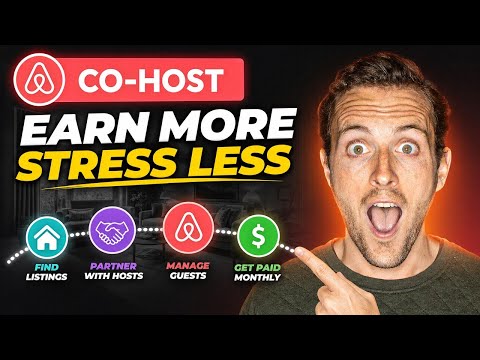
“Airbnb Co-Hosting in 2026: What I'd Charge, What I'd Refuse, and What Actually Scales”
What we found: Nothing Refused
Sound advice and arithmetic that actually checks out — under a title promising a list of things they would turn down, which the video never contains.
- Correct Their arithmetic
- 0 mentions "Refuse"
- Fee revenue $60,000 is
- $36,000 At $3,000/property
The claim
That co-hosting five Airbnb properties produces $60,000 a year with low overhead.
- Their stated arithmetic — 5 × $5,000 × 20% = $5,000/month = $60,000/year — spoken, and set out in an on-screen "The Math" graphic at 12:47
- Our check of it — Correct — the multiplication holds exactly
- What $60,000 actually is — Gross commission revenue, described as "income"
- Costs named against it — None. "Overhead" appears once, as a hedge
- Source for $5,000/month per property — None given
- Sensitivity to that figure — At $3,000/month the same five units give $36,000
- Standard commission — 20–25% of gross revenue — stated plainly
- "Refuse", "turn down", "walk away", "say no", "red flag", "decline" — Zero occurrences each
- The portfolio claim — "Most of the successful co-hosts I work with hit three to five properties"
- Denominator for that — None. "Fail" 0, "average" 0
- Licensing claim — "In most markets it doesn't require a property management license" — no market named
- "Contract", "liability", "insurance", "tax", "legal", "permit" — Zero occurrences each
What is this income idea?
Managing other people's short-term rental listings for a percentage of what those properties earn — without owning any property yourself.
- The model is stated plainly and early: "you manage someone else's short-term rental property and you take a percentage of the revenue, typically somewhere between 20 and 25%."
- Most of the video is instructional and, taken on its own terms, good. Three ways to pick a niche — geographic, property type, or owner type. A first conversation that leads with questions rather than a pitch. A thirty-day plan for a new client: audit and optimise in week one, build systems in week two, relaunch and monitor in weeks three and four.
- There is advice that runs against the presenter's commercial interest, too: "Do not compete on price… It's better to charge 20% and deliver exceptional results than to charge 10% and burn yourself out."
- Then the number the video builds to: "Five properties averaging $5,000 per month in revenue at 20% commission equals $5,000 per month in co-hosting income. That's $60,000 a year with relatively low overhead."
- We checked that multiplication and it is exactly right. What sits underneath it — and what the title's middle promise turns out to contain — is another matter.
Correct arithmetic resting on an unsourced assumption, called income when it is fee revenue.
- Pick a niche — Three angles given
- Lead with questions — Not a pitch
- Charge 20–25% — Of gross revenue
- Audit the listing — Week one
- Build systems — Week two
- Relaunch, monitor — Weeks three–four
- 5 units → $60K — Maths is right
- Costs? Refusals? — Neither appears
Six genuinely useful steps, one correct sum, and two things the title promised.
They do the sum correctly. They just never do the subtraction.
The lesson underneath the number
- Start with what is right, because there is a decent amount of it. The commission is stated openly as twenty to twenty-five per cent of gross revenue, which is a real industry range and something a viewer can act on the same day. The niching advice is specific rather than motivational, offering three distinct angles and telling you to validate demand before committing. The first-conversation method — ask about occupancy, pricing, reviews and headaches, then diagnose in the conversation itself — is genuinely how consultative selling works, and their framing of it is exactly right: it demonstrates competence without requiring a track record. The thirty-day onboarding plan is the most useful part of the video. And they give advice that costs them: do not undercut, because the owners who buy on price will be the worst clients you ever have.
- Then there is the arithmetic, which we checked because this queue has taught us to. Five properties at five thousand dollars a month, commissioned at twenty per cent, really is five thousand dollars a month and sixty thousand a year. Nothing is inflated and no unit is switched. That should be unremarkable and it is not.
- What is missing is everything on either side of the sum. Upstream, the five thousand dollars a month per property has no source, no market, no occupancy assumption and no seasonality, and the whole headline scales directly with it — three thousand a month turns sixty thousand into thirty-six. Downstream, twenty per cent of gross revenue is turnover, not income. Out of it come the property management system they tell you to buy from your very first listing, the analysis tools they recommend, self-employment tax, insurance and every hour of your own work. The entirety of that is covered by the phrase "relatively low overhead", used once, with no number, while margin, expense, tax and insurance appear zero times between them.
- And then the part the title sold. "What I'd Refuse" is the middle of three promises and the video contains none of it — not refuse, not turn down, not walk away, not say no, not red flag, not decline. That absence matters more here than it would elsewhere, because refusing is where this business is won or lost. A co-host takes responsibility for someone else's asset and for strangers sleeping in it, and the expensive mistakes are the owner with unrealistic expectations, the property that cannot perform at any price, the market that has just restricted short-term lets, and the arrangement with no written agreement behind it. Contract, liability, legal and permit each appear zero times, and the one mention of licensing is a reassurance — "in most markets it doesn't require a property management license" — with no market named and no source given.
Five properties averaging $5,000 per month in revenue at 20% commission equals $5,000 per month in co-hosting income.
The sum is correct. The word doing the work is "income".
What it actually contains
Good teaching, one honest number, two missing halves.
The central calculation is as spoken and as shown in the on-screen "The Math" graphic at 12:47. Counts across the video: "refuse" 0, "turn down" 0, "walk away" 0, "say no" 0, "red flag" 0, "decline" 0, "margin" 0, "expense" 0, "tax" 0, "insurance" 0, "liability" 0, "contract" 0, "legal" 0, "permit" 0, "fail" 0, "average" 0, "guarantee" 0. "Overhead" appears once, "licen" once, "regulat" once. The only monetary figures are 20–25%, 10%, $5,000 and $60,000. Sensitivity figures below are our own arithmetic.
- Get the arithmetic right — Five properties at $5,000 a month is $25,000 of gross revenue; 20% of that is $5,000 a month and $60,000 a year. We checked it and it holds exactly. That is rarer in this genre than it should be. The same sum is set out in an on-screen "The Math" graphic at 12:47, which also labels the result "income".
- State the commission openly — "Typically somewhere between 20 and 25%" of gross revenue, given as a range without hedging. A viewer can take that figure to a conversation immediately.
- Advise against undercutting — "Do not compete on price. This is the single biggest mistake that kills co-hosting businesses… Owners who hire based on the lowest price will be the most difficult clients you'll ever work with."
- Give a concrete first-client method — Lead with questions about occupancy, pricing, reviews and headaches; diagnose in the conversation itself. "It demonstrates competence without needing a track record."
- Name a real example with real terms — A member who "negotiated 20% management fees plus upfront consultation fees for the audit and the relaunch" on their first client. Specific enough to be checkable.
- Then call fee revenue "income" — "$60,000 a year with relatively low overhead." No cost is ever named — "margin", "expense", "tax" and "insurance" each appear zero times — while a paid PMS is recommended in the same video. The on-screen checklist graphic that reads "Use a PMS" carries no price either.
- Leave the $5,000 unsourced — No market, no occupancy assumption, no seasonality, no citation. The entire headline rests on it: at $3,000 a month per property the same five units produce $36,000.
- Refuse nothing — The title promises "What I'd Refuse". "Refuse", "turn down", "walk away", "say no", "red flag" and "decline" each appear zero times. The closest thing is advice about pricing.
The business model
20–25% of the gross revenue of managed properties; $60,000/year illustrated on five units at $5,000/month.
Property owners who are overwhelmed, out of state, underperforming, or moving from long-term to short-term letting.
Focused attention a large management company cannot give — "a focused boutique co-host with five listings can genuinely outperform a company with 50".
Existing network, real estate investor groups, direct outreach to listings, and Airbnb's own co-host network.
- Property management software — Recommended from the first listing; never priced
- Market analysis tools — AirDNA named; never priced
- Tax and insurance — Zero mentions each
- The co-host's own labour — Never valued
The only cost language in the video is "relatively low overhead", used once, with no figure.
What you would actually need
Money
Presented as one of the lowest-barrier models available: "you don't need to buy a property, you don't need massive startup costs, and you don't need years of experience." The $60,000 figure carries the phrase "relatively low overhead".
The barrier genuinely is low — this is labour and judgement rather than capital, and that part is fair. But "relatively low overhead" is the only cost language in the video and it is a hedge with no number behind it. In the same breath they recommend running a property management system "even for your very first listing", naming Hostaway, and recommend AirDNA for market analysis. Neither is priced. Nor is anything else: "margin", "expense", "tax" and "insurance" each appear zero times, so the $60,000 arrives with nothing subtracted and no indication of what should be.
Named and unnamed
- No property purchase — genuinely the model's strength
- A property management system, recommended from listing one — unpriced
- AirDNA or similar for market analysis — unpriced
- A reliable cleaning team, called "the backbone of your entire operation"
- Insurance and tax — zero mentions each
- Any margin or expense figure — zero mentions
Time
The first thirty days are mapped out in detail, and the growth expectation is "three to five properties within their first six to 12 months" — though for "the successful co-hosts I work with".
The thirty-day plan is the most practically useful part of the video and it describes real work: auditing photos, titles, descriptions, amenities and pricing; writing message templates; coordinating cleaners; relaunching and monitoring. Beyond that, the workload is guest communication and turnover management across every property, indefinitely. The claim that it "becomes increasingly passive" is asserted rather than demonstrated, and the six-to-twelve-month timeline applies to a group already filtered by the word "successful".
What the work looks like
- Week one — full listing audit and optimisation
- Week two — messaging templates, cleaning coordination, check-in procedures
- Weeks three to four — relaunch, track results, keep the owner updated
- Ongoing — guest messaging, turnovers, pricing, owner reporting
- Three to five properties in six to twelve months, for "successful" co-hosts
- No figure for how many starters reach that — "fail" appears zero times
The part you must pay attention to
The sum is right. The number going into it is unsourced.
"Five properties averaging $5,000 per month in revenue at 20% commission equals $5,000 per month."
- Gross property revenue — 5 × $5,000
- Commission — 20%
$60,000/yr
Correct arithmetic — on an unevidenced input
Credit first, because it is deserved: we ran the multiplication and it is exactly right, which is not something this queue gets to say often. Five properties turning over five thousand dollars a month is twenty-five thousand of gross revenue, a fifth of which is five thousand dollars a month and sixty thousand a year. No inflation, no rounding in their favour, no unit switched. The problem is upstream. Where does five thousand dollars a month per property come from? No market is named, no occupancy rate is given, no seasonality is mentioned and no source is cited — and the entire headline is a direct multiple of it. At three thousand a month, a perfectly ordinary figure for a great many short-term rentals, the same five properties on the same commission produce thirty-six thousand dollars. At two thousand, twenty-four. The sum is honest; the assumption carrying it is invisible.
And what comes out the other end is not income. Twenty per cent of gross revenue is the co-host's turnover, out of which comes the property management system they recommend from the very first listing, the market analysis tools, self-employment tax, any insurance appropriate to taking responsibility for other people's property and their guests, and the co-host's own unpaid hours. The phrase covering all of that is "relatively low overhead" — the single occurrence of the word, with no figure attached — while margin, expense, tax and insurance are each mentioned zero times. Then there is the title. It promises three things and delivers two. What they would charge is answered clearly at twenty to twenty-five per cent. What actually scales is answered with standard operating procedures, software and a cleaning team. What they would refuse is answered not at all: refuse, turn down, walk away, say no, red flag and decline each occur zero times in thirteen minutes, which is a striking gap in a business where the wrong owner, the wrong property or the wrong contract is the most expensive mistake available.
- HIS SUM - WE CHECKED IT
- 5 properties x $5,000/mo
- = $25,000 gross revenue
- x 20% commission
- = $5,000 / month
- x 12 = $60,000 / year
- VERDICT: CORRECT
- BUT THE INPUT IS UNSOURCED
- no market named
- no occupancy rate given
- no seasonality
- no citation
- SENSITIVITY (5 units, 20%)
- $2,000/mo each -> $24,000/yr
- $3,000/mo each -> $36,000/yr
- $5,000/mo each -> $60,000/yr <- theirs
- $8,000/mo each -> $96,000/yr
- AND $60,000 IS NOT INCOME
- it is 20% commission revenue
- still to come out of it:
- PMS (they recommend Hostaway)
- market analysis tools
- self-employment tax
- insurance
- their own hours
- cost language in the video:
- "relatively low overhead"
- (1 occurrence, no figure)
- THE TITLE'S 3 PROMISES
- "What I'd Charge" DELIVERED
- "What I'd Refuse" 0 content
- "What Actually Scales" DELIVERED
- NEVER MENTIONED (0 each)
- refuse turn down walk away
- say no red flag decline
- margin expense tax insurance
- contract liability legal permit
The economics
A correct calculation between two blanks.
- Commission rate — 20–25% of gross revenue
- Assumed property revenue — $5,000/month — no source
- Assumed portfolio — Five properties
- Resulting fee revenue — $5,000/month, $60,000/year
- Our check of their maths — Correct
- At $3,000/property — $36,000/year
- At $2,000/property — $24,000/year
- Costs deducted — None
- Cost language used — "Relatively low overhead" — once, no figure
- Time to five properties — 6–12 months, for "successful" co-hosts
- Share of starters who get there — Never stated
- Tax, insurance, contracts — Zero mentions each
How far the headline moves on its own assumption
5 properties × 20% × monthly revenue × 12 → $24,000 at $2,000/mo, $36,000 at $3,000/mo, $60,000 at $5,000/mo
The $60,000 is a direct multiple of an unsourced input; a third off the assumption is 40% off the headline
IncomeIdeaLab arithmetic on the commission rate and portfolio size they state
Properties in strong markets genuinely do turn over $5,000 a month and more. The objection is that no market, occupancy rate or source is given, so a viewer cannot test whether their own area supports the assumption.
- Where the $5,000/month per property figure comes from
- The cost of the property management software recommended from listing one
- Self-employment tax and any insurance appropriate to the role
- What proportion of people who start reach three to five properties
- What sort of client, property or market they would decline
- Whether a written management agreement is required, and what it should contain
- The on-camera multiplication is arithmetically correct.
- The revenue assumption it rests on is unsourced.
- The $60,000 is commission revenue, described as income.
- "Refuse", "turn down", "walk away", "red flag" and "decline" each appear zero times.
- "Contract", "liability", "insurance", "tax" and "legal" each appear zero times.
- The portfolio claim is scoped to "the successful co-hosts I work with".
Evidence status
Every substantive claim in the video.
- 5 × $5,000 × 20% = $60,000/year — Presenter; on-screen "The Math" graphic at 12:47 — We checked the arithmetic. Correct.
- That $60,000 is "income" — Presenter — It is commission revenue.
- Properties average $5,000/month — Presenter — No market, occupancy or source.
- Standard rate is 20–25% — Presenter — Consistent with the industry.
- "Relatively low overhead" — Presenter — No figure; a PMS is recommended.
- 3–5 properties in 6–12 months — Presenter — Scoped to "successful" co-hosts.
- No licence needed "in most markets" — Presenter — No market named, no source.
- Andrea negotiated 20% plus consultation fees — Presenter — Specific, but a single case.
- "Do not compete on price" — Presenter — Sound, and against their funnel's grain.
- What they would refuse — Nobody — Promised in the title; zero content.
What is actually proven?
The multiplication. Not the inputs, and not the outcome.
- That five units at $5,000 on 20% is $60,000 a year.
- That the industry commission range is 20–25% of gross.
- A specific, sensible thirty-day client onboarding plan.
- That no cost of any kind is deducted from the $60,000.
- That the title's "What I'd Refuse" has no content.
- That a $3,000 assumption would make the headline $36,000.
- What anyone actually earns doing this, after costs.
What the headline doesn’t tell you
One promise unfilled, one number unsourced, one word doing too much.
- The maths is right. — Genuinely. We checked.
- $60,000 is fee revenue. — Called "income".
- $5,000/property is assumed. — No source at all.
- At $3,000 it is $36,000. — Same five units.
- Nothing is refused. — Zero occurrences.
- No contract mentioned. — Nor liability.
- No tax or insurance. — Zero each.
- "Successful co-hosts." — Sample pre-selected.
Should you try it?
Useful instruction — treat the $60,000 as turnover and supply the refusals yourself
Better teaching than most in this queue, with correct arithmetic. The gaps are the cost side and the entire middle of the title.
- Accuracy of the arithmetic — 9 — Checked and correct.
- Clarity on the commission rate — 8 — 20–25%, stated plainly.
- Quality of the onboarding plan — 8 — Week-by-week and specific.
- Advice against undercutting — 8 — Costs them; they say it anyway.
- Sourcing of the revenue assumption — 1 — No market, occupancy or citation.
- Cost disclosure — 0 — "Relatively low overhead", no figure.
- Delivery of "What I'd Refuse" — 0 — Zero occurrences of any refusal term.
- Legal and contractual coverage — 0 — Contract, liability, insurance all zero.
- Use the instruction, because it is sound. Niche deliberately rather than offering to manage anything for anyone; open the first conversation with questions about occupancy, pricing and the owner's actual headaches rather than a rate card; and follow the thirty-day plan, which correctly front-loads the listing audit where the fastest visible wins are. Their warning not to undercut is the best advice in the video and it works against their own funnel, since cheap co-hosts are easier to sell a course to.
- Take the arithmetic at face value, because it is right. Five properties at five thousand a month on a twenty per cent commission is sixty thousand a year. We checked it deliberately and there is no sleight of hand in the multiplication itself.
- Then test the assumption in your own market before you believe the total, because the headline is a direct multiple of a figure with no source attached. If properties near you turn over three thousand a month rather than five, the same five units and the same commission produce thirty-six thousand. They recommend AirDNA; use it on your own postcode before adopting their number.
- Read the sixty thousand as turnover. Twenty per cent of gross revenue is what the business bills, and out of it come the property management system they tell you to run from your first listing, the analysis tools, self-employment tax, insurance and all of your own hours. "Relatively low overhead" is the only cost language in thirteen minutes and carries no figure.
- Supply the refusals yourself, since the title promised them and the video does not deliver. The expensive mistakes in this business are the owner whose expectations cannot be met, the property that will not perform at any price, the market that has just tightened its short-term letting rules, and the arrangement with nothing in writing. Contract, liability, legal and permit each appear zero times, and the sole mention of licensing is a reassurance that "in most markets" none is required — with no market named and no source. Check your own jurisdiction rather than that sentence.
Passive or automated?
Automation
Real and specific — messaging templates, a PMS from listing one, documented SOPs for every repeatable task.
Passive potential
Claimed to become "increasingly passive", but asserted rather than shown. Guests and turnovers continue indefinitely.
The systems advice is genuinely good and unusually early: run property management software from your very first listing rather than waiting until it hurts, automate guest messaging so you are not retyping the same reply, and document standard operating procedures for everything repeatable so that delegation later does not degrade quality. That is how an operator actually gets from one property to five. But the claim that "the business becomes increasingly passive" is an assertion with nothing behind it in the video, and the work being systematised — guest communication, cleaning coordination, pricing, owner reporting — does not stop, it simply moves to templates and eventually to other people who must be paid out of the same twenty per cent that is never broken down.
- Winning owners, which is consultative selling on every deal
- Guest communication and problem-solving across every property
- Coordinating cleaners and turnovers, called the backbone of the operation
- Reporting to owners, who are clients that can leave
Recommended beginner experiment
Keep their method; add the two halves they left out.
- Pull real revenue for your area. — Don't inherit $5,000.
- Recompute at your local figure. — The total moves with it.
- Price the PMS and tools. — Neither is costed here.
- Subtract tax before celebrating. — Zero mentions.
- Get a written agreement. — "Contract" appears 0 times.
- Check licensing where you live. — Not "most markets".
- Write your own refusal list. — The title's missing half.
- Follow the 30-day plan. — That part is good.
Our verdict: 5/10
Correct arithmetic, unsourced inputs, and a promise never kept The $60,000 sum checks out exactly — but it is commission revenue, and "refuse" appears zero times
Credited for instruction that is specific and largely sound, and for arithmetic that we verified and found correct: five properties averaging $5,000 a month at a 20% commission genuinely is $5,000 a month and $60,000 a year, with nothing inflated and no unit switched, which is rarer in this genre than it ought to be; the commission range of 20–25% of gross revenue is stated openly and matches the industry; the niching guidance offers three distinct and concrete angles, geographic, property type and owner type, and tells viewers to validate demand before committing; the first-conversation method of leading with questions about occupancy, pricing, reviews and headaches, then diagnosing live, is genuinely how consultative selling works and is correctly framed as a way to demonstrate competence without a track record; the thirty-day onboarding plan is week-by-week and front-loads the listing audit where the fastest visible improvements sit; the systems advice to run a PMS from the first listing and document SOPs early is right; a named member example includes specific commercial terms, 20% plus an upfront consultation fee; and the instruction not to undercut — "it's better to charge 20% and deliver exceptional results than to charge 10% and burn yourself out" — runs against their own funnel's interest. Marked down because the $5,000 monthly revenue per property that the entire headline multiplies is given with no market, no occupancy assumption, no seasonality and no source, so the total moves directly with an invisible input: the same five properties at $3,000 a month yield $36,000 and at $2,000 yield $24,000; because that $60,000 is commission turnover described as "co-hosting income" with "relatively low overhead", the only cost language in the video, occurring once and carrying no figure, while "margin", "expense", "tax" and "insurance" each appear zero times and a paid property management system is recommended from the first listing without being priced; because the title's middle promise, "What I'd Refuse", has no content whatsoever, with "refuse", "turn down", "walk away", "say no", "red flag" and "decline" each occurring zero times across the video, in a business where the wrong owner, the wrong property or the wrong market is the costliest available mistake; because "contract", "liability", "legal" and "permit" each appear zero times despite the model consisting of taking responsibility for other people's assets and their guests; because the sole mention of licensing is the reassurance that "in most markets it doesn't require a property management license", with no market named and no source given; and because the growth claim of three to five properties in six to twelve months is explicitly scoped to "the successful co-hosts I work with", a pre-selected sample, with no denominator and with "fail" and "average" each appearing zero times.
This is better teaching than most of what passes through this queue, and it does something almost nothing else here does: it gets its sum right. Five properties at five thousand a month on a twenty per cent commission really is sixty thousand a year, and we checked it precisely because we expected not to be able to say that. The niching framework is concrete, the first-conversation method is how selling actually works, the thirty-day plan is specific, and the instruction not to undercut is advice that costs them something to give. What surrounds the correct sum is the problem. The five thousand dollars a month it multiplies has no market, no occupancy rate and no source, and the headline falls to thirty-six thousand on an assumption of three thousand instead. The sixty thousand that comes out is commission turnover, not income, and the only word spent on costs is "overhead", once, hedged with "relatively low", while the video recommends software it never prices. And the title sold three things and delivered two: what they would charge is answered, what scales is answered, and what they would refuse — the part that would protect a beginner from the wrong owner, the wrong property or the wrong jurisdiction — never appears at all.
- Their arithmetic — Correct
- Revenue assumption — $5,000/mo, unsourced
- At $3,000/property — $36,000/year
- $60,000 is — Commission revenue
- Costs deducted — None
- "Refuse" and synonyms — 0 mentions
- Contract / liability / tax — 0 mentions each
- Growth claim scope — "Successful" co-hosts only
- Beginner suitability — Good method, incomplete ledger
Sources
- Airbnb Co-Hosting in 2026: What I'd Charge, What I'd Refuse, and What Actually Scales — James Svetec — Source video; calculation also shown in an on-screen graphic, 2026-07-23
- Airbnb — Co-Host Network — Platform feature named in the video as a client channel
- FTC — Guides Concerning the Use of Endorsements and Testimonials — Regulatory guidance on earnings claims and typical results