Creator Economy · Claim Review
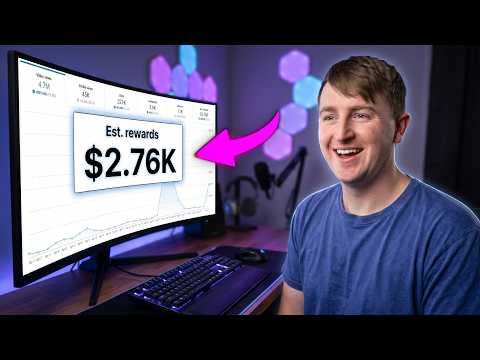
“I Made $2,760 Clipping in April 2026 (Full Breakdown)”
What we found: Two Million Views, One Hundred and Ten Dollars
A clipper shows their dashboard, corrects their own headline down to $1–2K a month, and reports the clips that paid nothing.
- $2,760 April
- $1–2K/mo Their 2026 average
- $110 Campaign payout
- 0 mentions Rights, terms, copyright
The claim
That they made $2,760 clipping in April 2026.
- April earnings — $2,760 as "Est. rewards" for 1–30 April, shown in TikTok Studio analytics at 0:54 — TikTok's estimate, not a payout
- Views that month — 4.7 million, up 885,046 (23.4%) on the previous period, on the same dashboard
- The previous period (March) — ≈$2,430 — the dashboard shows April up $328.83 (13.5%) on it (our arithmetic)
- Implied rate — ≈$0.59 per 1,000 views
- Where most of it came from — TikTok Creator Fund, not clipping campaigns — stated in the first 30 seconds
- Their actual 2026 average — "About 1 to $2,000 a month" — volunteered
- April against that midpoint — 1.84× higher
- Cause of the spike — One clip at 2 million views
- Campaign earnings on that clip — $110 estimated payout, $0 paid out yet — campaign page on screen at 2:10; "the budget literally ended as soon as that video went viral"
- That works out at — ≈$0.055 per 1,000 views
- A separate 1.1M-view clip earned — Nothing — it ran 34 seconds, under the 60-second threshold
- Products sold — None — a free Discord is the only offer
- Hours worked, costs, tax, copyright — Zero mentions each
What is this income idea?
Cutting short clips from other people’s podcasts and streams, posting them, and being paid by the platform and by clip campaigns.
- The proof comes early and on screen: "I am now in my TikTok analytics, and as you can see for the entire month of April, I generated $2,760." The TikTok Studio overview on screen at 0:54 labels the figure "Est. rewards" for 1–30 April, with 4.7 million views and 221,000 likes. It also shows April up $328.83 (13.5%) on the previous period, which puts March at about $2,430 (our arithmetic).
- Then the correction, unprompted and in the same breath: "So far for 2026, I'm averaging about 1 to $2,000 a month. This last month was definitely better, and it's because of this clip right here. It got 2 million views."
- They also separate the sources immediately. "The majority of my money is coming from the TikTok Creator Fund because I do have over 10k followers" — so most of the total is platform payout on their own account, not campaign work, despite the word "clipping" in the title.
- The campaign economics get an honest airing. That same 2-million-view clip was posted to a campaign and returned $110, "because the budget literally ended as soon as that video went viral". The campaign page on screen at 2:10 shows the $110 as "Your estimated payout", with $0 paid out at that point. They estimate they would have earned "at least an additional $1,500" had the budget held.
- And a second failure: a clip of another podcast reached 1.1 million views and paid nothing at all, because at 34 seconds it fell under the 60-second threshold the platform requires. "Definitely bummed I did not make this over a minute."
A small creator showing their real numbers, including the ones that went wrong, with nothing for sale at the end.
- Pass 10K followers — Unlocks payouts
- Cut clips 60s+ — Below that pays $0
- Post to own account — Most of the money
- Also join campaigns — Rate per 1,000
- One clip goes viral — 2M views
- Campaign budget ends — $110 total
- April: $2,760 — Peak month
- Average: $1–2K — Their own figure
The viral clip that made the month is also the clip that shows how little campaigns can pay.
They tell you the month was lucky.
The lesson underneath the number
- The structure of this report is the opposite of the genre norm. Most income videos show a good month and imply it is the floor. This one shows a good month, displays the dashboard behind it, and then immediately says the average is roughly half to three-quarters of it — one to two thousand a month across the year — before naming the single two-million-view clip that made the difference. One detail on the same dashboard sits slightly against that: April is shown up 13.5% on the previous period, which puts March at about $2,430 by our arithmetic, also above the stated range. The stated average and the two months on screen are not fully reconciled in the video.
- They also give away the two facts a seller would suppress. A campaign paid them a hundred and ten dollars on a clip with two million views, because the budget ran dry the moment the video took off, and they reckon a live budget would have been worth fifteen hundred dollars more. And a clip of a different podcast drew over a million views and paid nothing at all, because they cut it at thirty-four seconds and the threshold is sixty. Both are told as their own mistakes or misfortunes, with the numbers attached.
- And there is nothing at the end. No course, no coaching, no paid community, no discount code. The editing tools they name are flagged as having free plans, the community they point to is a free Discord, and their closing move is to ask their viewers what they earned last month because they genuinely want to compare. In a queue full of funnels, a creator whose only ask is a comment is worth noting.
- Two things are missing and one of them is serious. The smaller gap is labour: they never say how many clips they made, how long one takes, or how many hours went into four point seven million views, which means the earnings have no denominator and nobody can tell whether this is well or badly paid work. The larger gap is rights. Every clip is cut from someone else's podcast or stream, and copyright, permission, platform terms, strikes and bans are each mentioned zero times. Campaign work usually comes with a licence attached; the platform payouts they say make up most of their income do not obviously come with anything of the kind, and the video never raises the question.
I did not get paid for every single view because the budget literally ended as soon as that video went viral.
The most useful warning in the video, about their own best clip
What it actually contains
The dashboard, the average, and the clips that earned nothing.
Earnings figures are quoted as stated and as shown on screen: TikTok Studio analytics at 0:54 and the campaign payout page at 2:10. The per-1,000-view rates, the March figure and the peak-versus-average multiple are our own arithmetic on their figures and are labelled calculated. Counts across the video: "hours" 0, "per day" 0, "cost" 0, "tax" 0, "copyright" 0, "strike" 0, "ban" 0, "terms" 0, "course" 0, "coaching" 0, "sponsor" 0, "affiliate" 0.
- Show the dashboard — "I am now in my TikTok analytics, and as you can see for the entire month of April, I generated $2,760." The figure is displayed rather than asserted: the TikTok Studio overview at 0:54 shows "Est. rewards" of $2.76K for 1–30 April, alongside 4.7 million views. It is TikTok's estimated rewards figure rather than a payout record.
- State the real average immediately — "So far for 2026, I'm averaging about 1 to $2,000 a month. This last month was definitely better." They identify their own headline as an outlier within seconds of showing it. The same dashboard shows April up 13.5% on the previous period, which puts March at about $2,430 (our arithmetic), also above the range they give.
- Name the single clip responsible — The spike traces to one video at 2 million views. They do not present the month as a new baseline, and explicitly attributes it to a single piece of luck.
- Separate platform payouts from campaign work — "The majority of my money is coming from the TikTok Creator Fund." The title says clipping; they clarify in the opening thirty seconds that most of the money is the platform paying them for their own account's views.
- Report the campaign that paid almost nothing — 2 million views returned an estimated $110, because "the budget literally ended as soon as that video went viral". The campaign page at 2:10 shows "Your estimated payout" of $110 and $0 paid out so far. They add that a full budget would have meant "at least an additional $1,500", and say they are bummed.
- Report the clip that paid nothing at all — 1.1 million views on another podcast clip, $0 earned, because it ran 34 seconds against a 60-second minimum. A concrete rule and a concrete personal loss, volunteered.
- Give an actual rate card — Named campaigns at $1.30, $0.29 and $0.11 per thousand views, with the trade-off explained: higher rates attach to less popular creators where views are harder to win, lower rates to bigger ones where they are easier.
- Sell nothing — No course, no coaching, no paid community. The tools they name have free plans and the community they point to is a free Discord. They end by asking viewers what they earned, because they want to compare.
The business model
Platform payouts on a personal TikTok account (the majority) plus per-thousand-view fees from clip campaigns.
Not applicable — the payers are the platform and the campaign budgets of podcasters and streamers.
Short-form distribution for long-form creators, and watch time for the platform.
A TikTok account past 10,000 followers, with clips repurposed automatically to YouTube Shorts.
- Editing software — Premiere Pro, plus add-ons; never priced
- Time per clip — Never stated — the key missing input
- Tax — Never mentioned
- Rights to the source footage — Never discussed
The monetary barrier is genuinely low. The unpriced input is labour, and the video gives no hours at all against which to judge the earnings.
What you would actually need
Money
Not addressed. The word cost never occurs. They edit in Premiere Pro and name Fire Cut, Opus Clip and Waymark as alternatives, noting that the last two have free plans.
The barrier here is genuinely low, which is part of why the model attracts people — but it is not zero. Premiere Pro is a paid subscription and it is the tool they actually use, with the free options presented as fallbacks for when they cannot face editing. No figure is given, and the $2,760 is pre-tax, which is never mentioned either.
Named and unnamed
- Premiere Pro — their editing tool; never priced
- Fire Cut — a Premiere add-on they recommend; never priced
- Opus Clip and Waymark — free plans noted, paid tiers not discussed
- Tax on the earnings — never mentioned
- A TikTok account past 10,000 followers — the gating requirement
- What it cost them in time to reach that threshold — never stated
Time
Entirely absent. The words "hours", "per day" and "how many" each occur zero times. They never say how many clips produced 4.7 million views, or how long one takes to cut.
This is the video's largest omission, and it is the one that decides whether the model is worth anything. Without the hours, $2,760 has no denominator: it could be an excellent hourly rate or a poor one. Someone deciding whether to try this needs to know how many clips a month, and how long each takes — and the "full breakdown" in the title does not include it.
What is missing
- Clips produced in April — never stated
- Time per clip — never stated
- Hours per week — never stated
- Time spent reaching 10,000 followers — never stated
- How long the account has been running — never stated
- Effective hourly rate — impossible to derive
The part you must pay attention to
A campaign budget can run out mid-viral.
"I did not get paid for every single view because the budget literally ended as soon as that video went viral. So, I only got $110 from it."
- Views on the clip — 2,000,000
- Estimated campaign payout — $110
$0.055 / 1,000
Against advertised rates of $0.11 to $1.30
This is the most useful thing in the video and it works against the model they are describing. Clip campaigns advertise a rate per thousand views — they name three, at a dollar thirty, twenty-nine cents and eleven cents — but those rates are drawn against a fixed budget, and when the budget empties the payments stop regardless of how the clip performs. Their two-million-view video earned an estimated hundred and ten dollars (the campaign page on screen shows nothing paid out yet), which is about five and a half cents per thousand: half the lowest advertised rate on their own list, and a twenty-fourth of the highest. They estimate they would have made at least fifteen hundred dollars more had the budget survived, and say plainly that they are bummed about it. Anyone reading a campaign rate card should treat it as a ceiling that may be withdrawn at the exact moment it starts to matter.
The second lesson costs them even more and they volunteer it too: a clip of another podcast reached one point one million views and paid nothing whatsoever, because at thirty-four seconds it fell below the platform's sixty-second threshold for payment. More than a million views, zero dollars, on a rule they knew and missed. Set against that candour is one absence that matters. Every clip discussed is made from somebody else's recording — named podcasts and streams — and the words copyright, permission, terms, strike and ban occur zero times in the entire video. Campaign clipping normally carries an explicit licence from the creator running the campaign, which is fine. But they tell us the majority of their money comes from the platform's own payouts on their account rather than from campaigns, and for that portion the question of whose footage it is, and under what permission, is never raised at all. In a model whose entire input is other people's work, that is the risk a beginner most needs flagged, and it is the one thing this otherwise careful report does not flag.
- APRIL, AS SHOWN
- Platform earnings $2,760
- Views 4.7M
- Implied rate ~$0.59 / 1,000
- Views vs previous period +23.4%
- Rewards vs previous +13.5%
- March, our arithmetic ~$2,430
- HIS OWN AVERAGE
- 2026 to date $1,000-$2,000
- April vs midpoint 1.84x
- Cause one 2M clip
- THE CAMPAIGN CLIP
- Views 2M
- Estimated payout $110
- Paid out at filming $0
- Rate ~$0.055 / 1,000
- Reason budget exhausted
- Forgone, their estimate $1,500+
- THE 34-SECOND CLIP
- Views 1.1M
- Paid $0
- Reason under 60 seconds
- ADVERTISED RATES (per 1,000)
- Mariah $1.30
- Impulsive $0.29
- Steiny $0.11
- NEVER MENTIONED (0 each)
- hours cost tax
- copyright permission terms
The economics
Real figures, honestly bounded, with no hours behind them.
- April platform earnings — $2,760 est. rewards, TikTok Studio, 1–30 April (0:54)
- April views — 4.7 million
- March, from the +$328.83 (13.5%) change shown — ≈$2,430
- Implied platform rate — ≈$0.59 per 1,000 views
- 2026 monthly average — $1,000–$2,000
- April vs that midpoint — 1.84×
- Campaign payout on a 2M clip — $110 estimated; $0 paid out yet (2:10)
- That rate — ≈$0.055 per 1,000 views
- Forgone, by their estimate — "At least an additional $1,500"
- A 1.1M-view clip earned — $0 — under 60 seconds
- Advertised campaign rates — $1.30, $0.29, $0.11 per 1,000
- Hours worked — Never stated
- Costs and tax — Never mentioned
What the campaign actually paid per thousand views
$110 ÷ (2,000,000 ÷ 1,000) = $0.055 per 1,000 views
Half the lowest advertised rate on their own list, and roughly a twenty-fourth of the highest
IncomeIdeaLab arithmetic on their stated figures
The shortfall is caused by budget exhaustion rather than a difference in the advertised rate; the point is that advertised rates are ceilings drawn against finite budgets.
- How many clips produced 4.7 million views
- How long a single clip takes to make
- What the editing software costs
- Tax on the earnings
- Whether they have permission to use the source footage
- What happens to the account if a rights holder objects
- The April figure is displayed in TikTok Studio analytics at 0:54 rather than asserted; it is labelled "Est. rewards", TikTok's estimate rather than a payout.
- The same dashboard shows April up $328.83 (13.5%) on the previous period, which puts March at about $2,430 (our arithmetic).
- The $110 campaign figure is shown at 2:10 as an estimated payout, with $0 paid out at that point.
- They volunteer a 2026 average of $1,000–$2,000, below the headline month.
- They attribute the spike to a single 2-million-view clip.
- Most of the income is platform payouts, not campaign fees — stated in the opening 30 seconds.
- Two clips are reported that earned $110 and $0 respectively on 2M and 1.1M views.
- No product is sold anywhere in the video; the only community offered is free.
Evidence status
Every substantive claim in the video.
- $2,760 in April — TikTok Studio analytics on screen at 0:54, 1–30 April — Shown, not asserted; labelled as estimated rewards.
- 4.7 million views, +23.4% on the previous period — TikTok Studio analytics on screen at 0:54 — Consistent with the rewards figure.
- March at about $2,430 — Our arithmetic from the +$328.83 (13.5%) change shown — Also above the $1,000–$2,000 average they state.
- "Averaging about 1 to $2,000 a month" — Presenter — Volunteered; makes April an outlier.
- Most income is Creator Fund, not campaigns — Presenter — Clarified in the opening 30 seconds.
- $110 on a 2M-view clip — Campaign payout page on screen at 2:10 — An estimated payout, with $0 paid out at that point; the cause, budget exhaustion, is explained.
- $0 on a 1.1M-view clip — Presenter — Under the 60-second threshold.
- Campaign rates of $1.30 / $0.29 / $0.11 — Presenter — Specific and checkable, with the trade-off explained.
- "At least an additional $1,500" forgone — Presenter — Their estimate; reasonable but unverifiable.
- Hours, costs, tax — Nobody — None appears.
- Rights to the source footage — Nobody — Never raised in a video built on it.
What is actually proven?
More than usual, and honestly bounded.
- April estimated rewards of $2,760 and 4.7 million views, shown in TikTok Studio analytics at 0:54.
- That March was about $2,430, from the 13.5% change shown on the same dashboard.
- A 2026 average of $1,000–$2,000 a month.
- That April was 1.84× their own stated midpoint.
- A $110 estimated payout on 2 million views after budget exhaustion, with $0 paid out yet (campaign page at 2:10).
- That this equals ≈$0.055 per 1,000 views.
- That nothing is sold anywhere in the video.
- Hours, costs, tax, and the rights position.
What the headline doesn’t tell you
They tell you most of it themselves.
- Average is $1–2K. — April was 1.84×.
- Mostly Creator Fund. — Not campaign work.
- 2M views: $110 estimated. — Budget ran out; $0 paid yet.
- March was ~$2,430 too. — Our arithmetic, from the dashboard.
- 1.1M views paid $0. — 34 seconds.
- No hours given. — No denominator.
- No costs, no tax. — Zero mentions.
- Whose footage? Unasked. — The real gap.
- Nothing for sale. — Genuine credit.
Should you try it?
Honest report; check the rights before the rates
One of the straighter income videos in this queue. Treat $1–2K a month as the figure, not $2,760, and find out whose content you are allowed to cut.
- Evidence for the headline figure — 8 — TikTok Studio dashboard shown on screen.
- Disclosure of the real average — 9 — Volunteered within seconds.
- Reporting of failures — 9 — $110 and $0 outcomes, with causes.
- Usefulness of the rate data — 8 — Three named rates with trade-offs.
- Absence of a funnel — 10 — Nothing sold at all.
- Disclosure of hours worked — 0 — Zero mentions.
- Costs and tax — 0 — Neither addressed.
- Rights and platform risk — 0 — Never raised.
- Judged as an income report this is among the better ones here. The figure is displayed in the platform's own analytics rather than asserted, and within seconds of showing it they explain that their real average across 2026 is one to two thousand a month and that April was lifted by a single clip that happened to reach two million views. That is someone describing variance rather than selling a ceiling, and it is the correct way to present a good month.
- They then give away two things that make the model look worse, both with numbers. A campaign paid them a hundred and ten dollars on that same viral clip because the budget emptied the moment it took off — about five and a half cents per thousand views, against advertised rates on their own list running from eleven cents to a dollar thirty. And a clip of another podcast pulled more than a million views and earned nothing at all, because they cut it at thirty-four seconds and the payment threshold is sixty. Those are the two structural traps in clipping, and they have walked into both and shown you the damage.
- Nothing is being sold. No course, no coaching, no paid group, no code. The editing tools they mention are flagged as having free plans, the community is a free Discord, and their closing request is for viewers to tell them what they earned so they can compare. That deserves saying plainly, because in this queue it is close to unique.
- Two gaps remain. They never say how many clips they made or how long one takes, which leaves the earnings without a denominator — four point seven million views could represent thirty hours of work or three hundred, and nobody watching can tell. And in a business whose raw material is entirely other people's podcasts and streams, copyright, permission, platform terms, strikes and account bans are mentioned zero times. Campaign clipping normally carries a licence from the creator running it; the platform payouts they say are most of their income do not obviously carry anything, and the question never comes up.
Passive or automated?
Automation
They automate redistribution — two TikTok posts a day pushed to YouTube Shorts — but every clip is cut by hand.
Passive potential
Earnings track views, and views require a constant supply of new clips.
The only genuine automation described is redistribution: they built a workflow pushing two posts a day from TikTok to a YouTube Shorts account "and I don't have to do any work with it", with the honest caveat that the account is not yet monetised and they will report back if it becomes so. Everything upstream is manual — finding the source, choosing the moment, cutting it, captioning it in Premiere or Fire Cut, and checking it clears sixty seconds. Income stops when clipping stops, and the month that made the headline depended on one clip performing unusually well.
- Selecting and cutting every clip
- Captioning and editing each one
- Monitoring campaign budgets before posting
- Maintaining posting volume to sustain views
Recommended beginner experiment
Take their caution; add the questions they skipped.
- Use the average, not the best month. — $1–2K, by their own account.
- Cut every clip over 60 seconds. — Their 1.1M-view clip paid $0.
- Check a campaign’s remaining budget. — Rates are ceilings, not promises.
- Expect the budget to die on your hit. — It did on theirs.
- Confirm you may use the footage. — Never raised in the video.
- Log your hours from day one. — They give none; you should.
- Set the tax aside. — The $2,760 is gross.
- Treat the platform fund as the real income. — Campaigns were $110 of it.
Our verdict: 7/10
An honest report that corrects its own headline They show the dashboard, then say their average is $1–2K a month
Scored well above this queue's norm because the reporting is disciplined and consistently unflattering to itself: the $2,760 is displayed in the platform's own analytics rather than asserted, and within seconds they volunteer that their 2026 average is "about 1 to $2,000 a month" and attribute April's excess to a single clip that reached 2 million views, making the headline month 1.84× their own midpoint by our arithmetic (the same dashboard shows April up 13.5% on the previous period, which puts March at about $2,430, also above that range); they clarify in the opening thirty seconds that most of the money is TikTok Creator Fund payouts on their own account rather than clipping-campaign fees, despite the title; they report two damaging outcomes with figures attached, a campaign that returned an estimated $110 on a 2-million-view clip, shown as an estimated payout with $0 paid out on the campaign page at 2:10, because "the budget literally ended as soon as that video went viral" — roughly $0.055 per thousand views, half the lowest rate on their own advertised list — and a 1.1-million-view clip that earned nothing because it ran 34 seconds against a 60-second threshold; they supply a genuine rate card with three named campaigns at $1.30, $0.29 and $0.11 per thousand and explains why higher rates attach to harder audiences; and they sell nothing whatsoever, naming free plans for the tools, pointing to a free Discord, and closing by asking viewers to report their own earnings so they can compare. Marked down because the "full breakdown" contains no labour figure at all — "hours", "per day" and "how many" each occur zero times, so 4.7 million views has no denominator and no one can judge whether the work is well or poorly paid; because cost and tax are each mentioned zero times, leaving the figure gross and the paid editing software they actually use unpriced; and most seriously because every clip is cut from someone else's podcast or stream while "copyright", "permission", "terms", "strike" and "ban" each return zero occurrences — a licence normally accompanies campaign work, but they state that the majority of their income comes from platform payouts that carry no such arrangement, and the question is never raised.
This is what an income report should look like from someone with no product to sell. The number is on screen in the platform's own dashboard, and before the viewer can mistake it for a baseline they say that their average across the year is one to two thousand a month and that April owed its size to one clip reaching two million views. They then hand over the two facts that make clipping look worst, because both happened to them: a campaign paid a hundred and ten dollars on that same viral clip after its budget emptied at the worst possible moment, which works out at about five and a half cents per thousand views against advertised rates running as high as a dollar thirty; and a clip on another podcast drew over a million views and paid nothing at all because they cut it four seconds too long to be thirty seconds and twenty-six seconds too short to be paid. They name real campaign rates, explains why the generous ones are generous, and then finish by asking their audience what they made, having offered them nothing but a free Discord. What is missing is the work. They never say how many clips they made, or how long one takes, so four point seven million views arrives without any sense of what it cost them to produce — the one number a "full breakdown" most needed. And in a model built entirely from other people's recordings, the words copyright, permission, terms, strike and ban appear not once, in a video that also tells us most of the money comes from payouts that carry no campaign licence at all.
- April — $2,760 est. rewards (TikTok Studio)
- March — ≈$2,430
- Their average — $1,000–$2,000/mo
- Peak vs midpoint — 1.84×
- Campaign on a 2M clip — $110 estimated
- That rate — ≈$0.055/1,000
- 1.1M-view clip — $0 — under 60s
- Products sold — None
- Hours / costs / rights — Zero mentions each
- Beginner suitability — Good, with rights checked
Sources
- I Made $2,760 Clipping in April 2026 (Full Breakdown) — Ethan’s Hustle — Source video; TikTok Studio analytics and a campaign payout page shown on screen, 2026-05-08
- FTC — Guides Concerning the Use of Endorsements and Testimonials — Regulatory guidance on earnings claims and typical-results disclosure