Affiliate Marketing / Traffic Methods · Claim Review
“The ONLY Clickbank Affiliate Marketing Tutorial You Need to Make Your First Sale (Full Tutorial)”
What we found: Three ClickBank Methods: A First Sale Is Not Shown, but the Creator's Own Dashboard Shows $5.2K in Six Months
A first sale “within 24 hours” is promised and not shown. The creator's own affiliate dashboard at 33:30 shows $5.2K in earnings for 2 Feb to 2 Aug 2026 ($66.4K all-time) and a $5.53 earnings per click, with no ad spend, and the $100-a-day ads plan compares two different kinds of click.
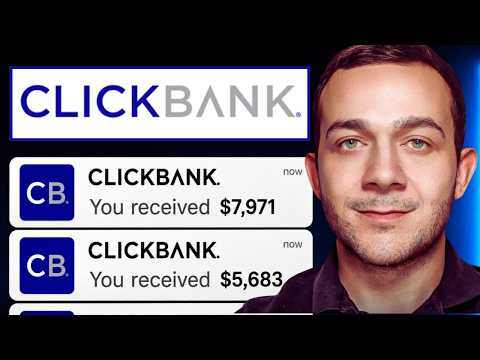
- $100+ Commission per sale
- $5.2K Their earnings, 6 months
- $100/day Ads budget shown
- None Ad spend shown
The claim
That this is the only tutorial needed to make a first ClickBank sale, whether "within 24 hours" or "starting with absolutely zero", using one of three methods.
- Average commission on the chosen offer — Over $100
- Average conversion on affiliate-link clicks — Almost 4%
- Average earnings per click, all affiliates — ~$4
- $100 × 4% — $4, consistent
- Their own earnings per click, long-term — $2.28
- Their own earnings per click, last 12 months — $4.31
- Their own earnings per click, last 6 months — Over $5
- Total earnings on the offer, dashboard at 33:30, 2 Feb–2 Aug 2026 — $5.2K ($66.4K all-time)
- Sign-ups and recurring customers, same dashboard and period — 26 sign-ups; 370 recurring customers (1.4K conversions all-time)
- Click-to-paid rate and earnings per click, same dashboard — 2.76%; $5.53
- Method 1 tools — ~$17/month video tool, ~$20/month keyword tool ($1 first month via their offer)
- Google Ads budget entered — $100 a day
- Their ad spend and a payout or ClickBank statement — Not shown
What is this income idea?
Promote a ClickBank language course to people who are already trying to learn a language, using AI to make the content that reaches them.
- The offer is an online language course on ClickBank that "will pay us on average over USD 100 every time somebody clicks onto our affiliate link and proceeds to make a purchase," with a conversion rate "almost 4%" and average earnings of "around USD 4 for every single click." Those three figures agree with each other.
- Method one is YouTube. They point to animated English-lesson channels whose videos reach millions of views, uses VidIQ to find low-competition searches such as how to customise a coffee order in English (over 3,600 a month), and generates a short cartoon dialogue with an AI video tool. The affiliate link goes in the description, shortened, with a disclaimer. They note this method costs money: about $17 a month for the video tool and about $20 for VidIQ, or $1 for the first 30 days through their offer.
- Method two is free. Claude builds a set of ten flashcards with audio whose last card links to the course; Gemini makes a Pinterest pin; the cards are hosted free and linked from the pin. A stronger version puts the cards behind an email sign-up and sends the affiliate link by automatic email, which they say they cover in another video.
- Method three is paid. Claude builds a multi-page site with guides, a privacy policy and calls to action for the course, and a Google search campaign sends traffic to it. They mention a promotion of up to $900 in ad credits and enters a $100 daily budget.
- They then show their own affiliate dashboard for the offer. Since they began promoting it around 2022 or 2023, their earnings per click average $2.28; over the last 12 months they are $4.31, and over the last 6 months over $5. They credit "substantial testing" of headlines, creatives and landing pages. The dashboard on screen at 33:30 covers 2 Feb to 2 Aug 2026 and shows total earnings of $5.2K ($66.4K all-time), 26 sign-ups, 370 recurring customers (1.4K conversions all-time), a click-to-paid rate of 2.76% and earnings per click of $5.53. It is the creator's own screen; no payout or ClickBank statement is shown with it.
- The video opens by promising a first sale "within 24 hours" for viewers who want speed. No sale from any of the three methods is shown; the dashboard is for the creator's existing promotion of the offer.
Three sensible ways to send language learners to a course, and a dashboard in which the creator shows earnings of $5.2K over six months on the offer, but no ad spend and no result from the three methods themselves.
- Pick a high-EPC offer — $100+, ~4%
- Method 1: AI lessons — YouTube, ~$37/mo tools
- Method 2: free cards — Claude and Pinterest
- Optional email gate — Covered elsewhere
- Method 3: search ads — $100 a day
- Visitor clicks through — To the affiliate link
- Test and improve — Dashboard: $5.2K in 6 months
Every route passes through a page of their own before the affiliate link, where the average applies.
They show the right kind of evidence, but not the spend
The lesson underneath the number
- Much of this is sound. Picking a course and then going where its buyers already are (people searching how to order coffee in English, or saving restaurant phrase cards on Pinterest) matches the offer to the intent. They choose low-competition searches over bigger ones, adds an affiliate disclaimer, ticks the box declaring AI use on YouTube, explains why Google Ads needs a full site rather than a sign-up page, and tells viewers to check the privacy policy Claude writes for them. They are also open that two of their three methods cost money.
- The most interesting part is their dashboard. Earnings per click on the offer averaged $2.28 since they started, rose to $4.31 over the last year, and passed $5 over the last six months. The dashboard on screen at 33:30 covers 2 Feb to 2 Aug 2026 and shows $5.2K in earnings ($66.4K all-time), 26 sign-ups, 370 recurring customers, a 2.76% click-to-paid rate and $5.53 earnings per click. That is their own data on their own promotion, and it supports their main lesson: that testing headlines, creatives and landing pages raises what each click is worth. It is the kind of evidence this genre rarely provides.
- It is a self-shown screen with no payout or ClickBank statement, so we mark it as shown on screen, not confirmed. It also leaves out what was spent on ads or other traffic, so profit cannot be worked out, and it does not say which traffic source the sales came from. The video promises a first sale and shows none from the three methods it teaches.
- The ads method needs the most care. They set a $100 daily budget, about $3,000 a month, and supports it by comparing Google's cost per ad click with the offer's earnings per affiliate-link click. Those are different clicks: one lands on their site, the other leaves it. The value of an ad click is the earnings per link click multiplied by how many site visitors click through, and the video gives no figure for that step. They say, fairly, that Google Ads may not be for everyone because of the upfront cost.
The trick behind all of this is testing, substantial testing.
Their own explanation for the rising rate, and the most credible line in the video
The three methods, as they give them
Well chosen for a language course, with one costed and two not.
No sale or ad spend is shown for any of the three methods; the dashboard on screen covers the creator's promotion of the offer.
- Choose the offer on its numbers — Over $100 per sale, almost 4% conversion and about $4 per click, plus a long track record. The three figures are internally consistent: $100 × 4% = $4.
- Find low-competition YouTube searches — They pass over a 30,000-a-month search rated medium competition in favour of narrower ones rated low or very low, such as over 10,000 a month for polite work phrases. A sensible way for a new channel to be found.
- Generate an animated lesson — A two-character coffee-shop dialogue from a short prompt, with a recap of key phrases at the end. They disclose the AI use on upload and adds an affiliate disclaimer in the description, both good practice.
- Give away flashcards — Ten restaurant phrases with audio, built from a reusable Claude prompt, with the course offered on the last card. Hosted free and linked from a Pinterest pin made with Gemini.
- Optionally gate them behind an email — They call this "even more effective" and says it is "proven to increase" conversions, but sends viewers to a separate video for the setup and gives no figures.
- Run search ads to a fuller site — They explain that a bare sign-up page is not suitable for Google Ads, so Claude builds a multi-page site with guides and a privacy policy, and tells viewers to check it themselves. The campaign is set to maximise purchases with up to 15 test headlines.
- Test until earnings per click rise — Their own dashboard: $2.28 long-term, $4.31 over 12 months, over $5 over 6 months. The dashboard on screen at 33:30 (2 Feb–2 Aug 2026) shows $5.2K in earnings and a $5.53 earnings per click. They say they are "continuously learning as well."
The business model
ClickBank commissions of over $100 per sale on an online language course.
People searching for help with everyday phrases in a new language, here English learners.
Free short lessons, flashcards or guides, each ending with a recommendation for a full course.
YouTube search, Pinterest pins, and paid Google search ads, all leading to pages that link to the offer.
- AI video tool — ~$17 a month, their estimate
- VidIQ — ~$20 a month, $1 first month via their offer
- Google Ads — $100 a day entered; spend to date not given
- Hosting and design — Free tools used
- Refunds and reversed commissions — Not mentioned
- Time for testing — Years, on their own account
Tool costs are stated. The one cost that decides the paid method, ad spend against commissions, is not shown.
What you would actually need
Money
Method one has "some cost involved"; method two needs nothing; method three is paid, with "up to USD 900 in ad credits" available and a $100 daily budget entered, which they call "not on the low end by any stretch."
They are open that two of the three methods cost money, which the "starting with absolutely zero" in the intro does not make clear. The ads method is the expensive one: $100 a day is about $3,000 a month, against an offer that pays per sale and a break-even they never work out.
Costs named in the video
- AI video tool: about $17 a month, their estimate
- VidIQ: about $20 a month, $1 for 30 days via their offer
- Flashcards, pins and hosting: free
- Email automation: a free plan, covered in another video
- Google Ads: $100 a day entered, about $3,000 a month (our arithmetic)
- Ad credit promotion: conditions not stated
Time
A first sale "within 24 hours" for those who want speed; a library of videos built "in literally a fraction of the time it previously took."
The 24-hour promise is not followed up with any result. Their own dashboard suggests the opposite timescale: they began on this offer around 2022 or 2023 and their earnings per click improved over years of testing.
What takes the time
- Keyword research for each video
- Generating, reviewing and uploading videos
- Building flashcard sets and pins per topic
- Building and checking a multi-page ads site
- Writing and testing up to 15 ad headlines
- Years of testing, by their own dashboard
The part you must pay attention to
Cost per ad click and earnings per affiliate-link click are a page apart.
For the ads method, they contrast Google's estimated cost per click with the offer's "almost USD 4" earnings per click, and calls it the case where "the earnings per click is so high and the average estimated cost per click is so low."
- Earnings per affiliate-link click — ~$4
- Share of site visitors who click through (our assumption) — 30%
~$1.20
Most you could pay per ad click and break even, on that assumption
The ad does not send people to the affiliate link. It sends them to the site Claude built, and they explain why it has to: Google Ads will not accept a bare sign-up page. Only the visitors who then click a call to action on that site reach the affiliate link, where the average of about $4 per click applies. So the amount an ad click is worth is $4 multiplied by the share of site visitors who click through, a rate the video never gives. On our assumed 30%, the break-even cost per ad click is about $1.20, not $4. The load-bearing assumption is that a visitor who clicks a search ad for an English-speaking course will then click through to this offer at a high rate, and nothing in the video measures it.
The same applies to their own dashboard, with a difference. Earnings per click rising from $2.28 to over $5 is evidence that their targeting improved, and the dashboard at 33:30 adds the counts that earlier were missing: $5.2K in earnings for 2 Feb to 2 Aug 2026 ($66.4K all-time), 26 sign-ups, 370 recurring customers, a 2.76% click-to-paid rate and $5.53 earnings per click. That is more than most tutorials show. What it does not contain is ad spend, a payout or ClickBank statement, or which of the three methods produced the sales, so it does not tell you profit and it is not evidence that the new methods in the video work. At a $100 daily budget, the campaign in the video needs one sale a day just to cover its cost. The video ends before any of it runs.
- THE OFFER (CONSISTENT)
- Commission per sale $100+
- Conversion ~4%
- $100 x 4% = ~$4 per
- affiliate-link click
- THE ADS PLAN, OUR ARITHMETIC
- Daily budget $100
- Monthly (x30) ~$3,000
- Break-even sales/day 1
- Link clicks needed ~25/day
- Ad click -> site -> link click
- If 30% click through (assumed)
- Ad clicks needed ~83/day
- Break-even CPC ~$1.20
- HIS DASHBOARD
- EPC long-term $2.28
- EPC 12 months $4.31
- EPC 6 months $5+
- Earnings (2 Feb-2 Aug) $5.2K
- Click-to-paid 2.76%
- Ad spend ???
The economics
Their own dashboard totals and rates, with budgets but without ad spend or results from the three methods.
- Commission per sale — Over $100
- Conversion on link clicks — Almost 4%
- Average earnings per link click — ~$4
- Their earnings per click, long-term — $2.28
- Their earnings per click, 12 months — $4.31
- Their earnings per click, 6 months — Over $5
- Their earnings, dashboard at 33:30, 2 Feb–2 Aug 2026 — $5.2K ($66.4K all-time)
- Their sign-ups and recurring customers, same period — 26 and 370 (1.4K conversions all-time)
- Their click-to-paid rate and earnings per click, same period — 2.76% and $5.53
- Daily ad budget entered — $100
- Monthly at that budget — ~$3,000
- Site click-through rate — Not given
- Their ad spend and a payout or ClickBank statement — Not shown
Break-even for the $100-a-day search campaign
$100 a day ÷ $100 per sale = 1 sale a day; 1 ÷ 4% = ~25 affiliate-link clicks a day; ÷ 30% assumed click-through = ~83 ad clicks a day; $100 ÷ 83
About $1.20 is the most an ad click can cost to break even, on an assumed 30% of site visitors clicking through
IncomeIdeaLab calculation. Commission and conversion are from the video; the 30% click-through is our assumption for illustration
If more visitors click through, the break-even cost per click rises; if fewer, it falls. The video gives no click-through rate for the site, and no ad results.
- A payout or ClickBank statement behind the dashboard figures
- Which traffic source the dashboard sales came from
- Their Google Ads spend and return (not shown)
- Click-through rate from their pages to the affiliate link
- Conditions attached to the ad credit promotion
- Refunds and reversed commissions
- Whether their tool links are affiliate links
- The offer figures agree: a commission over $100 at almost 4% conversion gives about $4 per click, matching the earnings per click shown.
- The view counts quoted (over 11 million and 9 million on one channel's lessons, 3.4 million on another's) belong to other channels, and views are not clicks on a description link.
- The intro's first sale "within 24 hours" is not linked to any method or result in the rest of the video.
- Their earnings per click roughly doubled between the long-term figure and the last 12 months, by our arithmetic ($2.28 to $4.31), which supports their point about testing.
- The dashboard at 33:30 gives $5.2K in earnings for 2 Feb to 2 Aug 2026; by our arithmetic that is about $870 a month on average, before any ad spend or other costs.
Evidence status
Every substantive claim in the video.
- The only tutorial you need to make a first sale — Title — No sale is shown from any method.
- First sale "within 24 hours" — Intro — Not followed up anywhere in the video.
- Over $100 per sale, almost 4% conversion, ~$4 per click — ClickBank page on screen — Internally consistent marketplace averages.
- Their earnings per click: $2.28, $4.31, over $5 — Their dashboard on screen — Shown on screen at 33:30 ($5.53 for 2 Feb–2 Aug 2026); self-shown, no payout statement.
- Earnings, sign-ups, customers and click-to-paid rate on the offer — Their dashboard on screen, 33:30, 2 Feb–2 Aug 2026 — $5.2K ($66.4K all-time), 26 sign-ups, 370 recurring customers, 2.76%. Self-shown; ad spend and a payout statement are not shown.
- Animated lesson channels get millions of views — Other channels on screen — Other people's views, not affiliate clicks.
- Low-competition searches, e.g. 3,600 a month — VidIQ on screen — Sensible targeting for a new channel.
- Method 1 costs ~$17 + ~$20 a month — Creator — Disclosed, with a $1 first month via their offer.
- Email gating is "proven to increase" conversions — Creator — No figures given; setup deferred to another video.
- Up to $900 in Google ad credits — Creator — Conditions not stated.
- Low cost per click against a high earnings per click — Creator — Compares an ad click with an affiliate-link click a page later.
- Ad spend and a payout or ClickBank statement — Not shown — Not shown on screen.
What is actually proven?
That their dashboard shows earnings and a rising earnings per click. Not what the three methods earn.
- Their own earnings per click on the offer rose from $2.28 long-term to over $5 recently, and the dashboard at 33:30 shows $5.2K in earnings, 26 sign-ups, 370 recurring customers and a 2.76% click-to-paid rate for 2 Feb–2 Aug 2026. It is self-shown, with no payout statement.
- The offer's commission, conversion and earnings per click agree.
- Each of the three methods is set up on screen.
- Affiliate disclaimer and AI-use disclosure are both shown.
- The ads comparison omits the site click-through step.
- Their ad spend, and a payout or ClickBank statement.
- The first sale promised in the title and intro.
What the headline doesn’t tell you
A dashboard is not a payout statement.
- No sale is shown. — From any of the three methods taught.
- The 24-hour promise vanishes. — It is never mentioned again.
- Their proof is a dashboard. — Self-shown, with no ad spend or payout statement.
- Two methods cost money. — Despite "starting with absolutely zero".
- $100 a day is ~$3,000 a month. — Break-even is never worked out.
- Ad clicks are not link clicks. — The site sits in between.
- The view counts are other channels'. — And views are not clicks.
- The email method is elsewhere. — Called proven, with no figures.
Should you try it?
Try the free method first, and work out ad break-even before any spend
The targeting ideas are good. Their results are shown on their own dashboard, with no ad spend, so plan around your own numbers, not theirs.
- Quality of targeting advice — 8 — Low-competition searches and matching free resources.
- Evidence from their own account — 7 — A dashboard with earnings, customers and rates; no ad spend or payout statement.
- Delivery on the title — 2 — No first sale shown, 24-hour promise dropped.
- Cost disclosure — 6 — Tool costs and ad budget stated; ad results not.
- Ad economics — 2 — Compares two different kinds of click.
- Disclosure practice — 7 — Shows an affiliate disclaimer and AI label.
- Free route available — 7 — Flashcards and Pinterest cost nothing.
- Beginner accessibility — 4 — The fastest method is also the riskiest.
- The ideas for reaching buyers are good. Making something genuinely useful for the exact situation someone is searching for, then offering the course at the end, is honest affiliate marketing, and their advice to aim at low-competition searches is right for a new channel. The flashcard method is free, quick to try, and teaches you the most important number in this business: how many people who see your free resource go on to click the affiliate link.
- Read their dashboard for what it is. Earnings per click rising from $2.28 to over $5 shows that their promotion got better, and supports their point that testing matters. The screen at 33:30 also shows $5.2K in earnings over 2 Feb to 2 Aug 2026 and 370 recurring customers, which is self-shown evidence on this offer. It does not show ad spend or which traffic produced the sales, so a beginner should not read it as a forecast.
- Be most careful with the ads method. They enter $100 a day and compares Google's estimated cost per ad click with the offer's earnings per click. But your ad sends people to your site, not to the affiliate link. Find out what share of your site visitors click through before you trust that comparison; on our illustrative 30%, an ad click is worth about $1.20, not $4. At $100 a day you need roughly one sale every day to break even.
- And treat the "within 24 hours" in the intro as a hook. Nothing in the video shows a sale arriving that quickly, and their own account of improving over two or three years suggests a longer timescale.
Passive or automated?
Automation
Videos and pins keep linking once published; ads run on a budget.
Passive potential
Their own results came from years of continuous testing.
Published videos and pins can keep sending visitors without further work, which is the appeal. But all three methods depend on producing more: more lessons on more searches, more flashcard sets and pins, more ad headlines and landing-page tests. Their own explanation for their rising earnings per click is "substantial testing," which is ongoing work by definition. The paid method is the least passive of all, because a $100 daily budget needs watching every day to make sure it is not losing money.
- Finding new low-competition searches
- Generating and checking each lesson video
- Making new flashcard sets and pins
- Writing, testing and pausing ad headlines
- Watching ad spend against commissions daily
Recommended beginner experiment
Start free, measure every step, then decide on ads.
- Start with the flashcard method. — It costs nothing to test.
- Target one narrow situation. — Like their restaurant phrases.
- Track views, card opens and link clicks. — Your own click-through rate.
- Add a YouTube lesson only if cards convert. — Then the tools are worth paying for.
- Work out break-even cost per ad click. — Earnings per click × your click-through.
- Test ads at a small daily cap. — Not $100 a day on day one.
- Record sales, not just rates. — Rates without volumes hide the result.
- Add the disclaimer and AI label. — As they show.
Our verdict: 6/10
Good targeting, a dashboard that shows earnings, and no sale from the methods taught with an ads plan that compares two different clicks
Credited for internally consistent offer figures, for targeting low-competition searches with useful free resources, for disclosing the tool costs and that two of three methods are paid, for showing an affiliate disclaimer and AI-use label, for explaining why Google Ads needs a full site, and for showing their own affiliate dashboard at 33:30: $5.2K in earnings for 2 Feb to 2 Aug 2026 ($66.4K all-time), 26 sign-ups, 370 recurring customers, a 2.76% click-to-paid rate and $5.53 earnings per click. Marked down because the first sale promised in the title and the "within 24 hours" in the intro never appear; because ad spend and a payout statement are not shown; because the ads method sets cost per ad click against earnings per affiliate-link click without the site step in between; and because a $100 daily budget is entered without any break-even.
This is a more grounded ClickBank tutorial than most. The offer's numbers agree with each other, the targeting is thoughtful (narrow, low-competition searches and free resources that fit what people are looking for), the costs of the paid methods are disclosed, and the creator shows good practice on affiliate and AI disclosure. Most usefully, they show their own affiliate dashboard for the offer: earnings per click rising from $2.28 over the long term to $4.31 over a year and over $5 over six months, and, at 33:30, $5.2K in earnings for 2 Feb to 2 Aug 2026 ($66.4K all-time), 26 sign-ups, 370 recurring customers and a 2.76% click-to-paid rate. It is self-shown, with no payout or ClickBank statement, and ad spend is not shown, so it supports their income on this offer but says nothing about profit. The title promises a first sale and the intro promises one within 24 hours; neither appears. And the method most likely to be fast is the riskiest: a $100-a-day search campaign, about $3,000 a month, justified by comparing the cost of an ad click with the earnings of an affiliate-link click, when every ad visitor first lands on a site and only some click through. On an assumed 30% click-through, the break-even cost per ad click is about $1.20, and the campaign needs a sale a day just to stand still. Try the free flashcard route, measure your own click-through, and only then decide what an ad click is worth to you.
- Offer EPC — ~$4
- Their dashboard, 2 Feb–2 Aug 2026 — $5.2K; EPC $5.53; 2.76% click-to-paid
- Sale from the three methods shown — None
- Ad budget — $100/day (~$3,000/mo)
- Break-even CPC — ~$1.20 at 30% click-through
- Method 1 tools — ~$37/month
- Free method — Flashcards and Pinterest
- Beginner suitability — Free route yes, ads with caution
Sources
- The ONLY Clickbank Affiliate Marketing Tutorial You Need to Make Your First Sale (Full Tutorial) — Real Money Strategies — YouTube video, 2026-08-15
- FTC — Guides Concerning the Use of Endorsements and Testimonials — Regulatory guidance on endorsements and affiliate disclosure