Dropshipping / AI Agents · Claim Review
“Claude FULLY Runs This Dropshipping Store By Itself..”
What we found: $323,000 in Total Sales Is Shown on a Shopify Dashboard for a Claude-Run Dropshipping Store; Ad Spend and Profit Are Not Shown
A Shopify Analytics screen shows $323,225.78 in total sales, which includes $28,934.91 of shipping charges and sits after $46,993.92 of discounts. Net sales are $293,649.87. No ad spend, product cost or profit is shown for a store built on Meta ads, and the creator still oversees ad spend and steers the AI.
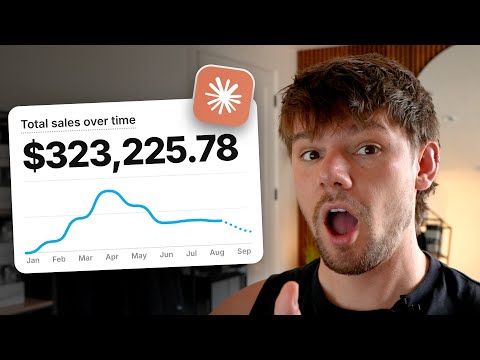
- $323,225.78 Total sales, Jan 1 – Sep 21
- $293,649.87 Net sales
- ~$37k Average per month
- Not stated Ad spend, costs, profit
The claim
That a dropshipping store has done over $320,000 in sales this year while being "fully ran by Claude", with the creator "only working 1 hour a week".
- Total sales, Jan 1 – Sep 21 (Shopify Analytics, 0:57) — $323,225.78
- Gross sales / discounts / sales reversals / net sales (0:57) — $346,864.94 / -$46,993.92 / -$6,221.15 / $293,649.87
- Shipping charges included in total sales (0:57) — $28,934.91
- Sales by channel (0:57) — Online Store $238.8K; Recharge Subscriptions $49.2K; TikTok $14.6K
- Orders / orders fulfilled (0:57) — 6,337 / 6,310
- Average order value (0:57) — $46.45
- Sessions / conversion rate / completed checkouts (0:57) — 250,238 / 1.64% / 4,127
- Returning customer rate (0:57) — 20.3%
- Creator's time — "Only working 1 hour a week"
- Dropshipping experience — Since 2016
- Ad spend, product cost, fees, profit — Not stated
What is this income idea?
Run a dropshipping store where an AI agent does the product research, store building, ad creation and day-to-day changes, with the owner approving.
- The creator opens with the store's analytics: built in January, launched with ads in February, and over $323,000 in sales since, with 6,310 orders, a $46 average order value, 250,000 sessions and a 1.64% conversion rate. The product sells on subscription, and email and SMS campaigns are described as a big reason for its success.
- The analytics are on screen at 0:57: a Shopify Analytics page for the creator's store covering January 1 to September 21 (the year is not clearly legible). It shows total sales of $323,225.78, made up of gross sales of $346,864.94, discounts of -$46,993.92, sales reversals of -$6,221.15 (net sales $293,649.87) and shipping charges of $28,934.91. It also shows 6,337 orders (6,310 fulfilled), a $46.45 average order value, 250,238 sessions, a 1.64% conversion rate with 4,127 completed checkouts, a 20.3% returning customer rate, and sales by channel of $238.8K for the online store, $49.2K for Recharge Subscriptions and $14.6K for TikTok. No ad spend or profit appears on that screen.
- The product and brand are withheld. The creator says the plan is to take the product to TikTok Shop and Amazon, so they are not naming it.
- The method is built around the Claude Chrome extension, which can see and act on web pages. Claude is used to sign up through a store-builder funnel, run product research inside AutoDS, design a Shopify store by copying a top competitor "one step better", find competitors' best ads and recreate them in Higgsfield, set up social accounts and post the videos, and read Shopify analytics to suggest fixes.
- The live demonstration stops before a store is built. Claude suggests a waist-belt massager, the creator finds it "a little bit gimmicky", asks for a top-ten list, reviews five products, and then says "for this video we're not going to choose a product and actually build a store".
- The creator also describes their own role: making sure "there isn't fires burning", checking the store is "spending money well on the meta advertisements", and nudging Claude "with better prompts" when its research or ad finds are weak.
- The first link in the description is for the creator's own energy drink brand, Void, promoted twice in the video. The store builder and AutoDS are the second and third links; whether these are affiliate links is not stated. At 2:34 the screen shows the store builder's marketing page ("Get a FREE AI-built Shopify store in minutes"), and at 4:34 AutoDS is shown beside a Claude side panel; no prices appear on either screen.
Give an AI agent your browser and let it research products, build the store and make ads, while you pay for the ads and check the results. The ad bill is not shown or stated.
- Build a Shopify store — Via a store-builder funnel
- Research in AutoDS — Claude browses for you
- Copy a top competitor — "One step better"
- Recreate winning ads — Higgsfield
- Run Meta ads — Spend not stated
- Approve AI fixes — "Yes that sounds good"
Every step is described as AI-run except the one that costs the most: the ad budget, which is set and watched by the creator and not quantified.
The AI does the tasks. The owner still makes the bets.
The lesson underneath the number
- The workflow in this video is real and specific. A browser agent that can operate AutoDS, Shopify and an ad tool removes a lot of manual work: filling out setup forms, browsing product lists, laying out a store page, finding competitor ads and recreating them. The creator's example of a store page built in about twenty minutes is a fair illustration of how much faster this has become.
- What the demonstration also shows is where judgement still sits. The first product Claude proposed was rejected as "a little bit gimmicky"; the creator asked for ten more and reviewed them; one was set aside because a strong brand already owns the market. That is the most important decision in dropshipping, and it was made by someone with ten years of experience, not by the agent.
- The same is true of money. The creator's own description of the job is making sure "there isn't fires burning" and that the store "is spending money well on the meta advertisements". Ad spend is where dropshipping stores make or lose money, and it is the figure the video does not give.
- So the headline is best read as two separate claims. One is that an AI agent can do most of the clicking in a dropshipping business, which the video makes a reasonable case for. The other is that this produced a $323,000 store that runs by itself, which depends on figures the video does not provide: what the ads cost, what the product cost, and what was left.
I don't really do anything in here other than just like make sure there isn't fires burning and making sure that it's spending money well on the meta advertisements.
The creator, on their role in the store
The playbook, as the video gives it
Claude in the browser, pointed at each tool in turn.
The product research is run on camera but stops before a product is chosen or a store is built.
- Set up Shopify through a store builder — The creator used a store-builder funnel linked in the description, which connects to a Shopify trial described as "like USD 1 for every 30 days". Claude can fill out the funnel.
- Product research in AutoDS — A spoken prompt asks for a high-potential, low-competition product with a "wow factor", aimed at women, priced around $40. Claude returns a massager belt with 6,372 units sold and 25 live Meta ads; the creator asks for alternatives instead.
- Copy the best competitor's site — "Literally copy their entire website and get it built by Claude in like 5 minutes." The creator's drink brand site is said to have been built by Claude in about 20 minutes.
- Recreate winning ads in Higgsfield — Claude finds competitors' best ads and recreates them in Higgsfield's marketing studio. The subscription is given as about $100 a month.
- Post and repeat daily — Claude sets up branded Instagram, Facebook and TikTok accounts, posts the videos, and, using a scheduled task, studies competitors' posts every day and makes new versions.
- Let Claude read the analytics — Connected to Shopify, Claude suggests changes to ads and conversion rate, and the owner approves them. The creator notes its research "isn't the best" sometimes and needs better prompts.
The business model
Sales of a single subscription-friendly product through a branded Shopify store, at about $46 an order.
Not stated beyond the product having subscriptions; the demonstration targets women with an impulse-priced product.
Not stated, because the product and brand are withheld.
Meta ads, with ad creative recreated from competitors' winning ads, plus email and SMS campaigns and organic social posts.
- Meta ad spend — The main traffic source. Not stated
- Product and shipping cost — Fulfilled through a dropshipping platform. Not stated
- Refunds — The "20% customer return rate" is not defined
- Shopify — "Like USD 1 for every 30 days" on the trial; later plan not stated
- Higgsfield — About $100 a month, as stated
- Claude, AutoDS, email and SMS tools — Not priced
The only prices given are for software. For a dropshipping store, the costs that decide profit are ads and product, and neither is stated.
What you would actually need
Money
Shopify's plan is "like USD 1 for every 30 days" and Higgsfield is about $100 a month. No other cost is given.
The two prices given are the smallest costs in this model. The store's sales come from Meta ads, and the ad budget, product and shipping costs, refunds and platform fees are not stated. Without them, nothing in the video says what the $323,000 in total sales left the owner.
Costs the model carries, not priced in the video
- Meta ad spend, the store's main traffic source
- Product and shipping cost on 6,310 fulfilled orders
- Refunds and chargebacks
- Payment processing on every order
- Shopify after the trial, AutoDS, apps, email and SMS tools
- A Claude subscription and Higgsfield (about $100 a month, as stated)
Time
"Only working 1 hour a week." The creator describes playing video games while Claude works.
The hour a week is the creator's figure for a store that already works, run by someone selling online since 2016. Choosing the product, judging Claude's suggestions and managing ad spend are the steps that decide a store's outcome, and they remain with the owner by the creator's own description.
What still takes the owner's time
- Judging and rejecting product suggestions
- Writing better prompts when results are weak
- Watching Meta spend and fixing ad issues
- Approving each change Claude proposes
- Customer service on a subscription product
The part you must pay attention to
The $323,225.78 is total sales including shipping, and no cost is shown.
The Shopify Analytics screen at 0:57 splits the headline figure into its parts. We checked the screen's own figures against each other.
- Net sales (after discounts and reversals) — $293,649.87
- Shipping charges — $28,934.91
$322,584.78
Against $323,225.78 total sales on screen; $641.00 is not itemised
The figure said aloud, over $323,000 in sales, matches the Shopify total sales on screen, so it should be read as total sales including shipping charges rather than as product revenue. After discounts of $46,993.92 and sales reversals of $6,221.15, net sales are $293,649.87, about $29,600 lower than the headline (our arithmetic). The on-screen average order value of $46.45 times 6,337 orders is about $294,350, close to net sales, and 250,238 sessions at 1.64% is about 4,100, close to the 4,127 completed checkouts shown. The screen does not say why 6,337 orders exceed 4,127 completed checkouts. It does list a Recharge Subscriptions channel of $49.2K, and the video describes the product as sold on subscription. The 20.3% on screen is labelled as a returning customer rate, which is a different measure from refunds; the sales reversals line shows $6,221.15.
The sales figures are shown on a Shopify dashboard and are consistent with each other; the creator is credited for putting the analytics on screen. What the screen does not show is the cost side. This is a store that buys its traffic on Meta, and the ad spend, product cost, fees and profit are neither shown nor stated. A reader cannot tell from the video whether $323,225.78 in total sales was profitable.
- FROM GROSS SALES TO TOTAL SALES (screen, 0:57)
- Gross sales $346,864.94
- Discounts -$46,993.92
- Sales reversals -$6,221.15
- Net sales $293,649.87
- Shipping charges +$28,934.91
- = $322,584.78 (our arithmetic)
- Total sales on screen $323,225.78
- -> $641.00 not itemised
- DO THE OTHER FIGURES FIT?
- 6,337 orders x $46.45 = ~$294,350
- 250,238 sessions x 1.64% = ~4,100
- Completed checkouts on screen 4,127
- PER MONTH
- $323,226 / ~8.7 months = ~$37k
- COSTS STATED
- Shopify plan "like $1 for 30 days"
- Higgsfield ~$100 a month
- Ad spend, product, profit not shown
The economics
A Shopify revenue dashboard on screen, and no cost of goods or ad spend.
- Total sales, Jan 1 – Sep 21 (Shopify, 0:57) — $323,225.78
- Net sales (0:57) — $293,649.87
- Shipping charges in total sales (0:57) — $28,934.91
- Orders / fulfilled (0:57) — 6,337 / 6,310
- Average order value (0:57) — $46.45
- Sessions / conversion rate (0:57) — 250,238 / 1.64%
- Recharge Subscriptions / TikTok channel sales (0:57) — $49.2K / $14.6K
- Average monthly total sales (about 8.7 months) — ~$37,000
- Higgsfield subscription — ~$100 a month
- Ad spend, product cost, profit — Not stated
From gross sales to total sales
$346,864.94 − $46,993.92 − $6,221.15 = $293,649.87 net; + $28,934.91 shipping = $322,584.78, against $323,225.78 on screen
Total sales of $323,225.78 include $28,934.91 of shipping charges; net sales are $293,649.87, and $641.00 of the total is not itemised on the screen
IncomeIdeaLab calculation from the Shopify Analytics figures on screen at 0:57
The screen does not say what the remaining $641.00 is. The three channels read from the screen add to $302.6K against the $323.2K total, so other channels, if any, are not read. The year on the date range is not clearly legible.
- Total Meta ad spend, not shown on the analytics screen
- Product and shipping cost per order
- Refunds beyond the $6,221.15 sales reversals line
- Profit or margin for any period
- The product, brand and store, which the creator chooses to withhold
- Monthly sales trend, beyond a mention of "ad issues"
- $323,225.78 in total sales over January 1 to September 21, about 8.7 months, averages about $37,000 a month (our arithmetic).
- Payment processing alone on $323,000, at a typical card rate of around 3% plus a fixed fee per order, would be roughly $11,000. This is our illustration; the video names no processor or rate.
- The creator states they have been dropshipping since 2016. That experience, rather than the AI, may account for much of the product and ad judgement in the store.
- The first link in the description promotes the creator's own drink brand, which is advertised twice. The store builder and AutoDS links follow; whether the creator earns from them is not stated.
Evidence status
Every substantive figure in the video.
- Over $323,000 in sales this year — Creator; Shopify Analytics on screen at 0:57 — Shopify Analytics, January 1 to September 21, shows total sales of $323,225.78. This includes $28,934.91 of shipping; net sales are $293,649.87.
- 6,310 orders at a $46 average — Creator; Shopify Analytics at 0:57 — The screen shows 6,337 orders (6,310 fulfilled) and a $46.45 average order value; 6,337 × $46.45 is about $294,350, close to net sales (our arithmetic).
- 250,000 sessions, 1.64% conversion rate — Creator; Shopify Analytics at 0:57 — The screen shows 250,238 sessions, a 1.64% conversion rate and 4,127 completed checkouts, in line with each other (our arithmetic).
- 20% customer return rate — Creator; Shopify Analytics at 0:57 — The screen labels it a returning customer rate of 20.3%, a repeat-customer measure; a separate sales reversals line shows -$6,221.15.
- Sales by channel — Shopify Analytics at 0:57 — Online Store $238.8K, Recharge Subscriptions $49.2K, TikTok $14.6K of $323.2K total.
- The store is "fully ran by Claude" — Creator — The creator also oversees ad spend and steers Claude with better prompts.
- "Only working 1 hour a week" — Creator — The creator's estimate; no breakdown is given.
- Claude built the drink brand's site in about 20 minutes — Creator — Plausible for a page layout; refers to a different business.
- Shopify plan is "like USD 1 for every 30 days" — Creator — A trial price; the ongoing plan cost is not stated.
- Higgsfield costs about $100 a month — Creator — Stated as an estimate ("I want to say").
- Claude's pick: 6,372 units sold, 25 Meta ads live — Claude output in AutoDS — Rejected by the creator as gimmicky.
- Ad spend, product cost, profit — Nobody — Not stated anywhere in the video.
What is actually proven?
The workflow is described in detail and the sales figures are on screen; the cost side is not.
- A Shopify Analytics screen at 0:57 (January 1 to September 21) shows total sales of $323,225.78, net sales of $293,649.87, 6,337 orders, 250,238 sessions and a 1.64% conversion rate.
- The total sales figure includes $28,934.91 of shipping charges and sits after $46,993.92 of discounts and $6,221.15 of sales reversals.
- Orders × average order value is about $294,350, close to net sales; sessions × conversion rate is about 4,100, close to the 4,127 completed checkouts shown.
- Claude is used for research, site building and ad recreation in the creator's account.
- The on-camera product search ends without a product chosen or a store built.
- Ad spend, product cost and profit, none of which is on the analytics screen.
- The product and brand, which the creator chooses to withhold.
What the headline doesn’t tell you
Sales are not profit, and an agent is not an owner.
- No ad spend is shown. — On a Meta-ads store.
- No product cost is shown. — On 6,310 fulfilled orders.
- $323k includes shipping. — Net sales are $293,650.
- Discounts are $46,994. — Shown on the same screen.
- The product is withheld. — By the creator's choice.
- The demo stops early. — No product picked, no store built.
- The owner still steers. — Ads, prompts and approvals.
- Ten years of experience. — Dropshipping since 2016.
Should you try it?
Useful tooling, sales shown, economics incomplete
Try the agent for setup and research chores. Do not start a dropshipping store expecting it to run itself, and budget for ads before anything else.
- Specificity of the workflow — 7 — Each tool and prompt is described.
- Evidence for the sales figure — 8 — Shopify Analytics on screen; product and brand withheld.
- Internal consistency — 8 — Orders, order value, sessions and checkouts fit the screen's own totals.
- Cost disclosure — 1 — Two software prices; no ad, product or fee figure.
- Candour about limits — 6 — Says Claude's results sometimes need better prompts.
- Beginner accessibility — 3 — Needs an ad budget and product judgement the video does not cover.
- The tools in this video are worth knowing about. An agent that can operate a store builder, a product database and an ad tool in your browser can take on a lot of setup work, and the creator's description of how they use it is specific enough to copy.
- But a beginner should notice what the video does not hand over. The product decision was made by someone with ten years of experience who rejected the agent's first pick. The store's traffic comes from Meta ads, and the creator still watches that spend. Neither of those is automated, and both decide whether a store makes money.
- The financial picture is also incomplete. The $323,225.78 on the Shopify screen is total sales including $28,934.91 of shipping; net sales are $293,649.87. More importantly, no figure is shown or given for ad spend, product cost, fees or profit, so you cannot tell from the video what running this store earns.
- If you try this, set an ad budget you can afford to lose, track cost per order from the first day, and treat the agent's product suggestions as a shortlist to judge yourself, as the creator did.
Passive or automated?
Automation
Research, site building, ad recreation and posting are handed to an agent.
Passive potential
Subscriptions repeat, but ad spend, product choice and approvals stay with the owner.
More of this store's workload is automated than in a typical dropshipping business: an agent researches products, builds pages, recreates ads, posts them and proposes changes from the analytics. Fulfilment is handled by a dropshipping platform, and the subscription product brings repeat orders. What is not passive is the part with money attached. The creator watches Meta spend, steps in when there are "fires", rejects weak product picks, and rewrites prompts when the agent's research is poor. One hour a week may be accurate for a store that has already found its product and its ads; the video does not say how much time it took to get there.
- Choosing the product from the agent's shortlist
- Setting and watching Meta ad spend
- Approving the agent's proposed changes
- Rewriting prompts when results are weak
- Handling refunds and customer issues
Recommended beginner experiment
Use the agent for chores; keep the money decisions.
- Set a fixed ad budget first. — The video gives no figure; pick one you can lose.
- Let the agent shortlist products. — Then judge them yourself.
- Price product and shipping per order. — Before you build anything.
- Work out break-even cost per order. — Price less product, fees and ads.
- Let the agent build the store page. — Then check every claim on it.
- Test ads small. — Stop when cost per order beats margin.
- Track refunds separately. — Define your return rate clearly.
- Count your real hours. — Compare with "1 hour a week".
Our verdict: 4/10
A detailed AI workflow, with the store's Shopify sales on screen and no ad spend, product cost or profit shown for a store built on paid traffic
Credited for putting a full Shopify Analytics screen on camera rather than one headline number; for a specific, reproducible description of using a browser agent with a store builder, AutoDS, Shopify and Higgsfield; for running the product search on camera, including the agent's weak first pick; for stating that results sometimes need better prompts; and for disclosing ten years of dropshipping experience. Marked down because the $323,225.78 is total sales including $28,934.91 of shipping, so net sales are $293,649.87; because no ad spend, product cost, fee or profit figure is shown or given for a store that runs on Meta ads; because the product and store are withheld; and because the demonstration ends before a product is chosen or a store built.
The AI workflow in this video is specific and current. A browser agent fills out the setup, searches AutoDS for products, builds store pages by copying competitors, recreates competitors' best ads in Higgsfield, posts them and proposes changes from the analytics, and the creator is open that it sometimes needs better prompts. The revenue claim is backed by a screen. Over $323,000 in sales since January is shown on a Shopify Analytics page at 0:57 as total sales of $323,225.78 for January 1 to September 21, for a store whose product and brand are withheld. That total includes $28,934.91 of shipping; net sales are $293,649.87, after $46,993.92 of discounts and $6,221.15 of sales reversals. The orders, average order value, sessions and conversion rate on the same screen are consistent with each other, and the 20% figure is labelled a returning customer rate. What the screen does not show is any ad spend, product cost, fee or profit figure for a business whose customers come from Meta ads, so the video does not establish whether the store makes money. The creator's own account also places the decisions that matter, picking the product and managing ad spend, with a person who has been dropshipping since 2016. The agent saves time; the video does not show it replaces the owner, and it does not show what the store earns.
- Total sales, Jan 1 – Sep 21 — $323,225.78
- Net sales — $293,649.87
- Shipping included in total — $28,934.91
- Average per month — ~$37,000
- Creator's time — "1 hour a week"
- Ad spend — Not shown or stated
- Profit — Not shown or stated
- Beginner suitability — Tools yes, model with caution
Sources
- Claude FULLY Runs This Dropshipping Store By Itself.. — Jordan Bown — YouTube video, 2026-10-10
- FTC — Guides Concerning the Use of Endorsements and Testimonials — Regulatory guidance on earnings claims and affiliate disclosure