YouTube / Self-Publishing / Affiliate · Claim Review
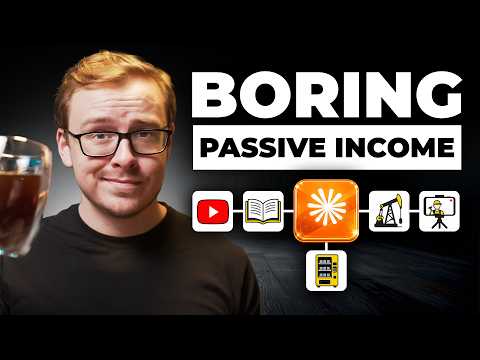
“5 Claude AI Passive Income Ideas That Actually Work in 2026”
What we found: The ‘$97,000 a Month’ in the Intro Is $97,000 a Year in the Story
Five content ideas with Claude as the writer, held up by figures that change size between the intro and the body, and by examples drawn from the creator’s clients and family.
- $97k/yr Intro: “$97,000 a month”
- Not found Intro: “$77,000 a year”
- Two sizes Creator’s own passive income
- 3 of 7 Examples tied to the creator
The claim
That five content businesses — self-published books, affiliate blogs, affiliate YouTube, evergreen answer videos and documenting your job — produce near-passive income, with Claude now doing the writing.
- Intro: real people “pulling $97,000 a month” — $97,000/month
- Body: author’s royalties from two books “in one year” — “over $97,000”
- News headline on screen at 2:46, published 4 August 2022 — “earned $97,000 in passive income from Amazon last year”
- The same $97,000 per month — ~$8,083
- Intro: “$77,000 a year” — No matching example
- Creator: “hundreds of thousands of dollars in passive income every single year” — $100k+/year
- Creator: “I still make six figures a month” — $100k+/month
- Creator: lifetime affiliate income — “over a million dollars”
- Creator: WGU video series at peak — “over $10,000 a month”
- Creator: one evergreen video, lifetime — $7,840
- Brother’s channel, month three — ~$450/day
- Brother’s record month — “over $18,000”
- Community member’s peak month, said as profit — $500,000
- Client message on screen at 3:39 — “We hit $500k revenue for Jan!” over a January 2025 sales-call dashboard (142 sales; a tile reads about $504,235)
What is this income idea?
Create content once — a book, a blog post or a video — that keeps earning from search traffic for years, using Claude to draft it and a human to edit it.
- The creator opens with their credentials — "I make hundreds of thousands of dollars in passive income every single year" — and a promise: "regular people… pulling $97,000 a month $40,000 a month $77,000 a year." They then say most AI passive-income videos are "pure bullshit" and that "there really is no such thing as fully passive income", only things that need setup first.
- Idea one is self-publishing on Amazon KDP, compared to songwriting royalties. The example is an author they say a news outlet covered, whose two books "in one year… netted her over $97,000 in royalties", with $75 spent on advertising; the headline on screen, published 4 August 2022, says the $97,000 was earned "last year". They add a member of their community who runs a KDP YouTube channel and whose profit, after they began working together, rose from about $30,000 a month "to a max of $500,000 in a single month". The screen at that point shows the client's message, "We hit $500k revenue for Jan! basically all YT organic leads", with a dashboard of calls, closing rates and 142 sales for January 2025. Claude, they say, replaces "a $30,000 ghostwriter".
- Idea two is an affiliate blog, "the vending machine". The example is a personal-finance blogger said to make "about $40,000 a month semi-passively". Idea three is the same model on YouTube, with their own example: a series about an online university that peaked at "over $10,000 a month" and still pays "thousands of dollars every single month", part of "over a million dollars" from affiliate marketing, with AdSense on top.
- Idea four is evergreen answer videos — maths, tax, plumbing — with a chemistry channel said to make "$79,000 a month just from AdSense" according to an estimation site, and their own experiment, a three-minute marketing explainer that has earned $7,840 over several years.
- Idea five is documenting your job. The examples are a mechanic's channel, with figures from an estimation site and an article; the creator's brother, who had "a $214 day" 29 days after their first video, averaged about $450 a day by month three and recently made "over $18,000" in a month; and a client the creator helped reach "over $100,000 a month". The video closes with a free live training and an application for paid one-to-one or done-for-you help: "We're only accepting five people right now."
Make search-friendly books, posts or videos once and let them earn for years — a real model, but slower and more active than the intro’s numbers suggest.
- Pick a narrow niche — Their tip for all five
- Draft with Claude — “Interview me” prompt
- Human edit and fact-check — Their own instruction
- Publish to a search platform — Amazon, Google, YouTube
- Monetise — Royalties, affiliate, AdSense
- Repeat for years — One book a quarter
Legitimate models, presented with examples that are larger, older or closer to the creator than they first appear.
The models are real; the examples are bigger, older and closer than they look.
The lesson underneath the number
- Nothing in the list is a scheme. Self-published books, affiliate blogs, review videos and evergreen explainers are established ways to earn from search, and the creator's framing is more careful than most — they say there is no fully passive income, insist on a human edit after Claude drafts, and tell viewers to niche down. Their WGU series is a good first-hand case: they found a question thousands of people searched each week, did the tedious cross-referencing nobody else would, and earned from both affiliate links and ads for years.
- The trouble is the scale the intro attaches to it. The $97,000 a month promised in the first minute becomes $97,000 for a whole year when the author's story is told, and that year came "years after she initially wrote the books". The $77,000 a year does not reappear at all. Other large figures — $79,000 a month in AdSense, $24,000 a month and a lifetime figure for a mechanic — come from an estimation site and an article the viewer is not shown, and they themselves say such estimates often understate income. These are secondhand numbers about people who are not in the video.
- Then there is proximity. A community member whose profit "went from 30,000 all the way up to a max of $500,000 in a single month" after they "started working together"; their brother's channel; a client who reached $100,000 a month and whose wedding they are attending. All three are disclosed, and all three double as testimonials for the paid service sold at the end, which is "only accepting five people" and accepts "less than 18%" of applicants. The $500,000 is also a single peak month, not a typical one, and the message on screen calls it revenue, from a business whose dashboard tracks sales calls and closing rates rather than book royalties.
- The most useful numbers in the video are the smallest. A three-minute marketing explainer that has made $7,840 over several years — "a few dollars" a day — is an honest picture of what one evergreen video does. A WGU series that peaked at $10,000 a month and now pays thousands is what a well-chosen niche looks like after years. Those are the benchmarks a beginner should hold, rather than the figures from the first minute.
The truth is there really is no such thing as fully passive income.
The creator, in a video titled “Passive Income Ideas”
The five ideas, as they give them
Each with a prompt, an example and a claim.
From what is said and shown in the video, published 30 June 2026. Figures for third parties are quoted from news coverage, an estimation website or the creator's own account; two sources appear on screen and are described below.
- Self-publish on Amazon KDP — Write once, earn on ebook, paperback and audiobook. The example author's "over $97,000" is for one year, years after publication; the 2022 headline on screen says "last year". They recommend one book a quarter, and a human pass to "fact check it" and add your own stories.
- Build an affiliate blog — Articles that rank in Google keep earning commissions. The example blogger built the blog over ten years; one post "still pulls in tens of thousands of new readers every single month".
- Do affiliate reviews on YouTube — Videos about things viewers already plan to buy, with affiliate links plus ad revenue. Their own WGU series is the strongest first-hand example in the video: a niche nobody had mapped, a spreadsheet, and a peak of over $10,000 a month.
- Make evergreen answer videos — Questions people always search. Their own test video — $7,840 over years, "a few dollars" a day — is a more realistic benchmark than the $79,000-a-month estimate for an established channel.
- Document your job — Film or talk about what you already do. The examples are a long-running mechanic's channel, their brother's trade-careers channel, and a client in consulting careers.
- Niche down — "Productivity for medical workers… instead of just productivity in general." Sound advice for every model in the list.
The business model
Book royalties, affiliate commissions, YouTube ad revenue and, for the creator, a paid one-to-one and done-for-you service sold through a free training.
People searching Amazon, Google or YouTube for answers, reviews and how-to content in a narrow niche.
Useful, specific content that keeps being found long after it is published.
Search on Amazon, Google and YouTube, with social media to amplify.
- Writing and editing time — Claude drafts; they say a human must fact-check
- Claude subscription — Unpriced
- Advertising — The KDP example spent $75
- Hosting, equipment, covers — Not discussed
- Years of output before income — Implied by every large example
Cash costs are low, and they are right about that. The real cost is the volume of work and the years before search traffic builds.
What you would actually need
Money
Little: the KDP author spent "$75 advertising the books"; Claude replaces a "$30,000 ghostwriter"; the training is "completely free".
Starting costs are genuinely low for all five ideas. The costs that matter are time and, for books and blogs, the long wait before search traffic arrives. A Claude subscription, editing, cover design, recording equipment and hosting are modest but real, and none are priced.
Costs named or implied
- A Claude subscription for drafting
- Human editing and fact-checking
- Book covers and formatting for KDP
- Website hosting and domain for a blog
- Microphone or camera for YouTube
- Optional paid one-to-one help from the creator — unpriced
Time
"One book per quarter and it can compound for a few years"; "pick five record five upload five then another five"; the example blogger "started 10 years ago".
This is where the "passive" framing is weakest. Every example earning large sums has years of output behind it — ten years of blogging, decades of mechanic experience, dozens of review videos. The brother's fast start is the exception they highlight, not the pattern.
What the examples took
- Example blogger: ten years of articles
- Example author: royalties “years after” writing
- Creator: “dozens” of review videos; series last updated 2–3 years ago
- Mechanic: “25 years” of experience before the channel
- Brother: ~30 years in the trades before the channel
- You: one book a quarter, or videos in batches of five
The part you must pay attention to
The intro’s $97,000 a month is $97,000 for a whole year when the story is told.
The opening promise is "regular people… pulling $97,000 a month $40,000 a month $77,000 a year". Here is what the body supports.
- As promised in the intro — “$97,000 a month”
- As told about the author — “over $97,000… in one year”
- Months — ÷ 12
~$8,083 a month
The same example expressed monthly
The $97,000 example is described in the body as royalties earned "in one year", so the intro figure is twelve times the figure in the body. The $40,000 a month matches the blogger example, though it is secondhand and described as "semi-passive". No $77,000-a-year example appears anywhere; the nearest figure is $79,000 a month for a chemistry channel, taken from an estimation site. The creator's own income is described two ways as well: "hundreds of thousands of dollars in passive income every single year" at the start, and "I still make six figures a month" later — a difference of roughly ten times, since six figures a month is over $1.2 million a year.
Who the examples are matters too. Of the seven people whose income is described, three are connected to the creator: a member of their community whose growth is credited to "when we started working together", their brother, and a client whose wedding they are attending. Their results are presented as proof of the model and also serve as testimonials for the paid service advertised at the end. The relationships are disclosed, which is to the creator's credit. Only one of the three figures appears on screen, and it differs from what is said: the $500,000 month is described aloud as profit from "the same KDP model", while the message on screen at 3:39 reads "We hit $500k revenue for Jan! basically all YT organic leads", over a January 2025 dashboard of calls, qualified leads, closing rates and 142 sales. That describes revenue from a sales-call business, not book royalties.
- INTRO vs BODY
- "$97,000 a month" -> body: "in one year"
- $97,000 / 12 = ~$8,083/mo
- "$40,000 a month" -> blogger, "semi-passively"
- "$77,000 a year" -> not found in body
- THE CREATOR'S OWN INCOME
- Start: "hundreds of thousands... every year"
- Later: "six figures a month"
- $100,000 x 12 = $1.2M+/yr
- -> ~10x apart
- THE $500,000 MONTH
- Said: profit, "same KDP model"
- On screen: "$500k revenue for Jan"
- sales-call dashboard, Jan 2025
- THE BROTHER'S CHANNEL
- Day 29: one $214 day
- -> called "a full-time income"
- Month 3: ~$450/day x 30 = ~$13,500/mo
- Record month >$18,000
- THEIR OWN EVERGREEN TEST
- One video, years of views $7,840
The economics
Real models, with headline figures that shrink on inspection.
- Intro promise — $97,000 a month
- Author’s royalties, one year — Over $97,000
- Same, per month — ~$8,083
- Blogger, per month — ~$40,000 “semi-passively”
- Creator: WGU series peak — Over $10,000/month
- Creator: one evergreen video, lifetime — $7,840
- Brother: month three — ~$450/day (~$13,500/month)
- Brother: record month — Over $18,000
- Community member: peak month, said as profit — $500,000
- Same, client message on screen — “$500k revenue for Jan”, January 2025
- Creator’s own passive income — “Hundreds of thousands” a year or “six figures a month”
Reconciling the intro with the body
$97,000 for one year ÷ 12 months
About $8,083 a month — one-twelfth of the “$97,000 a month” promised in the intro
IncomeIdeaLab calculation from the figures as the creator states them
The author's figure is quoted from news coverage; the headline on screen, published 4 August 2022, says $97,000 "in passive income from Amazon last year", so the year is 2021. The monthly equivalent assumes even earnings across the year.
- Any on-screen source for most third-party figures
- Costs for any of the examples beyond the $75 ad spend
- How many books, posts or videos the large earners produced
- Price of the creator’s paid one-to-one or done-for-you service
- What share of their own income is passive versus services
- The author is said to have sold about 25,000 copies of each book "through to that point" — a cumulative figure — while the $97,000 is for one year, so the two cannot be combined into a per-copy royalty.
- The brother's "$214 day" 29 days after their first video is described as "a full-time income in less than one month". One day at $214 is not a monthly income; their month-three average of about $450 a day, roughly $13,500 a month, is the more meaningful figure.
- The $79,000 a month for a chemistry channel and $24,000 a month for a mechanic are from an estimation website, which they say "often times underestimates" — either way they are estimates, not reported income.
- The client message on screen at 3:39 reads "We hit $500k revenue for Jan! basically all YT organic leads", over a dashboard filtered to January 2025 with tiles for calls, qualified leads, closing rates and 142 sales; one tile reads about $504,235. It is revenue, not profit, and the dashboard is a sales funnel rather than a royalty report. On-screen text just before it reads "Started at $30,000 a month from his KDP business."
- The paid service is described as accepting five people and fewer than 18% of applicants. Neither figure can be checked, and both function as urgency.
Evidence status
Every substantive claim in the video.
- Regular people pulling $97,000 a month — Creator, intro — The body gives $97,000 for one year.
- Regular people pulling $77,000 a year — Creator, intro — No matching example in the video.
- Author earned over $97,000 in royalties in one year, $75 on ads — Creator, citing news coverage shown on screen at 2:46 — Headline dated 4 August 2022, about the previous year.
- Blogger makes ~$40,000 a month semi-passively — Creator, secondhand — Ten years of articles behind it.
- Community member’s profit peaked at $500,000 in a month — Creator — The message on screen says revenue, not profit.
- “We hit $500k revenue for Jan!” — Client message on screen, 3:39 — January 2025; a sales-call dashboard with 142 sales.
- Creator’s WGU series peaked over $10,000 a month — Creator — First-hand and specific; not shown.
- Creator: over $1 million from affiliate marketing — Creator — Lifetime figure; not shown.
- One evergreen video made $7,840 — Creator — A modest, realistic benchmark.
- Chemistry channel makes $79,000 a month from AdSense — Estimation website — An estimate, not reported income.
- Brother reached “full-time income” in under a month — Creator — Based on one $214 day.
- Brother’s record month over $18,000 — Creator — Family member; not shown.
- Client reached over $100,000 a month — Creator — Their client; not shown.
- “Hundreds of thousands” a year vs “six figures a month” — Creator — About ten times apart.
What is actually proven?
The models exist. The intro’s numbers do not hold.
- They say plainly that no income is fully passive.
- They require a human edit and fact-check after Claude drafts.
- The intro’s $97,000 a month is $97,000 a year in the body.
- Their two descriptions of their own passive income differ about tenfold.
- Their WGU series and one evergreen video give realistic first-hand benchmarks.
- Most large figures are secondhand or estimated.
- A 2022 news headline for the author's year and a client's message reading "$500k revenue for Jan", both on screen.
What the headline doesn’t tell you
The ideas are fine. The numbers attached to them need resizing.
- $97k a month is $97k a year. — Intro vs story.
- $77k a year never appears. — No such example.
- Most figures are secondhand. — News, estimates, an article.
- Three examples are close to the creator. — Client, member, brother.
- $500k was one peak month. — Said as profit; revenue on screen.
- One $214 day. — Called a full-time income.
- Their own income, two sizes. — Per year, then per month.
- Ends in a paid service. — “Only accepting five.”
Should you try it?
Yes, at the scale of their smallest numbers
The content models are legitimate and cheap to start; expect years of output and income closer to $7,840 per good video than $97,000 a month.
- Legitimacy of the models — 8 — Books, affiliate content and evergreen video are established.
- Honesty about passivity — 7 — Says nothing is fully passive; still titles it passive.
- Accuracy of the intro figures — 2 — $97k a month is a year; $77k a year is absent.
- First-hand evidence — 5 — Their own WGU series and test video are specific but not shown.
- Independence of examples — 3 — Three of seven are their client, member or brother.
- Use of AI — 6 — Claude drafts; human edit and fact-check required.
- Beginner accessibility — 7 — Low cost to start; slow to pay.
- If you are drawn to these ideas, they are worth pursuing on their real terms. A narrowly focused book, blog or set of videos that answers questions people keep searching can earn for years, and Claude can speed up drafting. The creator's own instruction to have a human fact-check and add personal stories is important — search platforms and readers both punish thin, generic content.
- Set expectations using their smallest numbers, not their largest. One evergreen explainer earned $7,840 over several years. A carefully researched review series, in a niche nobody had covered, peaked at about $10,000 a month. Those are first-hand and plausible. The $97,000 in the intro is a year's royalties for an author whose books were already years old, and the larger channel figures are estimates from a website.
- Treat the most dramatic stories with care. A $500,000 month for a community member, an $18,000 month for their brother and $100,000 a month for a client are all disclosed relationships and are also used to promote their paid service. Only the $500,000 appears on screen, as a client's message calling it revenue from a sales-call business, not profit from book royalties. A single peak month says little about what a typical one looks like.
- Finally, notice the timescales behind every example: ten years of blogging, decades of trade experience before a channel, dozens of videos. "Passive" here means income that continues after the work stops — not income that arrives without years of work first.
Passive or automated?
Automation
Claude speeds drafting; research, editing and publishing stay manual.
Passive potential
Content can earn after it is made, but only after years of making it.
These are the most genuinely passive models in the income-content genre: a book or video that ranks can keep earning long after it is published, and the creator's own examples show that. But the passive phase follows a long active one. They suggest one book a quarter, videos in batches of five, and a human edit on everything Claude drafts; every large earner they cite has years of output behind them. Affiliate content also needs updating as products and prices change, and search rankings shift.
- Choosing a niche with real, ongoing searches
- Editing and fact-checking AI drafts
- Recording, publishing and optimising content
- Updating affiliate content as products change
- Building enough volume for income to compound
Recommended beginner experiment
One niche, one format, measured honestly.
- Pick one narrow search niche. — Questions people ask every week.
- Choose one format. — Book, blog or video — not all five.
- Draft with Claude, edit yourself. — Fact-check every claim.
- Publish in batches. — Their “five, then another five”.
- Track earnings per piece. — Their benchmark: $7,840 lifetime.
- Give it a year before judging. — Search traffic builds slowly.
- Double down on what ranks. — As they did with the WGU series.
Our verdict: 4/10
Real models, resized numbers the intro’s $97,000 a month is a year’s royalties, and the closest examples are the creator’s own clients and family
Credited for stating that "there really is no such thing as fully passive income"; for insisting that Claude's drafts get a human edit and fact-check; for sound advice to niche down; for first-hand, modest benchmarks — a single evergreen video at $7,840 lifetime and a review series that peaked near $10,000 a month; for disclosing their relationships with the community member, brother and client they cite; and for putting the sources of two figures on screen, a 2022 news headline and a client's message. Marked down because the intro's "$97,000 a month" is, in the body, $97,000 earned in a year; because the intro's "$77,000 a year" has no matching example; because their own passive income is described as both "hundreds of thousands" a year and "six figures a month"; because most large figures are secondhand or come from an estimation site; because the $500,000 month is said to be profit while the client's message on screen reads "$500k revenue for Jan" over a sales-call dashboard; because three of the seven named earners are their clients, community member or brother and double as testimonials for the paid service sold at the end; and because one $214 day is described as a full-time income.
The five ideas in this video are real ways to earn from content: self-published books, affiliate blogs, affiliate review videos, evergreen explainers and documenting your work. The creator presents them more carefully than many — no income is fully passive, Claude's drafts need a human edit and fact-check, and narrow niches beat broad ones. Their own best examples are specific and believable: a review series built on tedious research that peaked near $10,000 a month, and a three-minute explainer that has made $7,840 over years. The headline numbers do not hold up as well. The "$97,000 a month" promised in the first minute is, when the story is told, $97,000 in royalties over one year, earned years after the books were written; the news headline shown on screen, dated 4 August 2022, says "last year"; the "$77,000 a year" never reappears; and the creator's own passive income is described first as hundreds of thousands a year and later as six figures a month, about ten times more. Most of the large figures for other people are secondhand or from an estimation website, and three of the seven earners they name are their community member, their brother and a client — relationships they disclose, and stories that also advertise the paid service at the end, which is "only accepting five people". The $500,000 month is said to be profit; the message on screen reads "$500k revenue for Jan", over a dashboard of sales calls and closing rates. Use the models, set expectations by their smallest numbers, and plan for years of output before anything becomes passive.
- Intro: $97,000 a month — $97,000 a year in the body
- Intro: $77,000 a year — No example
- Their own passive income — Two figures ~10× apart
- $500k month — Said as profit; revenue on screen
- Best first-hand benchmark — $7,840 per evergreen video
- Examples tied to the creator — 3 of 7
- Paid service — Advertised at the end
- Beginner suitability — Yes, with slower expectations
Sources
- 5 Claude AI Passive Income Ideas That Actually Work in 2026 — Shane Hummus — Source video, 2026-06-30
- FTC — Guides Concerning the Use of Endorsements and Testimonials — Regulatory guidance on endorsements and earnings claims