Digital Products / Self-Publishing · Method Guide
“The SIMPLEST Way To Make Money Online With Claude AI In 2026”
What we found: The AI Ebook Method — and the Review Step Amazon’s Policy Forbids
Better disclaimers than anything else we have reviewed: no income promise, "not typical results" said twice, a free alternative at every paid step. Then it recommends buying reviews, which Amazon prohibits outside its own programme.
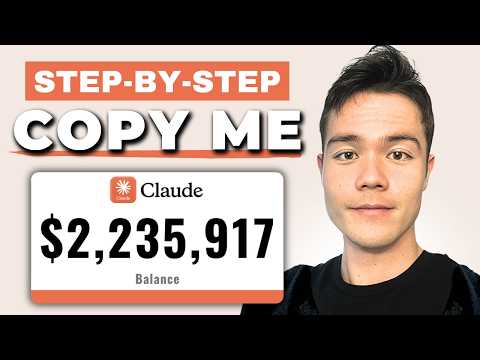
- $2.3M Career claim
- $820,000 Business sale
- $25/mo Review service cost
- 539,225 Views in two weeks
The claim
That anyone can make their first sale online by using Claude to write a short ebook on a topic already selling on Amazon, publishing it to KDP, and getting a handful of early reviews — with no website, no ads and no face on camera.
- Lifetime earnings claimed — $2.3 million
- Previous business sold for (Empire Flippers bill of sale on screen at 0:22) — $820,000.00, purchase date 24 August 2021
- KDP royalties tile in the intro — $3,067.11 approximated royalties, no dates legible
- Student, day one — ~$40
- Student, first year (student's post on screen) — $161,019.88 estimated royalties, 10 books, 2024; about 36k ad spend in the same post
- Amazon share of US book sales — 70%+
- Review service — $25/month, 15-day trial
What is this income idea?
Find a book topic that is already selling on Amazon, write a shorter and clearer version with AI, and publish it where the buyers already are.
- The three-step framing is genuinely good: find something people already buy, make a simpler version, put it where buyers already are. They are explicit that you are not creating demand — you are stepping in front of demand that exists. That is the correct instinct for any marketplace business.
- The framing discipline is also better than anything else we have reviewed. They open by stating that this is not a promise of $10,000 a month in 30 days, says the goal is your first sale rather than an income, labels their students’ results "not typical" twice, says "I say can, not will" about organic sales, and offers a free alternative at every step where they name a paid tool.
- By the standards this site usually applies, that is close to model behaviour. Which makes what follows more consequential rather than less.
- The validation tool at the centre of the method reports incorrect figures twice during their own demonstration. Its discount link routes through their own company’s domain while being introduced as "another AI tool". And the review step they recommend to an audience of 539,000 people is the one thing in the video that Amazon’s published policy rules out.
Use AI to write a short ebook on a topic already selling on Amazon, publish it, and get a few early reviews. The review method they suggest is against Amazon’s rules.
- Brainstorm topics — Ask an AI for fifty ideas
- Check Amazon — Are books already selling?
- Read the estimates — BSR-derived, and fallible
- Write a simpler version — Shorter than the 300-page rivals
- Design the cover — Where the paid tool comes in
- Publish free on KDP — Amazon only takes a cut on sales
- Get early reviews — The step that may conflict with Amazon’s rules
Steps one to six are legitimate, cheap and correctly explained. Step seven is where a viewer can put their publishing account at risk.
The most careful disclaimers we have reviewed, around the riskiest advice.
The lesson underneath the number
- We spend most of our time on this site pointing out missing caveats. This video has them. It opens by refusing to promise $10,000 a month. It reframes the goal as a first sale rather than an income. It says "not typical results" over student figures, twice, unprompted. It says "I say can, not will" about organic sales. It offers a free alternative at every paid step and states plainly that the video is not meant to be a pitch for the tool.
- That deserves acknowledgement, and it also raises the standard against which the rest is judged. A creator who understands disclosure well enough to do all of that is a creator who understands what a policy prohibition is.
- Two things sit awkwardly against it. The tool is introduced as "another AI tool called co-author.ai", phrasing that reads as third-party — but the discount link in the description routes through royaltyhero.com, their own company’s domain. And that tool, whose entire job is to tell you whether a topic is profitable, displays zero royalties incorrectly twice during the demonstration. They notice both times and says so, which is honest; they then continue to rely on it for validation, which is the method.
- The review step is the one that matters. Amazon’s rule is not obscure and it is not new: no reviews in exchange for anything of value, Vine excepted. A publisher who follows this advice and is caught does not lose $25 a month. They risk the account holding every book they have published.
A creator careful enough to say “not typical results” twice is careful enough to check Amazon’s review policy once.
IncomeIdeaLab
What the creator teaches
The method as set out in the video.
Summarised from what is said and shown in the video. The career figure is creator-stated; an $820,000 bill of sale, a KDP royalties tile and a student’s royalties screenshot appear on screen, and the sales estimates shown come from a third-party tool.
- Validate before you create — Ask an AI for fifty topic ideas, then check each on Amazon. If books on the topic are selling, it is viable. If nothing is selling, the absence is a verdict rather than an opportunity.
- Read the sales estimates — A browser plugin converts Amazon’s Best Sellers Rank into estimated daily sales and royalties across a whole results page, saving the work of opening each listing. The CoAuthor.ai cards shown at 6:36 put competitor books at, for example, 27–46 sales and $109–$181 of royalties a day for one audiobook, and 3–6 sales and $13–$21 a day for a workbook — the tool’s estimates for other authors’ books, not anyone’s earnings.
- Make a simpler version — Against 300-page incumbents, write something shorter and clearer. They argue most beginners lose on titling — vague, clever titles instead of plain descriptive ones.
- Use plain, literal titles — Their examples of good titles are the descriptive ones and their examples of bad titles are the poetic ones. Correct for a search-driven marketplace, and free to apply.
- Publish on Amazon, not your own site — No listing fee, no hosting, no traffic problem — Amazon takes a cut only when a sale happens. For a first product this is the right platform choice.
- Get a handful of early reviews — They recommend a paid service at $25 a month with a free trial, suggests around five reviews per book, and gives a free manual alternative of supplying files and following up.
- Market on social, faceless — Post the book on short-form platforms without appearing yourself. Free, and consistent with the rest of the approach.
The business model
Royalties on ebooks and paperbacks sold through Amazon search.
Amazon shoppers already looking for a book on a specific problem.
A shorter, clearer treatment of a topic whose incumbents run to 300 pages.
Amazon organic search, supplemented optionally by ads or faceless social posts.
- KDP listing — Free; deducted per sale
- AI writing tool — Subscription or free tier
- Cover design tool — Paid, with free alternatives named
- Review service — $25/month
- Amazon Ads — Optional and flagged as paid
The cost structure is genuinely light and they are unusually careful to give a free path at each step. The exposure in this model is not financial — it is the publishing account itself.
What you would actually need
Money
Explicitly dual-tracked. At every paid step they name a free alternative, and says outright that the video is not meant to be a pitch for the tool.
That is a genuinely fair way to present a method and we should say so. The costs that remain are the cover design, the review service, and — if you use it — a subscription to a tool whose link routes through their own company.
The real cost structure
- KDP listing — free; Amazon deducts only on a sale
- AI writing subscription — or a free tier
- Cover design — paid tool, or free alternative
- Review service — $25/month, with a 15-day trial
- Amazon Ads — optional, and they flag it as paid
- Your time researching and editing the manuscript
Time
Framed as days rather than months to a first sale, with AI making the process "10 times faster" than when they started.
Writing genuinely is faster now. What has not changed is Amazon’s ranking delay — a new listing takes time before organic traffic finds it, which our separate KDP analysis measured at roughly two months.
Where the ongoing work sits
- Topic validation — the step that decides everything
- Writing and editing the manuscript
- Cover and listing copy
- Chasing early reviews
- Waiting for rank — outside your control
- Publishing further titles, because one book is not a business
The part you must pay attention to
Amazon prohibits reviews obtained in exchange for anything of value.
They correctly warns against reviews from friends and family. The broader rule — the one that covers what they then recommend — is not mentioned.
- Review service recommended — $25/mo
- Amazon’s sole permitted incentive route — Vine only
Prohibited
Reviews exchanged for a free or discounted copy
Amazon’s Community Guidelines prohibit incentivised reviews unless facilitated through Amazon Vine. A review counts as incentivised if the reviewer received a free product, a discounted product, a refund, a gift card, a payment, a promise of future compensation, or any other form of value in exchange for it. Supplying a review copy in order to obtain a review is the case the wording describes. That applies to the paid service they name and, on the face of it, to the free manual alternative they offer alongside it — handing someone the files and following up to ask for a review.
We cannot say from outside exactly how any particular service operates, and some route through channels designed to stay compliant. What we can say is that the video tells 539,000 people to obtain early reviews by supplying copies, cites only the narrow friends-and-family rule, and does not mention the broad prohibition that governs the tactic. The consequence of getting this wrong lands on the publisher’s account, not on the person recommending it.
- WHAT THE VIDEO SAYS
- “Do not get reviews from friends and family
- because that is against Amazon’s terms.” ✓ correct
- Recommended instead:
- • Paid review service, $25/month
- • Free method: send files, follow up, ask
- WHAT AMAZON’S POLICY SAYS
- A review is incentivised — and prohibited —
- if the reviewer received any of:
- free product · discounted product · refund
- gift card · payment · promised compensation
- or any other form of value
- Sole exception: Amazon Vine
- RISK SITS WITH: the publisher, not the presenter
The economics
The model is cheap and the claims are large. Only one of those is checkable.
- Lifetime earnings claimed — $2.3 million
- Business sale (Empire Flippers bill of sale, 24 Aug 2021) — $820,000.00
- Student first-year estimated royalties (student’s post on screen) — $161,019.88 from 10 books
- Student ad spend, same post — About 36k
- Student royalties less that ad spend — ~$125,000 before other costs
- Review service — $25/month
- KDP listing cost — Free
- Amazon review policy — Vine only
What the model actually costs to attempt
$0 listing + optional tools + $25 reviews
Under $100 to publish a first book
IncomeIdeaLab, from the costs named in the video
Financially this is among the lowest-risk models on the site. The risk is not money — it is that the review step, if it breaches policy, puts the publishing account and every title on it in jeopardy.
- Any total or document that adds up to the $2.3 million
- How many books produced those figures
- How many students reach any result at all
- The mechanics of how the review service obtains reviews
- Their commercial relationship to the promoted tool, stated on camera
- How long a first sale typically takes
- The sales estimates shown are derived from Amazon’s Best Sellers Rank, not from Amazon sales data. BSR-to-revenue conversion is a model, and it is least reliable at exactly the low ranks a beginner will be examining. The tool visibly misreports two listings as earning zero royalties during the demonstration — they catch both and moves on.
- Their claim that more than 70% of US book sales happen on Amazon is widely cited and directionally uncontroversial, though the precise share varies by source and by whether ebooks, print and audio are counted together. It does not change the advice either way.
- The two student figures — around $40 on day one and $161,000 in a first year from ten books — are both explicitly labelled as not typical, which is the correct treatment. Neither is accompanied by any indication of how many students reach neither.
- The $161,000 slide at 25:51 shows the student’s own post in the creator’s Royalty Hero community: a KDP royalties-estimator screenshot reading $161,019.88 of estimated royalties ("Royalty previste", 1 January to 31 December 2024, including page reads) across 10 books, and the line that there was "an ADS expense of about 36k". Spoken as "he made $161,000", the figure is estimated royalties before about $36,000 of ad spend — roughly $125,000 before any other cost, by our arithmetic. The student is described as a member of the creator’s paid programme.
- The intro collage at 0:22 shows an Empire Flippers "Online Business Bill of Sale" for $820,000.00, purchase date 24 August 2021, with the creator named as seller and the buyer and site redacted, alongside a KDP royalties tile reading $3,067.11 with no legible dates. The bill of sale reappears later beside thumbnails of the creator’s older "KDP Income Reports" videos. The $820,000 is a sale price for a business, not royalties, and no on-screen figure adds up to the $2.3 million.
- The per-day royalty figures read out for competitor books — "$100 to $181 per day", "$13 to $21 per day" — are CoAuthor.ai estimates shown on screen, not those authors’ reported earnings.
Evidence status
Every checkable statement in the video, and what supports it.
- Do not get reviews from friends and family — Creator — Correct as far as it goes. It is a narrow instance of a much broader prohibition the video does not state.
- Use a paid service to obtain early reviews — Creator — Amazon prohibits reviews given in exchange for a free or discounted product or any other value, with Amazon Vine the only exception.
- Or supply files and follow up asking for a review — Creator — Described as the free alternative. On the face of the policy wording, supplying a copy to obtain a review is the case being prohibited.
- $2.3 million from this business model — Creator — No on-screen total adds up to it. The intro shows an $820,000 business sale and a $3,067.11 royalties tile with no dates.
- A previous business sold for $820,000 — Creator; Empire Flippers bill of sale on screen at 0:22 — $820,000.00, purchase date 24 August 2021, creator named as seller, buyer and site redacted. An exit price, not royalties.
- Student made $161,000 in their first year from 10 books — Creator; student’s post on screen at 25:51 — The post shows $161,019.88 of estimated royalties for 2024 and mentions about 36k of ad spend, which the video does not subtract. Labelled "not typical results".
- The promoted tool is "another AI tool" — Creator — Its discount link routes through royaltyhero.com — their own company’s domain. The relationship is not stated on camera.
- The sales estimates are reliable — Implied by the method — They are BSR-derived models, and the tool reports zero royalties in error twice during the demonstration.
- This is not a promise of $10K/month in 30 days — Creator — Stated explicitly at the start and reinforced throughout. Better framing than anything else we have reviewed.
- Validate on Amazon before writing — Creator — Sound. Checking that a topic already sells before producing anything is the correct order of operations.
What is actually proven?
The method is legitimate. One step in it may conflict with Amazon’s rules, and the headline number has no total behind it.
- Amazon prohibits incentivised reviews outside the Vine programme.
- Publishing on KDP is free; Amazon deducts only when a sale occurs.
- The promoted tool’s link routes through the presenter’s own company domain.
- The validation tool reported zero royalties in error twice on camera.
- The video makes no income promise and labels student results atypical.
- Validating demand before creating a product is the right sequence.
- An $820,000 business sale on an Empire Flippers bill of sale dated 24 August 2021.
- The $2.3 million, which no on-screen figure adds up to.
- The student figures; the $161,000 is estimated royalties before about 36k of ad spend, per the student’s own post.
- How the recommended review service actually obtains reviews.
What the headline doesn’t tell you
The framing is careful. These are what still need checking.
- The review step conflicts with Amazon policy. — Reviews in exchange for a free or discounted copy are prohibited. Vine is the only exception.
- The consequence lands on your account. — Not on the presenter. A review that conflicts with the platform's rules puts every title you have published at risk.
- The validation tool errs twice on camera. — Two listings shown as earning zero royalties. They catch both, then keeps using it to validate.
- The estimates are BSR models, not Amazon data. — Least reliable at the low ranks a beginner is actually looking at.
- The tool link goes to their own company. — Introduced as "another AI tool", with a discount code routing through royaltyhero.com.
- The $2.3 million has no total behind it. — An $820,000 business sale is shown on a bill of sale — an exit price, not royalties.
- The $161,000 student result is before ads. — The student’s own post mentions about 36k of ad spend.
- Ranking still takes months. — Our separate KDP analysis measured roughly two months before meaningful organic sales.
- One book is not a business. — The student figure quoted involves ten titles. The method scales on volume, not on a first book.
Should you try it?
Good method, skip step seven
Follow the validation and writing process. Get reviews the way Amazon permits, or do not get them at all.
- Quality of framing — 9 — No income promise, atypical results labelled, free alternatives throughout.
- Business-model validity — 8 — Self-publishing on Amazon is a real, large market.
- Startup affordability — 9 — Free to list; Amazon takes its cut only on a sale.
- Method quality — 7 — Validate before creating, and title plainly. Both correct.
- AI automation — 7 — Writing and research genuinely compress.
- Passive potential — 6 — Amazon handles sale, delivery and support entirely.
- Platform-risk handling — 2 — Recommends the one tactic that endangers the account.
- Evidence for the claims — 4 — An $820,000 bill of sale is shown; the $2.3M total is not, and the student figure omits ad spend.
- Tool disclosure — 4 — Free alternatives offered; the ownership relationship is not stated.
- The core method is good and worth following. Checking that books on your topic already sell before you write anything is the right order of operations, and it is the step most beginners skip. So is their point about titles: in a search-driven marketplace, a plain descriptive title beats a clever one every time, and that costs nothing to apply.
- The framing deserves credit too. This is the only video we have reviewed that opens by explicitly refusing to promise a monthly income, reframes success as a single first sale, and labels its own student results as atypical without being asked. Measured on disclosure alone, it is the best in our set.
- Which is why the review step is worth being direct about. Amazon prohibits reviews obtained in exchange for a free product, a discounted product, or anything else of value, and Amazon Vine is the only sanctioned route. Both methods suggested here — a paid service and a manual send-the-files-then-ask approach — involve supplying a copy in order to obtain a review. If that is judged a breach, the loss is not the subscription. It is the account holding every book you have published.
- Finally, treat the validation numbers as directional. They are derived from sales rank rather than from Amazon, and the tool misreports two books as earning nothing during the demonstration itself. Use it to decide whether a category has life in it, not to forecast what a book will earn.
Passive or automated?
AI automation
Research, drafting and cover generation all compress substantially.
Passive potential
Amazon handles the sale, the delivery and the customer entirely.
Once a book is live, nobody touches it — the sale, the file delivery and the support are all Amazon’s. That is genuine passive income. What is not passive is the pipeline: validating topics, writing, designing covers and publishing further titles, because at realistic per-book volumes the model works on catalogue size rather than on any single title.
- Topic validation and judgment
- Editing whatever the model drafts
- Cover and listing decisions
- Publishing additional titles
- Staying inside Amazon’s policies
Recommended beginner experiment
Their method, with the review step replaced.
- Read Amazon’s review policy first. — Before the tutorial. It is short and it is unambiguous.
- Validate on Amazon before writing a word. — If nothing on the topic sells, the absence is the answer.
- Treat rank estimates as directional only. — They are models, and they visibly failed twice in the demo.
- Write shorter than the incumbents. — The genuine product insight in the video.
- Title plainly, not cleverly. — People search for the problem, not for your metaphor.
- Get reviews only through Amazon Vine. — Or let them arrive on their own. Do not buy them.
- Publish several titles. — The student figure quoted involves ten books, not one.
- Judge at six months. — Ranking lag makes anything sooner a measure of Amazon, not of you.
Our verdict: 5/10
The best-framed video we have reviewed recommending the one step that risks your account
Exemplary disclaimers, a sound validation method and an $820,000 business sale shown on a bill of sale, offset by a review tactic Amazon prohibits outside Vine, a validation tool that errs on camera, a $2.3 million career figure that no on-screen document adds up to, and a $161,000 student result quoted before the student’s own ad spend.
This is, by some distance, the most carefully framed video in our set. It refuses to promise a monthly income, redefines success as a single first sale, labels its student results as atypical without being asked, and offers a free alternative every time it names a paid tool. The method underneath it is sound too — validate that a topic already sells before you write anything, then write something shorter and more plainly titled than the incumbents. All of that is worth following. But 539,000 people were also told to acquire early reviews by supplying copies of the book, either through a $25-a-month service or by sending files and following up. Amazon prohibits reviews given in exchange for a free product, a discounted product, or any other form of value, and Amazon Vine is the only exception — a rule the video does not mention, while correctly citing the narrower one about friends and family. Add a validation tool that reports zero royalties in error twice during its own demonstration, a discount link routing through the presenter’s own company while the tool is introduced as third-party, and $2.3 million in career earnings that the on-screen documents — an $820,000 Empire Flippers sale and a $3,067.11 royalties tile — do not add up to. Take the method. Get your reviews the way Amazon allows, or do without them.
- Business model — Real
- Framing and disclaimers — Excellent
- Validation method — Sound
- Review step — Against policy
- Tool link — Their own company
- Business sale — $820,000, bill of sale shown
- Career claim — $2.3M, no total shown
- Passive — Moderate-high
- Beginner suitability — Moderate
Sources
- The SIMPLEST Way To Make Money Online With Claude AI In 2026 — Source video, 2026-08-24
- Amazon — Community Guidelines on reviews — Platform documentation
- Amazon — Update on customer reviews — Company statement
- Amazon KDP — Publishing and royalties — Platform documentation
- FTC — Disclosures 101 for social media influencers — Regulatory guidance