Local Services / Car Wash · Claim Review
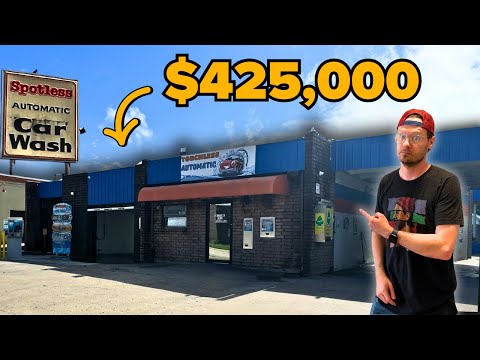
“I bought and Renovated a Car Wash. How Much Money does it Make?”
What we found: Car Wash Net Holds Up; the "33% Upside" Is a 56% Price Rise
$24,000 a month gross against $7,000–$10,000 in expenses leaves over $10,000 — on $565,000 invested, with the mortgage payment left unstated.
- $24k Average monthly gross
- $7k–$10k Monthly expenses
- >$10k/mo Stated net profit
- ~$565k Total invested
The claim
That a run-down self-serve car wash bought for $425,000 and renovated for about $140,000 now grosses $24,000 a month and nets over $10,000 a month.
- Purchase price — $425,000
- Renovation — $140,000 (later "$130 to $140,000")
- Gross before purchase — ~$96,000 a year
- Average monthly gross so far this year — ~$24,000
- Gross for the year — $250,000 "on track"
- Monthly expenses — $7,000–$10,000
- Net profit — Over $10,000 a month
- Gross minus expenses — $14,000–$17,000 a month
- Cleaning helper — ~$700 a month
- Mortgage payment — Not stated
What is this income idea?
Buy a neglected self-serve car wash with its land, fix it up, raise prices to the local market rate, and either hold it for cash flow or sell it on a multiple of gross revenue.
- The property is an eight-bay self-serve wash with one automatic bay. They paid $425,000 for it "last year" and put about $140,000 into renovation, describing it as run down, poorly lit, and priced below the market.
- Their acquisition method is specific. They checked competing washes and found they charged $2 for three minutes against the seller’s $1 for two minutes twenty seconds. They looked up road traffic — "I think the average traffic was like 16,000 people a day" — and, because the seller would not say how much it made, drove past three or four times a day for about three months, counting cars.
- The revenue section gives before and after. Under the previous owner it grossed "about USD 96,000 a year". Now: "grossing on average so far this year USD 24,000 a month and the expenses are USD 7 to USD 10,000 a month… my net profit is over USD 10,000 a month."
- They pay a helper about $700 a month to clean once or twice a day, collect coins and tokens themselves, and say flatly that the business is "not passive by any means."
- The exit plan is explicit: keep clean books because washes in their market sell for "four to five times the gross", so raising gross to around $250,000 "could potentially be worth a million."
- They explain the financing — a traditional commercial loan rather than an SBA loan, with a three-year fixed rate on a 20-year amortisation — and say real estate is their main income after about fifteen years of investing.
They bought a neglected wash with its land, fixed it, raised prices, and now takes in about $24,000 a month with $7,000–$10,000 of costs.
- Find a neglected wash — Below-market pricing
- Survey competitors — $2 for 3 minutes
- Count cars for 3 months — Seller withheld income
- Buy with the land — $425,000
- Renovate — ~$140,000
- Reprice to market — Stated "33% upside"
- Gross ~$24k a month — Was ~$8k
- Sell on a gross multiple — Their exit plan
A classic value-add play, described with more real numbers than most.
The best numbers are the boring ones
The lesson underneath the number
- What sets this video apart is the before-and-after. They give the purchase price, the renovation cost, the gross under the previous owner, the gross now, the monthly expense range and a helper’s wage. That is enough to see the shape of the deal: a wash grossing about $8,000 a month was bought and rebuilt for about $565,000, and now grosses about $24,000 a month. Few income videos give a viewer this much to check.
- Their due diligence is also worth copying because it is cheap. When the seller would not share income, they drove past the site three or four times a day for three months and counted cars. They surveyed every competing wash to price the market. They note that sellers of cash businesses often under-record income to reduce tax, and treat the seller’s claims with suspicion for that reason — and then commits to reporting all of their own income so the next buyer can trust their books.
- The weak points are arithmetic rather than honesty. The repricing they call a 33% upside is in fact a 56% rise per minute of wash time, by their own figures. The valuation multiple slips between three-to-five and four-to-five times gross. And $24,000 a month annualises to $288,000, not the $250,000 they say they are on track for, which suggests a seasonal slowdown they do not discuss.
- The one figure that matters most is the one they leave out. Over $10,000 a month of net profit is consistent with $24,000 gross and $7,000–$10,000 expenses only if a loan payment of up to several thousand dollars sits outside the expense range. Because they do not give the payment, the deposit or the loan balance, a viewer cannot tell how much of their own money is earning that $10,000, and the three-year fixed rate means the payment itself may change.
It's not passive by any means.
The owner, on an eight-bay self-serve wash
The value-add method, as they give it
Due diligence first, then fix, reprice and document.
Taken from what is said and shown in the video. Cash collection is filmed — a bill box of $1 notes, buckets and trays of tokens and coin, a token hopper and coin vaults — but no count, receipt or dashboard appears at those moments, so the footage neither confirms nor contradicts the monthly figures.
- Look for a value-add gap — Below-market prices, broken equipment and no lighting at night. They argue each of these is revenue a new owner can recover.
- Price the local market — They drove to every wash nearby and found $2 for three minutes against the seller’s $1 for two minutes twenty.
- Use traffic counts as a rough screen — Road traffic they recall as "like 16,000 people a day" and a $7 spend per customer — though they say, "I can't remember what the calculation is."
- Verify the seller by watching the lot — Three months of drive-bys, three or four times a day, to test a seller who would not share figures. A low-cost, sensible check.
- Keep a clean, lit site — Their single most important factor. They pay a helper about $700 a month for daily cleaning.
- Keep cash in the model — They argue against going cashless because customers spend "that extra 5 to 10 bucks in quarters". That also means collecting coin in person.
- Document everything for the exit — Report all income and track expenses daily, because buyers value washes on gross revenue.
The business model
Coins, tokens and bill-changer cash from eight self-serve bays and one automatic bay; dollar coins and cards are not accepted at the bays.
Local drivers on a road they recall as carrying "like 16,000 people a day", including night-time washers once the lot was lit.
A clean, lit, working wash at the local market price, replacing a neglected one.
Location and road traffic; no marketing is described.
- Commercial mortgage — 3-year fixed, 20-year amortisation. Payment and balance not stated
- Operating expenses — $7,000–$10,000 a month. Not itemised
- Cleaning helper — ~$700 a month
- Soap and chemicals — "Constantly having to replenish." Inside expenses, presumably
- Repairs — Wands, brush heads, solenoids
- Owner time — Cash collection, repairs, books. Unpaid
- Income tax — They say they report all income. Not quantified
Most videos in this genre give no cost at all. This one gives a monthly expense range and a wage; only the debt service is missing.
What you would actually need
Money
$425,000 to buy and about $140,000 to renovate, financed with a traditional commercial loan. Monthly expenses of $7,000 to $10,000.
This is unusually complete for the genre. What is missing is the deposit and the loan payment, which decide how much of the $14,000–$17,000 monthly surplus is really left, and how much of the $565,000 came from their own pocket.
Stated or implied
- $425,000 purchase, land included
- ~$140,000 renovation
- Down payment — not stated
- Commercial loan payment — not stated
- $7,000–$10,000 monthly expenses, not itemised
- ~$700 a month for a cleaning helper
- Soap, repairs, solenoids, wands and brush heads
Time
"It's not passive by any means." They are on site to collect cash and tokens, make minor repairs and replenish soap.
They are clear about this, and the helper covers most of the cleaning. Their own hours are not counted in the expenses, so the net is before paying the owner for the work.
Where their hours go
- Three months of drive-by due diligence
- Collecting coin and token boxes
- Refilling token changers
- Minor repairs and stuck solenoids
- Replenishing soap
- Daily bookkeeping for the eventual sale
The part you must pay attention to
The "net profit" is only as good as the mortgage figure, and that figure is not given.
They give the full monthly chain: "grossing on average so far this year USD 24,000 a month and the expenses are USD 7 to USD 10,000 a month… my net profit is over USD 10,000 a month again all while having the mortgage of basically a USD 100,000 a year wash."
- Average monthly gross, this year — $24,000
- Monthly expenses — $7,000–$10,000
$14,000–$17,000
Before any mortgage payment not already in expenses
The stated net is "over $10,000". Gross minus expenses is $14,000 to $17,000, so either the mortgage is inside the expense range and they are being conservative, or the mortgage sits outside it and costs somewhere up to $4,000–$7,000 a month. They do not say which, and give no loan amount or payment. "The mortgage of a USD 100,000 a year car wash" is a description of what they paid relative to the old revenue, not a payment figure. The loan is also a three-year fixed rate on a twenty-year amortisation, so the payment can change when the fixed period ends; they do not mention that risk.
Three other figures do not line up. First, the "33% upside" from repricing: $1 for 2 minutes 20 seconds is about 43 cents a minute, and $2 for 3 minutes is about 67 cents a minute, a 56% rise per minute — larger than they claim. Second, $24,000 a month for twelve months is $288,000, while they say they are "on track" for $250,000; the gap suggests slower months ahead, but seasonality is not discussed. Third, the valuation multiple is quoted as $600,000 to $1 million on $200,000 gross — three to five times — and then as "four to five times the gross". At four to five times, $250,000 gross would be $1.0–1.25 million, and $200,000 would be $800,000–$1 million.
- THE MONTHLY CHAIN
- Gross (avg this year) $24,000
- Expenses -$7k to -$10k
- Gross minus expenses $14k to $17k
- Stated net >$10,000
- -> mortgage payment: not given
- THE "33% UPSIDE"
- Old: $1 / 2:20 = $0.43 a minute
- New: $2 / 3:00 = $0.67 a minute
- Rise per minute ~56%
- THE YEAR
- $24,000 x 12 $288,000
- "On track to gross" $250,000
- Before purchase $96,000
- THE INVESTMENT
- Purchase $425,000
- Renovation ~$140,000
- Total ~$565,000
- $10k x 12 / $565k ~21%/yr
- -> on total cost, not on cash in
The economics
Unusually complete on revenue and operating cost; silent on debt.
- Purchase price — $425,000
- Renovation — ~$130,000–$140,000
- Gross before purchase — ~$96,000/yr (~$8,000/mo)
- Gross now, monthly average — ~$24,000
- Monthly expenses — $7,000–$10,000
- Stated net — Over $10,000 a month
- Gross growth since purchase — ~3× monthly, ~2.6× on the $250,000 target
- Price per wash minute — $0.43 → $0.67 (~56%)
- Mortgage payment, deposit, balance — Not stated
Net against total invested
$10,000 × 12 = $120,000 a year ÷ ($425,000 + $140,000) = ~21%
About 21% a year on total project cost, using their conservative "over $10,000" net
IncomeIdeaLab calculation from figures stated in the video
This is on total cost, not on the cash they put in; with a commercial loan, their own cash is smaller and the return on it higher, but the deposit is not stated. If the mortgage is not inside the $7,000–$10,000 expenses, the $10,000 is already after debt service; if it is, the true net may be higher. The figure is before income tax and before any pay for their own time.
- Down payment and loan balance
- Monthly loan payment and the rate after the three-year fixed period
- What the $7,000–$10,000 expenses contain
- How many months "so far this year" covers, and seasonal variation
- Property tax and insurance, unless inside expenses
- Income tax on the profit
- The video was published in early June, so "so far this year" is likely about five months; the period is not stated.
- The automatic bay is mentioned once and its revenue is not separated from the self-serve bays.
- They say renovation removed most breakdowns: "got everything where it's not breaking all the time".
- No course, coaching or affiliate link is mentioned in the video; they invite questions in the comments.
Evidence status
Every substantive figure in the video.
- Paid $425,000 — Owner — Stated once, clearly.
- Renovation of $140,000 / "$130 to $140,000" — Owner — Given two slightly different ways.
- Previously grossing ~$96,000 a year — Owner — Seller would not share figures; they checked by counting cars.
- $24,000 a month average gross — Owner — Period not stated. Annualises to $288,000.
- On track to gross $250,000 — Owner — Below the annualised monthly average.
- $7,000–$10,000 monthly expenses — Owner — A range, not itemised.
- Net profit over $10,000 a month — Owner — Consistent with gross and expenses; mortgage treatment unclear.
- "About a 33% upside" from repricing — Owner — Their own prices imply ~56% per minute.
- Washes sell at 4–5× gross — Owner — Also quoted as $600k–$1m on $200k, i.e. 3–5×.
- Helper paid ~$700 a month — Owner — Specific and plausible for part-time cleaning.
- Mortgage payment and deposit — Nobody — Absent; it decides what the net means.
What is actually proven?
The numbers are stated, not shown, but they are mostly consistent.
- Purchase price, renovation, before-and-after gross and expense range are all stated.
- Monthly gross minus expenses leaves $14,000–$17,000, consistent with "over $10,000" net.
- The repricing is a ~56% rise per minute, not 33%.
- $24,000 × 12 = $288,000, above the $250,000 they project.
- Cash collection is filmed — $1 bills, tokens and coin — but no count or total is shown at those moments.
- The loan payment, deposit and balance.
What the headline doesn’t tell you
A strong turnaround, with debt as the missing line.
- $565,000 went in. — Purchase plus renovation.
- Mortgage payment absent. — Net depends on it.
- "33%" is really ~56%. — By their own prices.
- $24k × 12 ≠ $250k. — Seasonality not discussed.
- Multiple quoted two ways. — 3–5× and 4–5×.
- Rate fixed for three years. — Then the payment can change.
- Owner time is unpaid. — Collection, repairs, books.
- Not passive. — They say so themselves.
Should you try it?
A credible turnaround for an experienced, well-capitalised buyer
Copy the due diligence. Do not copy the deal without your own loan figures, and recheck their repricing and multiple maths.
- Figure disclosure — 8 — Price, renovation, before/after gross, expenses and a wage.
- Internal consistency — 6 — Net checks out; repricing, annualising and multiple do not.
- Debt disclosure — 2 — Loan structure given; payment, deposit and balance absent.
- Due-diligence method — 8 — Competitor pricing, traffic and three months of car counts.
- Honesty about workload — 9 — "Not passive by any means."
- Conflicts of interest — 9 — No course, coaching or affiliate pitch in the video.
- Beginner accessibility — 2 — Over half a million dollars and commercial financing.
- This is one of the more transparent car-wash videos in the library. A viewer gets the purchase price, the renovation spend, the revenue before and after, a monthly expense range and the wage of the one helper. The monthly chain — $24,000 in, $7,000 to $10,000 out, over $10,000 kept — holds together, and they are blunt that the business is hands-on.
- The method is the most transferable part. They priced the competition, looked up road traffic, and verified a cagey seller by counting cars on the lot for three months. They warn that sellers of cash businesses often under-report income, and build their own exit around keeping clean books. Any buyer of a cash business could use the same checks.
- Recheck their arithmetic before relying on it. The repricing they describe is larger than they say, the annual gross they project is lower than their monthly average implies, and the valuation multiple shifts within the same passage. None of these errors flatter them dramatically, but they show the figures are spoken from memory rather than read from books.
- Most importantly, the deal cannot be copied without the debt figures. They invested about $565,000 through a commercial loan with a three-year fixed rate. Without the deposit, balance and payment, a viewer cannot tell how much cash this needs or what happens to the net when the rate resets. A beginner should treat this as a case study in due diligence, not a template.
Passive or automated?
Automation
The bays self-serve; cash, soap, repairs and cleaning do not.
Passive potential
They call it "not passive by any means" and is on site regularly.
They are explicit that this is not passive. Cash and tokens must be collected in person — they argue against going cashless because it would lose small cash spends — and the token changers must be refilled. The site needs cleaning every day, which a helper does for about $700 a month, and they handle repairs themselves: broken wands, worn brush heads and stuck solenoids. They also keep daily books for an eventual sale. They suggest a fully passive car wash is possible only with someone else collecting cash, and doubt most owners would trust that.
- Collecting coins and bill-changer cash
- Refilling token changers
- Daily cleaning (the $700-a-month helper)
- Repairs to wands, brushes and solenoids
- Replenishing soap
- Daily bookkeeping for the exit
Recommended beginner experiment
Do their due diligence on a wash near you before spending anything.
- Survey local wash prices. — Compare price per minute, not per cycle.
- Count cars for weeks. — Their check on a cagey seller.
- Ask for the books. — And distrust undocumented cash.
- Model debt service. — Including the rate after any fixed period.
- Itemise operating costs. — They give only a range.
- Plan for seasonality. — Their own numbers hint at it.
- Cost your own time. — Collection and repairs are yours.
- Check the exit multiple locally. — They quote two different ones.
Our verdict: 7/10
A well-documented turnaround with loose arithmetic and the mortgage payment left out of the net-profit claim
Credited for stating the purchase price, renovation cost, gross under the previous owner, current monthly gross, a monthly expense range and a helper’s wage; for a monthly chain from gross to net that is internally consistent; for a cheap, specific due-diligence method including three months of car counts; for warning that sellers of cash businesses often under-report income; for describing the loan structure; for saying plainly that the business is not passive; and for no course, coaching or affiliate pitch. Marked down because the loan payment, deposit and balance are not given, so the net-profit claim cannot be fully interpreted; because the "33% upside" from repricing is about 56% per minute by their own prices; because $24,000 a month annualises to $288,000, not the $250,000 they project, with seasonality undiscussed; and because the valuation multiple is quoted as both three-to-five and four-to-five times gross.
This video gives a viewer more real numbers than most in the cash-business genre. A self-serve wash bought for $425,000 and rebuilt for about $140,000 went from roughly $8,000 a month in gross under its previous owner to about $24,000 a month now, with $7,000 to $10,000 of monthly expenses and over $10,000 a month kept. Those three figures are consistent with one another, and on total project cost the stated net works out to about 21% a year before tax. The due diligence behind the purchase is the most useful part: competitor pricing, traffic counts, and three months of watching the lot to test a seller who would not share figures. They are candid that the business is hands-on, and the video carries no course or affiliate pitch. The arithmetic around the edges is looser. Their "33% upside" from repricing is about a 56% rise per minute by their own prices; $24,000 a month annualises well above the $250,000 they say they are on track for; and the valuation multiple shifts between three-to-five and four-to-five times gross within one passage. The largest gap is the debt. With the deposit, loan balance and payment absent, and a fixed rate that lasts only three years, a viewer cannot tell how much cash the deal needed or how secure the $10,000 is once the rate resets. Take the method; build the deal from your own loan figures.
- Total invested — ~$565,000
- Gross before / now — ~$8,000 / ~$24,000 a month
- Monthly expenses — $7,000–$10,000
- Stated net — >$10,000 a month
- Net on total cost — ~21% a year
- Repricing — ~56%, not 33%
- Mortgage payment — Not stated
- Beginner suitability — Method yes, deal no
Sources
- I bought and Renovated a Car Wash. How Much Money does it Make? — YouTube video, 2025-06-04