E-commerce / Print on Demand · Claim Review
“Canva Ai T-Shirts That are Making People USD 403k/year”
What we found: The $403K-a-Year T-Shirt Figure Is Not Stated in the Video; Its Numbers Are Other Sellers' Estimated Sales
A practical Canva and ChatGPT design walkthrough. The revenue figures belong to other listings, the creator's own shop totals are not given, and his $10.15 margin is applied to shirts that bring in less per sale than his own.
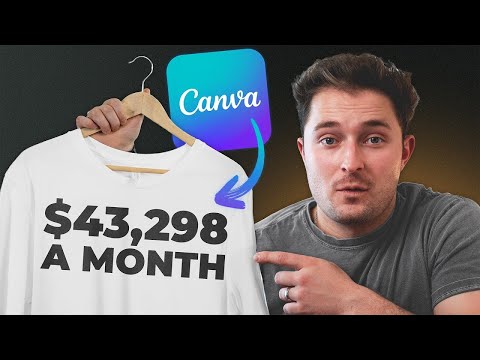
- $403k/yr Title figure
- $10.15 Creator's profit per sale
- ~$200k/mo Largest listing figure
- Not stated Creator's shop revenue
The claim
That AI-made T-shirt designs like the ones shown are making sellers $30,000 to $100,000 a month, and $403,000 a year in the title, and that viewers can make their own versions with free tools.
- $403,000 a year — In the title only; not stated in the video
- Creator's net per sale — $23.76 after fees, $10.15 after Printify
- Implied Printify cost per shirt — ~$13.61
- Slogan shirt, another seller — 1,000+ sales last month, "over $19,000"
- Slogan shirt, another seller — 10,000+ sales, "nearly $200,000" in 30 days
- Graphic shirt, another seller — 67 sales in 24 hours; an estimator puts it at 1,200 this month
- Creator's own results — One sale two days after an accidental listing
- Creator's shop revenue or profit totals — Not stated
What is this income idea?
Make T-shirt designs with AI and Canva, list them on marketplaces such as Etsy or Amazon, and have a print-on-demand supplier print and ship each order.
- The video is mainly a design tutorial. The creator walks through five styles: slogan shirts, graphic shirts, Japanese-style art, line-art vectors and custom text or photo shirts, and shows how to make each with ChatGPT for ideas and images, Canva for layout, free upscaling and tracing apps, and Figma for distressed textures.
- Between the design steps he shows existing listings and what they appear to earn. A slogan shirt on Amazon with over 1,000 sales in the last month "has made over $19,000". Another with over 10,000 sales "made nearly $200,000 just in the last 30 days". A graphic shirt on Etsy sold "over 67 times just in the last 24 hours" and a third-party tool estimates 1,200 sales this month.
- He then converts these into profit using his own margin. "When I sell a t-shirt even after all of the fees I make $23.76 on each sale", and after paying Printify he keeps $10.15. Applied to 1,000 sales, that is "a little bit over $10,000 of profit".
- His own results in the video are limited to that margin and one anecdote: a design he made for an earlier video was posted by accident in one of his shops and sold two days later without a mockup or SEO. No total for his own shops is given.
- The $403,000 a year in the title is not stated anywhere in the video, and no listing or combination of listings in the video is described as earning it.
A useful how-to for making shirt designs, with big numbers that belong to other people's best-selling listings rather than to the creator or to a typical shop.
- Find a selling design — Other listings
- Reverse it into a prompt — ChatGPT
- Generate a new version — ChatGPT images
- Lay out and upscale — Canva, free apps
- Add texture — Figma, free drafts
- List and fulfil — Printify
The design steps are complete; the creator's own sales across these steps are not stated.
Top listings are not a typical shop, and their margin is not yours
The lesson underneath the number
- The big numbers in this video are real-looking data points about real listings: a shirt with ten thousand sales in a month, another with sixty-seven in a day. But they are other people's best sellers, chosen because they sell, and in several cases the monthly figure is an estimate from a third-party tool. They show that the top of the market is large. They do not show what a new shop, or the creator's shop, earns.
- The conversion into profit is where the arithmetic needs care. The creator gives his own margin precisely, $23.76 net after fees and $10.15 after Printify, and that is useful. He then multiplies other listings' sales counts by it. Those listings bring in about $13 to $20 per sale, less than his own net after fees, so his margin cannot simply be carried across. At his own fulfilment cost, the cheaper shirts in the video would leave a few dollars a sale, or less than nothing.
- The graphic-shirt example shows the same issue with volume. Sixty-seven sales in 24 hours, extended to a month, is about 2,000 sales and gives the "around $20,000" profit figure. The estimator he cites puts the month at 1,200 sales, which at his margin is about $12,200. Both numbers are in the video; the higher one is used.
- The design teaching is good and the creator is fair about the work involved: you may have to make many designs to find ten that sell, and the reverse-prompt approach is presented as a way to work in proven niches without copying a single listing. Whether a design is safe to sell is a question of trademark and copyright that the viewer carries the risk on, whatever a tutorial says about it.
You can get there with as little as 10 great designs but you might have to make a lot of designs before you find those 10 great ones
Alek, on the route to $10,000 a month
How the designs are made in the video
A clear, free-tool design process for five shirt styles.
No figure is given for the creator's own shop revenue, listing count or sell-through rate.
- Slogan shirts — Give ChatGPT a screenshot of a slogan that inspired you and ask for variations; set a 4500 x 5400 pixel Canva canvas, pick a tall font for long sayings, and colour each line from an imported retro graphic.
- Distressed textures — Export a transparent PNG from Canva, then in Figma's free draft files mask the design with a distressed texture and paste it back. He notes this takes several steps.
- Graphic shirts by reverse prompting — Screenshot designs you like, ask ChatGPT to write a prompt that would produce something similar, then generate a new image from that prompt and upscale it in Canva.
- Japanese-style art and line-art vectors — The same reverse-prompt method, with a free upscaler for art and Canva's tracer app to turn an image into a scalable black-and-white vector.
- Custom text and photo shirts — List a mockup and a font-options card; when an order arrives, make the customer's design, confirm it with them and upload it to Printify to fulfil.
- Make many designs — "You can get there with as little as 10 great designs but you might have to make a lot of designs before you find those 10 great ones."
The business model
Retail T-shirt sales on Etsy, Amazon or other marketplaces, printed and shipped per order by Printify.
Marketplace shoppers searching for slogan, graphic, niche-art or custom shirts.
Designs modelled on styles already selling, and custom shirts made from the customer's own text or photo.
Marketplace search and listing SEO; advertising is not discussed.
- Printify fulfilment — ~$13.61 per shirt, from his two stated figures
- Marketplace fees — Included in his $23.76 net; not itemised
- Design tools — Free tiers used; Canva subscription mentioned
- Advertising — Not discussed
- Returns and reprints — Not discussed
He gives his own per-sale figures after fees and fulfilment, which many print-on-demand videos do not. The selling price and fee breakdown behind them are not stated.
What you would actually need
Money
Free AI apps and free tools: ChatGPT, Canva, Figma drafts and free upscalers. Printify is paid per order.
Design can be done at little or no cost, and print on demand means no stock. The costs not covered are marketplace listing and transaction fees, any advertising, and Canva or ChatGPT paid tiers if the free ones limit you. The video gives his net per sale but not the price or fees behind it.
Costs mentioned or implied
- Printify fulfilment, about $13.61 per shirt by our arithmetic
- Marketplace fees (included in his $23.76, not itemised)
- Canva subscription, which he says Figma lets you avoid
- Distressed texture files (free options linked)
- Advertising, not discussed
Time
Designs take "a few seconds" to minutes; a slogan design "only took a few seconds to put together".
Each design is quick. The time is in volume and research: he says you may need many designs to find ten that sell, and custom orders need a design made and approved for every sale.
Where the time goes
- Product research across Etsy and Amazon
- Making many designs to find a few that sell
- Mockups, titles and SEO for each listing
- Custom orders designed and confirmed one by one
- Customer service on print or shipping issues
The part you must pay attention to
His $10.15 margin does not fit the listings it is applied to.
The creator nets $23.76 per sale after fees and pays Printify about $13.61. The listings he applies this to bring in less per sale than his own net.
- Revenue per sale, 1,000-sale listing ($19,000 ÷ 1,000) — ~$19
- His Printify cost per shirt ($23.76 − $10.15) — ~$13.61
~$5.39
Left per sale before any marketplace fee
That the creator's own per-sale profit transfers to other sellers' listings. His $10.15 comes from a sale that nets $23.76 after fees, so his selling price is higher still. The Amazon listings he cites work out at about $19 and $20 per sale, the ramen shirt at about $13, and the Catzilla shirt at $17. At his own Printify cost, a $17 sale leaves about $3.39 before fees, and a $13 sale does not cover it.
Fulfilment costs differ by blank and supplier, and the other sellers may pay less to print, so this does not establish what they earn. It does mean that "1,000 sales times $10.15" describes the creator's pricing, not theirs, and that the monthly profit figures in the video come from combining one seller's sales count with another seller's margin.
- HIS OWN MARGIN
- Net after fees $23.76
- Profit after Printify $10.15
- Printify (difference) $13.61
- REVENUE PER SALE, OTHER LISTINGS
- $19,000 / 1,000 ~$19
- $200,000 / 10,000 ~$20
- Ramen: $13,000 / 1,000 ~$13
- Catzilla, stated price $17
- AT HIS PRINTIFY COST
- $19 - $13.61 ~$5.39
- $17 - $13.61 ~$3.39
- (before any marketplace fee)
The economics
One seller's margin, other sellers' volumes.
- Creator's net per sale after fees — $23.76
- Creator's profit after Printify — $10.15
- Implied Printify cost — ~$13.61
- Revenue per sale, cited Amazon listings — ~$19–$20
- Graphic shirt: 67 in 24h vs estimator's 1,200/month — ~2,010 vs 1,200 a month
- Profit at $10.15: 2,010 vs 1,200 sales — ~$20,400 vs ~$12,180
- Title figure — $403,000 a year
- Creator's shop revenue — Not stated
The graphic-shirt profit figure, two ways
67 sales × 30 days × $10.15, against 1,200 estimated sales × $10.15
About $20,400 a month from the one-day count, about $12,180 from the monthly estimate the video also cites
IncomeIdeaLab calculation from figures stated in the video
Both use the creator's own margin, which may not apply to this seller. The 67-in-24-hours figure is a single day; the 1,200 is a third-party estimate. Neither is a reported profit.
- The creator's own shop revenue or profit for any period
- How many designs he has listed and how many sell
- His selling price and the fees behind the $23.76
- Whether the high-level tutorial mentioned at the end is paid
- Advertising spend, if any
- Any basis for the $403,000 a year in the title
- Our check of his own margin: $23.76 − $10.15 = $13.61 for Printify, consistent with the figures he gives.
- His example of 10 shirts × 100 sales × $10 = $10,000 a month is arithmetically correct; the 100 sales per design per month is an assumption.
- The sunflower example, 1,000 sales × $10.15 ≈ $10,150, is also correct as arithmetic, but again pairs another listing's volume with his margin.
- The video ends by pointing to a tutorial and a free Discord community; whether the tutorial is paid is not stated in the video.
Evidence status
The main figures and claims in the video.
- $403,000 a year — Video title — Not stated in the video.
- Designs making $30,000 to $100,000 a month — Creator, about other listings — Other sellers' listings; several figures are third-party estimates.
- $23.76 net after fees, $10.15 after Printify — Creator — His own figure. Internally consistent.
- 1,000+ sales, "over $19,000" — Creator, about another listing — Implies about $19 per sale.
- "A little bit over $10,000 of profit" on that listing — Creator — Uses his margin on a listing that brings in less per sale than his own net.
- 10,000+ sales, "nearly $200,000" — Creator, about another listing — Implies about $20 per sale.
- Graphic shirt "around $20,000 of profit per month" — Creator — From 67 sales in one day; the estimator he cites gives about $12,180 at his margin.
- Catzilla at $17, "$6 to $7,000" profit a month — Creator — At his own Printify cost a $17 sale leaves about $3.39 before fees.
- An accidental listing sold in two days — Creator — A single sale; the only own-shop result given.
- Reverse-prompted designs do not infringe — Creator — The creator's view; the seller carries the trademark and copyright risk.
What is actually proven?
The design method is shown step by step. The income figures are other sellers' and are not checkable from the video.
- The creator nets $10.15 per sale after fees and Printify.
- The large monthly figures belong to other sellers' listings.
- Those listings bring in about $13 to $20 per sale.
- His margin does not carry across to listings priced below his net.
- He says many designs may be needed to find ten that sell.
- The $403,000 a year in the title.
- The creator's own shop revenue or profit.
What the headline doesn’t tell you
The numbers describe the top of the market, not a shop.
- $403K is in the title only. — Not stated in the video.
- Other sellers' listings. — Not the creator's results.
- Several figures are estimates. — From a third-party tool.
- Margins do not transfer. — $19 per sale is not $23.76 net.
- One day is not a month. — 67 a day vs 1,200 estimated.
- His own totals are not given. — One accidental sale is.
- Many designs to find ten. — His own caveat.
- IP risk sits with you. — Whatever a tutorial says.
Should you try it?
Learn the design method; ignore the income figures
The free-tool workflow is practical. Plan your pricing from your own fulfilment cost and expect low sales per design.
- Usefulness of the design tutorial — 8 — Five styles, each shown step by step with free tools.
- Disclosure of own per-sale margin — 7 — $23.76 net and $10.15 after Printify.
- Relevance of income figures to a new shop — 2 — Top listings belonging to other sellers.
- Arithmetic consistency — 3 — His margin applied to listings priced below it.
- Support for the title figure — 0 — $403,000 a year is not stated in the video.
- Low cost to start — 8 — No stock; free design tools.
- Beginner accessibility — 6 — Easy to start, hard to stand out.
- Print on demand is cheap to try: no stock, free design tools, and a supplier who prints after the customer pays. The design part of this video is a good starting point, especially the reverse-prompt method and Canva's tracer and upscaling apps.
- Before you price anything, work from your own costs. Find your supplier's price for the blank you will use, add shipping and the marketplace's fees, and set a price that leaves a margin. Do not assume $10 a sale; the creator's $10.15 comes from his own price, which is higher than the listings he points to.
- Then expect the creator's own caveat to apply: many designs, few that sell. The top listings shown sell thousands a month, which is why they were chosen. A realistic first goal is a handful of sales from dozens of listings, and a check on which styles sell before making more of them.
Passive or automated?
Automation
Printing and shipping are handled by the supplier.
Passive potential
A listed design can keep selling; finding ones that do is ongoing work.
Once a design is listed, Printify prints and ships each order, so a shirt that sells can do so without further work. That is the passive element, and it is real. The rest is not: designs have to be researched, made, checked and listed in volume, most will not sell, and custom shirts need a design made and approved for every order. Trends move, so a design that sells this month may not next month.
- Researching niches and selling styles
- Making and checking designs in volume
- Writing titles, tags and mockups
- Designing and confirming each custom order
- Handling customer service and reprints
Recommended beginner experiment
Test pricing and sell-through before volume.
- Price one blank with your supplier. — Include shipping.
- Add marketplace fees. — Then set a price with a margin.
- Make 20–30 designs in one niche. — Using the video's method.
- Check every design for trademarks. — Before listing.
- List and wait 30 days. — Without ads.
- Count sales per design. — Your own sell-through rate.
- Make variations of what sold. — Drop what did not.
Our verdict: 4/10
A good design tutorial with other sellers' numbers and a title figure that is not stated in the video
Credited for a clear, free-tool design workflow across five shirt styles; for giving the creator's own net per sale after fees and after Printify; and for saying that many designs may be needed to find ten that sell. Marked down because the $403,000 a year in the title is not stated in the video; because the large monthly figures belong to other sellers and several are third-party estimates; because the creator's $10.15 margin is applied to listings that bring in about $13 to $20 per sale, less than his own $23.76 net; and because no total for his own shops is given.
The design half of this video is worth watching. It shows how to turn a selling idea into an original design with ChatGPT, Canva, Figma and free upscaling and tracing tools, and the creator gives his own margin precisely: $23.76 per sale after fees, $10.15 after Printify. The income half needs care. Every large figure is another seller's listing, chosen because it sells, and several monthly totals are estimates from a third-party tool. Those listings bring in about $13 to $20 per sale, less than the creator's own net, so multiplying their sales by his $10.15 does not describe their profit; at his own Printify cost, the $17 shirt would leave about $3.39 before fees. The graphic-shirt profit uses a one-day count extended to a month rather than the lower monthly estimate the video also cites. The creator's own result is one sale from an accidental listing, and the $403,000 a year in the title does not appear in the video. Use the method, and build your pricing from your own costs.
- Title figure — $403,000 a year — not stated
- His profit per sale — $10.15
- Implied Printify cost — ~$13.61
- Cited listings, per sale — ~$13–$20
- Graphic shirt profit at his margin — ~$12,180 (estimate) to ~$20,400 (one day × 30)
- His shop revenue — Not stated
- Beginner suitability — Method yes; figures no
Sources
- Canva Ai T-Shirts That are Making People USD 403k/year — Alek — YouTube video, 2025-07-06
- FTC — Guides Concerning the Use of Endorsements and Testimonials — Regulatory guidance on endorsements and earnings claims