E-commerce / Made-to-Order Footwear · Claim Review
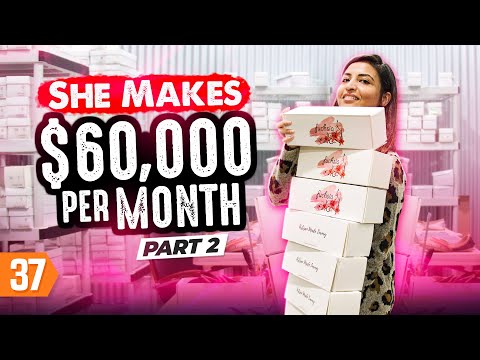
“How Afshan Makes $60K/Month From Her Shoes Business (Pt. 2)”
What we found: The Artisan Shoe Brand’s Numbers Are a Run Rate and a 10x Goal, Not $60K a Month
A $1 million run rate, a $10 million target for the next year, and no cost, margin or profit figure — with the title's number absent from this part.
- $1M/yr Run rate
- ~$83k Implied monthly
- $10M Next-year goal
- Never stated Costs, profit
The claim
That a made-to-order artisan shoe brand earns $60,000 a month and is on course to grow tenfold.
- Title figure — $60,000 a month — not said in this part
- Run rate — "A million dollar run rate this year"
- Run rate per month — ~$83,000
- Next-year target — "10 million in sales"
- Monthly sales needed for the target — ~$833,000
- Artisan market size — $32 billion, founder's own research
- Core customer — Women aged 35 to 55
- Delivery wait — Two to three weeks, made to order
- Attempts before this worked — "We failed 10 times but the 11th time it worked"
- Costs, margin, profit — Never stated
What is this income idea?
Sell handmade, embroidered leather flats online, made by artisans in Pakistan only after each order is placed, and market the brand on its social and sustainability story.
- The founder has a background in finance and market research. Their research found the global artisan sector to be "a 32 billion dollar industry" and the second-largest employer in developing countries after agriculture — a figure the founder states but does not source.
- The business began as a marketplace selling artisan shoes, scarves and handbags while bootstrapping. It narrowed to shoes because shoes were getting "so much more traction" and because product quality and sizing needed focus.
- The founder and their husband designed the first ten styles, two of which are still sold. Designs now come from freelance designers who, the founder says, have worked for major footwear retailers, and are handed to artisans to embroider.
- The brand holds no stock. Shoes are made after an order in a given size, so customers wait two to three weeks, and an email series fills the wait with stories of the named artisans working on their pair. Packing, fulfilment and half-size stretching happen in a Seattle space.
- The customer turned out not to be the students the founders expected but women aged 35 to 55. During the pandemic, sales rose but supply chains were disrupted, and the business also made face masks, both in Pakistan and with Seattle artisans.
- The only revenue figure in this part: "we are at a million dollar run rate this year next year we want to grow to 10 million in sales". The plan to get there is a better sales funnel, national PR and an affiliate programme for "an army of sustainability advocates".
A thoughtful made-to-order brand with a $1 million annualised sales pace, a tenfold growth goal, and no cost figures.
- Marketplace start — Shoes, scarves, handbags
- Focus on shoes — Most traction
- Freelance designers — Embroidery patterns
- Order placed — No stock held
- Made in Pakistan — 2–3 week wait
- Maker stories by email — While customers wait
- Fulfil from Seattle — Sizing and stretching
- $1M run rate — $10M goal next year
The operating model is described in detail. The economics of each pair are not.
A clever operating model, described in revenue terms only
The lesson underneath the number
- The strongest idea in this interview is an operational one. Footwear is a hard business partly because of sizes: every style multiplied by every size is inventory that may not sell. This brand holds none. It makes each pair after it is ordered, accepts a two-to-three-week wait, and turns the wait into a reason to stay engaged by emailing customers about the named artisans making their shoes. That removes the biggest risk in the category and makes a weakness part of the appeal.
- The founder is also honest about getting things wrong. The expected customer was students who care about sustainability; the real customer is women aged 35 to 55, found from the brand's own data. The original plan was a multi-category marketplace; it became a shoe brand. And the founder puts the path plainly: "we failed 10 times but the 11th time it worked".
- The figures are weaker. The title's $60,000 a month never appears in this part. The number that does, a $1 million run rate, works out to about $83,000 a month in sales, higher than the title, and is a projection from recent months rather than a year's actual takings. It was stated in a year the founder describes as unusual, with rising sales, disrupted supply and a side line in face masks.
- And like every figure in the video, it is sales. The model has costs at every step — artisans, materials, shipping from Pakistan, fulfilment, design, platform fees and, under the growth plan, affiliate commissions and PR — and none of them is priced. The $10 million target is stated clearly as a goal, which is fair. But a viewer cannot tell from this part whether the business earns anything from its $1 million, and the title offers a monthly figure that the interview does not.
we failed 10 times but the 11th time it worked
The founder, asked for one tip for someone starting a shoe company
How the brand operates
The operational choices are more interesting than the headline figure.
This is Part 2 of a two-part interview; we reviewed this part only, and the title's $60,000-a-month figure may come from Part 1.
- Narrow the catalogue — From shoes, scarves and handbags to shoes alone, so quality, sizing and standardisation could be got right. A sensible move for a bootstrapped brand.
- Make to order, hold no stock — "We don't carry any stock." Each pair is made after it is ordered, which removes inventory risk at the cost of a two-to-three-week wait.
- Turn the wait into marketing — An email series introduces the artisans making each customer's pair while they wait. A clever way to make a weakness part of the product.
- Use customer data to find the real buyer — Email and order data showed the customer was women aged 35 to 55, not the students the founders had assumed.
- Handle sizing locally — No half sizes are made; leather shoes are stretched by half a size in Seattle when a customer needs it.
- Pivot production in a shock — When supply chains were disrupted during the pandemic, the artisan network also made face masks, which the founder calls "a good save for the slow months".
- Plan growth through PR and affiliates — The route to $10 million is a better sales funnel, national press and an affiliate programme. None of it is costed.
The business model
Direct-to-consumer online sales of handmade embroidered leather flats, plus face masks during the pandemic.
Mainly women aged 35 to 55, identified from the brand's own customer data.
Distinctive handcrafted shoes with a social-impact story and named makers.
Own e-commerce store, an email series, customers sharing the story, and a planned affiliate programme and national PR push.
- Artisan production — Made to order in Pakistan. Never priced
- Freelance designers — Never priced
- International shipping — Never mentioned
- Fulfilment space in Seattle — Shown. Never priced
- Packaging — Box designed by a hired designer
- Affiliate commissions — Part of the growth plan
- Platform and payment fees — Never mentioned
Making to order removes the biggest cost risk in footwear — unsold stock. It is the one cost advantage the video demonstrates, and it deserves the credit.
What you would actually need
Money
The brand began bootstrapped. No start-up or running cost is given in this part.
Making to order keeps inventory costs low, which is a real advantage for a small brand. But every pair still carries artisan pay, materials, international shipping, possibly import duties, packaging, payment processing and customer acquisition, and none of these is mentioned. Without them, a $1 million run rate says nothing about what the business keeps.
Implied by the model, never priced
- Artisan wages and materials per pair
- Shipping from Pakistan to Seattle
- Import duties, if any
- Packaging and outbound shipping to customers
- E-commerce platform and payment fees
- Freelance designers
- Affiliate commissions
- PR and advertising for the 10x plan
- Returns and resizing
Time
"We failed 10 times but the 11th time it worked." How long that took is not said in this part.
The founder credits persistence and is candid about repeated failure, which deserves credit. The business runs on coordination across two countries — design, artisan production, shipping, sizing and customer communication — and that is ongoing work.
What the founders do
- Brief freelance designers
- Coordinate artisan production in Pakistan
- Pack, size and stretch shoes in Seattle
- Write the maker-story email series
- Run marketing, PR and the affiliate programme
The part you must pay attention to
Neither number in this part is monthly income.
The title says $60,000 a month. The founder says "a million dollar run rate this year" and wants "10 million in sales" next year.
- Annual run rate — $1,000,000
- Months — 12
~$83,000 a month
In sales — not $60,000, and not profit
A run rate is usually a recent month or quarter multiplied up to a year. It is not what the business has actually taken in over a year. This one was stated in a year when, by the founder's own account, pandemic sales rose unexpectedly and the business also sold face masks. If the run rate is based on those months, it may be higher than the shoe business's normal pace. It is also about $83,000 a month, higher than the title's $60,000, and the video never explains the difference. The likeliest reading is that $60,000 is an earlier or average monthly figure and the run rate is based on a stronger recent period, but that is our inference.
The $10 million target is a plan, stated as one. Reaching it means about $833,000 of sales a month on average, ten times the current pace, through PR, an affiliate programme and a better funnel. None of those is costed, and affiliate commissions and press campaigns both cost money for each sale they bring. Every figure in the video is gross sales. Artisan pay, materials, shipping from Pakistan, platform fees and marketing all come out of it, and none are given.
- THE TITLE
- $60,000 / month (not in Part 2)
- x 12 = $720,000 / yr
- THE AUDIO
- "$1M run rate this year"
- / 12 = ~$83,300 / mo
- -> higher than the title
- -> sales, not profit
- THE GOAL
- "$10M in sales" next year
- / 12 = ~$833,000 / mo
- vs now = 10x
- WHAT COMES OUT OF EACH SALE
- Artisan pay + materials ???
- Pakistan -> Seattle ship ???
- Platform + payment fees ???
- Affiliates, PR, ads ???
- Profit ???
The economics
Sales figures only, one of them a target.
- Title figure — $60,000 a month
- Run rate — $1,000,000 a year
- Run rate per month — ~$83,300
- Next-year sales target — $10,000,000
- Target per month — ~$833,000
- Delivery time — 2–3 weeks
- Artisan market — $32 billion
- Costs, margin, profit — Never stated
Reconciling the title with the audio
$1,000,000 ÷ 12 = ~$83,300 a month, against a title of $60,000 a month
The run rate implies higher monthly sales than the title; neither is a profit figure
IncomeIdeaLab calculation from the founder’s stated run rate
A run rate annualises a recent period and is not a year's actual sales. The title's $60,000 may come from Part 1, which we did not review. Whether face-mask sales during the pandemic are included in the run rate is not stated.
- Cost to make and ship each pair
- Gross margin per pair
- Marketing and customer acquisition cost
- Affiliate commission rate
- Actual sales for any completed year
- How much of the run rate came from face masks
- Profit, and what the founders pay themselves
- The $32 billion artisan market figure and the claim that the artisan sector is the second-largest employer in developing countries come from the founder's own research. No source is given, and neither bears on this brand's revenue.
- Growing from $1 million to $10 million in a single year means averaging about $833,000 a month. The founder presents this as a goal, not a forecast, and the video does not say whether it was reached.
- The affiliate programme is part of the growth plan. There is no sign in this part that the video itself is promotional or sponsored.
Evidence status
Every substantive claim in Part 2.
- $60K a month (title) — Channel — Does not appear in this part's audio.
- "A million dollar run rate this year" — Founder — ~$83,000 a month in sales. An annualised pace, not a year's total.
- "10 million in sales" next year — Founder — A stated 10x goal. Not costed.
- Artisan market is $32 billion — Founder — Unsourced. Irrelevant to the brand's own figures.
- No stock held; made to order — Founder — Consistent with the two-to-three-week wait described.
- Core customer women 35–55 — Founder — Based on the brand's own customer data.
- Sales rose during the pandemic — Founder — No figures. Face masks were added at the same time.
- Failed 10 times before this worked — Founder — Candid, and unusual in this genre.
- Costs, margin, profit — Nobody — Absent throughout.
What is actually proven?
The operating model is described. The money is not.
- Products, packaging and the Seattle fulfilment space are shown on camera.
- A $1 million annual run rate in sales.
- That run rate is about $83,000 a month, not $60,000.
- A $10 million sales target for the following year.
- Costs, margin, profit and actual annual sales.
What the headline doesn’t tell you
The title's number is not in this part, and the ones that are describe sales.
- $60K a month is absent. — Not said in Part 2.
- Run rate, not revenue. — An annualised pace.
- ~$83K a month. — Higher than the title.
- $10M is a goal. — 10x in a year.
- Pandemic year. — Plus face masks.
- No costs at all. — Artisans, shipping, fees.
- Affiliates cost money. — Part of the growth plan.
- Eleventh attempt. — Ten failures first.
Should you try it?
Borrow the model, not the numbers
Made-to-order production and story-driven email are transferable. The revenue figures tell you nothing about margin.
- Operating detail — 8 — Made to order, sizing, email series, data-led targeting.
- Honesty about failure — 8 — "We failed 10 times."
- Revenue disclosure — 4 — A run rate only, in an unusual year.
- Cost disclosure — 0 — None.
- Title accuracy — 3 — $60K a month is not in this part.
- Beginner accessibility — 4 — Needs a reliable production partner abroad.
- The most useful idea for a beginner is making to order. If you are selling a product with many sizes or variants, holding no stock removes the risk that sinks most small product brands. The price is a longer wait, and this brand shows how to handle it: tell customers who is making their order and keep them engaged until it arrives.
- The second is letting your data correct you. The founders built for young sustainability-minded students and found their buyer was women aged 35 to 55. They followed the data.
- What the video does not give you is any sense of whether this is a good business to be in. There is no cost per pair, no margin and no figure for what it costs to acquire a customer. A $1 million run rate could be a healthy business or a thin one depending on those numbers. Treat the $10 million as what the founder calls it — a goal — and the $60,000 in the title as a number this part never states.
Passive or automated?
Automation
The email series can be automated. Production and fulfilment cannot.
Passive potential
Every order starts a two-country production and shipping process.
The customer-facing email series is the one piece that can run on its own once written. Everything else is active: each order triggers production by artisans in Pakistan, shipping to Seattle, sizing and sometimes stretching, packing and dispatch. Design is briefed to freelancers, and the growth plan adds PR and an affiliate programme to manage. The founders are running a physical-product business across two countries, and nothing in the interview suggests otherwise.
- Artisans making each pair after it is ordered
- Coordinating production and shipping from Pakistan
- Sizing and stretching shoes in Seattle
- Packing and dispatching orders
- Briefing freelance designers
- Managing PR and affiliates
Recommended beginner experiment
Test the made-to-order model at small scale before anything else.
- Find one reliable maker. — Quality and sizing first.
- Cost a single pair end to end. — Materials, labour, shipping, fees.
- Sell before you make. — No stock, as they do.
- Write the wait-time emails. — Tell customers who is making it.
- Check who actually buys. — Their buyer surprised them.
- Track actual monthly sales. — Not a run rate.
- Price affiliates before launching. — Commission comes off margin.
- Expect several failed attempts. — They had ten.
Our verdict: 4/10
A smart made-to-order model, described only in sales with the title's $60K absent and a $1M run rate in an unusual year
Credited for a genuinely useful made-to-order model that removes inventory risk; for turning the two-to-three-week wait into a customer-engagement email series; for being led by customer data to the real buyer; for adapting production during the pandemic; and for candour about failing ten times before this worked. Marked down because the title's $60,000 a month does not appear in this part; because the only revenue figure is a run rate — about $83,000 a month — stated in a year of pandemic sales and face-mask production; because the $10 million figure is a tenfold goal; and because no cost, margin or profit figure appears anywhere.
This part of the interview is more useful for its operations than its figures. The brand makes handmade leather flats in Pakistan only after they are ordered, which eliminates the unsold stock that sinks many footwear businesses. It fills the two-to-three-week wait with emails about the named artisans making each pair. It discovered from its own data that its buyers were women aged 35 to 55 rather than the students it had expected, and it adapted when the pandemic disrupted supply by making face masks. The founder is candid that the business came after ten failures. The figures are thinner. The title says $60,000 a month; this part never does. What it offers is "a million dollar run rate this year", about $83,000 a month in sales, stated in a year the founder describes as unusual, with rising sales and a side line in masks. The $10 million target for the next year is a tenfold goal and is described as one. Every figure is revenue. Artisan pay, materials, international shipping, fulfilment, design, platform fees and the planned affiliate commissions are never priced, so nothing here tells you what the business keeps. Take the made-to-order model and the wait-time emails; treat the numbers as a sales pace and an ambition.
- Title figure — $60K/month — absent
- Run rate — $1M/yr
- Run rate per month — ~$83,300
- Next-year target — $10M
- Costs and profit — Never stated
- Beginner suitability — Model yes, numbers unproven
Sources
- How Afshan Makes $60K/Month From Her Shoes Business (Pt. 2) — UpFlip — YouTube video, 2020-10-14