E-commerce / Amazon FBA Private Label · Claim Review
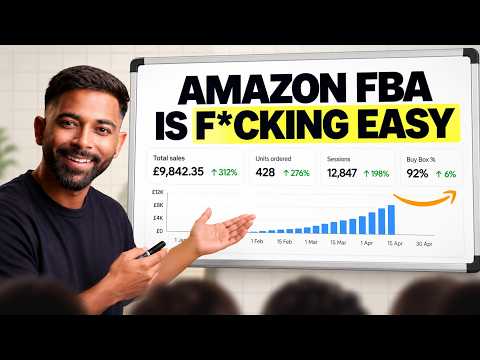
“The Most Valuable Amazon FBA Training You'll Ever Watch”
What we found: An Amazon FBA Brand Guide on £3,000: The Budget Is Not Broken Down, and No Product's Profit Is Worked Out
The research checklist, supplier negotiation and ad launch are specific. The £3,000 is a single figure, the example product has no unit economics, and the creator's seven-figure and student results are sales figures with no costs.
- ~£3,000 Stated launch budget
- ~4 months Time to first sale
- 7 figures+ Creator's Amazon sales
- None Product profit worked out
The claim
That a beginner with around £3,000 can launch their own Amazon FBA brand in about four months by following this step-by-step method, and build an asset that eventually profits "on autopilot".
- Launch budget — "Around £3,000"
- What it covers — Stock, samples, shipping, images, trademark, barcode, Amazon plan and ads
- Amounts for each of those items — Not stated
- Time to first sale — "About 4 months"; shipping takes 1.5 to 2 months
- Amazon Professional plan — £25 plus VAT, about £30 a month; about $40 in the US
- Example product — ~5.5K a month, 233 reviews, 4.4 stars
- Example supplier price — £4 a unit (hypothetical)
- Creator's own sales — "Over seven figures on Amazon in sales"
- Students' results — "Six-figure yearly" Amazon businesses
- Amazon referral and fulfilment fees, ad budget, margin — Not stated
What is this income idea?
Find a product people already buy on Amazon, make it slightly better, put your own brand on it, have a supplier ship it to Amazon's warehouses, and drive the first sales with reviews and ads.
- The video is aimed at someone with "around £3,000 to launch your own brand" who wants "to build an asset you own alongside your job". The creator says they have "made over seven figures on Amazon in sales", have "helped hundreds of people", and have been selling for almost six years.
- They are clear about the limits: "if you just watch this video and do absolutely nothing you're not going to see any results and this is not financial advice". Later: "this is not a get quicker scheme your first month of selling is about proving people want your product not profit."
- The method avoids both inventing a new product and putting a logo on a low-quality one. Instead: find a product with proven demand, read its one-star reviews, and improve it on one of three dimensions the creator calls visual, variant and value.
- The research checklist is precise: three sellers or fewer, 500 reviews or fewer, at least 2,500 a month in sales per listing, a market of around 150,000 a month, an average price above 20, and no single brand dominating. A sourdough starter kit is the worked example; the creator picks it despite its market of about 105,000 because the rules are "a guide not a law".
- Suppliers come from Alibaba, filtered to verified suppliers with trade assurance. The negotiation tip is to ask for prices at 300, 500 and 1,000 units, then ask for the 500-unit price on 300 units. The creator recounts that their first product, a lapel microphone, sold out at 200 units, then drew refunds after a 1,000-unit reorder "because the quality was just so bad".
- The launch is Amazon Vine for first reviews, then three ad campaigns — automatic, phrase match and competitor targeting — with winning searches moved into exact-match campaigns at "about 10 or 20 per day". The video ends with a link to apply for the creator's team to help build a brand.
Spend about £3,000 and four months launching an improved version of a product that already sells on Amazon, then use reviews and ads to get it going.
- Professional seller account — ~£30 a month
- Run the checklist — ≤3 sellers, ≤500 reviews
- Check the market — ~150k a month
- Fix the complaints — Visual, variant, value
- Source on Alibaba — Samples first
- Brand, barcode, listing — Trademark, GS1
- Ship to Amazon — 1.5–2 months
- Vine plus three ad campaigns — Ad budget not given
Every stage is described; the money at each stage is not.
A good process, without the numbers that decide it
The lesson underneath the number
- The research half of this video is better than most free tutorials. The checklist is specific enough to apply, the market check warns against the common mistake of finding one strong listing in a market dominated by large brands, and the resistance-band example shows a market that passes on size and fails on competition and price. Mining one-star reviews for what to fix is a sound, cheap way to differentiate.
- The candour is worth crediting too. The creator volunteers that their first product sold out at 200 units, was reordered at 1,000, and then drew refunds "because the quality was just so bad", and draws the right lesson: "quality makes or breaks your brand not marketing". They also say the first month is about proving demand rather than profit, and that sales may only break even at first.
- Where the video stops short is money. The £3,000 is a single figure covering stock, samples, freight, images, trademark, barcodes, the Amazon plan and ads, with no amount against any of them. The rule that an average price above 20 leaves "enough room for profit after Amazon fees and ads" is not tested on the example product, whose selling price and cost are not given. A beginner finishes the video knowing how to find a product and not whether that product would make money.
- The results quoted are sales. "Over seven figures on Amazon in sales" across almost six years and students' "six-figure yearly" businesses say nothing about margin, and the video closes with an application to work with the creator's team. The creator says plainly that watching alone will not produce results. That is a fair statement, and it is also the point at which the paid offer begins.
Quality makes or breaks your brand not marketing.
Jatz Naran, on their first product's refunds
The launch, as the creator gives it
The research and launch steps are unusually specific for a free tutorial.
No amount is given for stock, shipping, images, trademark, barcodes or ads at any stage.
- Use a Professional seller plan — £25 plus VAT a month in the UK, about $40 in the US, against 75p plus VAT or 99 cents per sale on the Individual plan. The creator recommends registering as a sole trader, limited company or LLC rather than an individual.
- Screen products against a checklist — Three sellers or fewer, 500 reviews or fewer, a rating with room to improve, and at least 2,500 a month in sales. The rating threshold is given as five stars, four stars and 4.5 at different points in the video.
- Check the whole market — Around 150,000 a month in total revenue, an average price above 20 "because this will give you enough room for profit after Amazon fees and ads", average reviews under 500, and new brands in the top ten.
- Improve on the one-star reviews — For the sourdough kit: dough sticking to the basket, no instructions, a poorly written recipe book. Fix those, or differentiate on visuals, size or colour, or an added extra such as a recipe book.
- Negotiate across quantities — Ask ten suppliers for prices at 300, 500 and 1,000 units, then ask for the 500-unit price on a 300-unit order. Order samples or use an inspector before buying in bulk.
- Register the brand and build the listing — Trademark the name, buy GS1 barcodes or apply for an exemption, enrol in Brand Registry, write a keyword-led title and benefit bullets, and make seven images, which the creator suggests generating with AI and checking for spelling.
- Launch with Vine and three campaigns — Vine for the first reviews, then automatic, phrase-match and competitor-targeting ads. Move converting searches into exact-match campaigns and add non-converting ones as negatives every one to two weeks.
The business model
Sales of an own-brand physical product on Amazon, fulfilled from Amazon's warehouses.
Amazon shoppers searching for an established product, such as a sourdough starter kit.
A version of a proven product that fixes the complaints in competitors' one-star reviews.
Amazon search, helped by Vine reviews and sponsored-product ads.
- Stock — Hypothetical £4 a unit; order size of 300 suggested
- Amazon Professional plan — ~£30 a month, stated
- Amazon referral and fulfilment fees — Referred to; not quantified
- Freight to Amazon — Not priced
- Trademark, barcodes, images — Not priced
- Ads — "About 10 or 20 per day" per exact keyword after launch; launch budget not given
Most of the cost categories are named. Almost none is given an amount, so margin cannot be worked out from the video.
What you would actually need
Money
"Around £3,000" for "everything from your first stock to samples to shipping to Amazon to product images trademark barcode Amazon plan launch for the amount you need for ads and everything".
The total is plausible for a small first order, but with no breakdown a beginner cannot check whether it fits their product. At the video's own hypothetical £4 a unit, a 300-unit order is £1,200, leaving about £1,800 for everything else, including the Professional plan for four months before the first sale and an ad budget the video does not size.
Inside the £3,000, not priced
- First stock order (300 units at £4 would be £1,200)
- Samples and any inspection
- Freight to Amazon's warehouse
- Images, trademark and GS1 barcodes
- Professional plan: ~£30 a month (stated)
- Launch ad budget
- Amazon's per-sale fees, after launch
Time
"About 4 months from the first sale", most of it waiting: shipping from the supplier "usually takes about 1 and 1/2 to 2 months".
The four-month estimate is stated plainly and the reason for it is given, which is fair. After launch, the creator's own timeline shows sales that may only break even at first, and weekly or fortnightly ad optimisation, so the time does not stop at the first sale.
Where the months go
- Account setup and verification: about 72 hours
- Product and market research
- Supplier contact, samples and negotiation
- Production and 1.5–2 months of shipping
- Brand Registry: up to 72 hours
- Ongoing ad optimisation every 1–2 weeks
The part you must pay attention to
No product in the video has a selling price, fees and ad cost set against its unit cost.
The creator sets an average price above 20 because it "will give you enough room for profit after Amazon fees and ads", but the fees and ad spend are not put into numbers anywhere in the video.
- Minimum average price, stated — ~£20+
- Unit cost, the video's hypothetical — £4
- Amazon fees, freight and ads per unit — Not stated
Profit per unit: not calculable
The inputs needed are not given
The whole plan rests on the gap between selling price and landed cost being wide enough to pay Amazon's referral and fulfilment fees and the launch ads, and still leave profit. The video gives the rule of thumb — price above 20 — and a hypothetical £4 unit price, and stops there. Amazon charges a referral fee on each sale and a fulfilment fee for each unit it ships, and neither appears in the video.
Much of this tutorial is useful. The checklist, the market check, the one-star-review approach and the negotiation tip are specific, and the creator is candid that the first product drew refunds on poor quality and that early sales may only break even. What is missing is the arithmetic that tells a beginner whether a given product is worth £3,000 and four months. The example sourdough kit has a listing figure of about 5.5K a month but no price, unit cost or fee figure, and the budget is a single total. The creator's "over seven figures on Amazon in sales" and the students' "six-figure yearly" businesses are given as sales, with no costs or profit, before an application for paid help at the end.
- THE £3,000, OUR ILLUSTRATION
- 300 units x £4 (hypothetical) £1,200
- Professional plan, 4 months ~£120
- Left for everything else ~£1,680
- samples, freight, images,
- trademark, barcodes, ads ???
- PER UNIT AT A £20 PRICE
- Selling price £20
- Unit cost -£4
- Freight per unit ???
- Amazon referral fee ???
- Amazon fulfilment fee ???
- Ad cost per sale ???
- ----------------------------------
- Profit per unit not calculable
- THE EXAMPLE MARKET
- Stated minimum ~150,000
- Sourdough kit market ~105,000
- "A guide not a law"
The economics
Cost categories named, amounts mostly not given, and no margin for any product.
- Launch budget — ~£3,000
- Time to first sale — ~4 months
- Professional plan — £25 + VAT (~£30) a month
- Plan cost before first sale — ~£120
- Hypothetical unit price — £4
- 300 units at £4 — £1,200
- Minimum average price — Above 20
- Exact-match ad budget per keyword — ~10–20 a day
- Amazon fees, freight, launch ads, margin — Not stated
How far the £3,000 goes on the video's own example figures
£3,000 − (300 × £4) − (4 × ~£30) = ~£1,680 for samples, freight, images, trademark, barcodes and ads
About £1,680 left for everything except stock and the seller plan, with no amounts given for those items
IncomeIdeaLab illustration from figures stated in the video
The £4 unit price is the video's hypothetical negotiation example, not a quote for the sourdough kit, and the 300-unit order is the video's hypothetical quantity. Actual costs depend on the product.
- A breakdown of the £3,000
- Amazon referral and fulfilment fees for any product
- The selling price and unit cost of the example product
- Launch ad budget
- Profit or margin on the creator's own brands
- Costs or profit behind the students' six-figure results
- "Over seven figures" in sales across almost six years is at least about 167,000 a year on average by our arithmetic, in sales, not profit.
- The example market of about 105,000 a month is below the creator's own 150,000 threshold; they say so and explain why they would still consider it.
- The listing rating threshold is given as five stars or lower, four stars or lower, and a filter maximum of 4.5 at different points.
- Exact-match campaigns at 10 to 20 a day per keyword would be about 300 to 600 a month per keyword by our arithmetic, a continuing cost after launch.
Evidence status
Every substantive claim in the video.
- Launch a brand with around £3,000 — Creator — Plausible for a small order; not itemised, so it cannot be checked against a product.
- About four months to first sale — Creator — Reason given: production and 1.5 to 2 months of shipping.
- Professional plan about £30 a month — Creator — Stated as £25 plus VAT.
- Price above 20 leaves room after fees and ads — Creator — Fees and ad costs are not quantified, so the rule is not tested in the video.
- Sourdough kit listing at ~5.5K a month — Creator, research tool — A sales estimate for a competitor's listing, not the creator's product.
- Negotiate the 500-unit price on 300 units — Creator — A specific tactic; the outcome is described, not evidenced.
- First product drew refunds on quality — Creator — A disclosed failure with a clear lesson.
- Over seven figures on Amazon in sales — Creator — Sales, across almost six years; no costs or profit given.
- Students built six-figure yearly businesses — Creator — Not stated as revenue or profit; we could not check it from the video.
- Featured on Business Insider — Creator — The creator's statement; we make no claim either way.
- Product margin or profit — Not stated — No product is worked through to profit.
What is actually proven?
A detailed method; the economics of following it are not given.
- The product and market checklist is specific and repeatable.
- The launch structure of Vine plus three ad campaigns is described step by step.
- The creator's first product drew refunds after a large reorder.
- On the video's own hypothetical, stock and the seller plan use about £1,320 of the £3,000.
- A breakdown of the £3,000.
- Amazon fees, ad spend and margin for any product.
- Profit behind the creator's or students' results.
What the headline doesn’t tell you
The method is thorough. The money is a single number.
- £3,000 is not itemised. — Eight cost types, one total.
- Four months to first sale. — The creator says so plainly.
- No product margin is worked out. — Not even the example.
- Amazon fees are not quantified. — Referral or fulfilment.
- The ad budget is not given. — Beyond 10–20 a day per keyword.
- Results are sales figures. — Seven figures, six figures.
- First product drew refunds. — Disclosed by the creator.
- Paid help is offered. — By application, at the end.
Should you try it?
A sound research method, but do your own maths before spending £3,000
Use the checklist to find a product, then work out price, landed cost, Amazon fees and ad cost per sale before ordering anything.
- Specificity of the research method — 8 — Checklist, filters, market check and examples.
- Launch and ad guidance — 7 — Three campaigns and an optimisation routine.
- Honesty about time and failure — 8 — Four months, break-even early, a refunded first product.
- Budget breakdown — 2 — Categories named; one total given.
- Unit economics — 1 — No product is worked through to profit.
- Evidence for results — 3 — Sales figures without costs.
- Beginner accessibility — 5 — Needs £3,000, four months and risk tolerance.
- If you want to sell your own product on Amazon, this video gives you a reasonable research process. Screen for listings with few sellers and few reviews that still sell, check that the whole market is not dominated by big brands, read the one-star reviews of the products you would compete with, and improve on what customers complain about. Order samples before a bulk order; the creator's own first product shows what happens otherwise.
- Then do the step the video does not. For any product you shortlist, write down the selling price, the unit cost from your supplier, the freight per unit to Amazon, Amazon's referral fee and fulfilment fee for that size and category, and a realistic ad cost per sale during launch. If what is left is thin, the product fails, however well it scores on the checklist. The video's "price above 20" rule is a starting filter, not a margin.
- Treat the £3,000 as an outline, not a plan. Stock alone at the video's own hypothetical — 300 units at £4 — is £1,200, the seller plan adds about £30 a month for four months before any sale, and freight, images, trademark, barcodes and launch ads all come out of what is left. Build your own line-by-line budget and keep a reserve for a reorder.
- Read the results as the creator presents them: sales. Seven figures across almost six years, and students' six-figure businesses, say nothing about what was kept after Amazon's fees, ads and stock. The application for paid help at the end is the creator's offer, and the free method in the video is enough to evaluate a first product before deciding whether you want it.
Passive or automated?
Automation
Amazon handles storage, shipping and returns; research, sourcing and ads are manual.
Passive potential
The creator describes profit "on autopilot" only after months of building and optimising.
Fulfilment by Amazon does remove the packing and shipping, and the creator stresses that the stock never comes to your house. Everything else stays with the seller: finding and testing products, negotiating with suppliers, managing quality, registering the brand, building listings, and running ad campaigns that need search-term reports reviewed every one to two weeks. The creator's own timeline has months of spending before sales, then a period near break-even. "On autopilot" describes where they say a brand can get to, not how it runs while it is being built.
- Product and market research
- Supplier negotiation, samples and quality checks
- Brand registration, listings and images
- Shipping plans and reorders
- Ad campaign optimisation every 1–2 weeks
Recommended beginner experiment
Shortlist with the checklist, decide with a spreadsheet.
- Shortlist five products. — Use the video's checklist.
- Get three supplier quotes each. — At 300, 500 and 1,000 units.
- Price freight to Amazon. — Per unit, door to warehouse.
- Look up Amazon's fees. — Referral and fulfilment, by size.
- Set a launch ad budget. — Not given in the video.
- Cut any product with a thin margin. — Whatever the checklist says.
- Order samples before stock. — The creator's own lesson.
- Hold back a reorder reserve. — Stock-outs cost ranking.
Our verdict: 5/10
A thorough launch method with no product worked through to profit a £3,000 total with no breakdown, and results stated as sales
Credited for a specific product and market checklist with worked examples; for a concrete supplier negotiation tactic and a clear three-campaign ad launch; for stating the four-month timeline and its cause; for saying the first month is about proving demand, not profit; and for disclosing that the creator's first product drew refunds on quality. Marked down because the £3,000 budget is not itemised; because no product's selling price, unit cost, Amazon fees or ad cost is worked out, including the example; because the rule that a price above 20 leaves room for profit is not tested; because the creator's and students' results are stated as sales with no costs; and because the video ends with an application for paid help.
As a map of the process, this video is thorough. It covers the seller account, a research checklist with numbers attached, a market check that rejects a big but crowded category, a way to differentiate from competitors' one-star reviews, a negotiation tactic, brand registration, listings, shipping and an ad launch with an optimisation routine. The creator is candid about the parts that put people off — about four months before the first sale, an early period near break-even — and about their own first product drawing refunds after a 1,000-unit reorder. What the video does not give is the money. The £3,000 is a single figure for eight categories of cost. The example sourdough kit is never priced, costed or set against Amazon's fees, and the rule that a price above 20 leaves room for profit after fees and ads is not tested. On the video's own hypothetical of 300 units at £4, stock and four months of the seller plan use about £1,320 of the budget, leaving about £1,680 for samples, freight, images, trademark, barcodes and launch ads. The creator's "over seven figures" and the students' "six-figure" businesses are sales figures with no costs, and the video ends with an application for paid help. Use the method to find a product; work out the margin yourself before spending anything.
- Launch budget — ~£3,000, not itemised
- Time to first sale — ~4 months
- Seller plan — ~£30 a month
- Stock on the video's hypothetical — £1,200 for 300 units
- Product margin — Not worked out
- Amazon fees and ad budget — Not stated
- Creator's results — 7 figures+ in sales
- Beginner suitability — Method yes; budget your own numbers
Sources
- The Most Valuable Amazon FBA Training You'll Ever Watch — YouTube video, 2026-10-15
- FTC — Guides Concerning the Use of Endorsements and Testimonials — Regulatory guidance on endorsements and earnings representations