Digital Products / Paid Ads · Claim Review
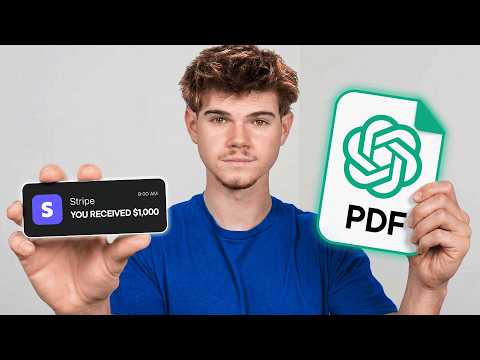
“I Tried Selling a Digital Product With ChatGPT to Make $1,000 in 7 Days”
What we found: The $1,000-in-7-Days Goal Is Missed, as the Creator Says; $776.96 in Sales Arrives by Day Eight and the $457 Cost Total Does Not Rebuild From the Stated Costs
An AI-agents guide built with ChatGPT and Codex, sold through Lovable and Shopify with Meta ads. Two sales came inside the seven days; eight more came on day eight at less than half the launch price. The stated $319 profit checks out against the stated totals, but the named costs add up to between $337 and $436, not $457.
- $776.96 Total sales
- $319 Stated profit
- ~$206 Sales inside 7 days
- $1,000 Goal
The claim
That a digital product built with ChatGPT could be taken from zero to $1,000 in sales within seven days, with the result documented on camera.
- Goal set at the start — $1,000 in 7 days, starting Friday 5 June
- Days spent building before ads — About 5 (ads started Wednesday 10 June)
- Launch price — $180 ($179.99)
- Day one ad spend and result — $60 spent, no sales, −$60.28
- Friday sales — Two orders at a $103 average, about $206
- Saturday (day eight) sales — $569 from eight orders, $91 ad spend
- Total sales — $776.96
- Total costs — $457
- Total profit — $319
- Profit, our check of the stated totals — $776.96 − $457 = $319.96
- Named costs, our sum — $337 to $436, depending on which ad figure is used
- Payment processing fees — Not stated in the video
What is this income idea?
Use ChatGPT to pick a niche and write a paid guide, build a sales page with an AI website builder, and buy traffic with Meta ads.
- The creator sets a goal on camera on Friday 5 June: sell a digital product built with ChatGPT and reach $1,000 in seven days. ChatGPT is used for market research and to suggest sub-niches; the creator rejects its first ideas and settles on "corporate professionals scared of AI", then narrows that to a guide on using AI agents in a small business.
- The first ChatGPT draft is judged poor ("it looks like AI definitely but it sucks"), so the guide is rebuilt with Codex, OpenAI's coding tool, run inside VS Code. The result is a PDF guide with a free workbook, priced at $180 because "there was a lot of competitors and they were selling it in somewhat the same range."
- The sales page is built with Lovable, connected to a Shopify store with a free digital-downloads app, on a domain that cost about $9. Ads are AI-generated "UGC" videos made in Arcads and edited in CapCut, run on Meta and LinkedIn.
- Building takes about five days, so ads start on Wednesday 10 June with two days of the challenge left. LinkedIn returns a $12 cost per click against a $2.50 target and is stopped; Meta returns 66 cents against a $1.50 target. Day one ends at −$60.28 and Thursday brings no sales.
- Friday brings two orders at an average of $103 after a price cut to $115 with a 20% discount code. On Saturday, which the creator acknowledges is outside the seven-day window, the price drops to $49.99 and then $79.99 with a 10% code, the site is rebuilt for mobile, and eight orders arrive for $569 against $91 of ad spend.
- The creator closes with $776.96 in sales, $457 in costs and $319 in profit, and says directly: "technically I failed the USD 1,000 challenge i got nowhere close to it."
An AI-written guide sold with paid ads: the goal was missed, the project turned a small stated profit on day eight, and the cost side is not fully itemised.
- ChatGPT market research — Sub-niche ideas
- Pick AI agents guide — For business owners
- Build PDF with Codex — Plus a workbook
- Lovable site + Shopify — $25 + $1 a month
- Arcads UGC ads — Meta and LinkedIn
- Cut price, fix mobile — $180 to $79.99
- Day eight sales — $569 on $91 spend
The money came after the price was cut and the challenge window had closed.
The challenge failed in seven days and the product found buyers on the eighth
The lesson underneath the number
- This video is more useful than most in its genre because it records a miss. The creator sets a public target, spends five of the seven days building, launches ads with two days left, shows a losing first day and a Thursday with no sales, and then says plainly that the goal was not met. That sequence is close to what a first product launch usually looks like, and it is rarely shown.
- The result changed on day eight, and the video is clear about what changed: the price fell from $180 to $79.99, the discount dropped from 20% to 10%, the site was rebuilt for mobile after the analytics showed most visitors were on phones, and only the better-performing male UGC ad was left running. Eight orders came in for $569 on $91 of ad spend, a return on ad spend of 6.25, which our arithmetic confirms.
- The sales figures hang together. Two orders at a $103 average on Friday and eight at a $71 average on Saturday come to about $774, against $776.96 stated; $71 is what $79.99 less 10% gives, and ten completed checkouts out of 36 is the 27% completion rate the creator quotes. That internal consistency is a good sign for the sales side.
- The cost side is looser. The stated $457 is more than any sum of the costs named, payment processing is not mentioned, the Shopify price is a $1 partner offer rather than a standard plan, and the AI tools used to make the product are not priced. None of that turns the stated profit negative, but it means the $319 rests on a total the video does not itemise. The forward claims are a different category: $800 a day in sales and $400 to $500 a day in profit are projections from one day of results at $91 of spend.
technically I failed the USD 1,000 challenge i got nowhere close to it
The creator, on the result inside the seven-day window
How the challenge ran, as the creator describes it
Five days of building, two days of ads inside the window, and one more day after it.
No cost is given for the ChatGPT or Codex subscriptions used to build the product.
- Research a sub-niche with ChatGPT — The creator asks for high-ticket ($100 to $200) ideas aimed at buyers aged 35 and over, on the reasoning that "older people are going to spend more money." Corporate professionals worried about AI are chosen over a college-applications guide because the creator says they have no college experience to draw on.
- Check competitors in ad libraries — The LinkedIn and Meta ad libraries are used to see what similar sellers run; one competitor is selling an ebook for $49. The creator says the LinkedIn ad library shows 289,000 ads for the search phrase used.
- Rebuild the product with Codex — The first ChatGPT version is described as looking "like it was built in PowerPoint back in 2007". Codex is asked whether the guide is worth $180, answers no, and lists changes, which the creator then has it make.
- Build the site with Lovable, check out on Shopify — The creator says about six hours went into the website at first and another five to six hours later. Lovable connects to Shopify and adds the product; a free app emails the PDF on purchase.
- Run cold traffic on two platforms — Day one plan: $50 on LinkedIn and $50 on Meta. LinkedIn costs $12 a click and is stopped; Meta comes in at 66 cents a click and later about 45 cents per landing page view, with a 5% click-through rate.
- Change price and page on gut feeling — From $180 to $115 with a 20% code, then $49.99, then $79.99 with a 10% code. The creator says this was done "on a whim" and that a proper test would take weeks of data across several landing pages.
The business model
One-off sales of a PDF guide and workbook on using AI agents in a small business, sold at $180, later $79.99 with a 10% discount code.
Small business owners and corporate professionals, targeted through Meta ads; the creator says most traffic turned out to be mobile users in the United States.
A short guide on automating repetitive tasks with AI agents, pitched as saving 12 to 15 hours a week.
AI-generated UGC video ads on Meta, after LinkedIn ads were stopped for cost.
- Meta and LinkedIn ads — About $324 on the daily figures; $225 in the on-camera tally
- Arcads — $77 stated; $110 a month list price per the creator
- Lovable — $25 a month
- Shopify — $1 a month on a partner offer linked by the creator
- Domain — About $9
- ChatGPT and Codex — Used to build everything; no figure is given
- Payment processing — Not mentioned in the video
Monthly subscriptions are counted for one month only. A seller continuing past the challenge pays them again each month.
What you would actually need
Money
A small ad budget, kept under $400, plus $25 a month for Lovable, $1 a month for Shopify, about $9 for a domain and $77 for Arcads. Total stated: $457.
The named costs do not add up to $457, so part of the stated total is not itemised. The $1-a-month Shopify price is a partner offer the creator links to, not a standard plan, and Shopify's payment processing fees are not mentioned. ChatGPT and Codex are used throughout and not priced.
Costs named or implied
- Meta and LinkedIn ad spend: about $324 on the daily figures given
- Arcads: $77 stated (starter plan $110 a month)
- Lovable: $25 a month
- Shopify: $1 a month on a partner offer
- Domain: about $9
- ChatGPT and Codex: used, not priced
- Payment processing on each order: not stated
Time
Seven days was the plan; the project took eight, with about five days of building before any ads ran.
The creator runs a company full-time and describes long experience as a marketer, including a former agency. A beginner without that background would likely need longer than five days to build the product, site and ad creative.
Where the time went
- Market research with ChatGPT: about an hour on day one
- Product build and revisions with Codex
- Website: about 6 hours, then 5 to 6 more
- Ad creative in Arcads, edited in CapCut
- Daily ad monitoring and price changes
The part you must pay attention to
The $457 cost total is higher than the costs named in the video.
The closing tally reads: "our total cost I believe without forgetting anything is USD 457 our total sales was USD 776." The sales side reconciles. The cost side does not rebuild from what is listed.
- Ad spend on the four daily figures given — ~$324
- Arcads — $77
- Lovable $25, Shopify $1, domain $9 — $35
~$436
Against $457 stated; $337 if the stated $225 ad total is used
The video gives two different routes to ad spend. Added day by day ($60 on Wednesday, $76 on Thursday, $97.36 on Friday, $91 on Saturday) it comes to about $324; the on-camera tally says Meta plus $49 of LinkedIn "gets us USD 225". Neither, with Arcads and the tools added, reaches $457. Using the larger stated cost is the cautious reading, and even then payment fees are not included.
Whichever cost figure is used, the stated sales leave a positive result: $320 on the stated total, up to about $440 on the lowest sum of named costs. What changes the picture is timing. Inside the seven days the creator set, sales were the two Friday orders, about $206, against roughly $345 spent by then on our arithmetic, so the challenge itself closed at a loss of about $140 before the day-eight sales.
- SALES (stated)
- Friday: 2 orders x $103 avg ~$206
- Saturday: 8 orders x $71 avg ~$568
- Sum ~$774
- Stated total $776.96
- -> reconciles
- COSTS
- Ads, daily figures ~$324.36
- Arcads $77
- Lovable + Shopify + domain $35
- Sum ~$436
- Stated total $457
- -> ~$21 not itemised
- INSIDE THE 7 DAYS (ours)
- Sales ~$206
- Ads Wed-Fri ~$233
- Arcads + tools $112
- Result ~-$140
The economics
Sales reconcile; costs are partly itemised; one strong day carries the projection.
- Launch price — $180 ($179.99)
- Day-eight price — $79.99 with a 10% code
- Wednesday ad spend — $60 (LinkedIn $49)
- Thursday ad spend — $76
- Friday ad spend — $97.36
- Saturday ad spend — $91
- Saturday sales — $569, eight orders, $71 average
- Friday ROAS / Saturday ROAS — 2.1 / 6.25
- Total sales / costs / profit — $776.96 / $457 / $319
- Payment fees, refunds, tax — Not stated
Rebuilding the stated totals
$776.96 − $457 = $319.96; named costs $324.36 + $77 + $35 = $436.36
The stated profit follows from the stated totals; the named costs come to about $21 less than $457, or $120 less using the on-camera $225 ad total
IncomeIdeaLab calculation from figures stated in the video
Ad spend is described two ways in the video and the two do not agree, so the exact cost total cannot be fixed from what is said. Payment processing fees, which apply to each card or PayPal order, are not included in any figure.
- Payment processing fees on each order
- ChatGPT and Codex subscription costs
- Any refunds or chargebacks
- Tax on the profit
- The creator's own time, about five days of building
- Shopify's price after the $1-a-month partner offer ends
- Saturday: $569 ÷ $91 = 6.25, matching the stated return on ad spend. Before fixed costs, $569 − $91 = $478, which is the "almost USD 500 on day eight of profit" the creator mentions; it excludes payment fees and the month's tools.
- Arcads is stated as $110 a month with about 20% off the first month, which would be $88; the tally uses $77. The difference is small and the creator says Arcads is optional.
- Ten completed checkouts out of 36 started is 27.8%, in line with the 27% quoted.
- The closing projections, "at least like USD 800 a day in sales" at $100 to $200 of daily spend and "USD 400 to USD 500 of profit a day", rest on one day at $91 of spend and are projections.
- The video ends by asking for 1,000 likes before a part two aimed at $10,000; that larger goal is not set at the start of the video.
Evidence status
Every substantive claim in the video.
- $1,000 in seven days — Creator, opening — Not reached; the creator says so directly.
- Day one: −$60.28 — Creator — A losing day shown openly; consistent with $60 of spend and no sales.
- Meta CPC 66 cents vs $1.50 target; LinkedIn $12 vs $2.50 — Creator — Specific and useful; LinkedIn was stopped on this basis.
- Friday: two orders, $103 average, ROAS 2.1 — Creator — About $206 in sales; 2.1 × $97.36 ≈ $204, so the figures agree.
- Saturday: $569 from eight orders on $91 — Creator — Reconciles with the $71 average and the 6.25 ROAS. Outside the seven-day window, as the creator notes.
- Total sales $776.96 — Creator — Matches the two days of sales described.
- Total costs $457 — Creator — Higher than the named costs, which sum to $337 to $436 on our arithmetic.
- Profit $319 — Creator — Follows from the stated totals; payment fees not included.
- Inside seven days, profit or loss — Not stated — About −$140 on our arithmetic: ~$206 sales against ~$345 spent by Friday.
- $400 to $500 profit a day possible — Creator, closing — Extrapolated from one day of results at $91 spend.
- Guide saves 12 to 15 hours a week — Sales page, as described — A marketing claim for the product; no basis is given in the video.
What is actually proven?
The sales story is internally consistent. The cost story is partly itemised.
- The creator states the $1,000 goal was missed inside the seven days.
- The daily sales, order counts and averages reconcile with the $776.96 total.
- Saturday's 6.25 return on ad spend checks out from $569 and $91.
- The named costs sum to less than the stated $457.
- Inside the seven-day window the project was about $140 down on our arithmetic.
- Payment fees, refunds and the cost of the AI tools used.
- Ongoing profit of $400 to $500 a day.
What the headline doesn't tell you
The title asks a question; the video answers it honestly, and the details matter.
- The goal was missed. — The creator says so.
- Most sales came on day eight. — After the window closed.
- The price fell by more than half. — $180 to $79.99, less 10%.
- $457 is not fully itemised. — Named costs sum lower.
- Payment fees are not mentioned. — They apply to every order.
- Shopify at $1 is a partner offer. — Linked by the creator.
- Referral links for Lovable and Arcads. — Both disclosed on camera.
- A marketer with a company. — The creator's stated background.
Should you try it?
A realistic small test, if you budget for a loss
Copy the sequence and the honesty about results; do not copy the timeline or the projection.
- Honesty about the result — 9 — States the goal was missed and shows a losing day.
- Internal consistency of sales figures — 8 — Orders, averages, ROAS and total all reconcile.
- Cost itemisation — 5 — Most costs named; total does not rebuild; fees absent.
- Disclosure of affiliations — 8 — Lovable partnership, Arcads and Shopify links all disclosed.
- Specificity of the ad process — 7 — Targets, CPCs, budgets and changes stated day by day.
- Support for the projections — 2 — One day at $91 of spend.
- Beginner accessibility — 5 — Low cash outlay; relies on marketing skill the creator already has.
- The cash needed is modest: a few hundred dollars of ads, a month of a website builder and a store, and a domain. That makes this a reasonable experiment for someone who wants to learn paid ads on a digital product, provided they treat the ad money as tuition and expect, as here, to lose money on the first days.
- The timeline is the part to adjust. The creator, who says they run a company full-time and have worked as a marketer for years, still needed five days to build before any ads ran. Plan for longer, and for the price and the page to change once real visitor data arrives; the day-eight improvement came from a lower price and a mobile rebuild, not from more spend.
- Do your own cost sheet with payment fees and the AI subscriptions included. On the stated figures this project made a profit of a few hundred dollars over eight days, and nearly all of it came on one day. A single good day is a signal worth testing further, not a daily income.
Passive or automated?
Automation
Delivery is automatic; ads, pricing and the page are adjusted daily.
Passive potential
Sales here depend on paid ads that stop when spending stops.
Once a sale is made, the PDF is emailed automatically by a free Shopify app, so fulfilment takes no work. Everything before the sale is active: the creator checked ad metrics each day, swapped ad creative, changed the price several times, cut the discount and rebuilt the site for mobile. All the traffic in the video is paid, so revenue depends on continued ad spend and monitoring.
- Daily ad monitoring and budget decisions
- Making and replacing ad creative
- Price and discount testing
- Website changes from analytics
- Customer questions and any refunds
Recommended beginner experiment
The same test, with the costs written down first.
- Set a loss limit before launch. — The creator capped ads near $400.
- List every cost, fees included. — Payment processing is per order.
- Check competitor prices first. — One sold a similar ebook at $49.
- Build for mobile from the start. — Most visitors here were on phones.
- Watch cost per click by platform. — LinkedIn was $12; Meta 66 cents.
- Test price with real data. — Not on a whim, as the creator notes.
- Judge on a week, not a day. — One day carried most of the sales.
Our verdict: 7/10
An honest miss with consistent sales figures and a cost total that does not rebuild most of the $776.96 came on day eight, after the price was cut
Credited for stating plainly that the $1,000 goal was missed, for showing a losing first day and a day with no sales, for daily ad figures, targets and price changes that let the sales total be reconciled, and for disclosing the Lovable partnership and the Arcads and Shopify links. Marked down because the $457 cost total is higher than the costs named in the video, payment fees and the AI tool subscriptions are not counted, most sales came after the seven-day window at less than half the launch price, and the closing profit projections rest on one day of results.
This is a challenge video that reports its own failure, and that makes it worth watching. The creator spent five of seven days building an AI-agents guide with ChatGPT and Codex, launched ads with two days left, lost $60.28 on day one, made no sales on Thursday and two on Friday, and says plainly that the $1,000 target was "nowhere close". The sales figures that follow are internally consistent: two orders at $103 and eight at $71 give about $774 against $776.96 stated, and Saturday's 6.25 return on ad spend checks out. The cost side is less complete. The stated $457 is more than the costs named, which come to between $337 and $436 depending on which of two ad figures is used; payment processing fees are not mentioned; and the AI tools used to make the product are not priced. On the stated totals the project made $319 over eight days, almost all of it on day eight after the price fell from $180 to $79.99 and the site was rebuilt for mobile. Inside the seven-day window it was about $140 down on our arithmetic. The closing figures of $400 to $500 profit a day are projections from that one day. As a template for a cheap first test of a digital product with paid ads, it is realistic, provided the reader plans for a slower build and a loss before any profit.
- Goal — $1,000 in 7 days, missed
- Sales inside 7 days — ~$206
- Total sales by day eight — $776.96
- Stated costs — $457
- Named costs, our sum — $337 to $436
- Stated profit — $319
- Result inside 7 days — ~−$140
- Daily profit projection — $400 to $500
- Beginner suitability — Yes, as a small test
Sources
- I Tried Selling a Digital Product With ChatGPT to Make USD 1,000 in 7 Days — London Leffler — YouTube video, 2026-06-25
- FTC — Guides Concerning the Use of Endorsements and Testimonials — Regulatory guidance on endorsements and affiliate disclosure