AI Business / Ghostwriting Service · Claim Review
“The Most Profitable Solo Business You’ve Never Heard Of”
What we found: AI Ghostwriting at $20,000 a Novel: A Specific Price List, a Six-Figure First Year Without a Book Count, and $60,000 From Five Bookings That Averages $12,000 Each
The fees, tiers and lead sources are stated clearly. The income totals are not broken down, the $60,000 figure averages well below the headline price, and the writer's own ten years of credentials carry much of the client-winning.
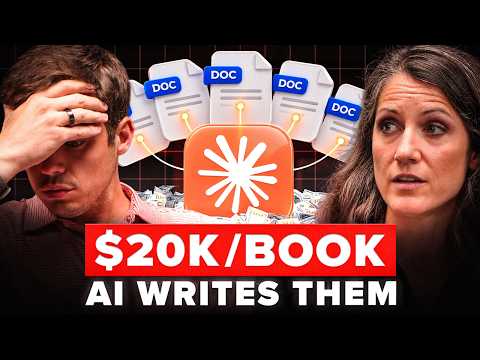
- $20,000 Novel price
- ~15 Books ghostwritten
- Six figures First-year profit
- $12,000 $60k ÷ 5 bookings
The claim
That a writer can use AI to ghostwrite books for clients at $20,000 a book, and that this made six figures in profit in its first year.
- Novel price now — $20,000 per book, "probably around like 25 cents a word"
- Development fee — $2,500 now, up from $1,500
- Tiers — $5,000 short story, $10,000 novella, $20,000 novel
- Starting price — 10 cents a word, about 1,000 words a week for 52 weeks
- Books ghostwritten — "About 15" in the past two years
- First-year result — "Six figures", confirmed as profit when the host asks
- First-year pricing — $8,000 to $12,000 a book, "a few at 20"
- Association bookings this year — Five books, three of them inbound from her profile
- Association membership — About $130 a year (also given as $125)
- "$125 investment to make $60,000" — Averages $12,000 per booking across five
- Expenses — "There's really not a lot of expenses"; few are priced
What is this income idea?
Sell ghostwritten books to people who have an idea but cannot or will not write it, draft the chapters with AI, and edit the output into something that does not read as machine-written.
- The guest describes herself as a novelist and screenwriter with ten years of experience and 25 books of her own. She says the business started when her husband, a real estate agent, typed a book idea into an AI chatbot and had a whole draft by 2 a.m.
- The service runs on a weekly rhythm: a chapter lands in the client's inbox on Friday and the client sends changes back on Tuesday. Chapters run about 1,200 to 1,700 words. Before writing starts there is a development stage, which she now sells as a 12-step method for a $2,500 fee.
- Pricing has changed as she went. She started at 10 cents a word with a plan of 1,000 words a week for 52 weeks, then found clients did not want to wait a year and did not like a weekly price that doubled when they asked for two chapters. She now quotes a flat $20,000 for a novel, $10,000 for a novella and $5,000 for a short story, and lets the client choose the pace and payment schedule.
- Clients come from a ghostwriters' association she pays about $130 a year to join, which circulates client requests that members bid on; from speaking at libraries, schools and writers' events; and from posting on Facebook and LinkedIn. She says she has booked five books through the association this year, three of them from people who found her profile.
- She is direct about where AI falls short. In her account it handles structure and prose but glosses over dialogue and tense moments, so she rewrites or re-prompts those scenes, and she suggests a beginner pay a human editor $2,000 to $4,000 on the first few books.
- The income figures are totals. She says she made six figures in profit in the first year, charging $8,000 to $12,000 a book with a few at $20,000, plus some editing work, and that she has written about 15 books in two years. No per-book revenue breakdown or expense total is given.
A writing service where AI produces the first draft and an experienced writer sells, edits and manages it, priced at up to $20,000 a novel.
- Find a client — Association, library, LinkedIn
- Pitch with AI — Tailored reply per request
- Development stage — 12 steps, $2,500
- Draft with AI — ~1 hour a chapter
- Fix dialogue and tension — Where AI is weakest
- Weekly chapter loop — Friday out, Tuesday back
- Get paid per book — $5k, $10k or $20k
A service business with a clear price list. The volume behind the income totals is not stated.
The AI writes the draft. The credentials win the client.
The lesson underneath the number
- The pitch of the episode is that AI turns anyone into a ghostwriter, and the host and guest say so in nearly those words: "we're now all experts in whatever I want to be." The account she gives of her own business points somewhere more specific. Her association replies are built around a published back catalogue of 25 books, a romantic comedy she turned into a film, film and TV contacts, and a teaching role at writers' workshops. Three of this year's five bookings found her profile without a bid. Those are ten years of credentials doing the selling, and a newcomer would be answering the same requests without them.
- The AI part is described candidly and usefully. She does not claim the model writes a sellable book on its own. In her telling it summarises conversations instead of writing them, races past moments that need slowing down, and adds characters nobody asked for. Her value is spotting those failures and fixing them, and she advises a beginner to pay a human editor for the first few books to learn what to look for. That is a realistic description of AI-assisted writing as a skilled job rather than a shortcut.
- The pricing story is the most useful part for anyone thinking of copying it. She started with a per-word, chapter-a-week model that assumed a year of recurring revenue, and dropped it once clients wanted to go faster and objected to weekly prices that changed. A flat price per length, with the client choosing the schedule, is simpler to sell. It also means income arrives unevenly, sometimes "spread out over years", which is worth knowing before treating $20,000 as a monthly or annual figure.
- The numbers are where the video is thin. Six figures in profit is given as a total, with no book count, no split between ghostwriting and editing, and no expense figure beyond "not a lot". The one pairing that can be checked, five bookings and $60,000, averages $12,000 a book. Neither figure looks out of line with the price list; they simply describe a typical book well below the one in the title.
I've probably done about 15.
Her count of books ghostwritten in two years, the figure that sets the real pace of the business
How she says she runs it
The process is described in more detail than the money.
Prices are given for each tier; no total cost or per-book profit is given.
- Join a client-request list — She pays about $130 a year to an association of ghostwriters that emails client surveys to members. She says she had three clients from it last year and has booked five books through it this year, three of them inbound from her profile page.
- Answer each request with a tailored pitch — She pastes the client's post into Claude and asks for a reply that highlights the parts of her record that match: a romance request got an email built around her romantic-comedy book and film. Her own rule is "I don't try to sell myself, I just share why I'm the right fit."
- Sell the development stage first — A $2,500 development fee, up from $1,500, covers story, characters and setting through a 12-step method she says she built over about a year and a half of clients. For memoirs it works more like a retainer for interview hours.
- Draft with AI, rewrite the human parts — She uses Claude for most creative work and puts the drafting time at about an hour a chapter. She says the model tends to summarise conversations and skim past tense moments, and those are the passages she has it redo.
- Price by length, not by week — $5,000 for a short story, $10,000 for a novella, $20,000 for a novel, paid on whatever schedule suits the client. She moved to flat prices after clients disliked a weekly fee that rose when they asked for faster delivery.
- Use free talks as a lead source — Libraries and schools run free community classes. She pitches a talk by email, sometimes gets paid "a few hundred", asks for the sign-up list where allowed, and hands out bracelets with her website inside. She puts typical attendance at eight to 12 people.
- Add cheaper offers around the main one — Editing, coaching, book proposals, a $15 book on writing with AI and a $5 blank comic template made in Canva sit below the ghostwriting tiers. She calls the whole set her "angleverse".
The business model
Flat fees per book by length, $5,000 to $20,000, plus a $2,500 development fee, with editing, coaching, book proposals, a $15 book and a $5 comic template as smaller offers.
Retirees, business owners and professionals with a book idea, many wanting fantasy or business books, some memoirs.
A finished book for less than she says most ghostwriters charge ($18,000 to $50,000), written collaboratively at the client's pace, with AI disclosed.
A paid ghostwriters' association request list, free talks at libraries and schools, writers' events, and posts on Facebook and LinkedIn.
- AI subscriptions — Paid monthly; amount not stated
- Association membership — About $130 a year
- Human editor — $2,000 to $4,000 a book, suggested for early books
- Subcontract writers — About $40 a chapter; screenwriter on a 60/40 split
- Referral fees paid out — Mentioned, not priced
- Her own time — About an hour a chapter for drafting, plus everything else
She says expenses are low, and the cash costs she names are small next to a $20,000 fee. Per-book costs are not totalled, so the margin cannot be calculated from the video.
What you would actually need
Money
Low. "There's really not a lot of expenses." The association costs about $130 a year, and she suggests a beginner pay $2,000 to $4,000 for a human editor on the first few books, out of the client's fee.
The cash cost to start is genuinely small. The larger costs she names are paid per book rather than up front: a human ghostwriter at about $40 a chapter, a screenwriter on a 60/40 split in his favour, an editor, referral fees, and monthly AI subscriptions. None is totalled, so the profit margin cannot be worked out from the video.
Named, but not totalled
- Association membership, about $130 a year
- AI subscriptions, paid monthly, amount not stated
- Human editor, $2,000 to $4,000 a book for early books
- Subcontract ghostwriter, about $40 a chapter
- Subcontract screenwriter, 60/40 split to him
- Referral fees, amount not stated
- Tax and self-employment costs, not mentioned
Time
About an hour per chapter with AI. She says she "could write 40 books at a time" at one chapter a week each, and adds she "would hate my life".
The hour per chapter covers drafting only. Development calls, client revisions every week, rewriting dialogue, pitching, library talks and admin all sit on top. The 40-book figure is a ceiling she describes as unpleasant, not her workload, and at about 15 books in two years her actual pace is far lower.
Where the hours go
- Development: 12 steps before chapter one
- Drafting: about an hour a chapter
- Rewriting dialogue and tense scenes
- Weekly client revisions, Friday to Tuesday
- Pitching each association request
- Library and school talks, unpaid or a few hundred dollars
The part you must pay attention to
Five bookings for $60,000 is $12,000 a book, not $20,000.
The clearest income pairing in the video comes near the end: "I have booked this year, I've booked five books with the association" and "that's a great $125 investment to make 60."
- Stated return on the association — $60,000
- Books booked through it this year — 5
$12,000
Average per booking, our arithmetic
The title and the opening frame this as $20,000 a book. That is the price of her top tier, a full novel, and the figures she gives elsewhere suggest most books sell below it. In her first year she says she charged "8 and 12 per book" with "a few at 20". This year, $60,000 across five bookings averages $12,000, which fits a mix of novellas, short stories and part-paid novels rather than five $20,000 novels. It is also unclear whether $60,000 is cash received or the value of contracts signed, since one client she describes is paying $20,000 "spread out over years". Earlier in the same interview she says she has "four clients from there" right now, so the count may refer to books rather than clients.
None of this makes the price list doubtful; it is stated plainly and consistently. What it shows is that "$20K a book" is a ceiling, and that the typical book in her own figures sells for something nearer $8,000 to $12,000. A reader building a plan should use that range, not the title.
- THE ASSOCIATION FIGURES
- Membership ~$125-130/yr
- Books booked this year 5
- Stated return $60,000
- $60,000 / 5 = $12,000/book
- 5 x $20,000 = $100,000
- -> the $20k tier is the top,
- not the average
- THE FIRST YEAR
- "Six figures" >= $100,000
- Price per book $8,000-$12,000
- $100,000 / $10,000 = ~10 books
- (fewer if some were $20k,
- plus some editing income)
- PRICE PER WORD (her estimate)
- $20,000 at ~25c/word = ~80,000 words
- Old plan: 1,000 words x 52 weeks
- = 52,000 words x 10c
- = $5,200 per book
The economics
A clear price list, two income totals, and costs that are named but not added up.
- Novel / novella / short story — $20,000 / $10,000 / $5,000
- Development fee — $2,500
- First-year price range — $8,000–$12,000, a few at $20,000
- First-year profit — Six figures
- Books in two years — ~15
- Association bookings this year — 5, for about $60,000
- Average per association booking — $12,000
- Drafting time — ~1 hour a chapter
- Subcontract ghostwriter — ~$40 a chapter
- Total annual costs — Not stated
What the stated prices imply about volume
15 books × $8,000–$20,000 = $120,000–$300,000 over two years; six figures in year one at ~$10,000 a book needs ~10 books
The totals are consistent with the price list if roughly 10 of the 15 books fell in the first year, or if editing work made up part of the six figures
IncomeIdeaLab calculation from the prices and counts stated in the video
She does not say how many books were written in each year, whether the six-figure figure is revenue less costs or cash collected, or how much came from editing jobs. Some fees are paid in instalments over years, so contract value and cash received can differ.
- Number of books written in the first year
- Revenue split between ghostwriting, editing, coaching and talks
- AI subscription costs
- Total paid to subcontract writers, editors and referral partners
- Whether $60,000 is cash received or contracts signed
- Tax and self-employment costs
- Her estimate that $20,000 is "around like 25 cents a word" implies a novel of about 80,000 words. The original plan of 1,000 words a week for 52 weeks at 10 cents a word would have come to $5,200 a book, which shows how far the pricing has moved.
- At about $40 a chapter, a subcontract ghostwriter costs very little next to the client fee: 50 chapters would be about $2,000 against a $20,000 book. Our arithmetic, assuming 50 chapters; the video does not state chapter counts.
- The statistics on how many Americans want to write a book (54%, 15% who start, about 140 million) are ones she says she got by asking Claude before the interview. We could not check them from the video.
- Library figures are also stated without a source: about 98,000 school libraries and 25,000 public library systems, which add to about 123,000 against the 125,000 total given. Close enough to be the same estimate.
- The host's sponsor read for GoHighLevel adds $347, $99, $25, $79 and $49 to "600 a month"; the sum is $599, and moving to a $97 plan would be an 84% cut, consistent with the "over 80%" stated. The episode also promotes the host's paid AI community and his $1,000 referral offer for podcast guests.
Evidence status
Every substantive figure in the video.
- $20,000 per novel — Guest — Her top tier. Stated consistently throughout.
- $2,500 development fee, up from $1,500 — Guest — A clear account of how the price rose as the method formed.
- $5,000 short story, $10,000 novella — Guest — Priced by length; the lower tiers matter for the average.
- Started at 10 cents a word; now about 25 cents — Guest — Implies about 80,000 words for $20,000, by our arithmetic.
- Six figures in profit in the first year — Guest, in answer to the host — No book count, cost total or editing split given. We could not check it from the video.
- $8,000 to $12,000 a book in year one, a few at $20,000 — Guest — The most useful guide to what a typical book sold for.
- About 15 books in two years — Guest — Sets the real pace: well under one a month.
- Five books booked through the association this year — Guest — Earlier she says four current clients came from it; the counts may measure different things.
- "$125 investment to make $60,000" — Host and guest — Averages $12,000 across five bookings, below the headline price.
- Could write 40 books at once at an hour a chapter — Guest — A stated capacity she says she would not want; not her workload.
- Most ghostwriters charge $18,000 to $50,000 — Guest — Stated without a source.
- 54% of Americans want to write a book; about 140 million — Guest, from asking Claude — Sourced to an AI answer. We could not check it from the video.
- 8 to 12 people at a typical library talk — Guest — Her estimate; she adds one $20,000 client a year would justify it.
- Total costs and profit margin — Nobody — Individual costs are named; no total is given.
What is actually proven?
The prices are stated clearly. The income totals are stated without a breakdown.
- A specific price list: $2,500 development, then $5,000, $10,000 or $20,000 by length.
- About 15 books ghostwritten in two years.
- Six figures in first-year profit, with no book count or expense figure.
- Five bookings for $60,000 averages $12,000 a book.
- She tells clients she uses AI, and names where it writes poorly.
- Client-winning leans on her ten years of experience and 25 published books.
- Total costs, profit margin, and cash received versus contracts signed.
What the headline doesn’t tell you
The price is real. It is the top of the range.
- $20,000 is the top tier. — Novellas are $10,000, short stories $5,000.
- Five bookings, $60,000. — $12,000 each on average.
- Year one was $8,000–$12,000 a book. — Her own figure.
- About 15 books in two years. — Not 40 at a time.
- Some clients pay over years. — Contract value is not cash.
- Ten years of credentials. — They do much of the pitching.
- Costs are named, not totalled. — Editors, subcontractors, AI tools.
- Two promotions in the episode. — A software sponsor and the host's AI community.
Should you try it?
Possible on a small scale, slower and cheaper than the title
Start with low-priced short work and a human editor. Expect the credentials gap to show in your win rate on paid lead lists.
- Clarity of the price list — 9 — Every tier and fee is stated, with its history.
- Candour about AI's limits — 8 — Names dialogue and tension as weak spots and advises paying an editor.
- Disclosure to clients — 7 — Says she mentions AI to clients and discusses it with those who care.
- Evidence for the income totals — 3 — Six figures and $60,000 are totals with no breakdown.
- Cost disclosure — 4 — Several costs priced individually; no total.
- Startup cost — 8 — About $130 a year and an AI subscription.
- Beginner accessibility — 4 — Her client-winning rests on credentials a newcomer will not have.
- The barrier to starting is low in cash terms. An AI subscription, a $130 association membership and a practice short story are enough to begin, and her suggestion to pay a human editor $2,000 to $4,000 for the first few books is sensible protection against shipping a book that reads as machine-written. Her advice to find early clients by offering a discount to people in your own network who have a story to tell is the most accessible route she describes.
- Be realistic about what wins clients on a paid request list. She stands out on those lists with 25 published books, a film credit, industry contacts and a teaching role, and a beginner's reply will not carry the same weight. The library route is slower: eight to 12 people per talk, often unpaid, with the hope of one large client a year.
- Plan around her own typical price, not the title. Her first-year books sold for $8,000 to $12,000, the five this year average $12,000, and the lower tiers start at $5,000. About 15 books in two years is under one a month. Some clients pay over years, so cash arrives more slowly than contracts are signed.
- Finally, treat the AI as a drafting tool that needs a skilled editor. Her own description is of a model that summarises dialogue, skips tension and adds characters nobody asked for. The skill being sold is noticing and fixing that, and the price reflects that skill.
Passive or automated?
Automation
AI speeds up drafting; selling, development, editing and revisions stay manual.
Passive potential
Each book is a commissioned project with a client in the loop every week.
This is a service business and she describes it as one. Every book starts with a client conversation and a 12-step development stage, then runs on a weekly loop of chapter out on Friday and changes back on Tuesday. The AI cuts drafting to about an hour a chapter, but the parts she says the client is paying for, dialogue, tension and voice, are the parts she rewrites by hand. Finding clients means pitching each association request and giving talks. The small digital products, a $15 book and a $5 comic template, are the only parts that could sell without her time.
- Pitching each client request
- Running the development stage
- Rewriting dialogue and tense scenes
- Weekly client revisions
- Library and school talks
- Managing subcontract writers and editors
Recommended beginner experiment
Prove you can deliver one short book before pricing a novel.
- Write one short story with AI yourself. — Her own first step for a beginner.
- Have a human editor mark it up. — Learn where the AI output fails.
- Offer one discounted book to your network. — Her "guinea pig" route to a first client.
- Price the short tier first. — Her list starts at $5,000.
- Track hours per chapter honestly. — Development and revisions included.
- Pitch a library talk by email. — Ask upfront whether you may collect names.
- Count cash received, not contracts. — Some clients pay over years.
- Add up every cost per book. — Editor, tools, subcontractors, tax.
Our verdict: 6/10
A clear price list for a skilled service, with income totals that sit below the title and a client pipeline that leans on ten years of credentials
Credited for a fully stated price list with its history, from 10 cents a word to flat fees of $5,000, $10,000 and $20,000 plus a $2,500 development fee; for naming specific lead sources and their cost; for saying she tells clients she uses AI; for a candid account of what AI writes poorly; and for advising beginners to pay a human editor. Marked down because six figures in first-year profit is given without a book count, cost total or split from editing income; because $60,000 across five bookings averages $12,000, well below the $20,000 in the title; because per-book costs are named but not totalled; and because the client-winning she describes rests on credentials a beginner would not have.
This interview describes a real service business with an unusually clear price list. A novel costs $20,000 plus a $2,500 development fee, a novella $10,000 and a short story $5,000, and the guest explains how she reached those prices after a per-word, chapter-a-week model frustrated clients who wanted to go faster. She is open that she uses AI, tells clients so, and is specific about where it falls short: it summarises dialogue, hurries through tense scenes and needs a writer to slow it down. Her advice to beginners is sensible, from practising on a short story to paying a human editor $2,000 to $4,000 on the first few books. The income figures are less complete. Six figures in profit in the first year is a total with no book count, no expense figure and some editing income mixed in. The one pairing that can be checked, five books booked through a $130-a-year association and $60,000 earned from it, averages $12,000 a book, and her first-year books sold for $8,000 to $12,000. So $20,000 is the top of her range rather than the typical sale, and about 15 books in two years sets the real pace at under one a month. The other thing to weigh is how she wins work: her pitches lean on 25 published books, a film credit and industry contacts, which a newcomer replying to the same requests would not have. The model is cheap to start and genuinely skilled work; plan on her typical price and a slower start than the title suggests.
- Novel price — $20,000 + $2,500 development
- Lower tiers — $5,000 / $10,000
- First-year price per book — $8,000–$12,000
- Average of five bookings — $12,000
- Books in two years — ~15
- First-year profit — Six figures
- Total costs — Not stated
- Beginner suitability — Yes, at the short tier first
Sources
- Writers Hate AI. She Uses It to Make USD 20K a Book. — Chris Koerner on The Koerner Office Podcast — YouTube video, 2026-11-20
- FTC — Guides Concerning the Use of Endorsements and Testimonials — Regulatory guidance on endorsements and sponsored content