Real Estate / Short-Term Rental Renovation · Claim Review
“Our Abandoned Cabin Hit 100°… And The Budget Just Got Real”
What we found: The Cabin Budget Rose From $14,851 to About $17,000 This Episode; How Much Came From the Airbnb, YouTube or Sponsors Is Not Stated
About $950 of purchases are itemised and about $3,100 of new money arrived, by our arithmetic, from three sources combined. The window bill that comes next is not yet known.
- $14,851 Budget at last update
- ~$950 Spent this episode
- ~$17,000 Budget now
- ~$3,100 Net new money
The claim
That income from an existing short-term rental, a YouTube channel and sponsorships is funding the renovation of a second property, bringing the remaining budget back up to about $17,000.
- Budget left at the previous update — $14,851
- Nails for the nail gun — ~$200
- Liquid flashing system — ~$250
- Portable air conditioner — $500
- Total spent this episode — ~$950
- Budget after spending, before new income — ~$13,901
- Budget now — ~$17,000
- Net new money, "the last month or so" — ~$3,100
- Split between Airbnb, YouTube and sponsorships — Not stated
- Cost of the windows, the next big purchase — Not known yet, by their own account
What is this income idea?
Buy a run-down property near an existing short-term rental, renovate it on weekends while documenting the work on YouTube, and pay for the renovation from rental income, channel revenue and sponsorships as it goes.
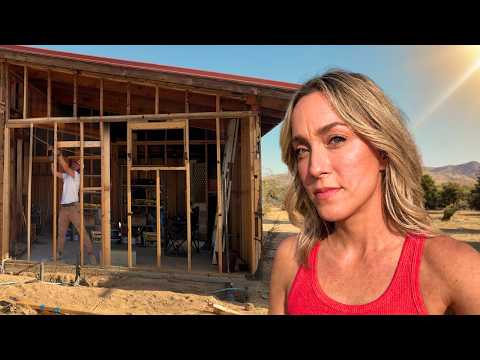
- The couple live about two hours away from Joshua Tree, where their first short-term rental already operates. Next door is an abandoned cabin they are rebuilding into a second rental, staying in an RV on site during work weekends.
- Each episode ends with a budget update. At the last one they had "$14,851 left in our savings for this project". This episode they list three purchases: about $200 of nails, about $250 for a liquid flashing system to seal the south wall, and $500 for a second portable air conditioner after the first failed in near-100° heat.
- They then say that "between our Airbnb, our YouTube revenue and sponsorships over the last month or so we've been able to bring that renovation budget back up to around $17,000", adding that the first rental "is still funding the renovation of this cabin" even in the slow summer months.
- Much of the episode is planning. They weigh three bathroom layouts against guest safety, cleaning time and the cost of moving the toilet drain about six feet, and settle on the original tub-and-curtain design because the plumbing is already close to it. They also size a bathroom window and frame part of a wall.
- Mid-episode there is a segment promoting a banking and bookkeeping app for rental owners, with a giveaway and a link in the description.
A couple use money from their first rental and their channel to pay for renovating a second property, and show the running balance.
- Run one rental — Joshua Tree, next door
- Buy a cabin to restore — Price not in this video
- Film the renovation — YouTube revenue
- Add sponsors — One read in this episode
- Feed income into the budget — ~$3,100 in a month
- Spend on materials — ~$950 this episode
- Price the windows next — Not yet known
The running balance is clear; how much each income source contributes is not.
A running balance is not a profit and loss
The lesson underneath the number
- This video does something many renovation channels do not: it gives an opening balance, prices each purchase, and gives a closing balance. A viewer can check the arithmetic, and it holds, with about $3,100 of new money coming in over roughly a month.
- What a running balance cannot show is where the money comes from in proportions that matter. The couple fund the renovation from three sources at once, and only one of them, the first rental, is the business model the cabin is meant to copy. If most of the $3,100 came from the channel and sponsors, the renovation is being paid for by media income rather than rental income. The video does not say which.
- The decisions in the episode are made with the eventual rental in mind: guest slipping risk, cleaners' time between stays, a "photo moment" for the listing, and privacy from neighbours. Choosing the design that keeps the toilet near its existing drain is a sensible cost decision for a project on a fixed budget.
- The title points to budget pressure, and the figures show the balance rose this episode. The pressure is ahead: the windows, which the couple say they have "no idea how bad that number is actually going to be".
The actual construction isn't the hardest part. The hardest part is making sure we don't run out of money.
The couple, on running the renovation
This episode's work and decisions
A practical weekend: heat, a broken air conditioner, a bathroom layout and a sealed wall.
Prices are given for three purchases; labour is the couple's own and is not costed.
- Keep the site livable — The first air conditioner died on arrival in 99° heat. They bought a second portable unit for $500 and split the two units across the RV.
- Choose the bathroom layout — Three options: a tub-shower with a curtain, a wet room with a central drain, or a tub inside a walk-in shower. They weigh guest slipping risk and cleaners' time, and pick the tub-shower because moving the toilet drain about six feet would be a bigger job.
- Seal the south wall — Liquid flashing over nail holes, gaps and the foundation line to keep out water and insects. They describe the tubes as expensive: four tubes and an applicator for "$200 something", later given as about $250.
- Size the bathroom window — A 24-by-36-inch window set above tub height, with a fence and planting planned for privacy from the neighbours.
- Reinforce the old framing — Tie the original cabin to a later addition with new boards and metal strapping where nothing connects them.
- Update the budget — About $950 out, and a combined figure from the Airbnb, YouTube and sponsorships in, ending near $17,000.
The business model
Short-term rental bookings from an existing property, YouTube revenue and sponsorships, with a second rental under renovation.
Guests booking desert stays near Joshua Tree; viewers and sponsors of the renovation channel.
An "old school and rustic" cabin experience, designed with a photo-worthy entrance and practical cleaning in mind.
Airbnb listings for the rental; the YouTube channel for the renovation story.
- Materials this episode — ~$450 in nails and flashing
- Equipment — $500 portable air conditioner
- Windows — Next big purchase; not yet priced
- Cabin purchase — Not stated in this video
- Running costs of the first rental — Not stated in this video
- The couple's labour and filming time — Not costed
The per-item costs are clear. The larger figures that decide whether the second rental pays off, its purchase price and total renovation cost, are not given in this episode.
What you would actually need
Money
A renovation budget held in savings, topped up from an existing rental, a YouTube channel and sponsors. About $17,000 remains.
This works because two income sources were already in place before this project: a running short-term rental and a channel large enough to earn revenue and attract sponsors. Neither is something a beginner starts with, and the purchase price of the cabin is not given in this video.
Costs named or coming
- Nails, about $200
- Liquid flashing, about $250
- Portable air conditioner, $500
- Windows, not yet priced
- Termite-damaged wall to replace
- RV on site to live in while working
Time
Weekend trips from about two hours away, working through 100° heat with two young children on site.
The labour is the couple's own and is not costed. A renovation run on weekends, with filming on top, moves slowly, and the video is open that it is "still very much in the messy middle".
Still to do, as listed
- Finish reframing the bathroom
- Replace the termite-damaged kitchen wall
- Start walls on the north side
- Buy and fit windows
- Build a privacy fence
The part you must pay attention to
About $3,100 of new money arrived, from three sources the video does not separate.
The budget update gives an opening balance, three purchases and a closing balance. That is enough to work out the inflow, but not where it came from.
- Budget now (approx.) — $17,000
- Budget at last update — $14,851
- Spent this episode — $950
~$3,100
Net new money from Airbnb, YouTube and sponsors combined
The three sources are reported as one figure. The video does not say how much the existing rental earned in the period, what it cost to run, or how much came from the channel and sponsors. So the statement that the first rental "is still funding the renovation" cannot be sized from this video: the rental could be contributing most of the $3,100 or a small part of it.
The arithmetic itself is tidy: $14,851 minus about $950 is about $13,901, and reaching about $17,000 needs about $3,100 of new money. The title says the budget "just got real", and the figures show it went up this episode, by about $2,150 net. The pressure the couple describe is the cost of the windows, which they say they do not yet know.
- THE BUDGET UPDATE (our arithmetic)
- Left at last update $14,851
- Nails -$200
- Liquid flashing -$250
- Portable AC -$500
- -----------------------------------
- After spending ~$13,901
- Budget now ~$17,000
- New money in ~$3,100
- Net change +~$2,150
- WHERE THE $3,100 CAME FROM
- Airbnb not stated
- YouTube not stated
- Sponsorships not stated
The economics
A clear running balance for the renovation, and a combined income figure behind it.
- Budget at last update — $14,851
- Spent this episode — ~$950
- Budget now — ~$17,000
- Net new money — ~$3,100
- Period — "The last month or so"
- Split by source — Not stated
- Cabin purchase price and total renovation spend — Not stated in this video
Reconstructing the inflow
$17,000 − ($14,851 − $950) = ~$3,100
About $3,100 of new money from the Airbnb, YouTube and sponsorships combined, in roughly a month
IncomeIdeaLab calculation from the budget figures stated in the video
The closing figure is given as "around $17,000" and two of the three purchases as approximate, so the inflow is approximate too. Any other spending in the period not mentioned in the video would make the inflow larger.
- How the $3,100 splits between the rental, YouTube and sponsors
- The first rental's running costs in the period
- The cabin's purchase price
- Total spent on the renovation so far
- The expected cost of the windows
- Expected nightly rate or occupancy for the finished cabin
- The liquid flashing is priced twice: "$200 something" for four tubes and an applicator while working, and about $250 in the budget update. The two are consistent.
- The couple describe summer as the slow season for the desert rental, so the period covered may not be typical of a full year.
- The episode includes a promotional segment for a banking and bookkeeping app for rental owners, with a giveaway and a link; the closing update names sponsorships among the income sources.
- The labour on the cabin is the couple's own and is not given a cost, which keeps the cash budget low compared with a hired renovation.
Evidence status
Every figure in the video.
- $14,851 left at the last update — Couple — Stated twice, at the start and the end.
- ~$200 on nails — Couple — Itemised.
- ~$250 on liquid flashing — Couple — Consistent with "$200 something" said earlier.
- $500 on a portable air conditioner — Couple — Itemised; bought after the first unit failed.
- Budget back to ~$17,000 — Couple — Implies ~$3,100 of new money, our arithmetic.
- Airbnb, YouTube and sponsors funded the top-up — Couple — Split not stated.
- The first rental "is still funding the renovation" — Couple — Its share of the $3,100 is not given.
- Windows are the next big purchase — Couple — Cost not yet known, by their own account.
- Moving the toilet drain ~6 feet would be a bigger project — Couple — A practical reason for the chosen layout.
What is actually proven?
The budget arithmetic holds. The sources behind it are combined.
- Three purchases totalling about $950 are itemised.
- Opening and closing balances imply about $3,100 of new money.
- The budget rose by about $2,150 net this episode.
- A promotional segment for a rental banking app appears in the video, with a link.
- How much of the new money came from the rental, the channel or sponsors.
- The cabin's purchase price and total renovation spend.
- The cost of the windows.
What the headline doesn’t tell you
The budget is tracked carefully; what is feeding it is not broken down.
- The budget went up. — By about $2,150 net.
- Three income sources. — Reported as one figure.
- A channel funds part of it. — Plus sponsorships.
- Summer is the slow season. — By their own account.
- Labour is not costed. — The couple do the work.
- Windows are next. — Price unknown so far.
- Purchase price not in this video. — Nor total spend.
Should you try it?
A transparent budget habit worth copying; the funding model depends on income a beginner may not have
Track your renovation the way they do, but plan to fund it from savings or rental income alone unless you already have an audience.
- Itemised spending — 8 — Every purchase this episode has a price.
- Budget arithmetic — 8 — Opening, spending and closing figures reconcile.
- Breakdown of income sources — 2 — Three sources, one combined figure.
- Whole-project figures — 2 — No purchase price or total spend in this episode.
- Practical decision-making — 7 — Layout chosen on safety, cleaning and plumbing cost.
- Beginner accessibility — 3 — Relies on an existing rental and a monetised channel.
- The habit to copy is the running budget: a starting balance, every purchase priced, and a closing balance each week. It keeps a self-managed renovation honest, and the couple are right that running out of money is a bigger risk than the building work.
- The funding model is harder to copy. This renovation is topped up by a rental that is already operating, a YouTube channel that earns revenue, and sponsors. In this episode those three together added about $3,100 in roughly a month, and the video does not say how much each contributed. Without the channel and sponsors, a beginner would be relying on rental income alone, in the slow season.
- The bathroom decision is a useful example of designing for a rental rather than a home: guest safety, cleaners' time between stays and the cost of moving a drain all weigh against a more modern layout.
- This episode does not give the cabin's purchase price or the total spent so far, so it cannot show whether the second rental will pay back its cost. The couple say the windows are next and the cost is not yet known.
Passive or automated?
Automation
Bookings and payouts can be automated; the renovation and filming cannot.
Passive potential
The first rental contributes while they work; everything else is hands-on.
The couple spend weekends on site in 100° heat doing the work themselves and filming it. The first rental brings in money in the background, and a finished cabin would add a second listing, but rentals still need cleaning between stays, maintenance and guest communication, which the couple mention when choosing the bathroom layout. The channel and sponsorships depend on continuing to produce episodes.
- Renovation labour every weekend
- Filming and editing episodes
- Cleaning between guest stays
- Maintenance on the first rental
- Sponsor segments and channel upkeep
Recommended beginner experiment
Copy the budget discipline and separate your income sources from the start.
- Set a fixed renovation budget. — Held apart from other savings.
- Price every purchase as you go. — As they do each episode.
- Record each income source separately. — Rental, media, other.
- Get window quotes early. — The cost they have not yet seen.
- Design for guests and cleaners. — Safety and turnaround time.
- Keep plumbing where it is if you can. — Moving drains adds cost.
- Track total spend against purchase price. — To know the real payback.
Our verdict: 6/10
A budget update that adds up, with its income sources combined about $3,100 came in over roughly a month from the Airbnb, YouTube and sponsors together
Credited for itemising every purchase in the episode, for opening and closing balances that reconcile, for stating plainly that YouTube revenue and sponsorships help fund the project, and for practical layout decisions made around guest safety, cleaning and plumbing cost. Marked down because the three income sources are given as one combined figure, because the first rental's costs and contribution are not stated, and because this episode gives no purchase price or total renovation spend against which the budget could be judged.
As a budget update, this is clear and it adds up. The couple had $14,851 left, spent about $950 on nails, liquid flashing and a replacement air conditioner, and now have around $17,000, which means about $3,100 of new money arrived in roughly a month by our arithmetic. They say plainly where it came from: their existing Airbnb, their YouTube revenue and sponsorships. What the video does not do is separate those three, so the statement that the first rental is still funding the renovation cannot be sized, and a viewer cannot tell how much of the project depends on the channel rather than the rental. The budget went up this episode; the pressure the title refers to is the window purchase still to come, which the couple say they cannot yet price. The cabin's purchase price and total spend are not given in this episode, so whether the second rental will pay back its cost is outside what this video shows. The budgeting habit is worth copying; the funding model relies on an audience most first-time hosts do not have.
- Budget at last update — $14,851
- Spent this episode — ~$950
- Budget now — ~$17,000
- Net new money — ~$3,100
- Split by source — Not stated
- Window cost — Not yet known
- Beginner suitability — Habit yes, funding model rarely
Sources
- Our Abandoned Cabin Hit 100°… And The Budget Just Got Real — Kristen & Michael — YouTube video, 2026-06-30
- FTC — Guides Concerning the Use of Endorsements and Testimonials — Regulatory guidance on endorsements and sponsored content